
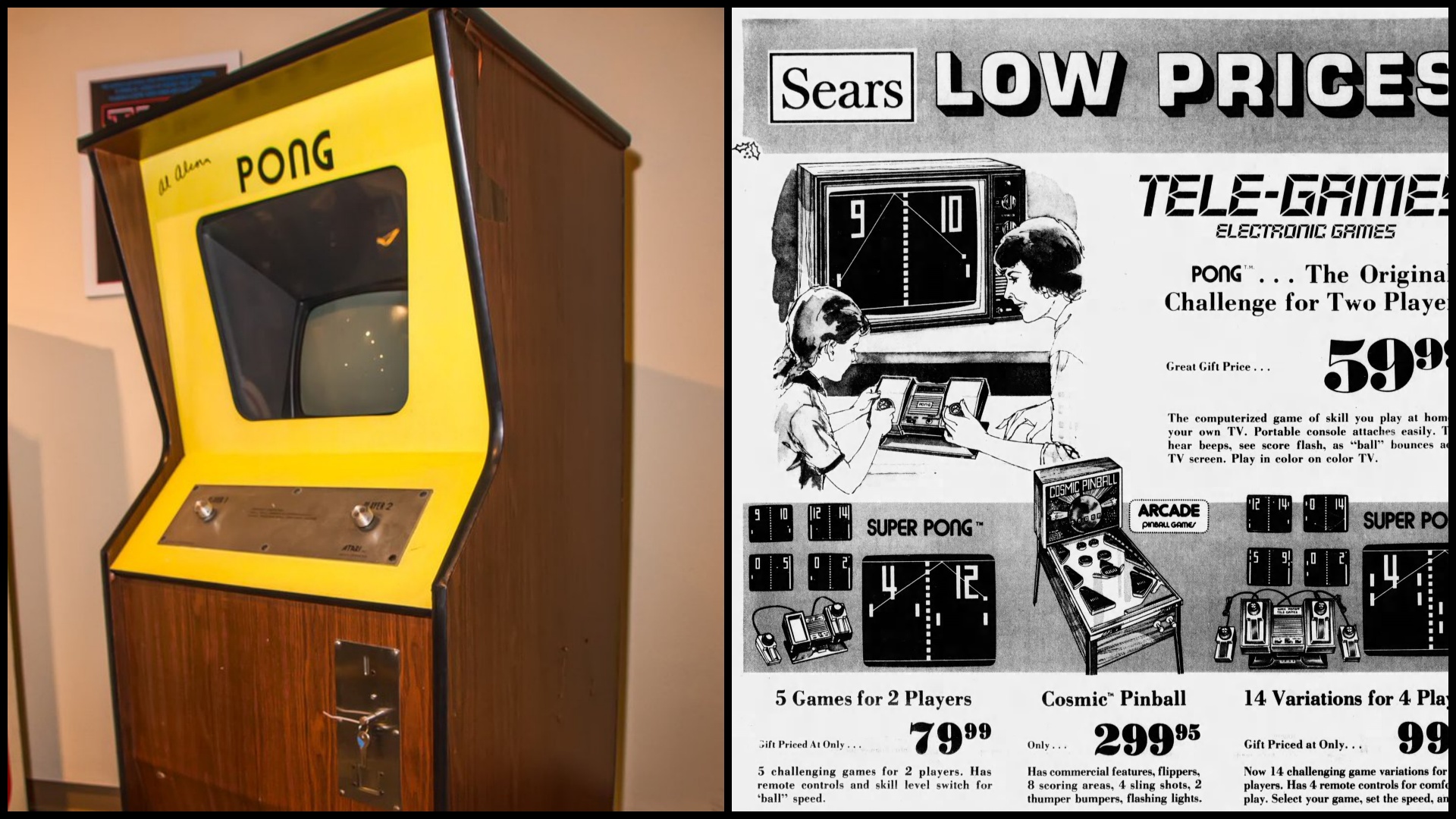
Fifty-three years ago today, in 1972, Pong was released and quietly set off one of the biggest entertainment revolutions of the 20th century. Created by Atari and designed by Allan Alcorn, the simple two-paddle tennis game became a cultural moment, marking the true beginning of the commercial video game industry.
When Pong first appeared in arcades, it stood out immediately. Its concept was easy to understand: two paddles, one square ball, and a race to score points by knocking the ball past your opponent. Yet behind that simplicity was a level of competitive tension that players found irresistible. The machine at Andy Capp’s Tavern in California famously broke down not because of a malfunction, but because it became so full of quarters that it couldn’t operate anymore.
The success of Pong showed that video games could be more than a novelty. It proved they could earn money, attract crowds, and create shared experiences in the same way pinball machines once had. For Atari, it was the spark that pushed the company into becoming a major force in the growing world of home and arcade entertainment.
While modern gaming has grown far beyond the simple mechanics of Pong, its influence can still be felt. Every competitive match, every home console, and every arcade revival owes something to the humble machine that proved games could captivate people of all ages. It represents the moment when video games began their journey from experimental technology to global entertainment powerhouse.
