

If you enjoy independent indie game coverage, consider supporting Indie-Games.eu on Patreon. It helps keep the site independent.
An IGN trailer recently highlighted 1348 Ex Voto, an upcoming third-person action-adventure game set in Italy during the Black Death. The post from one X user presenting the trailer frames the game as a better choice than Knight’s Path, another indie title that has faced backlash for using generative AI assets and for the developers’ public rejection of modern representation themes. However, Ex Voto sparked controversy for featuring a relationship between a female knight and a nun.
The story follows Aeta, a young wandering knight voiced by Alby Baldwin, who is driven by a desperate mission to save the person closest to her, Bianca. Bianca, voiced by Jennifer English, is a postulant nun who is kidnapped during the chaos of the plague. In the trailers, Aeta vows to rescue her at any cost and the emotional bond between the two is strongly emphasized. This has fueled online controversy, especially on social media, where many users frame the story as a romantic relationship between the two women.
Gameplay footage shows combat inspired by historical European martial arts, with different sword stances, both one-handed and two-handed, and skills learned through books. The world is a semi-open version of 14th-century Italy, featuring villages, castles, mountain regions, and ancient Roman ruins. The land is filled with danger, including bandits, mercenaries, religious zealots, and the ever-present threat of the Black Death.
1348 Ex Voto is developed by the Italian indie studio Sedleo, a team of about fifteen experienced developers, and published by Dear Villagers. The game is set to release on March 12, 2026, for PC via Steam and PlayStation 5. An Xbox Series version was planned but later canceled, as supporting the Series S would have required technical compromises the studio did not want to make.
The historical setting of 1348 Italy is important to understand the controversy. This was the peak of the Black Death, when the plague killed between thirty and sixty percent of the population in many regions. Cities like Florence lost massive portions of their people. Contemporary accounts describe bodies left in the streets, widespread fear, social breakdown, religious panic and violence. Many believed the plague was divine punishment and minorities and so-called sinners were often blamed.
Medieval Italian society was strictly ordered. Knighthood was a male role tied to nobility, faith, and service, with clear expectations about duty and behavior. Women did not roam the land as armed knights. While noblewomen could manage estates, the idea of a female knight errant belongs to much later periods or pure fiction. Religious life was equally strict. Nuns took vows of chastity and obedience and even postulants were closely controlled. Any sexual relationship, especially one between women, was treated as a serious crime and often punished harshly.
Because of this, we can argue that a romantic story between a wandering knight and a nun during the height of the plague is deeply out of place. In real history, such a situation would not lead to heroism or adventure, but to arrest, torture, or execution. There are no historical records of such stories surviving, largely because they would have been violently erased.
The criticism goes further than accuracy. Some argue that the character designs intentionally remove traditional femininity, presenting women as plain and androgynous in order to avoid beauty or attraction. To these critics, this reflects a broader trend in modern games where female characters are stripped of elegance or charm to make a political point, rather than to serve the setting or story.
For them, the larger issue is cultural. They see 1348 Ex Voto as part of a pattern where historical settings are used as backdrops for modern messages, even when those messages clash with the reality of the time. In their view, this weakens immersion and turns real historical suffering into a vehicle for modern debates. Where older games tried to teach values like courage, sacrifice, or honor through their worlds, they believe many modern titles focus instead on representation at the cost of coherence.
To these critics, the problem is not a female lead on its own, but the choice to reshape a brutal historical moment into something that feels more like modern fiction than medieval reality. They argue that history should be respected, not rewritten to fit current trends, especially when dealing with periods marked by real human tragedy.

Today’s roundup covers a wide range of stories shaping the future of independent games.

The indie games scene doesn’t slow down and neither do we.
This update comes after a long development journey that began with a successful Kickstarter campaign in 2021.
Deep knowledge of chess is not required and the developer has made it clear that learning strict openings or endgame…
Knight’s Path is an upcoming action RPG made almost entirely by solo developer Jan Tichota.
Some developments in today's gaming world are simply too significant to ignore, and today’s roundup reflects that balance.
The latest controversy about LGBTQ characters began with a former viral screenshot shared on X.
The Outer Worlds 2 is less an isolated disappointment and more a sign of a changing market.

In a new Patreon-exclusive article (free-to-read for anyone), I break down the full workflow behind our reviews.
Both Pillars of Eternity games used backer betas, which gave early access to players who supported the projects.

What shocked publishing lead John Buckley was not the number of pitches, but the terms developers had come to accept.

Welcome back to Daily Indie News Roundup, your one-stop snapshot of everything happening across the indie games and the wider…

To keep your feed clutter-free, we’ve once again gathered the latest headlines from across the indie gaming space.

We’re already halfway through January 2026, and the new year is off to an incredible start for gaming.
![[OPINION] Gaming Exclusives Are Losing Their Value: Who Really Breaks the News in Gaming Anymore](https://www.indie-games.eu/wp-content/uploads/2026/01/Gaming-Gaming-Journalism-300x200.jpg)
There is a growing problem in gaming media with exclusives and question arises who really breaks the gaming news anymore…
We are still fine-tuning this format, so please bear with us as we improve.
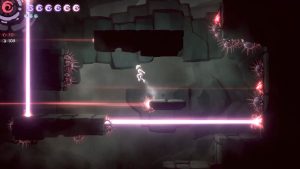
In BEFORE I GO, you take control of an inner child trapped in limbo, moving through a symbolic journey toward…
Instead of flooding your feed with dozens of individual posts, here’s everything you need to know from the indie games…
![[OPINION] Nintendo, Sony, and Microsoft Unite on Safety – Here’s Why That Matters](https://www.indie-games.eu/wp-content/uploads/2026/01/Gaming-Industry-big-tree-300x200.jpg)
At its best, the alliance sends a strong signal that online safety is no longer something to be handled in…

It is an easy recommendation for anyone who enjoys beautiful worlds, strong narratives, or tactical depth.
Today’s roundup covers a wide range of stories shaping the future of independent games.
The indie games scene doesn’t slow down and neither do we.
This update comes after a long development journey that began with a successful Kickstarter campaign in 2021.
Deep knowledge of chess is not required and the developer has made it clear that learning strict openings or endgame…
Knight’s Path is an upcoming action RPG made almost entirely by solo developer Jan Tichota.
Some developments in today's gaming world are simply too significant to ignore, and today’s roundup reflects that balance.
The latest controversy about LGBTQ characters began with a former viral screenshot shared on X.
The Outer Worlds 2 is less an isolated disappointment and more a sign of a changing market.
In a new Patreon-exclusive article (free-to-read for anyone), I break down the full workflow behind our reviews.
Both Pillars of Eternity games used backer betas, which gave early access to players who supported the projects.
What shocked publishing lead John Buckley was not the number of pitches, but the terms developers had come to accept.
Welcome back to Daily Indie News Roundup, your one-stop snapshot of everything happening across the indie games and the wider…
To keep your feed clutter-free, we’ve once again gathered the latest headlines from across the indie gaming space.
We’re already halfway through January 2026, and the new year is off to an incredible start for gaming.
There is a growing problem in gaming media with exclusives and question arises who really breaks the gaming news anymore…
We are still fine-tuning this format, so please bear with us as we improve.
In BEFORE I GO, you take control of an inner child trapped in limbo, moving through a symbolic journey toward…
Instead of flooding your feed with dozens of individual posts, here’s everything you need to know from the indie games…
At its best, the alliance sends a strong signal that online safety is no longer something to be handled in…
It is an easy recommendation for anyone who enjoys beautiful worlds, strong narratives, or tactical depth.
