![[GAMESCOM 2026] Full Circle – How One Developer Is Creating His Dream JRPG](https://www.indie-games.eu/wp-content/uploads/2026/09/Adolfo-Gazzo-Full-Circle-Interview-1-1024x576.jpg)
[GAMESCOM 2026] Full Circle – How One Developer Is Creating His Dream JRPG
At Gamescom 2026, I spoke with solo Peruvian developer Adolfo Gazzo about his upcoming JRPG Full Circle from Second Player…

![[A BIG INTERVIEW] Deep Dive into Star Birds with Toukana Interactive’s Co-Founder](https://www.indie-games.eu/wp-content/uploads/2025/09/star-birds.jpg)
If you enjoy independent indie game coverage, consider supporting Indie-Games.eu on Patreon. It helps keep the site independent.
Last week, we sat down with Zwi Zausch, co-founder, tech art lead, and marketing lead at Toukana Interactive. He spoke with us about Star Birds, a relaxing asteroid base-building and resource management game, which was made in collaboration with the science animation studio kurzgesagt, as well as his experience at Gamescom, the current state of the industry, his thoughts on cozy games, and the role of AI in gaming.
Toukana Interactive is a independent game development studio based in Berlin, Germany. It was founded in 2020 by four students from the Game Design program at HTW Berlin: Luca Langenberg, Sandro Heuberger, Timo Falcke, and Zausch. Their debut title Dorfromantik launched in Early Access in 2021 and became a significant indie success.
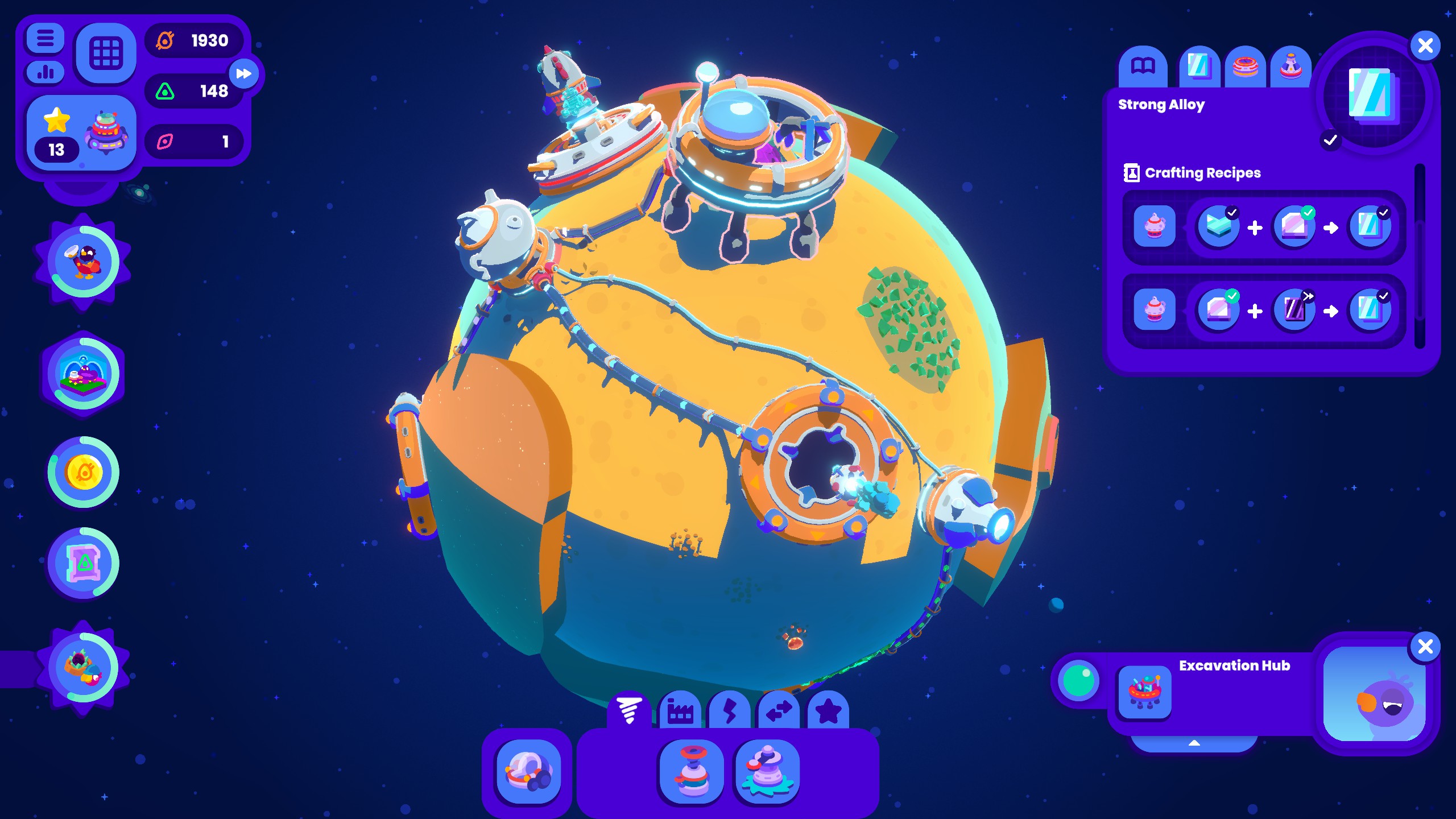
In Star Birds, players guide a flock of adorable spacefaring birds across the universe, mining asteroids, establishing production networks, and fulfilling the birds’ resource needs to help them thrive and expand to new horizons. Beyond the gameplay, you’ll enjoy a cel-shaded 3D art style heavily inspired by Kurzgesagt’s colorful, bird-centric animations. This extends to charming cutscenes, a much larger story, and humorous dialogue.
We’re splitting this interview into two parts. The first will focus on Star Birds, while the second will cover Zwi’s thoughts on the gaming industry. As a reminder, the game releases in Early Access this Wednesday on PC via Steam.
Our first experience at Gamescom was for the Dorfromantik Switch release. It was intense but very cool. We met a lot of interesting people, and it was a great bonding experience for the team due to the extreme environment and direct player contact. We also met many other interesting developers and came back with lots of motivation. This time, the team was bigger, and the game had even more traction. We even had to do some crowd control.
On the other hand, we originally announced a September 4th release date at Gamescom for Star Birds, but on the same day, Team Cherry announced that Silksong would also be released then. We shifted our game’s release to the 10th. It was a bit of a bummer, but we wanted to give both games space to gain their own traction
If other indie developers are reading this, I’d say these events aren’t necessarily best for measuring marketing success, but they’re great for networking, meeting other people, and team building.
The main feedback was that people really liked the game mechanics, and that they really enjoyed the game’s loop. Of course, they liked the cutscenes and the storyline, but the game’s loop kept them hooked, which is great to hear.
We also heard from players who enjoy more complex automation games like Factorio that they enjoyed our game as a more relaxed experience. That’s exactly what we’re trying to achieve, so it was really reassuring.
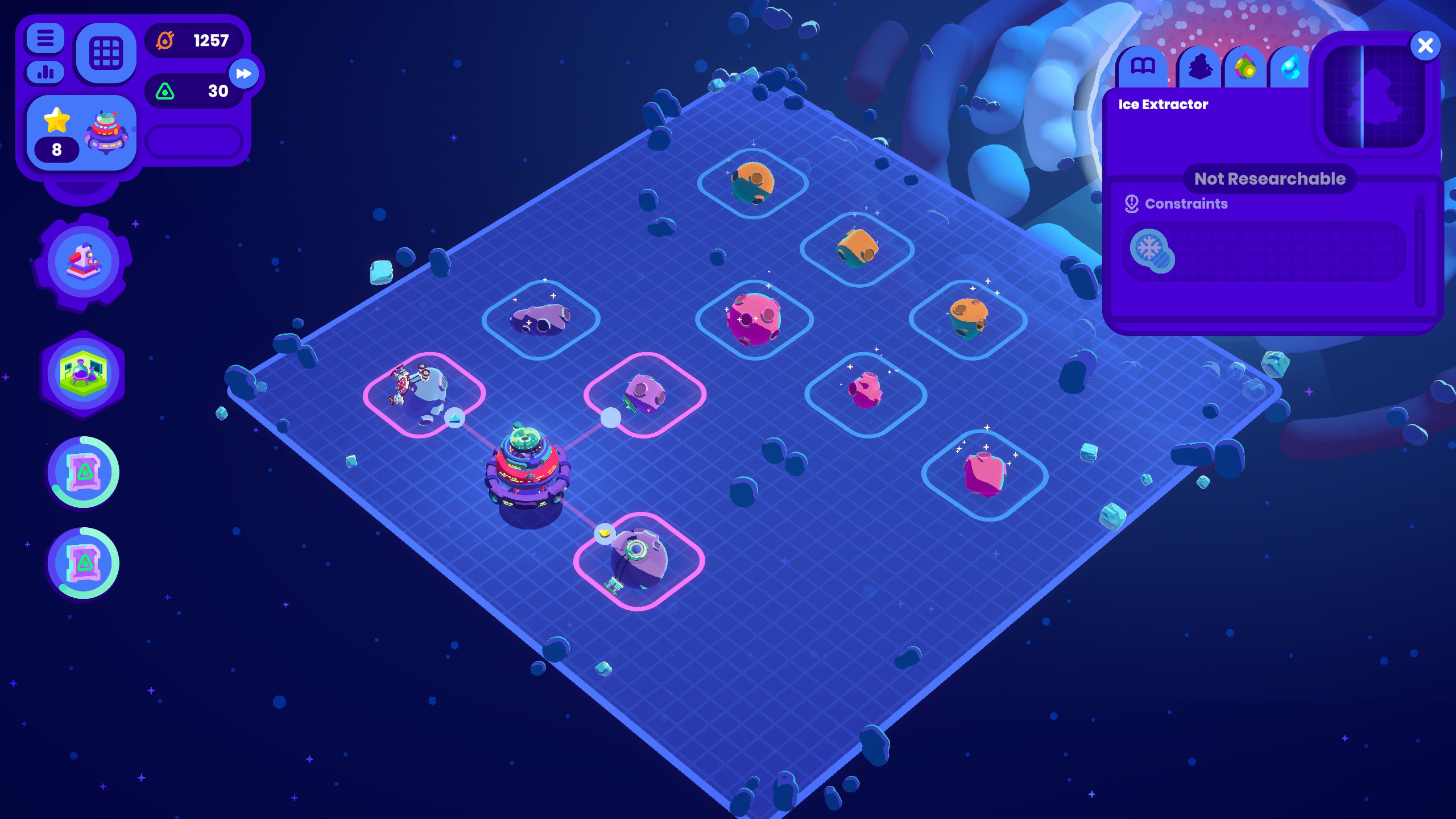
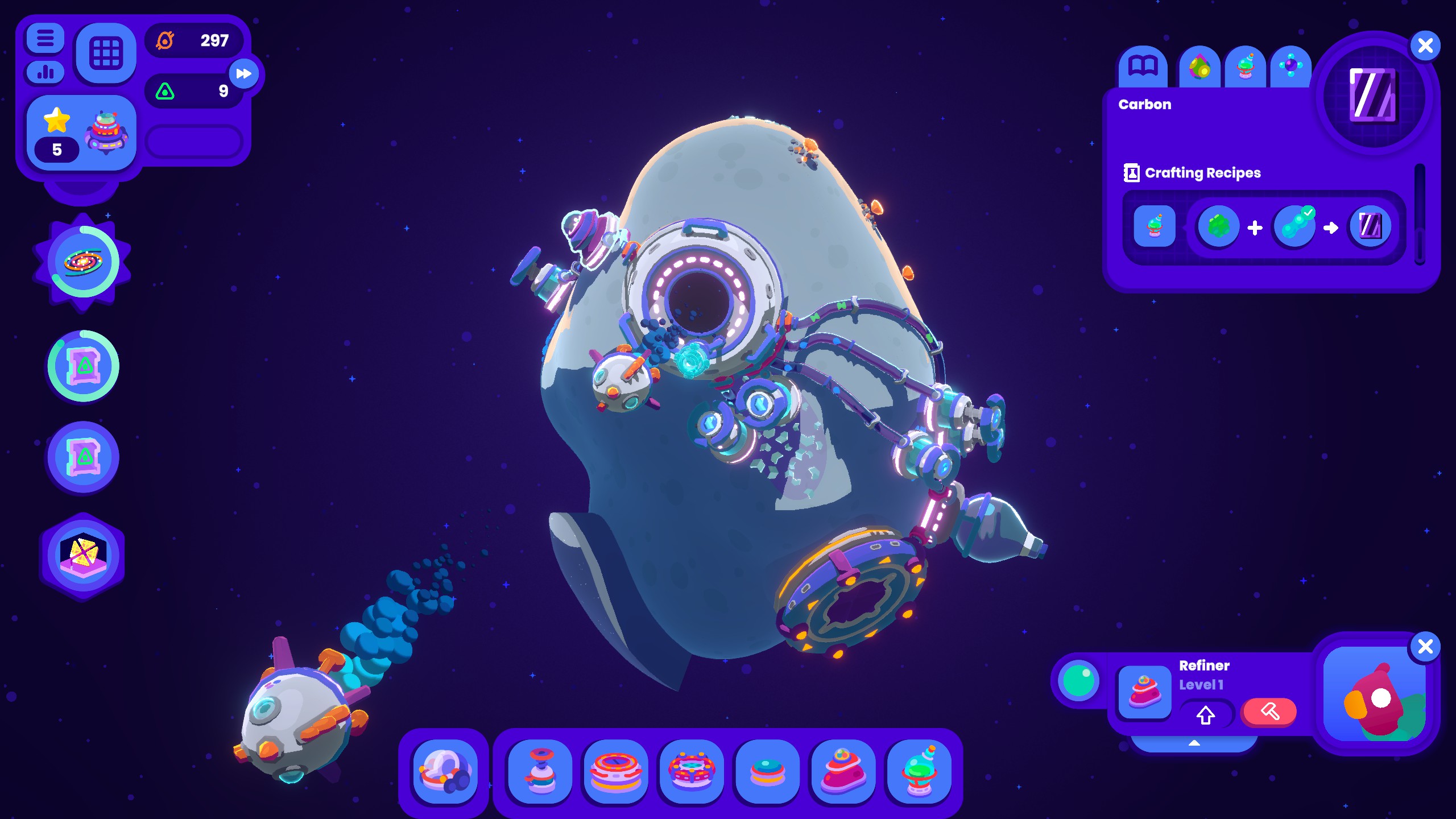
In the Early Access version, you’ll see that in the later levels, the complexity of the networks you need to build really scales up. You get more buildings that have different processes, combining two resources into one, or transforming one resource into another. For some buildings you’ll need energy, so you’ll have to build solar panels, reactors, and other energy sources. The complexity and puzzle factor of how you build your production networks really scales up.
That’s mostly where the complexity lies in the long chain of products you need to create to get to the end goal. It has a tree of depth with multiple layers of things you need to produce. The environmental aspect also has a bigger impact later because the asteroids have more plateau layers, and you have different frozen resources like methane, oxygen, and water, which makes things more complex.
However, the general idea of putting down buildings and connecting them by hand and having to think about how you use the space on the asteroids stays the same.
New things that were not in the demo include a wide range of additional buildings. These buildings allow you to heat, split, or combine things, and some just use resources, similar to the main station. You get to decide where to place them, which changes the cost and the things you have to produce as a player.
We have energy networks that make the whole thing a bit more interesting and challenging, and you’ll have different ways of producing this energy. We’re also thinking about additional challenges in later star systems, like not having enough sunlight, but that’s not in the current build.
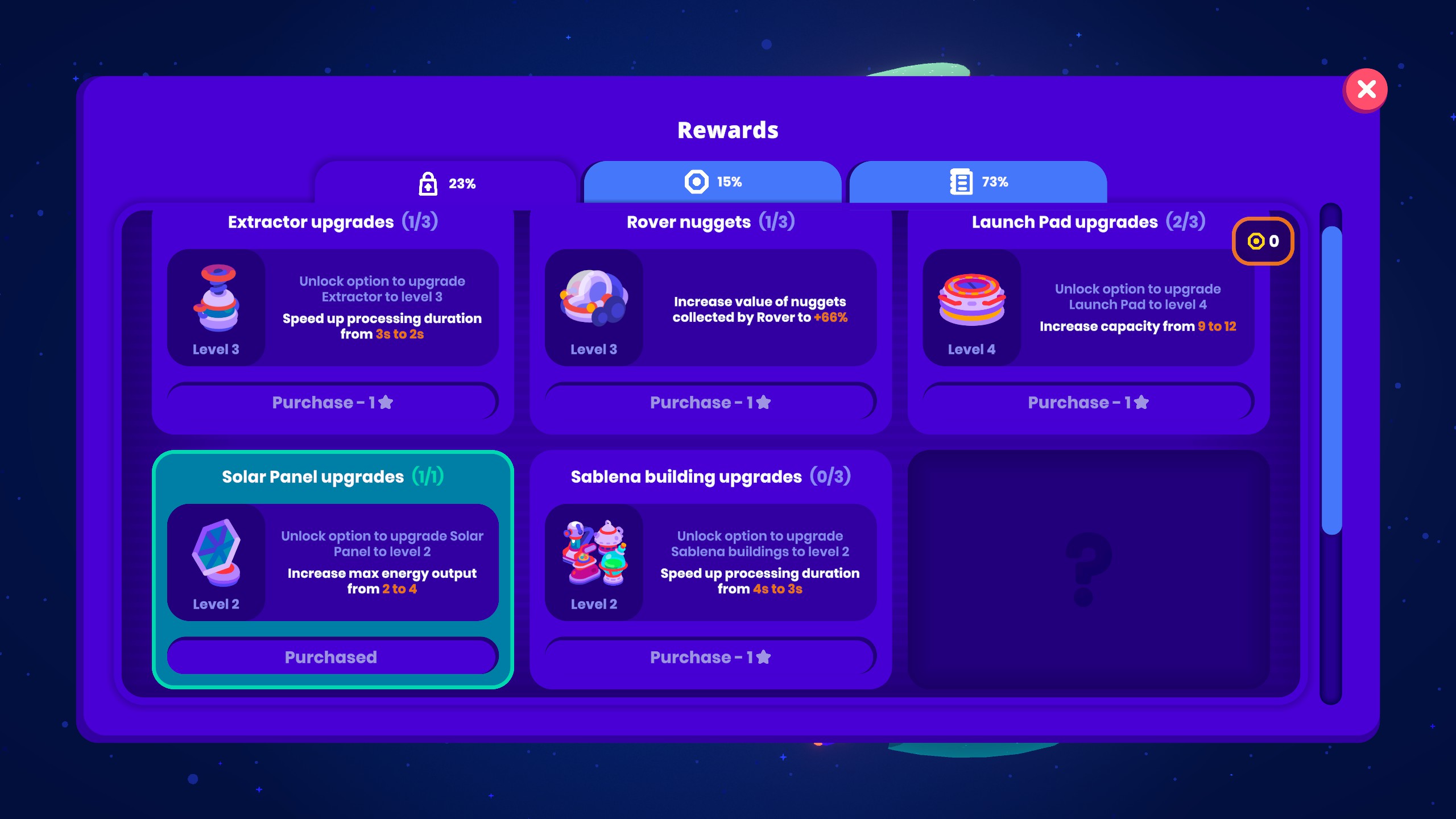
You’ll discover more unknown things on the asteroids. We have plateaus and different ice layers. One of the biggest changes is the upgrades for buildings. Players can improve their effectiveness and optimize their networks by upgrading certain parts, like a node point that’s a bottleneck. You can also upgrade rockets to carry more resources. This is a big feature in the early access version.
Finally, we have many achievements. Everything you do will reward you and depending on how well you optimize your level playthroughs and how many stars you collect, you can buy more upgrades. When I say “buy,” I don’t mean microtransactions. I mean you can use the rewards you get for playing the levels to improve and progress in your gameplay.
It was one of the biggest questions we asked ourselves when we started the project. Our approach at Toukana Interactive is always to create games that are relaxing and even a bit meditative, but that have a systemic core that becomes challenging later on. They’re easy to hop into, but they really challenge you if you want them to. You can play them casually or go deep and min-max how you play.
In Dorfromantik, we saw the same thing with extremely high scores because players really delved into the mechanics. With our new game, our approach was to create a game that on the surface is a chill Factorio, but then later on, it really challenges you and builds on the things you learn.
We’re trying to make a game that speaks to both casual players and genre veterans in the automation genre. Our ideal player base is a spectrum between those two types. Someone who finds games like Factorio a bit overwhelming can have a chill way to get into the genre with our game and then learn and get better.
After nearly three years of working on Dorfromantik, we wanted to do something different. We needed some fresh air. Luckily, we had already been in talks with Kurzgesagt through a contact we made at Gamescom in 2022. We even started working on a mobile version of Dorfromantik, but we realized we needed a new project to get our creative juices flowing again.
We created a few different prototypes and pitched them to Kurzgesagt. One of them was inspired by their asteroid mining video, which has been on their channel for a few years. We found the fantasy of mining asteroids and moving from one star system to another interesting. We saw it as an intriguing idea of progress, maybe even with a roguelike approach.
So, we started working on it early on. Our first goal was to get the core mechanic right, placing down things and connecting them to three-dimensional objects. The early prototypes already felt similar to the gameplay we have now. They weren’t as polished, but we knew that the core needed to work and feel smooth, even though it was very challenging to create.
That was the core inspiration. We also have some core design approaches: we like games that are easy to start, that are colorful, friendly, and welcoming, but also have a certain systemic depth. The asteroid mining approach fits these criteria perfectly.
Dorfromantik was a much bigger success than we ever imagined. Our goal was to make a game that was successful enough for us to continue as a studio, build a sustainable workplace, and establish ourselves in the German games industry. We never imagined such a big success.
This success gave us more independence and the freedom to continue working at our own pace, which is the same freedom we wanted for Star Birds. But you’re right, there’s a huge expectation that comes with having a successful first game. People expect big things and high quality. We have similar expectations for our own work, too. We knew the game needed to be very polished, even for its early access release, and offer a smooth, playable experience with a good amount of depth.
Managing these expectations wasn’t easy, especially since we didn’t do as open a social media campaign as we did for Dorfromantik. For that game, we shared early prototypes and versions online to get feedback. This time, we waited longer to show things because we knew the expectations were higher and we wanted to show things we were comfortable with from a quality standpoint. It was a challenge, but now that the demo has been well-received, I think we’re in a good spot.
On a technical level, Star Birds is much more complex than Dorfromantik. The semi-procedural generation of the asteroids was not easy because the meshes are generated in real-time, along with the plateaus and the pipes you drag by hand. Getting all of that to work without glitches was a major technical achievement for the team.
Translating the 2D vector art style from the Kurzgesagt videos into a tangible, working 3D art style was another big challenge. Early on, we had visual prototypes to figure out how to do it. The goal was to create a style that looked good in 3D, was recognizable, and was a mix of both Kurzgesagt’s style and our own. I’m proud of this because people often come to us at events like Gamescom and ask how we achieved it.
Another achievement is finding a way to get both of our teams to work together smoothly. Kurzgesagt is a bigger team with different processes, so we needed to find a way to collaborate. I’m proud of both teams for bringing their different experiences and skill sets together.
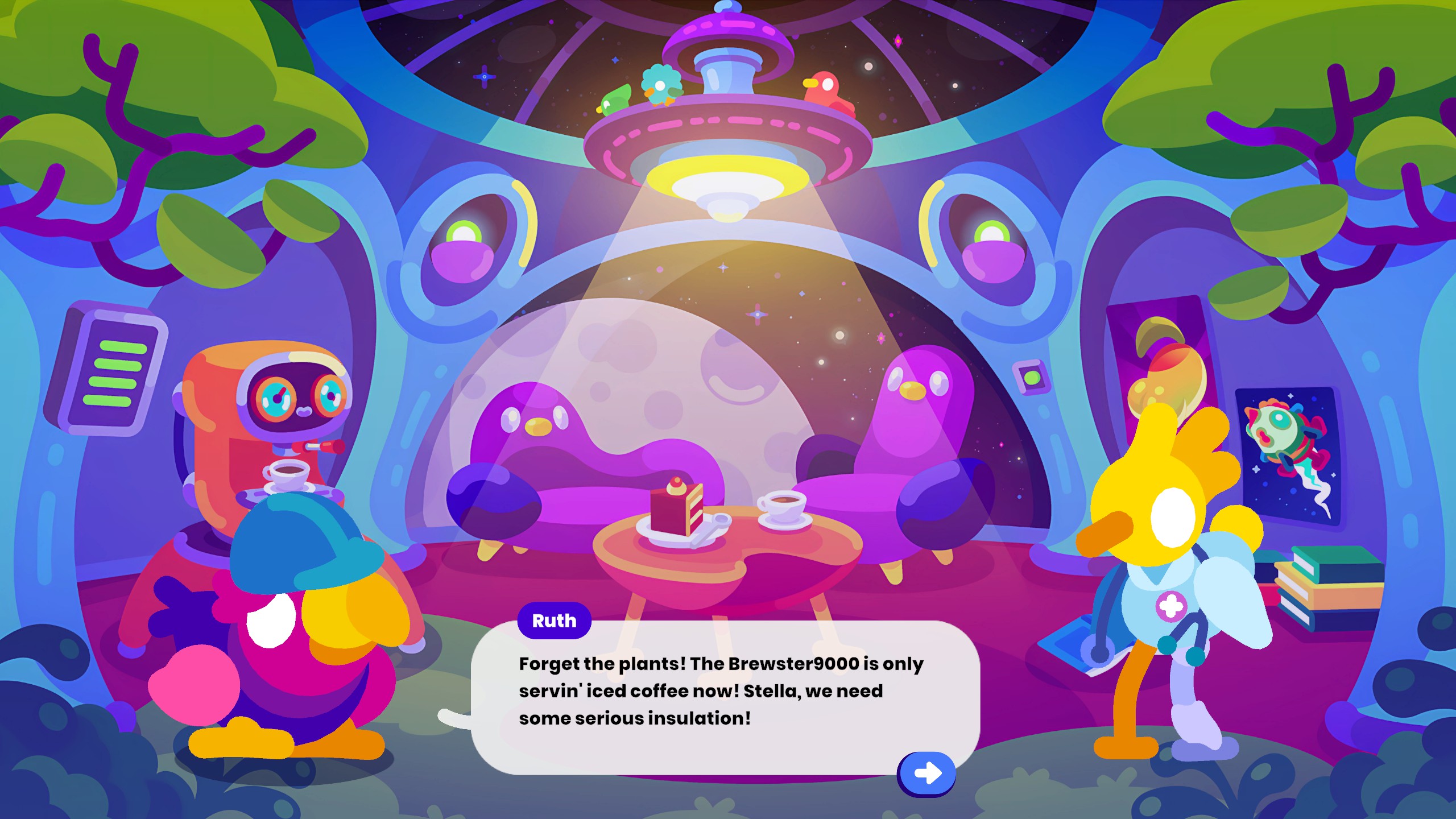
While working on the game, we felt that it needed a certain charm that would appeal to people. Since both of our studios have a bird as a mascot, we obviously like birds. While we were working on the game, we always thought about the civilization that’s doing this mining. Should they be normal humans? The answer was always no. Having birds do all of that felt natural, especially since Kurzgesagt is known for its birds in their videos.
So, we created a new type of birds, the Starbirds, and a narrative around them. We have a ragtag crew that travels through space and experiences a mysterious storyline that guides players through the game. This idea developed during the first year of development and it became clear that it was something we wanted to do. The narrative, cutscenes, and the crew became more important throughout the process.
I think the game is now a balanced experience that has a narrative, the crew characters, and Steve as a narrator in some scenes. However, we also wanted it to be a game clearly focused on its mechanics, not just a story-based game. We had to find a good balance between both aspects.
The playtime for the current build really depends on the type of player you are. If you’re quick, you might finish it in seven to eight hours. That means you’re moving fast, maybe skipping some additional levels, and not min-maxing your gameplay. However, if you want to go in-depth, the game offers many, many hours on top of that. You can replay every level a few times to get a better score and to upgrade your buildings and processes. There’s a lot of replayability already included in the early access release. If you want to experience everything in a deep way, you’re looking at more than 10 hours.
During the early access phase, we’ll add more content, more mechanics, and more features. We’re not being too specific right now, but there will be another star system, more levels, and more cutscenes as the story continues. We want to be flexible and open to player feedback. Since it’s an early release, we’re sure there will be bugs, and we’ll get a lot of feedback. We’ll be adding quality of life features and more things based on what we hear from the community.
As an indie studio, we have to focus our resources. Right now, our high priority is PC. We all love Steam Deck, so we will definitely look into it. I can’t promise an exact timeline, but there will be official controller support, which will make it much more playable on Steam Deck. I know many people are already playing it there with touch controls, and it seems to work. Later in the early access period, we want to have it running well and with proper controller support.
As for other consoles and platforms, we need to see how the game performs and if it gains enough traction. If it makes sense for us, we’ll consider bringing it to other platforms.
At Gamescom 2026, I spoke with solo Peruvian developer Adolfo Gazzo about his upcoming JRPG Full Circle from Second Player…
![[GAMESCOM 2026] Hell Maiden Interview: AstralShift on Self-Publishing, Early Access and An Unlikely Trip Through Hell](https://www.indie-games.eu/wp-content/uploads/2026/09/Hell-Maiden-5-1024x576.jpg)
At Gamescom 2026, we spoke with AstralShift co-founder, writer and marketing manager Patrícia Silva about rougelike Hell Maiden.
Built by a self-funded team of seven, Vahrin’s Call is an ambitious fantasy RPG inspired by Fable, The Elder Scrolls…
We spoke with cosplayer Prince de Guzman, who is known for his transformations inspired by horror, anime, and video games.
Unless you’re deep in the indie gaming scene, Naphtali Faulkner might be a new name to you. But as the…
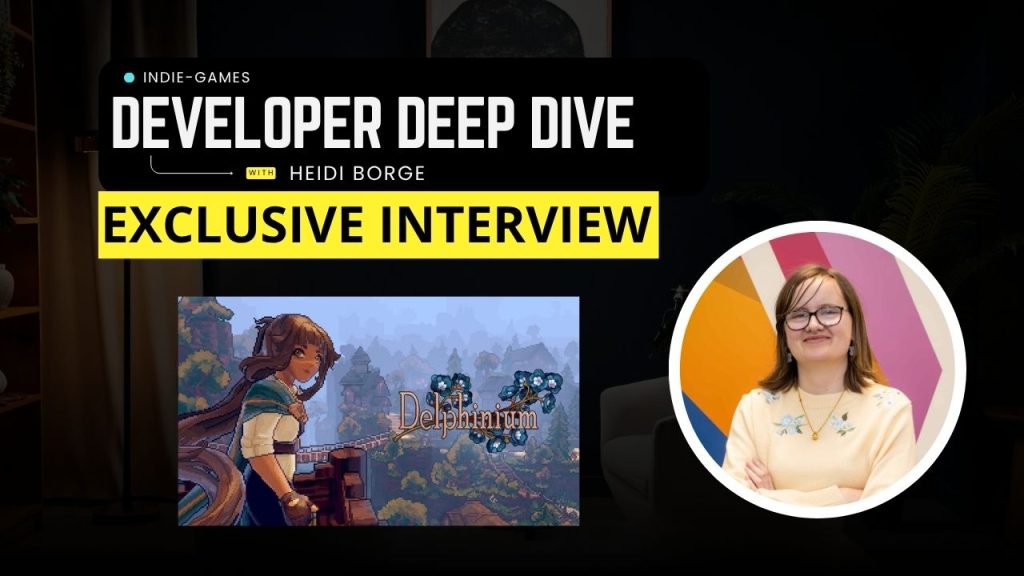
We had a chance to catch up with Heidi Borge, the developer behind narrative-driven cozy Delphinium to learn more about…
We had the opportunity to speak with Damian Czajka from MOUSE: P.I. For Hire Team.
We had the opportunity to talk with Piotr Nowakowski from Bloober Team about his work on Cronos: The New Dawn.
![[INTERVIEW] Manafinder II Is a Big Step Up – Here’s What the Developer Told Us](https://www.indie-games.eu/wp-content/uploads/2026/04/Manafinder-II-interview-1024x683.jpg)
In the interview, we discussed the game’s mechanics in greater detail, what players can expect from the sequel, and the…
We had the opportunity to sit down with the brilliant minds behind Business Goose Studios: Beau Vankemenade, Sander Ambroos, and…
![[EXCLUSIVE] Like a Bloody Storm – Interview with Kazusou Oda (Coda)](https://www.indie-games.eu/wp-content/uploads/2025/12/Oda-Kazusou-Interview-1024x576.jpg)
We had an opportunity to talk with Oda Kazusou, a theme song artist for JoJo's Bizarre Adventure.
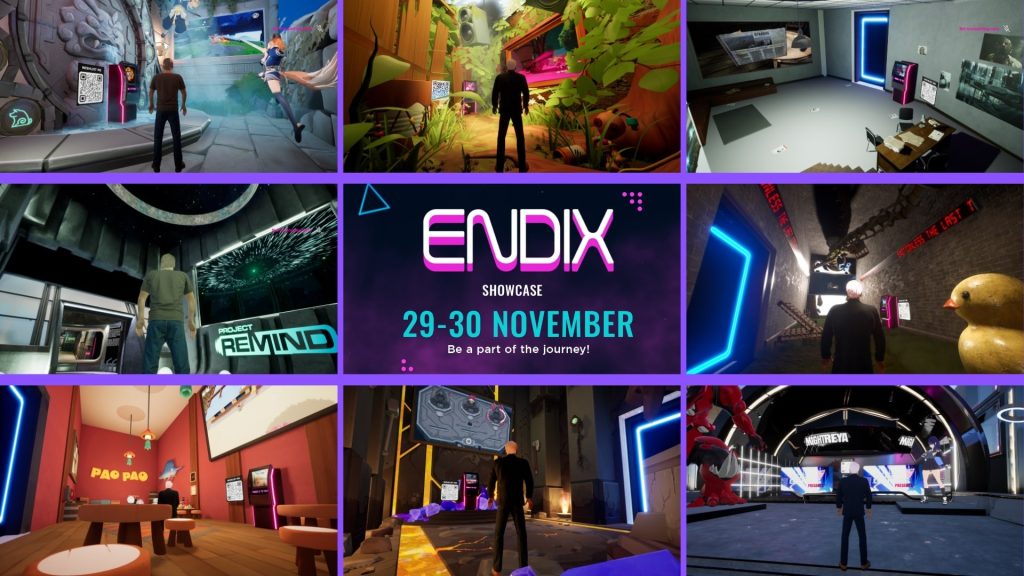
Once inside, visitors will find a fully immersive world where exhibitor booths are crafted using real in-game assets.
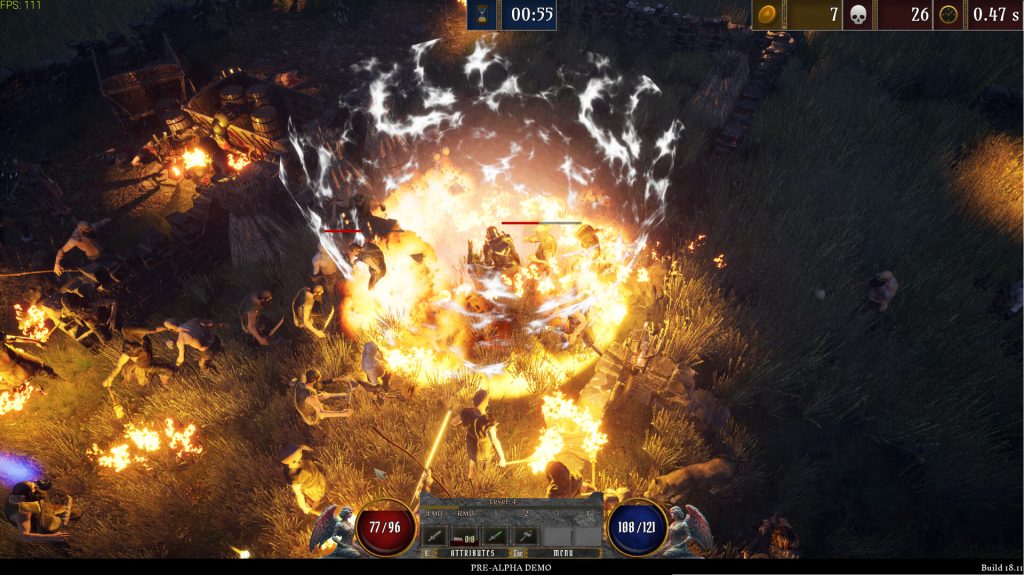
We talked to Tomasz Janicki about the details regarding Cult of Shadows.
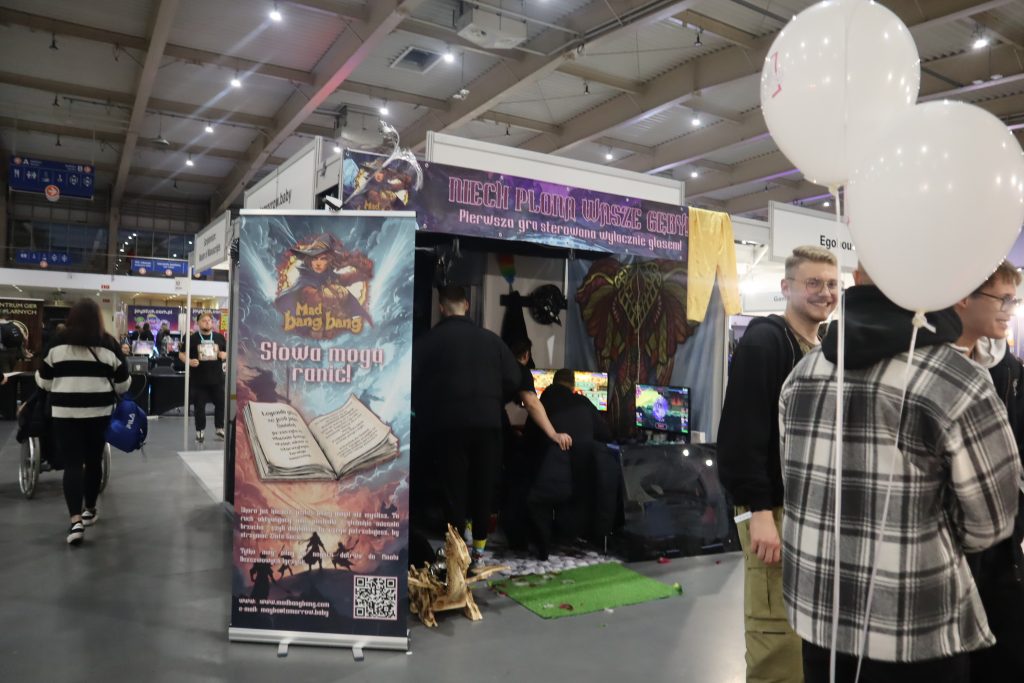
We talked to Piotr Ruszczak, one of the creators of Mad Bang Bang, about the details of this production.
We asked Kiryl, Marek, and Jakub to reveal the secrets of their work to us.
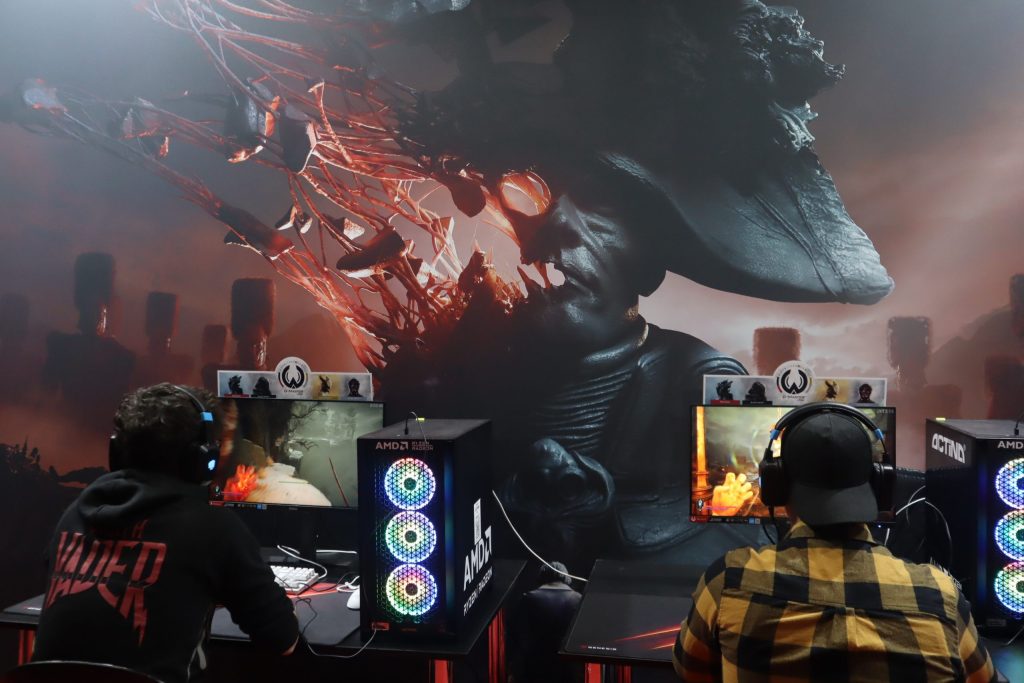
Will Valor Mortis become the hit of 2026?

We had the chance to ask Yannick Audéoud, developer behind Orbyss, some questions about the game.
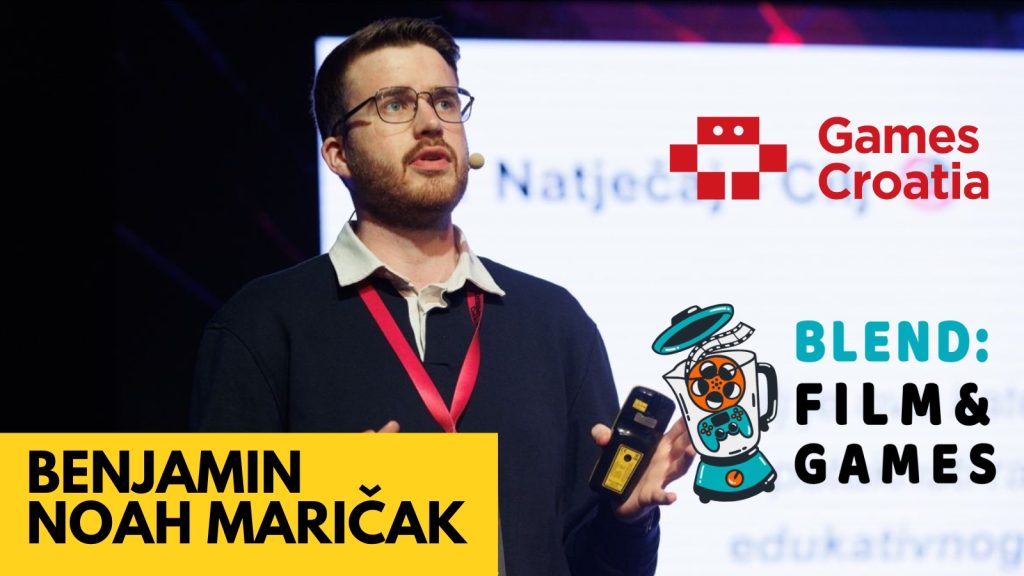
Maričak actively works to grow and promote the Croatian gaming industry while simultaneously fostering collaboration with the film industry.
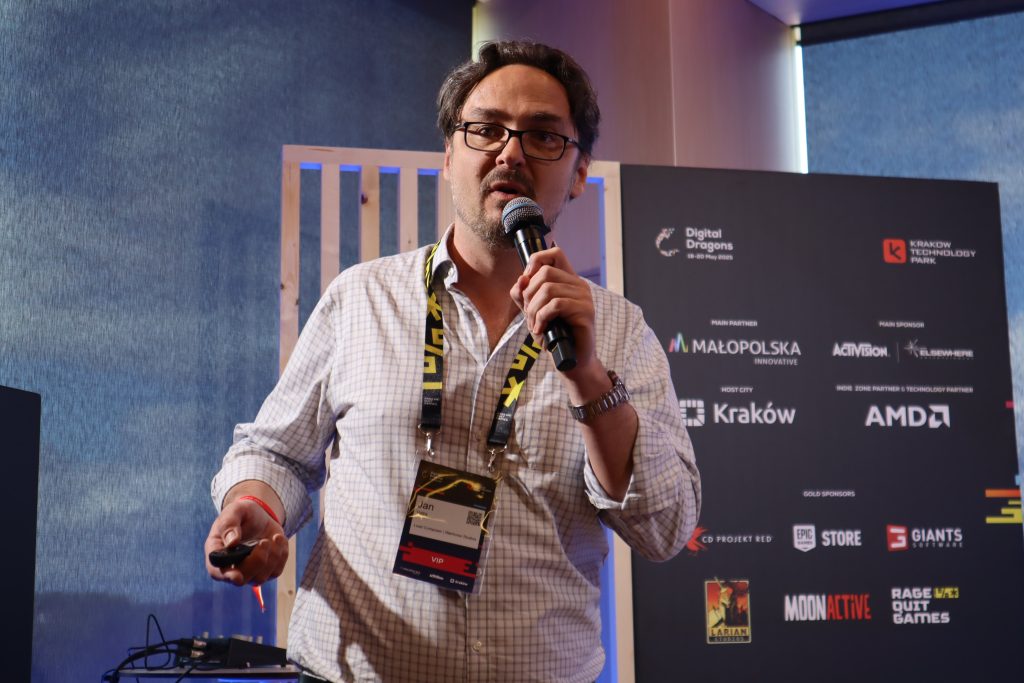
During our interview, Jan revealed the secrets of composing music for both KCD games.
In this interview, we asked Paweł Charzyński about his experience working on Frostpunk 2 as VFX coordinator.
