![[GAMESCOM 2026] Full Circle – How One Developer Is Creating His Dream JRPG](https://www.indie-games.eu/wp-content/uploads/2026/09/Adolfo-Gazzo-Full-Circle-Interview-1-1024x576.jpg)
[GAMESCOM 2026] Full Circle – How One Developer Is Creating His Dream JRPG
At Gamescom 2026, I spoke with solo Peruvian developer Adolfo Gazzo about his upcoming JRPG Full Circle from Second Player…


If you enjoy independent indie game coverage, consider supporting Indie-Games.eu on Patreon. It helps keep the site independent.
After the successful Blend: Film & Games conference, which was held at the premises of Algebra Bernays University in Zagreb at the beginning of the month, we had the opportunity to speak with Benjamin Noah Maričak.
He is the Head of Video Games and New Technologies at the Croatian Audiovisual Centre (HAVC) and the project manager of Games Croatia, and this year he organized the aforementioned conference for the second time. Maričak is actively working on the growth and promotion of the Croatian gaming industry, aware of the need for change and finding new ways to win over the increasingly demanding gaming audience. His dedication also includes international engagement, such as recent trips to Germany (Gamescom) and Japan (EXPO 2025 Osaka), with the aim of presenting Croatian games to the whole world.
Besides his comments on the conference, we asked Maričak about the current state of the Croatian gaming industry, the significance of HAVC and Games Croatia for the scene, as well as the upcoming, second Zagreb Game Dev Meetup this year, which awaits us at the beginning of November.

The idea came from the desire to connect the film and gaming industries. At HAVC, we recognized an increasing number of cooperation models in areas such as technology, dramaturgy, and author exchange. Although we are part of the same audiovisual family, in reality, there is a wall between gaming and film, and even within film itself (between animation, feature, and documentary). I wanted to create an event around connecting people.
The goal of the conference is not only to merge film and games but also to connect people from different sectors within film and gaming, as well as an increasing number of IT professionals, given the interconnectedness, especially in the context of AI and blockchain.
Two years ago, I pitched the idea for the Blend: Film & Games conference to my colleague Mia Pećina Drašković from the Zagreb Film Office, who had previously organized an exclusively film conference – Pro Film Days. She really liked the idea because she saw a future in combining her experiences with Pro Film Days and my idea for Blend: Film & Games to join the forces of institutions and knowledge. Algebra Bernays became the venue for the event and has also been our academic partner since this year.
Last year the conference was one-day because it was the first time, so we decided to start with one day. However, even then we thought it would be great if it were two days, but we were not sure about the space. The most important thing for us was to see if the audience, visitors, and industry wanted it. After last year’s conference, we sent out a questionnaire, and to the question of whether the conference should be two days, about 80% of the answers were that it must be two days. With that percentage of support, we realized that was the push we needed to make it two days this year.

At the very beginning, the idea was to call the conference “Blender”. We soon realized that it would be too closely associated with the software, even though we mention it. Everyone confirmed this to me, and there was a lot of confusion about the name itself. The visual of “Blender” was appealing to us, and we tried with that name, hoping that the conference would stand out enough and not be confused with the program, but fortunately, we quickly gave up. We realized we had to find a better option. We switched to “Blend,” which turned out to be a much better choice. Realistically, that name much more precisely characterizes the purpose and goal of the conference: mixing and joining the two industries, or “blending.”
Last year only 160 people registered for the conference, and a total of over 400 people came, which means that actually about 300 people came without registration. This year, 420 people were already registered before the conference. Therefore, we expect that with those who come without registration, there will be many visitors, certainly up to 600, if not more people.
The significance of this conference is enormous and manifold. Firstly, it signals that the Croatian audiovisual industry not only follows global trends but is actively setting them. The conversations we are having here go deeper than superficial adaptation; the focus is on true synergy and the “blending” of the two industries.
That is precisely what makes us unique. The “Blend” conference is one of the few in the world that directly and thoroughly deals with the merging of these two industries. This is crucial because HAVC wants to lay essential foundations for the future here, not only in Croatia but also in the global context. Our primary goal is first to inform and strongly connect the Croatian audiovisual industry, and then to extend that influence to the whole world.
Also, the conference enables natural growth and cooperation. Global visitors and participants gain a lot. For example, on the panel about virtual production, guests who worked on an Oscar-winning film had legitimate and serious questions, seeking knowledge for the continuation of their projects. All participants, including world experts, gain a lot through networking and knowledge exchange.

The Kingdom of Belgium became a conference partner by chance. When we confirmed all the speakers at the beginning of September, we realized we had five speakers from Belgium (three live and two via Zoom). Then we realized: why not ask the Belgian Embassy to be the partner country?
We approached them and they thought it was an excellent idea. The Ambassador praised the conference and our industry and sees many benefits in the exchange and cooperation between Belgium and Croatia, which was not so strong at that level (especially around gaming and film).
This proved to be a great opportunity for connection, where they could show their support and support their Belgians who came. For the future, we are open to cooperation with other countries, which will depend on the topics and, of course, the panelists. We always start with the content, fill it with panelists, and then, as in this case with Belgium, things naturally fall into place.
The Croatian gaming industry is growing every year, especially in the last five years. I am glad that the HAVC project, Games Croatia, can be a part of it, supporting and helping further development. However, what the community itself says is that there is a lack of educational aspects at the academic level. At the national level, there is currently no public university study directly related to video games (only private ones), although there are certain courses at many public universities.
We have great help in the form of the PISMO Incubator which already has hundreds of participants through its programs. However, at the level of universities and study programs, apart from some private ones, unfortunately, there is no public state university or study program for video games. This is a crucial piece of the puzzle that, I hope, will change in the future, as work is being done on it.
Besides education, we do not have enough publishers. We have a branch of the large publisher Raw Fury (called Fury Studios) and a few smaller ones, but there are not enough of those classic publishers that a game developer could approach for funding. Fury Studios receives hundreds of applications from all over the world, which is a big challenge. It would be great if there were domestic publishers in Croatia to complete the ecosystem.
We, as HAVC, keep a Register of Video Game Producers. Currently, there are over 240 entities in that register. It is important to note that not all of them are studios for which this is the primary activity; many do it as one of their activities, or they are start-ups intending to do so (for example, only about 70 of them are in Novska). I would say we have about 40 to 60 serious studios that have employees and work at a higher level. Through the Register, we want to show the size of the industry at least within some framework. Currently, that is those 240 to 250 plus entities. This data is public and can be found at HAVC.

Four years ago, at HAVC, we launched the Public Call for the Development and Production of Video Games. That is the key thing. So far, we have supported 70 projects from all over Croatia (from Split and Pula to Varaždin, Zagreb, and Novska). I particularly like the decentralization of projects.
What changed after two years is the Games Croatia project. This is the first project that brings together the key actors of the Croatian industry:
The Games Croatia project gives visibility and clear positioning to our industry. When someone from abroad wants to access the Croatian industry, they know where to go, instead of having to search through different sources. Abroad, the Games Croatia project has really contributed to seriousness and placement. Visibility and branding are key, especially in the audiovisual industry.
As Croatia, we are fighting for visibility and reach in the global market. We have to compete with much larger industries (America, Japan, Germany, France), because they are our direct competitors – a Croatian game on Steam competes with games from all over the world. Games Croatia allows us to position and brand ourselves more clearly in this global market competition.
Last year we established cooperation with Zagreb GameDev, which organizes monthly gatherings. We came up with the idea to present the Croatian industry to the wider public and to showcase projects that received funding from HAVC.
Last year we had two gatherings for projects that received funding in 2021 and 2022, and this year we have a meetup for projects from 2023. Recently, on September 5, we had the first such meetup. Although I thought about 40 people would come, in the end, 150 people came. Many had to stand. The sense of community and atmosphere was felt, it was wonderful. I really invite everyone to come to the Academy of Dramatic Art on October 7 in Zagreb where another gathering will be held.
At Gamescom 2026, I spoke with solo Peruvian developer Adolfo Gazzo about his upcoming JRPG Full Circle from Second Player…
![[GAMESCOM 2026] Hell Maiden Interview: AstralShift on Self-Publishing, Early Access and An Unlikely Trip Through Hell](https://www.indie-games.eu/wp-content/uploads/2026/09/Hell-Maiden-5-1024x576.jpg)
At Gamescom 2026, we spoke with AstralShift co-founder, writer and marketing manager Patrícia Silva about rougelike Hell Maiden.
Built by a self-funded team of seven, Vahrin’s Call is an ambitious fantasy RPG inspired by Fable, The Elder Scrolls…
We spoke with cosplayer Prince de Guzman, who is known for his transformations inspired by horror, anime, and video games.
Unless you’re deep in the indie gaming scene, Naphtali Faulkner might be a new name to you. But as the…
We had a chance to catch up with Heidi Borge, the developer behind narrative-driven cozy Delphinium to learn more about…
We had the opportunity to speak with Damian Czajka from MOUSE: P.I. For Hire Team.
We had the opportunity to talk with Piotr Nowakowski from Bloober Team about his work on Cronos: The New Dawn.
![[INTERVIEW] Manafinder II Is a Big Step Up – Here’s What the Developer Told Us](https://www.indie-games.eu/wp-content/uploads/2026/04/Manafinder-II-interview-1024x683.jpg)
In the interview, we discussed the game’s mechanics in greater detail, what players can expect from the sequel, and the…
We had the opportunity to sit down with the brilliant minds behind Business Goose Studios: Beau Vankemenade, Sander Ambroos, and…
![[EXCLUSIVE] Like a Bloody Storm – Interview with Kazusou Oda (Coda)](https://www.indie-games.eu/wp-content/uploads/2025/12/Oda-Kazusou-Interview-1024x576.jpg)
We had an opportunity to talk with Oda Kazusou, a theme song artist for JoJo's Bizarre Adventure.
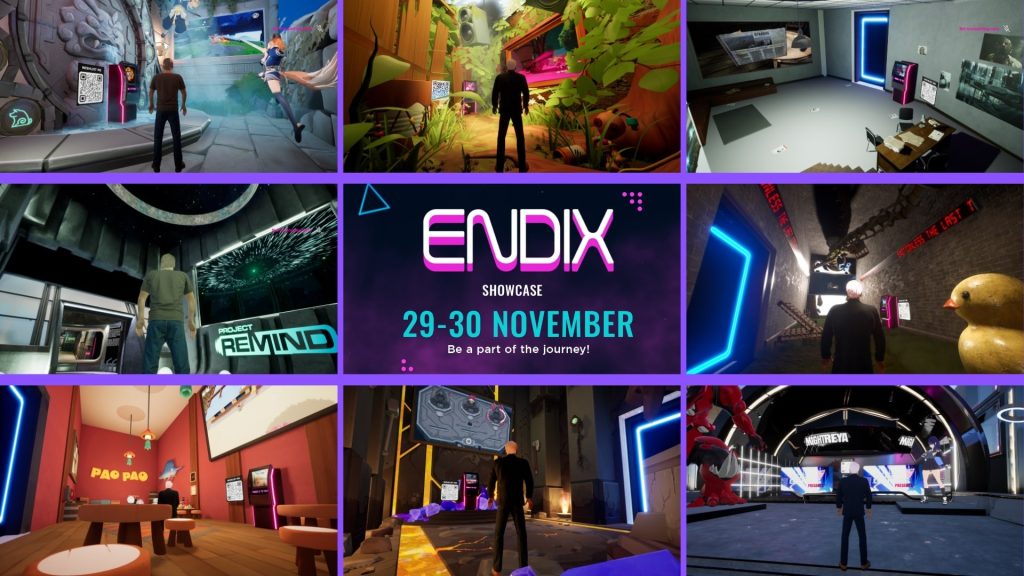
Once inside, visitors will find a fully immersive world where exhibitor booths are crafted using real in-game assets.
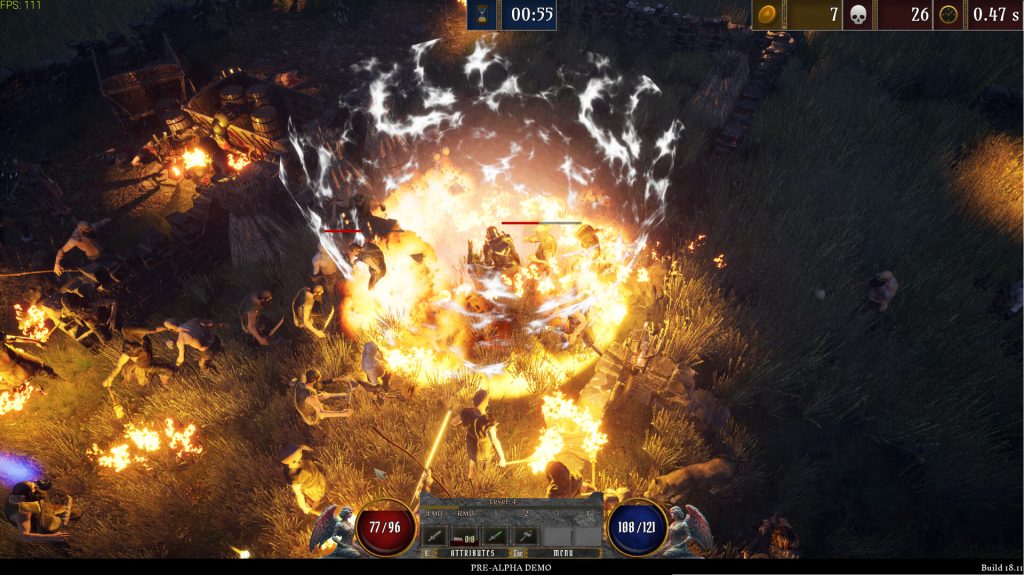
We talked to Tomasz Janicki about the details regarding Cult of Shadows.
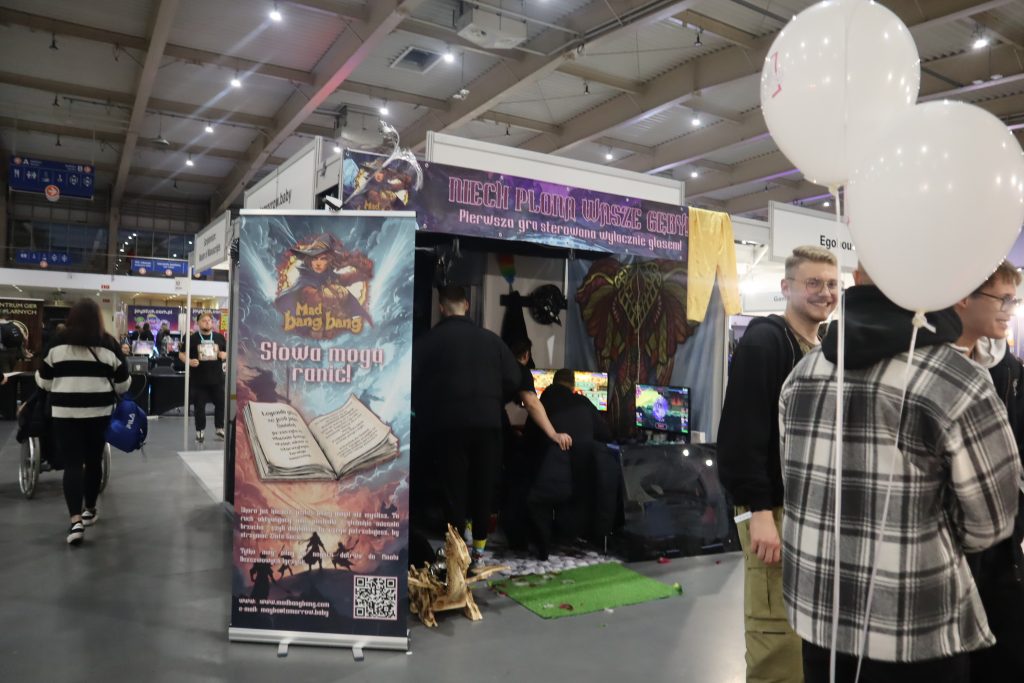
We talked to Piotr Ruszczak, one of the creators of Mad Bang Bang, about the details of this production.
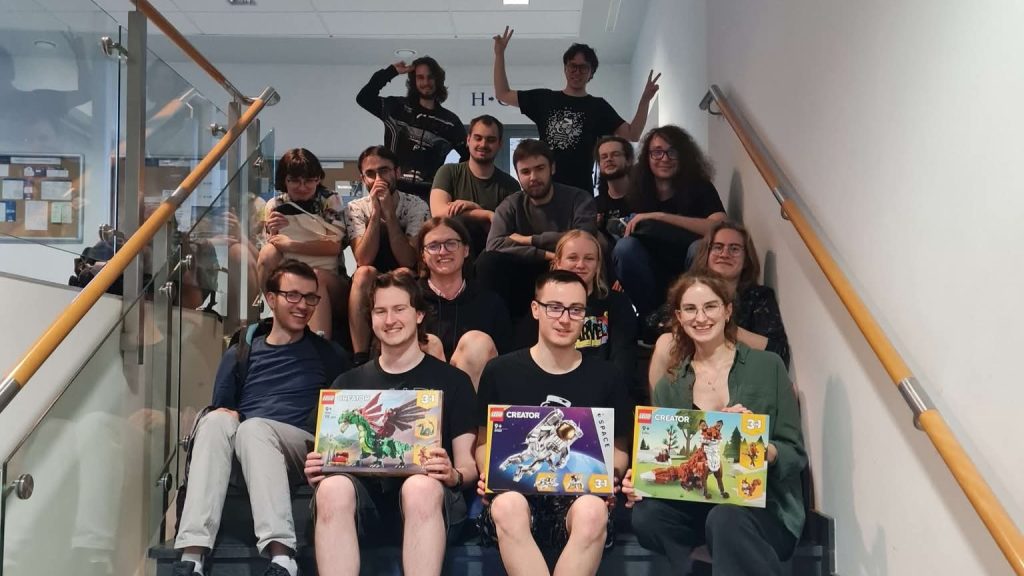
We asked Kiryl, Marek, and Jakub to reveal the secrets of their work to us.
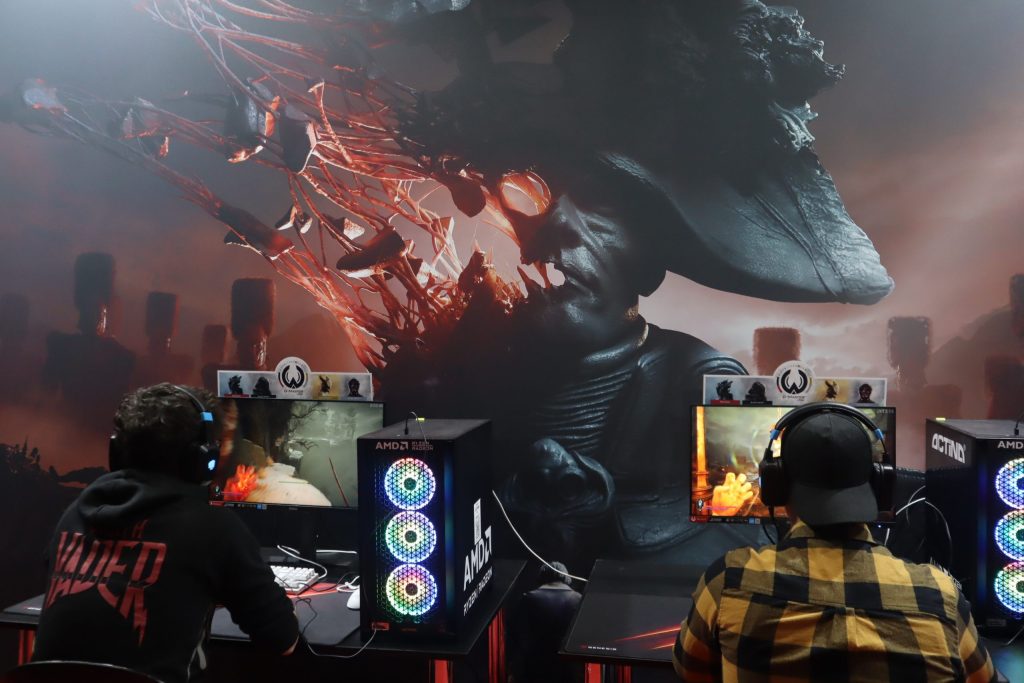
Will Valor Mortis become the hit of 2026?

We had the chance to ask Yannick Audéoud, developer behind Orbyss, some questions about the game.
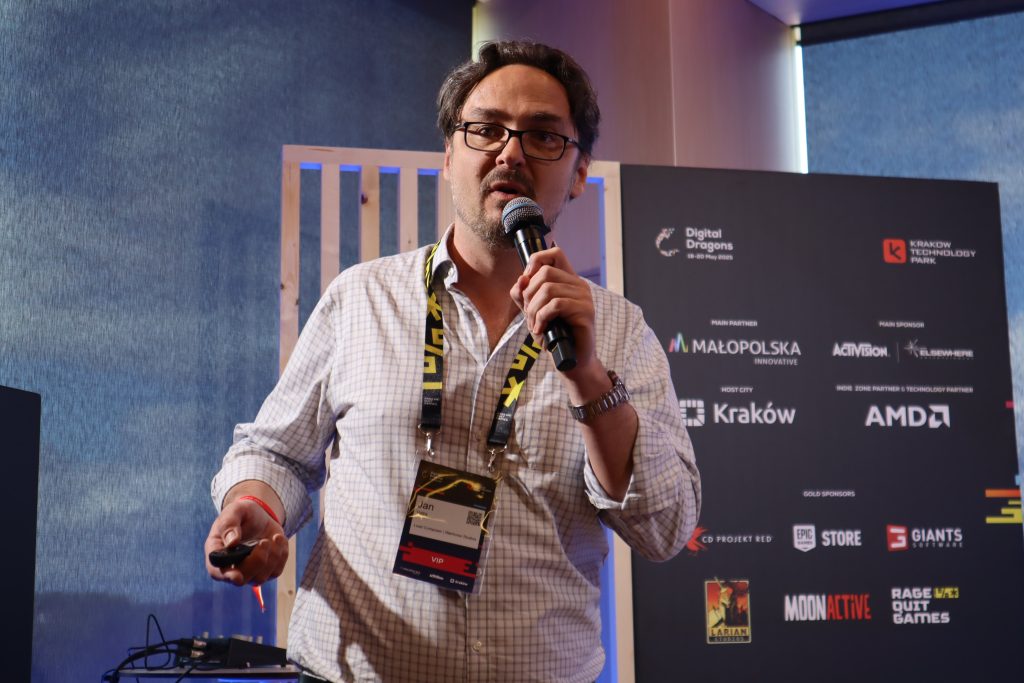
During our interview, Jan revealed the secrets of composing music for both KCD games.
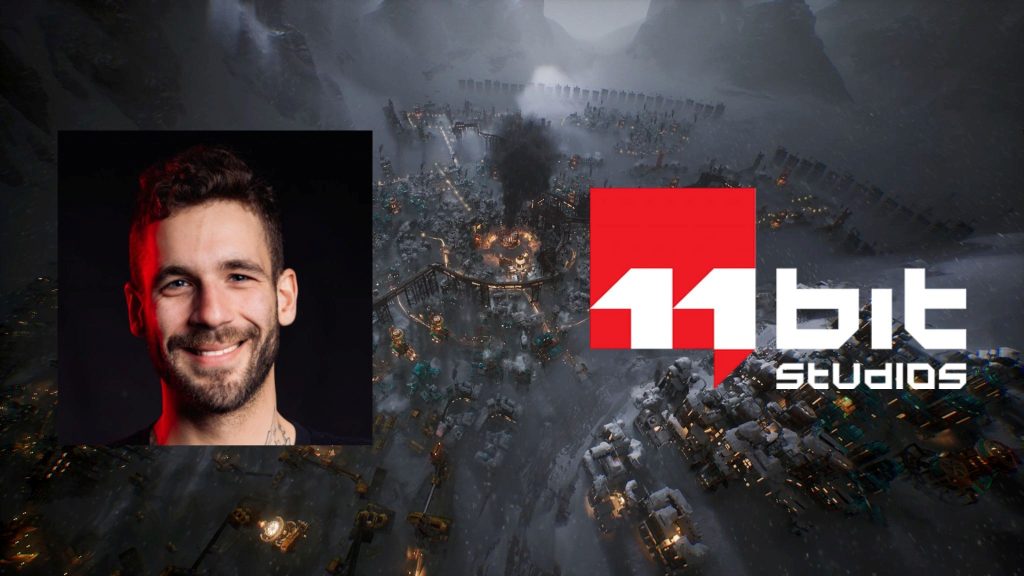
In this interview, we asked Paweł Charzyński about his experience working on Frostpunk 2 as VFX coordinator.
![[A BIG INTERVIEW] Toukana Interactive Co-Founder Zwi Zausch on the Gaming Industry](https://www.indie-games.eu/wp-content/uploads/2025/09/Dizajn-bez-naslova-2-1024x576.jpg)
Zwi Zausch provided a deep dive into the gaming industry from an indie developer's perspective.
