

If you enjoy independent indie game coverage, consider supporting Indie-Games.eu on Patreon. It helps keep the site independent.
Samantha and Kostia, a developer duo from an Australian studio, recently released their narrative-driven adventure game focused on cats, titled Copycat. We had the chance to play the game multiple times, from the early demo earlier this year to the full review now, and it’s clear that Copycat is a true indie success born out of dedication and creativity.
They met eight years ago in Germany while working their first jobs in the industry. As a creative team, they worked on various projects, including short films and a children’s book. However, their shared love of video games eventually inspired them to venture into game development with their project under the name Spoonful of Wonder.
The transition from advertising to game development wasn’t easy. While they naturally picked up new skills like programming and game writing, business tasks such as accounting and securing funding were more challenging. They started working on Copycat as a hobby, but to take it seriously, they needed financial support. Luckily, Screen Australia granted them development funding, allowing them to focus on realizing their vision.
Samantha, the creator of Copycat, spoke with us about her inspirations and motivations, giving insight into the preparation, development, and release of this cat-focused experience.


Copycat was a team effort, but the writing was primarily my domain. Dawn is witty, funny, and passionate. She’s hurt and genuinely believes that a permanent home doesn’t exist. For Dawn, it’s easier to run from a home than to be adopted and rejected. She concludes that she was never meant to be a pet but belongs in the wild, and that’s where she finds her true family.
Telling a three-part transformative narrative through the eyes of a silent protagonist required solutions that allowed the story to flow while remaining accessible and engaging. That’s when we decided to develop the nature documentary character as Dawn’s internal monologue. At the start of the story, he was knowledgeable and reliable. By the end, he had become more like The Stanley Parable, guiding players when needed and then immediately becoming their harshest critic. Writing his character was a lot of fun. Our voice actor, David Molloy, did a fantastic job bringing him to life.
Yes, we explored many cat-related works in preparation for Copycat. At the beginning of the game, Dawn explores her new home and gets into various misadventures. Inspirations included The Aristocats (Disney, 1970), The Secret Life of Pets (Universal Pictures, 2016), and the children’s book Slinky Malinki (Dodd, 1990). Later, when Dawn explores the outside world, we drew inspiration from the charm of the game Little Kitty Big City (Double Dagger Studio, 2024) and the humor of the children’s book Scallywag (Rowe, 1990). We also read A Street Cat Named Bob (Bowen, 2012) to research the bond between owner and pet, which ties into the next question.
We loved reading A Street Cat Named Bob (Bowen, 2012) and The World According to Bob (Bowen, 2015)! They truly touched our hearts. Seeing the role the pet played in saving the author’s life was incredible. The book taught me not to underestimate a cat’s intelligence and gave insight into their intimate friendship. That friendship inspired us to make Dawn and Olive as special and nuanced as Bob and James.


We had help from our talented animator, Radik Bilalov, who had a deep understanding of cat behavior. We’re lucky to have him on the team.
Growing up, my sister and I had the chance to love seven cats—all adopted from shelters. Very early on, we gave each cat a personality and a “voice”, it was fun imagining what they were thinking. We applied the same process to Dawn! She was definitely the most cynical, having had difficult experiences in previous homes. When she meets Olive, she’s a little bitter and cynical, but Olive gradually opens her heart to love. As for the second part of your question: yes, I like to think cats understand what we say, it depends on whether they’re listening.
The joy of bringing a pet home for the first time was a huge part of my childhood! All my cats came from shelters. We wanted players to walk in the paws of a newly adopted cat and experience the fear of adjusting to a new home. During development, we spoke with many pet owners to ensure gameplay was accurate and reflected diverse experiences. One of the most important scenes we worked on was the Adoption Form. We wanted to convey the responsibility of a pet owner when adopting a new animal. Feedback from our community helped shape the writing and development of the scene.


Although Copycat is a linear experience with a fixed ending, choices allow players to reflect their moral compass. It was also important that our character had agency. Dawn is in a world where she cannot control her options, but the player can guide her. This gives a sense of control while helping players empathize with the protagonist. In the end, Copycat is a powerful metaphor for the emotions we feel when we are left behind.
We want players to turn to their partner, friend, or pet and simply give them a big hug! This is an emotional game that breaks your heart and then carefully pieces it back together. We hope players finish with a sense of gratitude toward their pets. Pets are special, they keep loneliness at bay. Copycat emotionally honors the ups and downs of finding a place where you belong and what home truly means.
Copycat is currently our little wonder, and we’re putting all our effort into making it strong and healthy. But yes, we have ideas for our next project. Our dream is to continue creating narrative-driven, animal-focused games with beautiful graphics and big hearts. The next one will be underwater!

We had the opportunity to speak with Damian Czajka from MOUSE: P.I. For Hire Team.
We had the opportunity to talk with Piotr Nowakowski from Bloober Team about his work on Cronos: The New Dawn.
![[INTERVIEW] Manafinder II Is a Big Step Up – Here’s What the Developer Told Us](https://www.indie-games.eu/wp-content/uploads/2026/04/Manafinder-II-interview-300x200.jpg)
In the interview, we discussed the game’s mechanics in greater detail, what players can expect from the sequel, and the…

We had the opportunity to sit down with the brilliant minds behind Business Goose Studios: Beau Vankemenade, Sander Ambroos, and…
![[EXCLUSIVE] Like a Bloody Storm – Interview with Kazusou Oda (Coda)](https://www.indie-games.eu/wp-content/uploads/2025/12/Oda-Kazusou-Interview-300x169.jpg)
We had an opportunity to talk with Oda Kazusou, a theme song artist for JoJo's Bizarre Adventure.
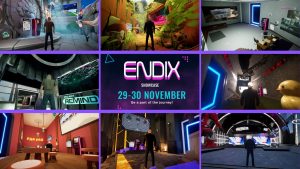
Once inside, visitors will find a fully immersive world where exhibitor booths are crafted using real in-game assets.
We talked to Tomasz Janicki about the details regarding Cult of Shadows.
We talked to Piotr Ruszczak, one of the creators of Mad Bang Bang, about the details of this production.
We asked Kiryl, Marek, and Jakub to reveal the secrets of their work to us.
Will Valor Mortis become the hit of 2026?
We had the chance to ask Yannick Audéoud, developer behind Orbyss, some questions about the game.
Maričak actively works to grow and promote the Croatian gaming industry while simultaneously fostering collaboration with the film industry.

During our interview, Jan revealed the secrets of composing music for both KCD games.

In this interview, we asked Paweł Charzyński about his experience working on Frostpunk 2 as VFX coordinator.
![[A BIG INTERVIEW] Toukana Interactive Co-Founder Zwi Zausch on the Gaming Industry](https://www.indie-games.eu/wp-content/uploads/2025/09/Dizajn-bez-naslova-2-300x169.jpg)
Zwi Zausch provided a deep dive into the gaming industry from an indie developer's perspective.
![[A BIG INTERVIEW] Deep Dive into Star Birds with Toukana Interactive’s Co-Founder](https://www.indie-games.eu/wp-content/uploads/2025/09/star-birds-300x169.jpg)
Ever wondered what it takes to build a relaxing base on an asteroid? We spoke with Zwi Zausch, who gave…
Playtonic has upgraded every aspect of the game, not just the visuals, also the core gameplay experience.

You'll mine resources, craft ship parts, and automate planetary bases with drones and cargo ships to create logistics networks.
We interviewed co-founder of Unfinished Pixel Marcos Torrecillas at Gamescom.

Frostrail centers on the Eden Engine, a steam-powered train that serves as your mobile base and lifeline in a frozen…
We had the opportunity to speak with Damian Czajka from MOUSE: P.I. For Hire Team.
We had the opportunity to talk with Piotr Nowakowski from Bloober Team about his work on Cronos: The New Dawn.
In the interview, we discussed the game’s mechanics in greater detail, what players can expect from the sequel, and the…
We had the opportunity to sit down with the brilliant minds behind Business Goose Studios: Beau Vankemenade, Sander Ambroos, and…
We had an opportunity to talk with Oda Kazusou, a theme song artist for JoJo's Bizarre Adventure.
Once inside, visitors will find a fully immersive world where exhibitor booths are crafted using real in-game assets.
We talked to Tomasz Janicki about the details regarding Cult of Shadows.
We talked to Piotr Ruszczak, one of the creators of Mad Bang Bang, about the details of this production.
We asked Kiryl, Marek, and Jakub to reveal the secrets of their work to us.
Will Valor Mortis become the hit of 2026?
We had the chance to ask Yannick Audéoud, developer behind Orbyss, some questions about the game.
Maričak actively works to grow and promote the Croatian gaming industry while simultaneously fostering collaboration with the film industry.
During our interview, Jan revealed the secrets of composing music for both KCD games.
In this interview, we asked Paweł Charzyński about his experience working on Frostpunk 2 as VFX coordinator.
Zwi Zausch provided a deep dive into the gaming industry from an indie developer's perspective.
Ever wondered what it takes to build a relaxing base on an asteroid? We spoke with Zwi Zausch, who gave…
Playtonic has upgraded every aspect of the game, not just the visuals, also the core gameplay experience.
You'll mine resources, craft ship parts, and automate planetary bases with drones and cargo ships to create logistics networks.
We interviewed co-founder of Unfinished Pixel Marcos Torrecillas at Gamescom.
Frostrail centers on the Eden Engine, a steam-powered train that serves as your mobile base and lifeline in a frozen…
