
If you enjoy independent indie game coverage, consider supporting Indie-Games.eu on Patreon. It helps keep the site independent.
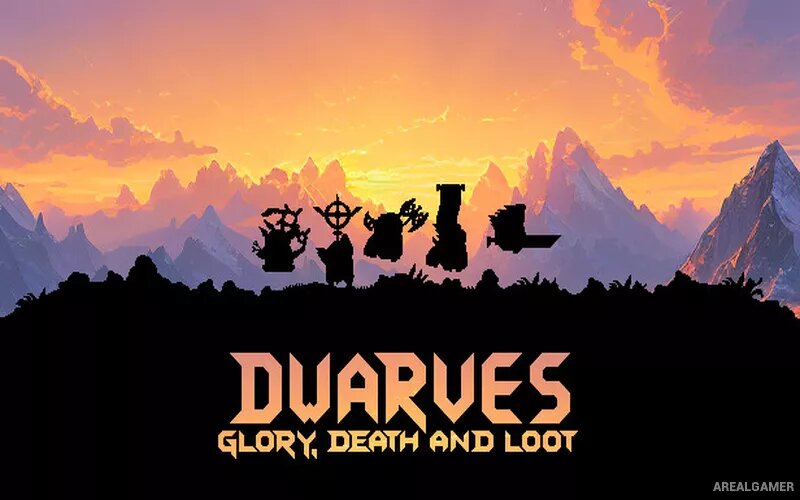
Dwarves: Glory, Death and Loot is a game you’ve very likely heard of or stumbled upon. It stands out for its interesting blend: auto-combat combines RPG progression with the unpredictability of expeditions featuring roguelike elements, all while you gather your clan of dwarves to fight hordes of orcs.
It was developed by solo developer ichbinhamma, who published the game on Steam last year, specifically on August 17th. Since then, it has attracted a considerable number of players, and the developer himself has shared a wealth of information about the game on various platforms, so we decided to talk to him about how the game became successful.
Your dwarves initially start with basic gear and limited combat skills. Each time you defeat enemies, you gain experience, earn gold, and improve their equipment, thus developing their combat abilities. Through further training and by recruiting new warriors to your ranks, you can achieve victory.
If you’re interested in playing this game, you can find it on Steam, and be sure to follow this brilliant developer on X and YouTube.
That was highly unexpected. I never even thought I could put a game on Steam when I came up with the concept for it. Up until then, I had only made mobile games as a hobby, starting in 2016/2017, which had maybe 100 downloads. When some of my concept art posts got popular on Reddit, I decided to give Steam a shot. Now, looking back, it feels completely surreal to write about such large numbers when discussing these statistics.
A content creator on Bilibili (the Chinese version of YouTube) somehow found my game’s demo on Steam and posted a video. In a very short time, that video received over 500,000 views. After that, several Chinese publishers got in touch with me. It was extremely helpful to see the publisher’s marketing efforts pay off in such a way. I think this is a special case for China, as access to different channels like X, Discord, Reddit, etc., is limited. So, they helped create content to promote my game on Bilibili and also handled ad creation and Steam store presence.
I suppose it’s mainly because there isn’t/wasn’t anything quite comparable. My idea was to transform the mechanics of 3D auto-chess (Dota Auto-Chess, Teamfight Tactics) and apply it to a 2D/sidescrolling environment.
Things I could actively influence: Reddit. The biggest traction, though, was gained through streamers. SplatterCat found my game early via Reddit and made a video, and later the video from the Bilibili creator came along.
I think it’s that “just one more turn” feeling that players get in the game. As some streamers have said: “This is doing something to my brain and I just want to continue.”
They really love finding and exploiting bugs!
That for your game to become popular, Steam is 1000 times better than mobile stores. It’s crucial to share your game early and get feedback from players. I released a web version of the game that was playable after about 4 months of development.
I usually update the game every 2–4 weeks. A lot of things have been changed and refined, although the core gameplay loop has remained the same. I hope for a full release later this year or early next year.
Yes! The community has had a big impact on many changes. I would highlight a complete UI overhaul and separating the single deck of cards I originally had into 3 different ones. Also, players pointed out many minor Quality of Life improvements, and after implementing them, I could clearly see and feel how the game improved! As a developer, it’s often hard to notice how a small change can significantly enhance the game’s quality.
I’ve already revealed the biggest contributor to my success: SplatterCat. However, all the major streamers who covered the game with a video (i.e., 10k+ views) found the game on their own, without my reaching out or any partnership.
When I look back, the game development mostly went quite smoothly. The only minor regret I have is the timing of the Steam Next Fest. I should have moved it closer to the game’s release to have more time to publish and refine the demo version of the game.
My main piece of advice would be to test your game ideas early and show them to an audience. Ideally, you have a playable prototype (even better if it’s browser-based) ready after a short development time so you can start gathering feedback early on.
I will try to explore different things, but I already have a clearer idea for a new game that would be in the same genre with a different twist.
I still have my 40-hour job, so solo development for me is like watching TV after work. For now, I’m happy solo; I don’t have to wait for or rely on anyone else but myself.
So, the plan is to work full-time as a developer after writing my doctoral thesis (which is related to my current job). I taught myself gamedev, but I do have 15 years of programming and an academic background.

We had the opportunity to sit down with the brilliant minds behind Business Goose Studios: Beau Vankemenade, Sander Ambroos, and…
![[EXCLUSIVE] Like a Bloody Storm – Interview with Kazusou Oda (Coda)](https://www.indie-games.eu/wp-content/uploads/2025/12/Oda-Kazusou-Interview-300x169.jpg)
We had an opportunity to talk with Oda Kazusou, a theme song artist for JoJo's Bizarre Adventure.
Once inside, visitors will find a fully immersive world where exhibitor booths are crafted using real in-game assets.
We talked to Tomasz Janicki about the details regarding Cult of Shadows.

We talked to Piotr Ruszczak, one of the creators of Mad Bang Bang, about the details of this production.
We asked Kiryl, Marek, and Jakub to reveal the secrets of their work to us.
Will Valor Mortis become the hit of 2026?
We had the chance to ask Yannick Audéoud, developer behind Orbyss, some questions about the game.

Maričak actively works to grow and promote the Croatian gaming industry while simultaneously fostering collaboration with the film industry.

During our interview, Jan revealed the secrets of composing music for both KCD games.

In this interview, we asked Paweł Charzyński about his experience working on Frostpunk 2 as VFX coordinator.
![[A BIG INTERVIEW] Toukana Interactive Co-Founder Zwi Zausch on the Gaming Industry](https://www.indie-games.eu/wp-content/uploads/2025/09/Dizajn-bez-naslova-2-300x169.jpg)
Zwi Zausch provided a deep dive into the gaming industry from an indie developer's perspective.
![[A BIG INTERVIEW] Deep Dive into Star Birds with Toukana Interactive’s Co-Founder](https://www.indie-games.eu/wp-content/uploads/2025/09/star-birds-300x169.jpg)
Ever wondered what it takes to build a relaxing base on an asteroid? We spoke with Zwi Zausch, who gave…
Playtonic has upgraded every aspect of the game, not just the visuals, also the core gameplay experience.

You'll mine resources, craft ship parts, and automate planetary bases with drones and cargo ships to create logistics networks.
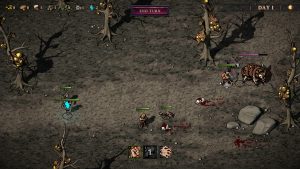
We interviewed co-founder of Unfinished Pixel Marcos Torrecillas at Gamescom.

Frostrail centers on the Eden Engine, a steam-powered train that serves as your mobile base and lifeline in a frozen…
We took a deeper dive into the game's inspiration, mechanics, and Serenity Forge's role as both a publisher and developer.
Directed and designed by Pietro Polsinelli, the game combines historical inspiration with a mix of roguelike strategy.
We had the chance to chat with Daphnée Portheault, developer at Tsukumogami Software behind Dice n' Goblins.
We had the opportunity to sit down with the brilliant minds behind Business Goose Studios: Beau Vankemenade, Sander Ambroos, and…
We had an opportunity to talk with Oda Kazusou, a theme song artist for JoJo's Bizarre Adventure.
Once inside, visitors will find a fully immersive world where exhibitor booths are crafted using real in-game assets.
We talked to Tomasz Janicki about the details regarding Cult of Shadows.
We talked to Piotr Ruszczak, one of the creators of Mad Bang Bang, about the details of this production.
We asked Kiryl, Marek, and Jakub to reveal the secrets of their work to us.
Will Valor Mortis become the hit of 2026?
We had the chance to ask Yannick Audéoud, developer behind Orbyss, some questions about the game.
Maričak actively works to grow and promote the Croatian gaming industry while simultaneously fostering collaboration with the film industry.
During our interview, Jan revealed the secrets of composing music for both KCD games.
In this interview, we asked Paweł Charzyński about his experience working on Frostpunk 2 as VFX coordinator.
Zwi Zausch provided a deep dive into the gaming industry from an indie developer's perspective.
Ever wondered what it takes to build a relaxing base on an asteroid? We spoke with Zwi Zausch, who gave…
Playtonic has upgraded every aspect of the game, not just the visuals, also the core gameplay experience.
You'll mine resources, craft ship parts, and automate planetary bases with drones and cargo ships to create logistics networks.
We interviewed co-founder of Unfinished Pixel Marcos Torrecillas at Gamescom.
Frostrail centers on the Eden Engine, a steam-powered train that serves as your mobile base and lifeline in a frozen…
We took a deeper dive into the game's inspiration, mechanics, and Serenity Forge's role as both a publisher and developer.
Directed and designed by Pietro Polsinelli, the game combines historical inspiration with a mix of roguelike strategy.
We had the chance to chat with Daphnée Portheault, developer at Tsukumogami Software behind Dice n' Goblins.
