
![[Q&A] How Early Access Shaped the Deck-Building Game Crush the Industry](https://www.indie-games.eu/wp-content/uploads/2025/02/ss_cde2a83a7a5d477c60829116f69e583d28a17f15.jpg)
If you enjoy independent indie game coverage, consider supporting Indie-Games.eu on Patreon. It helps keep the site independent.
Imagine you’ve just landed your dream job at the world’s biggest gaming studio, only to quickly find yourself in a labyrinth of toxic colleagues, endless meetings, and creative burnout. That is the exact premise of Crush the Industry, a unique deck-building game that challenges you to survive in the corporate gaming world. The game is being developed by Travis and Kara, a couple in love with retro games, and is soon to leave Early Access on Steam.
In Crush the Industry, you take on the role of a new employee at a massive gaming studio. Your goal is to climb the corporate ladder while battling workplace challenges, trying to maintain your own mental stability, and building a deck of skills to overcome obstacles. The game offers multiple playable characters, over 200 skills and talents, and a dynamic schedule that ensures no two careers look the same.
Progression in the game is challenging, with nine difficulty levels and the notorious “9 Circles of Corporate Hell” to conquer. As you reach milestones, you unlock new content, including skills, talents, and characters. The latest update brings 15 new exclusive skills for characters, a shop reroll option, discounted items, and four new talents. MacOS support has also been added, along with improvements to animations, enemy behavior, and bug fixes.
We asked Travis and Kara to share their thoughts on the Early Access process, whether it’s worth it, how it helps, what benefits it brings, and what developers can expect from this publishing model.
Early Access has increased our confidence leading up to the full release because we could better understand player expectations. The feedback and the extra time to polish the game have been extremely useful.
Yes, we are satisfied. Constructive negative reviews helped us improve the game, and we never expected it to appeal to everyone (especially due to the satire on office culture and slightly crude humor). We are happy to have over 90% positive reviews on Steam and that the majority of players share positive experiences.
We expanded the “rolling health” mechanic (known from Earthbound) and combined it with card battler gameplay. I think this is what makes our game special and different in the roguelike deckbuilder genre. Initially, we were afraid it would feel too gimmicky, but it turned out much better than we expected.
The players who took the time to provide us with detailed feedback were invaluable. Many of the things they suggested we wouldn’t have thought of ourselves.
An enemy most indie devs can probably relate to: the Game Designer Mole that tunnels too deep on new ideas. 🐿️#screenshotsaturday #gamedeveloper #indiedev pic.twitter.com/kqqZHlBjmP
— Travis | Crush the Industry dev (@CognogginGames) February 23, 2025
We had 10 major updates and about 20 smaller, unannounced updates. At some points, it really did become repetitive, and burnout was real. Localization, in particular, was very challenging to handle.
The most important lesson was the importance of an early marketing strategy. We learned it is better to reduce the content scope and focus solely on what makes the game fun. We had to cut some overly ambitious features, like a mini-game and a casino node. Learning to avoid the pitfalls of feature creep was just as important as speeding up the process of creating code and visuals. If we could repeat the process, we would start marketing earlier and wait to release the first demo until it was more polished. We would also re-evaluate some of the full-screen effects and perhaps be more flexible in maintaining the retro pixel art resolution.
Marketing was and remains crucial to our success. Steam Next Fest and early YouTube coverage of the game gave us solid initial momentum. Currently, our sales increase during discounts and seasonal sales. I think many players are waiting for the game to exit Early Access, and we are very close to that now. We currently have around 20,000 wishlists and plan to increase that number in the coming months through marketing campaigns before the full release.



We had the opportunity to speak with Damian Czajka from MOUSE: P.I. For Hire Team.
We had the opportunity to talk with Piotr Nowakowski from Bloober Team about his work on Cronos: The New Dawn.
![[INTERVIEW] Manafinder II Is a Big Step Up – Here’s What the Developer Told Us](https://www.indie-games.eu/wp-content/uploads/2026/04/Manafinder-II-interview-300x200.jpg)
In the interview, we discussed the game’s mechanics in greater detail, what players can expect from the sequel, and the…

We had the opportunity to sit down with the brilliant minds behind Business Goose Studios: Beau Vankemenade, Sander Ambroos, and…
![[EXCLUSIVE] Like a Bloody Storm – Interview with Kazusou Oda (Coda)](https://www.indie-games.eu/wp-content/uploads/2025/12/Oda-Kazusou-Interview-300x169.jpg)
We had an opportunity to talk with Oda Kazusou, a theme song artist for JoJo's Bizarre Adventure.
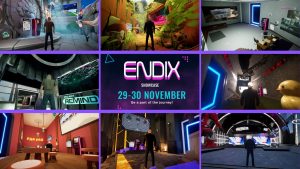
Once inside, visitors will find a fully immersive world where exhibitor booths are crafted using real in-game assets.
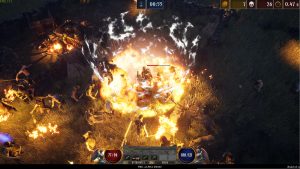
We talked to Tomasz Janicki about the details regarding Cult of Shadows.
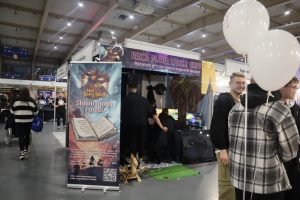
We talked to Piotr Ruszczak, one of the creators of Mad Bang Bang, about the details of this production.
We asked Kiryl, Marek, and Jakub to reveal the secrets of their work to us.
Will Valor Mortis become the hit of 2026?
We had the chance to ask Yannick Audéoud, developer behind Orbyss, some questions about the game.

Maričak actively works to grow and promote the Croatian gaming industry while simultaneously fostering collaboration with the film industry.
During our interview, Jan revealed the secrets of composing music for both KCD games.

In this interview, we asked Paweł Charzyński about his experience working on Frostpunk 2 as VFX coordinator.
![[A BIG INTERVIEW] Toukana Interactive Co-Founder Zwi Zausch on the Gaming Industry](https://www.indie-games.eu/wp-content/uploads/2025/09/Dizajn-bez-naslova-2-300x169.jpg)
Zwi Zausch provided a deep dive into the gaming industry from an indie developer's perspective.
![[A BIG INTERVIEW] Deep Dive into Star Birds with Toukana Interactive’s Co-Founder](https://www.indie-games.eu/wp-content/uploads/2025/09/star-birds-300x169.jpg)
Ever wondered what it takes to build a relaxing base on an asteroid? We spoke with Zwi Zausch, who gave…
Playtonic has upgraded every aspect of the game, not just the visuals, also the core gameplay experience.

You'll mine resources, craft ship parts, and automate planetary bases with drones and cargo ships to create logistics networks.
We interviewed co-founder of Unfinished Pixel Marcos Torrecillas at Gamescom.

Frostrail centers on the Eden Engine, a steam-powered train that serves as your mobile base and lifeline in a frozen…
We had the opportunity to speak with Damian Czajka from MOUSE: P.I. For Hire Team.
We had the opportunity to talk with Piotr Nowakowski from Bloober Team about his work on Cronos: The New Dawn.
In the interview, we discussed the game’s mechanics in greater detail, what players can expect from the sequel, and the…
We had the opportunity to sit down with the brilliant minds behind Business Goose Studios: Beau Vankemenade, Sander Ambroos, and…
We had an opportunity to talk with Oda Kazusou, a theme song artist for JoJo's Bizarre Adventure.
Once inside, visitors will find a fully immersive world where exhibitor booths are crafted using real in-game assets.
We talked to Tomasz Janicki about the details regarding Cult of Shadows.
We talked to Piotr Ruszczak, one of the creators of Mad Bang Bang, about the details of this production.
We asked Kiryl, Marek, and Jakub to reveal the secrets of their work to us.
Will Valor Mortis become the hit of 2026?
We had the chance to ask Yannick Audéoud, developer behind Orbyss, some questions about the game.
Maričak actively works to grow and promote the Croatian gaming industry while simultaneously fostering collaboration with the film industry.
During our interview, Jan revealed the secrets of composing music for both KCD games.
In this interview, we asked Paweł Charzyński about his experience working on Frostpunk 2 as VFX coordinator.
Zwi Zausch provided a deep dive into the gaming industry from an indie developer's perspective.
Ever wondered what it takes to build a relaxing base on an asteroid? We spoke with Zwi Zausch, who gave…
Playtonic has upgraded every aspect of the game, not just the visuals, also the core gameplay experience.
You'll mine resources, craft ship parts, and automate planetary bases with drones and cargo ships to create logistics networks.
We interviewed co-founder of Unfinished Pixel Marcos Torrecillas at Gamescom.
Frostrail centers on the Eden Engine, a steam-powered train that serves as your mobile base and lifeline in a frozen…
