
If you enjoy independent indie game coverage, consider supporting Indie-Games.eu on Patreon. It helps keep the site independent.
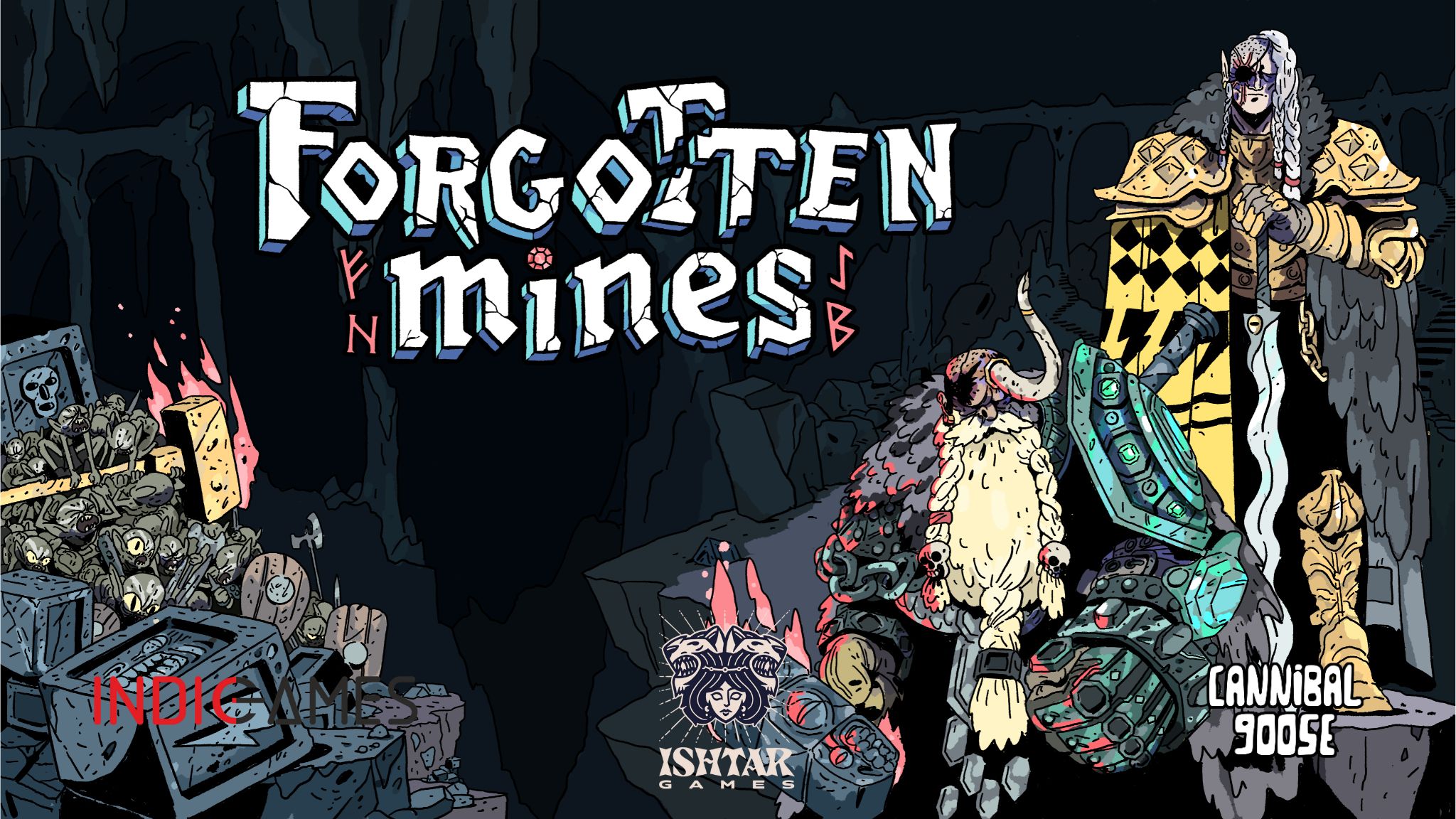
If you crave fantasy and miss the iconic dwarves, elves, and men of the Lord of the Rings franchise, then Forgotten Mines might be just what you need. Not only is the gameplay exciting, but the game’s pixel art is also visually appealing. Recently featured during the Steam Next Fest, this tactical roguelite RPG promises a thrilling adventure as you lead a team of dwarves to reclaim their lost mines.
In Forgotten Mines, a horde of goblins, demons, and orcs has overrun your ancient mines. You and your dwarven fellowship must fight through procedurally generated rooms, combining the fast-paced roguelite gameplay with the strategic depth of a tactical RPG. Furthermore, you can customize your team with new armor and weapons to maximize your chances of success. Despite its small scope, the game offers great depth, replayability, and challenges. Every decision matters, as one wrong step can lead to defeat and force you to restart your quest.
We had the pleasure of interviewing the solo developer from Brazil behind Cannibal Goose, whose game is available on Steam. You can also try out the demo version for yourself. Additionally, the developer is active on Discord, which you can join here.
I started developing Forgotten Mines in June/July of 2022. At the time, I was playing countless hours of FTL and Into the Breach and was in a sort of personal strategic roguelike fever. One day, I was at my old job, in the office, I grabbed a few sheets of paper from the printer, and started drawing. I was determined to create “my own Into the Breach.” I started outlining the scope of the game, and by that point, I had already made enough demos to understand the issues with an idea that is too unrealistic, too grandiose, and will never be finished.
I started with a humble-sized but achievable idea: a strategic roguelike, where you control three units and pass through four different areas to eventually defeat a final enemy. The only thing I wanted to have above average was the number of different equipment the game could offer the player (at this point, the game has over 320; at the time of the first demo, the game had over 100).
I had never made a commercial game before, but the challenge of doing so served as fuel to create this new demo. I decided to use dwarves as the protagonists for the story I wanted to tell, and initially, the game would only have dwarves (later, with development, other species were added). Dwarves fit well with the descent narrative I wanted. I had seen many games where the journey was more like an ascent, literally or metaphorically. Characters climb a tower or even grow morally throughout the journey. I wanted the opposite. I wanted characters who, the further they go, the more they descend, in every sense. I wanted a one-way journey, win or lose, the characters would never return.
After 6 months, in December 2022, I finished the demo and released the game on Steam for the first time. I received much more feedback than I expected, and then some publishers appeared with meetings, emails, proposals, and plans. The feeling of debut anxiety was somewhat relieved after partnering with a publisher. All their experience and the team’s support drastically changed the way I looked at and designed the game (I believe for the better).
When I tell others here that I’m a “game dev,” people usually don’t believe it. Some of them, perhaps the slightly older ones, even express a certain indignation like: “Okay, but what’s your real job?” I have no idea if things are like this in every corner of the world, but here I believe it’s largely because everything related to creating electronic games is still part of the external cultural imagination.
We are passionate players, we play like thirsty professionals in a life-or-death marathon, and, in fact, we have been playing for decades. But I spent most of my life without games localized into Portuguese, for example. Games have only been localized here for about ten years; most of us grew up with games in English, or even Japanese. I think this explains how, in the Brazilian popular imagination, electronic game development is quite unbelievable.
However, things seem to be changing significantly in the last decade. There are several successful games with incredible quality that have been created here. We have many wonderful pixel-art artists, and studios and associations are starting to appear more and more. I feel that we could be an important center for game creation in a global context, but for any flower to appear, it needs to be watered.

Honestly, I don’t know. All of this is still very new to me; this is my first Next Fest. In these early days, I am tracking some numbers and I am quite excited. The flow of people accessing the game is truly impressive.
Can you share some numbers with us? How many wishlists does the game have? Are you satisfied with the direction your game is going?
I don’t know if I can reveal internal information of this kind, due to contractual reasons. But, giving a slightly more abstract answer, I would say that we are in an average position in the 2024 indie context. The market is becoming increasingly demanding, and I feel that it is getting harder and harder to stand out. The indie aesthetic has become popular and is increasingly present in games with larger budgets.
Things are blending together, and it’s becoming difficult to distinguish what is an indie game and what is an AA game, for example. The game’s direction has changed somewhat with development and contact with the publisher. But I believe it has improved. The story I wanted to tell is the same, but the game has improved a lot. It has more content, better gameplay, and, generally speaking, it is more coherent. I’m glad I learned so much and that the game took a better direction than it had at the beginning.
Of course, there are many other things, but that’s the one. Miura-san’s work inspired me to tell my own stories of moral deviance, gore, and revenge. Not to mention the nihilistic and platonic points that this work carries in its subtext. I wanted to create an amalgamation of bloody stories, to tell a tale of how you must lose yourself in the abyss to maybe reclaim what you once had.
I wanted to tell a story of moral decadence, revenge, and political conquest. There is no room for horizontal exploration in a story like this. Things are vertical and only go in one direction: down. Dwarves are perfect for this. Beings of the underground, territorial, and stubborn enough to want to wage a centuries-long war seeking revenge. Perfect for telling the story of what is lost in that process.
In Forgotten Mines, Dorvgrad was the capital of the dwarven kingdom. Classic dwarven greed led them to dig too deep, until they reached the physical boundary of non-Euclidean space. The problem is they reached the gates of the abyss where all the demons and their creator live. This creator is also a being, born from the repressed evil desires of the inhabitants of the material plane. In short, it is pure madness.


Forgotten Mines already features other playable species. You unlock kobolds after beating the game for the first time. And the undead are a situational species, but you can play as them too. I think adding more content is always on my mind, and new species, classes, amulets, enemies, and items are part of that. I still have a few things I need to hang on this Christmas tree.
Actually, until December of last year, the user interface was quite bad. I was pretty lost in that aspect, and in the end I got advice from more experienced game designers and UI designers at Ishtar Games. If it weren’t for that, I believe the question would be the opposite: “It’s probably the worst I’ve ever seen.” But simplicity has always been an important parameter in the UI concept, especially given the limitations of one person making the game.
I hate tutorials. And, to be honest, I don’t like the direction the game’s introduction took. I hate this pile of text. I wanted players to learn how to play on their own, by trying things out or failing. I wanted something closer to Animal Well, more of a “here you are, you test things until you learn.” But most of the feedback didn’t go in that direction. In the end, I went with it because the game is made for the players.
I created things with the idea of time-based balance. In other words, a class that starts out strong doesn’t get many good and interesting things over time, while a class that starts out weak gets more interesting perk possibilities that can make it very strong in the late game.
Of course, in the middle of all that is the blacksmith, who is currently the strongest class in the game. Some classes are easier to play, the player just needs to hit the enemy. Others have interesting combo opportunities that may go unnoticed by less attentive players. The truth is that classes considered weak, like archers, have potential for very fun combinations and potentially brutal late-game power.


The method for ensuring balance and a good feeling when playing a class is thorough testing. I tested and tested. There’s a test I like to do, a kind of dopamine injection. If a class doesn’t have a moment during the game in which the player feels a rush of dopamine after a well-executed move, that class is not ready yet. Of course, some classes are more support-oriented, but even they have the opportunity to make great plays and carry certain battles if played correctly.
Trust me, the game would be boring without it. The turn limit gives the player the necessary anxiety to keep moving and not wait for enemies to come to them. The player attacks, the enemies defend. They win if you do nothing, if nothing changes. The turn limit reflects that, the discomfort of those who seek change. If time passes and nothing changes, the conservatives win.
The idea of powerful reinforcements is to educate the player after a few runs so they can play the game quickly and precisely. They’ll understand that they can’t wait and that they can’t compete with the reinforcements, at least not at first. Over time, players will discover that they can do everything, even destroy reinforcements and collect the extra XP they offer. In fact, there are undead enemies exclusive to reinforcement waves, if the player wants to complete the compendium, they’ll have to learn to face enemies after the 8th turn.
Amulets and classes can be purchased with gems. Amulets have an important role in creating possible combinations with classes, since the player chooses their lineup of classes and amulets before entering the game. There are certain amulets and combinations that make some classes more viable (or even overpowered). In that sense, gems are perhaps the most important currency in the game.
And no, they’re not hard to obtain. Maybe at first, yes, but over time you’ll realize there are ways to increase the chance of blue rocks appearing and the amount of gems they can drop. At the end of each area, the player receives a certain number of gems as a reward, and that amount increases as they progress to other areas.
In other words, losing the game in the first or second area isn’t very good for gem farming. Descent Mode also plays an important role for gem hunters. At the end of each room, you earn a number of gems equal to your descent level, meaning you can collect up to 20 extra gems per room with the maximum descent level.


Honestly, I don’t guarantee any of that. But sometimes I try. Generally, enemies are similar, but small differences in behavior, stats, and skill sets help make those differences feel more real. A player feels a big change when facing an enemy with Movement 1 and then the same type with Movement 2. That’s just one difference, right? But it completely changes how the player approaches that enemy.
The second generation of Pokémon, specifically Pokémon Silver. That is definitely the game I’ve played the most in my life. I still play it today. I really value the aesthetics and gameplay the Game Boy provided. I truly believe it’s the best console humanity has ever made.
Players can expect a lot of difficulty and a greater reward for meta-progression than usual. Honestly, at this point, I believe it’s not possible to beat the game with Descent Mode at maximum. It’s brutal.
Everything was a huge challenge. At this point, at the very end of development, I feel like I had a kind of two-year pregnancy, very exhausting. But I think today I can say my biggest challenge was translating my ideas into UX. I’m also not really a competent visual artist, I’d say, so I was constantly trying to keep things simple and modest. In any case, more than ever, I feel that game development is truly a marathon. Whenever possible, it’s important to seek and accept help; otherwise, the marathon runner probably won’t reach the finish line.
I hope they feel the sadness and catharsis it brings. Sadness for the characters who helped them reach their goal. And of course, I hope players will be able to enjoy a lot of the content and conquer the mines in every possible way, including with the Kobolds. They deserve a home, after all.
I have ideas that haven’t been implemented in the game yet. Classes, amulets, and equipment are always on my mind. I’ll try to combine things and add additional content in the near future. I’m also thinking a lot about a possible alternative mode in a future update, but the ideas are still very embryonic, and to be completely honest, everything will depend on feedback and public reception. Public interest is an important driver for sustaining the project. I hope players have fun and support Forgotten Mines so the game can have a long life and reach consoles as well.

We had the opportunity to speak with Damian Czajka from MOUSE: P.I. For Hire Team.
We had the opportunity to talk with Piotr Nowakowski from Bloober Team about his work on Cronos: The New Dawn.
![[INTERVIEW] Manafinder II Is a Big Step Up – Here’s What the Developer Told Us](https://www.indie-games.eu/wp-content/uploads/2026/04/Manafinder-II-interview-300x200.jpg)
In the interview, we discussed the game’s mechanics in greater detail, what players can expect from the sequel, and the…

We had the opportunity to sit down with the brilliant minds behind Business Goose Studios: Beau Vankemenade, Sander Ambroos, and…
![[EXCLUSIVE] Like a Bloody Storm – Interview with Kazusou Oda (Coda)](https://www.indie-games.eu/wp-content/uploads/2025/12/Oda-Kazusou-Interview-300x169.jpg)
We had an opportunity to talk with Oda Kazusou, a theme song artist for JoJo's Bizarre Adventure.
Once inside, visitors will find a fully immersive world where exhibitor booths are crafted using real in-game assets.
We talked to Tomasz Janicki about the details regarding Cult of Shadows.
We talked to Piotr Ruszczak, one of the creators of Mad Bang Bang, about the details of this production.
We asked Kiryl, Marek, and Jakub to reveal the secrets of their work to us.
Will Valor Mortis become the hit of 2026?
We had the chance to ask Yannick Audéoud, developer behind Orbyss, some questions about the game.
Maričak actively works to grow and promote the Croatian gaming industry while simultaneously fostering collaboration with the film industry.
During our interview, Jan revealed the secrets of composing music for both KCD games.

In this interview, we asked Paweł Charzyński about his experience working on Frostpunk 2 as VFX coordinator.
![[A BIG INTERVIEW] Toukana Interactive Co-Founder Zwi Zausch on the Gaming Industry](https://www.indie-games.eu/wp-content/uploads/2025/09/Dizajn-bez-naslova-2-300x169.jpg)
Zwi Zausch provided a deep dive into the gaming industry from an indie developer's perspective.
![[A BIG INTERVIEW] Deep Dive into Star Birds with Toukana Interactive’s Co-Founder](https://www.indie-games.eu/wp-content/uploads/2025/09/star-birds-300x169.jpg)
Ever wondered what it takes to build a relaxing base on an asteroid? We spoke with Zwi Zausch, who gave…
Playtonic has upgraded every aspect of the game, not just the visuals, also the core gameplay experience.

You'll mine resources, craft ship parts, and automate planetary bases with drones and cargo ships to create logistics networks.
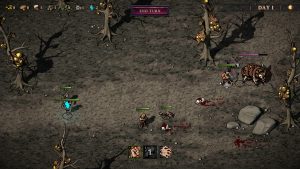
We interviewed co-founder of Unfinished Pixel Marcos Torrecillas at Gamescom.
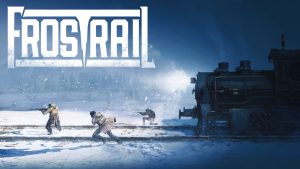
Frostrail centers on the Eden Engine, a steam-powered train that serves as your mobile base and lifeline in a frozen…
We had the opportunity to speak with Damian Czajka from MOUSE: P.I. For Hire Team.
We had the opportunity to talk with Piotr Nowakowski from Bloober Team about his work on Cronos: The New Dawn.
In the interview, we discussed the game’s mechanics in greater detail, what players can expect from the sequel, and the…
We had the opportunity to sit down with the brilliant minds behind Business Goose Studios: Beau Vankemenade, Sander Ambroos, and…
We had an opportunity to talk with Oda Kazusou, a theme song artist for JoJo's Bizarre Adventure.
Once inside, visitors will find a fully immersive world where exhibitor booths are crafted using real in-game assets.
We talked to Tomasz Janicki about the details regarding Cult of Shadows.
We talked to Piotr Ruszczak, one of the creators of Mad Bang Bang, about the details of this production.
We asked Kiryl, Marek, and Jakub to reveal the secrets of their work to us.
Will Valor Mortis become the hit of 2026?
We had the chance to ask Yannick Audéoud, developer behind Orbyss, some questions about the game.
Maričak actively works to grow and promote the Croatian gaming industry while simultaneously fostering collaboration with the film industry.
During our interview, Jan revealed the secrets of composing music for both KCD games.
In this interview, we asked Paweł Charzyński about his experience working on Frostpunk 2 as VFX coordinator.
Zwi Zausch provided a deep dive into the gaming industry from an indie developer's perspective.
Ever wondered what it takes to build a relaxing base on an asteroid? We spoke with Zwi Zausch, who gave…
Playtonic has upgraded every aspect of the game, not just the visuals, also the core gameplay experience.
You'll mine resources, craft ship parts, and automate planetary bases with drones and cargo ships to create logistics networks.
We interviewed co-founder of Unfinished Pixel Marcos Torrecillas at Gamescom.
Frostrail centers on the Eden Engine, a steam-powered train that serves as your mobile base and lifeline in a frozen…
