

If you enjoy independent indie game coverage, consider supporting Indie-Games.eu on Patreon. It helps keep the site independent.
The latest controversy began with a viral screenshot shared by the account DelusionPosting, which originally came from a tweet posted back in 2023. The image claimed that “PlayStation’s best three franchises have LGBTQ leads,” and showed three characters as examples: Kratos from God of War, Ellie from The Last of Us Part II, and Aloy from Horizon Forbidden West. While Ellie and Aloy are canonically part of same-sex relationships, the inclusion of Kratos quickly sparked backlash.
The image spread fast, but the moment that truly ignited the debate came on January 19, 2026, when @FiadhBaikal quote-posted it with a blunt response pointing out that Kratos has a wife and a child, and that earlier games openly showed him sleeping with women. That post exploded, pulling in tens of thousands of likes, hundreds of reposts, and well over a million views in just a few days.
As the discussion grew, @FiadhBaikal followed up by addressing claims that Kratos might be bisexual. She argued that appreciating beauty or coming from ancient Greek culture does not equal having relationships with men, and pointed out that across the entire series there is no scene, story beat, or official statement showing Kratos being involved with another man. While Greek history is often brought up in these arguments, she stressed that there is still no canon example of Kratos acting on anything outside heterosexual relationships.
Looking at the games themselves, the record is clear. Throughout the original Greek-era titles, Kratos is shown engaging in multiple sexual encounters with women, including extended scenes in several mainline entries. His story is built around two marriages, first to Lysandra and later to Faye, and both relationships are central to his character arc. The death of his first family defines his fall, while the loss of his second wife drives the emotional core of the Norse saga.
One commonly cited moment comes from a 2019 tweet by original director David Jaffe, where he jokingly said Kratos was bisexual before settling down. That comment was later admitted to be a troll meant to mock online outrage, and Jaffe clarified that there was no canon basis behind it. Despite this, the quote continues to resurface as supposed proof.
In the replies and wider discussion, several defenses repeated again and again. Many argued that because Kratos is Greek or Spartan, he must be bisexual or gay. Others accused critics of not understanding Greek mythology. Some leaned on vague references to ancient practices without explaining how they relate to a fictional character in a modern game series.
These arguments fall apart under scrutiny. God of War is not a strict retelling of mythology, but a fantasy setting built around an original character who openly kills gods and reshapes entire pantheons. The series has never aimed for historical accuracy, only internal story logic. Using real-world ancient customs to rewrite a character with over twenty years of clear storytelling does not hold up.

There is also a common misunderstanding of ancient Greek relationships. Practices like pederasty were not the same as modern LGBTQ identities and were often tied to power, class, and exploitation rather than mutual adult relationships. Even in Sparta, evidence for widespread same-sex relationships is limited, and marriage to women for heirs was still the norm.
The larger issue goes beyond Kratos himself. Critics argue that this kind of viral post reflects a trend where characters are retroactively labeled as LGBTQ to boost representation numbers. Instead of highlighting characters who are clearly written that way, canon details are ignored or rewritten to fit a message. In this view, it becomes less about real diversity and more about reshaping existing stories to score points in online culture wars.
Ellie and Aloy are often mentioned alongside Kratos in these posts, but their situations are different. Their relationships are clearly written into the narrative and supported by the games themselves. Lumping them together with Kratos blurs the line between canon and fan fiction, which only fuels backlash and confusion.
As the debate continues to circle on social media, one thing remains unchanged. Kratos, as written and shown across the series, is not an LGBTQ character. The discussion says more about modern online discourse than it does about the character himself.
Today’s roundup covers a wide range of stories shaping the future of independent games.

The indie games scene doesn’t slow down and neither do we.
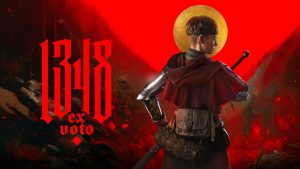
An IGN trailer recently highlighted 1348 Ex Voto, an upcoming third-person action-adventure game set in Italy during the Black Death.
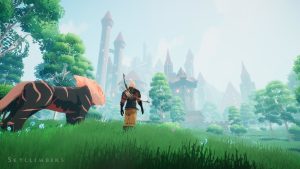
This update comes after a long development journey that began with a successful Kickstarter campaign in 2021.
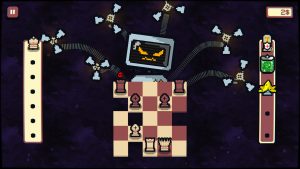
Deep knowledge of chess is not required and the developer has made it clear that learning strict openings or endgame…
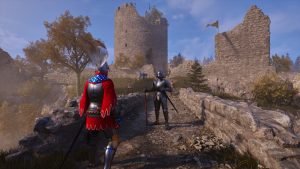
Knight’s Path is an upcoming action RPG made almost entirely by solo developer Jan Tichota.
Some developments in today's gaming world are simply too significant to ignore, and today’s roundup reflects that balance.
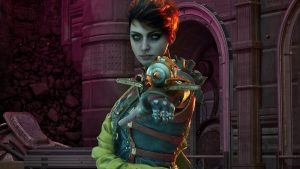
The Outer Worlds 2 is less an isolated disappointment and more a sign of a changing market.

In a new Patreon-exclusive article (free-to-read for anyone), I break down the full workflow behind our reviews.
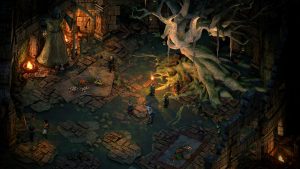
Both Pillars of Eternity games used backer betas, which gave early access to players who supported the projects.
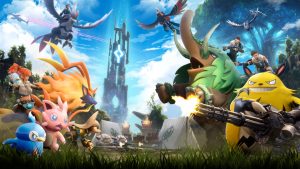
What shocked publishing lead John Buckley was not the number of pitches, but the terms developers had come to accept.

Welcome back to Daily Indie News Roundup, your one-stop snapshot of everything happening across the indie games and the wider…

To keep your feed clutter-free, we’ve once again gathered the latest headlines from across the indie gaming space.
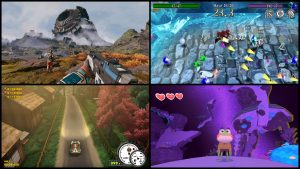
We’re already halfway through January 2026, and the new year is off to an incredible start for gaming.
![[OPINION] Gaming Exclusives Are Losing Their Value: Who Really Breaks the News in Gaming Anymore](https://www.indie-games.eu/wp-content/uploads/2026/01/Gaming-Gaming-Journalism-300x200.jpg)
There is a growing problem in gaming media with exclusives and question arises who really breaks the gaming news anymore…
We are still fine-tuning this format, so please bear with us as we improve.
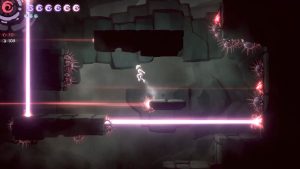
In BEFORE I GO, you take control of an inner child trapped in limbo, moving through a symbolic journey toward…
Instead of flooding your feed with dozens of individual posts, here’s everything you need to know from the indie games…
![[OPINION] Nintendo, Sony, and Microsoft Unite on Safety – Here’s Why That Matters](https://www.indie-games.eu/wp-content/uploads/2026/01/Gaming-Industry-big-tree-300x200.jpg)
At its best, the alliance sends a strong signal that online safety is no longer something to be handled in…

It is an easy recommendation for anyone who enjoys beautiful worlds, strong narratives, or tactical depth.
Today’s roundup covers a wide range of stories shaping the future of independent games.
The indie games scene doesn’t slow down and neither do we.
An IGN trailer recently highlighted 1348 Ex Voto, an upcoming third-person action-adventure game set in Italy during the Black Death.
This update comes after a long development journey that began with a successful Kickstarter campaign in 2021.
Deep knowledge of chess is not required and the developer has made it clear that learning strict openings or endgame…
Knight’s Path is an upcoming action RPG made almost entirely by solo developer Jan Tichota.
Some developments in today's gaming world are simply too significant to ignore, and today’s roundup reflects that balance.
The Outer Worlds 2 is less an isolated disappointment and more a sign of a changing market.
In a new Patreon-exclusive article (free-to-read for anyone), I break down the full workflow behind our reviews.
Both Pillars of Eternity games used backer betas, which gave early access to players who supported the projects.
What shocked publishing lead John Buckley was not the number of pitches, but the terms developers had come to accept.
Welcome back to Daily Indie News Roundup, your one-stop snapshot of everything happening across the indie games and the wider…
To keep your feed clutter-free, we’ve once again gathered the latest headlines from across the indie gaming space.
We’re already halfway through January 2026, and the new year is off to an incredible start for gaming.
There is a growing problem in gaming media with exclusives and question arises who really breaks the gaming news anymore…
We are still fine-tuning this format, so please bear with us as we improve.
In BEFORE I GO, you take control of an inner child trapped in limbo, moving through a symbolic journey toward…
Instead of flooding your feed with dozens of individual posts, here’s everything you need to know from the indie games…
At its best, the alliance sends a strong signal that online safety is no longer something to be handled in…
It is an easy recommendation for anyone who enjoys beautiful worlds, strong narratives, or tactical depth.
