
If you enjoy independent indie game coverage, consider supporting Indie-Games.eu on Patreon. It helps keep the site independent.
Crowdfunding has long been seen as a lifeline for independent game developers, a way to bypass publishers and bring their projects directly to players. When I saw recently that Pizza Kidd failed to get funded on Kickstarter, it became a clear indicator just how unforgiving that path has become in 2026. Despite a promising prototype, constant promotion, and clear creative ambition, the project fell well short of its goal, highlighting the growing challenges small studios are facing in an overcrowded market.
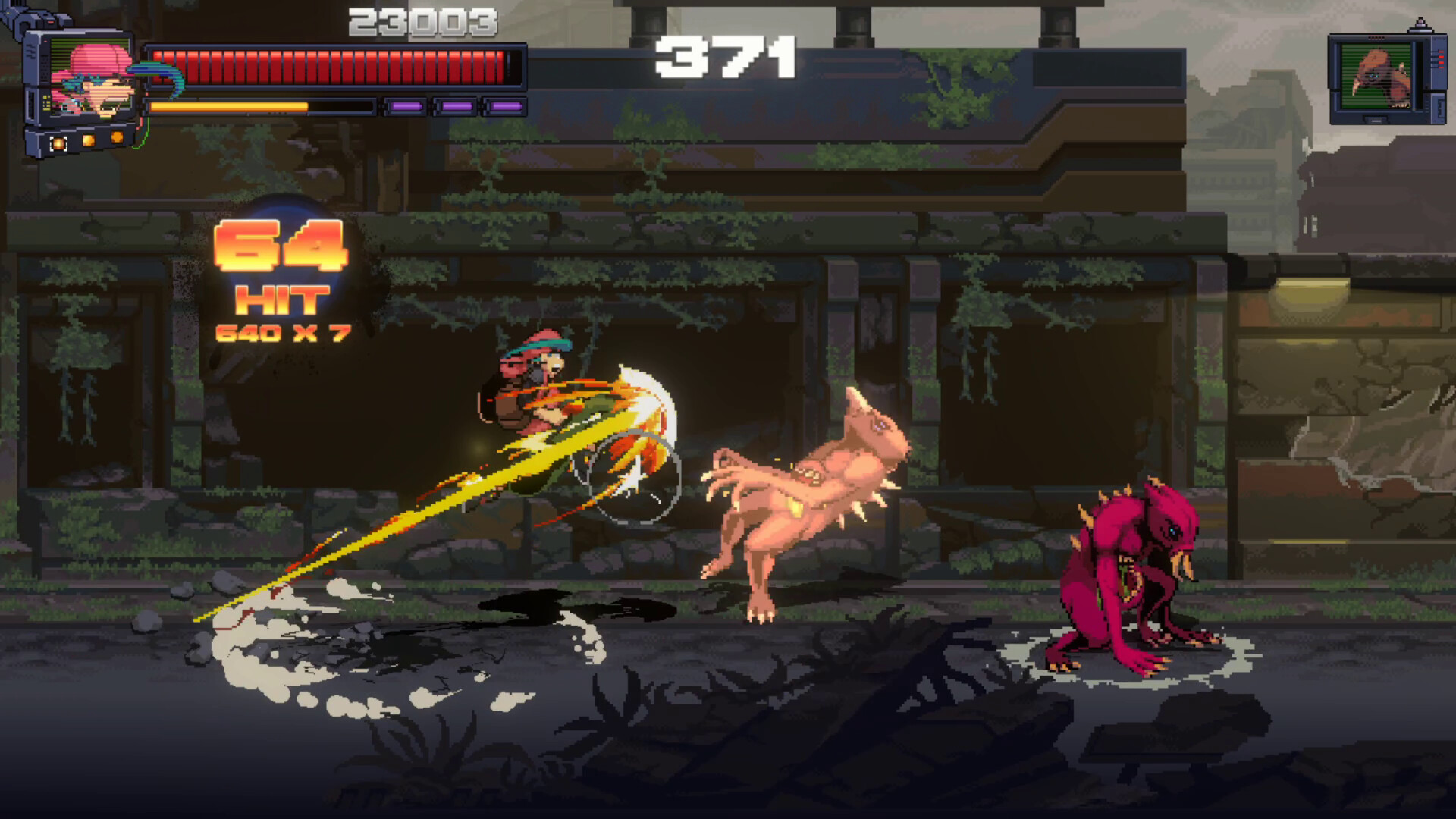
Launched last month, by the team at Kidd Games, the Pizza Kidd Kickstarter set out to raise $97,500. The funding was intended to turn an already award-winning prototype into a full-fledged release: a sci-fi-inspired 2D beat ’em up featuring fast-paced martial arts combat, grotesque pixel-art enemies, and a heavy emphasis on stylish combos. The campaign promised additional content if it succeeded, including new playable characters, console versions, and a Nintendo Switch port.
At the time of launch, the project had all predispositions to succeed. A Steam page was already live, demo version was also there, and early footage had attracted interest because of its gameplay and well polished character design. Kidd Games also leaned heavily into community outreach, using social media to post and spread awareness about their game.
Despite these efforts, the campaign struggled to gain the momentum it needed. When the deadline arrived this Sunday, Pizza Kidd had secured just $50,893 from 519 backers. Because Kickstarter operates on an all-or-nothing model, the team received none of that funding. Now, some may wonder whether the campaign’s budget was simply too ambitious.
Games rarely manage to raise more than $100,000, while it’s not impossible, it is extremely difficult to achieve. For example, the current Kickstarter campaign for Bel’s Fanfare (RPG inspired by first Zelda games) has raised well over $400,000 despite asking for a relatively modest $47,000. This raises the question: was it the genre Pizza Kidd tried to appeal to, marketing issues, or perhaps the game itself that failed to resonate with players?


In fact, the funding goal itself was modest by industry standards. A budget under $100,000 would have covered artwork, sound design, quality assurance testing, and basic marketing for a retro-style game. Yet even that relatively small sum proved elusive. This reflects broader trends in crowdfunding, where more than half of game-related campaigns historically fail, leaving developers to rely on personal savings, side jobs, or alternative funding sources to survive.
The result illustrates a difficult truth about modern crowdfunding. Success today often depends less on raw creativity and more on visibility. Viral marketing, influencer endorsements, and massive pre-launch followings now play a decisive role. There is also the question of whether Kickstarter-funded games go on to be successful on Steam and other platforms after launch, especially considering that much of the interested audience may have already funded the campaign or is waiting for a better deal. However, that’s a topic for another time.
Importantly, this is not the end of Pizza Kidd’s story. In their closing messages, the developers said that this was their first Kickstarter attempt. By framing it that way, they signaled an intention to regroup, refine their pitch, and try again. This approach has worked for other indie teams in the past, turning near-misses into eventual successes through improved marketing and clearer value propositions.
This story matters because it exposes how fragile independent game development has become. It shows that even talented teams with playable builds are not guaranteed support, and that the dream of “funded by fans” is increasingly difficult to realize.
Pizza Kidd’s failed campaign is not a story of incompetence or lack of effort. It is a case study in how tough the modern indie gaming has become. As Kidd Games prepares for its next move, their experience serves as both a warning and a reminder: passion remains essential, but in today’s market, it must be matched by reach, timing, and relentless visibility to have a chance of survival.

Your daily digest of everything happening in indie games and the wider industry is here!
![[OPINION] Why “Being a Gamer” Is Changing in an Oversaturated Industry](https://www.indie-games.eu/wp-content/uploads/2026/02/Mobile-gaming-300x197.jpg)
Gaming is no longer defined solely by access to hardware or software. It is shaped by attention, time, and trust.

The controversy began when farming sim YouTuber Josh, posted screenshots highlighting a wave of unusually similar positive Steam reviews.

At the heart of Rhell’s design is a simple but ambitious idea: what if spells weren’t selected from a list,…
Rather than relying solely on difficulty and linear progression, it builds its identity around run-based structure, spell systems, counters, and…

The new update significantly expands the sci-fi survival-crafting game’s world, story, and technical performance.

When you combine historically grounded settings, physics-driven combat, and a fully simulated city overrun by the undead, you get something…
Today's Daily Indie News Roundup #18 edition brings together news about new ambitious projects, long-awaited updates, platform expansions, and industry…
As always, here are our picks for the best upcoming indie titles to keep on your radar and your wishlists.

With discounts reaching up to 92% off, these deals are too good to ignore.

It’s been 17 days since we launched our Daily Indie News Roundup, a special editorial dedicated to the latest updates…
![[OPINION] Are Console Exclusives Still Good for Gamers?](https://www.indie-games.eu/wp-content/uploads/2026/02/Zelda-300x168.jpg)
Today, movies, music and TV shows are available on every major platform and many gamers are asking why video games…

During the weekend MENACE reached a peak of more than 20,600 concurrent players, climbing rapidly from just a few thousand…

February is now in full swing, and with it comes clearer picture of how the indie scene kicked off 2026.
Welcome back to Daily Indie News Roundup #15, your go-to place of everything happening across the indie and wider gaming…

In an era where thousands of indie games compete for attention on Steam every year, success is often assumed to…
From developer-first publishing models and surprise Early Access success stories to shifting hardware strategies and major industry departures.

If you enjoy building, crafting, and surviving in immersive game worlds, Green Man Gaming’s Crafted Worlds Bundle is an offer…
From Epic’s latest financial results and Nintendo’s record-breaking Switch 2 sales to studio closures and a wave of creative new…

The shutdown of Pahdo Labs in February 2026 is a reminder of how fragile independent game development can b.
Your daily digest of everything happening in indie games and the wider industry is here!
Gaming is no longer defined solely by access to hardware or software. It is shaped by attention, time, and trust.
The controversy began when farming sim YouTuber Josh, posted screenshots highlighting a wave of unusually similar positive Steam reviews.
At the heart of Rhell’s design is a simple but ambitious idea: what if spells weren’t selected from a list,…
Rather than relying solely on difficulty and linear progression, it builds its identity around run-based structure, spell systems, counters, and…
The new update significantly expands the sci-fi survival-crafting game’s world, story, and technical performance.
When you combine historically grounded settings, physics-driven combat, and a fully simulated city overrun by the undead, you get something…
Today's Daily Indie News Roundup #18 edition brings together news about new ambitious projects, long-awaited updates, platform expansions, and industry…
As always, here are our picks for the best upcoming indie titles to keep on your radar and your wishlists.
With discounts reaching up to 92% off, these deals are too good to ignore.
It’s been 17 days since we launched our Daily Indie News Roundup, a special editorial dedicated to the latest updates…
Today, movies, music and TV shows are available on every major platform and many gamers are asking why video games…
During the weekend MENACE reached a peak of more than 20,600 concurrent players, climbing rapidly from just a few thousand…
February is now in full swing, and with it comes clearer picture of how the indie scene kicked off 2026.
Welcome back to Daily Indie News Roundup #15, your go-to place of everything happening across the indie and wider gaming…
In an era where thousands of indie games compete for attention on Steam every year, success is often assumed to…
From developer-first publishing models and surprise Early Access success stories to shifting hardware strategies and major industry departures.
If you enjoy building, crafting, and surviving in immersive game worlds, Green Man Gaming’s Crafted Worlds Bundle is an offer…
From Epic’s latest financial results and Nintendo’s record-breaking Switch 2 sales to studio closures and a wave of creative new…
The shutdown of Pahdo Labs in February 2026 is a reminder of how fragile independent game development can b.
