![[GAMESCOM 2026] Clive Barker’s Hellraiser: Revival Preview – Ready to Open the Box](https://www.indie-games.eu/wp-content/uploads/2026/09/Clive-Barkers-Hellraiser-Revival-08-30-26-1-1024x576.jpg)
[GAMESCOM 2026] Clive Barker’s Hellraiser: Revival Preview – Ready to Open the Box
Hellraiser: Revival preserves the franchise’s sex, gore and psychological horror while delivering approachable survival-horror gameplay.


If you enjoy independent indie game coverage, consider supporting Indie-Games.eu on Patreon. It helps keep the site independent.
It feels impossible to describe Denshattack! with a single comparison. It throws together the trick-chaining of Tony Hawk’s Pro Skater, the stylish attitude of Jet Set Radio, the rhythm and spectacle of Sayonara Wild Hearts, precise action timing, and Japanese train culture into one chaotic package. The result is one of the most unforgettable arcade experiences I’ve played this year and easily one of the most creative dystopian games released recently.
Set in an alternate version of Japan, the powerful Miraido Corporation controls the country’s railway network. You join a rebellious group determined to fight back by transforming gravity-defying trains into extreme sports machines. Despite featuring a dedicated racing mode, Denshattack! is not a racing game. It’s much closer to a skateboarding score attacker where every level revolves around building huge combos, mastering tricks, and chasing higher scores.

The gameplay is built around an incredibly satisfying combo system. You’ll grind rails, drift around corners, wall ride, perform kickflips with your train, dodge hazards, chain manuals together, jump across gaps, and pull off more than 30 different tricks ranging from basic moves to advanced techniques. The game introduces new mechanics throughout its chapters, constantly expanding your toolkit with abilities such as attaching to monorails, riding air currents, tilting across railings, or using entirely new traversal methods that completely change how you approach each stage.
Fortunately, the game never forces you to master every mechanic. You can finish levels simply by experimenting and pressing buttons until the systems begin to click naturally. However, learning advanced combos becomes essential if you want to earn higher multipliers and reach the score requirements tied to each stage. Every level includes target scores, time goals, and optional side objectives, but failing them never blocks your progress. Even mistakes rarely feel punishing thanks to generous checkpoints and encouraging teammates who cheer you on whenever you mess up. You’ll fail often while learning, but you’ll almost always want to jump straight back in for another attempt.
Everything feels incredibly responsive. The controls are tight, landing tricks feels precise, and movement remains fluid even during the most chaotic sequences. Advanced combos definitely require practice. I played almost the entire game with a controller, and I would strongly recommend doing the same. Pulling off longer trick strings simply feels far more comfortable than using a keyboard.
Denshattack! features more than 67 levels spread across various regions of Japan, including Tokyo, Osaka, Kyushu, Hokkaido, volcanic landscapes, coastlines, and peaceful countryside areas. Every location feels distinct, with multiple routes, hidden collectibles, optional challenges, and constantly changing level mechanics. Individual stages usually last between five and ten minutes, creating an addictive “just one more run” loop that’s perfect for replaying in search of better scores and flawless executions.

What impressed me most is how the game constantly reinvents itself. Just when you think you’ve seen everything, it introduces another mechanic or throws a completely unexpected set piece your way. That constant sense of escalation prevents the formula from ever becoming repetitive, despite the core gameplay remaining largely the same throughout the adventure. The flow is exceptional. You’re almost always moving at full speed, drifting around corners, launching through loops, grinding across impossible railways, and reacting to new obstacles without ever having a chance to slow down.
Boss fights further break up the pacing, with each chapter ending in a memorable encounter inspired by different aspects of Japanese pop culture. Whether you’re battling a giant Power Rangers-style enemy, facing a basketball-themed boss that requires you to reflect projectiles using tricks, or encountering colorful characters like a gyaru girl, the game fully embraces its over-the-top personality. None of the bosses are particularly difficult, but each introduces unique mechanics that test your abilities in creative ways.
Outside the main campaign, progression unlocks new trains, customization options, stickers, cosmetics, collectible photos, and additional upgrades. Different trains also come with their own characteristics and abilities, giving you another incentive to keep replaying levels beyond simply chasing higher scores.
The story, however, isn’t quite as memorable as the gameplay. While the setting itself is interesting and the rebellious cast is likable, the narrative mostly exists to push you toward the next level. Dialogue is fairly brief, world-building receives enough attention to establish the setting, and the humor generally lands, although the English voice acting can occasionally be hit or miss. It’s enjoyable enough, but don’t expect Persona-level storytelling. Dash Attack clearly understands that gameplay comes first.
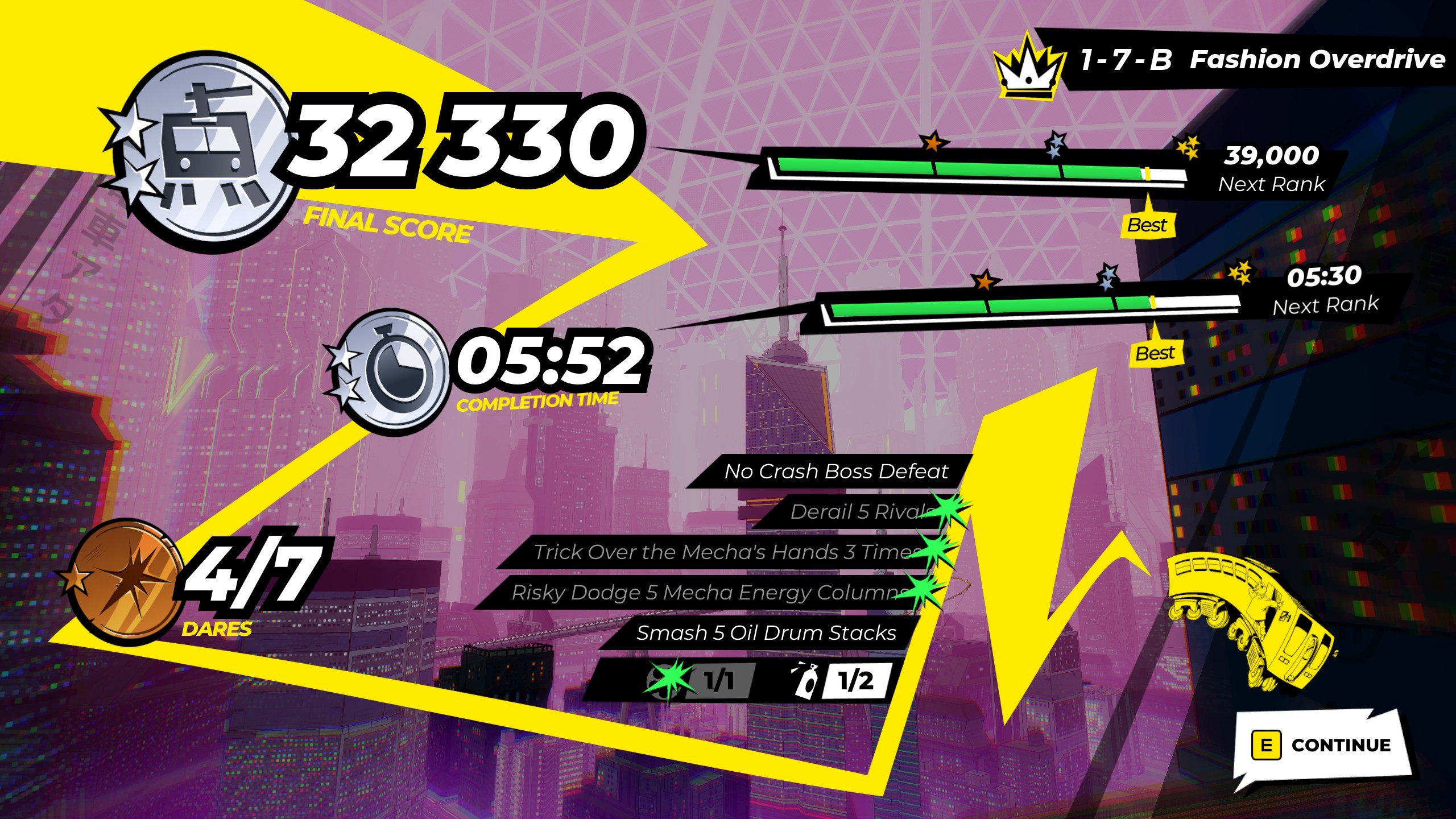
Visually, the game is absolutely bursting with personality. Its anime-inspired presentation is paired with expressive character animations, stylish manga-style story sequences, and excellent visual clarity that makes it surprisingly easy to read the action despite the game’s incredible speed. Environmental variety remains consistently impressive, while the colorful art direction gives every location its own identity. Even during the most chaotic moments, the screen never becomes overwhelming, allowing you to appreciate both the scenery and everything happening around your train.
The soundtrack deserves special recognition. Featuring contributions from artists including Tee Lopes, Andrew One or Sean Bialo, the music is packed with energetic, memorable tracks that perfectly match the game’s relentless pace. Nearly every level feels elevated by its soundtrack, and several songs stayed with me long after I finished playing.
I was also slightly concerned that the gameplay might become repetitive over time. Thankfully, those concerns disappeared completely. Denshattack! constantly introduces alternate routes, collectibles, challenges, and spectacular moments that ensure you never quite know what’s waiting around the next corner. Chaining together drifting, grinding, jumping, manuals, wall rides, tricks, environmental interactions, and dozens of other mechanics into one uninterrupted combo never stops being satisfying.
Denshattack! does have a fairly steep learning curve, and mastering its large selection of trick inputs takes time. But once everything clicks, it’s an incredibly rewarding experience that never runs out of fresh ideas. It’s stylish, chaotic, mechanically deep, and endlessly replayable. The story may only do enough to support the action, but honestly, that’s all it needs. Watching a lovable group of punk-rock misfits take down a megacorporation with nothing but friendship, attitude, and trick-performing trains is exactly the kind of ridiculous energy this game thrives on.
Denshattack! is one of the most creative and stylish arcade games of the year. It brilliantly combines skateboarding-inspired trick systems, rhythm-like flow and over-the-top anime presentation into an experience unlike anything else on the market. While its story takes a back seat to the gameplay and mastering its mechanics requires dedication, the payoff is an endlessly rewarding score-chasing adventure packed with personality, replayability and exhilarating movement. If you enjoy arcade games that reward skill and experimentation, Denshattack! is an easy recommendation and one of the standout indie releases of the year.
Ending Thoughts
Review copy provided by the publisher
Hellraiser: Revival preserves the franchise’s sex, gore and psychological horror while delivering approachable survival-horror gameplay.

Swan Song creates a peaceful and forgiving puzzle space without removing the challenge that makes solving a difficult puzzle rewarding.
Mortal Shell II starts brilliantly but grows repetitive and exhausting, while remaining a rewarding and ambitious Soulslike sequel.
![[GAMESCOM 2026] Terranigma Preview – A Lost SNES Classic Returns in 2027](https://www.indie-games.eu/wp-content/uploads/2026/08/Terranigma-1-1024x576.jpg)
After more than three decades of limited availability, Terranigma is returning in 2027. We played its enhanced re-release at Gamescom…
Reading another person’s mind is often presented as a desirable superpower, but Sister Other Paranoia immediately understands why it could…
Forsaken Realms: Vahrin’s Call is exactly the kind of ambitious, slightly clumsy fantasy RPG that used to be far more…
![[Early Access] 2nd EVE – Sci-Fi Action RPG That Lacks a Sense of Stakes](https://www.indie-games.eu/wp-content/uploads/2026/08/2ND-EVE-1024x576.jpg)
2nd Eve is a space-set action RPG in which we strive to save humanity.
![[PREVIEW] Dreamcards – Strategic Exploration of Consciousness](https://www.indie-games.eu/wp-content/uploads/2026/08/Dreamcards_20260810_233631_0000-1024x576.jpg)
Dreamcards is a roguelike deckbuilder centered around dreams and nightmares.
![[Early Access] OFFBEAT – Incredibly Fun Way to Start a Music Career](https://www.indie-games.eu/wp-content/uploads/2026/08/Offbeat_20260808_201446_0000-1024x576.jpg)
In OFFBEAT, we play the role of a jobbing composer who is launching their music career.
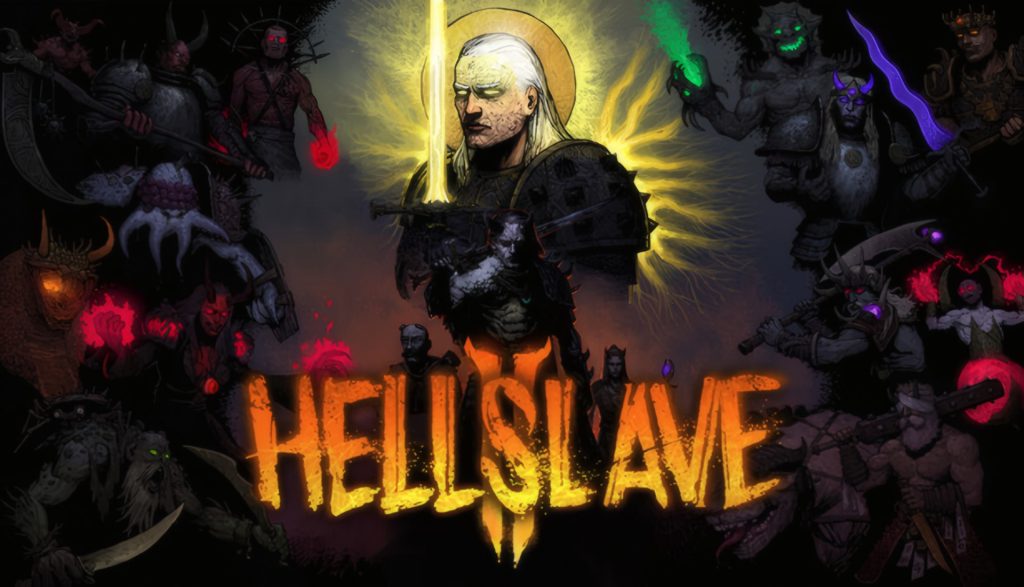
HellSlave II retains the original’s oppressive atmosphere, morally grey world and striking art while adding a larger world, randomized loot…
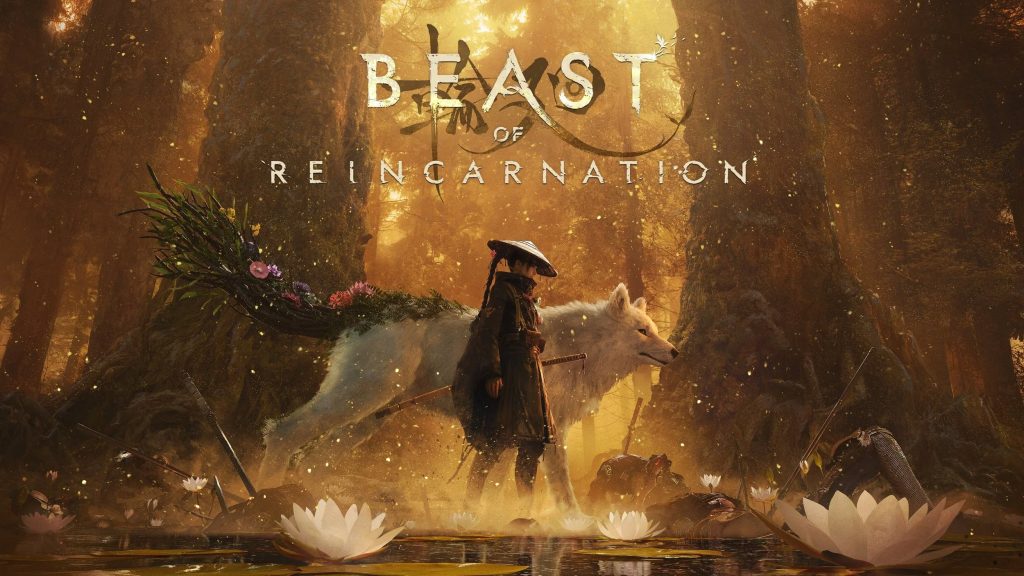
Beast of Reincarnation is an ambitious but uneven action RPG elevated by satisfying parry combat, beautiful art direction and the…

K-pop Idol Stories: Road to Debut captures the pressure of building idol group, but its management systems never explore that…
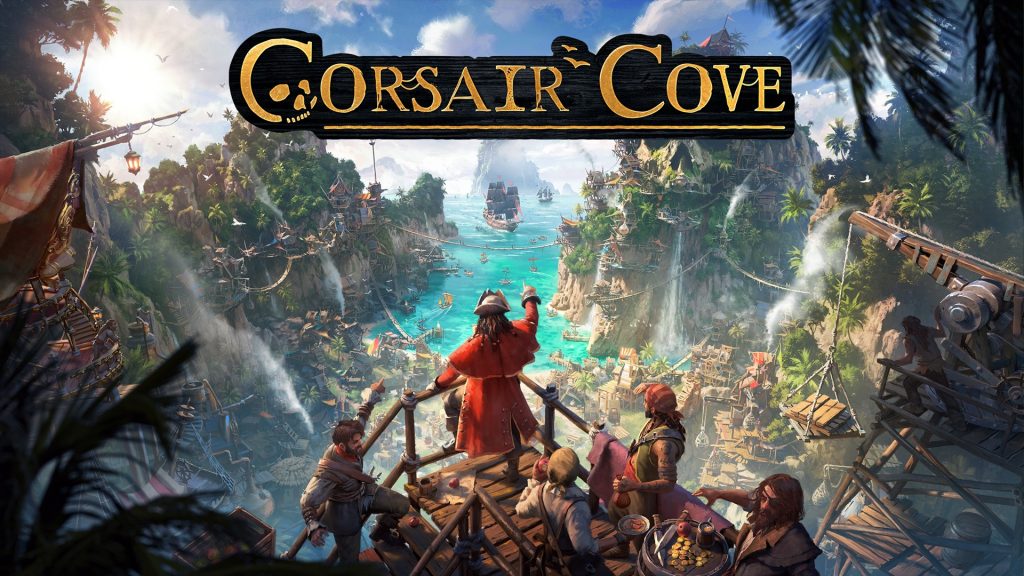
Hooded Horse keeps finding strategy games that know their audience, and Corsair Cove extends its impressive run of excellent city-builders.
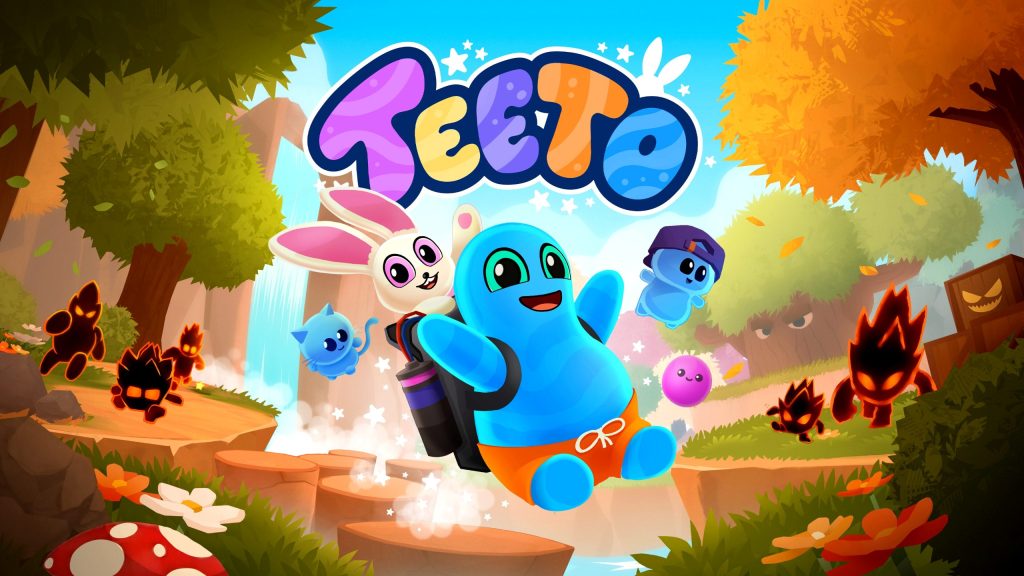
Teeto is a warm, cozy, creative and highly enjoyable 3D platformer that understands why classic collectathons remain so appealing.
Turnip Mountain stands out for its combination of a unique control system and a minimalist approach.
Dystopicon is an imaginative and memorable narrative experiment with sharp social commentary, engaging world-building and several wonderfully absurd scenarios.
Maneki Mania is an incremental game centered around petting a lucky cat.
XeGrader Plus delivers colorful retro shooting, but basic mechanics, a short campaign and paid retro modes make its €20 price…
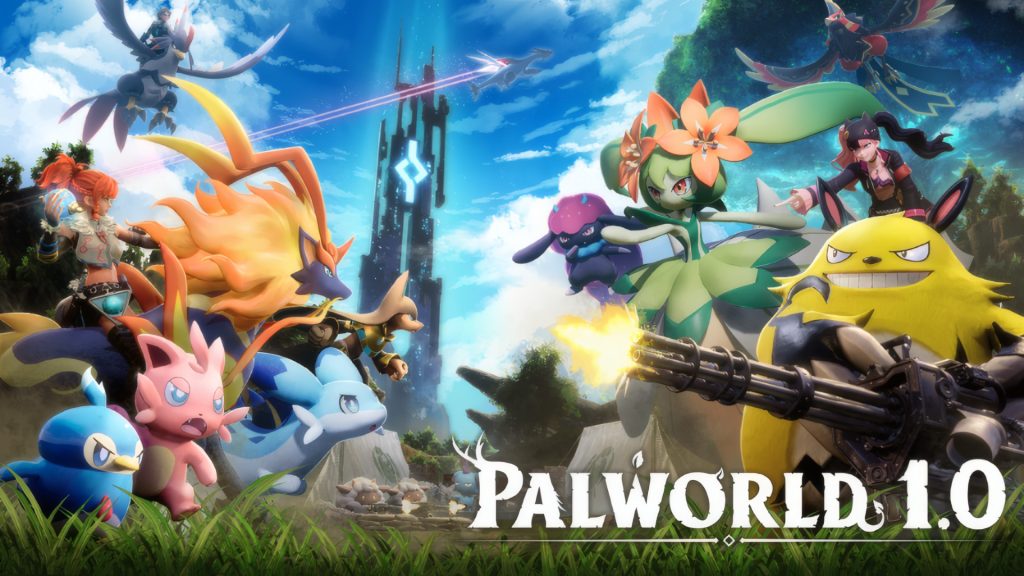
It has been roughly two and a half years since Palworld first entered Early Access, and quite a lot has…
![[EARLY ACCESS] The Last Caretaker – Survival Game I Cannot Stop Playing](https://www.indie-games.eu/wp-content/uploads/2026/07/The-last-Caretaker-Key-Art-1024x587.jpg)
The Last Caretaker is a compelling survival crafter with a flooded world and mobile base, but weak combat and performance…
