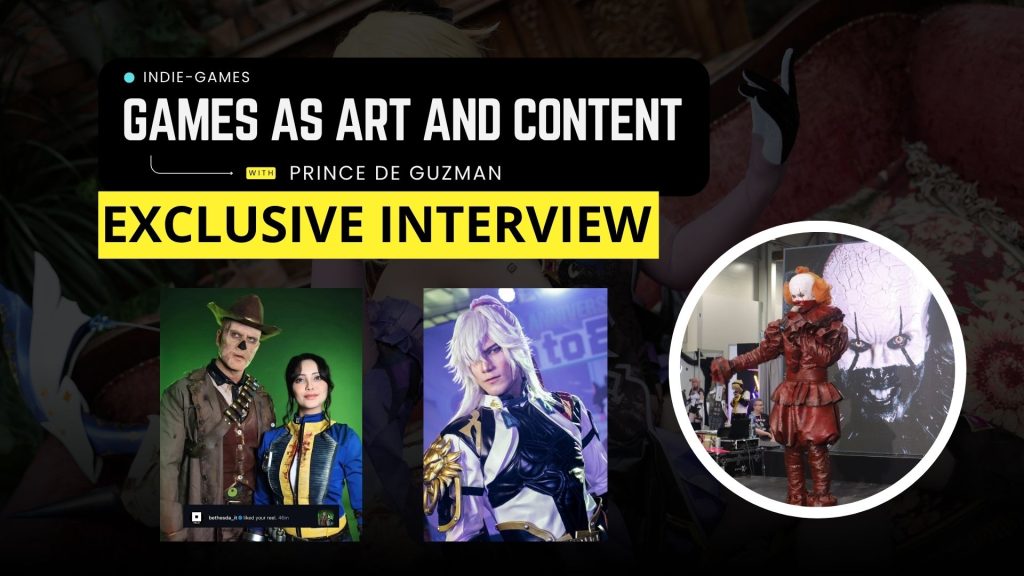
Games as Art and Content – Interview with Prince de Guzman
We spoke with cosplayer Prince de Guzman, who is known for his transformations inspired by horror, anime, and video games.

If you enjoy independent indie game coverage, consider supporting Indie-Games.eu on Patreon. It helps keep the site independent.
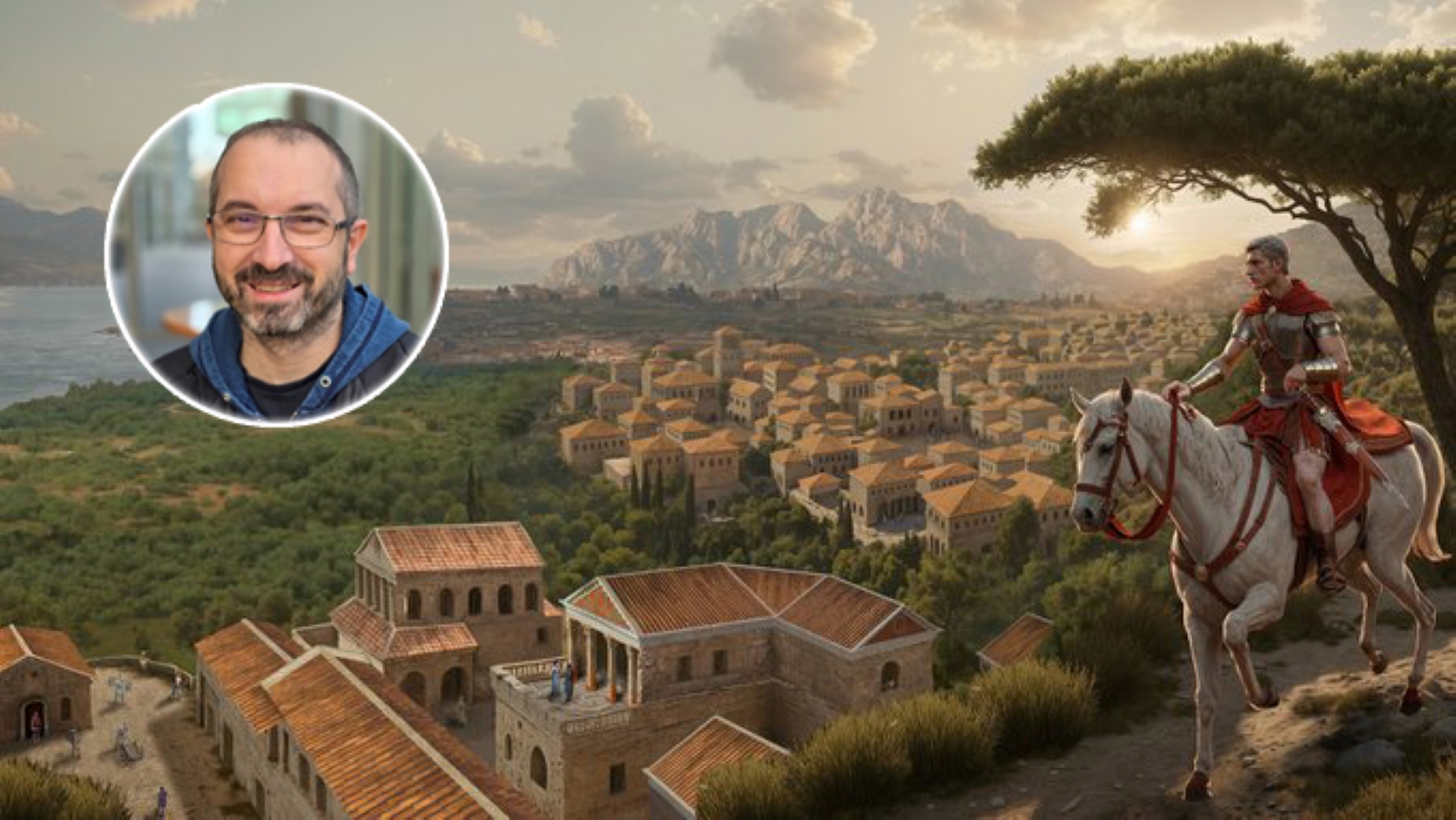
Željko Kos is an extremely experienced developer on the Croatian gaming scene. He has been a producer, programmer, and video game designer since 1999 and is a co-founder of LGM Games and Overseer Games. He also owns Siscia Games and is currently working on the city-builder title Pompeii: The Legacy.
We asked him about his journey as a developer, the projects he has worked on, his opinion on the gaming scene in Croatia, and what we can expect from his latest title. He is proof that Croatian video games can achieve exceptional popularity when the right idea is combined with a suitable genre that attracts a wide audience.
We certainly recommend following his projects. Although the newest title, Pompeii: The Legacy, still does not have its Steam page, you can find more information here. If you are interested in other games he has worked on or supported, you can visit the official Steam page of Overseer Games.
I started programming already on the Commodore 64, and after enrolling in university, I shifted my focus to 3D modeling. Towards the end of my studies, I fell into bad company and started working as a level designer on a project at Fragile Bits. In addition, I was looking at other people’s code, which attracted me more and more. That’s when my first studio, Razbor, came along, where we managed to create and release the adventure game Legacy: Dark Shadows.
As I mentioned, I consider Legacy: Dark Shadows to be my first project. On that game, I worked on both character modeling and the complete code. Since it wasn’t possible to use commercial game engines at that time, I had to write it myself. The very fact that you had to learn every segment of game programming to reach the goal is what shaped me as a generalist game programmer.
Starpoint Gemini 3 was extremely technically demanding. Since we were working on our own game engine, we needed to develop an animation system for characters that supported facial expressions and speech. On that project, we used both motion capture and facial capture, technologies that few people in Croatia use even today. That game is primarily a space simulation but contains many elements from other genres. On that project, I collaborated with the writer Darko Macan and many top-tier graphic artists, of whom I would especially highlight Stjepan Mihaljević and Goran Pavlovski.
I think the quality of the game is more important than the genre. Today there is a hyperproduction of games. On Steam, this is evident through 40,000 game publishers. I am not sure, but I assume that 90% of the games released do not earn even 10% of their own development costs. That is precisely why it is important for a game to stand out in quality from other games in its genre. When my company started developing Patron, there were only a few quality city-builder games on Steam. Today, 3 years later, there are hundreds of city-builder titles on Steam. It has become very difficult to predict trends a year or two in advance.
Feedback is far more important than we are, and as game designers, we must accept that. Of course, one must be very objective and know how to filter that information, because in addition to quality feedback, developers also receive a lot of noise—information that some players generate based on their own flawed perception of the upcoming game.
In our work so far, we have done projects whose development lasted from 8 months to a maximum of 3 years. Previously, the development of our games took longer. Today, I prefer to work on a relatively shorter game development cycle because of less stress and less risk that longer development entails. Teamwork in the creative industry is extremely stressful. Creative people want their own freedom, but the deadlines pressing the company deny them that freedom and guide them within the defined boundaries of the project. The positive thing is that over years of working in the industry, a certain template crystallizes that should be followed so that creatives are satisfied and, at the same time, the project progresses.
Personally, I would prefer to work independently. However, a studio sometimes doesn’t have that option due to rising costs and must seek a publisher. Since I have experience working both with a publisher and independently, I can say that for a team with experience and knowledge, it makes no difference whether they have a publisher or not. However, a small team that is just starting out without a publisher is often doomed to fail. It is sometimes good for beginners to set boundaries on how far they can go, precisely for their own good.
Pompeii: The Legacy is my first title that I conceived entirely on my own. I have always been fascinated by Roman civilization. Since we are fortunate to have numerous remains of that civilization in our country, even in my youth I saw the remnants of Roman buildings in Istria, Dalmatia, and on the continent. While preparing this project, in addition to reference games, I watched numerous documentaries, series, and films on Roman themes. The knowledge I gained helped me crystallize the vision for this game.
Pompeii: The Legacy will be a classic city-builder with developed trade, in which the player rebuilds Pompeii anew 20 years after the great volcanic eruption. At the time the game’s story begins, the Roman Emperor Trajan is in power, who also appears as one of the protagonists. The game’s plot will span several hundred years, and the player will manage several generations of a family that is building Pompeii. The head of the family will decide the lives of their subjects, as well as the lives of their successors.
It is a game engine based on DX11 technology. It relies on several add-ons like the Autodesk FBX Library and nVidia Physx. The engine was primarily developed for the needs of creating space simulations, but I later made it more universal, and it was successfully used in Patron and Aquatico. For the needs of this project, I improved the rendering of terrain, animated characters, and added more realistic drawing of the sea using Gerstner’s wave system.
First and foremost, before choosing an engine, you need to know your own needs. If you want to make a photorealistic game, then you will probably choose Unreal; if you want to make a 2D platformer, Godot is the choice that covers your needs. The second thing is whether your programmers are more proficient in C++ or C#. If you only have C# programmers, then Unity is your best choice. Every engine is good in the hands of developers who have basic knowledge. The opposite is also true: no engine is suitable for people who don’t know the fundamentals.
This is the first Overseer Games title whose development I am not directly involved in. However, as a co-owner of the company, I follow the statistics and can say that Steam Next Fest went very well. My colleagues did an excellent job regarding both game development and marketing. During the festival, the threshold of 100,000 wishlists was crossed, and that number continued to grow. The release date for Kaiserpunk will be announced very soon.
I believe it is the first city-builder in which the action takes place completely underwater. One version of Anno was partially underwater, but in Aquatico, there is no action outside the deep sea. When you have something so unique, it is easy to devise a marketing campaign and attract influencers and players. Also, in Aquatico, we have the ability to build on the seabed, but also in raised underwater domes. That method of construction was not common in games of this genre until then.
The gaming industry in Croatia has greatly increased in the last decade. With the growth in the number of studios, the quality has also increased. We currently have a great diversity in the size of the studios, which is very good for the industry. With the emergence of the gaming incubator in Novska, the industry gained additional momentum. Today, there are numerous schools, universities, and courses that help new game developers gather knowledge. This was unimaginable at the time I started in the industry.
As one of the founders of the CGDA, I am glad how the cluster has now developed and professionalized. I think that with the arrival of Aleksandar Gavrilović as the cluster’s secretary, everything has become much more dynamic. HAVC as a large institution and the CGDA are still in the courtship phase, and I hope that their relationship will become a partnership in the near future. HAVC currently co-finances video game projects to a small extent, but for now, those funds are mostly symbolic. However, it should be emphasized that there is a great willingness among the leading people at HAVC for video games to become equal to film.
Young people should develop knowledge of mathematics, physics, and logic. Young people do not remember a time when we went to bookstores for professional books. We older folks have switched to books on Kindle, but young people, due to a lack of perception of the value of books, no longer use them as a source of knowledge. The saddest thing is when a young person who knows how to “program” blueprints in one of the game engines truly believes they are a programmer.
Young people in any position in a team, if they do not have a logical way of thinking, if they do not know how to use spreadsheets and various tools, if they are not creative, they will find it difficult to fit into a game development team. In addition to the mentioned skills, a game designer needs to be aware of the competition by playing video games, but also to develop imagination by reading books and watching movies.
To go on vacation without a laptop. To go to Pula, Rome, and Kyoto, without a camera (mobile phone).
We spoke with cosplayer Prince de Guzman, who is known for his transformations inspired by horror, anime, and video games.
Unless you’re deep in the indie gaming scene, Naphtali Faulkner might be a new name to you. But as the…
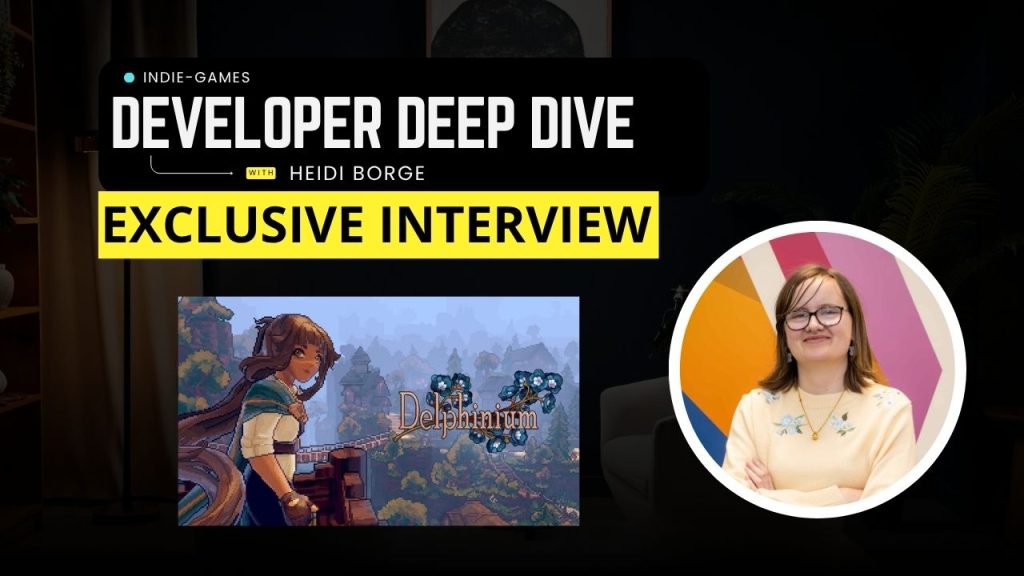
We had a chance to catch up with Heidi Borge, the developer behind narrative-driven cozy Delphinium to learn more about…
We had the opportunity to speak with Damian Czajka from MOUSE: P.I. For Hire Team.
We had the opportunity to talk with Piotr Nowakowski from Bloober Team about his work on Cronos: The New Dawn.
![[INTERVIEW] Manafinder II Is a Big Step Up – Here’s What the Developer Told Us](https://www.indie-games.eu/wp-content/uploads/2026/04/Manafinder-II-interview-1024x683.jpg)
In the interview, we discussed the game’s mechanics in greater detail, what players can expect from the sequel, and the…
We had the opportunity to sit down with the brilliant minds behind Business Goose Studios: Beau Vankemenade, Sander Ambroos, and…
![[EXCLUSIVE] Like a Bloody Storm – Interview with Kazusou Oda (Coda)](https://www.indie-games.eu/wp-content/uploads/2025/12/Oda-Kazusou-Interview-1024x576.jpg)
We had an opportunity to talk with Oda Kazusou, a theme song artist for JoJo's Bizarre Adventure.
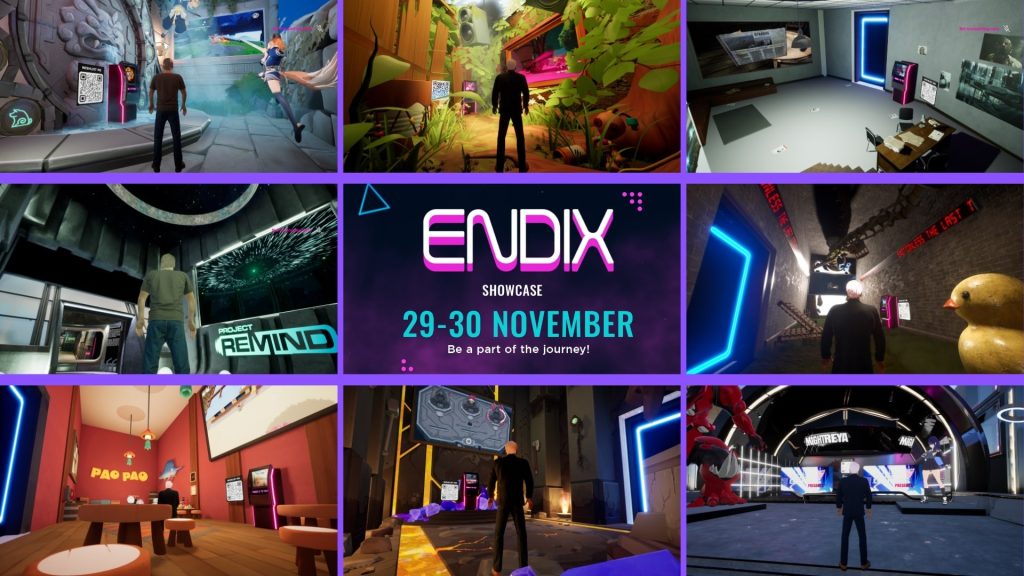
Once inside, visitors will find a fully immersive world where exhibitor booths are crafted using real in-game assets.
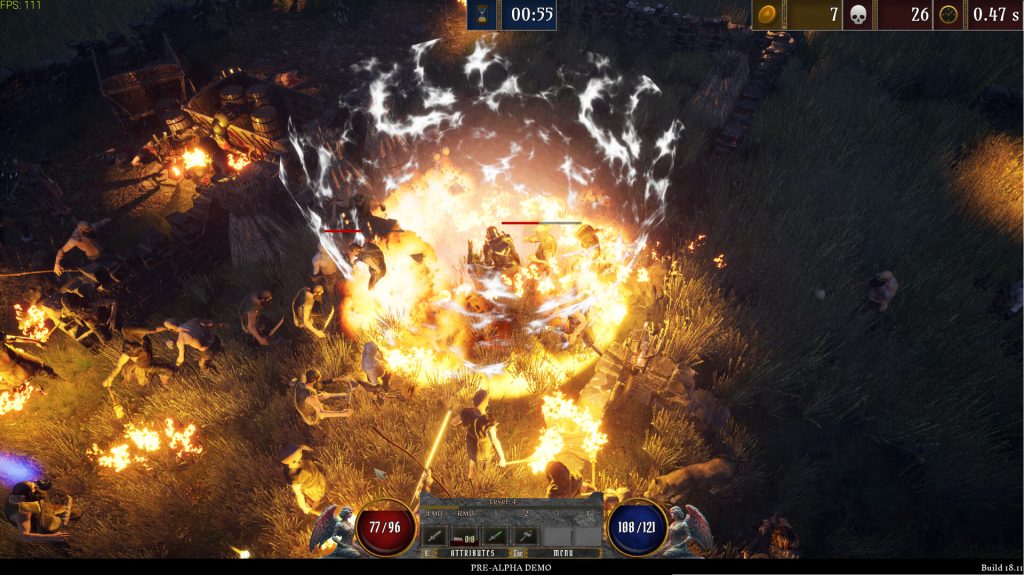
We talked to Tomasz Janicki about the details regarding Cult of Shadows.
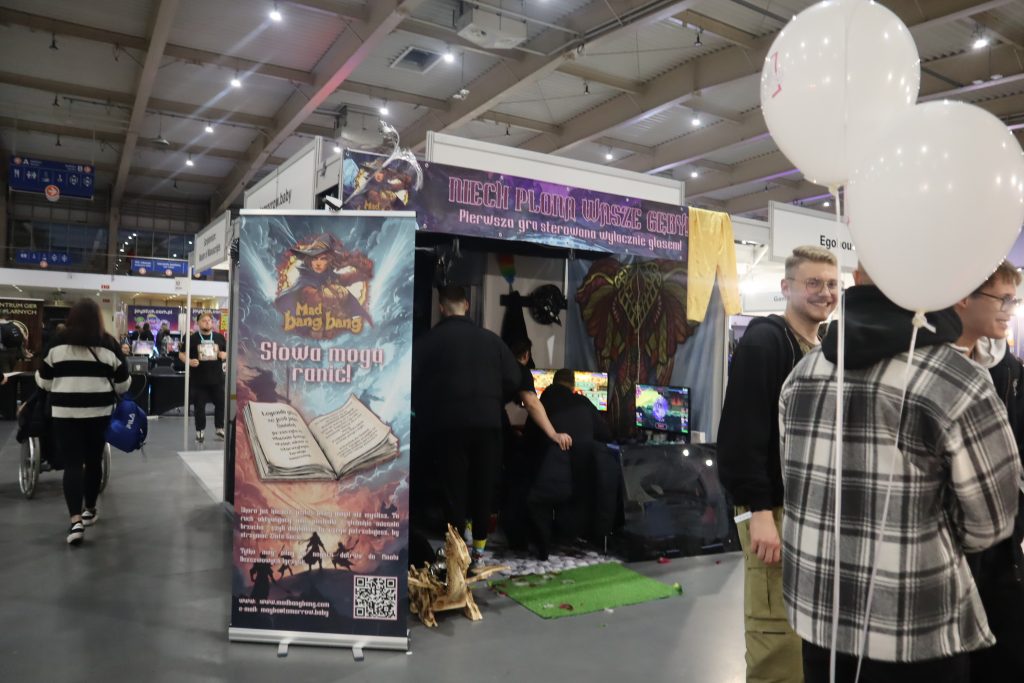
We talked to Piotr Ruszczak, one of the creators of Mad Bang Bang, about the details of this production.
We asked Kiryl, Marek, and Jakub to reveal the secrets of their work to us.
Will Valor Mortis become the hit of 2026?

We had the chance to ask Yannick Audéoud, developer behind Orbyss, some questions about the game.
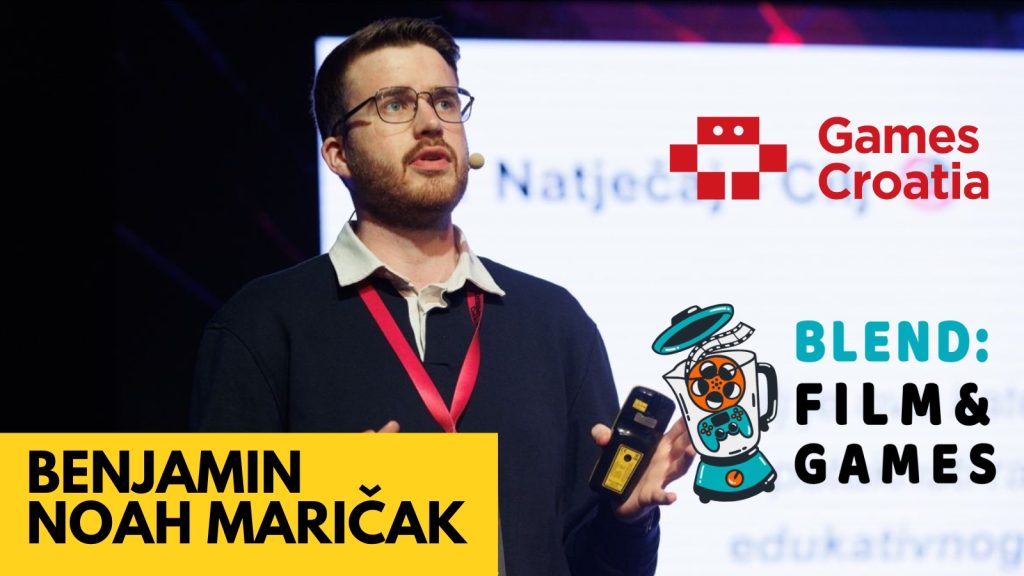
Maričak actively works to grow and promote the Croatian gaming industry while simultaneously fostering collaboration with the film industry.
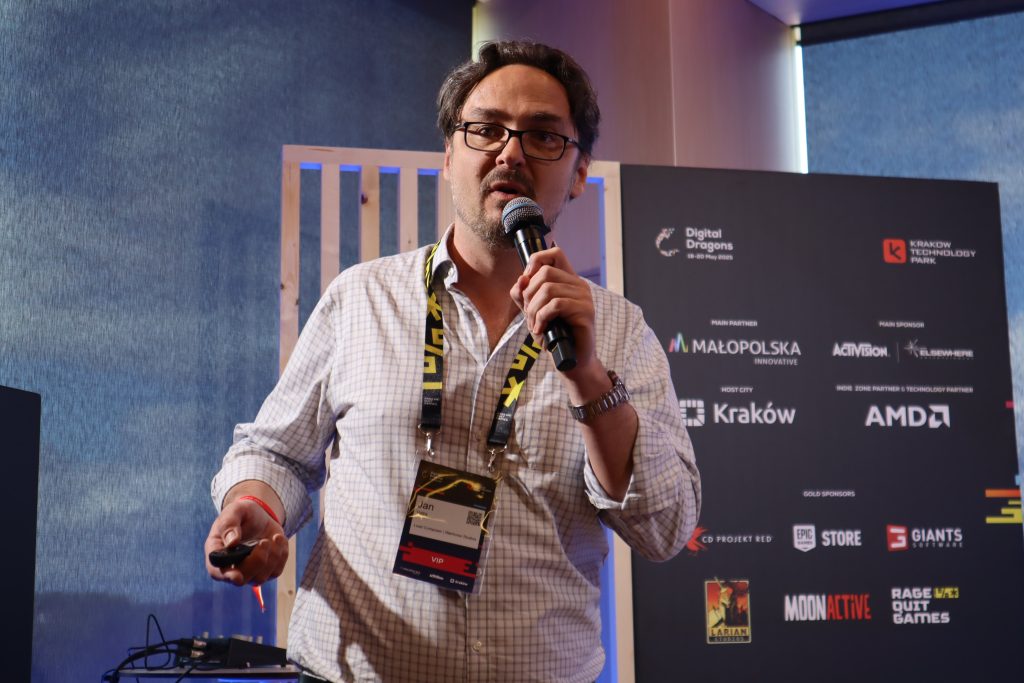
During our interview, Jan revealed the secrets of composing music for both KCD games.
In this interview, we asked Paweł Charzyński about his experience working on Frostpunk 2 as VFX coordinator.
![[A BIG INTERVIEW] Toukana Interactive Co-Founder Zwi Zausch on the Gaming Industry](https://www.indie-games.eu/wp-content/uploads/2025/09/Dizajn-bez-naslova-2-1024x576.jpg)
Zwi Zausch provided a deep dive into the gaming industry from an indie developer's perspective.
![[A BIG INTERVIEW] Deep Dive into Star Birds with Toukana Interactive’s Co-Founder](https://www.indie-games.eu/wp-content/uploads/2025/09/star-birds-1024x576.jpg)
Ever wondered what it takes to build a relaxing base on an asteroid? We spoke with Zwi Zausch, who gave…
Playtonic has upgraded every aspect of the game, not just the visuals, also the core gameplay experience.
