
![[OPINION] Gaming New Year’s resolutions: What we should address in 2026](https://www.indie-games.eu/wp-content/uploads/2026/01/fireworks-1924628_1920-1.jpg)
The year 2025 was an eventful one for the gaming community. It was a year of comebacks for well-known and beloved series, spectacular debuts, and big announcements. It was a monumental year for the entire industry, filled with new devices and billion-dollar deals. However, while the video game sector remains a global powerhouse, over the past 12 months it has not been immune to problems that undermine its growth, stability, and creativity. Therefore, as we enter 2026, it is important to remember the issues that we cannot ignore if we want to find solutions that will enable us to face the greatest challenges of the next few years.
One of the biggest challenges in game development is maintaining the financial viability of developers. Both larger studios and smaller teams face the same problem: how to maintain the profitability of their projects without compromising their quality. The continuous increase in production costs associated with high-quality graphics, sound, and updates requiring huge investments makes it difficult for smaller developers to compete with those who have greater financial resources. While there are certain solutions available that they use to survive, such as Early Access or monetization, their use is not always based on smart scaling and community-first strategies.
Aside from the financial aspect, many creators are also affected by workforce instability. Employee layoffs and project cancellations are still some of the biggest problems in the industry, major publishers have downsized teams to cut costs, leaving a lot of professionals jobless. On top of that, the number of entry-level roles is limited, and studios often prioritize hires that already have established experience in the gaming industry.
All these factors lead to companies venturing into consolidation with other companies, which tends to put a stop to creative risk-taking and limits unique, experimental projects. That is why it is important to speak openly about internal issues, which are often accompanied by burnout, stress, and mental health struggles, in order to improve developers’ working conditions and increase their capabilities, allowing them to create increasingly interesting and original titles.
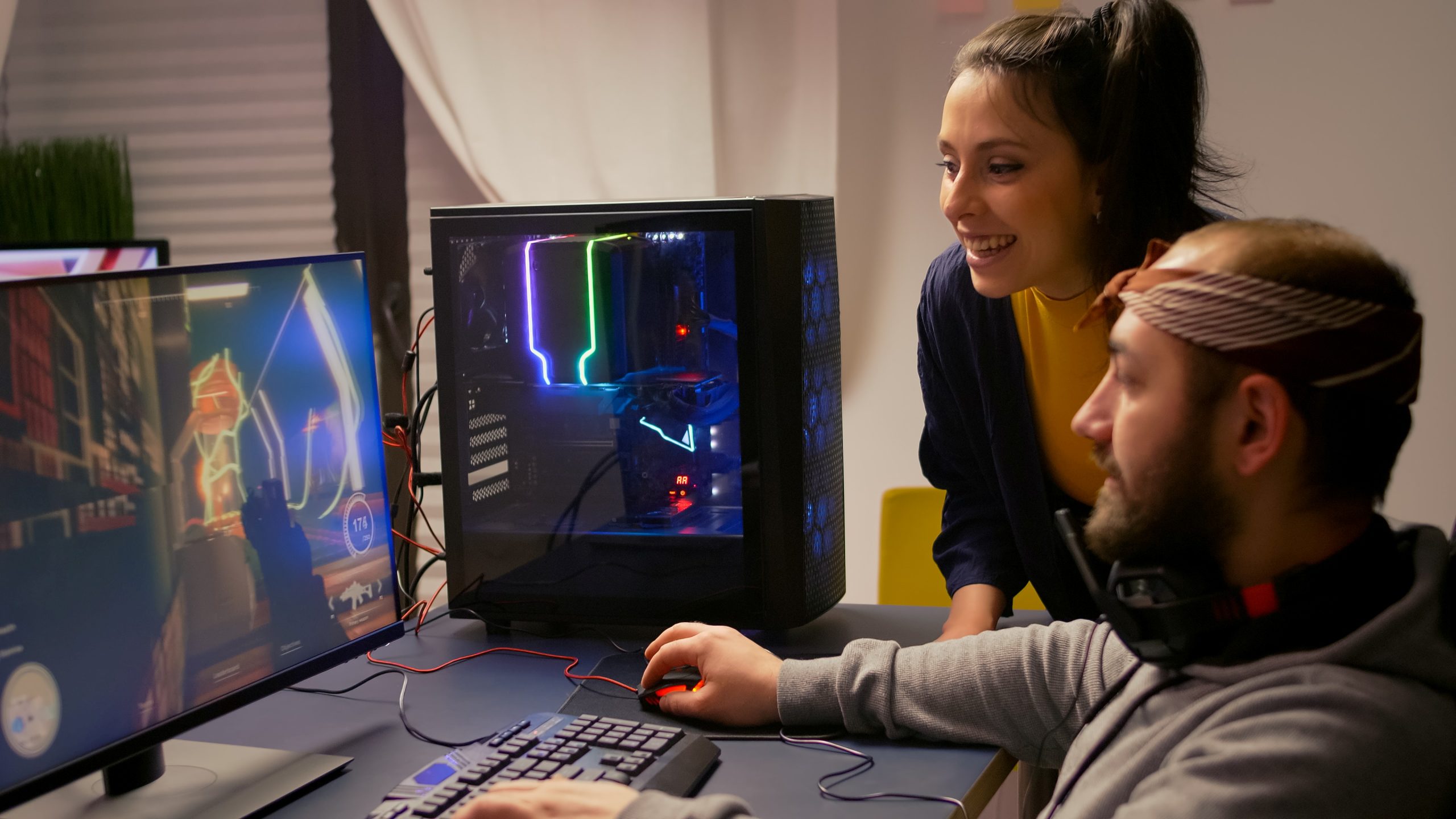
The gaming industry is a complex and dynamic sector, so it should come as no surprise that legal issues are not straightforward in this field. Over the years, challenges around data privacy, AI use, and content moderation have continued to grow and become even more complex. Many issues require greater transparency as in the case of data privacy for younger players, where compliance with regulations such as the EU’s GDPR, US COPPA, and regional data protection laws remains inconsistent across various studios and platforms. Although it is not easy, it is definitely worth following this topic, as understanding the global landscape of gaming regulations is crucial for success in the industry.
Continuing the thought from the previous paragraph, we must look at the inevitable: the development of AI. Whether we like it or not, AI is forcing changes to how games are developed, too, not all of which are welcome. Generative AI tools can write game code, perform the quality assurance testing, as well as create stories, graphics, and other content by sampling the work of writers and artists Here, too, we are talking about defining legal standards for the use of this technology.
Right now, we have many questions that we are still seeking answers to, such as ownership of AI-generated assets, moderation of AI content, and issues with copyright. In addition to strictly legal solutions, the limits of AI use in game development should also be defined by the developers and players themselves, so that we can avoid future misunderstandings and inconsistencies in decision-making.

Monetization is a recurring theme in discussions about the direction in which game production is heading. It is worth pointing out that the main problem with it is not the fact that companies want to make money – the real issue is how they try to do so. To compensate for the high cost of expanding gaming technology, developers tend to sustain their finances by using microtransactions as their primary business model.
Because of that, players are growing weary of pay-to-win system and aggressive monetization that sometimes bypass already established regulations. That is why it is worth opposing abuses such as predatory pricing, pay-to-win systems, and a general lack of transparency – fair monetization is possible, and clear pricing and player-friendly designs are within our reach.
According to the article by Maria B. Garda and Paweł Grabarczyk, the concept of “independent game” is associated with three types of independence: financial (constituted by the developer-investor relationship), creative (developer-intended audience), and publishing (developer-publisher). However, as all these categories are subject to constant modification, it is becoming increasingly difficult to distinguish between traditionally understood indie games and productions from higher tiers. One thing is certain: without common agreement on what counts as a small budget, a small team, or a major financial supporter, the indie label will keep causing confusion and frustration instead of actually serving as a guide to group games.

Digital accessibility in gaming allows everyone, regardless of their ability, to fully participate in wonderful interactive adventures. It encompasses a wide range of considerations, from visual and auditory capabilities to cognitive and physical needs, ensuring that digital content is usable by everyone. Unfortunately, this issue even now is overlooked when designing the player experience – even though we are talking about real needs on a significant scale. It’s not only about making games; it’s about putting player first, promising to grow together and embracing every player along the way. Accessibility is necessary for some and beneficial for all.
In the following years, the industry must also confront a challenge that is less technical but equally urgent: the rise of toxicity and misguided commentary in gaming communities. While players undeniably bring a great deal of creativity and passion to their activities, the discourse they initiate is increasingly diverging from real criticism. If the culture around feedback doesn’t evolve, the innovation will suffer; developers won’t take any risks, players will grow divided, and meaningful dialogue will slowly start to disappear.
That is why I think it is worth ending this list with a thought that applies not only to the gaming world, but also to our actions in various other fields. Therefore, as we enter 2026, it is worth taking to heart these words, which, although not my own, I agree with 100 percent:
“And for heaven’s sake, people, like each other a little more.”

This physical release comes after the launch of the Ultimate Edition, which brought all available DLC to modern consoles in…

Neowiz is now building on that momentum with a strong lineup of future projects.

Many of the discounts are among the deepest seen on GOG in recent months.

One of the main concerns raised by critics involves AI-assisted voice work.

The report also points out a big difference between premium and free-to-play games.

Playground Games is the only studio officially confirmed so far.

Post-apocalyptic Earth? Check. A massive super-heavy tank? Check. Fighting alone against enemy tanks and alien creatures? Check.

The game stood out thanks to its dark fantasy world inspired by the Belle Époque era and a story that…
The goal is to push, pull, or launch enemies off the edge of the level using force, speed, and smart…

The game asks players to bring balance and calm to different living spaces by placing furniture based on real Feng…
Each year, a single warrior is chosen to carry the Lantern of Eternal Flame into lands filled with twisted creatures.

The story of Eternights takes place in a broken world where a drug meant to stop aging has gone terribly…

Alongside the story mode, the game will support online co-op, giving players the chance to team up and take on…

With E3 now gone, the festival has taken its place as the main hub for summer game announcements.

The main activity is exploring quiet, handcrafted environments and taking photos of animals in their natural habitats.
You follow the story of Stephen, an American soldier who wakes up alone and badly injured after a deadly ambush…

Players step into their late grandfather’s study, a peaceful space filled with memories, books, and a telescope pointed toward the…
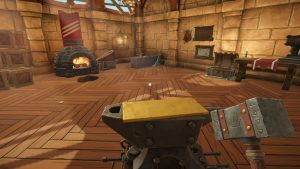
Each day, the King sends orders that must be completed by hand using a range of tools and workstations.

Streetdog BMX takes place across six large, hand-built maps designed for smooth movement and creativity.

At its core, Marble’s Marbles focuses on tight controls and fair challenge.
This physical release comes after the launch of the Ultimate Edition, which brought all available DLC to modern consoles in…
Neowiz is now building on that momentum with a strong lineup of future projects.
Many of the discounts are among the deepest seen on GOG in recent months.
One of the main concerns raised by critics involves AI-assisted voice work.
The report also points out a big difference between premium and free-to-play games.
Playground Games is the only studio officially confirmed so far.
Post-apocalyptic Earth? Check. A massive super-heavy tank? Check. Fighting alone against enemy tanks and alien creatures? Check.
The game stood out thanks to its dark fantasy world inspired by the Belle Époque era and a story that…
The goal is to push, pull, or launch enemies off the edge of the level using force, speed, and smart…
The game asks players to bring balance and calm to different living spaces by placing furniture based on real Feng…
Each year, a single warrior is chosen to carry the Lantern of Eternal Flame into lands filled with twisted creatures.
The story of Eternights takes place in a broken world where a drug meant to stop aging has gone terribly…
Alongside the story mode, the game will support online co-op, giving players the chance to team up and take on…
With E3 now gone, the festival has taken its place as the main hub for summer game announcements.
The main activity is exploring quiet, handcrafted environments and taking photos of animals in their natural habitats.
You follow the story of Stephen, an American soldier who wakes up alone and badly injured after a deadly ambush…
Players step into their late grandfather’s study, a peaceful space filled with memories, books, and a telescope pointed toward the…
Each day, the King sends orders that must be completed by hand using a range of tools and workstations.
Streetdog BMX takes place across six large, hand-built maps designed for smooth movement and creativity.
At its core, Marble’s Marbles focuses on tight controls and fair challenge.
