![[GAMESCOM 2026] Full Circle – How One Developer Is Creating His Dream JRPG](https://www.indie-games.eu/wp-content/uploads/2026/09/Adolfo-Gazzo-Full-Circle-Interview-1-1024x576.jpg)
[GAMESCOM 2026] Full Circle – How One Developer Is Creating His Dream JRPG
At Gamescom 2026, I spoke with solo Peruvian developer Adolfo Gazzo about his upcoming JRPG Full Circle from Second Player…

If you enjoy independent indie game coverage, consider supporting Indie-Games.eu on Patreon. It helps keep the site independent.
As the demand for narrative-driven cozy games keeps growing, one upcoming title is poised to infuse the genre with richer emotional depth. Earlier this year, publisher Serenity Forge and developer CINNADEV introduced Delphinium, a story-forward farming simulator. The game is scheduled to release on PC via Steam and Xbox consoles in 2027, and it will feature Xbox Play Anywhere support.
The gameplay blends familiar farming-sim activities with branching narrative choices. Players can grow crops, fish, cook meals, and complete daily tasks, but every interaction also influences relationships with villagers and unlocks new story events. Conversations, personal conflicts, and player decisions gradually shape Haiyan’s future, leading to multiple possible endings depending on how players guide her life.
We had a chance to catch up with Heidi Borge, the developer behind Delphinium to learn more about it. We touched on the game’s narrative and setting, gameplay elements like mini games, the visual style that catches your attention and what are some of the biggest challenges she faced while developing Delphinium.
Hi! My name is Heidi Borge, though I usually go by Sev online. I’m currently the founder and sole director of my Adelaide-based game studio CINNADEV, working on our first major game release Delphinium.
I fell into game development entirely on accident back in 2019, which was my second to last year of high school. I ended up in a programming class even though I’d never coded before, and it hadn’t been my first choice in subject selection- and ended up loving it more than anything else I’d done up until that point. Digital art had been my main hobby since I was 12, and I loved writing characters and stories, so… all my interests combined nicely into making games!
I started Delphinium in 2021 (or maybe even December of 2020), basically the second I graduated high school. At that point, I had been spending all my free time on game-making assignments for school, so I thought there would be a void left in my life if I didn’t have something to work on all the time. Delphinium’s initial concept was a small-scale, story-based farming sim about two women living in a cottage together in the middle of nowhere, that would “take me a month to make”… more than 60 months on, I can say that my initial estimate was a little off!
I work as the programmer, writer, designer and artist on Delphinium; I’m joined by the incredible talents of composer Starling Tan, graphic designer Hannah Ewart, and animator and 3D artist Ty Hemi. Also, CINNADEV is named after my childhood pet rabbit Cinnamon.
I first started talking to Z, Serenity Forge’s founder, back in August 2021 after we connected on Twitter when I began posting about the game. It’s a bit embarrassing to admit, but at the time I didn’t even know what a publisher was. Still, I knew the opportunity to work with Serenity Forge was one I didn’t want to miss.
Since Delphinium was still in the early stages of development, Z and I stayed in touch until I was ready to properly pitch the game in 2023, when we officially signed. I spoke with other publishers, but I always felt Serenity Forge was the perfect fit. Their focus on impactful, narrative-driven games closely aligns with my own values, and I’m incredibly grateful for their support and faith in the project.
Serenity Forge has contributed so much to Delphinium. Even before our partnership was publicly announced, they were a constant source of advice and support. More recently, they organized Delphinium’s appearance at ID@Xbox during GDC 2026, bringing me to San Francisco to showcase the game for the first time. They’ve also supported the project through marketing, testing, feedback, and other showcase opportunities, with even more to come.
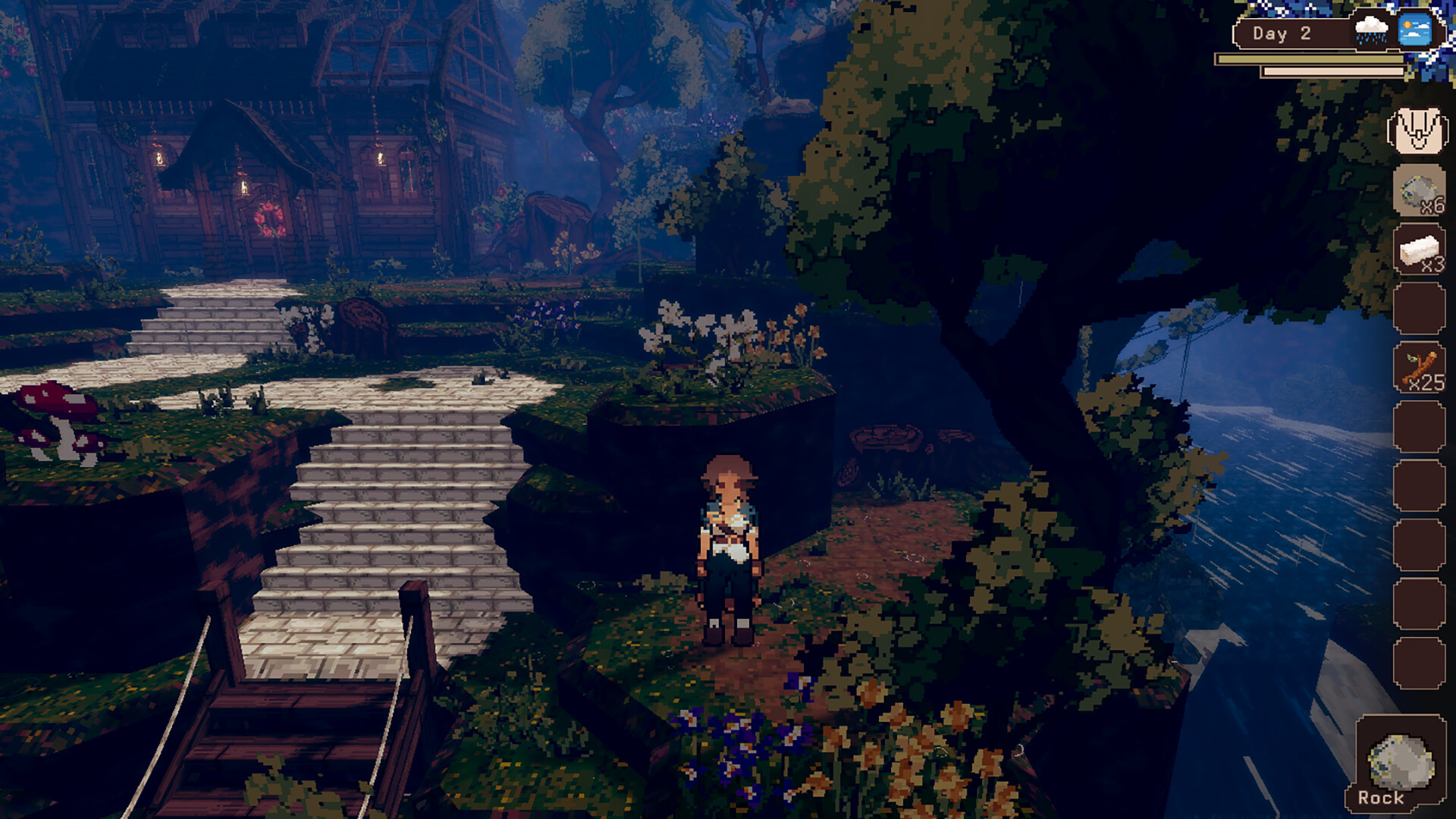
The themes of Delphinium have changed and grown throughout the game’s development. Grief and loss are just as central to the story as connection and community. The story has evolved over the five years I’ve spent developing it, growing alongside me as a person, I started when I was 18, and now I’m 23.
Delphinium is set in a world where, for many people, the future feels bleak. On the fictional continent of Hloris, the story takes place after a devastating war and a failed revolution, leaving many uncertain about what lies ahead.
That feeling of hopelessness is very prevalent in our world today. Even in the games industry, the future can feel uncertain. The rise of AI has reduced opportunities for creatives, COVID disrupted many young people’s formative years, and even travelling to San Francisco for GDC this year felt daunting.
At its core, Delphinium is about struggling to find your place in a world that feels like it has no place for you. It explores why each character left mainstream society to seek refuge in an isolated mountain village, and how they slowly rediscover comfort and hope through one another, even when nothing is certain.
Delphinium stands out in the farming sim genre through its narrative focus. It’s a story-driven game first and a farming sim second. Building connections with the characters and world is prioritized over farming, cooking, and crafting, though those mechanics are still important.
Through Delphinium, I wanted to use a farming simulator as a vehicle to tell a story, rather than using a story to enhance the farming sim setting. Because the genre has so many familiar tropes, there are opportunities to subvert player expectations by changing or temporarily removing gameplay mechanics for key story moments.
A simple example comes on the fourth day, when Haiyan is kicked out of the village store after a tense conversation. The player can’t trade there for the rest of the day. I wondered if players would find being locked out of a core mechanic frustrating, but to me, that’s exactly the point.
Delphinium’s story takes place over just one in-game month. Once that month ends, so does the game. Rather than an endless loop spanning years, I wanted to use the farming sim genre to tell a concise, satisfying story. It isn’t built to last forever, and I think that’s part of what makes it unique.
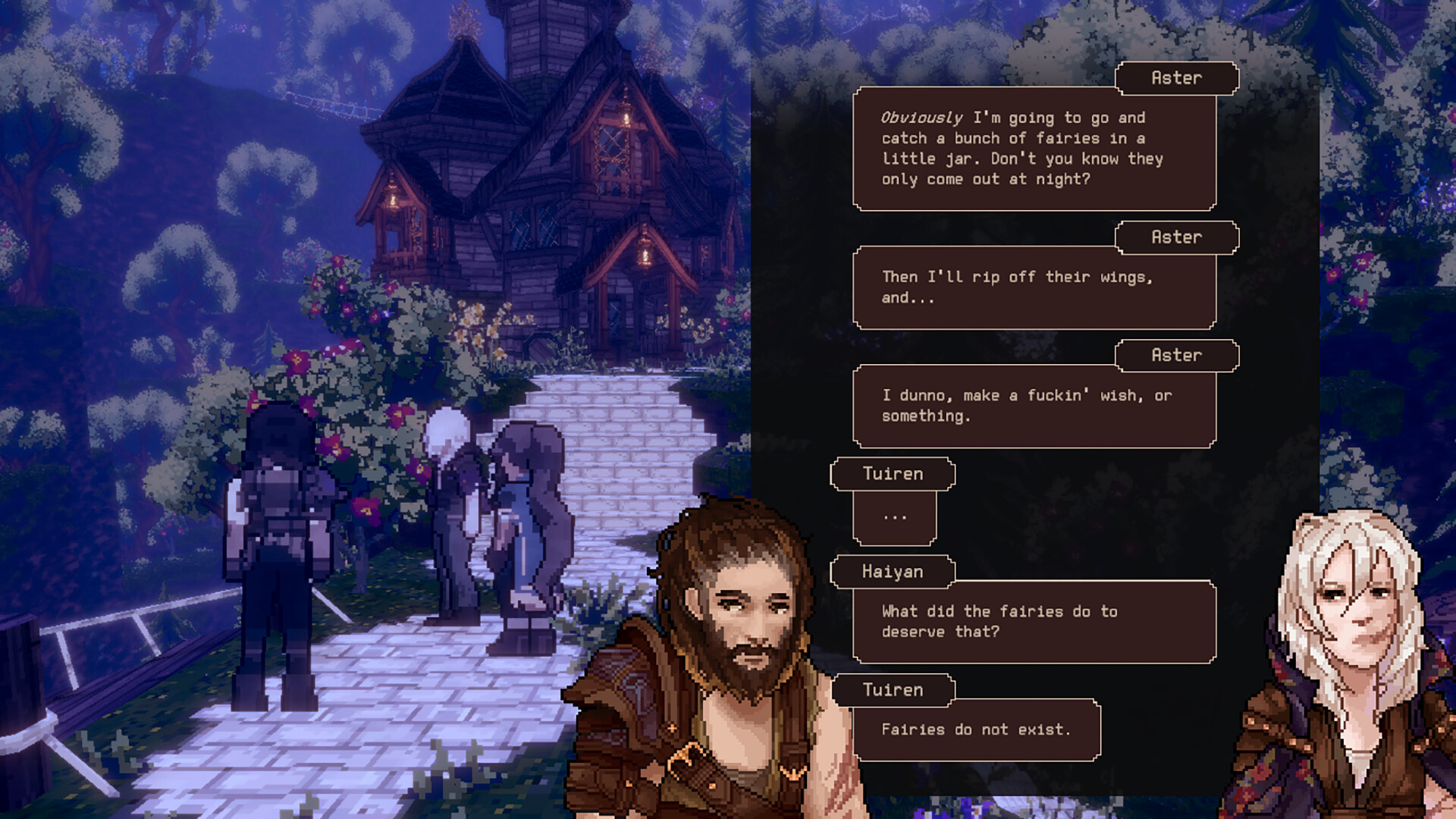
Delphinium’s quest structures are time and story based! On certain days, certain events will occur, and the player will play through a variety of scenes and gameplay requirements to progress to the next day. These are the main quests. The player also has side quests available to them through a quest board in the centre of the village, where they can assist their fellow villagers with shorter day-to-day tasks.
Each day, the player is also given the option to witness smaller story events between different characters. Every character’s individual storylines play out depending on who you do and don’t spend your time with characters locations on certain days will change depending on whether or not you’re on their ‘route’, and their relationships with the player character Haiyan, as well as one another, will evolve depending on where you spend your time.
I like to use the term ‘evolving narrative’ because I wouldn’t necessarily say the story is ‘branching’! Delphinium’s story takes place over just one month of in-game time, and the story unfolds at a set pace you can’t be everywhere and do everything, and you’ll have to choose where you’re spending your time and who you’re spending it with. And those choices will shape certain parts of the narrative.
As a whole, Delphinium’s story has set major events that will play out the same in every playthrough – its major plot beats remain the same, but the individual stories and finer details of each of its characters evolve differently based on player choice. There aren’t necessarily ‘branches’ in the story, but the player will still be able to feel the impact of their choices through how the characters around them change and grow.
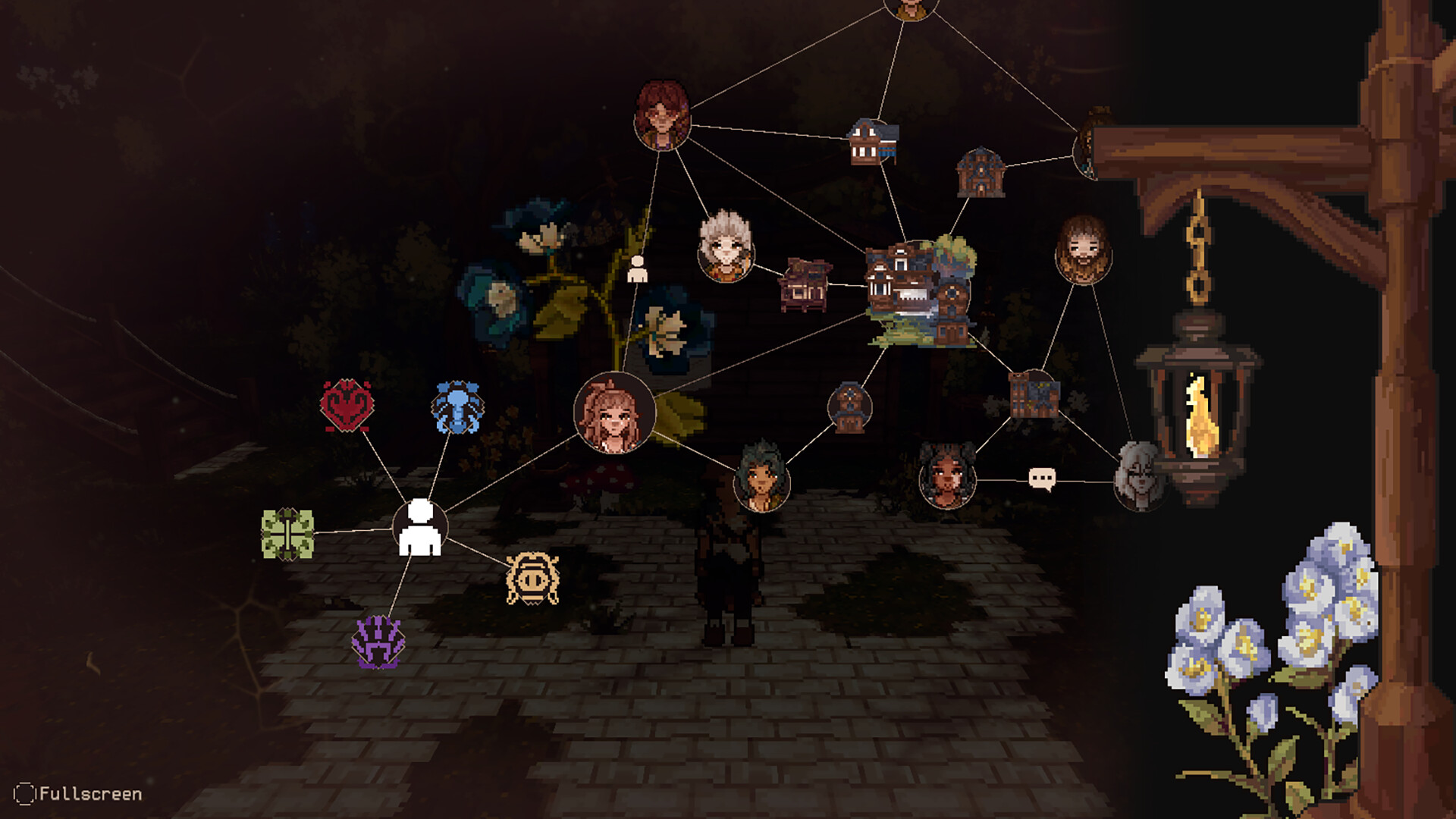
Delphinium has nine main characters, though whoever is present on certain days will depend on where the player is up to in the story! The game also doesn’t include relationship and romance systems in the traditional sense. Characters don’t have friendship bars that go up and down when you talk to them or give them gifts – their relationships with each other, and with Haiyan, depend on who the player chooses to spend their time with.
There is romance in Delphinium, but not in the traditional farming sim sense! Haiyan isn’t intended as a player insert, rather, she’s her own character, with different, individual relationships and dynamics with the rest of the game’s cast. A select few of her relationships with other characters can become romantic but this isn’t up to the player’s discretion. Rather, some storylines will naturally evolve into romance, whereas others will always remain platonic.
Minigames are a part of Delphinium’s day-to-day gameplay loop the player can complete some minigames (such as fishing, cleaning, and darts) to collect different items, and others (such as cooking and crafting) are completed to successfully combine a collection of items into something new.
Almost all of these minigames cost stamina, which is the main resource in play on each day of Delphinium once the player runs out of stamina, there won’t be much left they can do before moving on to the next day. I want the gameplay experience to focus on the player making the most of every day, managing their stamina and their time well through the minigames and other gameplay features available to them, and choosing what to prioritize in the limited time they have.
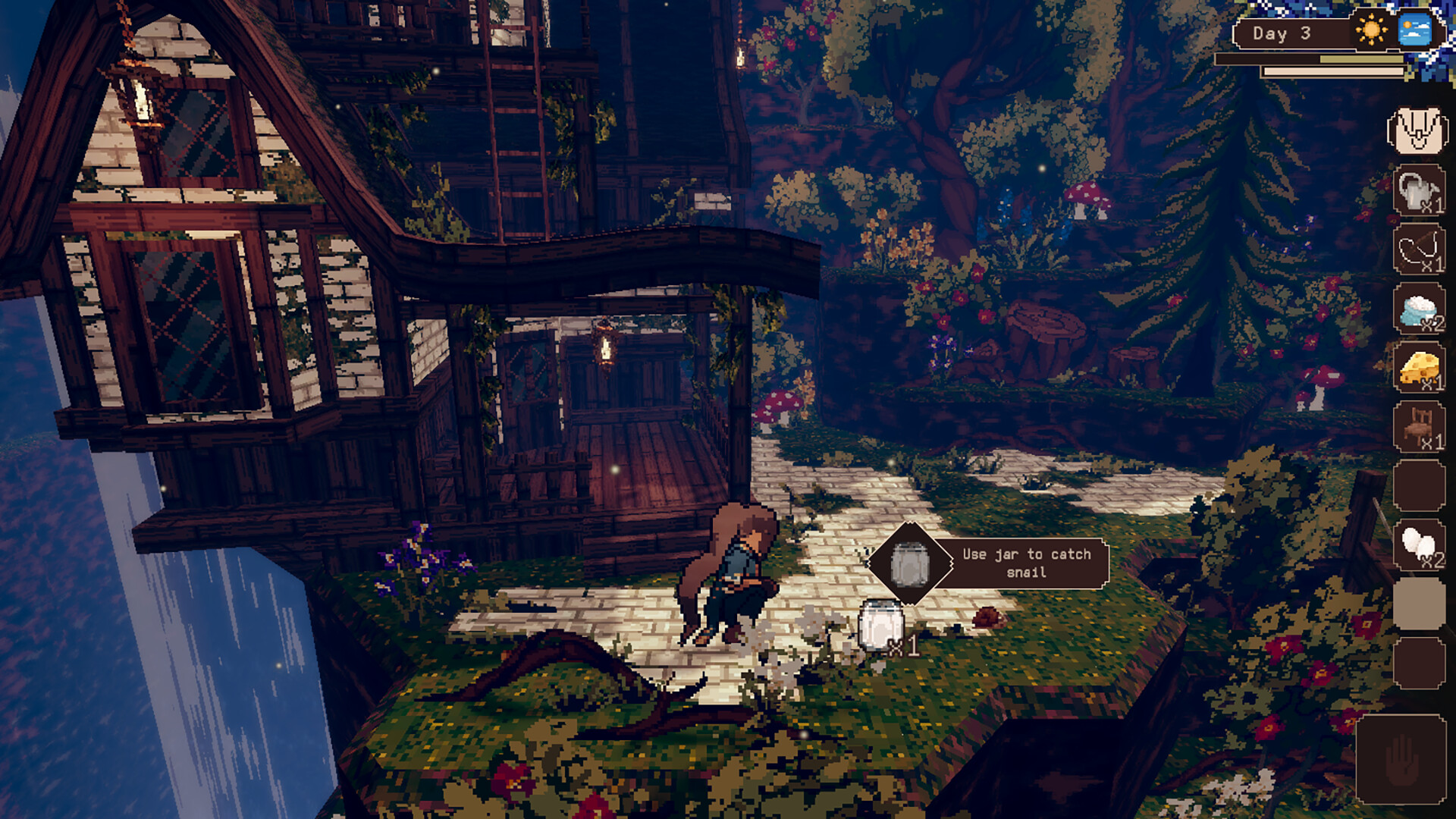
About 80% of Delphinium’s story is set in a small, isolated mountain village with a population of just nine people. Located on the fictional continent of Hloris, this village serves as the setting for the game’s first, second, and fourth chapters.
The third chapter, however, takes place in Simul, one of Hloris’ three major regions. Built across hundreds of small islands, Simul is a bustling centre of merchant trade, filled with lively market stalls and offering a sharp contrast to the village’s quiet, peaceful atmosphere.
Set a few years in Haiyan’s past, this chapter lasts only a few in-game days, but gives players a deeper understanding of Hloris while revealing key moments from Haiyan’s life.
To be honest, I think 200 recipes is pretty standard for this sort of game, maybe even on the lower side. Cooking and crafting systems are usually very expansive in farming sims. In Delphinium, cooking recipes restore stamina, crafted objects can decorate your home, and new recipes can be discovered through trial and error by combining different ingredients.
What makes these systems meaningful, though, is the gifting system. You can give any item to your fellow villagers and see their response, with each character having around fifty or more unique gift dialogues. Gifting is a way of getting to know the villagers better, with very little impact on gameplay itself.
I want players to feel excited about discovering new dialogue through gifts, so that when they unlock a new cooking or crafting recipe, they can think, “Oh, this character would love that!”
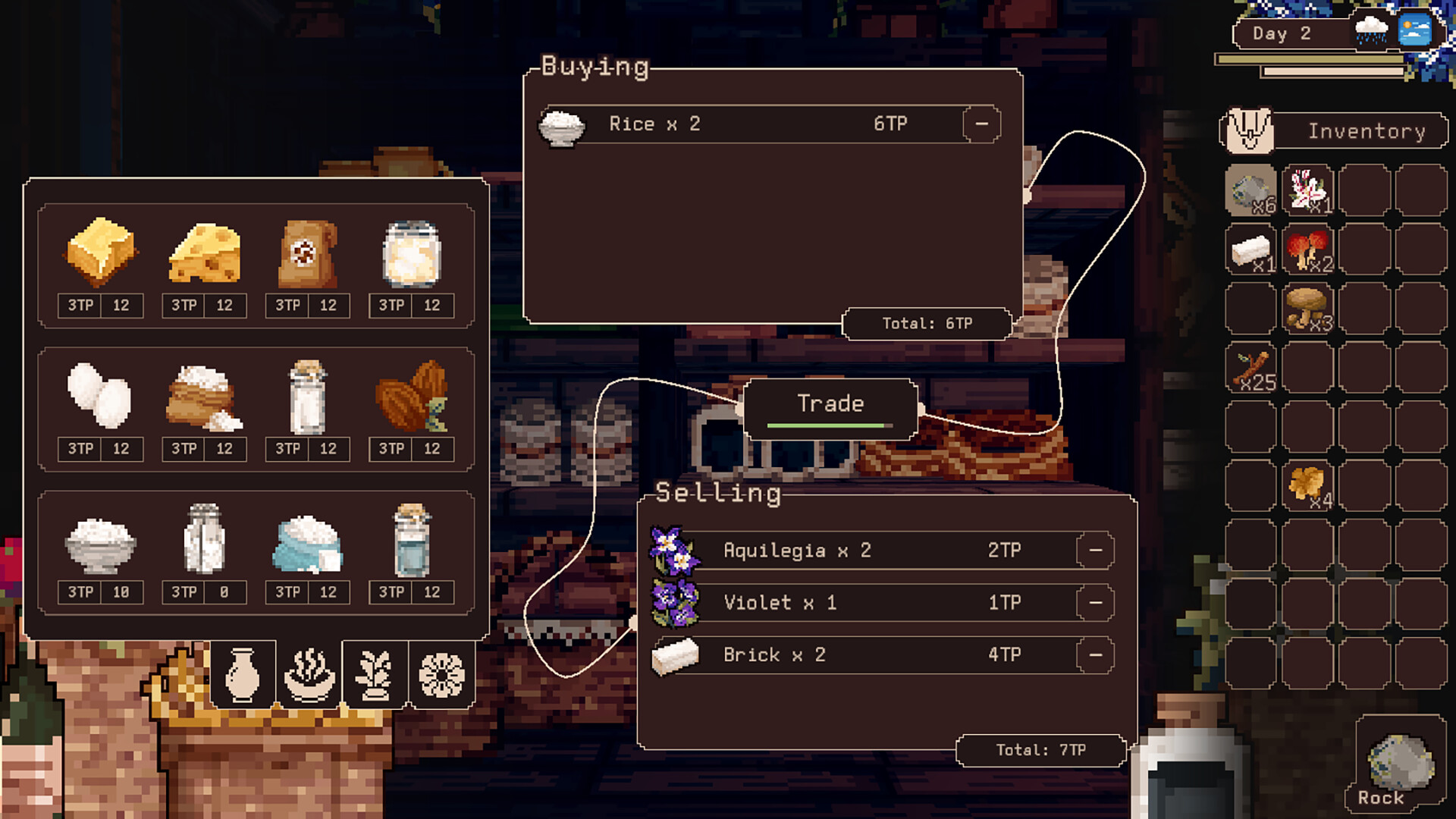
It’s funny to say, but Delphinium’s visual style started out of necessity. When I began the game, I wasn’t experienced with 3D art, so I leaned into 2D sprites in a 3D world because it better suited my skills. As I became more comfortable with 3D development, I realized the 2.5D style was part of what made Delphinium unique. I drew inspiration from Octopath Traveller, but wanted to ensure Delphinium had its own distinct identity.
Delphinium is made in Unity. I use Clip Studio Paint and Procreate for pixel art, and occasionally Blender for 3D modelling. Most buildings, objects, and even the terrain are created directly in Unity using custom mesh generation scripts. Many of the game’s 3D models are generated through code, allowing me to combine programming and art in a way that plays to my strengths.
Almost all textures and sprites are hand-drawn, with the exception of the character spritesheets. The environment uses simple, lineless pixel art with a consistent scale and limited colour palette, helping the world feel cohesive. Post-processing effects, particularly the light-blue distance fog, are also essential to defining depth and enhancing the 2.5D look.
The character sprites originally used hand-drawn animations inspired by classic RPGs, but as the project grew that became impractical. I switched to creating and animating 3D character models, then capturing them at a low resolution to produce 2D pixel-art sprites. This allows for much more expressive animations, including eight-direction movement instead of four.
I think the biggest challenge in Delphinium’s development has only really become apparent this year. I don’t consider myself a solo developer, as the project wouldn’t be possible without the support of the team, our investors, friends, and family. Still, I complete most of the work alone in the corner of my living room.
From 2021 through 2025, I was content working like this, but more recently I’ve realized it can be quite lonely. This year I’ve had more opportunities to collaborate, workshop ideas with friends, receive testing feedback, and communicate with Kickstarter backers, and I’ve discovered how much I enjoy working closely with others.
I believe game development is an inherently collaborative process, and that “solo dev” is a myth. There have been many moments this year where I’ve thought, “I wish I had someone to run this by.” For my future games, I’d love to work alongside my friends as creative leads.
At Gamescom 2026, I spoke with solo Peruvian developer Adolfo Gazzo about his upcoming JRPG Full Circle from Second Player…
![[GAMESCOM 2026] Hell Maiden Interview: AstralShift on Self-Publishing, Early Access and An Unlikely Trip Through Hell](https://www.indie-games.eu/wp-content/uploads/2026/09/Hell-Maiden-5-1024x576.jpg)
At Gamescom 2026, we spoke with AstralShift co-founder, writer and marketing manager Patrícia Silva about rougelike Hell Maiden.
Built by a self-funded team of seven, Vahrin’s Call is an ambitious fantasy RPG inspired by Fable, The Elder Scrolls…
We spoke with cosplayer Prince de Guzman, who is known for his transformations inspired by horror, anime, and video games.
Unless you’re deep in the indie gaming scene, Naphtali Faulkner might be a new name to you. But as the…
We had the opportunity to speak with Damian Czajka from MOUSE: P.I. For Hire Team.
We had the opportunity to talk with Piotr Nowakowski from Bloober Team about his work on Cronos: The New Dawn.
![[INTERVIEW] Manafinder II Is a Big Step Up – Here’s What the Developer Told Us](https://www.indie-games.eu/wp-content/uploads/2026/04/Manafinder-II-interview-1024x683.jpg)
In the interview, we discussed the game’s mechanics in greater detail, what players can expect from the sequel, and the…
We had the opportunity to sit down with the brilliant minds behind Business Goose Studios: Beau Vankemenade, Sander Ambroos, and…
![[EXCLUSIVE] Like a Bloody Storm – Interview with Kazusou Oda (Coda)](https://www.indie-games.eu/wp-content/uploads/2025/12/Oda-Kazusou-Interview-1024x576.jpg)
We had an opportunity to talk with Oda Kazusou, a theme song artist for JoJo's Bizarre Adventure.
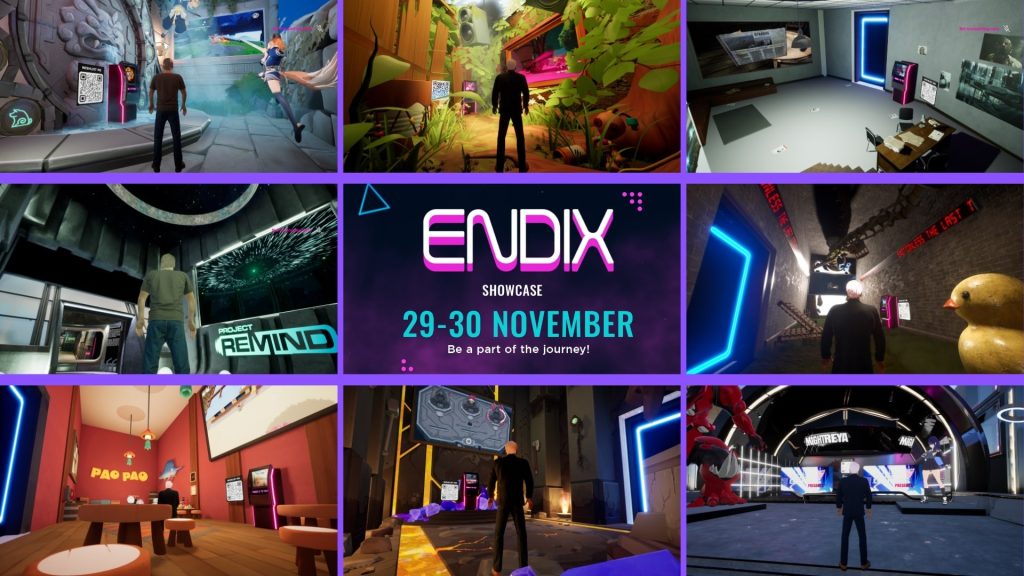
Once inside, visitors will find a fully immersive world where exhibitor booths are crafted using real in-game assets.
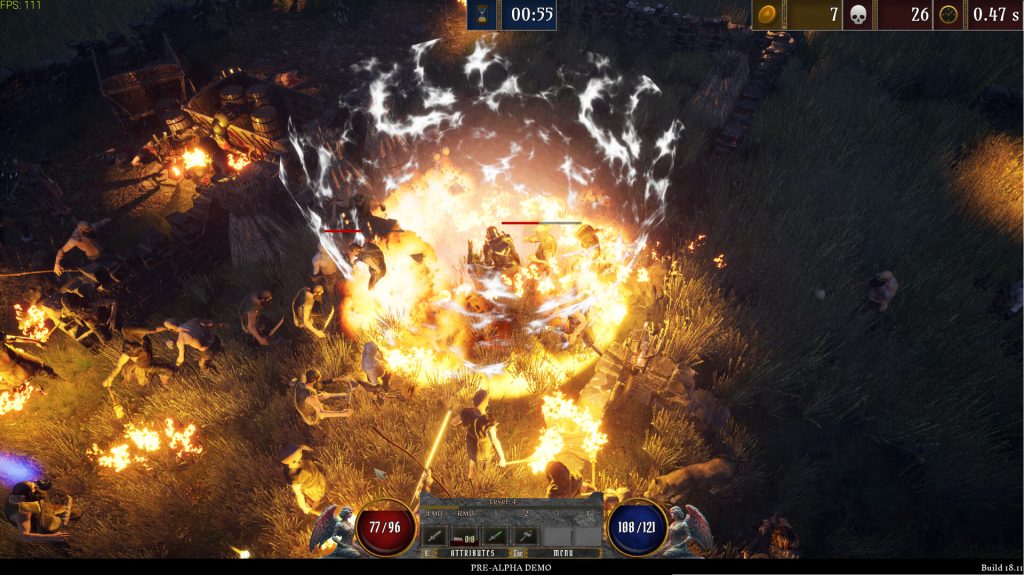
We talked to Tomasz Janicki about the details regarding Cult of Shadows.
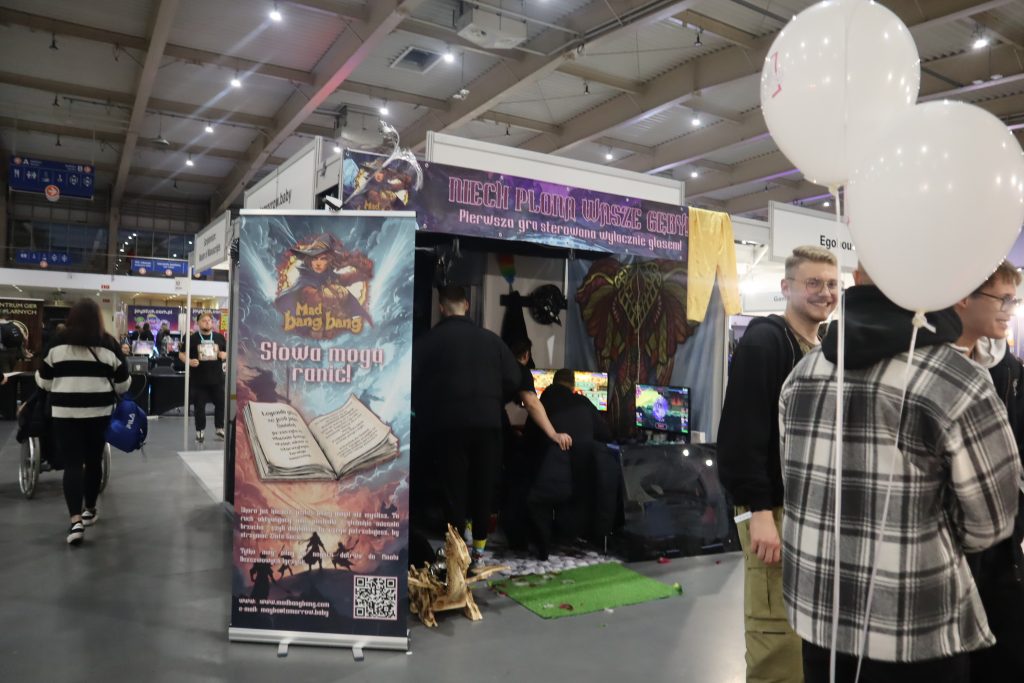
We talked to Piotr Ruszczak, one of the creators of Mad Bang Bang, about the details of this production.
We asked Kiryl, Marek, and Jakub to reveal the secrets of their work to us.
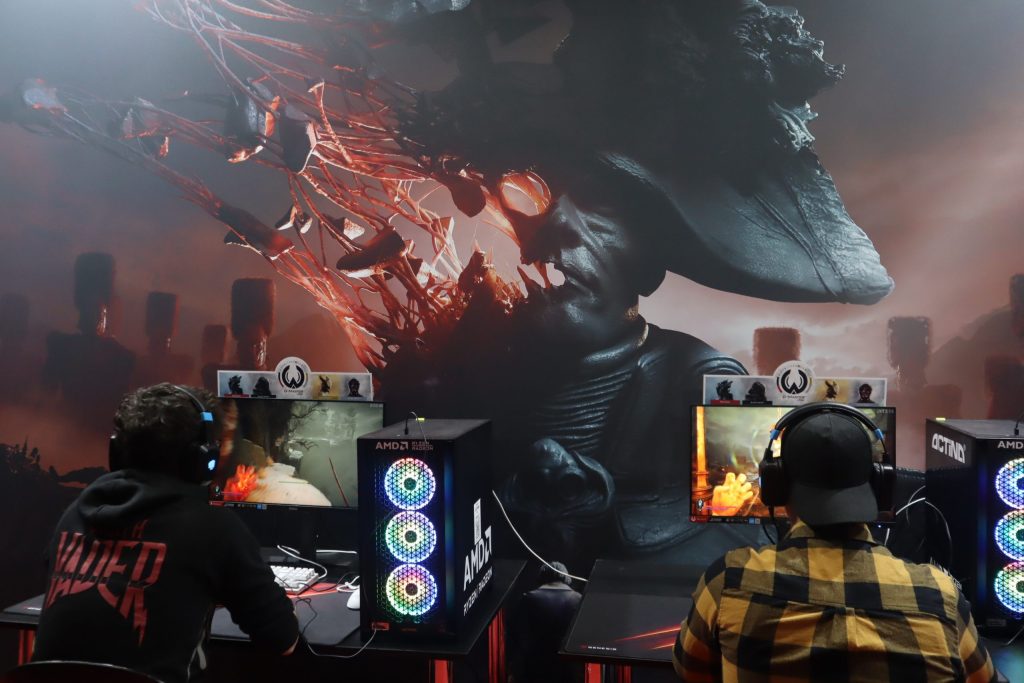
Will Valor Mortis become the hit of 2026?

We had the chance to ask Yannick Audéoud, developer behind Orbyss, some questions about the game.
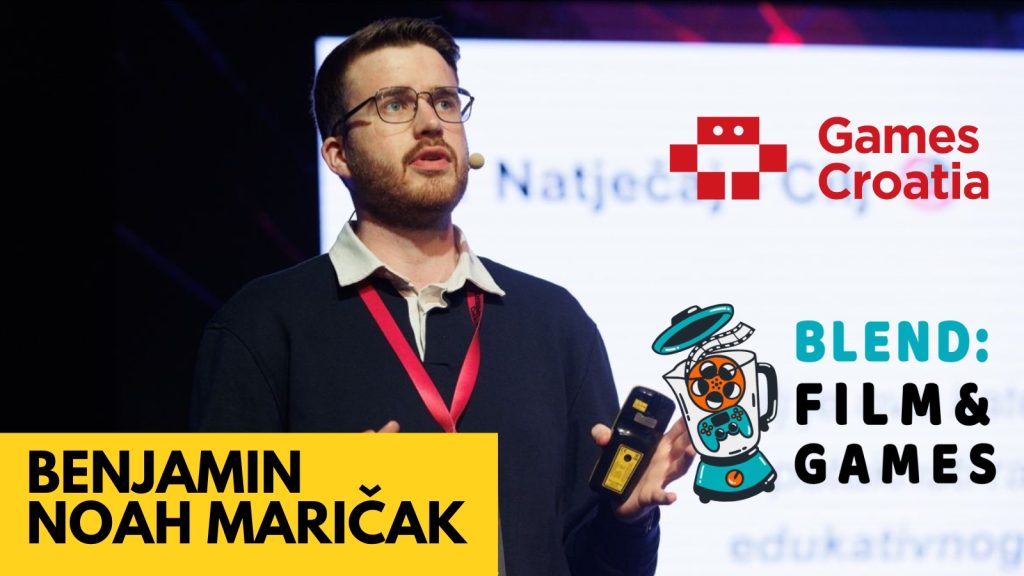
Maričak actively works to grow and promote the Croatian gaming industry while simultaneously fostering collaboration with the film industry.
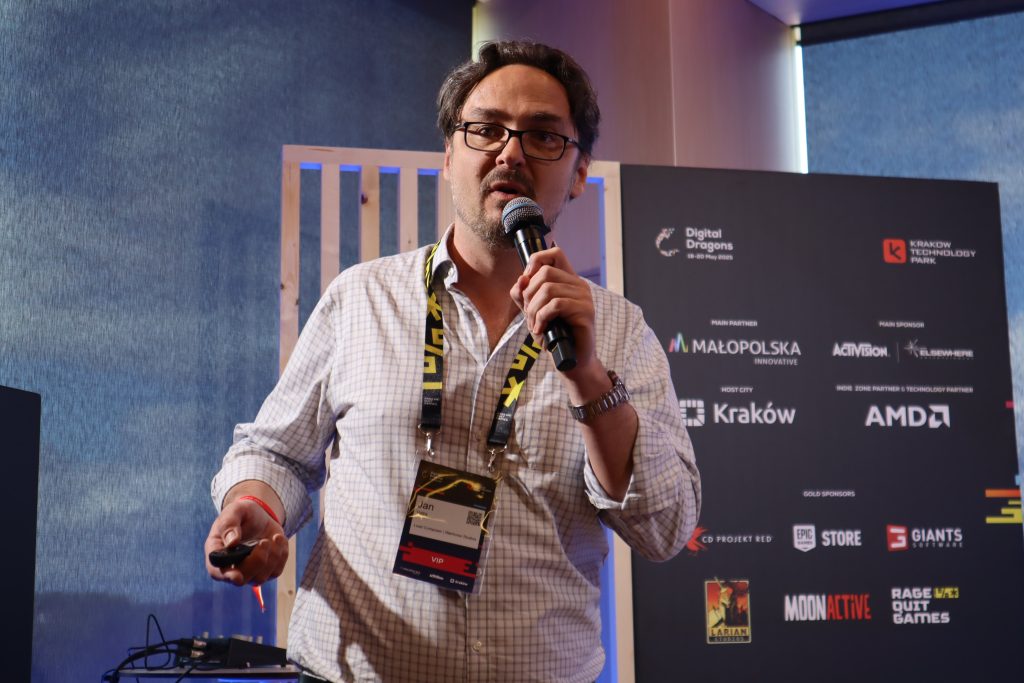
During our interview, Jan revealed the secrets of composing music for both KCD games.
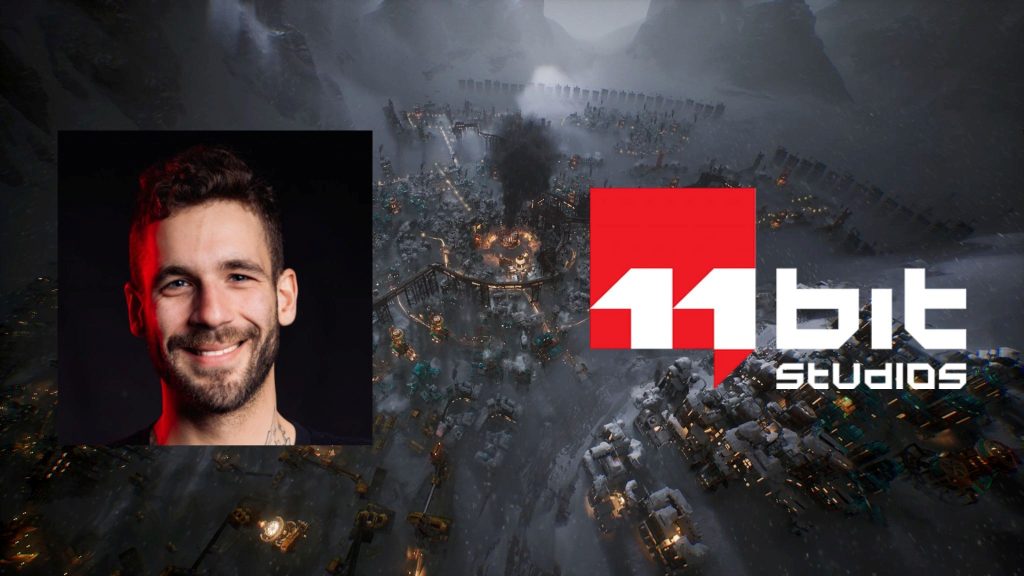
In this interview, we asked Paweł Charzyński about his experience working on Frostpunk 2 as VFX coordinator.
![[A BIG INTERVIEW] Toukana Interactive Co-Founder Zwi Zausch on the Gaming Industry](https://www.indie-games.eu/wp-content/uploads/2025/09/Dizajn-bez-naslova-2-1024x576.jpg)
Zwi Zausch provided a deep dive into the gaming industry from an indie developer's perspective.
