![[GAMESCOM 2026] Clive Barker’s Hellraiser: Revival Preview – Ready to Open the Box](https://www.indie-games.eu/wp-content/uploads/2026/09/Clive-Barkers-Hellraiser-Revival-08-30-26-1-1024x576.jpg)
[GAMESCOM 2026] Clive Barker’s Hellraiser: Revival Preview – Ready to Open the Box
Hellraiser: Revival preserves the franchise’s sex, gore and psychological horror while delivering approachable survival-horror gameplay.

![[EARLY ACCESS] Hive Blight – Where Autobattler Meets Roguelite](https://www.indie-games.eu/wp-content/uploads/2026/03/Hive-1.jpg)
If you enjoy independent indie game coverage, consider supporting Indie-Games.eu on Patreon. It helps keep the site independent.
Hive Blight is a mashup of auto-battler and roguelite, two genres I didn’t know I needed combined, but here we are. In this game, you place insect warriors on a battlefield, and it all plays out in real time. But the magic lies in the roguelite twist: every run is a wild, unpredictable ride. What really stands out is the theme. We’re talking about insects, those tiny critters we often find gross. But Hive Blight flips the script, giving them cartoonish charm that’s oddly captivating. The story is centered around battling a sinister fungal corruption.
Right now, the early access offers three clans, each with its own flavor: ranged fighters, tanks, healers and so on. Between the three, you get over 30 unique characters, and each run takes you through three chapters, each ending with a boss fight. Along the way, you’re picking up gear and trinkets, some boost your attack, some give you defense, so every run feels like a new chance to experiment. And the map design? It’s a horizontal layout with nine various spots where you decide your path, either to do battles, shop or find upgrades.
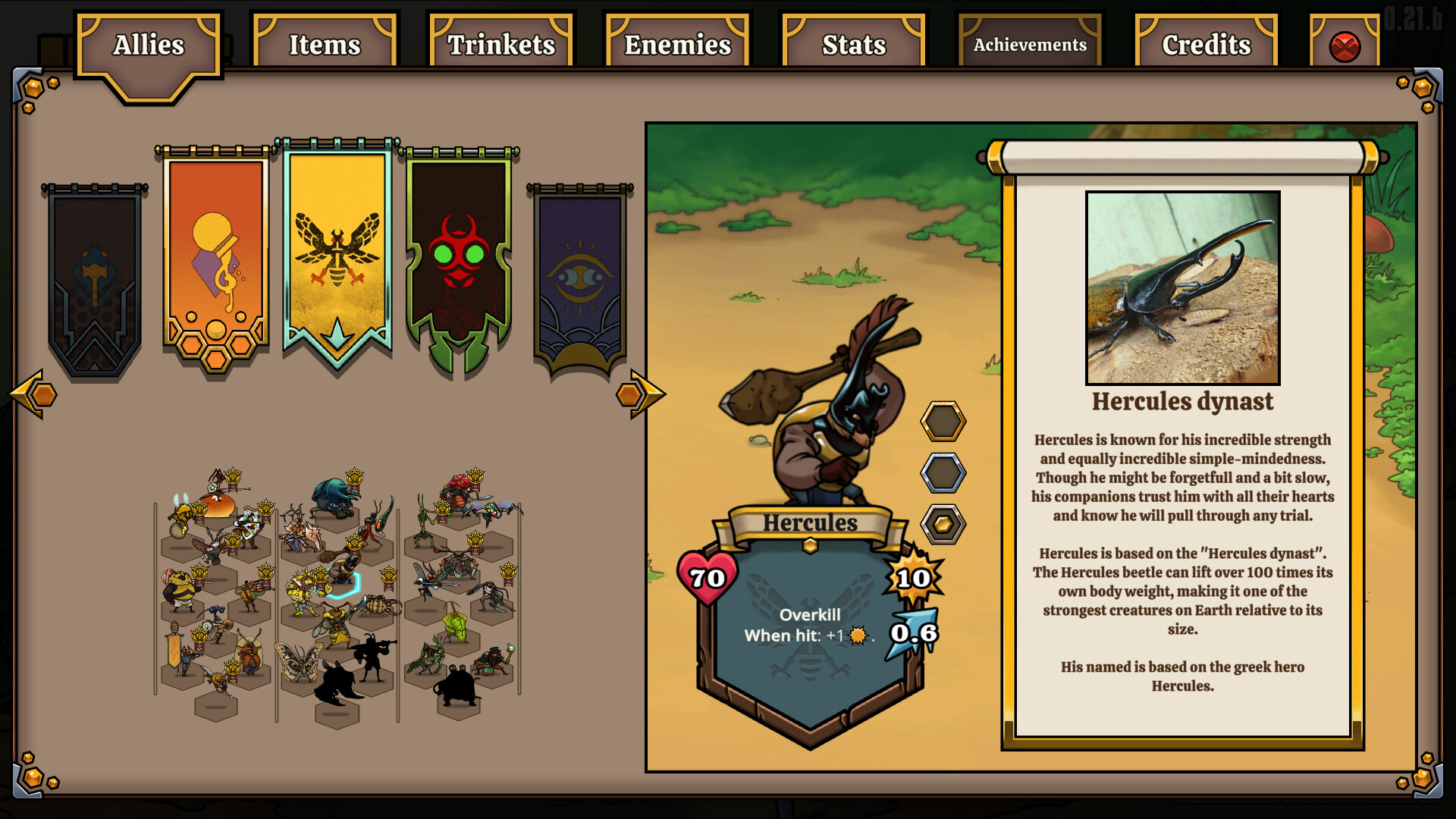
Is it fun? Absolutely. Hive Blight hooks you with a polished, easy-to-learn gameplay loop, but it never holds your hand. Each unit feels distinct, with charming animations and even fun bug facts that make you genuinely care about their survival. The real magic lies in the strategy: mixing clans, balancing stats, and evolving your squad so it grows stronger with every run.
You can only bring seven units into battle, but the system is so well-designed that it encourages experimentation. Every unit is interconnected, so understanding your preferred lineup is key. Each one has its own health, attack damage, and attack speed, while different clans add meaningful variety. Bees specialize in healing, while Beetles, for example, offer high health and heavy damage at the cost of slower attacks. On top of that, each unit can evolve up to three times, significantly boosting their effectiveness.
What stands out most is how clearly defined each unit’s strengths are, making team composition feel rewarding. Keeping track of abilities is essential as some units reflect damage with spikes, while others enable strong synergies. For instance, pairing two durable frontline tanks with archers and a healer can create a surprisingly effective setup.
That said, this isn’t an easy game. Resource management plays a huge role. You’ll need to carefully balance your honey and health potions. Health acts as a shared resource, you start each chapter with 100 points, which are used to heal units between battles, but it steadily depletes. Saving enough for boss encounters becomes crucial. With enough health potions, you can even resurrect fallen units and retry after a defeat. Honey, on the other hand, is used for merchants and events, making every decision feel important.
At the start of each run, you’re given three scrolls, and using them wisely can make all the difference. They weaken enemies and often determine whether you survive tougher encounters. The game also features both normal and elite battles, with elite fights posing a serious challenge, typically placing you against a mini-boss backed by a full squad of enemies. As you complete chapters, higher difficulties unlock, and that’s where the real test begins. Even then, the game rarely feels unfair. It gives you the tools you need to succeed, striking a careful balance where victory feels earned, not handed to you.
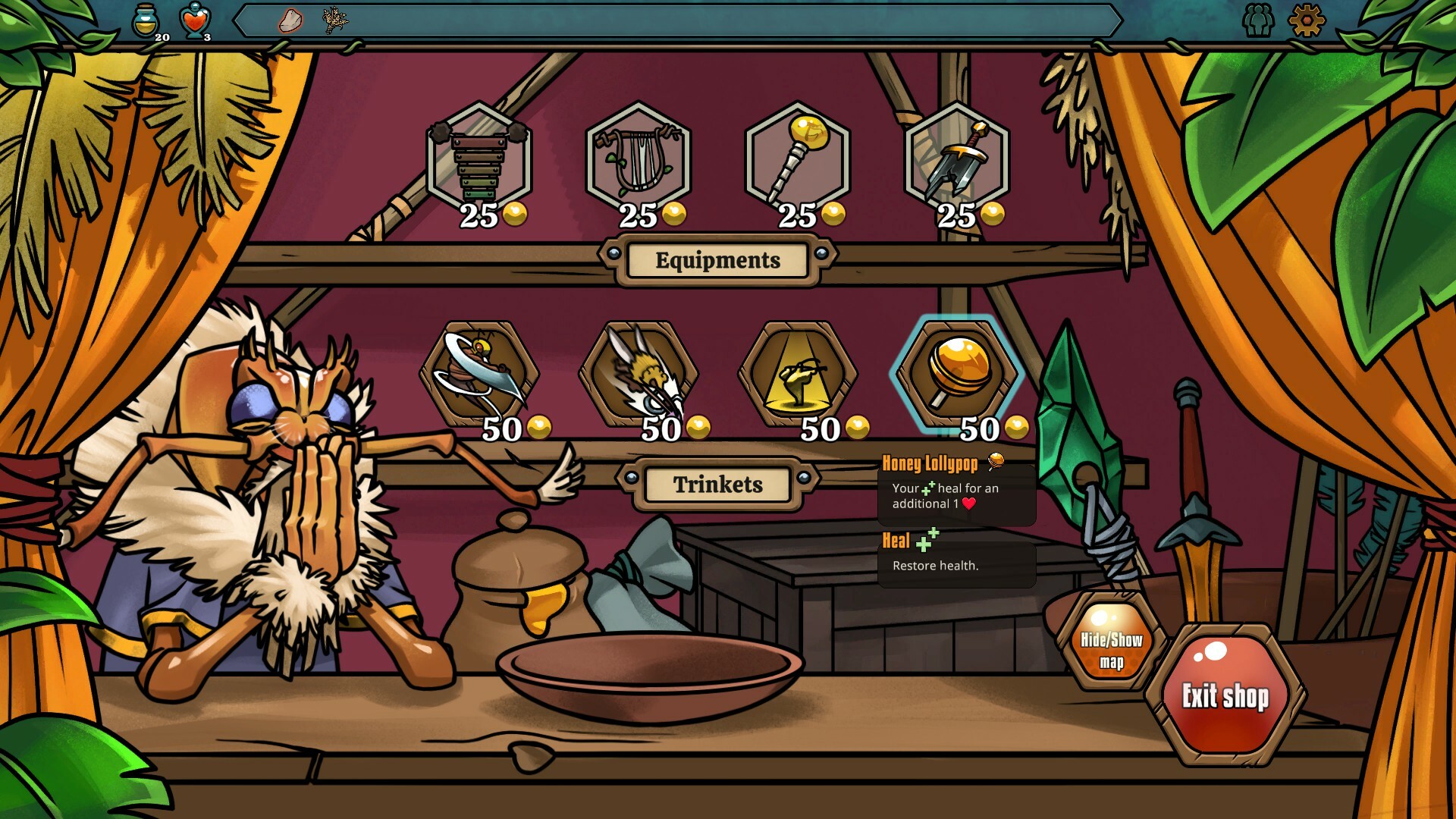
Outside of battle, you can discover new equipment that’s upgradeable, for instance, by visiting a blacksmith, you can combine two identical shield items to forge something far more powerful. You’ll also come across artifacts that stack with one another, offering bonuses like increased attack speed or attack power. With a wide variety available, you’ll definitely want to tailor your choices to complement your lineup. Everything in the game revolves around synergies, having a solid plan and executing it well. You will fail at times, but you’ll never feel frustrated, because progression is swift and the game never wastes your time.
Even in early access, there’s a decent variety of enemies and bosses. That said, I was a bit disappointed with the battles themselves. As mentioned, it’s an auto-battler, and while you can taunt enemies to target specific units or influence who they attack first, there isn’t much else you can do. You can’t throw anything to shake things up mid-fight, and positioning is limited to predefined spots, so despite its importance, the tactical side feels somewhat constrained. I really wish the battles had more depth or flair.
One thing worth pointing out is that some balancing is still needed, healing, in particular, feels quite strong compared to other abilities at the moment. In the end, if you’re a fan of roguelites with an auto-battler twist, Hive Blight is absolutely worth a try. It’s only going to improve throughout Early Access, and even now, it’s a polished, thoughtfully designed game that knows exactly what it wants to be. You won’t run into any major bugs or technical issues, and given its affordable price, it’s well worth your time.
Hellraiser: Revival preserves the franchise’s sex, gore and psychological horror while delivering approachable survival-horror gameplay.

Swan Song creates a peaceful and forgiving puzzle space without removing the challenge that makes solving a difficult puzzle rewarding.
Mortal Shell II starts brilliantly but grows repetitive and exhausting, while remaining a rewarding and ambitious Soulslike sequel.
![[GAMESCOM 2026] Terranigma Preview – A Lost SNES Classic Returns in 2027](https://www.indie-games.eu/wp-content/uploads/2026/08/Terranigma-1-1024x576.jpg)
After more than three decades of limited availability, Terranigma is returning in 2027. We played its enhanced re-release at Gamescom…

Reading another person’s mind is often presented as a desirable superpower, but Sister Other Paranoia immediately understands why it could…
Forsaken Realms: Vahrin’s Call is exactly the kind of ambitious, slightly clumsy fantasy RPG that used to be far more…
![[Early Access] 2nd EVE – Sci-Fi Action RPG That Lacks a Sense of Stakes](https://www.indie-games.eu/wp-content/uploads/2026/08/2ND-EVE-1024x576.jpg)
2nd Eve is a space-set action RPG in which we strive to save humanity.
![[PREVIEW] Dreamcards – Strategic Exploration of Consciousness](https://www.indie-games.eu/wp-content/uploads/2026/08/Dreamcards_20260810_233631_0000-1024x576.jpg)
Dreamcards is a roguelike deckbuilder centered around dreams and nightmares.
![[Early Access] OFFBEAT – Incredibly Fun Way to Start a Music Career](https://www.indie-games.eu/wp-content/uploads/2026/08/Offbeat_20260808_201446_0000-1024x576.jpg)
In OFFBEAT, we play the role of a jobbing composer who is launching their music career.
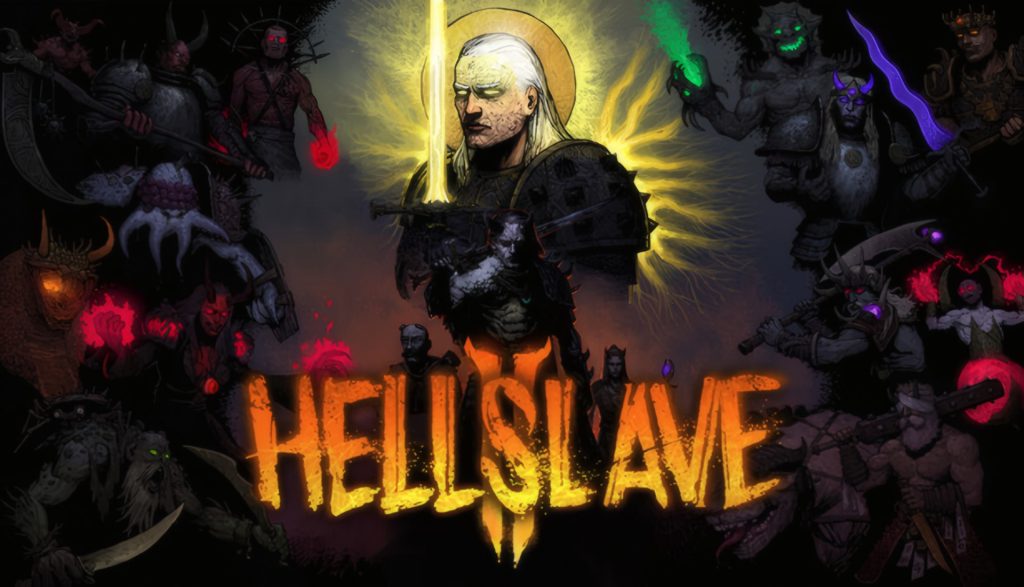
HellSlave II retains the original’s oppressive atmosphere, morally grey world and striking art while adding a larger world, randomized loot…
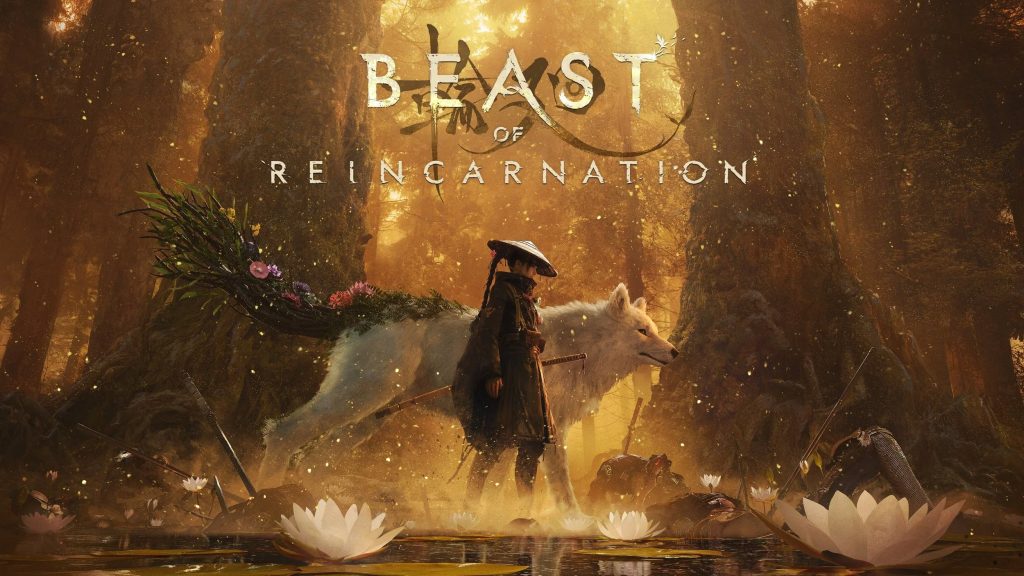
Beast of Reincarnation is an ambitious but uneven action RPG elevated by satisfying parry combat, beautiful art direction and the…

K-pop Idol Stories: Road to Debut captures the pressure of building idol group, but its management systems never explore that…
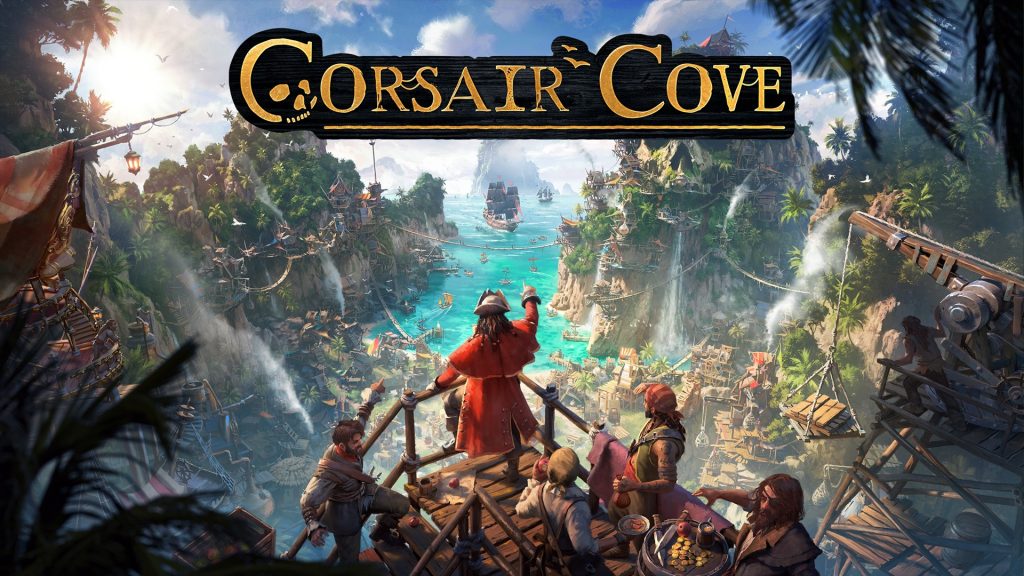
Hooded Horse keeps finding strategy games that know their audience, and Corsair Cove extends its impressive run of excellent city-builders.
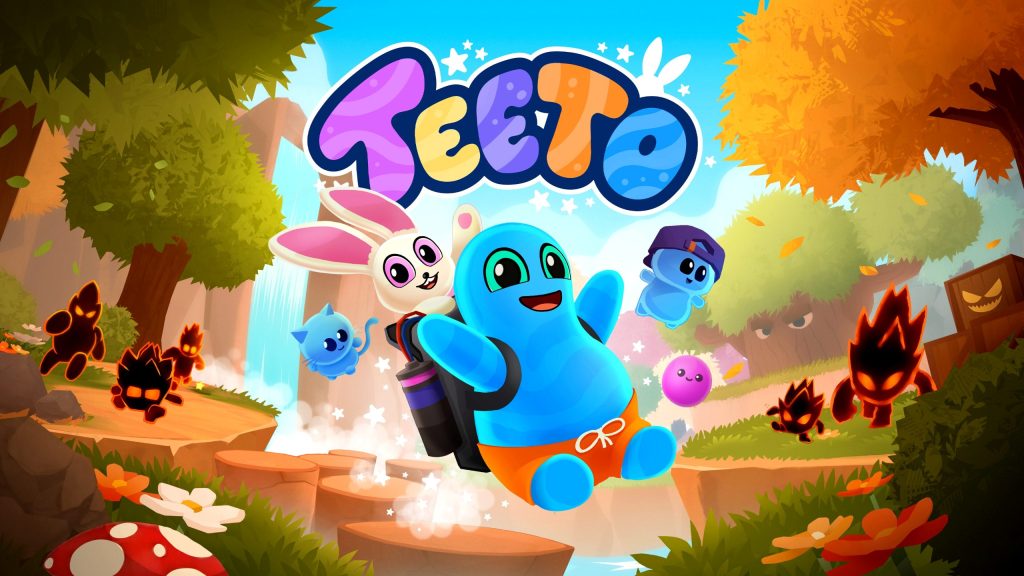
Teeto is a warm, cozy, creative and highly enjoyable 3D platformer that understands why classic collectathons remain so appealing.
Turnip Mountain stands out for its combination of a unique control system and a minimalist approach.
Dystopicon is an imaginative and memorable narrative experiment with sharp social commentary, engaging world-building and several wonderfully absurd scenarios.
Maneki Mania is an incremental game centered around petting a lucky cat.
XeGrader Plus delivers colorful retro shooting, but basic mechanics, a short campaign and paid retro modes make its €20 price…
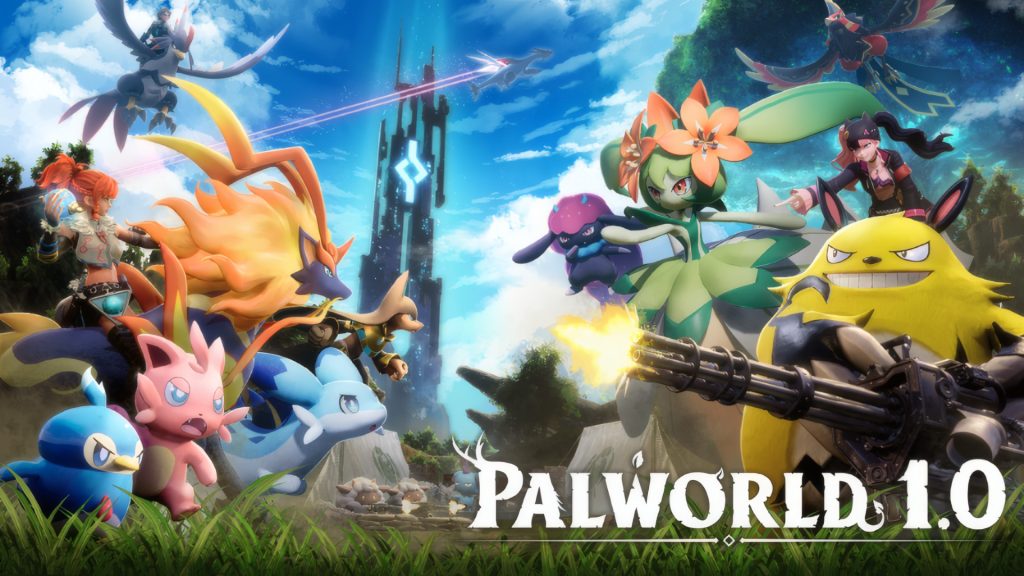
It has been roughly two and a half years since Palworld first entered Early Access, and quite a lot has…
![[EARLY ACCESS] The Last Caretaker – Survival Game I Cannot Stop Playing](https://www.indie-games.eu/wp-content/uploads/2026/07/The-last-Caretaker-Key-Art-1024x587.jpg)
The Last Caretaker is a compelling survival crafter with a flooded world and mobile base, but weak combat and performance…
