

Nintendo’s launch of the Switch 2 has not been as smooth on the stock market as it has been with fans. Throughout December, Nintendo shares fell sharply on the Tokyo Stock Exchange, dropping by around 19 percent in just one month. The stock closed at 10,595 yen on December 30, far below its early December high of 13,065 yen. This fall wiped out an estimated 14 billion dollars in market value and pushed Nintendo’s stock to its lowest point since May 2025. Much of this drop comes from growing worries about how expensive modern hardware has become to produce.
At the center of the problem is a global shortage of memory chips. The Switch 2 relies on 12GB of LPDDR5X RAM, and the price of this memory jumped by more than 40 percent in the final months of 2025. Storage costs have also risen, with NAND flash prices climbing by nearly 8 percent. These increases are driven by huge demand from AI data centers, which now take priority for major chip makers like Samsung, Micron, and SK Hynix. As a result, companies that make consumer hardware are once again dealing with supply pressure similar to what the industry faced in 2020.

The company has long followed a model where consoles are sold with small profit margins to help sell more games. With parts becoming more expensive, those margins are shrinking fast. Investors fear Nintendo may have no choice but to raise prices, either by making the Switch 2 more expensive than its current price of around 400 dollars or by pushing first-party game prices beyond the current 70-dollar standard. There are also extra costs for players, since limited internal storage often forces buyers to purchase costly high-speed SD cards, which have also gone up in price.
While the Switch 2 launched strongly and passed 10 million units sold by late 2025, momentum slowed in November. In the United States, the console sold about 480,000 units that month, well below the 775,000 units the original Switch sold in November 2017. Early holiday bundle discounts also raised concerns that Nintendo may be working harder than expected to compete with the PlayStation 5 during the shopping season.
Even with these issues, many analysts remain calm about Nintendo’s future. The company is said to have built up large supplies of key parts before launch to avoid major shortages early on. Strong brand loyalty also remains, with most Switch 2 buyers being existing Nintendo fans upgrading from older systems. While high chip prices have shaken investor confidence in the short term, Nintendo’s powerful game franchises and strong software sales could help balance things out as the market settles in 2026.

This physical release comes after the launch of the Ultimate Edition, which brought all available DLC to modern consoles in…

Neowiz is now building on that momentum with a strong lineup of future projects.

Many of the discounts are among the deepest seen on GOG in recent months.

One of the main concerns raised by critics involves AI-assisted voice work.

The report also points out a big difference between premium and free-to-play games.

Playground Games is the only studio officially confirmed so far.

Post-apocalyptic Earth? Check. A massive super-heavy tank? Check. Fighting alone against enemy tanks and alien creatures? Check.

The game stood out thanks to its dark fantasy world inspired by the Belle Époque era and a story that…
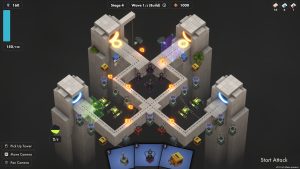
The goal is to push, pull, or launch enemies off the edge of the level using force, speed, and smart…
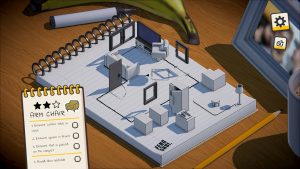
The game asks players to bring balance and calm to different living spaces by placing furniture based on real Feng…
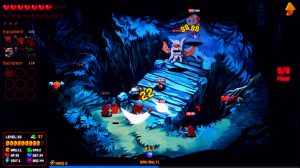
Each year, a single warrior is chosen to carry the Lantern of Eternal Flame into lands filled with twisted creatures.

The story of Eternights takes place in a broken world where a drug meant to stop aging has gone terribly…
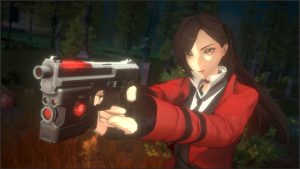
Alongside the story mode, the game will support online co-op, giving players the chance to team up and take on…
![[OPINION] Gaming New Year’s resolutions: What we should address in 2026](https://www.indie-games.eu/wp-content/uploads/2026/01/fireworks-1924628_1920-1-300x200.jpg)
What we should focus on in 2026 in relation to video games?

With E3 now gone, the festival has taken its place as the main hub for summer game announcements.

The main activity is exploring quiet, handcrafted environments and taking photos of animals in their natural habitats.
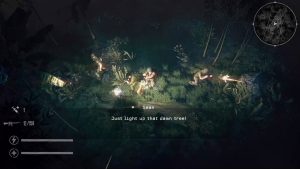
You follow the story of Stephen, an American soldier who wakes up alone and badly injured after a deadly ambush…

Players step into their late grandfather’s study, a peaceful space filled with memories, books, and a telescope pointed toward the…
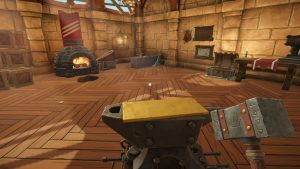
Each day, the King sends orders that must be completed by hand using a range of tools and workstations.

Streetdog BMX takes place across six large, hand-built maps designed for smooth movement and creativity.
This physical release comes after the launch of the Ultimate Edition, which brought all available DLC to modern consoles in…
Neowiz is now building on that momentum with a strong lineup of future projects.
Many of the discounts are among the deepest seen on GOG in recent months.
One of the main concerns raised by critics involves AI-assisted voice work.
The report also points out a big difference between premium and free-to-play games.
Playground Games is the only studio officially confirmed so far.
Post-apocalyptic Earth? Check. A massive super-heavy tank? Check. Fighting alone against enemy tanks and alien creatures? Check.
The game stood out thanks to its dark fantasy world inspired by the Belle Époque era and a story that…
The goal is to push, pull, or launch enemies off the edge of the level using force, speed, and smart…
The game asks players to bring balance and calm to different living spaces by placing furniture based on real Feng…
Each year, a single warrior is chosen to carry the Lantern of Eternal Flame into lands filled with twisted creatures.
The story of Eternights takes place in a broken world where a drug meant to stop aging has gone terribly…
Alongside the story mode, the game will support online co-op, giving players the chance to team up and take on…
What we should focus on in 2026 in relation to video games?
With E3 now gone, the festival has taken its place as the main hub for summer game announcements.
The main activity is exploring quiet, handcrafted environments and taking photos of animals in their natural habitats.
You follow the story of Stephen, an American soldier who wakes up alone and badly injured after a deadly ambush…
Players step into their late grandfather’s study, a peaceful space filled with memories, books, and a telescope pointed toward the…
Each day, the King sends orders that must be completed by hand using a range of tools and workstations.
Streetdog BMX takes place across six large, hand-built maps designed for smooth movement and creativity.
