Fire Emblem Awakening Retro Review – Unfulfilled Potential
Awakening is worth playing if you enjoy developing characters, experimenting with tactical partnerships, and shaping an army over a massive…

If you enjoy independent indie game coverage, consider supporting Indie-Games.eu on Patreon. It helps keep the site independent.
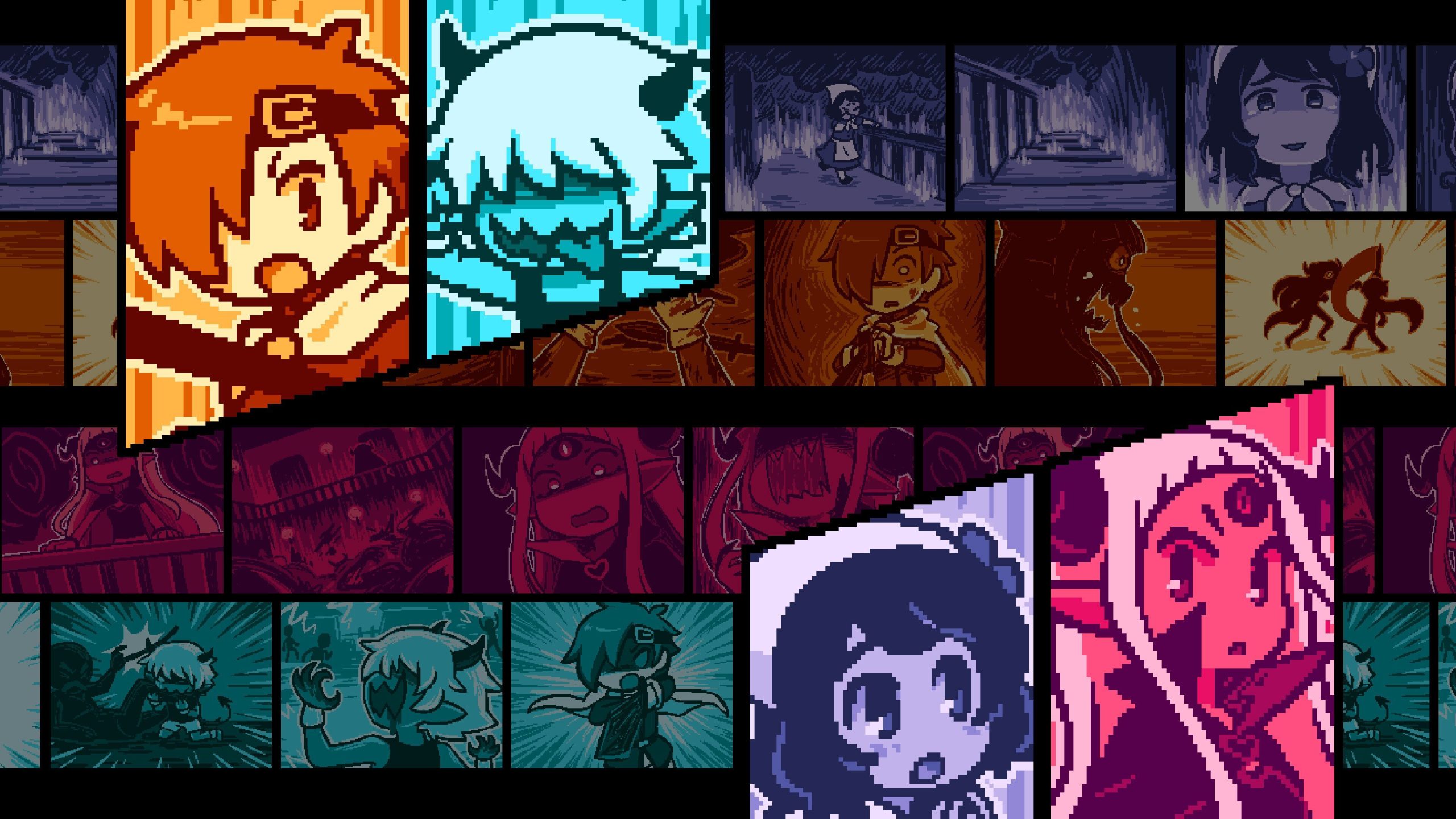
Even four years later, Bad End Theater remains a surprising, unique, and excellent visual novel with puzzle elements. Now, with its console release finally here, it’s the perfect time to dive back into its immersive world. This choose-your-own-adventure experience lets you pick one of four protagonists: Hero, Maiden, Underling, or Overlord to explore interconnected narratives in a dark fantasy world of humans and demons.
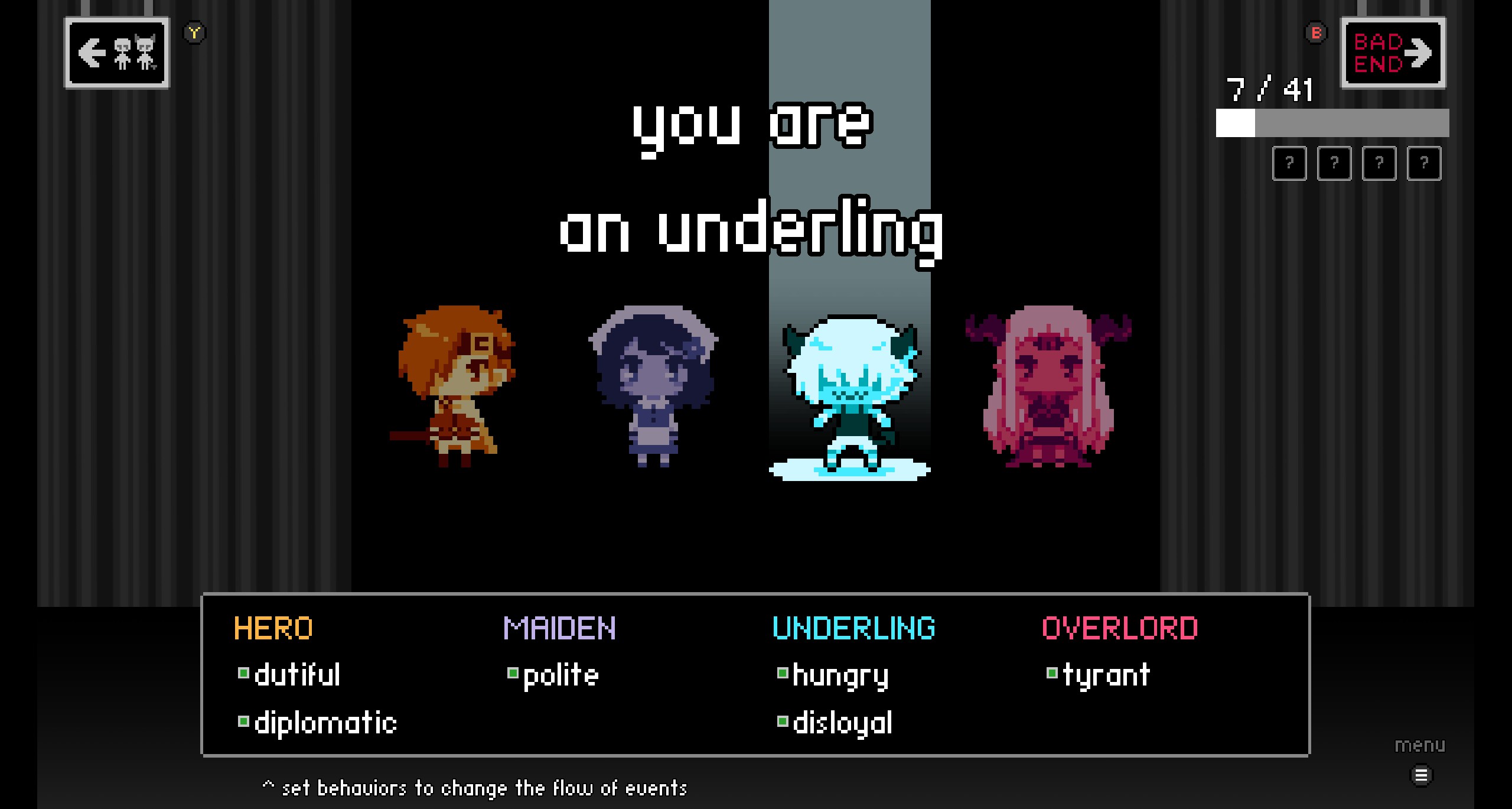
As its name suggests, every choice you make in Bad End Theater leads to a bad ending, but there’s a twist once you reach a certain point. The game’s unique hook lies in its interconnected narrative: choices made for one character, like the Hero’s decision to fight or flee, directly influence the outcomes for others, such as the Overlord’s story. You can even toggle character personality traits, dutiful for the Hero or disloyal for the Underling to unlock new paths, creating a web of cause-and-effect that encourages experimentation.
The gameplay is minimalist, revolving around clicking through dialogue and selecting choices at key moments, typically 2-3 per route, which last a few minutes each. The four protagonists offer distinct perspectives on a shared world. For example, choosing the Hero to slay demons might lead to the Maiden’s demise, while making the Underling loyal could alter the Overlord’s fate. The game’s flowchart shows these branches and endings, but you can’t jump to specific scenes; you’ll need to replay manually to change choices.
The puzzle element lies in manipulating personality traits to unlock all 40+ endings, including a “true” ending that ties the narratives together via Tragedy, who represents the story’s nature. It takes 2-3 hours to complete all endings, with playtime depending on your puzzle-solving skills. While it might sound boring, being able to skip dialogue and jump straight to choices makes the story unfold much faster. However, the biggest issue is easily getting lost; it’s unclear how to unlock new character personalities until you stumble upon them, and each personality drastically changes the story.
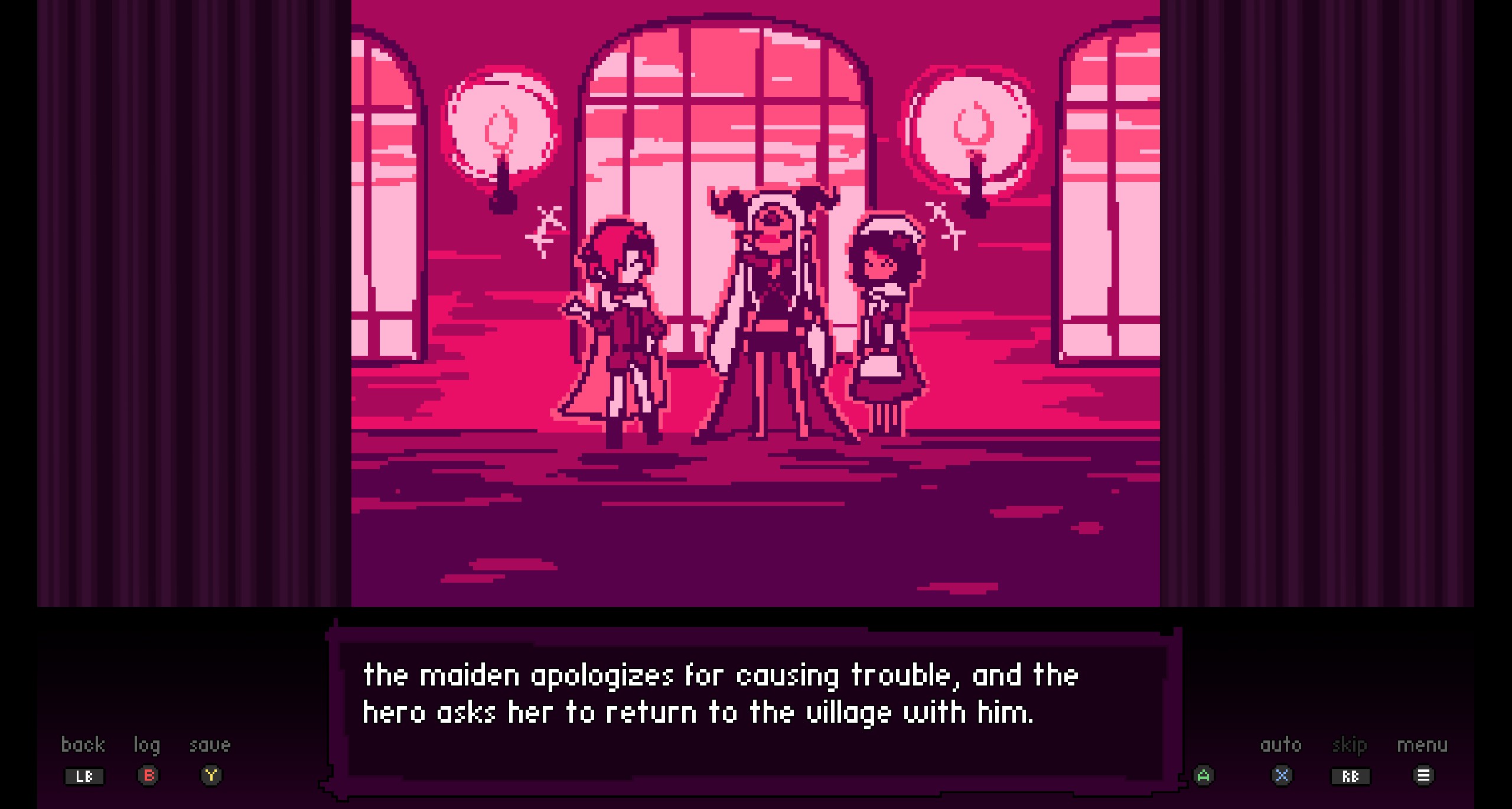
The game’s meta-narrative, exploring fate and inevitability, is compelling but light on dialogue; the prose feels more like a summary than a full story. This isn’t necessarily bad, as it allows you to quickly jump between scenes, which is ideal for those less interested in lengthy visual novels. Be advised, however, that Bad End Theater doesn’t shy away from blood, gore, betrayal, and murder.
It was truly fun to see the Maiden’s story unfold, as she connects with all the characters. For instance, she can politely interact with the Underling, who might or might not try to eat her. She can then befriend the Overlord, after which the Hero arrives, and they all start understanding each other. However, once the Maiden returns to tell the village that demons aren’t so bad, she might be burned at the stake or even take the Hero with her. But, one part of the story always remains the same – a tragic end.
Bad End Theater uses a charming 16-bit pixel art style, mixing cute, chibi-like characters with a grim fantasy setting. NomnomNami’s 600 amazing illustrations show various tragedies like burning castle or demonic battles with surprising emotion despite the retro look. Overall, it’s a very visually pleasing game. Plus, hunting achievements is very easy, and there are several secret endings to find.
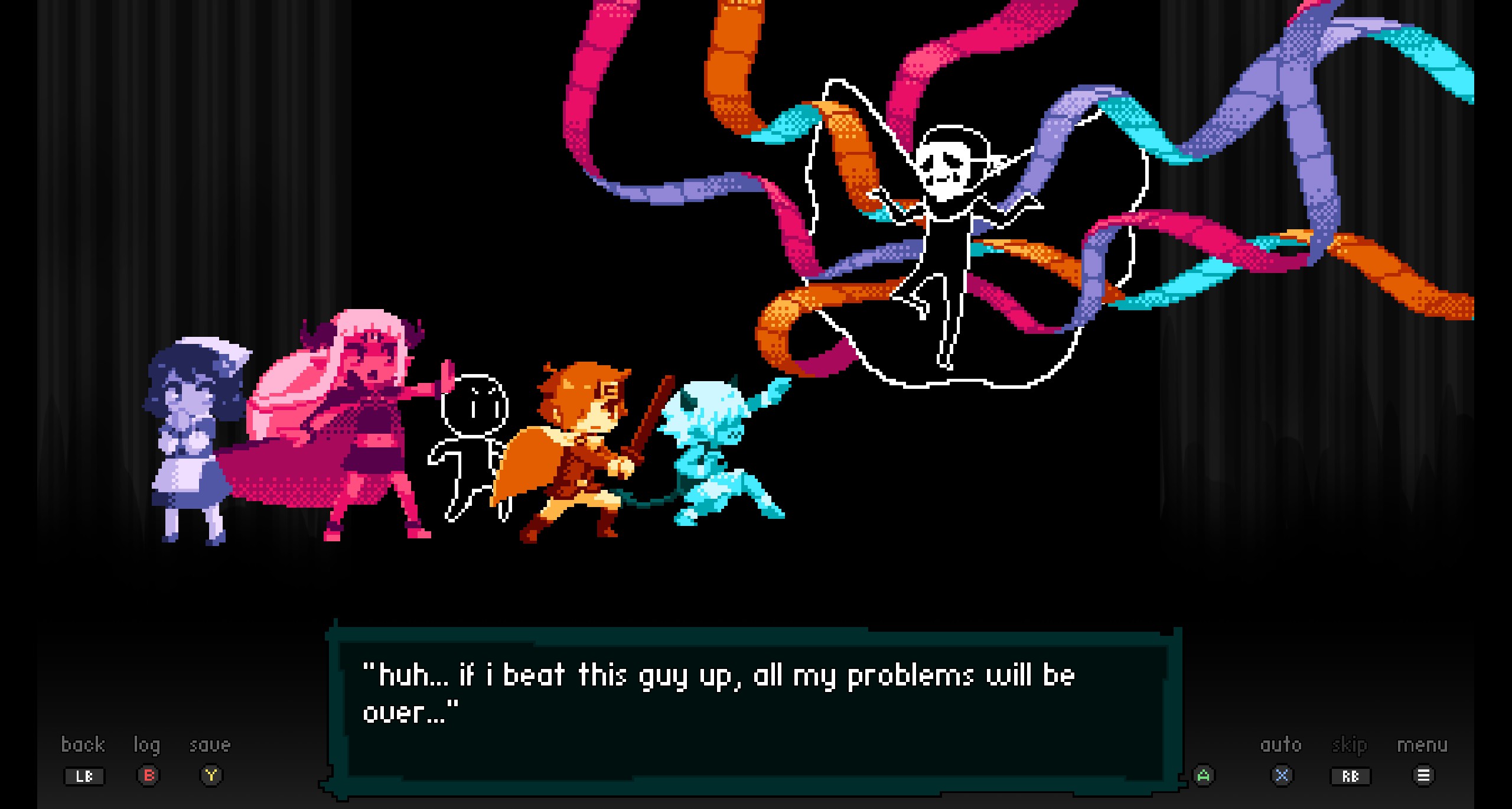
With its upcoming release on Nintendo Switch, Xbox One, Xbox Series X/S, PlayStation 4, and PlayStation 5, you have nothing to lose by trying this game. I expect it will be quite affordable on those platforms. I’ve already played it with an Xbox controller, and the controls were intuitive and easy. It’s a worthwhile purchase for anyone who enjoys compact, thought-provoking stories.
| Pros | Cons |
|---|---|
| Well narratively connected story. | Repetitive. |
| Fast gameplay, no time wasting. | The dialogue has no depth. |
| Four unique characters. | |
| Charming graphics. |
Review copy provided by the publisher
Awakening is worth playing if you enjoy developing characters, experimenting with tactical partnerships, and shaping an army over a massive…
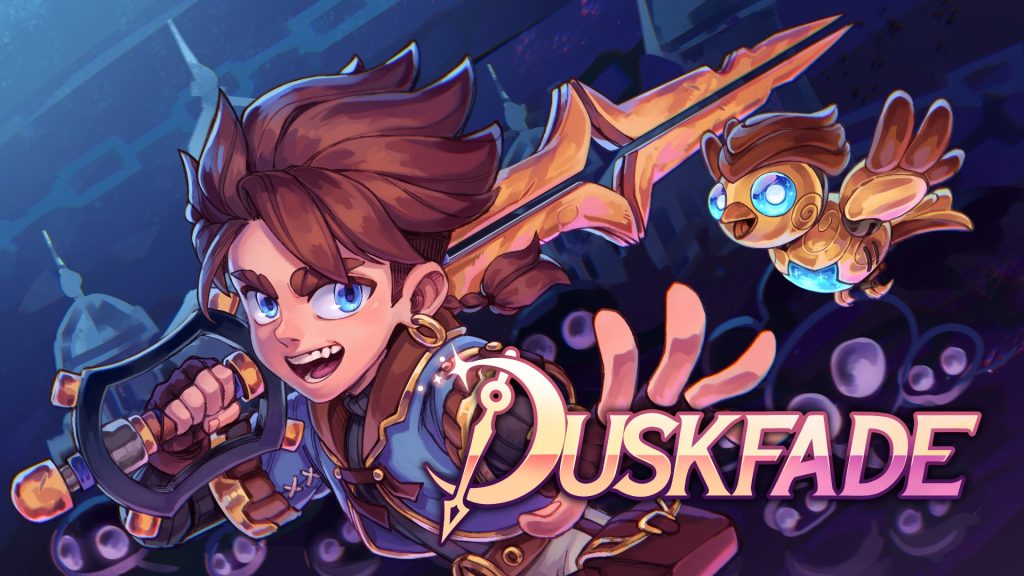
Duskfade is worth considering for players who miss colourful PS2-style action-platformers and can tolerate basic combat, floaty movement and backtracking.
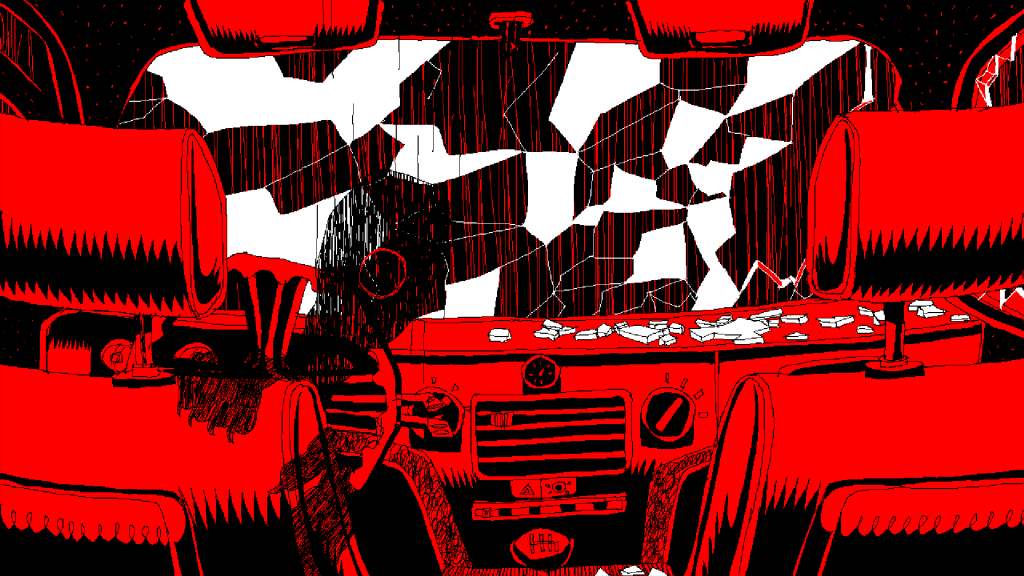
Man I Just Wanna Go Home is a noir crime story with visuals from MS Paint and life-or-death choices.
![[GAMESCOM 2026] Vikings Dynasty Preview – Expands the Dynasty Formula](https://www.indie-games.eu/wp-content/uploads/2026/09/Viking-Dynasty-09-21-26-2-1024x576.jpg)
After showing me Prospera at Gamescom 2026, Toplitz Productions' Mathias Oertel moved to a very different kind of settlement builder.…
![[GAMESCOM 2026] Prospera Preview – Production, Prosperity and Victorian Industry](https://www.indie-games.eu/wp-content/uploads/2026/09/Prospera-09-21-26-5-1024x576.jpg)
At Gamescom 2026, I met with Toplitz Productions' Mathias Oertel for a guided presentation of two upcoming games. One of…
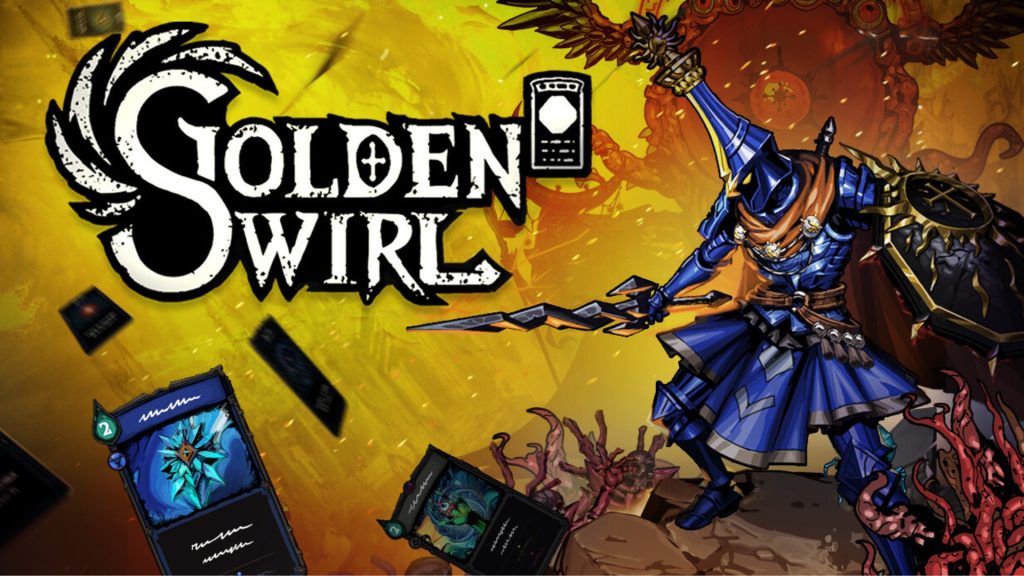
Golden Swirl inventive card combat carries the experience, but repetitive rooms, weak upgrades and excessive dialogue hold it back.
![[GAMESCOM 2026] Wilderdark Preview – Ambitious Dinosaur Horror Game That Still Has Plenty to Prove](https://www.indie-games.eu/wp-content/uploads/2026/09/Wilderdark-1024x576.jpg)
Dinosaur survival horror game Wilderdark has one of those premises that immediately makes you wonder why more games have not…
![[PREVIEW] Tiny Metal 2 – Strategy Game That Wants You to Learn From Every Mistake](https://www.indie-games.eu/wp-content/uploads/2026/09/Tiny-Metal-2-1024x576.jpg)
I rarely enjoy discovering that my opening strategy was completely wrong, but Tiny Metal 2 made that process one of…
![[PREVIEW] Remothered: Red Nun’s Legacy – Ambitious Survival Horror That Needs More Polish](https://www.indie-games.eu/wp-content/uploads/2026/09/Remothered-Red-Nuns-Legacy-4-1024x576.jpg)
Remothered: Red Nun’s Legacy has a gripping atmosphere and promising survival tools, but its repetitive hiding and rough visuals need…
The Alighieri Circle: Dante’s Bloodline is difficult to recommend beyond players who are especially interested in Dante or enjoy solving…
Orc Incremental offers satisfying progression, entertaining totem combinations and enough content to justify its affordable price.
![[GAMESCOM 2026] Chronoscript: The Endless End Preview – Beautiful Pages Hide Deliberate Combat](https://www.indie-games.eu/wp-content/uploads/2026/09/Chronoscript-The-Endless-End-1-1024x576.jpg)
Chronoscript: The Endless End stands out from other Metroidvanias by blending 2D manuscript worlds with exploration inside a 3D manor.
![[GAMESCOM 2026] MegaGum Preview – Combat Hits Hard in This Sticky Platforming Adventure](https://www.indie-games.eu/wp-content/uploads/2026/09/MegaGum-09-09-26-5-1024x576.jpg)
MegaGum combines hard-hitting combat, varied weapons and Gum-powered platforming in a promising Gamescom 2026 demo.
![[GAMESCOM 2026] Delphinium Preview – Cozy Routine Mixed With Enjoyable Minigames](https://www.indie-games.eu/wp-content/uploads/2026/03/Delphinium--1024x665.jpg)
Delphinium mixes cozy farming, exploration and relationships with enjoyable fishing, cooking and forging minigames in its Gamescom 2026 demo.
Lady Death: Demonicron looks the part, but underneath its excellent comic-book exterior is a clunky and painfully short brawler.
![[GAMESCOM 2026] Tomb Raider: Legacy of Atlantis Preview – Expands the Original Without Losing Its Identity](https://www.indie-games.eu/wp-content/uploads/2026/09/tomb-raider-legacy-of-atlantis-06-02-26-1-1024x576.jpg)
Tomb Raider: Legacy of Atlantis brings Lara back to her roots, but its Gamescom 2026 showing proved this is far…
![[GAMESCOM 2026] Clive Barker’s Hellraiser: Revival Preview – Ready to Open the Box](https://www.indie-games.eu/wp-content/uploads/2026/09/Clive-Barkers-Hellraiser-Revival-08-30-26-1-1024x576.jpg)
Hellraiser: Revival preserves the franchise’s sex, gore and psychological horror while delivering approachable survival-horror gameplay.

Swan Song creates a peaceful and forgiving puzzle space without removing the challenge that makes solving a difficult puzzle rewarding.
Mortal Shell II starts brilliantly but grows repetitive and exhausting, while remaining a rewarding and ambitious Soulslike sequel.
![[GAMESCOM 2026] Terranigma Preview – A Lost SNES Classic Returns in 2027](https://www.indie-games.eu/wp-content/uploads/2026/08/Terranigma-1-1024x576.jpg)
After more than three decades of limited availability, Terranigma is returning in 2027. We played its enhanced re-release at Gamescom…
