Duskfade – The PS2 Era Returns With All Its Strengths and Weaknesses
Duskfade is worth considering for players who miss colourful PS2-style action-platformers and can tolerate basic combat, floaty movement and backtracking.

If you enjoy independent indie game coverage, consider supporting Indie-Games.eu on Patreon. It helps keep the site independent.
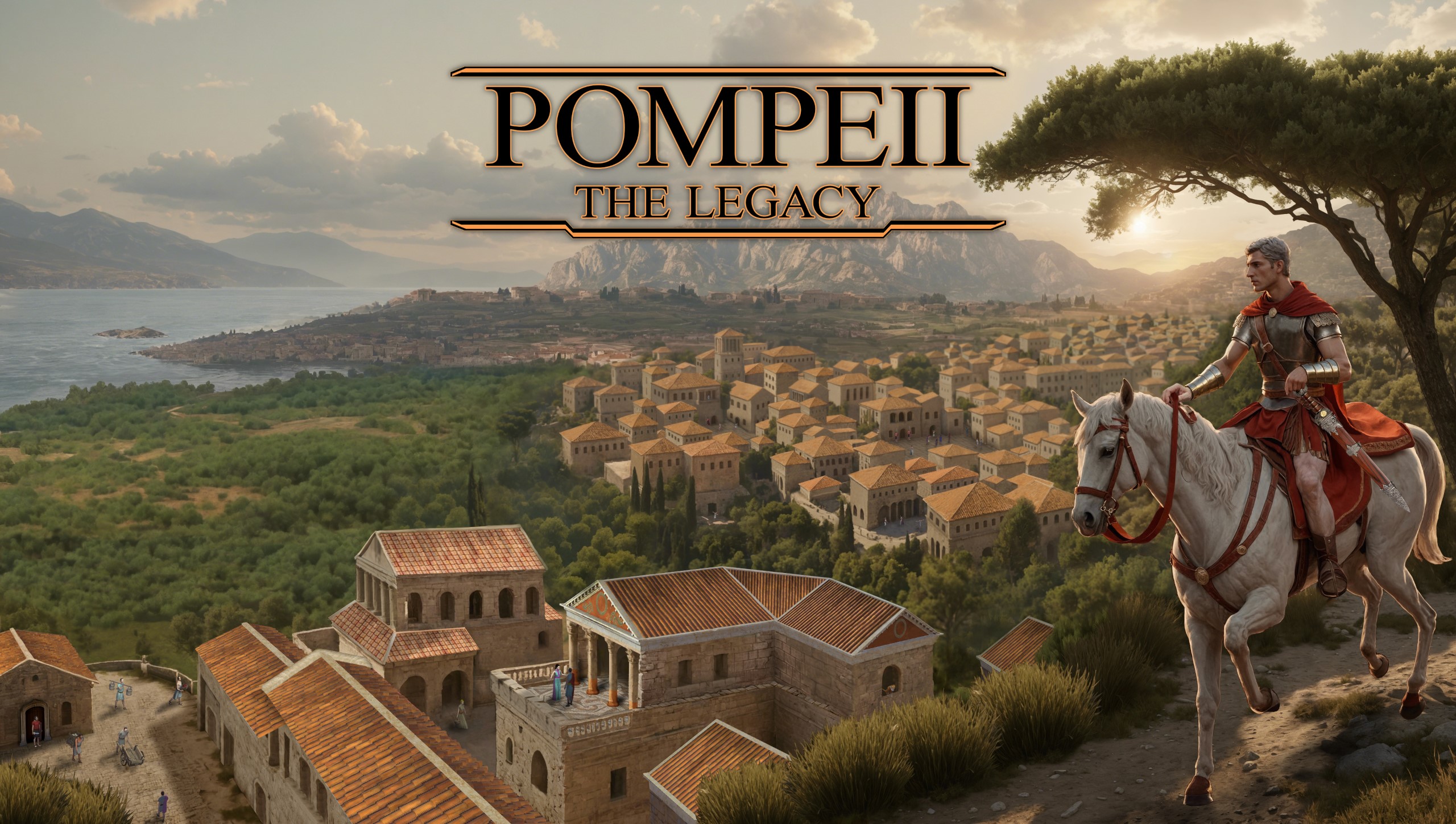
Pompeii: The Legacy has now fully stepped out of early access, and I decided to give it another proper run: from the very beginning all the way to the end of the research tree, finishing with the jewelry store. Back when I first reviewed it in early access, I gave it a solid score, and honestly, I still stand by that. This is a very good city builder, especially in a time where we’ve seen a flood of Roman-themed games. What helps Pompeii stand out is its more grounded, historically accurate approach. It leans away from fantasy and focuses on realism, and if that’s something you enjoy, this game is very easy to recommend. That said, even in its full release, it still carries some of the same underlying issues.
This is a game about management, production chains, and trading. Those three pillars define everything you do. You’re managing citizens, expanding your city, and juggling a huge number of buildings and systems. And that’s where one of the biggest problems starts to show. There is simply too much management. While I appreciate the depth and the sheer number of options available, it eventually becomes overwhelming, especially in the late game.
The game gives you tools to track production, shortages, and upgrades through its menus, and those menus are actually quite useful on their own. But when everything is spread across multiple layers and systems, it becomes messy. You can find the information you need, but it takes time, and eventually, it just feels like you’re constantly digging through menus rather than actually building and enjoying your city.
Another issue is how certain mechanics are paced. Some of the more interesting features, like the military system, only really come into play much later. When it does appear, it takes on a light RTS-style approach where you defend against external threats by building walls, placing guards, and managing your defenses. The bigger problem is that many players may not even reach this point quickly, because while the early game moves fast, the mid-game tends to drag, and that’s where you’ll spend most of your time before unlocking those later systems.
Where the game does shine is in its interconnected systems. Your family plays a role, allowing for marriages, expeditions, and trade relationships with other factions. Trading itself is one of the stronger aspects of the game. You can’t produce everything on your own, so you’re forced to rely on external cities for certain goods. The game does a great job of presenting this information clearly, letting you control trade limits, track supply, and decide what to export or import.
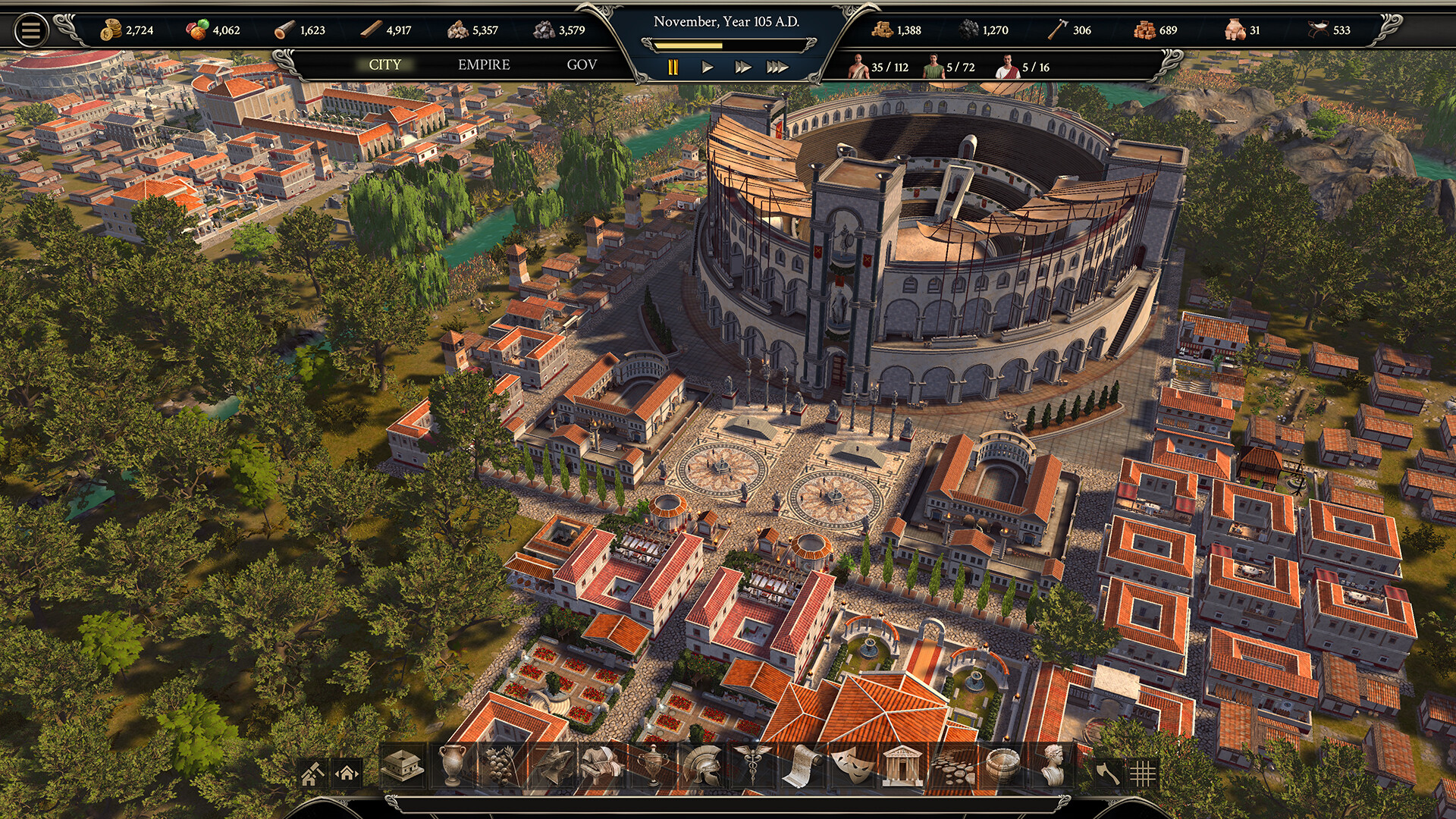
The 1.0 release also introduces more dynamic events, ranging from storms and volcanic ash to various decision-based pop-ups. These events add some flavor, but they don’t feel particularly impactful. They’re there, they happen, and you react to them, but they don’t drastically change how you play. A more noticeable addition is the expanded fire system, and this is something I’m not a big fan of.
Fires occur far too frequently, and dealing with them becomes more tedious than engaging. You’re forced to rely on prefectures and similar structures to manage outbreaks, often needing multiple of them to stay safe. There’s also a bucket chain system working in the background, but it doesn’t feel effective. Even environmental factors like rain don’t seem to help, which just makes the whole system feel frustrating rather than dynamic.
On the other hand, some systems are handled much better. Disease, for example, is fairly manageable once you unlock apothecaries and medicine production. The reworked aqueduct system is another great thomg, making water distribution much easier and more efficient. Reservoirs now cover a wider area, reducing the need for excessive micromanagement with wells, and overall it feels like a meaningful improvement.
The research tree is probably one of my favorite parts of the entire game. It’s well-structured, easy to navigate, and provides a clear sense of progression. It naturally aligns with how your city develops, unlocking new buildings, mechanics, and societal options like laws and taxes at a steady pace. It never feels random or disconnected, and it gives you a strong sense of direction throughout your playthrough.
There are improvements in presentation. Ambient sounds have been noticeably expanded, with more environmental detail and a greater sense of life in your city. As your population grows, the world feels louder and more active, which adds to immersion.
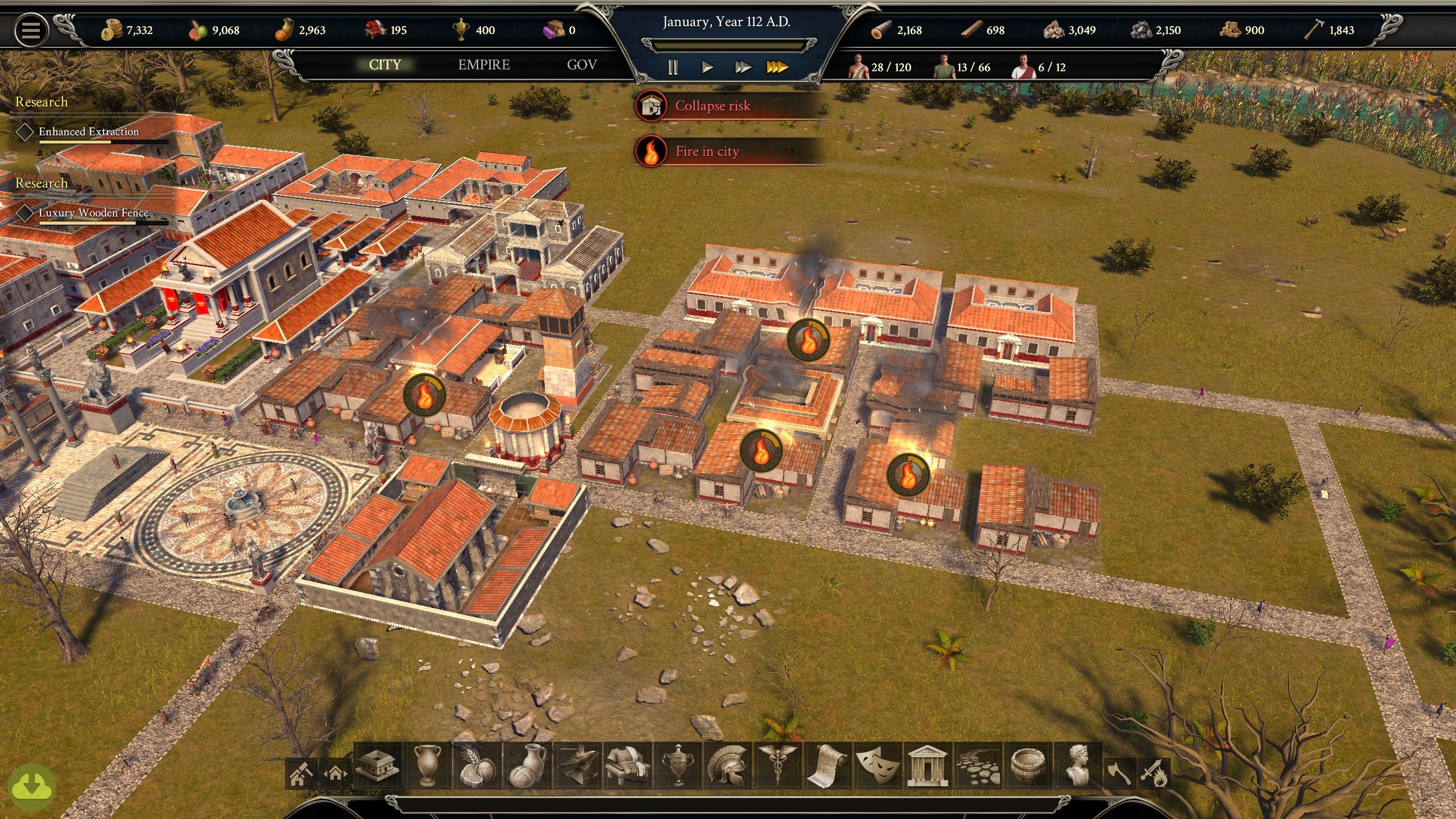
New buildings, such as entertainment structures like circuses, along with additional temples, mines, and academies, further expand your options and reinforce that Roman atmosphere. Features like festivals, arena games, and public events also help sell that theme, even if they don’t drastically change gameplay.
When it comes to modes, the game offers both a campaign and a sandbox. The campaign runs for around 20 hours and does a good job of introducing mechanics step by step, but personally, I found myself gravitating much more toward sandbox. It simply offers more freedom and lets you approach city-building in your own way without restrictions, which fits the game much better once you already understand its systems.
One thing that becomes increasingly important the longer you play is city planning. Placement matters a lot. You can’t just build randomly and expect things to work out. You need to think ahead, leave space for future buildings like baths or entertainment structures, and plan your layout with both the present and late-game in mind. It adds a layer of strategy that I really appreciate, but it also reinforces the game’s tendency to become overwhelming if you’re not careful.
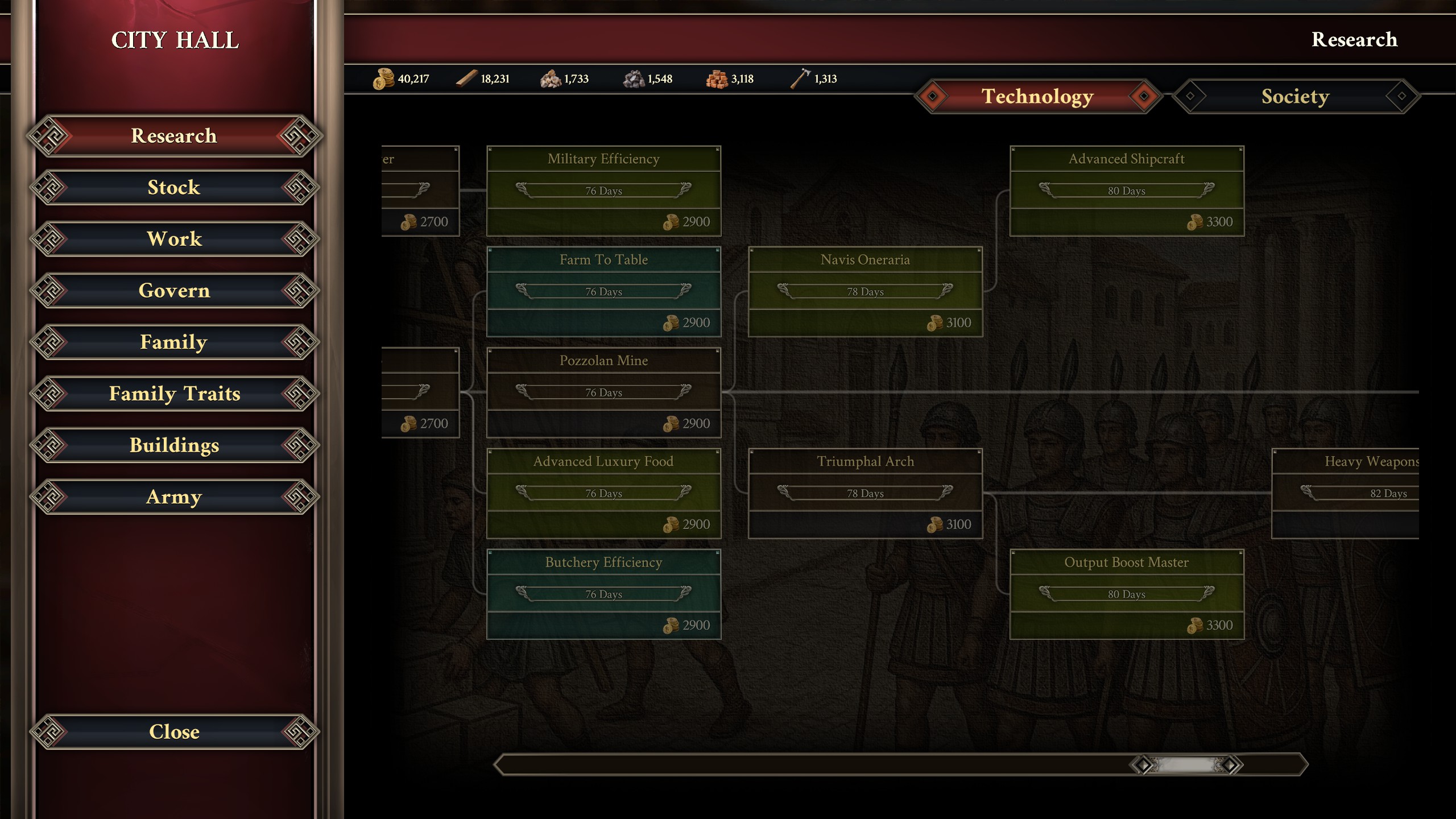
In the end, Pompeii: The Legacy is still a very solid city builder. It’s not perfect, and it definitely leans too far into complexity at times, especially with its management systems and late-game clutter. Some mechanics feel poorly balanced, like the fire system, while others, like research and trading, are genuinely strong. But if you’re into city builders, especially with a historical Roman setting, this is a game that’s very easy to recommend. It offers a lot, sometimes even too much, but there’s no denying that it delivers a deep and engaging experience for those willing to invest the time.
Pompeii: The Legacy is a very good city builder that stands out through its grounded, historically accurate approach rather than fantasy elements. The interconnected systems of management, production chains, and trading create a deep and engaging experience. However, the game has underlying issues that persist from early access. There is simply too much management in the late game, with information spread across multiple layers and systems that become messy.
Ending Thoughts
Review copy provided by the publisher
Duskfade is worth considering for players who miss colourful PS2-style action-platformers and can tolerate basic combat, floaty movement and backtracking.

Man I Just Wanna Go Home is a noir crime story with visuals from MS Paint and life-or-death choices.
![[GAMESCOM 2026] Vikings Dynasty Preview – Expands the Dynasty Formula](https://www.indie-games.eu/wp-content/uploads/2026/09/Viking-Dynasty-09-21-26-2-1024x576.jpg)
After showing me Prospera at Gamescom 2026, Toplitz Productions' Mathias Oertel moved to a very different kind of settlement builder.…
![[GAMESCOM 2026] Prospera Preview – Production, Prosperity and Victorian Industry](https://www.indie-games.eu/wp-content/uploads/2026/09/Prospera-09-21-26-5-1024x576.jpg)
At Gamescom 2026, I met with Toplitz Productions' Mathias Oertel for a guided presentation of two upcoming games. One of…
Golden Swirl inventive card combat carries the experience, but repetitive rooms, weak upgrades and excessive dialogue hold it back.
![[GAMESCOM 2026] Wilderdark Preview – Ambitious Dinosaur Horror Game That Still Has Plenty to Prove](https://www.indie-games.eu/wp-content/uploads/2026/09/Wilderdark-1024x576.jpg)
Dinosaur survival horror game Wilderdark has one of those premises that immediately makes you wonder why more games have not…
![[PREVIEW] Tiny Metal 2 – Strategy Game That Wants You to Learn From Every Mistake](https://www.indie-games.eu/wp-content/uploads/2026/09/Tiny-Metal-2-1024x576.jpg)
I rarely enjoy discovering that my opening strategy was completely wrong, but Tiny Metal 2 made that process one of…
![[PREVIEW] Remothered: Red Nun’s Legacy – Ambitious Survival Horror That Needs More Polish](https://www.indie-games.eu/wp-content/uploads/2026/09/Remothered-Red-Nuns-Legacy-4-1024x576.jpg)
Remothered: Red Nun’s Legacy has a gripping atmosphere and promising survival tools, but its repetitive hiding and rough visuals need…
The Alighieri Circle: Dante’s Bloodline is difficult to recommend beyond players who are especially interested in Dante or enjoy solving…
Orc Incremental offers satisfying progression, entertaining totem combinations and enough content to justify its affordable price.
![[GAMESCOM 2026] Chronoscript: The Endless End Preview – Beautiful Pages Hide Deliberate Combat](https://www.indie-games.eu/wp-content/uploads/2026/09/Chronoscript-The-Endless-End-1-1024x576.jpg)
Chronoscript: The Endless End stands out from other Metroidvanias by blending 2D manuscript worlds with exploration inside a 3D manor.
![[GAMESCOM 2026] MegaGum Preview – Combat Hits Hard in This Sticky Platforming Adventure](https://www.indie-games.eu/wp-content/uploads/2026/09/MegaGum-09-09-26-5-1024x576.jpg)
MegaGum combines hard-hitting combat, varied weapons and Gum-powered platforming in a promising Gamescom 2026 demo.
![[GAMESCOM 2026] Delphinium Preview – Cozy Routine Mixed With Enjoyable Minigames](https://www.indie-games.eu/wp-content/uploads/2026/03/Delphinium--1024x665.jpg)
Delphinium mixes cozy farming, exploration and relationships with enjoyable fishing, cooking and forging minigames in its Gamescom 2026 demo.
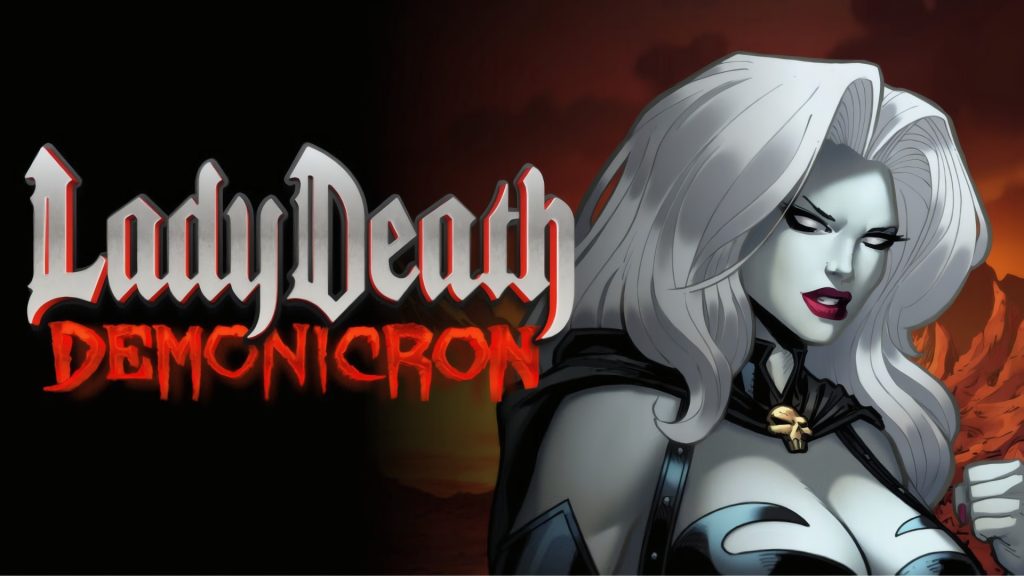
Lady Death: Demonicron looks the part, but underneath its excellent comic-book exterior is a clunky and painfully short brawler.
![[GAMESCOM 2026] Tomb Raider: Legacy of Atlantis Preview – Expands the Original Without Losing Its Identity](https://www.indie-games.eu/wp-content/uploads/2026/09/tomb-raider-legacy-of-atlantis-06-02-26-1-1024x576.jpg)
Tomb Raider: Legacy of Atlantis brings Lara back to her roots, but its Gamescom 2026 showing proved this is far…
![[GAMESCOM 2026] Clive Barker’s Hellraiser: Revival Preview – Ready to Open the Box](https://www.indie-games.eu/wp-content/uploads/2026/09/Clive-Barkers-Hellraiser-Revival-08-30-26-1-1024x576.jpg)
Hellraiser: Revival preserves the franchise’s sex, gore and psychological horror while delivering approachable survival-horror gameplay.

Swan Song creates a peaceful and forgiving puzzle space without removing the challenge that makes solving a difficult puzzle rewarding.
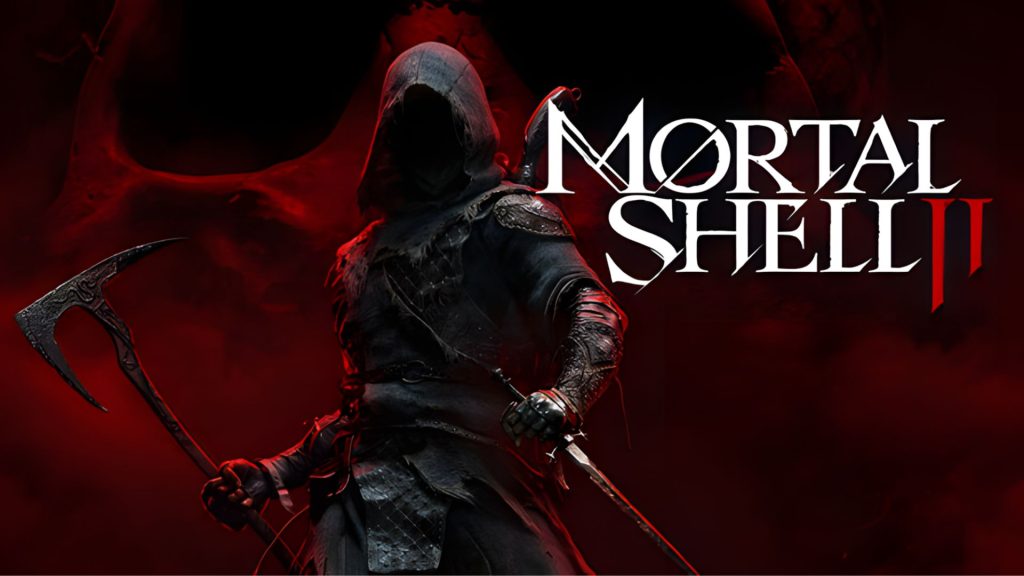
Mortal Shell II starts brilliantly but grows repetitive and exhausting, while remaining a rewarding and ambitious Soulslike sequel.
![[GAMESCOM 2026] Terranigma Preview – A Lost SNES Classic Returns in 2027](https://www.indie-games.eu/wp-content/uploads/2026/08/Terranigma-1-1024x576.jpg)
After more than three decades of limited availability, Terranigma is returning in 2027. We played its enhanced re-release at Gamescom…

Reading another person’s mind is often presented as a desirable superpower, but Sister Other Paranoia immediately understands why it could…
