
If you enjoy independent indie game coverage, consider supporting Indie-Games.eu on Patreon. It helps keep the site independent.
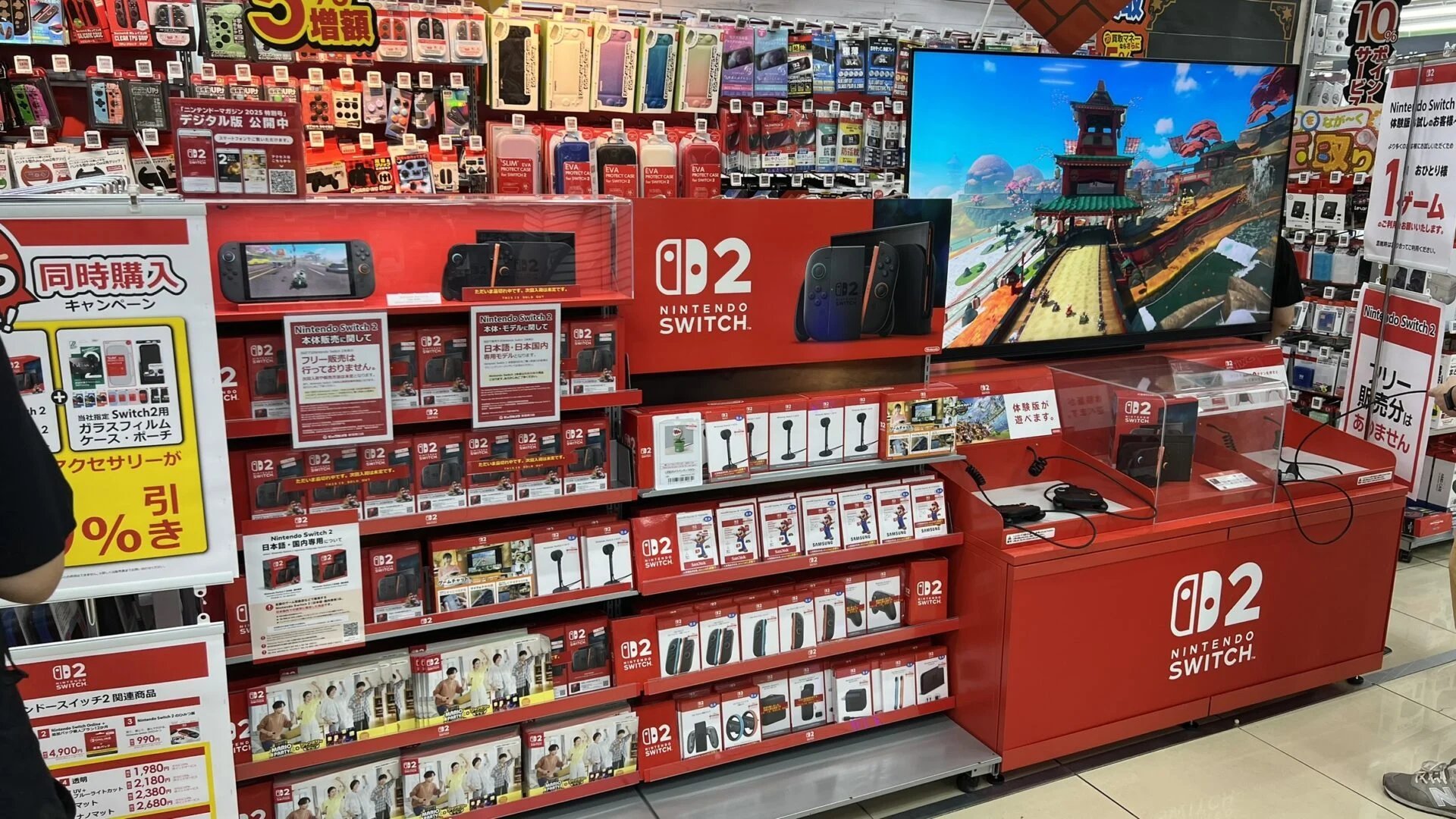
Nintendo’s latest financial report confirms what many industry observers have suspected for months: the Switch 2 is not just a successful follow-up, but one of the fastest-selling consoles in the company’s history. In its first seven months on the market, the system has already sold 17.37 million units worldwide, putting it nearly 10 million units ahead of the original Switch over the same launch period.
The momentum remained strong through the crucial holiday quarter ending December 31, 2025, when Nintendo shipped 7.01 million Switch 2 units. While this figure sits slightly below the original Switch’s 7.23 million in its comparable period, it is particularly impressive given the Switch 2’s significantly higher launch price of around $450, compared to $300 for the original model. Unlike its predecessor, which suffered from prolonged stock shortages early in its life, the Switch 2 has also benefited from relatively stable supply, meaning its sales have been driven more by genuine demand than by scarcity.
Regional performance paints a nuanced picture of the console’s success. In Japan, shipments declined by 27 percent to 1.77 million units for the quarter, influenced by earlier supply limitations and ongoing economic pressures. In contrast, the United States recorded strong growth with 2.82 million units sold, while the rest of the world reached 2.64 million. Europe, in particular, emerged as a major driver, helping offset weaker results in other regions and reinforcing Nintendo’s global appeal.
Software sales have played a crucial role in sustaining this momentum. The Switch 2 has already moved 37.93 million games, led by major releases such as Mario Kart World, which reached 14.03 million units and boasts an attach rate of roughly 80 percent when bundles are included. Donkey Kong Bananza and Pokémon Legends: Z-A (Switch 2 Edition) have also performed strongly, selling 4.25 million and 3.89 million packaged units respectively. By late December, overall sell-through to consumers had reached 15 million units, marking the fastest adoption rate for any Nintendo platform to date.


These strong hardware and software performances have translated directly into financial success. For the nine-month period, Nintendo reported net sales of 1,905.8 billion yen, representing a year-over-year increase of 99.3 percent. Operating profit rose by 21.3 percent to 300.3 billion yen, reflecting both high demand and effective cost management. For shareholders and industry analysts, these figures underline Nintendo’s ability to turn popular hardware into sustained profitability.
Comparative charts further emphasize the scale of the Switch 2’s early dominance. At the seven-month mark, it stands well ahead of not only the original Switch but also competitors such as the PlayStation 5 and PlayStation 4. Quarterly shipments have consistently outpaced its predecessor across the first eight quarters, suggesting that this is not a short-term surge but a sustained trend.
The console has already surpassed the Wii U’s lifetime sales total of 13.56 million units and is expected to overtake the GameCube’s 21.74 million before summer 2026, according to analysts such as Serkan Toto. Nintendo has maintained its forecast of 19 million hardware units by March 31, 2026, but with strong momentum and two months remaining in the fiscal year, surpassing 20 million units now appears likely. The original Switch did not reach this milestone until its third full fiscal year.
At the same time, the original Switch continues to demonstrate remarkable longevity, having reached 155.37 million lifetime units and securing its place as Nintendo’s best-selling console ever. This dual success highlights the company’s rare position of maintaining a thriving legacy platform while launching a massively popular successor.
The Xbox-owned studio released three major games in a single year: Grounded 2, Avowed, and The Outer Worlds 2.
Welcome to Daily Indie News Roundup #12, your one-stop destination for everything happening across the independent games scene.

Half Sword currently holds a “Mixed” rating on Steam, with only around 42 percent of reviews marked as positive from…
The Dispatch censorship saga stands as a reminder that in today’s multiplatform landscape, clear communication can be just as important…
Rather than relying on frequent jump scares or combat, MOLE focuses on slow-burning tension and psychological unease.
In a market saturated with procedurally generated shooters and roguelike hybrids, Terrible Life Expectancy stands out by making progression feel…

Today’s edition spans everything from handcrafted stop-motion horror and cozy puzzle cats to ambitious RPG projects
The exhibition was organized by the Video Game History Museum in Zagreb and represents the first systematic and chronological overview…
![[OPINION] Xbox Hardware Slips as Microsoft’s Earnings Expose a Growing Problem](https://www.indie-games.eu/wp-content/uploads/2026/01/Xbox-300x169.jpg)
Xbox gaming revenue fell 9 percent year over year. Hardware sales collapsed by 32 percent, while content and services dropped…

Another packed day in the indie and gaming world brings a wave of demos, release dates, major updates, industry shifts,…

Sezon relacji z różnych imprez rozpoczynamy koncertem Anime Symphony Kameralnie.
We are kicking off the 2026 season of events with Anime Symphony concert.

We’ve gathered today’s most important stories into one easy-to-read roundup.

Twin Sails Interactive has announced a new publishing partnership with Brazilian developer Orbit Studio.

Indie Fan Fest is a curated digital showcase focused on unreleased indie games.

Everplay’s new CEO, Mikkel Weidder, said he is confident about the group’s future.

You travel alongside a mysterious girl who has completely lost her memory, and the core of the experience revolves around…

Each run will be different thanks to roguelite mechanics, while additional depth comes from soulslike elements such as parrying.

Welcome to Daily Indie News Roundup #8, your one-stop destination for everything happening across the indie gaming world and beyond.
![[OPINION] How Nintendo Turned Switch 2 Upgrades Into a Money Trap](https://www.indie-games.eu/wp-content/uploads/2026/01/Nintendo-Switch-2-Upgrades-300x174.jpg)
Before the massive success of the Switch, the company offered options that respected different budgets.
The Xbox-owned studio released three major games in a single year: Grounded 2, Avowed, and The Outer Worlds 2.
Welcome to Daily Indie News Roundup #12, your one-stop destination for everything happening across the independent games scene.
Half Sword currently holds a “Mixed” rating on Steam, with only around 42 percent of reviews marked as positive from…
The Dispatch censorship saga stands as a reminder that in today’s multiplatform landscape, clear communication can be just as important…
Rather than relying on frequent jump scares or combat, MOLE focuses on slow-burning tension and psychological unease.
In a market saturated with procedurally generated shooters and roguelike hybrids, Terrible Life Expectancy stands out by making progression feel…
Today’s edition spans everything from handcrafted stop-motion horror and cozy puzzle cats to ambitious RPG projects
The exhibition was organized by the Video Game History Museum in Zagreb and represents the first systematic and chronological overview…
Xbox gaming revenue fell 9 percent year over year. Hardware sales collapsed by 32 percent, while content and services dropped…
Another packed day in the indie and gaming world brings a wave of demos, release dates, major updates, industry shifts,…
Sezon relacji z różnych imprez rozpoczynamy koncertem Anime Symphony Kameralnie.
We are kicking off the 2026 season of events with Anime Symphony concert.
We’ve gathered today’s most important stories into one easy-to-read roundup.
Twin Sails Interactive has announced a new publishing partnership with Brazilian developer Orbit Studio.
Indie Fan Fest is a curated digital showcase focused on unreleased indie games.
Everplay’s new CEO, Mikkel Weidder, said he is confident about the group’s future.
You travel alongside a mysterious girl who has completely lost her memory, and the core of the experience revolves around…
Each run will be different thanks to roguelite mechanics, while additional depth comes from soulslike elements such as parrying.
Welcome to Daily Indie News Roundup #8, your one-stop destination for everything happening across the indie gaming world and beyond.
Before the massive success of the Switch, the company offered options that respected different budgets.
