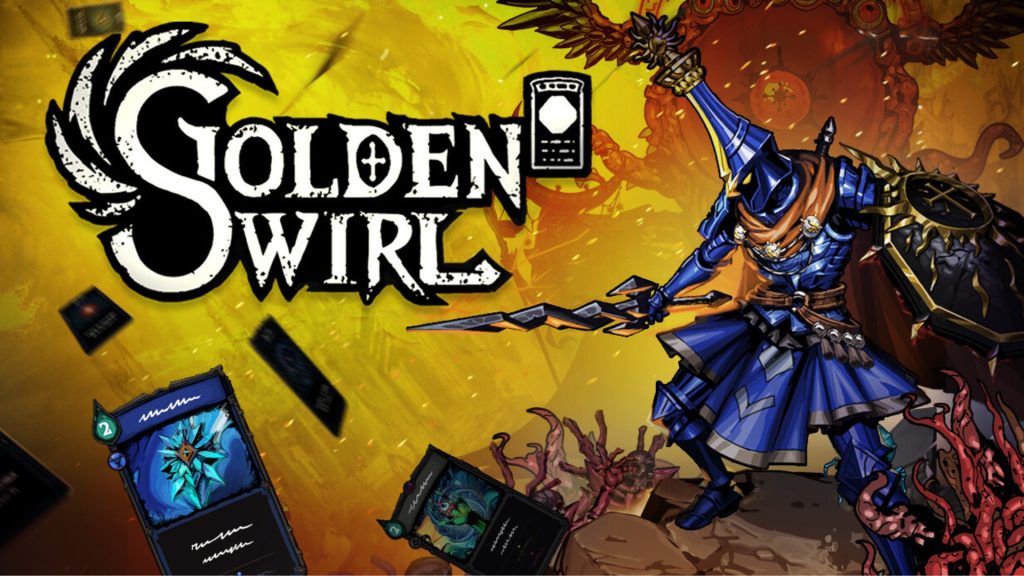
Golden Swirl – Brilliant Deckbuilding Buried Under Endless Dialogue
Golden Swirl inventive card combat carries the experience, but repetitive rooms, weak upgrades and excessive dialogue hold it back.

![[PREVIEW] NODE: The Last Favor of the Antarii – A Blend of Puzzles and Platforming](https://www.indie-games.eu/wp-content/uploads/2025/06/23291-node-teaser.jpg)
If you enjoy independent indie game coverage, consider supporting Indie-Games.eu on Patreon. It helps keep the site independent.
The Cerebral Puzzle Showcase brought us a multitude of games that might not always be on every gamer’s radar. But what if you combine that genre with platforming capabilities, not by directly controlling the main character, but by issuing commands? Then you get the game NODE: The Last Favor of the Antarii. The demo version, which is still available to play, is quite long and will immerse you in the world of a fictional Soviet Russia.
Set in the decaying ruins of Toska, a fictional Soviet nuclear complex in Siberia in 2034, you control NODE, an autonomous AI robot tasked with preventing a catastrophic reactor meltdown. This game introduces a unique timeline-based command system where you plan actions (for examplke, movement, jumping, interactions) to solve puzzles.

The gameplay is quite detailed and demands precision. You can choose how many seconds or even tenths of a second your character moves, then command it to jump over an obstacle and continue moving – all to get from one checkpoint to the next.
The gameplay is based on a unique command system where you don’t control NODE in real-time. Instead, you set a series of actions, like moving forward, jumping, pausing, interacting, or turning, on a timeline and then press “play” to execute those commands. You can precisely determine the exact second or tenth of a second your character must perform an action to reach the next checkpoint.
However, the path to stopping the nuclear reactor will not be easy; it’s full of traps, crumbling walls, holes, and stairs. If NODE fails to reach the goal, you go back, adjust the timeline, and try again, which creates a loop of trial and error. The game requires precise planning, as actions must be synchronized with environmental elements like moving platforms or timed switches.

NODE: The Last Favor of the Antarii doesn’t just offer pure gameplay; it also has an accompanying story. You’ll be able to talk to your creators and choose narrative dialogues if you want to learn more about the world or simply execute the given commands. All of this is, of course, linear, so you don’t have too many choices about certain things, and it’s unclear whether your decisions affect the story’s progression. The game world is also quite dark and very atmospheric, helped by excellent graphics that are truly beautiful and full of detail.
Unfortunately, this game has a major problem: you cannot view the entire map while setting commands on the timeline. Instead, you first have to command the robot to move, explore, and scout the area, and only then return to fix and devise a movement plan. This is certainly not ideal because it wastes a lot of your time. This is somewhat mitigated because you can speed up the movement time. Additionally, there are a lot of repetitive puzzles. While this is somewhat acceptable when you realize the entire structure has its own pattern, it can definitely be distracting.
The demo version did a very good job of showcasing the game’s main features; everything is done quite well, and I recommend at least trying it. It was interesting to avoid lasers and mathematically study and calculate how much time you need for a certain action. However, the feeling is that the game doesn’t spare your time; there will be a lot of repetition and frustrating moments. Despite this, it is a truly impressive title that puzzle lovers will be thrilled with.
Golden Swirl inventive card combat carries the experience, but repetitive rooms, weak upgrades and excessive dialogue hold it back.
![[GAMESCOM 2026] Wilderdark Preview – Ambitious Dinosaur Horror Game That Still Has Plenty to Prove](https://www.indie-games.eu/wp-content/uploads/2026/09/Wilderdark-1024x576.jpg)
Dinosaur survival horror game Wilderdark has one of those premises that immediately makes you wonder why more games have not…
![[PREVIEW] Tiny Metal 2 – Strategy Game That Wants You to Learn From Every Mistake](https://www.indie-games.eu/wp-content/uploads/2026/09/Tiny-Metal-2-1024x576.jpg)
I rarely enjoy discovering that my opening strategy was completely wrong, but Tiny Metal 2 made that process one of…
![[PREVIEW] Remothered: Red Nun’s Legacy – Ambitious Survival Horror That Needs More Polish](https://www.indie-games.eu/wp-content/uploads/2026/09/Remothered-Red-Nuns-Legacy-4-1024x576.jpg)
Remothered: Red Nun’s Legacy has a gripping atmosphere and promising survival tools, but its repetitive hiding and rough visuals need…
The Alighieri Circle: Dante’s Bloodline is difficult to recommend beyond players who are especially interested in Dante or enjoy solving…

Orc Incremental offers satisfying progression, entertaining totem combinations and enough content to justify its affordable price.
![[GAMESCOM 2026] Chronoscript: The Endless End Preview – Beautiful Pages Hide Deliberate Combat](https://www.indie-games.eu/wp-content/uploads/2026/09/Chronoscript-The-Endless-End-1-1024x576.jpg)
Chronoscript: The Endless End stands out from other Metroidvanias by blending 2D manuscript worlds with exploration inside a 3D manor.
![[GAMESCOM 2026] MegaGum Preview – Combat Hits Hard in This Sticky Platforming Adventure](https://www.indie-games.eu/wp-content/uploads/2026/09/MegaGum-09-09-26-5-1024x576.jpg)
MegaGum combines hard-hitting combat, varied weapons and Gum-powered platforming in a promising Gamescom 2026 demo.
![[GAMESCOM 2026] Delphinium Preview – Cozy Routine Mixed With Enjoyable Minigames](https://www.indie-games.eu/wp-content/uploads/2026/03/Delphinium--1024x665.jpg)
Delphinium mixes cozy farming, exploration and relationships with enjoyable fishing, cooking and forging minigames in its Gamescom 2026 demo.
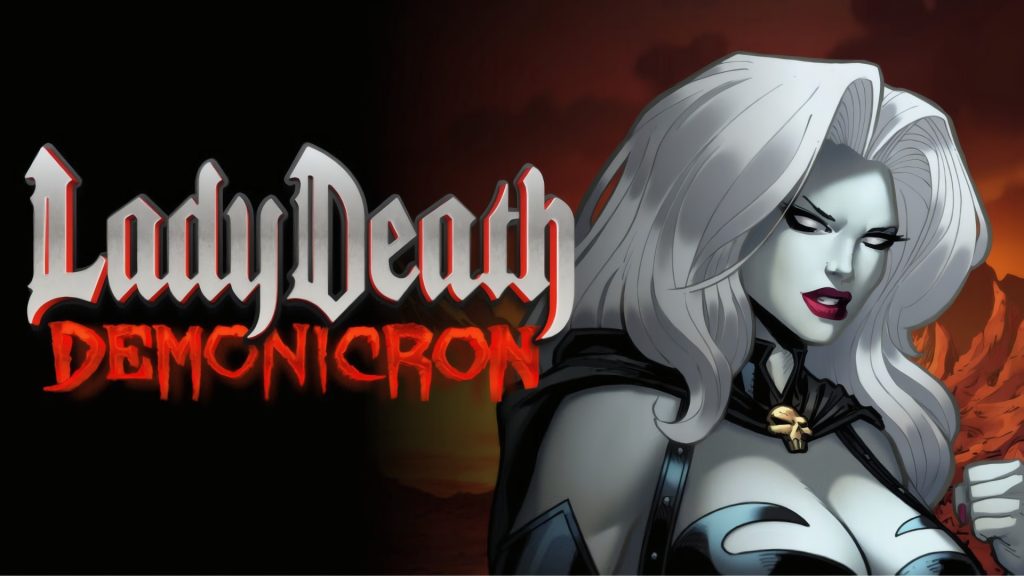
Lady Death: Demonicron looks the part, but underneath its excellent comic-book exterior is a clunky and painfully short brawler.
![[GAMESCOM 2026] Tomb Raider: Legacy of Atlantis Preview – Expands the Original Without Losing Its Identity](https://www.indie-games.eu/wp-content/uploads/2026/09/tomb-raider-legacy-of-atlantis-06-02-26-1-1024x576.jpg)
Tomb Raider: Legacy of Atlantis brings Lara back to her roots, but its Gamescom 2026 showing proved this is far…
![[GAMESCOM 2026] Clive Barker’s Hellraiser: Revival Preview – Ready to Open the Box](https://www.indie-games.eu/wp-content/uploads/2026/09/Clive-Barkers-Hellraiser-Revival-08-30-26-1-1024x576.jpg)
Hellraiser: Revival preserves the franchise’s sex, gore and psychological horror while delivering approachable survival-horror gameplay.

Swan Song creates a peaceful and forgiving puzzle space without removing the challenge that makes solving a difficult puzzle rewarding.
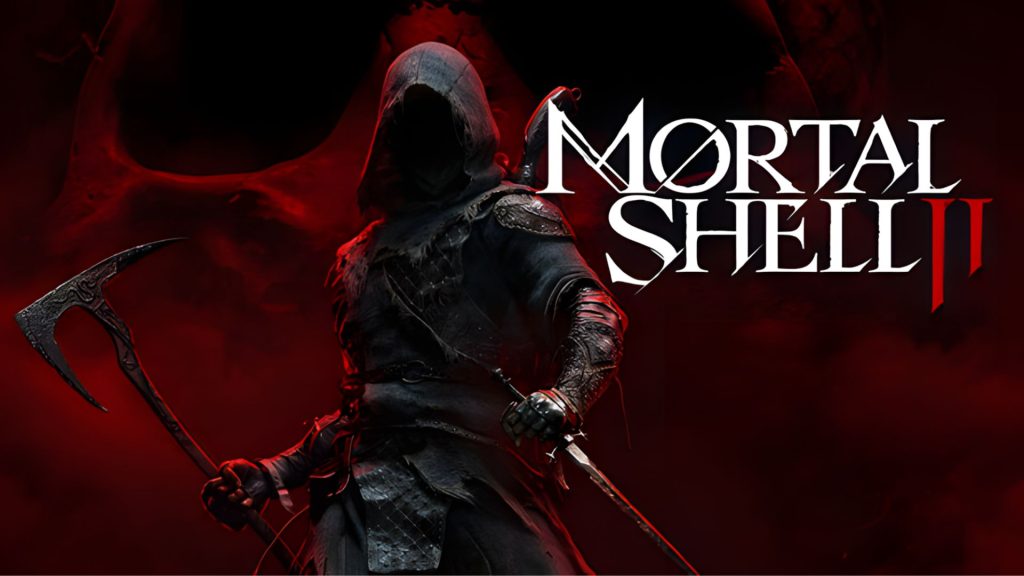
Mortal Shell II starts brilliantly but grows repetitive and exhausting, while remaining a rewarding and ambitious Soulslike sequel.
![[GAMESCOM 2026] Terranigma Preview – A Lost SNES Classic Returns in 2027](https://www.indie-games.eu/wp-content/uploads/2026/08/Terranigma-1-1024x576.jpg)
After more than three decades of limited availability, Terranigma is returning in 2027. We played its enhanced re-release at Gamescom…

Reading another person’s mind is often presented as a desirable superpower, but Sister Other Paranoia immediately understands why it could…
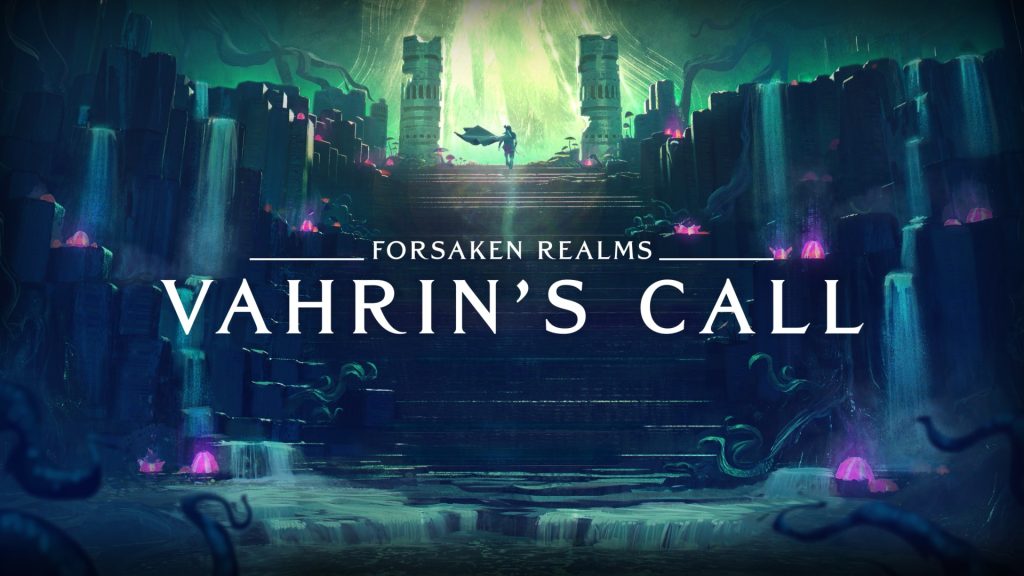
Forsaken Realms: Vahrin’s Call is exactly the kind of ambitious, slightly clumsy fantasy RPG that used to be far more…
![[Early Access] 2nd EVE – Sci-Fi Action RPG That Lacks a Sense of Stakes](https://www.indie-games.eu/wp-content/uploads/2026/08/2ND-EVE-1024x576.jpg)
2nd Eve is a space-set action RPG in which we strive to save humanity.
![[PREVIEW] Dreamcards – Strategic Exploration of Consciousness](https://www.indie-games.eu/wp-content/uploads/2026/08/Dreamcards_20260810_233631_0000-1024x576.jpg)
Dreamcards is a roguelike deckbuilder centered around dreams and nightmares.
![[Early Access] OFFBEAT – Incredibly Fun Way to Start a Music Career](https://www.indie-games.eu/wp-content/uploads/2026/08/Offbeat_20260808_201446_0000-1024x576.jpg)
In OFFBEAT, we play the role of a jobbing composer who is launching their music career.
