![[GAMESCOM 2026] Vikings Dynasty Preview – Expands the Dynasty Formula](https://www.indie-games.eu/wp-content/uploads/2026/09/Viking-Dynasty-09-21-26-2-1024x576.jpg)
[GAMESCOM 2026] Vikings Dynasty Preview – Expands the Dynasty Formula
After showing me Prospera at Gamescom 2026, Toplitz Productions' Mathias Oertel moved to a very different kind of settlement builder.…


If you enjoy independent indie game coverage, consider supporting Indie-Games.eu on Patreon. It helps keep the site independent.
After more than a decade of continuous storytelling, the Trails series has explored nearly every narrative direction imaginable. Political conspiracies, ancient relics, secret societies, supernatural phenomena, and massive technological threats have all played major roles across its many arcs. With so much ground already covered, it would be easy for the franchise to begin feeling creatively exhausted. Instead, The Legend of Heroes: Trails Beyond the Horizon reinvents its sense of scale by centering its story on humanity’s first venture into space, using this milestone as the foundation for one of the most ambitious narratives the series has ever attempted.
Blending science fiction elements with the franchise’s signature political drama and character-focused storytelling, Beyond the Horizon pushes the Calvard arc into uncharted territory. At the same time, it continues refining the hybrid combat system introduced in the Daybreak titles, resulting in some of the most engaging battles in the franchise. While its cliffhanger ending may frustrate some, the game succeeds in establishing a powerful foundation for the future of the series.
The narrative picks up shortly after the events of Trails Through Daybreak II. The Republic of Calvard announces Project Startaker, an unprecedented initiative designed to send humans into space for the first time in Zemurian history. President Roy Cramheart places enormous political and symbolic weight behind the mission, framing it as a triumph of national pride and technological progress. Naturally, this historic moment soon becomes entangled in conspiracies, hidden agendas, and long-running mysteries.
Like Trails into Reverie, the game divides its campaign between three protagonists: Van Arkride, the morally flexible Spriggan of the Daybreak arc; Rean Schwarzer, returning from the Cold Steel saga; and Kevin Graham, who makes his long-awaited comeback as a playable character after years of absence. Each character follows their own storyline over the course of three in-game days, with the routes unfolding in parallel.
This structure is handled competently, but it reinforces that Beyond the Horizon is not designed for newcomers. The game heavily relies on knowledge from previous arcs, particularly Daybreak, Cold Steel, Reverie, and Trails in the Sky the 3rd. Without this background, many emotional moments and major revelations lose their impact. Despite this barrier, the individual routes are interesting in their own right.
Rean’s chapters focus on uncovering the true purpose behind Project Startaker and confronting long-standing personal and ideological conflicts. His storyline provides meaningful closure for fans of the Cold Steel saga. Kevin’s route is the most mysterious and intellectually engaging, revolving around investigations and revelations that reshape the player’s understanding of past events. Van’s route, while the longest, is initially the slowest to develop. Much of its early portion feels familiar to Daybreak veterans, but it ultimately builds toward an explosive and rewarding finale.
One notable aspect of the structure is how isolated the three routes feel. Outside of the opening chapter and shared dungeon content, the protagonists rarely interact. Even in the later stages, the game resists fully uniting them. While this reinforces the idea that each story serves a specific narrative purpose, some may find the lack of crossover disappointing.
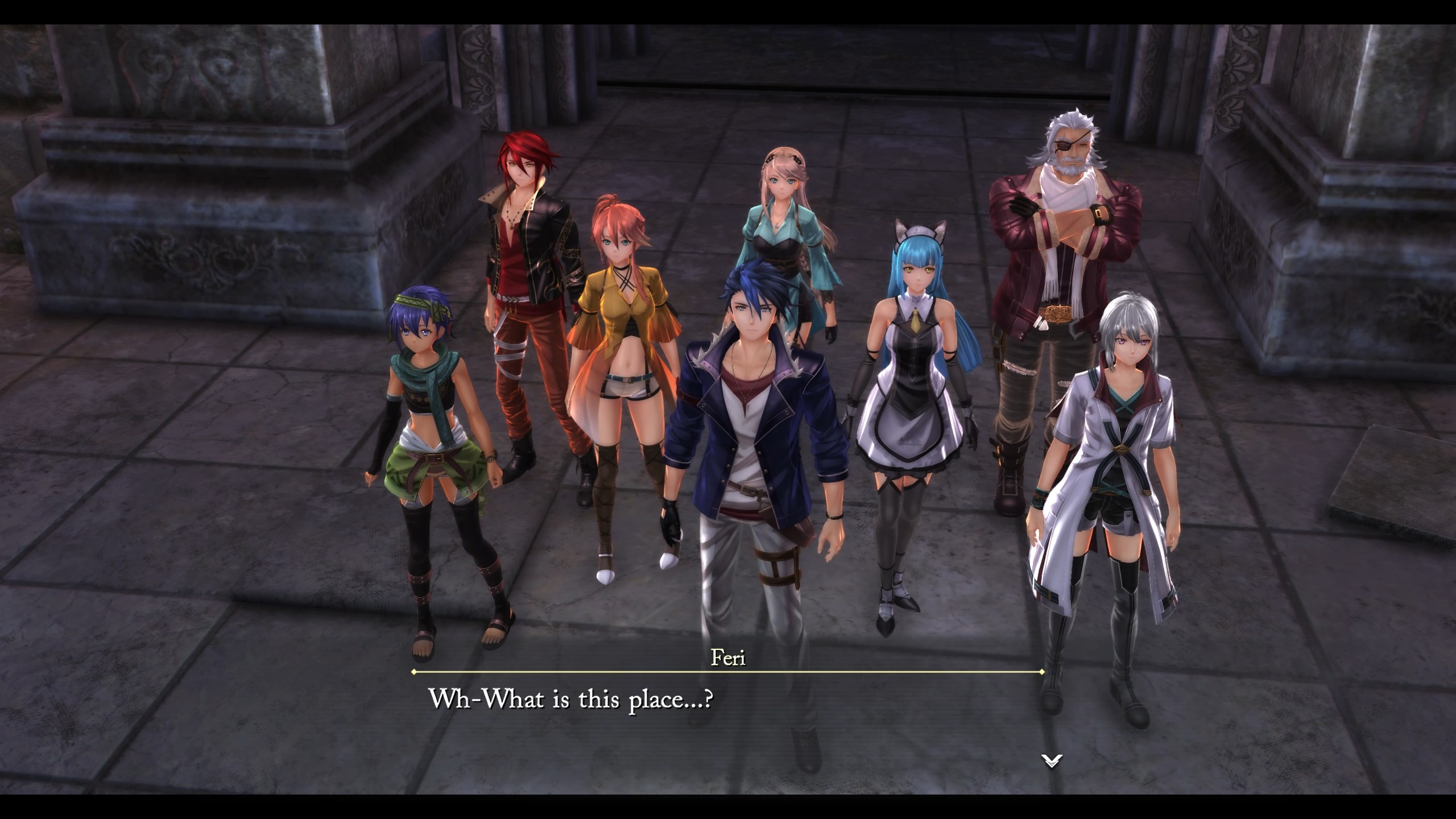
With so many returning characters, Trails games often struggle with overcrowded casts. Beyond the Horizon largely avoids this problem by focusing on a carefully selected group of familiar faces. Only key members from past arcs appear, allowing most characters to receive meaningful screen time. The overall quality of writing remains high, balancing large-scale political drama with intimate character moments.
Voice acting is expectional without a doubt, I always preffered the Japanese voice acting over the English one as it gives much more original feel to everything. Besides that, bonding events, known as Connections, return and remain one of the game’s strongest features. These scenes deepen relationships between characters while providing meaningful gameplay benefits. While some previous entries allowed for extensive bonding options, Trails Beyond the Horizon leans more heavily into established character paths.
Optional content has always been central to the Trails experience, and Beyond the Horizon continues this tradition. Side quests are lengthy, well-written, and often connected to plotlines dating back to much earlier entries. Some even reference characters and schemes introduced over a decade ago, reinforcing the sense of a persistent, evolving world.
The Law, Gray, and Chaos morality system also makes a return. Unfortunately, it remains largely unimportant. While players can make judgment calls at the end of certain quests, these decisions rarely affect the story in meaningful ways. As a result, the system feels underutilized and somewhat outdated, which was quite underwhelming.
The Märchen Garten from Daybreak II returns as the Grim Garten, a redesigned roguelite-style dungeon. It features board-game-inspired progression and randomized encounters, offering a change of pace from the main story. While functional and occasionally enjoyable, Grim Garten contains less content than its predecessor and cannot be revisited after completing the main campaign. Nevertheless, it provides valuable rewards and additional lore. In any case, you can easily expect to spend around 100 hours into this game with all the side and main content included.
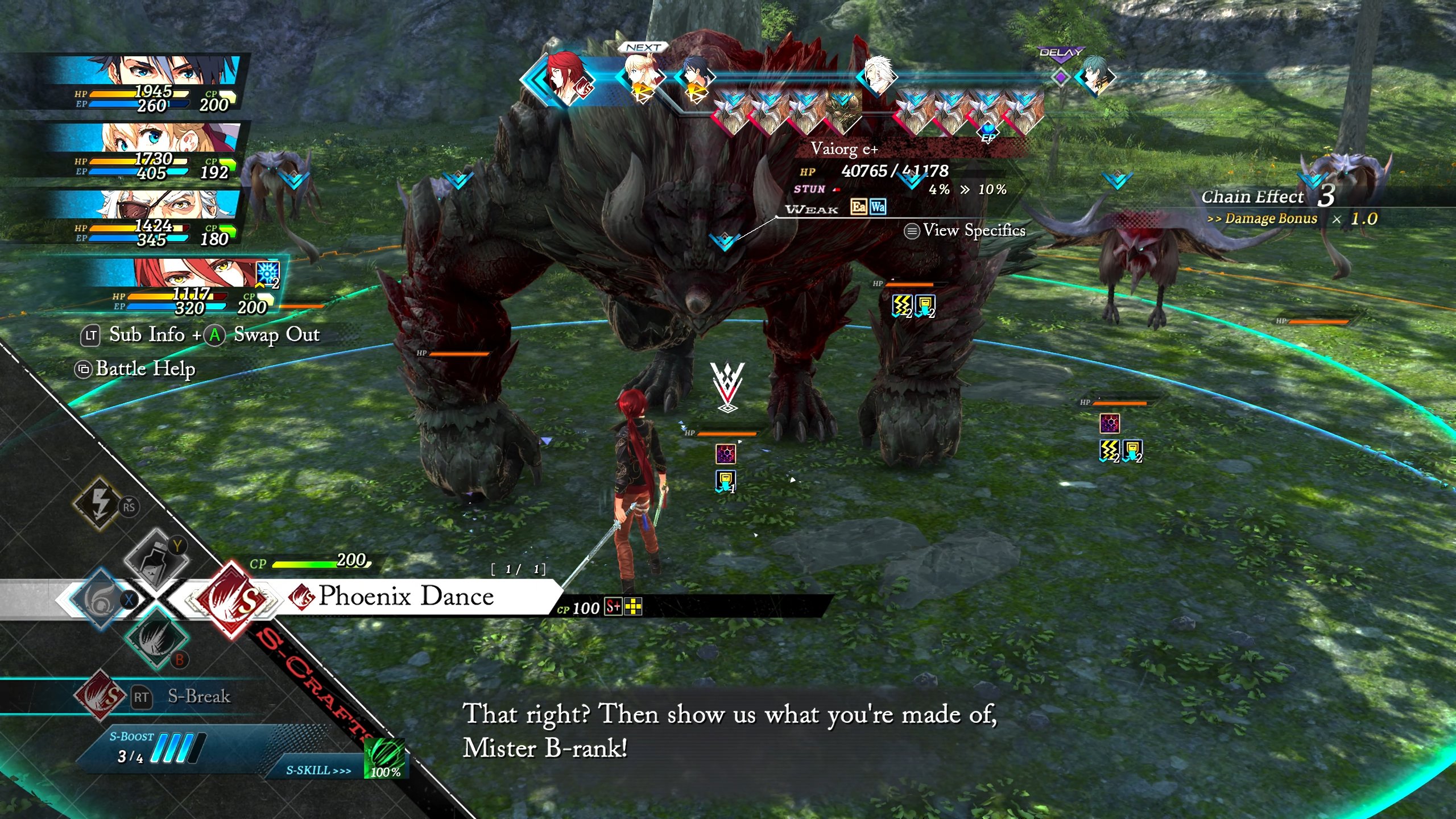
Trails Beyond the Horizon continues to build upon the hybrid combat system introduced in the Daybreak games, blending real-time field combat with traditional turn-based encounters. In real-time mode, you can directly attack enemies, charge strikes, and cast Quick Arts to build stun gauges. Successfully stunning enemies provides a significant advantage when transitioning into turn-based combat.
New features such as ZOC abilities and Awakening forms improve this system, allowing characters like Rean, Van, and Kevin to temporarily enter powerful states that boost damage and survivability. These upgrades make field combat smoother and more viable than ever before.
But, turn-based combat remains the heart of the experience. Battles revolve around a visible timeline that determines turn order and assigns random bonuses. These bonuses can dramatically affect combat flow, encouraging you to plan several turns ahead. Beyond the Horizon expands this system through improved bonus-stealing mechanics, enhanced Delay effects, and the introduction of “Plus” bonuses that strengthen stolen effects.
The most significant addition is the Shard Command system, which functions as an evolved version of Brave Orders. By consuming resources, you can apply powerful party-wide buffs for several turns. Enemies can also use similar abilities, and overwriting them requires additional cost, ensuring that battles remain balanced. Resource management is more complex than ever, as you must decide whether to conserve energy for ultimate attacks or invest it in buffs, positioning, and timeline manipulation.
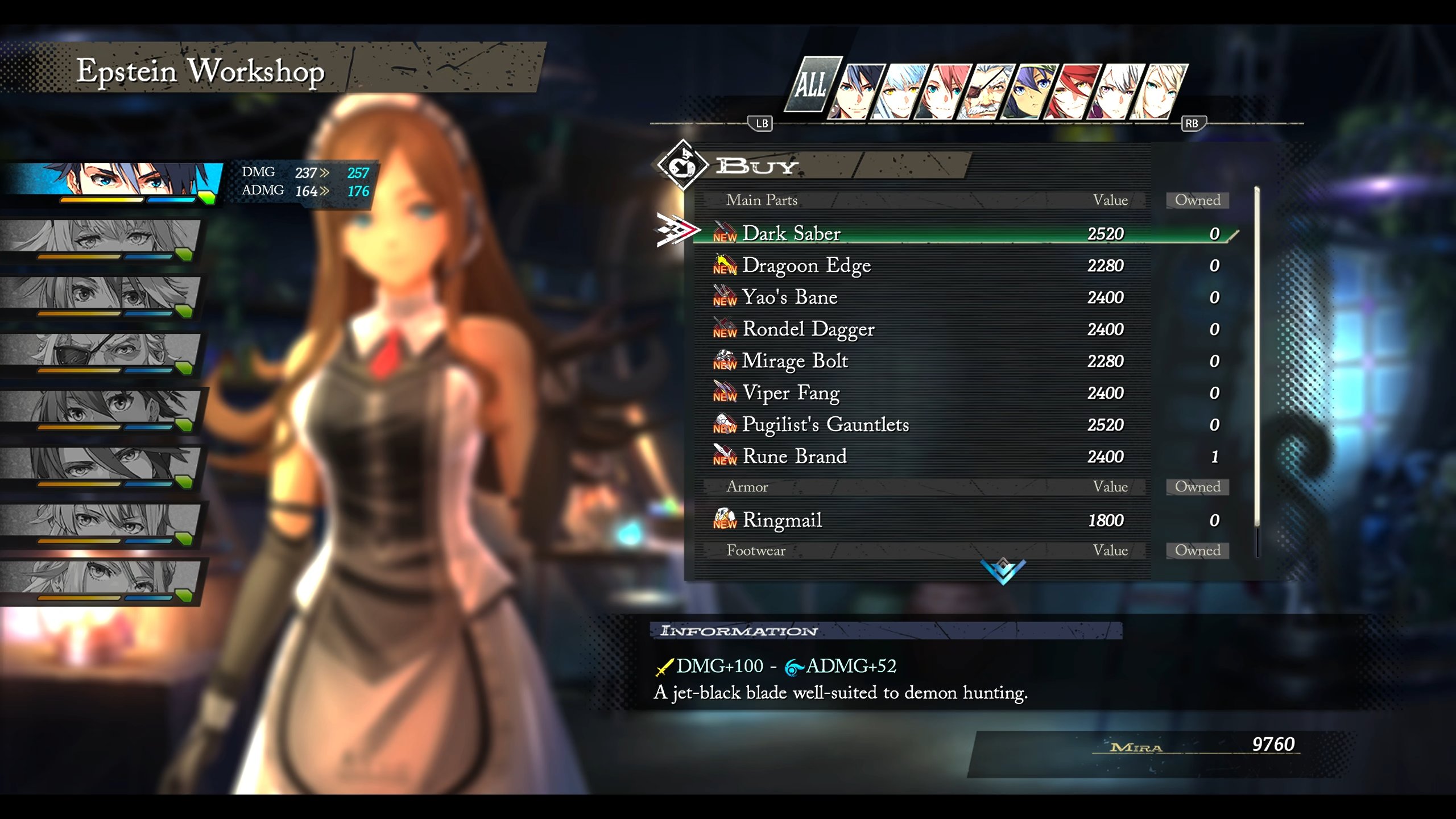
Customization remains one of the franchise’s greatest strengths. The Quartz system allows players to slot elemental gems into multiple lines, unlocking spells, passive abilities, and powerful shard effects. Experimentation is heavily encouraged, and optimizing builds can easily occupy hours. Rebalanced cost-reduction mechanics prevent excessive exploitation, while Craft leveling rewards consistent usage.
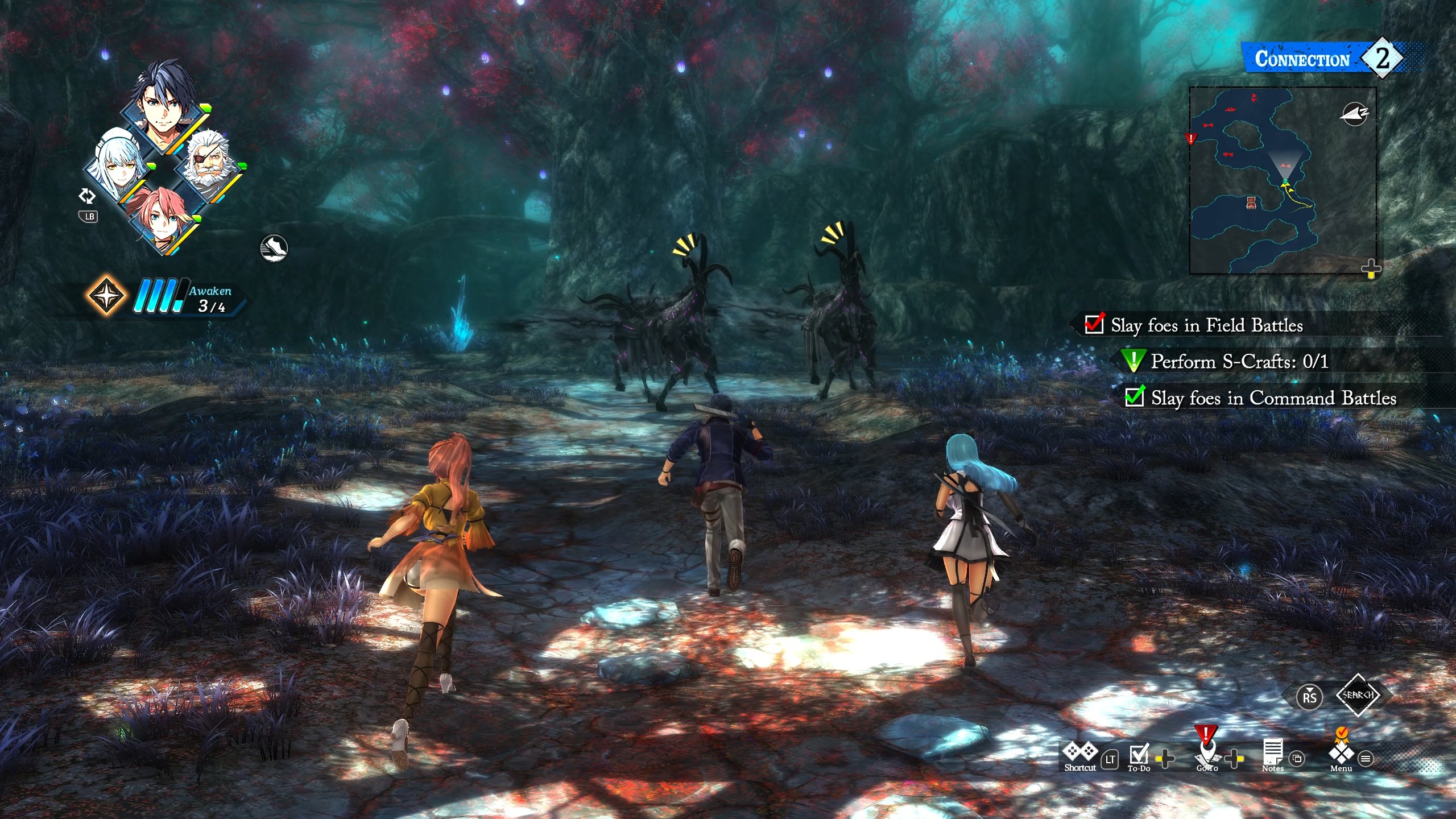
Visually, Beyond the Horizon maintains the style established in the Calvard arc. While it does not push graphical boundaries, it remains clean, consistent, and expressive. Fully animated story scenes are used more effectively, adding major emotional and narrative moments. One of Beyond the Horizon’s greatest achievements is its sense of scale. While previous arcs focused primarily on regional conflicts, this entry introduces developments that feel globally transformative. The implications extend across Zemuria, reshaping the political, technological, and philosophical landscape of the series.
The final chapters are dense with revelations that reframe earlier events and characters. Many will finish the game eager to revisit previous titles with fresh perspective. Rather than offering neat resolutions, the ending deliberately raises more questions, setting the stage for future entries.
So, is The Legend of Heroes: Trails Beyond the Horizon worth your time? Absolutely. Even if you’re unfamiliar with the series’ lore or narrative, this is a rock-solid JRPG that more than justifies its substantial playtime. The gameplay is smooth, the characters are engaging and the voice acting is excellently delivered. Trails Beyond the Horizon also marks just the first entry in this year’s lineup for the Trails series, setting the stage for more memorable experiences to come.
Trails Beyond the Horizon is not a game designed to welcome new players. It is a culmination of over a decade of interconnected storytelling, built primarily for dedicated fans. For those who have followed the series, however, it represents one of its strongest and most important entries.
Review copy provided by the publisher
After showing me Prospera at Gamescom 2026, Toplitz Productions' Mathias Oertel moved to a very different kind of settlement builder.…
![[GAMESCOM 2026] Prospera Preview – Production, Prosperity and Victorian Industry](https://www.indie-games.eu/wp-content/uploads/2026/09/Prospera-09-21-26-5-1024x576.jpg)
At Gamescom 2026, I met with Toplitz Productions' Mathias Oertel for a guided presentation of two upcoming games. One of…
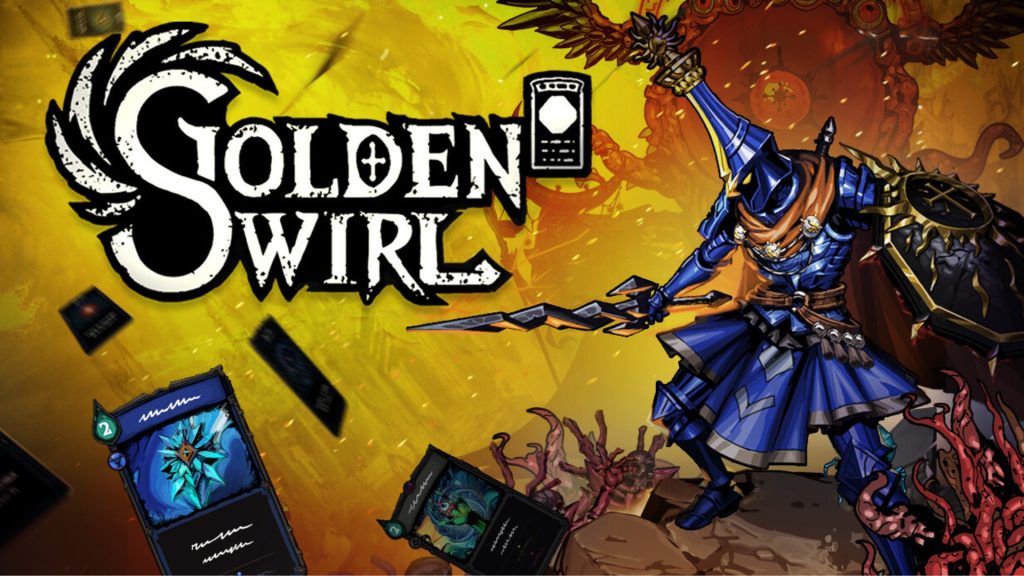
Golden Swirl inventive card combat carries the experience, but repetitive rooms, weak upgrades and excessive dialogue hold it back.
![[GAMESCOM 2026] Wilderdark Preview – Ambitious Dinosaur Horror Game That Still Has Plenty to Prove](https://www.indie-games.eu/wp-content/uploads/2026/09/Wilderdark-1024x576.jpg)
Dinosaur survival horror game Wilderdark has one of those premises that immediately makes you wonder why more games have not…
![[PREVIEW] Tiny Metal 2 – Strategy Game That Wants You to Learn From Every Mistake](https://www.indie-games.eu/wp-content/uploads/2026/09/Tiny-Metal-2-1024x576.jpg)
I rarely enjoy discovering that my opening strategy was completely wrong, but Tiny Metal 2 made that process one of…
![[PREVIEW] Remothered: Red Nun’s Legacy – Ambitious Survival Horror That Needs More Polish](https://www.indie-games.eu/wp-content/uploads/2026/09/Remothered-Red-Nuns-Legacy-4-1024x576.jpg)
Remothered: Red Nun’s Legacy has a gripping atmosphere and promising survival tools, but its repetitive hiding and rough visuals need…
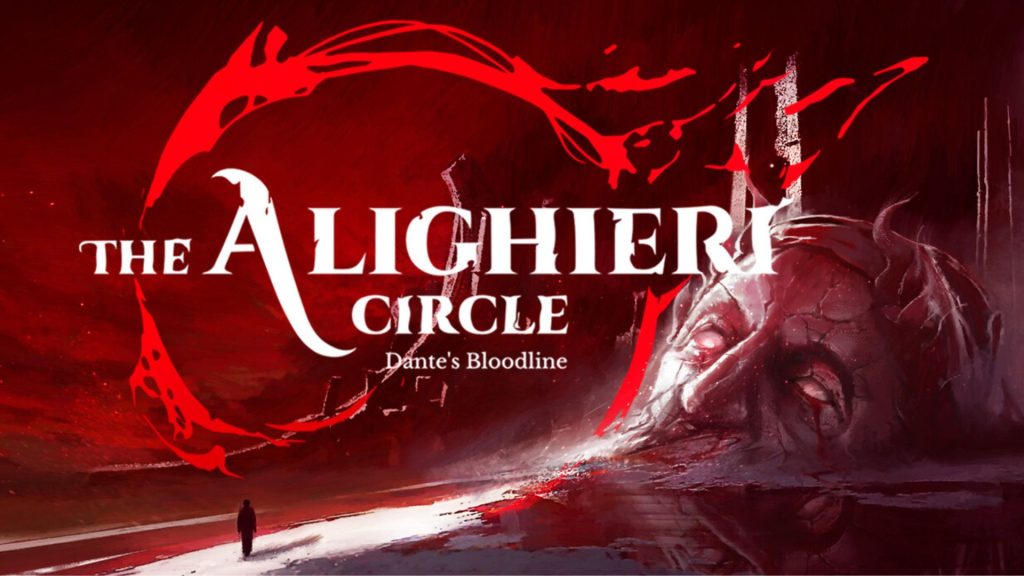
The Alighieri Circle: Dante’s Bloodline is difficult to recommend beyond players who are especially interested in Dante or enjoy solving…
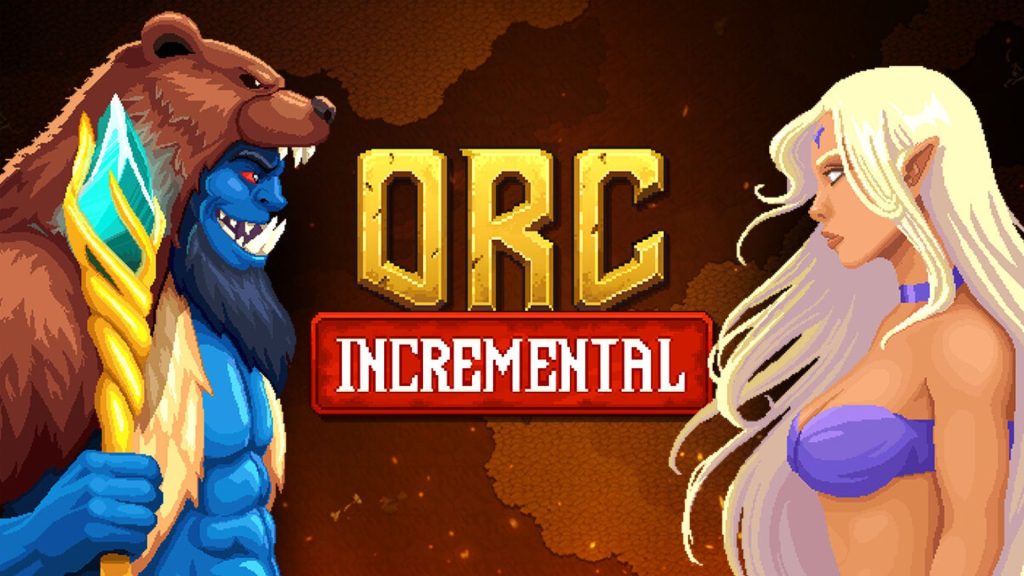
Orc Incremental offers satisfying progression, entertaining totem combinations and enough content to justify its affordable price.
![[GAMESCOM 2026] Chronoscript: The Endless End Preview – Beautiful Pages Hide Deliberate Combat](https://www.indie-games.eu/wp-content/uploads/2026/09/Chronoscript-The-Endless-End-1-1024x576.jpg)
Chronoscript: The Endless End stands out from other Metroidvanias by blending 2D manuscript worlds with exploration inside a 3D manor.
![[GAMESCOM 2026] MegaGum Preview – Combat Hits Hard in This Sticky Platforming Adventure](https://www.indie-games.eu/wp-content/uploads/2026/09/MegaGum-09-09-26-5-1024x576.jpg)
MegaGum combines hard-hitting combat, varied weapons and Gum-powered platforming in a promising Gamescom 2026 demo.
![[GAMESCOM 2026] Delphinium Preview – Cozy Routine Mixed With Enjoyable Minigames](https://www.indie-games.eu/wp-content/uploads/2026/03/Delphinium--1024x665.jpg)
Delphinium mixes cozy farming, exploration and relationships with enjoyable fishing, cooking and forging minigames in its Gamescom 2026 demo.
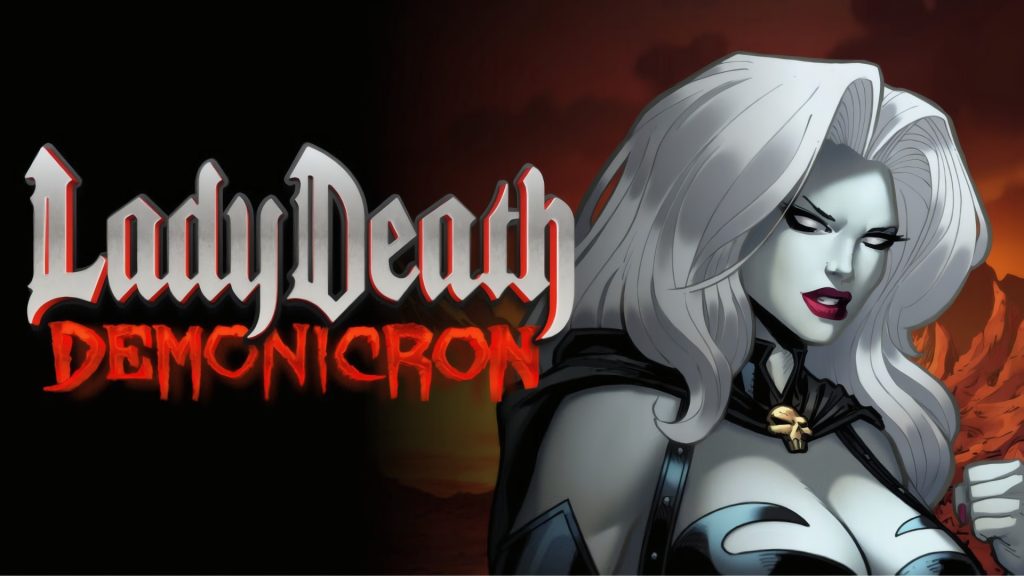
Lady Death: Demonicron looks the part, but underneath its excellent comic-book exterior is a clunky and painfully short brawler.
![[GAMESCOM 2026] Tomb Raider: Legacy of Atlantis Preview – Expands the Original Without Losing Its Identity](https://www.indie-games.eu/wp-content/uploads/2026/09/tomb-raider-legacy-of-atlantis-06-02-26-1-1024x576.jpg)
Tomb Raider: Legacy of Atlantis brings Lara back to her roots, but its Gamescom 2026 showing proved this is far…
![[GAMESCOM 2026] Clive Barker’s Hellraiser: Revival Preview – Ready to Open the Box](https://www.indie-games.eu/wp-content/uploads/2026/09/Clive-Barkers-Hellraiser-Revival-08-30-26-1-1024x576.jpg)
Hellraiser: Revival preserves the franchise’s sex, gore and psychological horror while delivering approachable survival-horror gameplay.

Swan Song creates a peaceful and forgiving puzzle space without removing the challenge that makes solving a difficult puzzle rewarding.
Mortal Shell II starts brilliantly but grows repetitive and exhausting, while remaining a rewarding and ambitious Soulslike sequel.
![[GAMESCOM 2026] Terranigma Preview – A Lost SNES Classic Returns in 2027](https://www.indie-games.eu/wp-content/uploads/2026/08/Terranigma-1-1024x576.jpg)
After more than three decades of limited availability, Terranigma is returning in 2027. We played its enhanced re-release at Gamescom…

Reading another person’s mind is often presented as a desirable superpower, but Sister Other Paranoia immediately understands why it could…
Forsaken Realms: Vahrin’s Call is exactly the kind of ambitious, slightly clumsy fantasy RPG that used to be far more…
![[Early Access] 2nd EVE – Sci-Fi Action RPG That Lacks a Sense of Stakes](https://www.indie-games.eu/wp-content/uploads/2026/08/2ND-EVE-1024x576.jpg)
2nd Eve is a space-set action RPG in which we strive to save humanity.
