
If you enjoy independent indie game coverage, consider supporting Indie-Games.eu on Patreon. It helps keep the site independent.
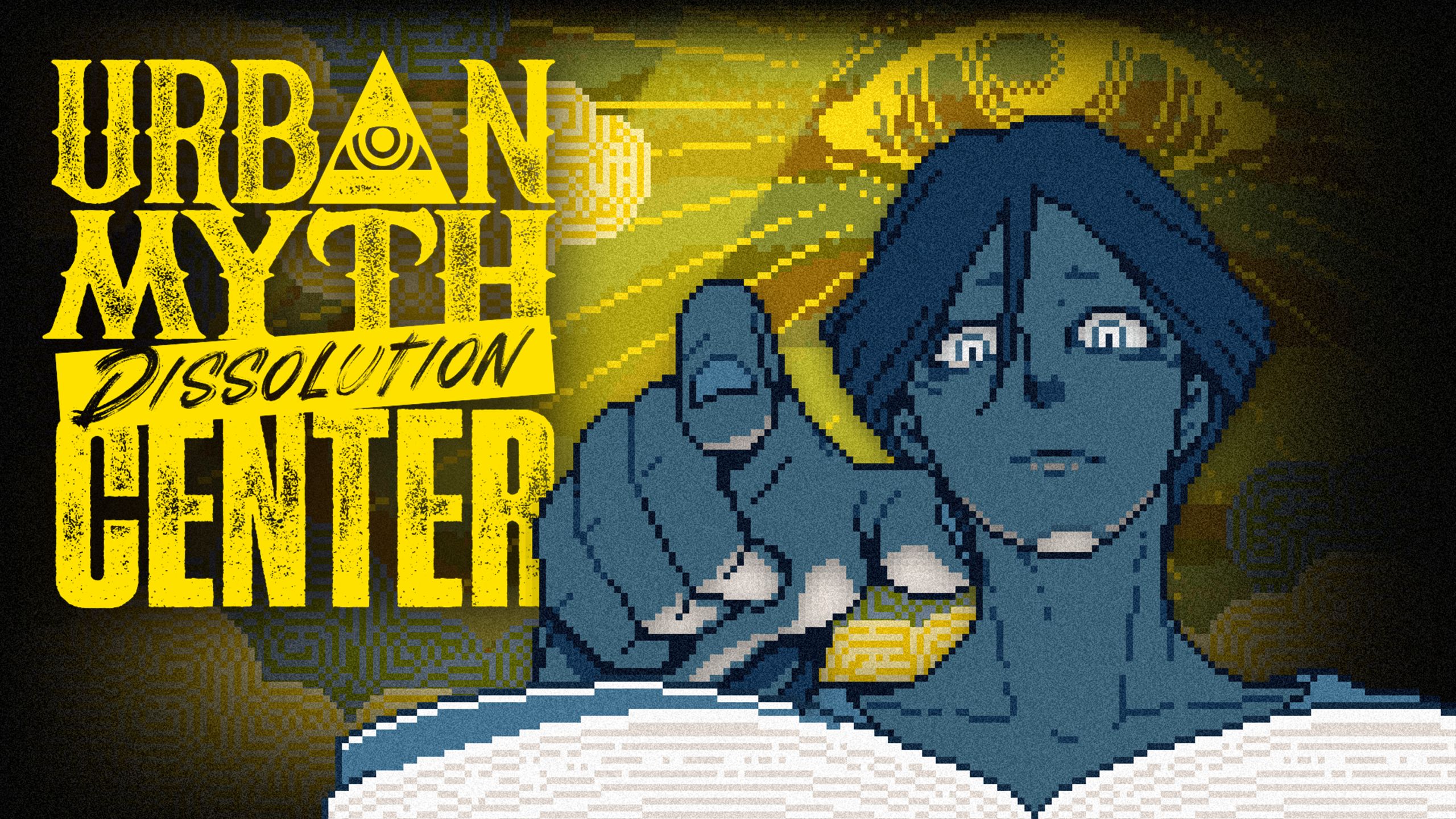
Urban Myth Dissolution Center is a detective visual novel that combines point-and-click investigation, social media research, and puzzle-solving to unravel paranormal mysteries. Developed by Hakababunko and published by Shueisha Games, this title draws inspiration from classics like Ace Attorney, but it subsequently suffers from pacing issues and repetitive gameplay. While it has its brilliant moments, the overall experience can feel tedious.
The game follows Azami, an investigator with psychic abilities, and her partner Jasmine as they solve six paranormal cases set in modern Japan. Each case revolves around urban legends and supernatural phenomena, such as haunted objects, possessed apartments, and doppelgängers. Honestly, Urban Myth Dissolution Center feels like an episode of an anime series, filled with mysteries, unexpected encounters, and plot twists, while the main protagonist remains at the center of the action.
Although the mysterious and intriguing story maintains your interest, individual cases often feel overly drawn-out and repetitive, and conclusions are sometimes simply handed to you instead of being assembled by yourself. Still, while these repetitive sequences have their purpose, they significantly slow down the game’s pace. Just when you think a case is solved, the game heightens the drama, adds tension, and an unexpected twist that forces you to return to already seen sequences. Although these moments can feel tedious, they effectively keep the story engaging and the tension constant.
Another thing that bothers me is the lack of accessibility options; there’s no way to speed up the text or simplify the process of clicking through dialogues. However, the game is designed to require careful reading and deep thinking. Every detail matters, and skipping is not an option. You will explore environments, interact with objects, and talk to characters to gather clues. Azami’s psychic ability adds a unique element, allowing her to see the spectral remnants of past events. These visions can be literal or abstract, which keeps the game’s supernatural elements fresh and unpredictable.
The puzzle-solving mechanics, where you fill in the blanks to piece together the story, are simple but often too easy. In some cases, you can solve them by simply guessing based on sentence structure, which diminishes the challenge. On the other hand, the social media sections are truly fun. Azami uses a Twitter-like platform to track the origin of urban legends, and the game excellently mimics the experience of “falling” down an internet rabbit hole while researching different stories and mysteries.


Just like other aspects of the game, these social media sections become tiresome over time, as you have to go through multiple rounds of social media research in each case. The logic behind what counts as a valid clue sometimes feels inconsistent, which makes these parts of the game more frustrating than fun, especially since some conversations are completely irrelevant and can pull you away from the main objective.
Despite the repetitive sequences in the gameplay, where the game truly shines is the writing. As mentioned earlier, the game is full of mystery, drama, and unexpected encounters, and the story flows naturally and unobtrusively. There is no sense that the plot is being forcibly pushed in unnatural directions; the game feels like an episode of The Mentalist, where you eagerly await that final moment when the killer is revealed. From the very first episode, the game masterfully builds tension and easily draws you into its world.
You will also quickly connect with the characters, especially Jasmine and Azami, who make a fantastic team. Although there is no voice acting, this does not diminish the experience at all. In fact, I’m not sure if voice acting would even suit a title like this. Instead, the game relies heavily on expressive animations and emotions—fear, smiles, laughter, and disgust—all of which are conveyed extremely effectively.


Visually, Urban Myth Dissolution Center is impressive. The pixel art is detailed and expressive, and the character portraits convey a lot of personality. The use of color is particularly striking, with calm, cool tones dominating in everyday scenes, while the supernatural elements are highlighted by bright red hues. This contrast effectively draws attention to key details and further enhances the game’s eerie atmosphere.
Another thing to highlight is the music, as well as the creepy atmosphere that accompanies you throughout the entire gameplay experience. One could discuss the numerous moments that hit hard, but it would be a shame to spoil this experience. Additionally, this title is quite accessible in terms of price given the amount of content it provides. My personal favorite thing is the Dissolution Phase Answers near the end of each episode, where you distill the entire story into a few conclusions, thus closing the case.
Urban Myth Dissolution Center is a conceptually interesting detective game but is hampered by slow pacing, repetitive gameplay, and a lack of challenge. Personally, it doesn’t feel like a classic game but more like an interactive anime. The emphasis is entirely on the story, while the gameplay is simplified to keep the narrative at the center of attention. The main story and unique mechanics, such as social media investigation and clairvoyance, are the game’s highlights, but they are not strong enough to completely outweigh its flaws. For fans of detective visual novels, Urban Myth Dissolution Center offers enough content to enjoy, especially if you can overlook the game’s pacing issues.
| Pros | Cons |
|---|---|
| Engaging, overarching story. | Slow gameplay pace. |
| Unique social media mechanic. | Boring, repetitive sections. |
| Beautiful visual design. | Easy puzzles. |
| Clairvoyance mechanic. | Lack of accessibility options. |
Review copy provided by the publisher
![[EARLY ACCESS] Far Far West – Co-Op Shooter I Didn’t Expect to Love This Much](https://www.indie-games.eu/wp-content/uploads/2026/04/Far-Far-West-300x169.jpg)
There is a reason why Far Far West is currently sitting at overwhelmingly positive reviews on Steam and has already…

Retro Rewind - Video Store Simulator latest update that adds repair stations, street sign and more to the game, could…
Vultures: Scavengers of Death is a turn-based tactical strategy game heavily inspired by classic survival horror.
![[Early Access] No Stone Unturned – A fowl play](https://www.indie-games.eu/wp-content/uploads/2026/05/Unturned-1-300x169.jpg)
In No Stone Unturned, we play as Detective Cox, a squirrel with amnesia who investigates a murder of a chicken…

Outbound is a mediocre, shallow cozy game with a beautiful presentation and strong concept, but one that fails to deliver…
![[PREVIEW] L’Agence – The Hearts of Paris](https://www.indie-games.eu/wp-content/uploads/2026/05/LAgence-naslovna-300x169.jpg)
L'Agence - The Hearts of Paris already feels like one of those indie games you randomly discover and end up…
Memoriapolis has just received its massive “Banners and Wonders” update, released alongside the game’s one-year anniversary.

Demon Lord: Just a Block initially felt like another roguelike I would spend a few hours with before eventually moving…
Wardrum is a flawed but genuinely creative roguelite, one that rhythm game and tactical RPG fans may still find worthwhile,…
Motorslice blends Prince of Persia-style platforming with Shadow of the Colossus-like boss encounters, throwing you into a world filled with…
Even in early access, Dead as Disco is an extremely fun mix of rhythm, action, and brawler gameplay.
Dungeon Clawler is a roguelike deck-builder built around heavy RNG, but instead of leaning fully into chaos or strict balance,…

Bus Bound sits somewhere between a driving simulator and light management game, but leans much more toward the simulation side,…
InKONBINI is for players who want something slow and introspective and less about managing a store and more about understanding…
Reptilian Rising is a thoughtful, cohesive tactics game that fully commits to its identity.
![[PREVIEW] Duo Quest – This Game Tests Your Friendship](https://www.indie-games.eu/wp-content/uploads/2025/12/Duo-Quest-300x169.jpg)
Duo Quest highlights everything great about the indie scene, though its chaotic gameplay might just put your friendships to the…
Cinderia is a really nice surprise, an action roguelite with tight gameplay that doesn't reinvent the genre but executes its…
Yu-Gi-Oh! Legacy of the Duelist: Link Evolution is probably the best single-player Yu-Gi-Oh! game we have right now.
StarRupture got its first major update about two weeks ago, and it pretty much changes everything you knew about the…
Vampire Crawlers doesn’t reinvent the genre, but it doesn’t need to. For the price, the amount of content, and how…
There is a reason why Far Far West is currently sitting at overwhelmingly positive reviews on Steam and has already…
Retro Rewind - Video Store Simulator latest update that adds repair stations, street sign and more to the game, could…
Vultures: Scavengers of Death is a turn-based tactical strategy game heavily inspired by classic survival horror.
In No Stone Unturned, we play as Detective Cox, a squirrel with amnesia who investigates a murder of a chicken…
Outbound is a mediocre, shallow cozy game with a beautiful presentation and strong concept, but one that fails to deliver…
L'Agence - The Hearts of Paris already feels like one of those indie games you randomly discover and end up…
Memoriapolis has just received its massive “Banners and Wonders” update, released alongside the game’s one-year anniversary.
Demon Lord: Just a Block initially felt like another roguelike I would spend a few hours with before eventually moving…
Wardrum is a flawed but genuinely creative roguelite, one that rhythm game and tactical RPG fans may still find worthwhile,…
Motorslice blends Prince of Persia-style platforming with Shadow of the Colossus-like boss encounters, throwing you into a world filled with…
Even in early access, Dead as Disco is an extremely fun mix of rhythm, action, and brawler gameplay.
Dungeon Clawler is a roguelike deck-builder built around heavy RNG, but instead of leaning fully into chaos or strict balance,…
Bus Bound sits somewhere between a driving simulator and light management game, but leans much more toward the simulation side,…
InKONBINI is for players who want something slow and introspective and less about managing a store and more about understanding…
Reptilian Rising is a thoughtful, cohesive tactics game that fully commits to its identity.
Duo Quest highlights everything great about the indie scene, though its chaotic gameplay might just put your friendships to the…
Cinderia is a really nice surprise, an action roguelite with tight gameplay that doesn't reinvent the genre but executes its…
Yu-Gi-Oh! Legacy of the Duelist: Link Evolution is probably the best single-player Yu-Gi-Oh! game we have right now.
StarRupture got its first major update about two weeks ago, and it pretty much changes everything you knew about the…
Vampire Crawlers doesn’t reinvent the genre, but it doesn’t need to. For the price, the amount of content, and how…
