

If you enjoy independent indie game coverage, consider supporting Indie-Games.eu on Patreon. It helps keep the site independent.
At Gamescom, we had the chance to play Fractured Blooms for the first time, a game that explores a different kind of “cozy” genre, one connected to horror and psychological themes. The publisher of this game is Serenity Forge, otherwise known for bringing something special and unique to their titles.
Usually, when you hear someone mention the “cozy” genre, you probably think of games with a lot of monotony and relaxation, free of stress and too much action. Most games that involve farming and cultivation fall under this genre. Perhaps the best example is Stardew Valley, which offers a low-stakes, relaxing experience where players can explore, make friends, and play at their own pace in a charming setting.
For those who may not have heard, Fractured Blooms is a horror life simulation that is scheduled to be released initially for PC via Steam, with a later release on consoles. In it, you play as Angie, a girl trapped in a time loop, and you carry out daily tasks like gardening, cooking, and renovating a neglected home. Beneath the relaxing surface, the game reveals a deeply personal story inspired by a true event, exploring themes of psychological stress, grief, and trauma.
Each loop involves strategic resource management, with unsettling changes and frightening scenes that intensify as the story progresses, attempting to blend elements of Doki Doki Literature Club and Silent Hill. Graphically, this game looks truly impressive, and its mysterious atmosphere is the most memorable aspect. In the demo we played at Gamescom, everything starts out simply: we have to harvest tomatoes, find a water bucket, sow new seeds, and return to the house to cook dinner.

However, you are constantly accompanied by Angie’s monotonous and unemotional voice. Her dry tone suggests that this world might not be what it seems. To successfully complete tasks, you must keep an eye on your stamina, which is clearly visible on the screen. Every action uses up stamina, and if you don’t have enough, the game will skip some tasks to encourage you to do better on your next attempt.
This leads us to the concept of the time loop, in which Angie is trapped in her own psychological world that she can’t escape from. The demo showed that you perform the same tasks every day (though this may not be the case in the full game), but Angie’s inner voice encourages you to do something different at times. Inside the house, which feels haunted and desolate, you might encounter a jumpscare, like a TV randomly turning on. In other words, you are constantly progressing through the narrative.
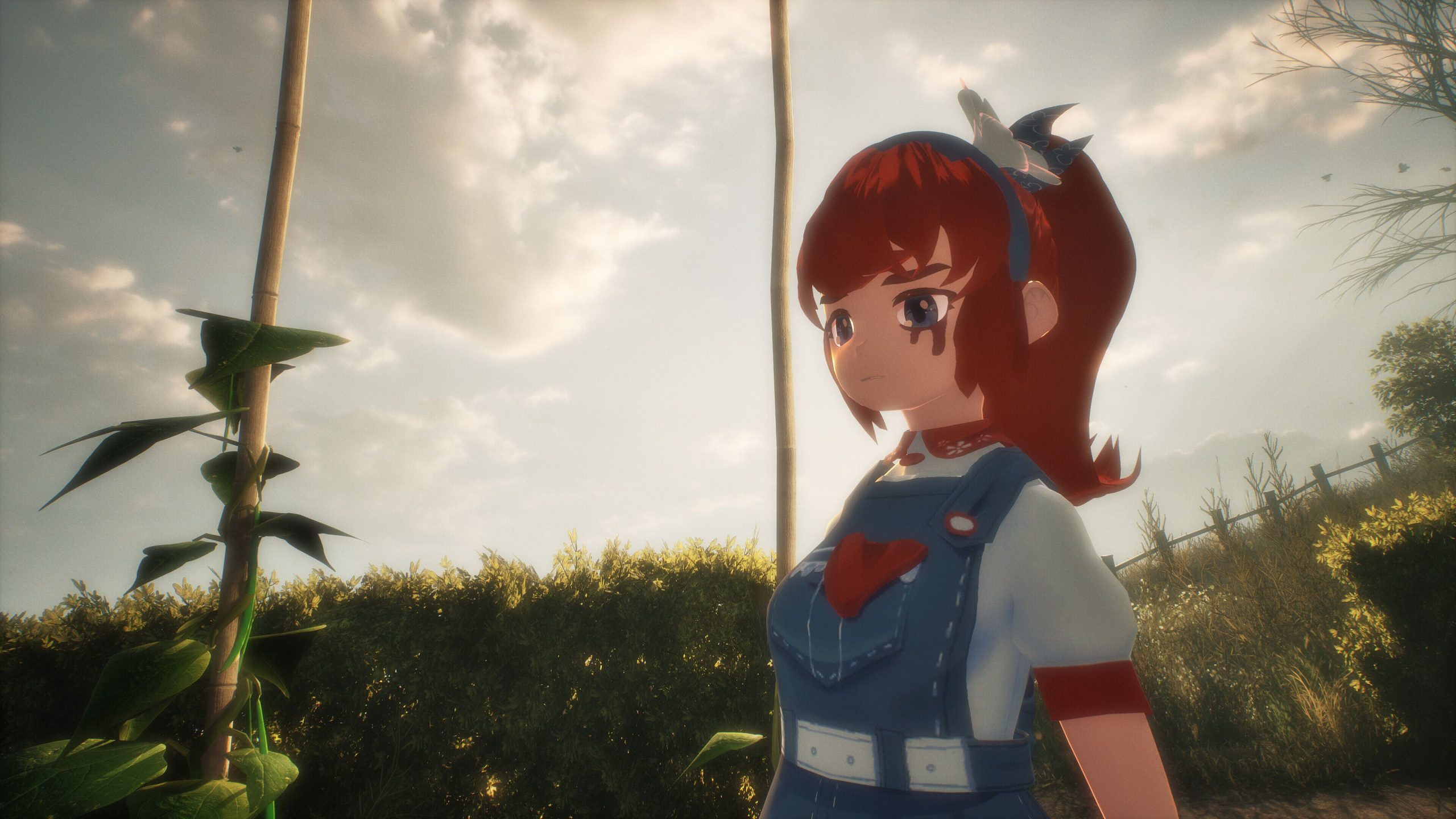
The final part of the demo gave us a timed challenge: we had to pick up scattered laundry from the upper floor. Once you succeed and go to sleep, your stamina will be restored, and the amount you recover depends on how fast you were. It wasn’t explained exactly how much you get back, but it’s enough to successfully get through the next day. The environment, a seemingly idyllic house, acts as a metaphor for Angie’s mental state, with its decay reflecting her internal struggles.
Zsófi Hámori-Gecser, the marketing manager at Serenity Forge, told us more about this. The time loop mechanic amplifies the themes of entrapment and repetition, aiming to create a sense of inevitable stagnation. As the game progresses, the environment subtly changes, with familiar spaces becoming warped or unsettling, which reflects Angie’s psyche. While it may not be obvious at first, Zsófi also pointed out that the story delves into difficult topics that aren’t often discussed, so the house is actually a psychological battlefield where daily tasks disguise a deeper existential fear.

The further you progress, the scarier the game becomes, and you will sometimes encounter grotesque and surreal scenes, such as flowers that bleed or objects that take on strange shapes. In essence, the story is revealed through fragmented memories and mysterious clues, forcing you to piece together Angie’s past. This slow unveiling of her grief and pain creates a constant sense of unease and fear.
This is where the demo ends, and it’s sure to leave a strong impression and encourage you to think about certain themes. In short, Fractured Blooms sounds truly impressive, and the demo should be available later this year.
![[PREVIEW] 70s-style Robot Anime Geppy-X – This Game Pretends It’s a Real 1970s Anime](https://www.indie-games.eu/wp-content/uploads/2026/06/70s-Style-Robot-Anime-Geppy-X-Preview-300x169.jpg)
As I continue my Steam Next Fest journey, I stumbled upon a game I honestly wasn't expecting to enjoy as…
![[PREVIEW] Edge of Memories – One of My Biggest Steam Next Fest Disappointments](https://www.indie-games.eu/wp-content/uploads/2026/06/Edge-of-Memories-Preview-300x169.jpg)
Right now, Edge of Memories feels like a game with good ideas that hasn't yet figured out how to turn…
![[PREVIEW] Penguin Colony – Lovecraftian Horror Meets Antarctic Exploration](https://www.indie-games.eu/wp-content/uploads/2026/06/Penguin-Colony-5-300x169.jpg)
It is surprisingly difficult to explain Penguin Colony, yet incredibly easy to become fascinated by.

Magical Princess is one of those games that immediately reminded me of the classic Princess Maker series, but it does…
![[PREVIEW] Mortal Shell II – Difficult, Fair, and Surprisingly Polished](https://www.indie-games.eu/wp-content/uploads/2026/06/Mortal-Shell-II-1-1-300x169.jpg)
Mortal Shell II has opened its beta to everyone, and I have to admit, this is exactly how you showcase…
![[PREVIEW] 1666: Amsterdam – Fails to Capture the Promise of Its Reveal](https://www.indie-games.eu/wp-content/uploads/2026/06/1666-amsterdam-300x169.jpg)
Having just recently been revealed during Summer Game Fest, 1666: Amsterdam has already received a playable prologue on Steam.
![[EARLY ACCESS] Far Far West – Co-Op Shooter I Didn’t Expect to Love This Much](https://www.indie-games.eu/wp-content/uploads/2026/04/Far-Far-West-300x169.jpg)
There is a reason why Far Far West is currently sitting at overwhelmingly positive reviews on Steam and has already…

Retro Rewind - Video Store Simulator latest update that adds repair stations, street sign and more to the game, could…
Vultures: Scavengers of Death is a turn-based tactical strategy game heavily inspired by classic survival horror.
![[Early Access] No Stone Unturned – A Fowl Play](https://www.indie-games.eu/wp-content/uploads/2026/05/Unturned-1-300x169.jpg)
In No Stone Unturned, we play as Detective Cox, a squirrel with amnesia who investigates a murder of a chicken…

Outbound is a mediocre, shallow cozy game with a beautiful presentation and strong concept, but one that fails to deliver…
![[PREVIEW] L’Agence – The Hearts of Paris](https://www.indie-games.eu/wp-content/uploads/2026/05/LAgence-The-Hearts-of-Paris-300x169.jpg)
L'Agence - The Hearts of Paris already feels like one of those indie games you randomly discover and end up…

Memoriapolis has just received its massive “Banners and Wonders” update, released alongside the game’s one-year anniversary.

Demon Lord: Just a Block initially felt like another roguelike I would spend a few hours with before eventually moving…

Wardrum is a flawed but genuinely creative roguelite, one that rhythm game and tactical RPG fans may still find worthwhile,…
Motorslice blends Prince of Persia-style platforming with Shadow of the Colossus-like boss encounters, throwing you into a world filled with…

Even in early access, Dead as Disco is an extremely fun mix of rhythm, action, and brawler gameplay.
Dungeon Clawler is a roguelike deck-builder built around heavy RNG, but instead of leaning fully into chaos or strict balance,…

Bus Bound sits somewhere between a driving simulator and light management game, but leans much more toward the simulation side,…

InKONBINI is for players who want something slow and introspective and less about managing a store and more about understanding…
As I continue my Steam Next Fest journey, I stumbled upon a game I honestly wasn't expecting to enjoy as…
Right now, Edge of Memories feels like a game with good ideas that hasn't yet figured out how to turn…
It is surprisingly difficult to explain Penguin Colony, yet incredibly easy to become fascinated by.
Magical Princess is one of those games that immediately reminded me of the classic Princess Maker series, but it does…
Mortal Shell II has opened its beta to everyone, and I have to admit, this is exactly how you showcase…
Having just recently been revealed during Summer Game Fest, 1666: Amsterdam has already received a playable prologue on Steam.
There is a reason why Far Far West is currently sitting at overwhelmingly positive reviews on Steam and has already…
Retro Rewind - Video Store Simulator latest update that adds repair stations, street sign and more to the game, could…
Vultures: Scavengers of Death is a turn-based tactical strategy game heavily inspired by classic survival horror.
In No Stone Unturned, we play as Detective Cox, a squirrel with amnesia who investigates a murder of a chicken…
Outbound is a mediocre, shallow cozy game with a beautiful presentation and strong concept, but one that fails to deliver…
L'Agence - The Hearts of Paris already feels like one of those indie games you randomly discover and end up…
Memoriapolis has just received its massive “Banners and Wonders” update, released alongside the game’s one-year anniversary.
Demon Lord: Just a Block initially felt like another roguelike I would spend a few hours with before eventually moving…
Wardrum is a flawed but genuinely creative roguelite, one that rhythm game and tactical RPG fans may still find worthwhile,…
Motorslice blends Prince of Persia-style platforming with Shadow of the Colossus-like boss encounters, throwing you into a world filled with…
Even in early access, Dead as Disco is an extremely fun mix of rhythm, action, and brawler gameplay.
Dungeon Clawler is a roguelike deck-builder built around heavy RNG, but instead of leaning fully into chaos or strict balance,…
Bus Bound sits somewhere between a driving simulator and light management game, but leans much more toward the simulation side,…
InKONBINI is for players who want something slow and introspective and less about managing a store and more about understanding…
