![[GAMESCOM 2026] Clive Barker’s Hellraiser: Revival Preview – Ready to Open the Box](https://www.indie-games.eu/wp-content/uploads/2026/09/Clive-Barkers-Hellraiser-Revival-08-30-26-1-1024x576.jpg)
[GAMESCOM 2026] Clive Barker’s Hellraiser: Revival Preview – Ready to Open the Box
Hellraiser: Revival preserves the franchise’s sex, gore and psychological horror while delivering approachable survival-horror gameplay.

![[PREVIEW] The Alighieri Circle: Dante’s Bloodline – Promising Descent into Hell](https://www.indie-games.eu/wp-content/uploads/2026/02/Dante-Alighieri-Bloodline-scaled.jpg)
If you enjoy independent indie game coverage, consider supporting Indie-Games.eu on Patreon. It helps keep the site independent.
I’ve always been intrigued by The Divine Comedy by Dante Alighieri, especially its depiction of Hell and the way its characters are portrayed. There’s something timeless about poetry like this: it invites endless interpretation and reinvention. That flexibility becomes even more fascinating when the source material inspires modern media, including video games. Interpretations range from faithful adaptations to wildly creative reimaginings. But that’s not what we’re here to discuss. Instead, let’s take a closer look at The Alighieri Circle: Dante’s Bloodline.
At its core, the game is a walking simulator with elements of psychological horror. Gameplay is minimal, which makes it disappointing that the demo doesn’t offer even a proper puzzle beyond wandering around to collect statues in order to unlock an otherworldly portal. Mechanically, there isn’t much to engage with.
Where the game truly shines, however, is its voice acting. The performances are outstanding, the emotion in each line delivery feels authentic and enhances the narrative significantly. The premise itself is intriguing: “The world knows The Divine Comedy as a poem. For your family, it is a prison. As Gabriele Alighieri, you inherit a duty: reseal the gates of Hell.”
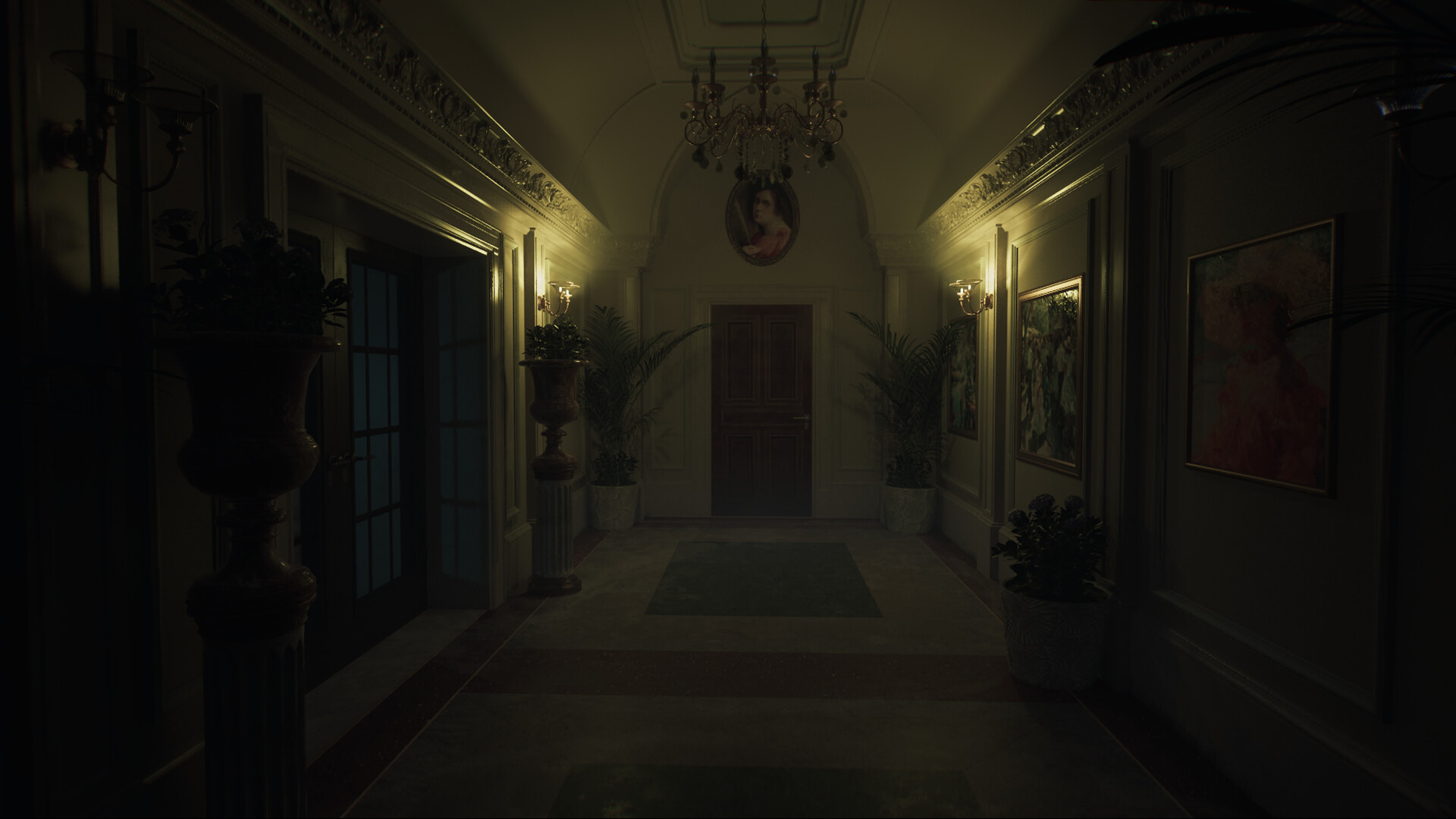
That hook is immediately intriguing. Hell isn’t portrayed as a traditional inferno, but rather as a reflection of the protagonist’s soul. We witness fragments of his memories: airplanes, travel, glimpses of his life. Eventually, we learn he has a wife and child, and that revelation adds emotional weight to his journey. He’s not just fighting for himself, but for his family. The story deepens further with another crucial detail: “Every 33 years, the barrier between our reality and Hell fades.”
There’s no combat here. The focus is entirely on atmosphere, exploration, psychological tension, and the ever-present fear of falling. You navigate two primary settings: a villa and a distorted vision of Hell. While the demo emphasizes storytelling, it’s difficult to judge the full experience based on a 30-minute playthrough. That said, the game avoids unnecessary scenes and narrative bloat, keeping the pacing tight and focused, something especially important in the walking simulator genre.
Visually, the game leans toward realism. The environments are richly detailed. One world bursts with color, while the other is largely monochromatic, with sharp flashes of red, most notably the color of blood, breaking through the grayscale palette. Performance-wise, the demo runs smoothly, with no noticeable stutters or frame drops, and overall it looks impressive.
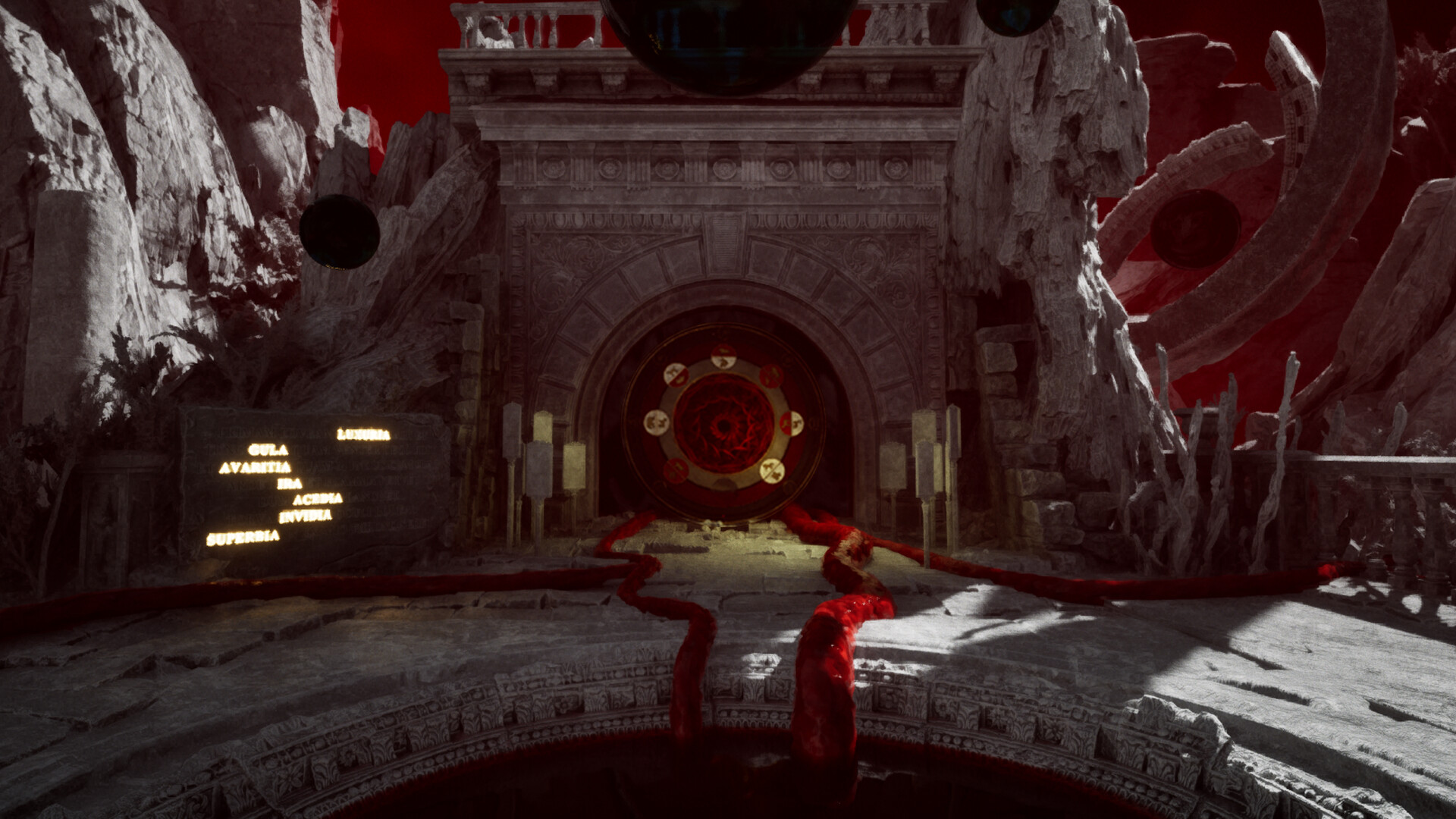
One shortcoming, however, is the lack of tangible character presence. We don’t see clear portraits or detailed representations of the characters. While this may be a deliberate artistic choice to preserve mystery, it does create some emotional distance. The Steam page also promises puzzles, and I genuinely wish the demo had offered a stronger glimpse of that aspect.
While ending on a cliffhanger effectively builds anticipation, the experience feels light on gameplay. Not everyone will enjoy simply running back and forth while listening to story exposition. Beyond the main narrative, there are hidden collectibles and diary pages that expand on the protagonist’s past, which adds welcome depth.
In the end, it’s difficult to predict the game’s direction based solely on the demo. It could evolve into something memorable, but as it stands, it risks feeling like just another walking simulator, one that might be good, but leaves you uncertain until its full release.
Hellraiser: Revival preserves the franchise’s sex, gore and psychological horror while delivering approachable survival-horror gameplay.

Swan Song creates a peaceful and forgiving puzzle space without removing the challenge that makes solving a difficult puzzle rewarding.
Mortal Shell II starts brilliantly but grows repetitive and exhausting, while remaining a rewarding and ambitious Soulslike sequel.
![[GAMESCOM 2026] Terranigma Preview – A Lost SNES Classic Returns in 2027](https://www.indie-games.eu/wp-content/uploads/2026/08/Terranigma-1-1024x576.jpg)
After more than three decades of limited availability, Terranigma is returning in 2027. We played its enhanced re-release at Gamescom…

Reading another person’s mind is often presented as a desirable superpower, but Sister Other Paranoia immediately understands why it could…
Forsaken Realms: Vahrin’s Call is exactly the kind of ambitious, slightly clumsy fantasy RPG that used to be far more…
![[Early Access] 2nd EVE – Sci-Fi Action RPG That Lacks a Sense of Stakes](https://www.indie-games.eu/wp-content/uploads/2026/08/2ND-EVE-1024x576.jpg)
2nd Eve is a space-set action RPG in which we strive to save humanity.
![[PREVIEW] Dreamcards – Strategic Exploration of Consciousness](https://www.indie-games.eu/wp-content/uploads/2026/08/Dreamcards_20260810_233631_0000-1024x576.jpg)
Dreamcards is a roguelike deckbuilder centered around dreams and nightmares.
![[Early Access] OFFBEAT – Incredibly Fun Way to Start a Music Career](https://www.indie-games.eu/wp-content/uploads/2026/08/Offbeat_20260808_201446_0000-1024x576.jpg)
In OFFBEAT, we play the role of a jobbing composer who is launching their music career.

HellSlave II retains the original’s oppressive atmosphere, morally grey world and striking art while adding a larger world, randomized loot…
Beast of Reincarnation is an ambitious but uneven action RPG elevated by satisfying parry combat, beautiful art direction and the…

K-pop Idol Stories: Road to Debut captures the pressure of building idol group, but its management systems never explore that…
Hooded Horse keeps finding strategy games that know their audience, and Corsair Cove extends its impressive run of excellent city-builders.
Teeto is a warm, cozy, creative and highly enjoyable 3D platformer that understands why classic collectathons remain so appealing.

Turnip Mountain stands out for its combination of a unique control system and a minimalist approach.
Dystopicon is an imaginative and memorable narrative experiment with sharp social commentary, engaging world-building and several wonderfully absurd scenarios.

Maneki Mania is an incremental game centered around petting a lucky cat.
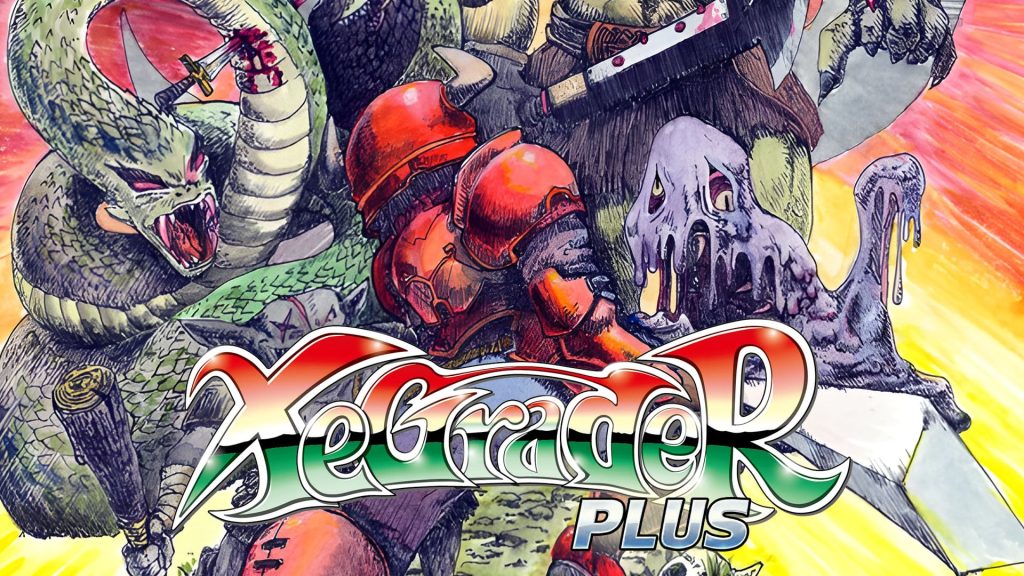
XeGrader Plus delivers colorful retro shooting, but basic mechanics, a short campaign and paid retro modes make its €20 price…
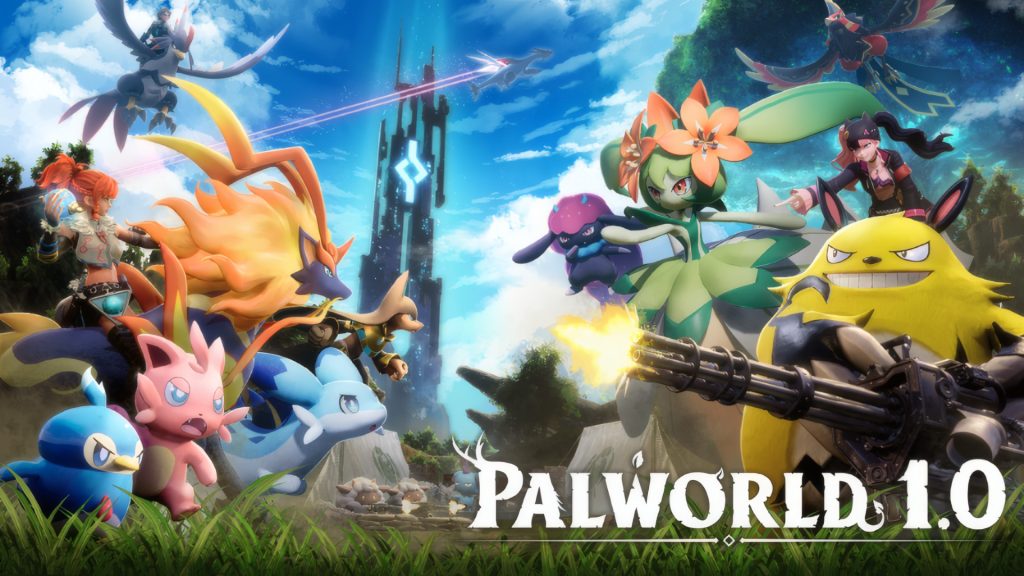
It has been roughly two and a half years since Palworld first entered Early Access, and quite a lot has…
![[EARLY ACCESS] The Last Caretaker – Survival Game I Cannot Stop Playing](https://www.indie-games.eu/wp-content/uploads/2026/07/The-last-Caretaker-Key-Art-1024x587.jpg)
The Last Caretaker is a compelling survival crafter with a flooded world and mobile base, but weak combat and performance…
