Duskfade – The PS2 Era Returns With All Its Strengths and Weaknesses
Duskfade is worth considering for players who miss colourful PS2-style action-platformers and can tolerate basic combat, floaty movement and backtracking.

![[Early Access] 2nd EVE – Sci-Fi Action RPG That Lacks a Sense of Stakes](https://www.indie-games.eu/wp-content/uploads/2026/08/2ND-EVE.jpg)
If you enjoy independent indie game coverage, consider supporting Indie-Games.eu on Patreon. It helps keep the site independent.
Setting action games in a science fiction universe offers tremendous potential in terms of storytelling, combat design, and atmosphere-building. At the same time, however, given the popularity of this genre, a given title must do more than just follow the typical conventions in order to stand out and keep players engaged. In the case of 2nd EVE, a space-set action RPG, there are several appealing and engaging ideas, but they fall victim to repetitiveness, shallowness, and a simple lack of spark.
2nd EVE tells the story of the inevitable collision between the Moon and Earth, in the face of which humanity, in order to survive, sent three massive colony ships bound for Proxima B, the closest thing to a new Earth. Playing as Sister Zola – a nun, psychiatrist, and high-ranking officer – our mission is to protect the minds of the colonists during their cryosleep, a task made more difficult by the effects of reality fractures, such as rogue machines, people waking up in a twisted version, and the ship itself transforming into a labyrinth. Using our faith, new powers, and hand-to-hand combat, we must save the future of humanity and ensure that we ourselves do not lose our soul.
The Early Access version includes the first three chapters of the story, which is set to continue in future updates. Based on what we have so far, however, we can draw more than enough conclusions about the game’s story, gameplay, and presentation. First and foremost, this is a game designed for challenging combat; although the official description labels it an action RPG, there are many elements that draw inspiration from soulslike games. So, it’s no surprise that the basics involve clearing each room of enemies, upgrading our character with new abilities, and overcoming final battles that require skill, strategy, and timing.
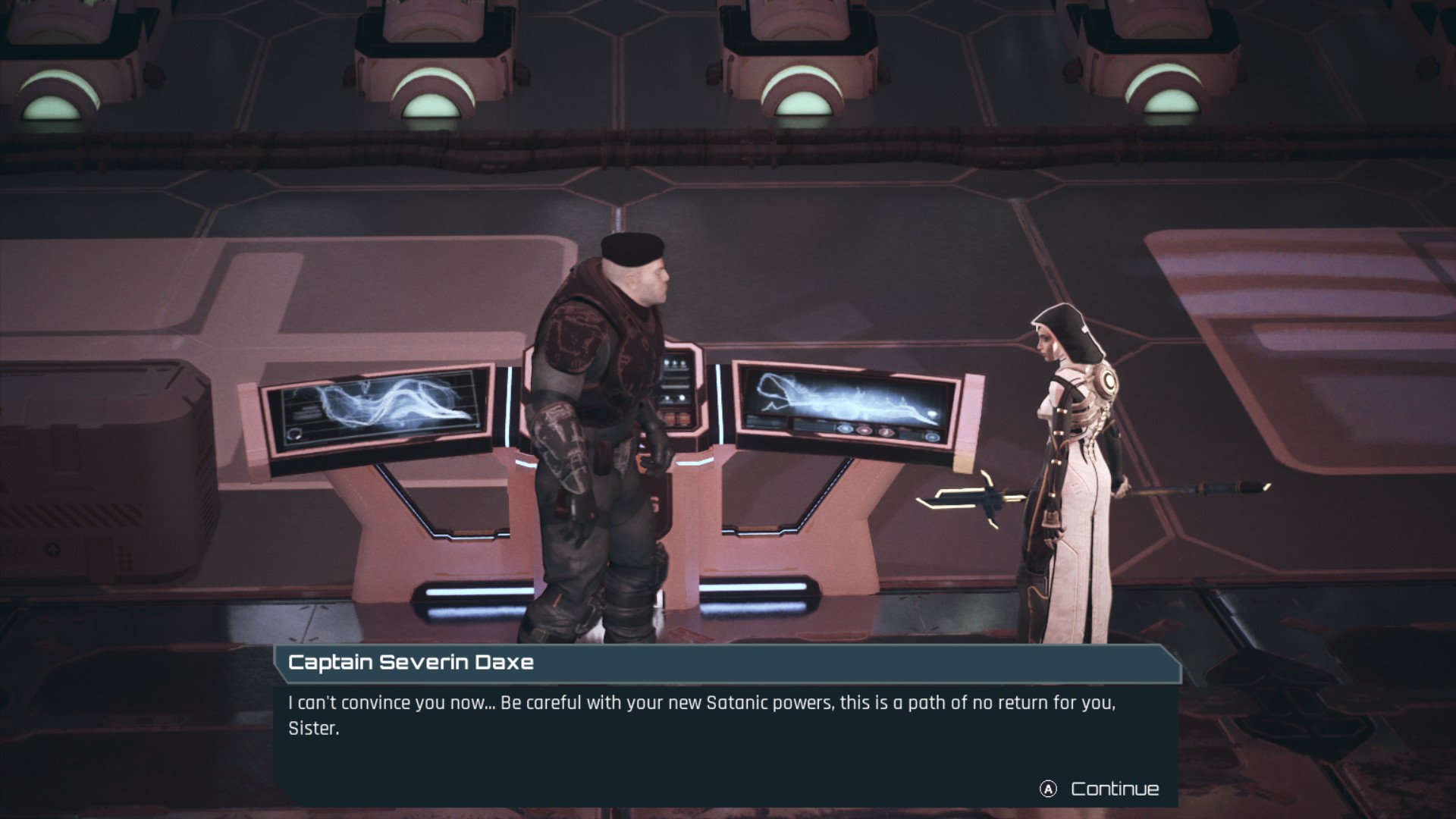
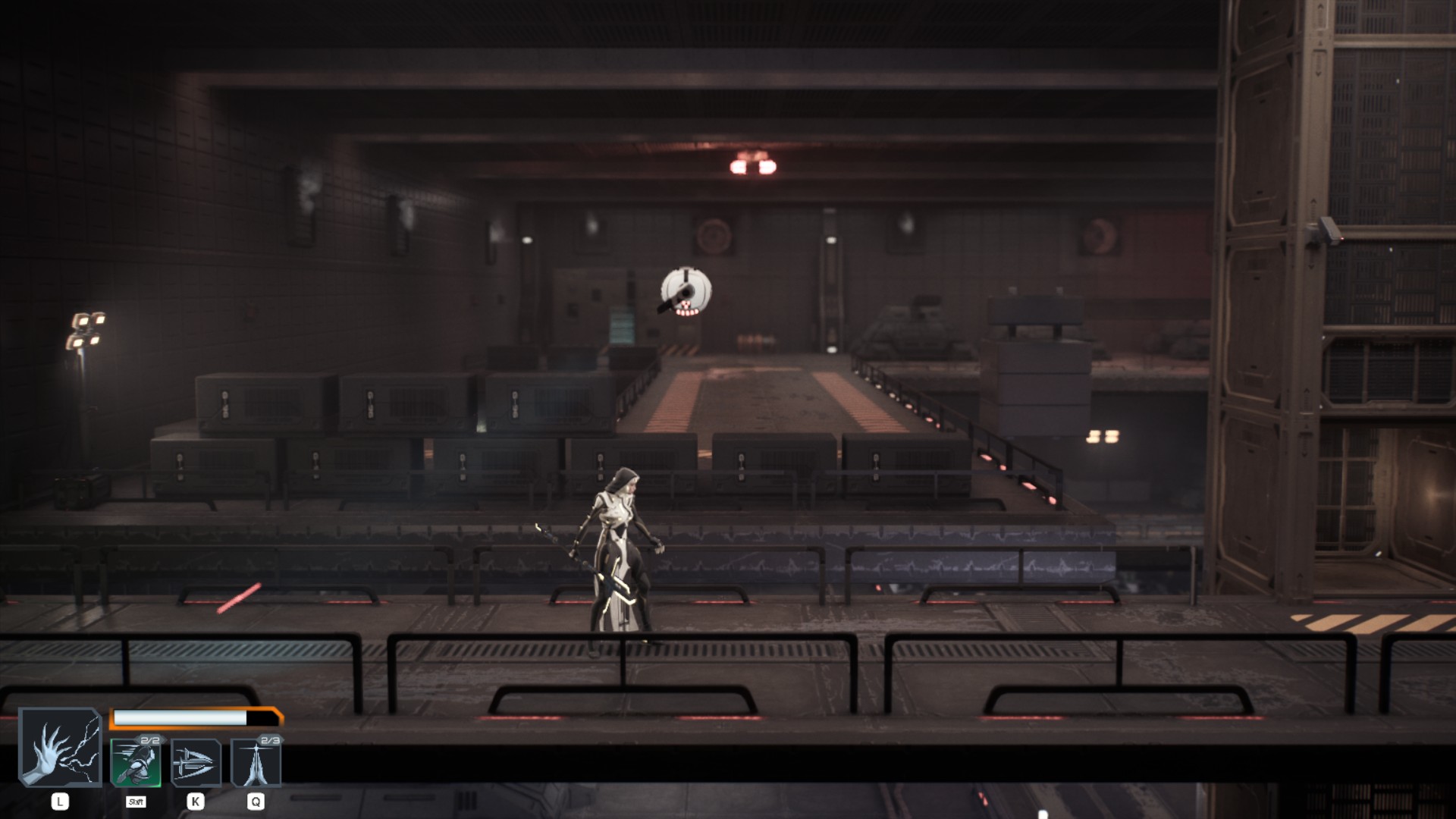
Although the game currently features as many as three different station layouts, each with its own theme and different enemies, there is still a lot of repetition in the combat and exploration. Each time, the rooms have identical features and often the same layout, so on each level we’re actually following the same route.
Practically the same can be said about the combat: it feels a bit off, as if it were too slow or out of sync. Many times, the best strategy turned out to be simply waiting for the other side to attack, which was quite tedious in the timed sections. What’s more, on some levels, having several enemies spawn at once created some pretty strange combinations, especially with soldiers and laser-firing equipment, which got annoying after a while because I felt like they were being added every few moments just for the sake of it. On top of that, boss battles weren’t much different from regular fights, which also contributed to the feeling of repetitiveness.
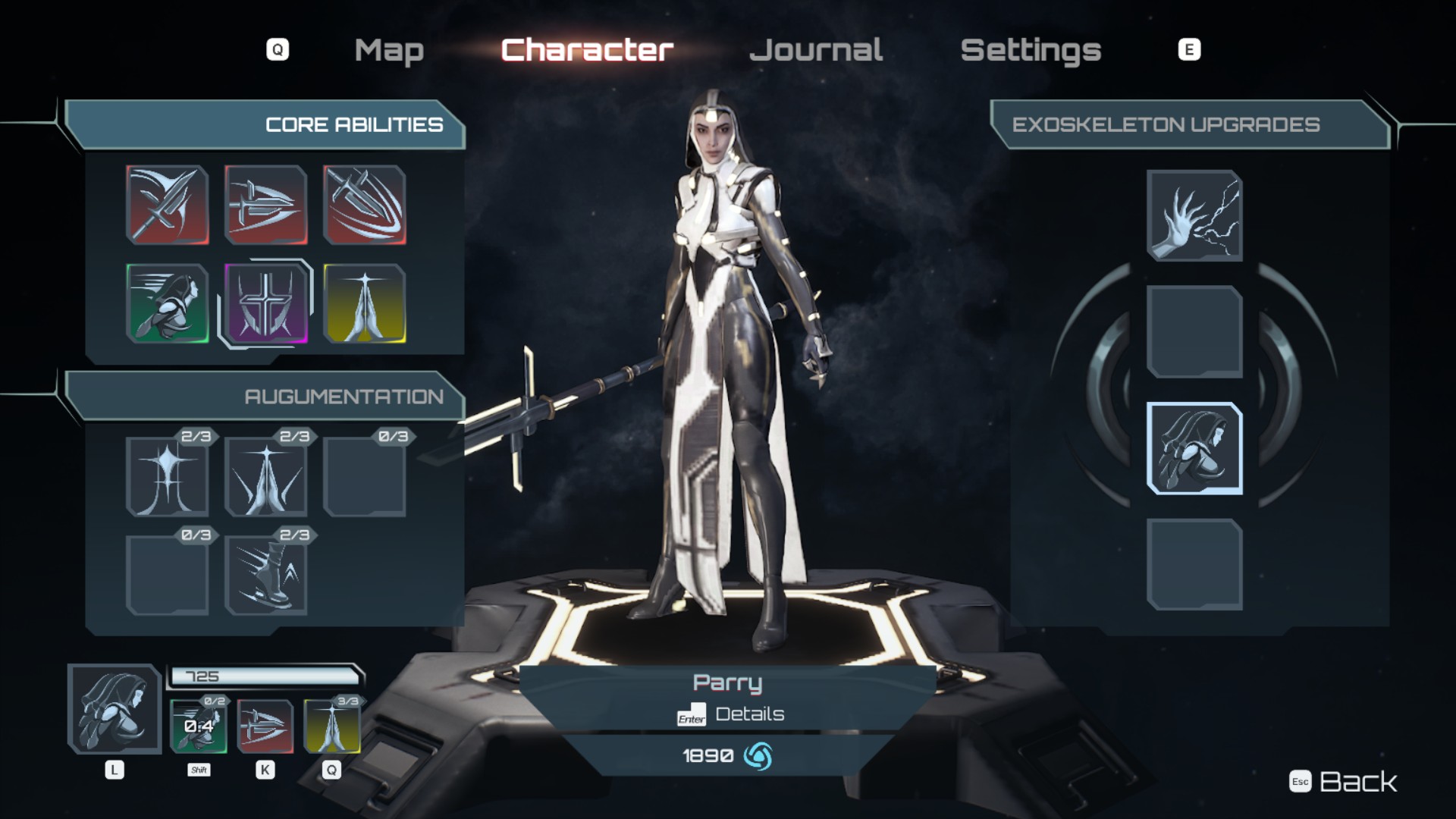
Choosing a warrior nun as a character was definitely an interesting choice, and this is reflected in every aspect of controlling that character. The game offers a variety of abilities that we can equip and upgrade depending on our preferred playstyle, and we can experiment with different combinations of these abilities during regular battles or in training areas. The powers themselves are quite interesting – they include abilities such as slowing down time, delivering an electric shock, or pulling opponents toward you – which motivates you to continue searching for new ones and improving the ones you already have.
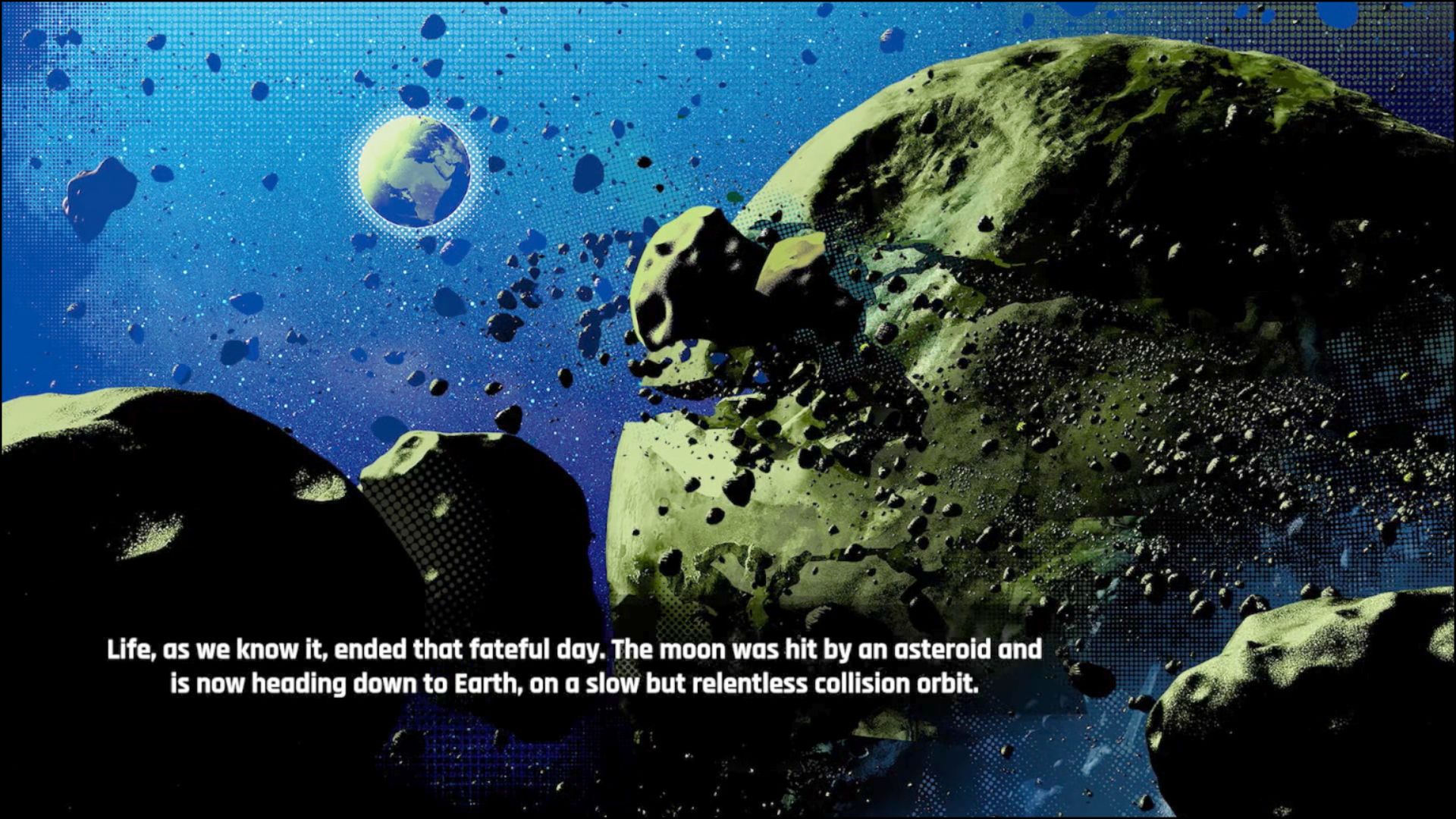
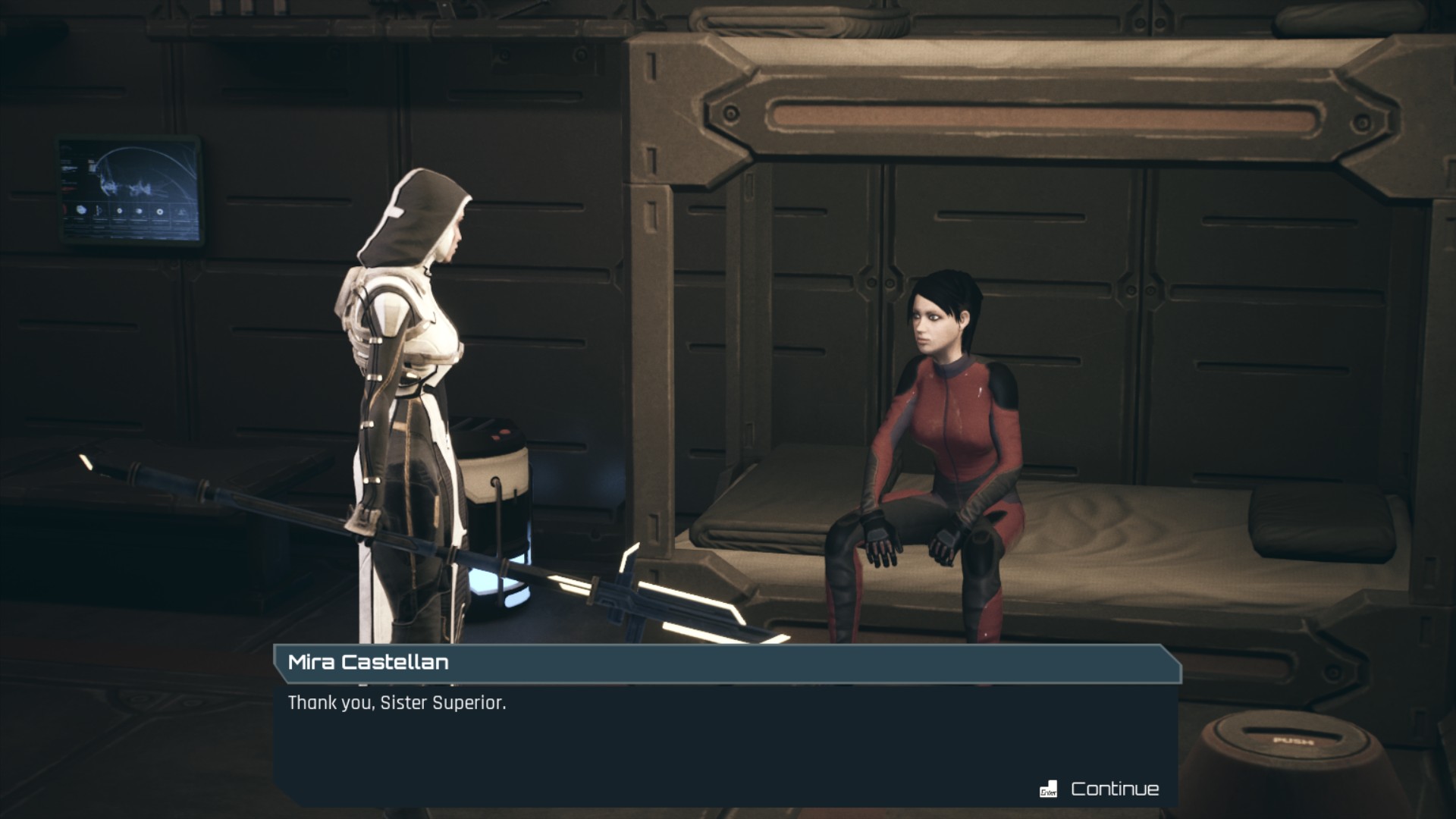
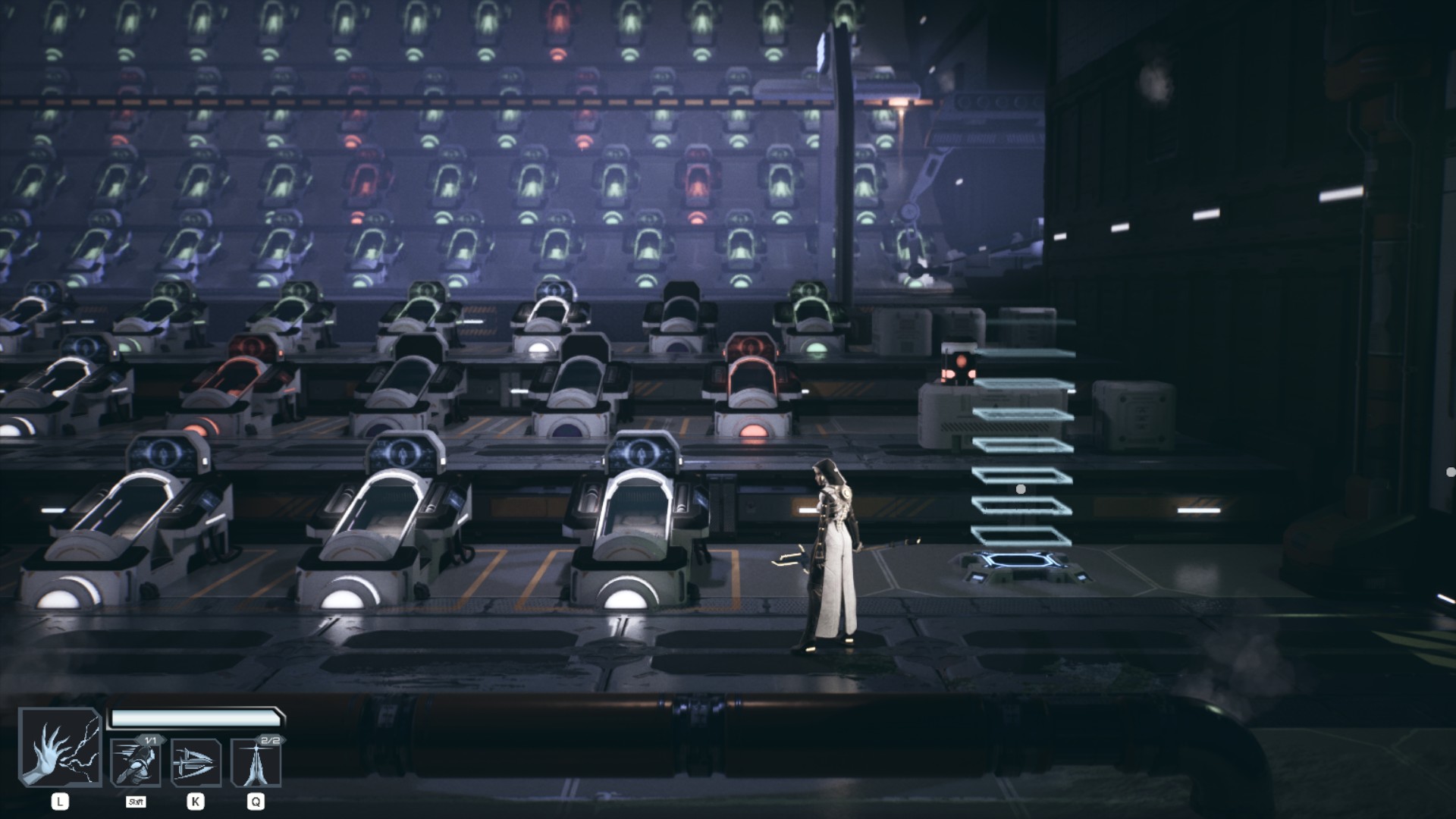
Sister Zola also plays a key role in the story, having been entrusted with the task of saving humanity during mysterious events that also threaten her own life. As the story progresses, we talk to others at the station and gather material for the journal to uncover more of the story; however, the plot doesn’t seem that important or impactful during gameplay.
In addition, the dialogue, which doesn’t add much and is delivered via AI voice acting, along with choices left without commentary, all contribute to the fact that this plot, which sounds very intense, in practice lacks the stakes needed to make you care about it. Although the story falls short, at least the game deserves credit for capturing the atmosphere of the space station, which is further enhanced by synth tracks that fit perfectly with the overall vibe.
It’s common knowledge in the gaming world that releasing games in Early Access is meant to gather feedback and improve the game over time. At the time of writing this review, however, the content presented in this version isn’t quite enough to make the game stand out or motivate players to keep playing: the combat is frustrating and requires bizarre tactics to get through, while the exploration and story are monotonous and predictable.
Overall, despite the interesting and unique concept reflected in the main character and the atmosphere, the game doesn’t have enough going for it to make it compelling. Will this change once the game leaves Early Access? We’ll have to wait and see on August 20th whether unlocking the full content will make a good impression.
2nd EVE has an appealing foundation but currently struggles to transform its ideas into a consistently entertaining action RPG. A warrior nun protecting humanity aboard a colony ship distorted by reality fractures is a strong premise, and Sister Zola’s supernatural abilities give the combat some welcome personality. Unfortunately, repetitive exploration, sluggish combat, underwhelming bosses and a story that lacks emotional impact leave the current Early Access version feeling considerably less exciting than its premise suggests. Even its more interesting powers are limited by encounters that rarely encourage creative use of them.
Ending Thoughts
Review copy provided by the publisher
Duskfade is worth considering for players who miss colourful PS2-style action-platformers and can tolerate basic combat, floaty movement and backtracking.
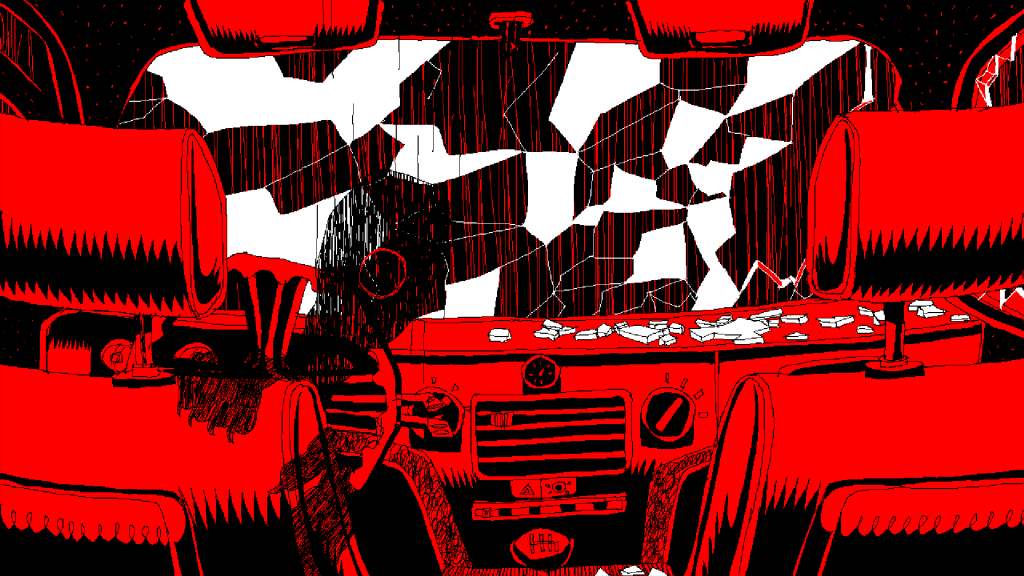
Man I Just Wanna Go Home is a noir crime story with visuals from MS Paint and life-or-death choices.
![[GAMESCOM 2026] Vikings Dynasty Preview – Expands the Dynasty Formula](https://www.indie-games.eu/wp-content/uploads/2026/09/Viking-Dynasty-09-21-26-2-1024x576.jpg)
After showing me Prospera at Gamescom 2026, Toplitz Productions' Mathias Oertel moved to a very different kind of settlement builder.…
![[GAMESCOM 2026] Prospera Preview – Production, Prosperity and Victorian Industry](https://www.indie-games.eu/wp-content/uploads/2026/09/Prospera-09-21-26-5-1024x576.jpg)
At Gamescom 2026, I met with Toplitz Productions' Mathias Oertel for a guided presentation of two upcoming games. One of…
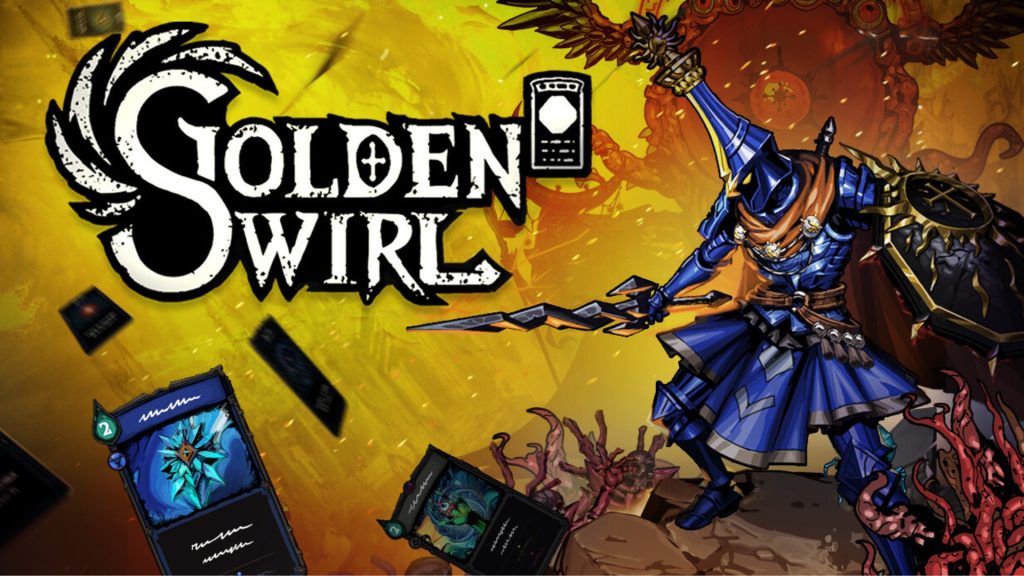
Golden Swirl inventive card combat carries the experience, but repetitive rooms, weak upgrades and excessive dialogue hold it back.
![[GAMESCOM 2026] Wilderdark Preview – Ambitious Dinosaur Horror Game That Still Has Plenty to Prove](https://www.indie-games.eu/wp-content/uploads/2026/09/Wilderdark-1024x576.jpg)
Dinosaur survival horror game Wilderdark has one of those premises that immediately makes you wonder why more games have not…
![[PREVIEW] Tiny Metal 2 – Strategy Game That Wants You to Learn From Every Mistake](https://www.indie-games.eu/wp-content/uploads/2026/09/Tiny-Metal-2-1024x576.jpg)
I rarely enjoy discovering that my opening strategy was completely wrong, but Tiny Metal 2 made that process one of…
![[PREVIEW] Remothered: Red Nun’s Legacy – Ambitious Survival Horror That Needs More Polish](https://www.indie-games.eu/wp-content/uploads/2026/09/Remothered-Red-Nuns-Legacy-4-1024x576.jpg)
Remothered: Red Nun’s Legacy has a gripping atmosphere and promising survival tools, but its repetitive hiding and rough visuals need…
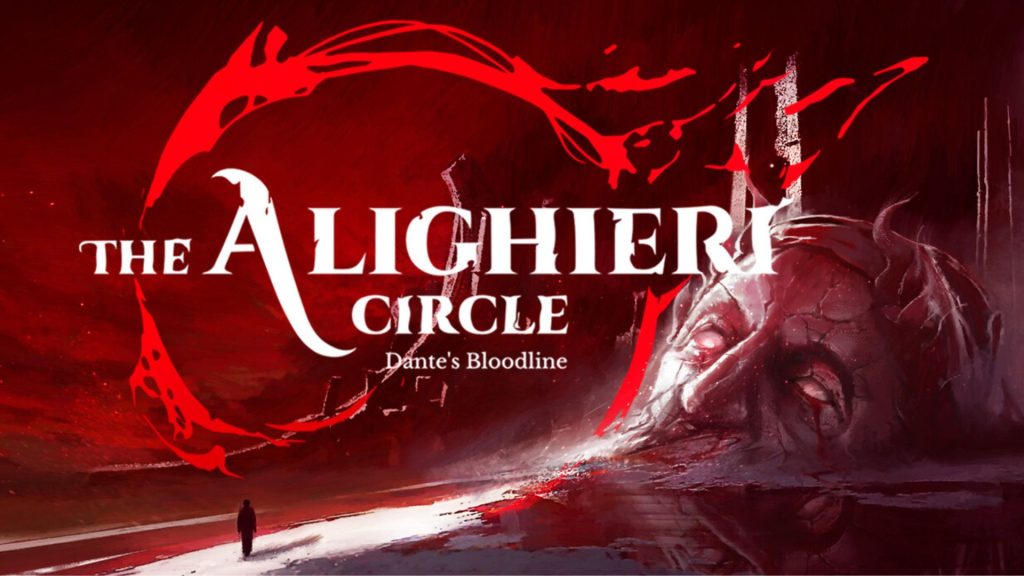
The Alighieri Circle: Dante’s Bloodline is difficult to recommend beyond players who are especially interested in Dante or enjoy solving…
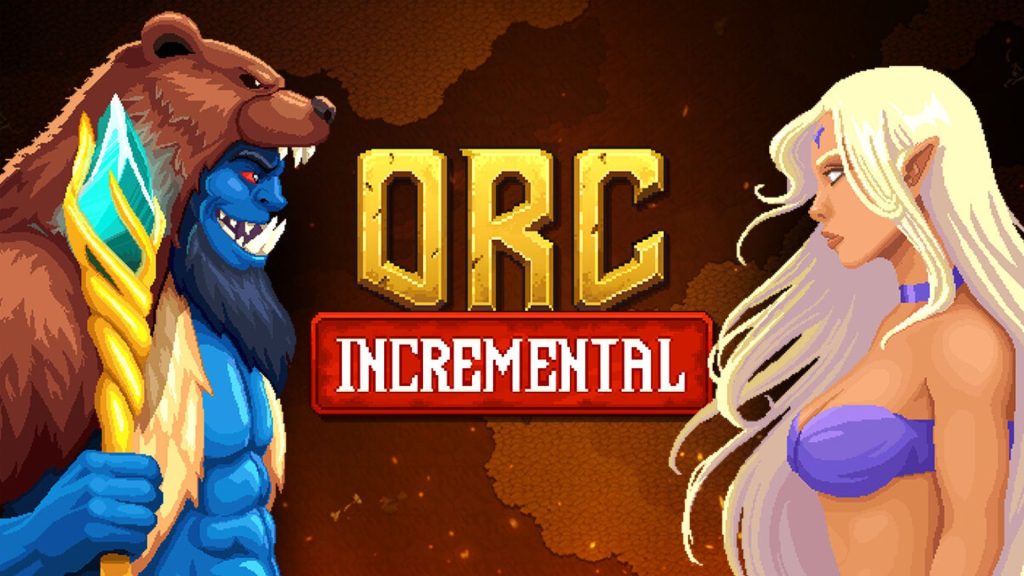
Orc Incremental offers satisfying progression, entertaining totem combinations and enough content to justify its affordable price.
![[GAMESCOM 2026] Chronoscript: The Endless End Preview – Beautiful Pages Hide Deliberate Combat](https://www.indie-games.eu/wp-content/uploads/2026/09/Chronoscript-The-Endless-End-1-1024x576.jpg)
Chronoscript: The Endless End stands out from other Metroidvanias by blending 2D manuscript worlds with exploration inside a 3D manor.
![[GAMESCOM 2026] MegaGum Preview – Combat Hits Hard in This Sticky Platforming Adventure](https://www.indie-games.eu/wp-content/uploads/2026/09/MegaGum-09-09-26-5-1024x576.jpg)
MegaGum combines hard-hitting combat, varied weapons and Gum-powered platforming in a promising Gamescom 2026 demo.
![[GAMESCOM 2026] Delphinium Preview – Cozy Routine Mixed With Enjoyable Minigames](https://www.indie-games.eu/wp-content/uploads/2026/03/Delphinium--1024x665.jpg)
Delphinium mixes cozy farming, exploration and relationships with enjoyable fishing, cooking and forging minigames in its Gamescom 2026 demo.
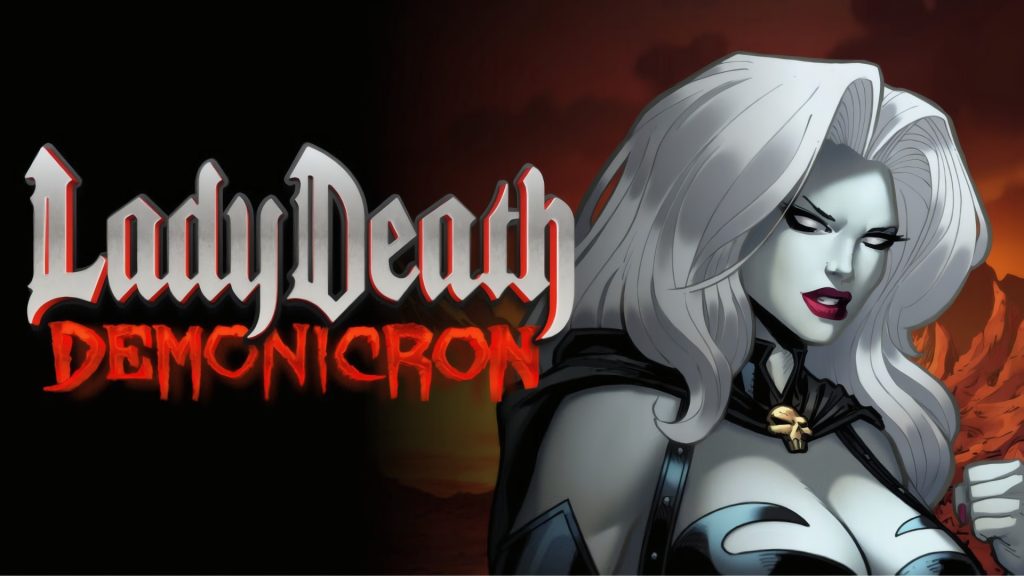
Lady Death: Demonicron looks the part, but underneath its excellent comic-book exterior is a clunky and painfully short brawler.
![[GAMESCOM 2026] Tomb Raider: Legacy of Atlantis Preview – Expands the Original Without Losing Its Identity](https://www.indie-games.eu/wp-content/uploads/2026/09/tomb-raider-legacy-of-atlantis-06-02-26-1-1024x576.jpg)
Tomb Raider: Legacy of Atlantis brings Lara back to her roots, but its Gamescom 2026 showing proved this is far…
![[GAMESCOM 2026] Clive Barker’s Hellraiser: Revival Preview – Ready to Open the Box](https://www.indie-games.eu/wp-content/uploads/2026/09/Clive-Barkers-Hellraiser-Revival-08-30-26-1-1024x576.jpg)
Hellraiser: Revival preserves the franchise’s sex, gore and psychological horror while delivering approachable survival-horror gameplay.

Swan Song creates a peaceful and forgiving puzzle space without removing the challenge that makes solving a difficult puzzle rewarding.
Mortal Shell II starts brilliantly but grows repetitive and exhausting, while remaining a rewarding and ambitious Soulslike sequel.
![[GAMESCOM 2026] Terranigma Preview – A Lost SNES Classic Returns in 2027](https://www.indie-games.eu/wp-content/uploads/2026/08/Terranigma-1-1024x576.jpg)
After more than three decades of limited availability, Terranigma is returning in 2027. We played its enhanced re-release at Gamescom…
Reading another person’s mind is often presented as a desirable superpower, but Sister Other Paranoia immediately understands why it could…
