![[GAMESCOM 2026] Vikings Dynasty Preview – Expands the Dynasty Formula](https://www.indie-games.eu/wp-content/uploads/2026/09/Viking-Dynasty-09-21-26-2-1024x576.jpg)
[GAMESCOM 2026] Vikings Dynasty Preview – Expands the Dynasty Formula
After showing me Prospera at Gamescom 2026, Toplitz Productions' Mathias Oertel moved to a very different kind of settlement builder.…

![[GAMESCOM 2026] Prospera Preview – Production, Prosperity and Victorian Industry](https://www.indie-games.eu/wp-content/uploads/2026/09/Prospera-09-21-26-5.jpg)
If you enjoy independent indie game coverage, consider supporting Indie-Games.eu on Patreon. It helps keep the site independent.
At Gamescom 2026, I met with Toplitz Productions’ Mathias Oertel for a guided presentation of two upcoming games. One of them was Prospera, the newly announced project from Active Fungus Studios. I did not play it myself, so this is not a hands-on preview or a judgment of how its systems ultimately feel.
The demonstration offered a much clearer look at what the studio means when it describes Prospera as an immersive city builder. The easiest comparison would be to imagine the Victorian atmosphere and expanding economy of Anno 1800 combined with the physical production lines of Satisfactory and the direct involvement of Medieval Dynasty.
Prospera is still about building an efficient city, managing workers and turning basic resources into increasingly complicated goods. The difference is that it does not ask you to remain above the city as an invisible planner. You can walk through it in first or third person, enter its buildings and perform many of the same jobs as its residents.
Every new activity introduced in Prospera must first be completed by the player. You begin with open land in a large world and personally construct the first buildings needed to establish your settlement. The game briefly moves to an elevated isometric perspective when you place structures, but the actual work brings you back into the city. Even once builders have been hired, you can join them and help finish a project more quickly.
That principle extends far beyond construction. You can cut wood, produce resources, water flowers, collect rubbish, kill vermin and take part in almost every production-related job. According to Oertel, the player will always perform these tasks faster than an ordinary worker. This gives manual labour a practical purpose during the early stages of a settlement or whenever one part of its economy needs immediate attention.
The approach could also make automation feel more rewarding. Workers are not hired through a distant spreadsheet. You visit a workplace, employ them and then see them travel to the relevant building. Logs, planks, food and other resources exist visibly in the world, while production and consumption are fully animated. If a shop is stocked with soup, residents will arrive, purchase it and sit down to eat it.
You will eventually be managing too much to do everything yourself. A city can currently contain roughly 100 to 120 buildings, and multiple cities can exist across the same open world. The point is therefore not to replace the management side with busywork. Instead, Prospera wants the player to understand a task physically before turning it into one part of a much larger automated system.
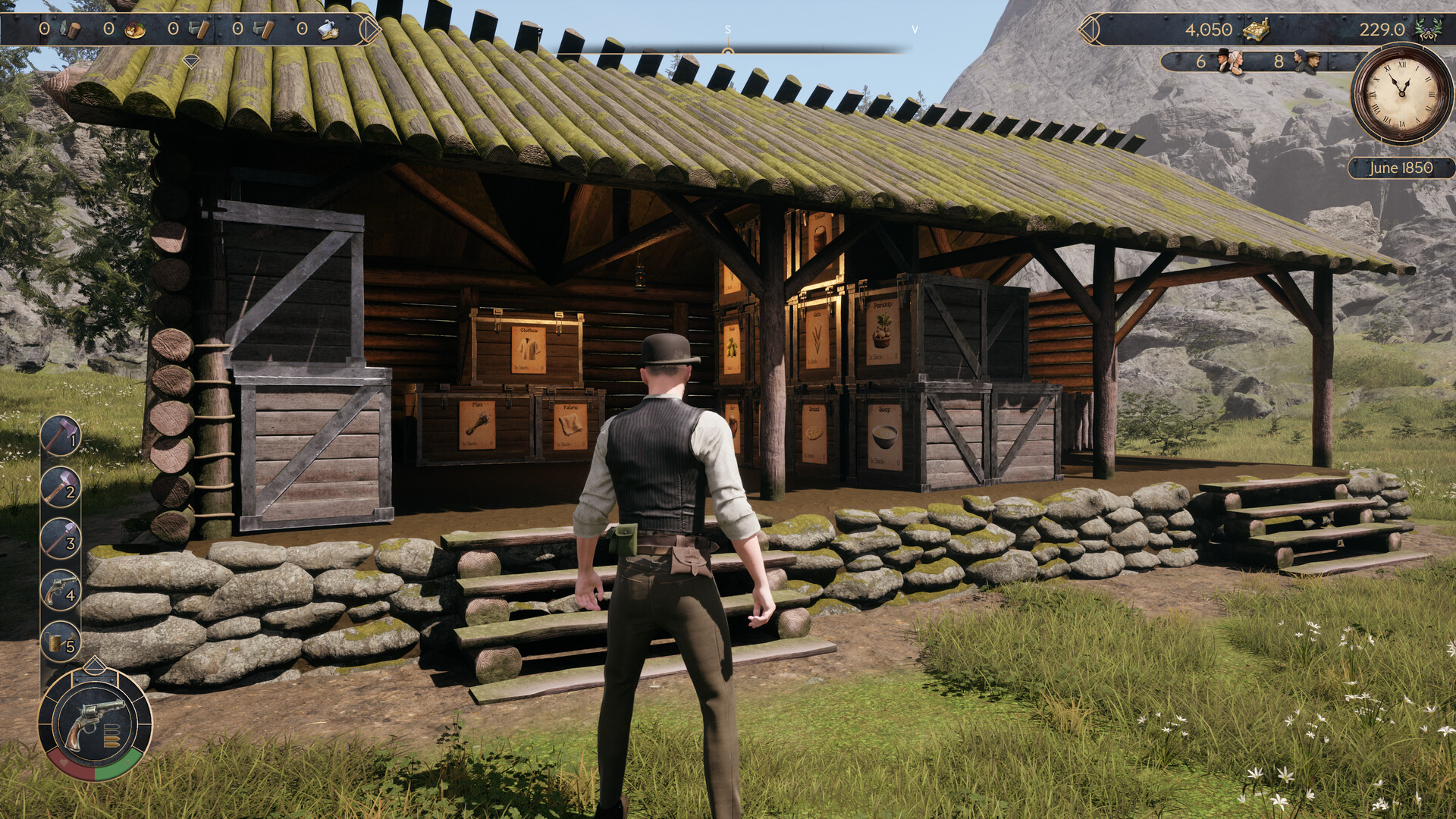
Residents have two broad groups of needs. Their physical requirements include essentials such as food, clothing and firewood. Supplying these goods generates income, but money must also cover the daily wages of your workforce. As the city develops, its population begins asking for entertainment and more pleasant surroundings, including music, fountains, places to rest and attractive streets.
This second group feeds into prosperity, which functions as another form of currency. A productive city is not automatically a desirable one. Benches, flowers and entertainment contribute to its appeal, while rubbish, dead plants and vermin work against it.
Oertel said the current version includes more than 30 goods and production lines, with more planned during Early Access, alongside over 60 prosperity needs and goods. More importantly, residents must complete their daily routines within a single day. It is not enough to technically have food, clothing and entertainment somewhere in the city. People must be able to reach them in time.
That turns the physical layout into more than an aesthetic choice. Poorly positioned shops or unnecessarily long journeys could prevent enough residents from satisfying their needs, which in turn stops the city from reaching its next tier. Efficient paths, districts and local access to important services should matter just as much as raw production numbers.
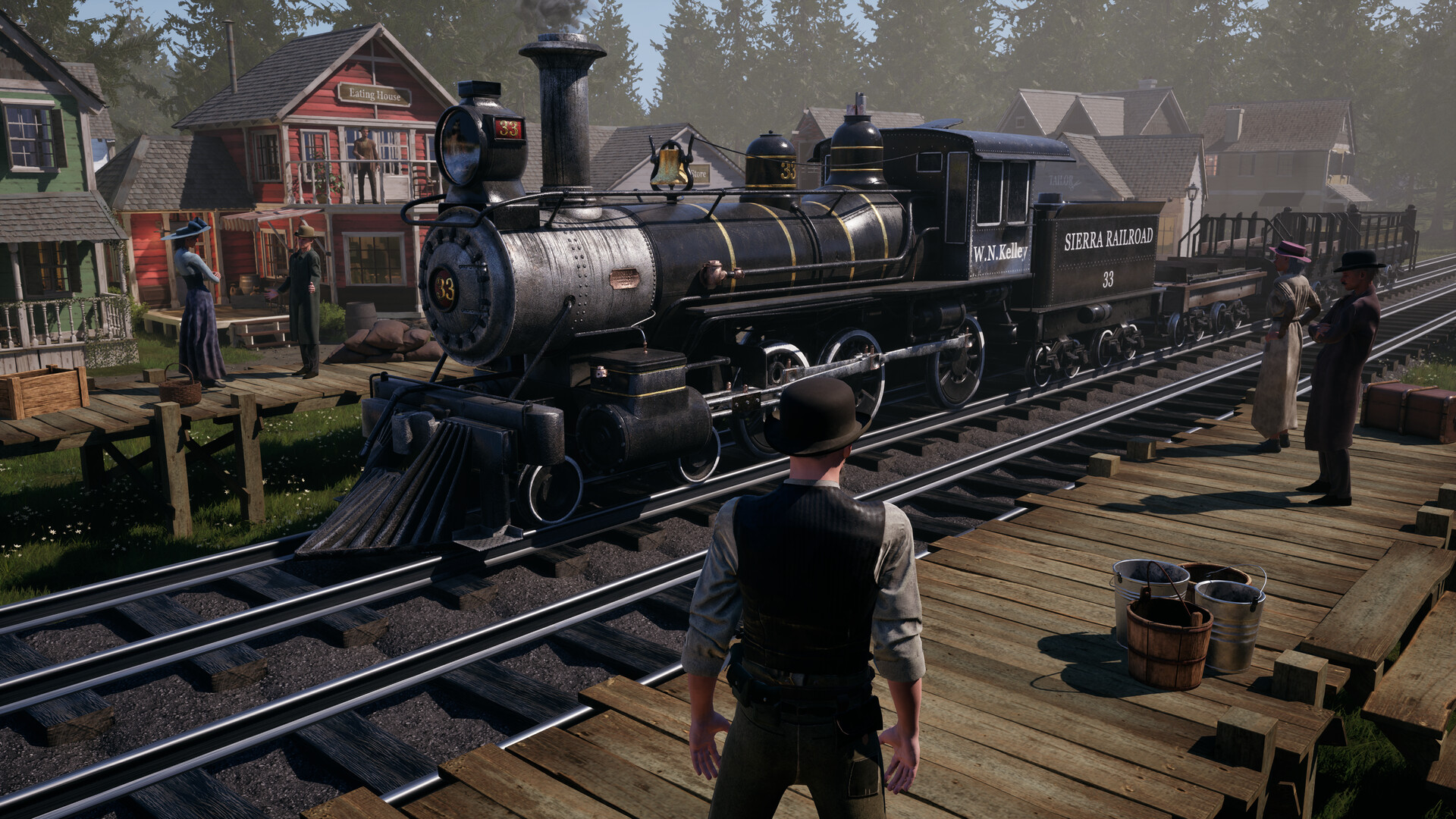
Progression introduces new construction methods and increasingly involved industries. Early buildings use raw logs, while later tiers add planks, cement and sturdier Victorian architecture. With each step, the settlement requires more resources and longer production chains.
This is where Prospera moves closest to Satisfactory. Its trains effectively serve as conveyor belts spread across the open world. Players must explore beyond their original settlement, discover new resource deposits and connect them to the wider industrial network. Every train costs money, while the position of the tracks, the routes they follow and the number of locomotives using them remain under the player’s control.
Rail construction is one of the few areas that deliberately pulls the camera away from the character. Active Fungus Studios experimented with laying tracks entirely from the ground, but found that the process was too slow and simply not enjoyable.
It is a sensible exception to the game’s immersive philosophy. Being physically present can add meaning to building and production, but forcing that viewpoint onto every large-scale planning task would risk making the interface unnecessarily awkward.
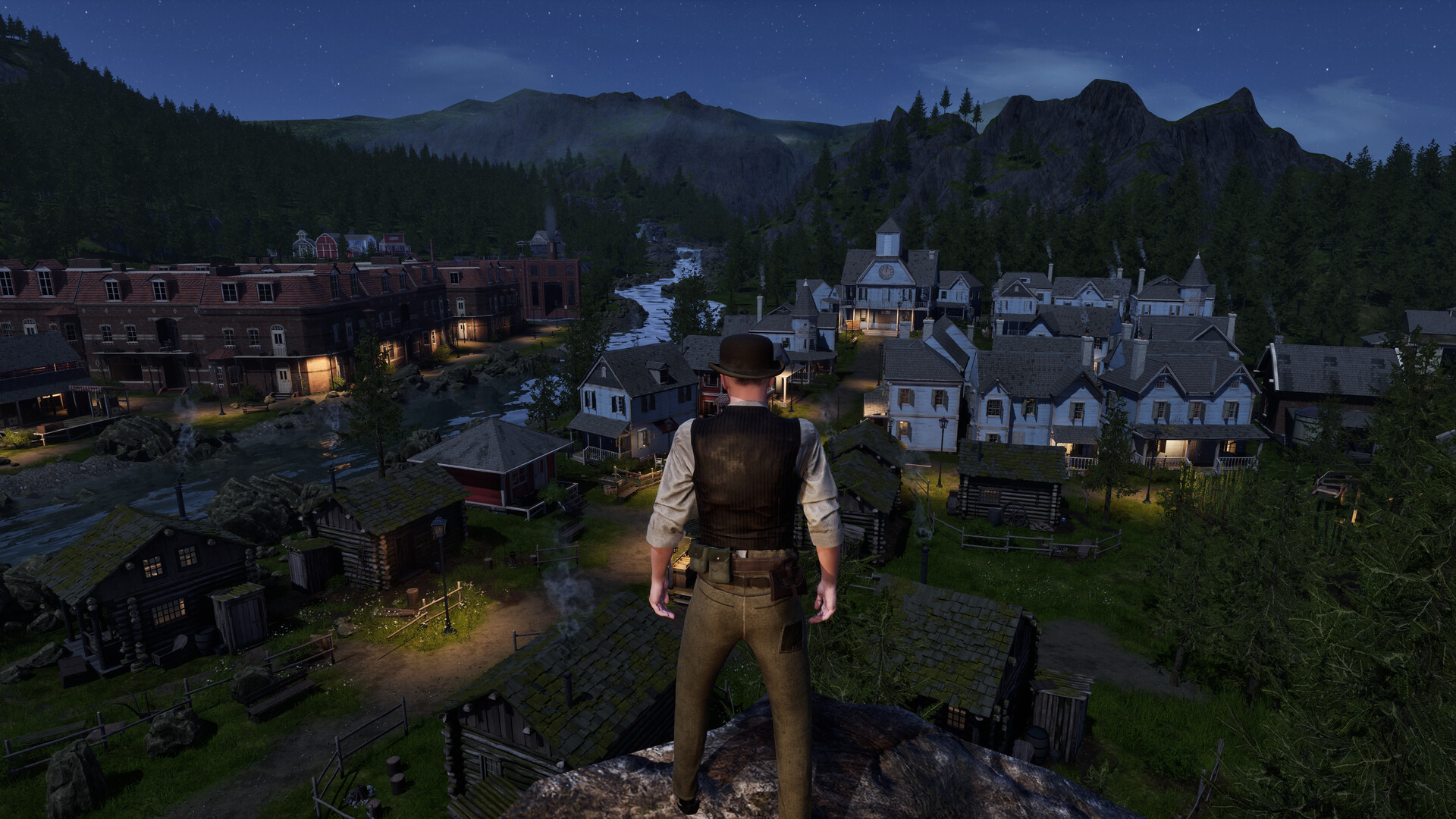
For the moment, Prospera is focused on civilian life rather than conflict. Weapons can be used against rats, crop-stealing birds and dangerous wild boars, but there are currently no enemy factions threatening the city. Oertel said the team has considered ideas that could give the setting a grittier, almost Peaky Blinders-like edge, although he could not confirm whether such systems will become part of the game.
What has been shown already gives Prospera a unique identity. Many city builders allow us to admire a successful metropolis, but usually from a distance. This game wants every step of industrialisation to remain visible: the first tree cut by hand, workers carrying materials, residents following their routines and trains connecting distant resources to an expanding network of factories.
The main question is whether all that physical interaction will continue to feel meaningful once the city becomes enormous. If Active Fungus Studios can keep manual work useful without making it repetitive, Prospera could find an interesting middle ground between the personal satisfaction of a crafting game and the complexity of a large city-building simulation.
Prospera is currently targeting a Q2 2027 Early Access release on Steam. During the Gamescom presentation, Oertel said the team was looking at the end of May or beginning of June, although that remains a development target rather than a final release date.
After showing me Prospera at Gamescom 2026, Toplitz Productions' Mathias Oertel moved to a very different kind of settlement builder.…
Golden Swirl inventive card combat carries the experience, but repetitive rooms, weak upgrades and excessive dialogue hold it back.
![[GAMESCOM 2026] Wilderdark Preview – Ambitious Dinosaur Horror Game That Still Has Plenty to Prove](https://www.indie-games.eu/wp-content/uploads/2026/09/Wilderdark-1024x576.jpg)
Dinosaur survival horror game Wilderdark has one of those premises that immediately makes you wonder why more games have not…
![[PREVIEW] Tiny Metal 2 – Strategy Game That Wants You to Learn From Every Mistake](https://www.indie-games.eu/wp-content/uploads/2026/09/Tiny-Metal-2-1024x576.jpg)
I rarely enjoy discovering that my opening strategy was completely wrong, but Tiny Metal 2 made that process one of…
![[PREVIEW] Remothered: Red Nun’s Legacy – Ambitious Survival Horror That Needs More Polish](https://www.indie-games.eu/wp-content/uploads/2026/09/Remothered-Red-Nuns-Legacy-4-1024x576.jpg)
Remothered: Red Nun’s Legacy has a gripping atmosphere and promising survival tools, but its repetitive hiding and rough visuals need…
The Alighieri Circle: Dante’s Bloodline is difficult to recommend beyond players who are especially interested in Dante or enjoy solving…

Orc Incremental offers satisfying progression, entertaining totem combinations and enough content to justify its affordable price.
![[GAMESCOM 2026] Chronoscript: The Endless End Preview – Beautiful Pages Hide Deliberate Combat](https://www.indie-games.eu/wp-content/uploads/2026/09/Chronoscript-The-Endless-End-1-1024x576.jpg)
Chronoscript: The Endless End stands out from other Metroidvanias by blending 2D manuscript worlds with exploration inside a 3D manor.
![[GAMESCOM 2026] MegaGum Preview – Combat Hits Hard in This Sticky Platforming Adventure](https://www.indie-games.eu/wp-content/uploads/2026/09/MegaGum-09-09-26-5-1024x576.jpg)
MegaGum combines hard-hitting combat, varied weapons and Gum-powered platforming in a promising Gamescom 2026 demo.
![[GAMESCOM 2026] Delphinium Preview – Cozy Routine Mixed With Enjoyable Minigames](https://www.indie-games.eu/wp-content/uploads/2026/03/Delphinium--1024x665.jpg)
Delphinium mixes cozy farming, exploration and relationships with enjoyable fishing, cooking and forging minigames in its Gamescom 2026 demo.
Lady Death: Demonicron looks the part, but underneath its excellent comic-book exterior is a clunky and painfully short brawler.
![[GAMESCOM 2026] Tomb Raider: Legacy of Atlantis Preview – Expands the Original Without Losing Its Identity](https://www.indie-games.eu/wp-content/uploads/2026/09/tomb-raider-legacy-of-atlantis-06-02-26-1-1024x576.jpg)
Tomb Raider: Legacy of Atlantis brings Lara back to her roots, but its Gamescom 2026 showing proved this is far…
![[GAMESCOM 2026] Clive Barker’s Hellraiser: Revival Preview – Ready to Open the Box](https://www.indie-games.eu/wp-content/uploads/2026/09/Clive-Barkers-Hellraiser-Revival-08-30-26-1-1024x576.jpg)
Hellraiser: Revival preserves the franchise’s sex, gore and psychological horror while delivering approachable survival-horror gameplay.

Swan Song creates a peaceful and forgiving puzzle space without removing the challenge that makes solving a difficult puzzle rewarding.

Mortal Shell II starts brilliantly but grows repetitive and exhausting, while remaining a rewarding and ambitious Soulslike sequel.
![[GAMESCOM 2026] Terranigma Preview – A Lost SNES Classic Returns in 2027](https://www.indie-games.eu/wp-content/uploads/2026/08/Terranigma-1-1024x576.jpg)
After more than three decades of limited availability, Terranigma is returning in 2027. We played its enhanced re-release at Gamescom…

Reading another person’s mind is often presented as a desirable superpower, but Sister Other Paranoia immediately understands why it could…
Forsaken Realms: Vahrin’s Call is exactly the kind of ambitious, slightly clumsy fantasy RPG that used to be far more…
![[Early Access] 2nd EVE – Sci-Fi Action RPG That Lacks a Sense of Stakes](https://www.indie-games.eu/wp-content/uploads/2026/08/2ND-EVE-1024x576.jpg)
2nd Eve is a space-set action RPG in which we strive to save humanity.
![[PREVIEW] Dreamcards – Strategic Exploration of Consciousness](https://www.indie-games.eu/wp-content/uploads/2026/08/Dreamcards_20260810_233631_0000-1024x576.jpg)
Dreamcards is a roguelike deckbuilder centered around dreams and nightmares.
