Man I Just Wanna Go Home – One Evening, Many Thrills
Man I Just Wanna Go Home is a noir crime story with visuals from MS Paint and life-or-death choices.

If you enjoy independent indie game coverage, consider supporting Indie-Games.eu on Patreon. It helps keep the site independent.
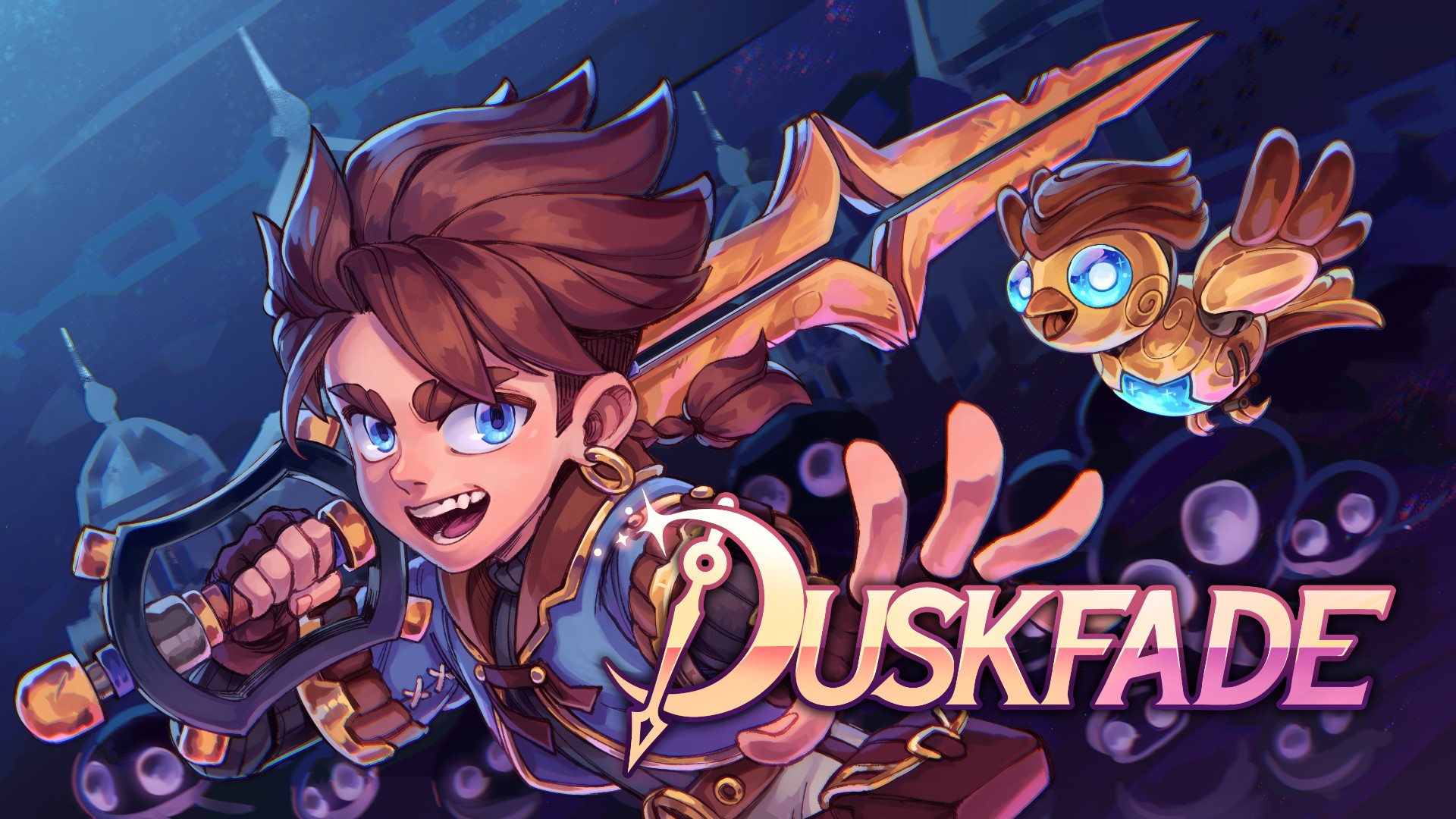
Duskfade is a colourful, sincere and completely unashamed of its love for the 3D action-platformers that defined the PlayStation 2 era. The influence of Jak and Daxter, Ratchet & Clank and Kingdom Hearts can be seen almost everywhere, from its acrobatic movement to the clock-hand sword that looks suspiciously similar to a Keyblade.
That nostalgia gives Duskfade an immediately likeable identity, but it also creates expectations that the game cannot always meet. Its beautiful worlds, enjoyable platforming and creative bosses regularly capture the spirit of those older adventures. Unfortunately, repetitive combat, delayed progression and several irritating design decisions stop it from becoming the modern genre classic it clearly wants to be.
The story follows Zirian, a young boy attempting to rescue his sister Allira after an experiment involving ancient clockmaking technology goes wrong. A mysterious Clock Tower traps Allira inside, covers the world in eternal night and becomes sealed by enormous chains. Accompanied by Allira’s mechanical bird Cuckoo, Zirian must travel across several regions, defeat their guardians and break those chains.
It is a straightforward premise, but Duskfade uses it to explore grief, responsibility, acceptance and the difficulty of letting go. The presentation leaves a much stronger impression. Each region has a distinctive identity, ranging from forests and deserts to volcanic areas, underwater environments and cloudy heights. Detailed backgrounds, enormous mechanical structures and colourful lighting make even the simpler routes enjoyable to look at. Bosses combine expressive animation with designs based on the story’s emotional obstacles.
Platforming is easily the strongest part of Duskfade. Zirian begins with familiar abilities such as a double jump and aerial roll, but gradually obtains a grappling hook, glider, rail grinding and other time-based devices. Later challenges begin combining these tools, asking Zirian to move between grappling points, avoid environmental hazards and finish a sequence with a carefully timed dash. There is an enjoyable freedom to how far Zirian can travel once these abilities are combined.
However, movement never feels quite as precise as it should. Zirian carries noticeable momentum and can feel floaty in the air, making certain landings difficult to judge. Grabbing ledges is inconsistent because only specific surfaces allow it, while the camera and lock-on create additional problems whenever platforming and fighting occupy the same space. The controls become easier to understand over time, but adjusting to their unusual weight does not completely remove the imprecision.
The larger problem is how slowly Duskfade distributes its best abilities. The early hours provide only a limited version of what the movement system eventually becomes. Some of the most enjoyable tools arrive so late that they have little time to develop before the conclusion. The adventure steadily improves, but it should not take this long to reveal why moving through its world can be so entertaining.
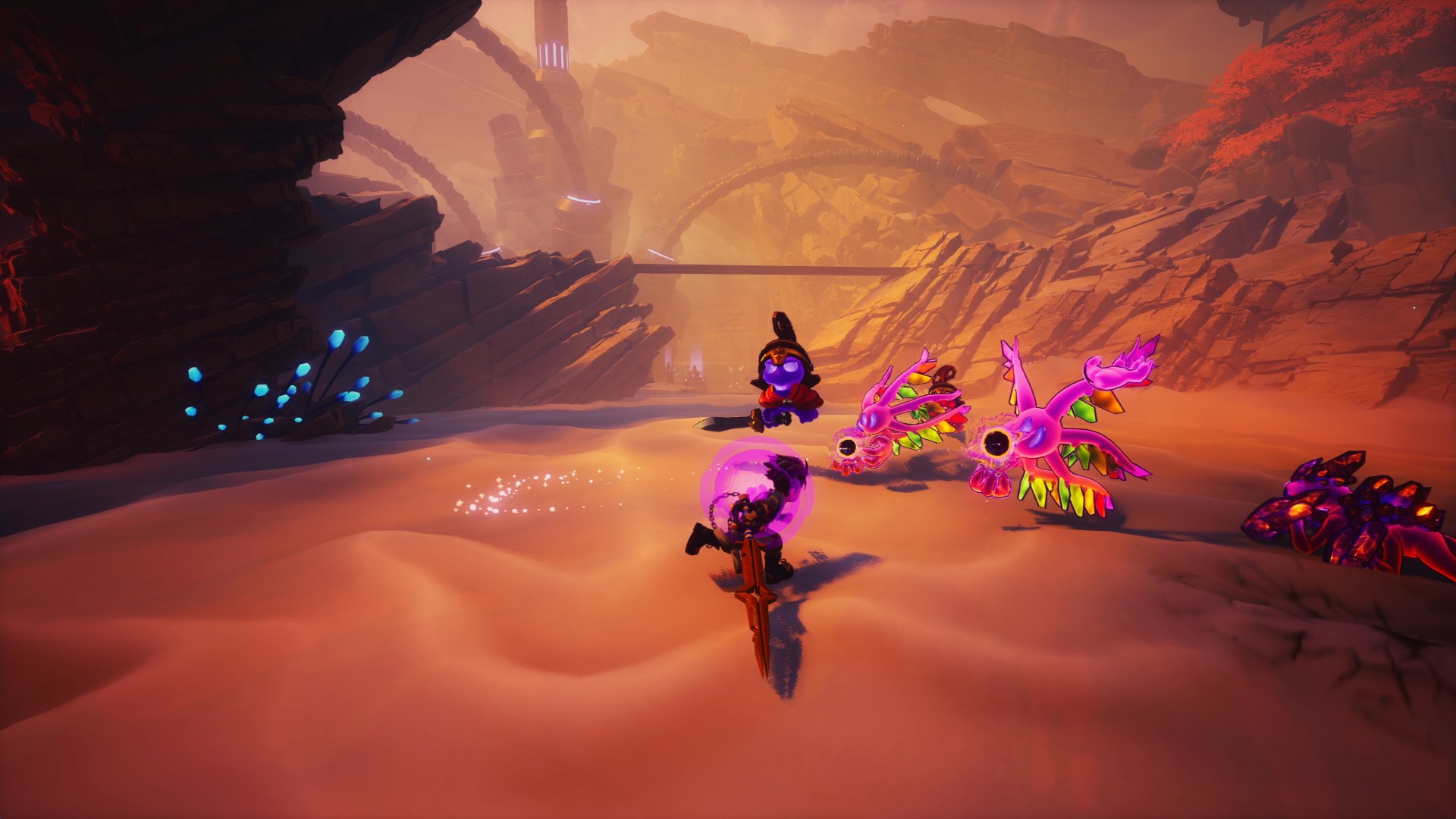
Normal combat is where Duskfade struggles most. Zirian can perform light and heavy attacks, dodge incoming blows, reflect projectiles and slow time with a perfectly timed evasion. Additional sword forms, ranged abilities and upgrades eventually provide more options, while Cuckoo assists with automatic attacks.
On paper, that sounds respectable. In practice, too many encounters become a routine of attacking, dodging and repeating the same sequence until the arena is clear. Longer animations make advanced attacks unnecessarily risky, so the safest basic strategy is often more effective than experimentation.
The lock-on system makes fights against groups particularly frustrating. It does not always select the intended target, and Zirian lacks a convincing way to control several aggressive enemies attacking from different directions. Greater enemy variety eventually demands some prioritisation, but it does not solve the underlying repetition. Enclosed waves of ordinary enemies begin to feel like interruptions placed between the more enjoyable traversal sections.
Boss fights demonstrate how much better combat can be when it works together with the platforming. These encounters regularly alternate between attacking the boss and completing a traversal challenge based on the ability introduced in that region. Climbing away from a rising hazard or grappling towards switches gives each fight an identity beyond reducing another health bar. Their memorable presentation and mechanical variety make the bosses one of Duskfade’s most successful elements.
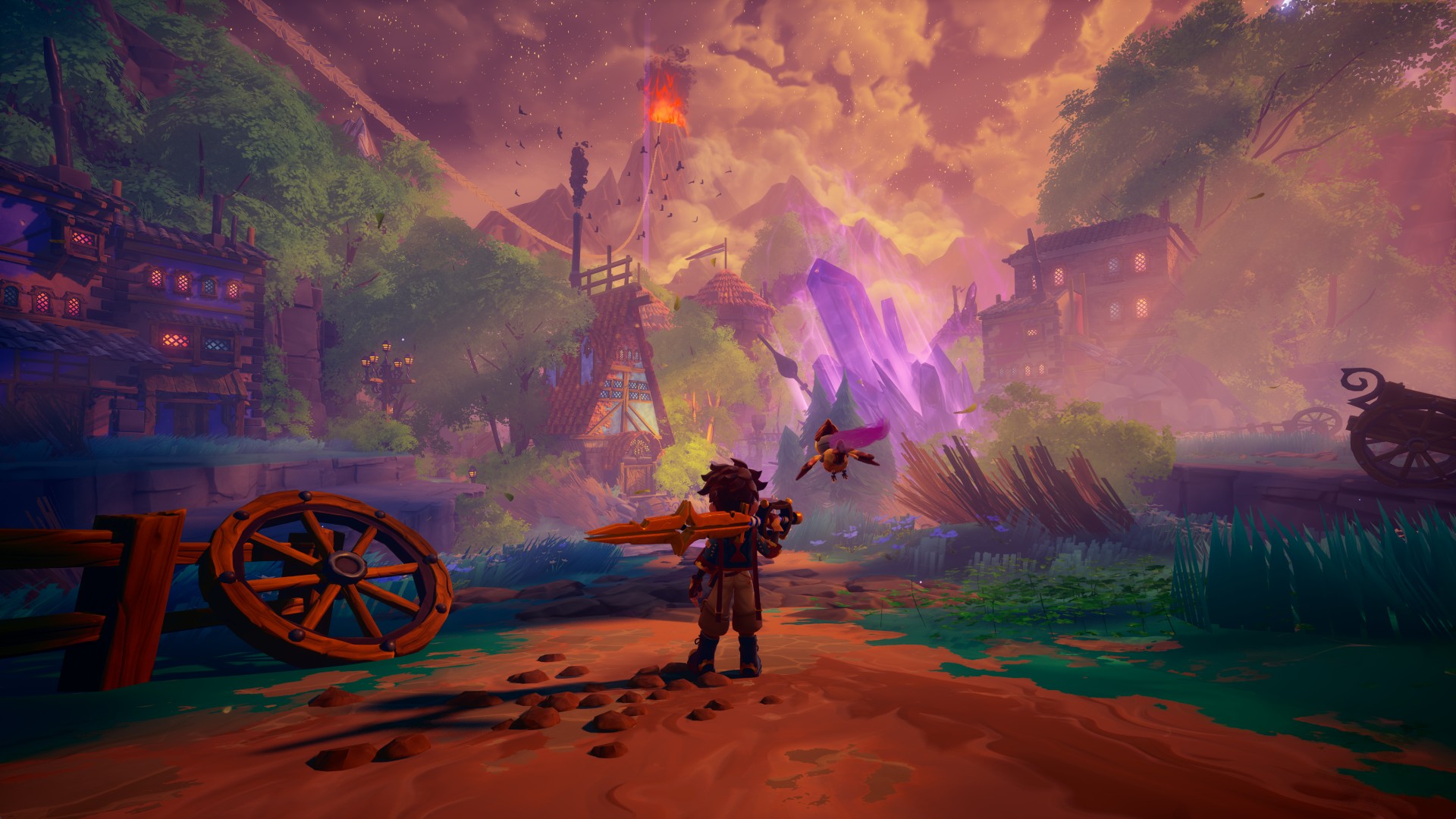
The levels contain health improvements, currencies, costumes, sword designs, music, cards and story-related Echoes. New abilities also open routes that were inaccessible during the first visit, providing a reason to return to previous regions. Unfortunately, Duskfade does not have a useful traditional map. That absence becomes increasingly irritating when searching for a missed collectible or trying to remember which obstruction required a later ability. Limited shortcuts mean that returning for a single item can involve replaying a substantial part of the level.
Duskfade understands much of what made classic 3D platformers enjoyable. Its worlds invite exploration, its later movement challenges use Zirian’s abilities intelligently, and its bosses successfully unite combat, platforming and visual storytelling. Its earnest story also gives the adventure more emotional weight than its colourful exterior initially suggests.
It is equally difficult to ignore how often the weaker systems interfere with those strengths. Combat becomes repetitive, the lock-on is unreliable, backtracking is needlessly inconvenient and too many important abilities arrive after the opening has already tested the player’s patience. Even the enjoyable movement lacks the final degree of precision needed to make every challenge feel dependable.
Duskfade is therefore a good tribute rather than the new standard for the genre. Its personality, art direction and obvious affection for PS2 platformers carry it through many rough moments, but nostalgia cannot completely disguise the missing polish. What remains is an enjoyable and heartfelt adventure that comes close to something special without ever escaping the shadow of the games that inspired it.
Duskfade is worth considering for players who miss colourful PS2-style action-platformers and can tolerate basic combat, floaty movement and inconvenient backtracking. Its platforming, worlds and bosses provide enough memorable moments to justify the journey, but anyone expecting the depth of Kingdom Hearts or the precision of the genre’s best games should keep those expectations under control.
Ending Thoughts
Review copy provided by the publisher
Man I Just Wanna Go Home is a noir crime story with visuals from MS Paint and life-or-death choices.
![[GAMESCOM 2026] Vikings Dynasty Preview – Expands the Dynasty Formula](https://www.indie-games.eu/wp-content/uploads/2026/09/Viking-Dynasty-09-21-26-2-1024x576.jpg)
After showing me Prospera at Gamescom 2026, Toplitz Productions' Mathias Oertel moved to a very different kind of settlement builder.…
![[GAMESCOM 2026] Prospera Preview – Production, Prosperity and Victorian Industry](https://www.indie-games.eu/wp-content/uploads/2026/09/Prospera-09-21-26-5-1024x576.jpg)
At Gamescom 2026, I met with Toplitz Productions' Mathias Oertel for a guided presentation of two upcoming games. One of…
Golden Swirl inventive card combat carries the experience, but repetitive rooms, weak upgrades and excessive dialogue hold it back.
![[GAMESCOM 2026] Wilderdark Preview – Ambitious Dinosaur Horror Game That Still Has Plenty to Prove](https://www.indie-games.eu/wp-content/uploads/2026/09/Wilderdark-1024x576.jpg)
Dinosaur survival horror game Wilderdark has one of those premises that immediately makes you wonder why more games have not…
![[PREVIEW] Tiny Metal 2 – Strategy Game That Wants You to Learn From Every Mistake](https://www.indie-games.eu/wp-content/uploads/2026/09/Tiny-Metal-2-1024x576.jpg)
I rarely enjoy discovering that my opening strategy was completely wrong, but Tiny Metal 2 made that process one of…
![[PREVIEW] Remothered: Red Nun’s Legacy – Ambitious Survival Horror That Needs More Polish](https://www.indie-games.eu/wp-content/uploads/2026/09/Remothered-Red-Nuns-Legacy-4-1024x576.jpg)
Remothered: Red Nun’s Legacy has a gripping atmosphere and promising survival tools, but its repetitive hiding and rough visuals need…
The Alighieri Circle: Dante’s Bloodline is difficult to recommend beyond players who are especially interested in Dante or enjoy solving…
Orc Incremental offers satisfying progression, entertaining totem combinations and enough content to justify its affordable price.
![[GAMESCOM 2026] Chronoscript: The Endless End Preview – Beautiful Pages Hide Deliberate Combat](https://www.indie-games.eu/wp-content/uploads/2026/09/Chronoscript-The-Endless-End-1-1024x576.jpg)
Chronoscript: The Endless End stands out from other Metroidvanias by blending 2D manuscript worlds with exploration inside a 3D manor.
![[GAMESCOM 2026] MegaGum Preview – Combat Hits Hard in This Sticky Platforming Adventure](https://www.indie-games.eu/wp-content/uploads/2026/09/MegaGum-09-09-26-5-1024x576.jpg)
MegaGum combines hard-hitting combat, varied weapons and Gum-powered platforming in a promising Gamescom 2026 demo.
![[GAMESCOM 2026] Delphinium Preview – Cozy Routine Mixed With Enjoyable Minigames](https://www.indie-games.eu/wp-content/uploads/2026/03/Delphinium--1024x665.jpg)
Delphinium mixes cozy farming, exploration and relationships with enjoyable fishing, cooking and forging minigames in its Gamescom 2026 demo.
Lady Death: Demonicron looks the part, but underneath its excellent comic-book exterior is a clunky and painfully short brawler.
![[GAMESCOM 2026] Tomb Raider: Legacy of Atlantis Preview – Expands the Original Without Losing Its Identity](https://www.indie-games.eu/wp-content/uploads/2026/09/tomb-raider-legacy-of-atlantis-06-02-26-1-1024x576.jpg)
Tomb Raider: Legacy of Atlantis brings Lara back to her roots, but its Gamescom 2026 showing proved this is far…
![[GAMESCOM 2026] Clive Barker’s Hellraiser: Revival Preview – Ready to Open the Box](https://www.indie-games.eu/wp-content/uploads/2026/09/Clive-Barkers-Hellraiser-Revival-08-30-26-1-1024x576.jpg)
Hellraiser: Revival preserves the franchise’s sex, gore and psychological horror while delivering approachable survival-horror gameplay.

Swan Song creates a peaceful and forgiving puzzle space without removing the challenge that makes solving a difficult puzzle rewarding.
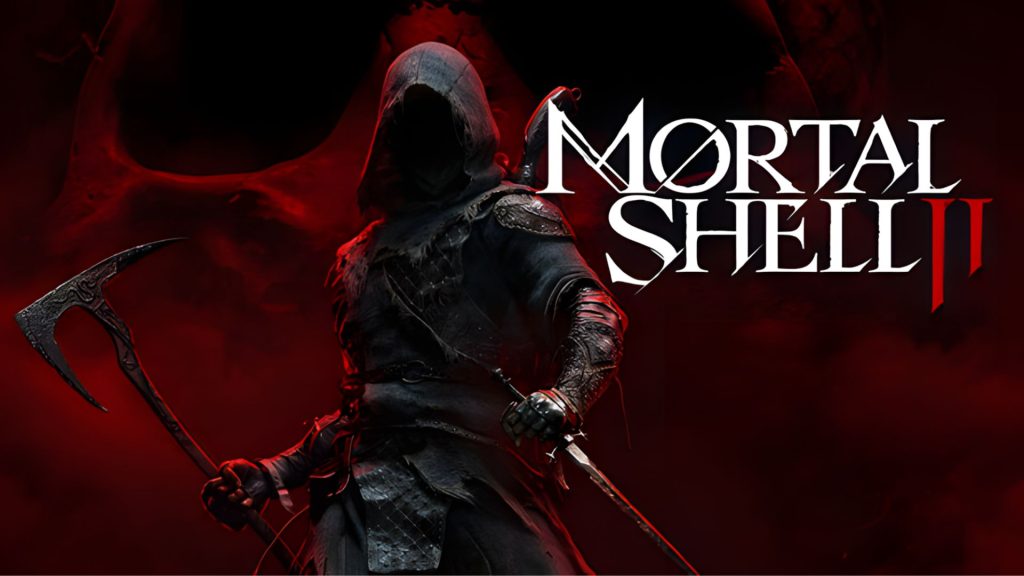
Mortal Shell II starts brilliantly but grows repetitive and exhausting, while remaining a rewarding and ambitious Soulslike sequel.
![[GAMESCOM 2026] Terranigma Preview – A Lost SNES Classic Returns in 2027](https://www.indie-games.eu/wp-content/uploads/2026/08/Terranigma-1-1024x576.jpg)
After more than three decades of limited availability, Terranigma is returning in 2027. We played its enhanced re-release at Gamescom…
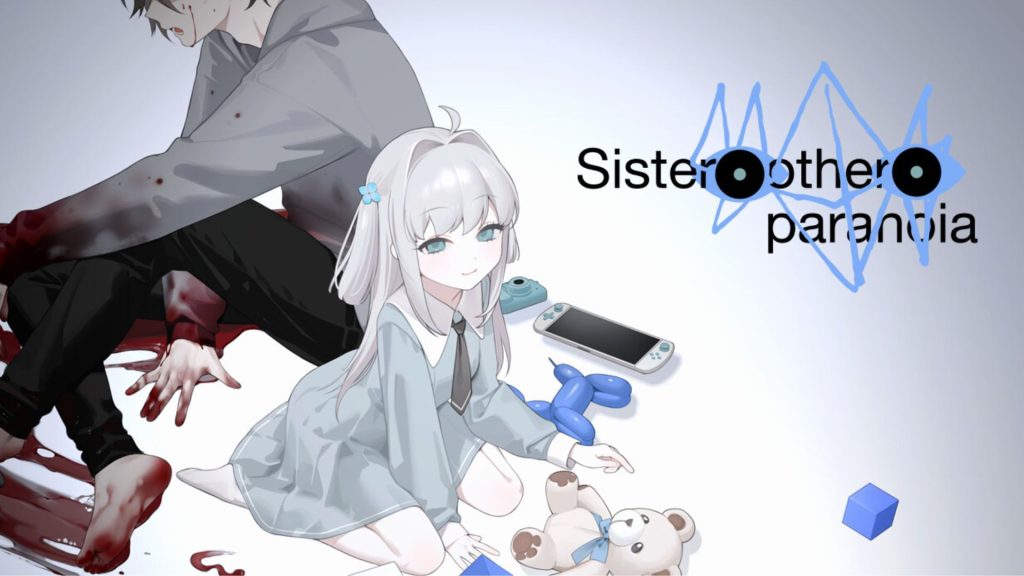
Reading another person’s mind is often presented as a desirable superpower, but Sister Other Paranoia immediately understands why it could…
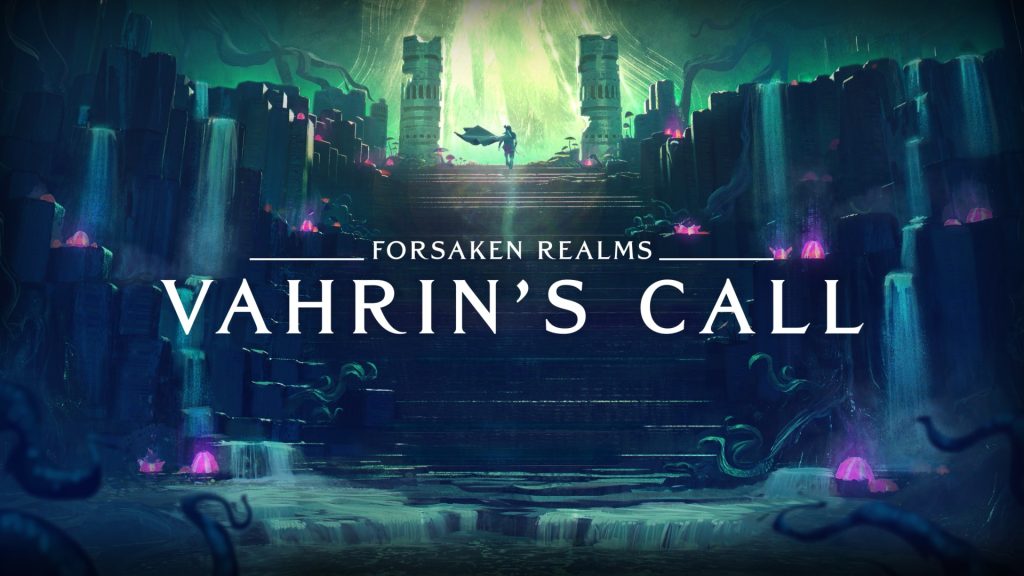
Forsaken Realms: Vahrin’s Call is exactly the kind of ambitious, slightly clumsy fantasy RPG that used to be far more…
