
Orc Incremental – My Orc Army Became Unstoppable, but Was It Still Fun?
Orc Incremental offers satisfying progression, entertaining totem combinations and enough content to justify its affordable price.

If you enjoy independent indie game coverage, consider supporting Indie-Games.eu on Patreon. It helps keep the site independent.
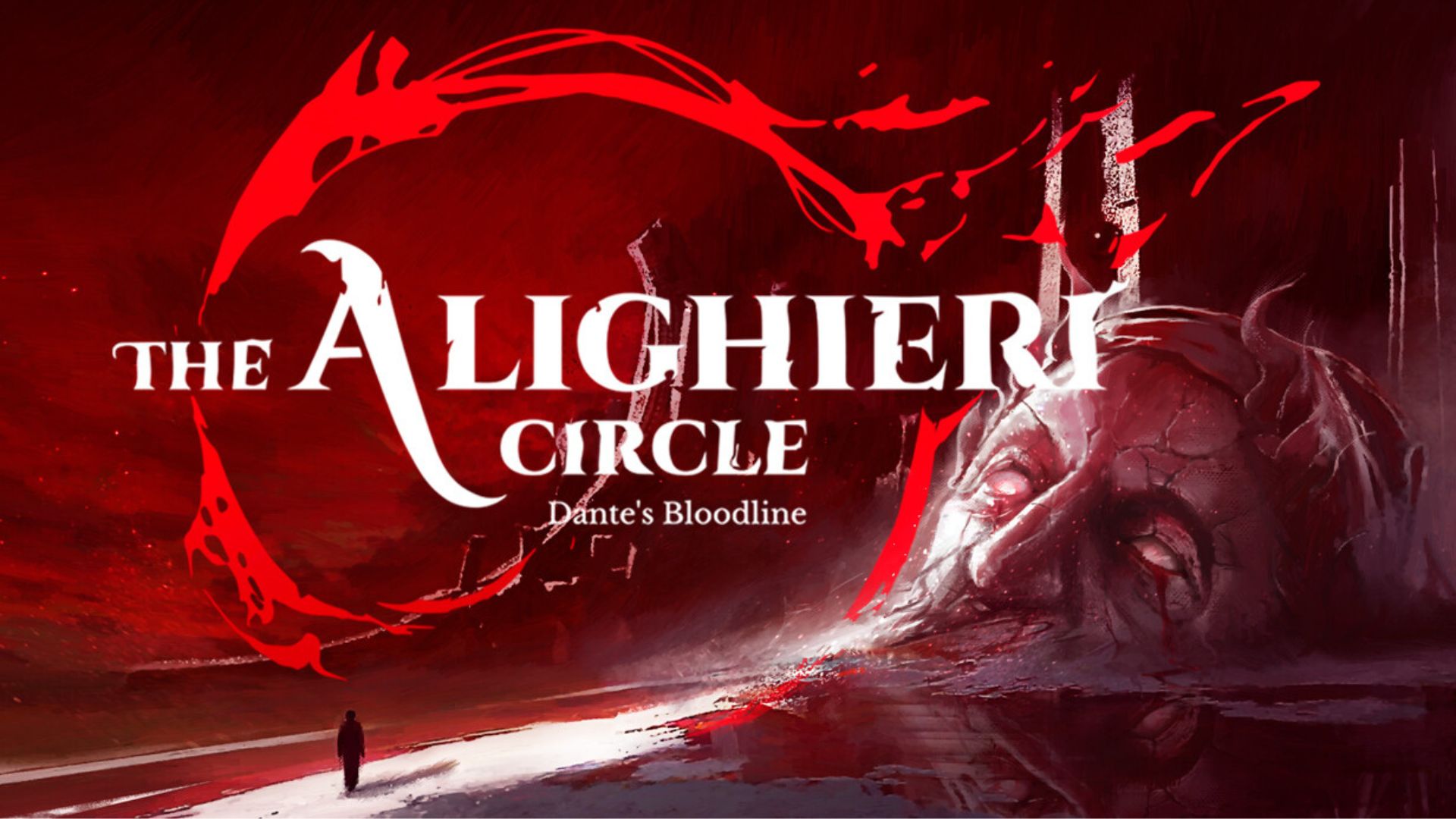
The Alighieri Circle: Dante’s Bloodline caught my attention with its premise. Rather than directly adapting The Divine Comedy, it imagines Dante Alighieri’s work as a warning passed down through his family. It is an interesting foundation for a psychological thriller, filled with opportunities to explore guilt, responsibility and generational trauma.
Unfortunately, while the game meaningfully incorporates Dante’s work into its imagery and puzzles, the adventure built around those ideas is surprisingly ordinary. Beneath its famous literary inspiration is a fairly generic walking simulator with repetitive environments, underdeveloped characters and several technical shortcomings.
You play as Gabriele Alighieri, a modern descendant of the famous Italian poet. Every 33 years, the barrier between reality and Hell begins to fade, forcing someone from the Alighieri bloodline to perform a ritual and reseal its gates. Gabriele has spent his life running from this responsibility, but eventually returns to his family’s villa to confront the inheritance he never wanted.
It is a genuinely strong setup. The game treats Hell as something personal, shaped by buried memories, guilt and family secrets rather than simply fire, demons and punishment. Its references to The Divine Comedy feel meaningful and well integrated instead of being attached to the game purely for recognition.
The problem is that Gabriele and his family are not developed enough to support the emotional weight of the premise. I understood his burden and remained interested in discovering the truth, but I never formed a strong attachment to him or the people he was trying to protect. For a narrative-driven experience, that emotional distance is difficult to ignore.
There is an interesting plot here, but the game needed more time to develop its characters, relationships and central conflict. Instead, it moves through its ideas without exploring them as deeply as it could have.
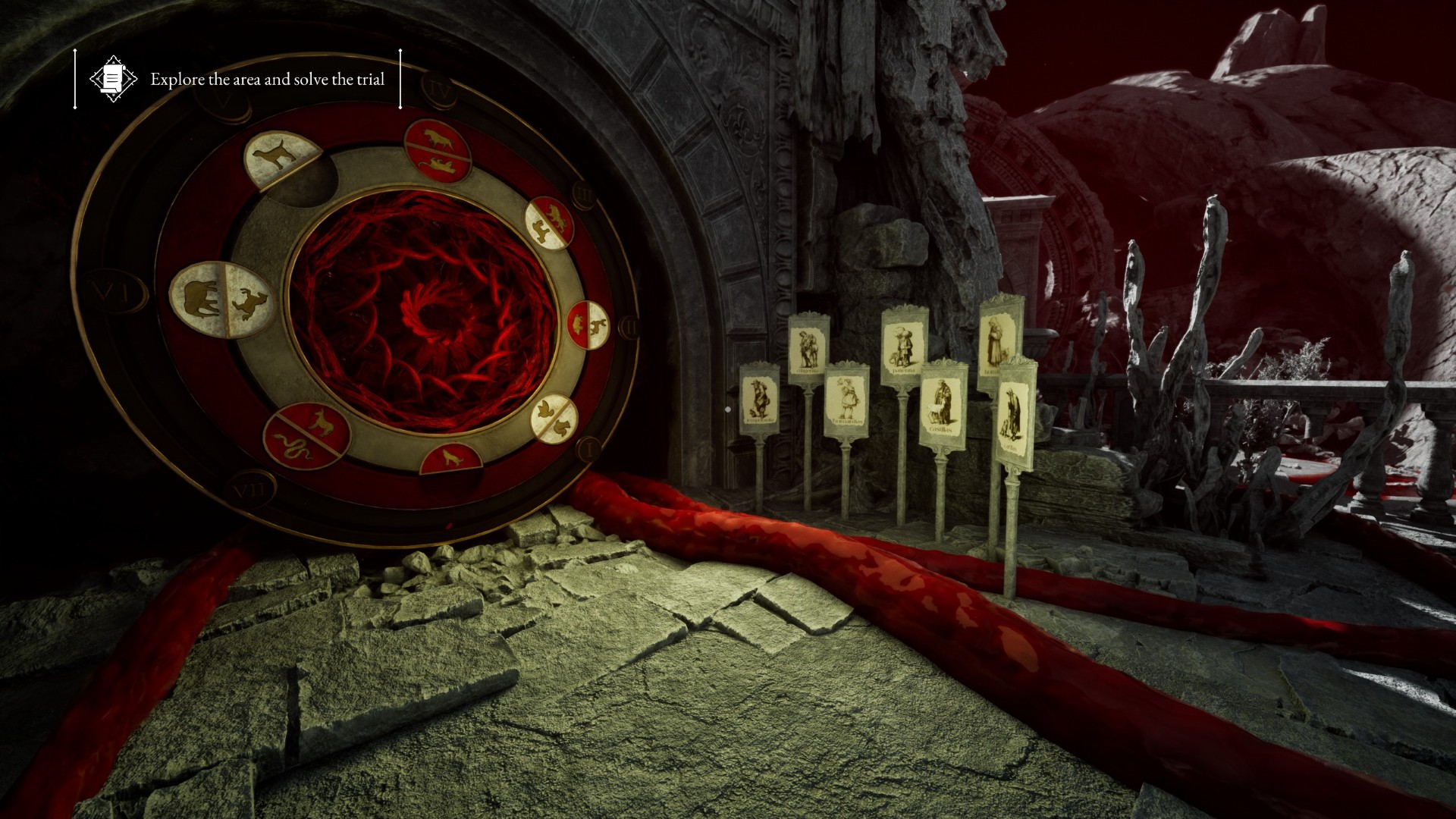
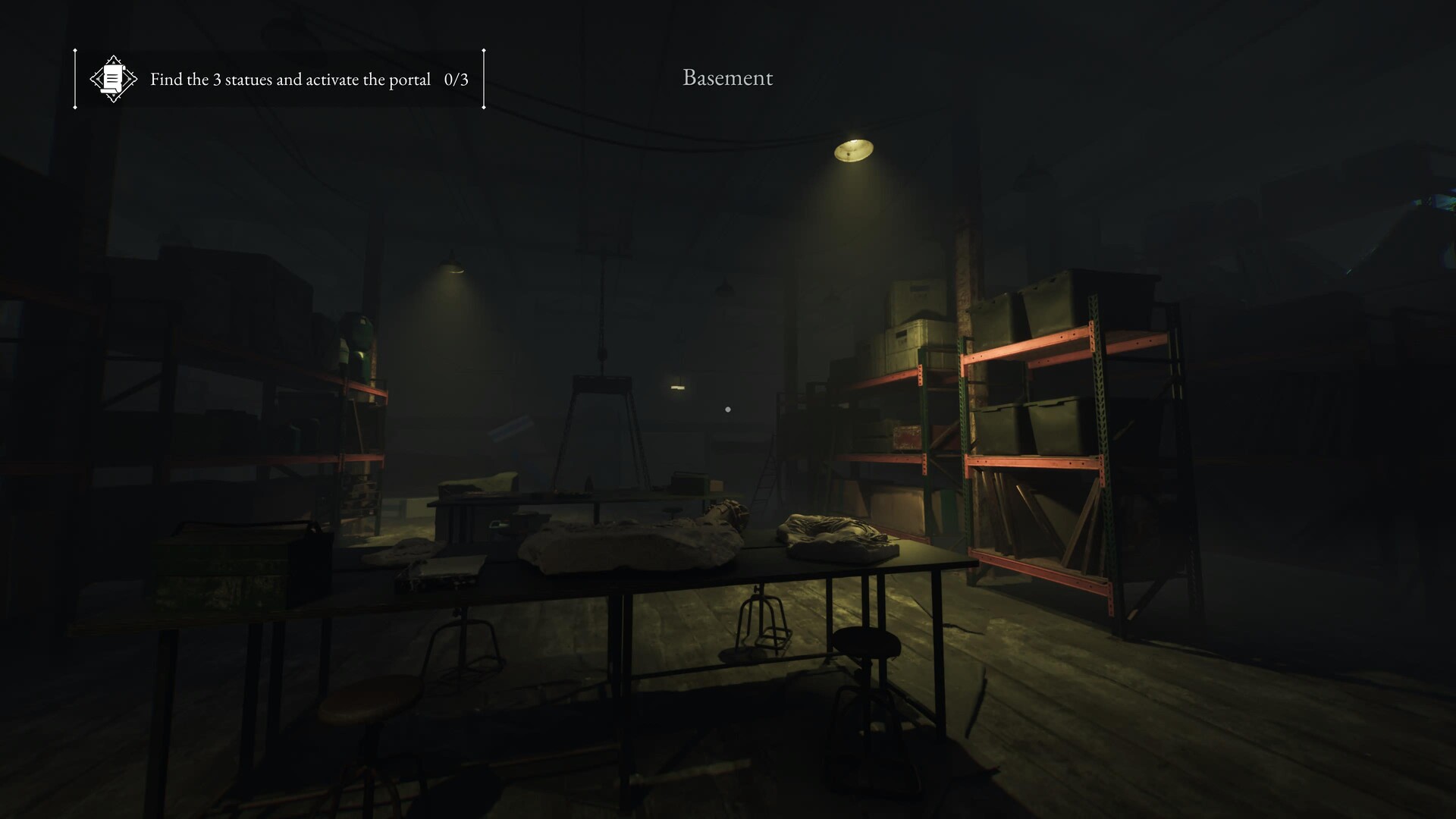
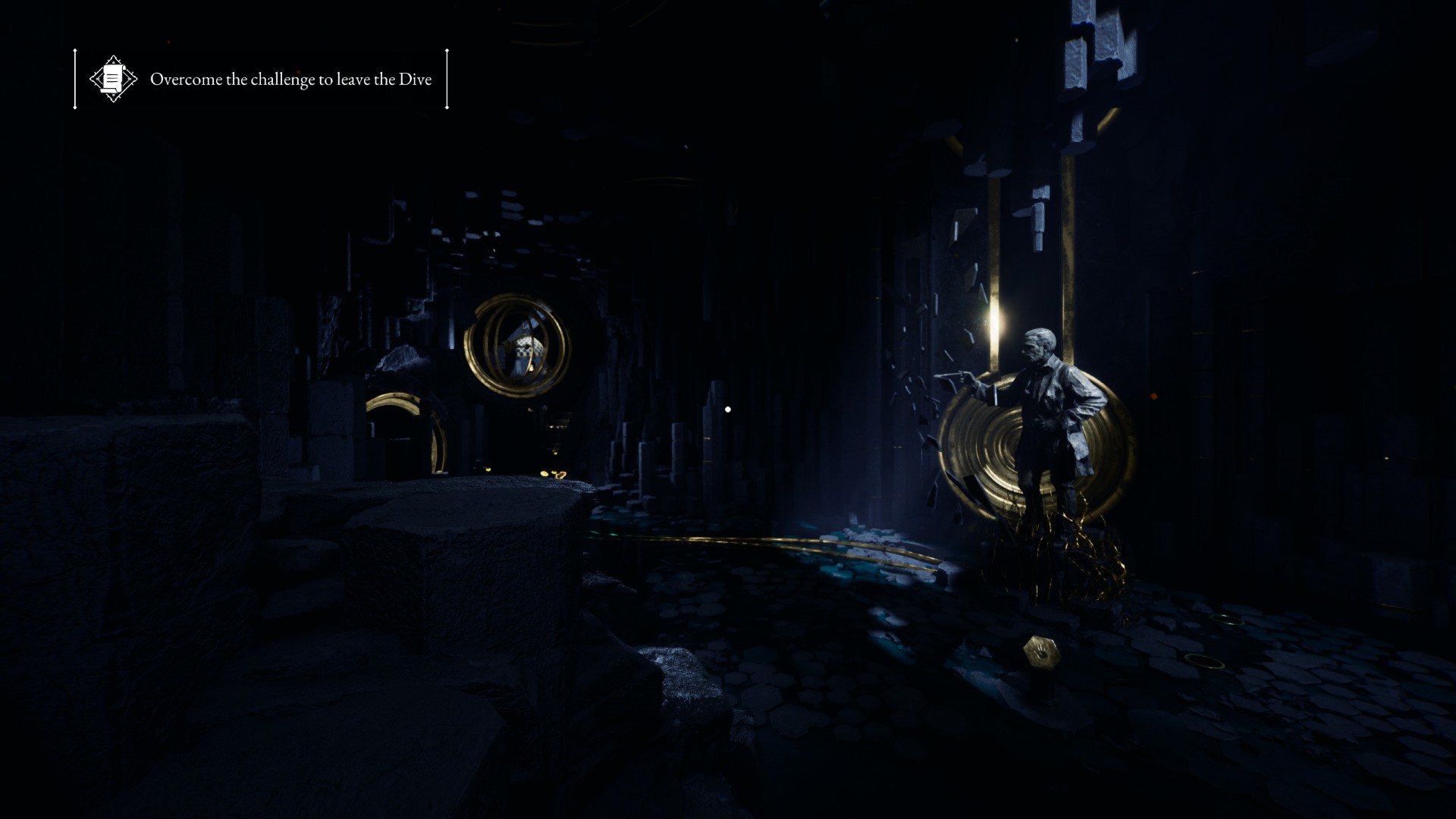
The journey is divided between two connected locations. The Villa is Gabriele’s ancestral home, filled with documents, family history and hidden clues. The Dive is a distorted version of the infernal depths, where his memories and fears become part of the environment.
Neither world was particularly interesting to explore. You frequently move back and forth between them, sometimes for reasons that feel important to the story, but often simply to perform another small objective. This makes the structure feel unnecessarily awkward.
The locations themselves also lack variety. You repeatedly travel through the same areas with only minor changes, and the environmental repetition becomes increasingly noticeable. My playthrough lasted around five hours because I explored every corner and spent considerable time stuck on one puzzle, yet I rarely felt properly rewarded for examining these spaces.
That is a shame because the game has a strong visual appeal. The Villa’s melancholic architecture and the surreal infernal imagery of The Dive give it a distinct identity. Certain scenes use lighting, colour and scale particularly well. The problem is not that the game looks bad, but that it shows you too many variations of the same places.
Puzzle-solving is where The Alighieri Circle is at its best. Most puzzles are easy enough to understand once you examine the environment and carefully think about the available clues. They are rarely solved instantly, but they usually communicate enough information for the solution to feel logical.
The Dante-inspired symbolism also strengthens them. References to sin, virtue, ritual and punishment are incorporated into the challenges themselves, allowing the literary inspiration to influence the gameplay rather than remaining confined to the story.
However, one puzzle involving bells, buttons and music was extremely frustrating. The intended logic was difficult to understand, and the complete absence of a hint system made the situation much worse. There is a difference between asking players to think carefully and expecting them to understand what the developers had in mind without sufficient guidance.
A simple optional hint system could have preserved the challenge while preventing anyone who decides to play the game from becoming completely stuck. The game does not need to reveal its solutions immediately, but it should be capable of providing a small push after someone might spent too long making no progress.
Despite being presented as a psychological thriller, only a few moments created any effective sense of horror. The uncomfortable silence, visual distortions and occasional unsettling scene sometimes work, but the tension is inconsistent. Much of the experience involves walking through familiar areas without any real sense of danger.
The PC version also offers surprisingly little control over its presentation. Instead of providing detailed graphical options, the game essentially limits you to Low and High presets. That makes it difficult to adjust individual settings or properly optimize the experience for a particular system.
More concerning is the strange blurring that appears when moving the camera quickly. Disabling motion blur did not completely remove it, suggesting that another visual effect may be responsible. I also encountered occasional stuttering when turning rapidly with the mouse. When standing still or moving the camera slowly, performance was much more stable.
My PC can run considerably more demanding games without these issues, so The Alighieri Circle does not feel particularly well optimized. The limited settings make these problems even more frustrating because there is little opportunity to identify and disable whatever is causing them.
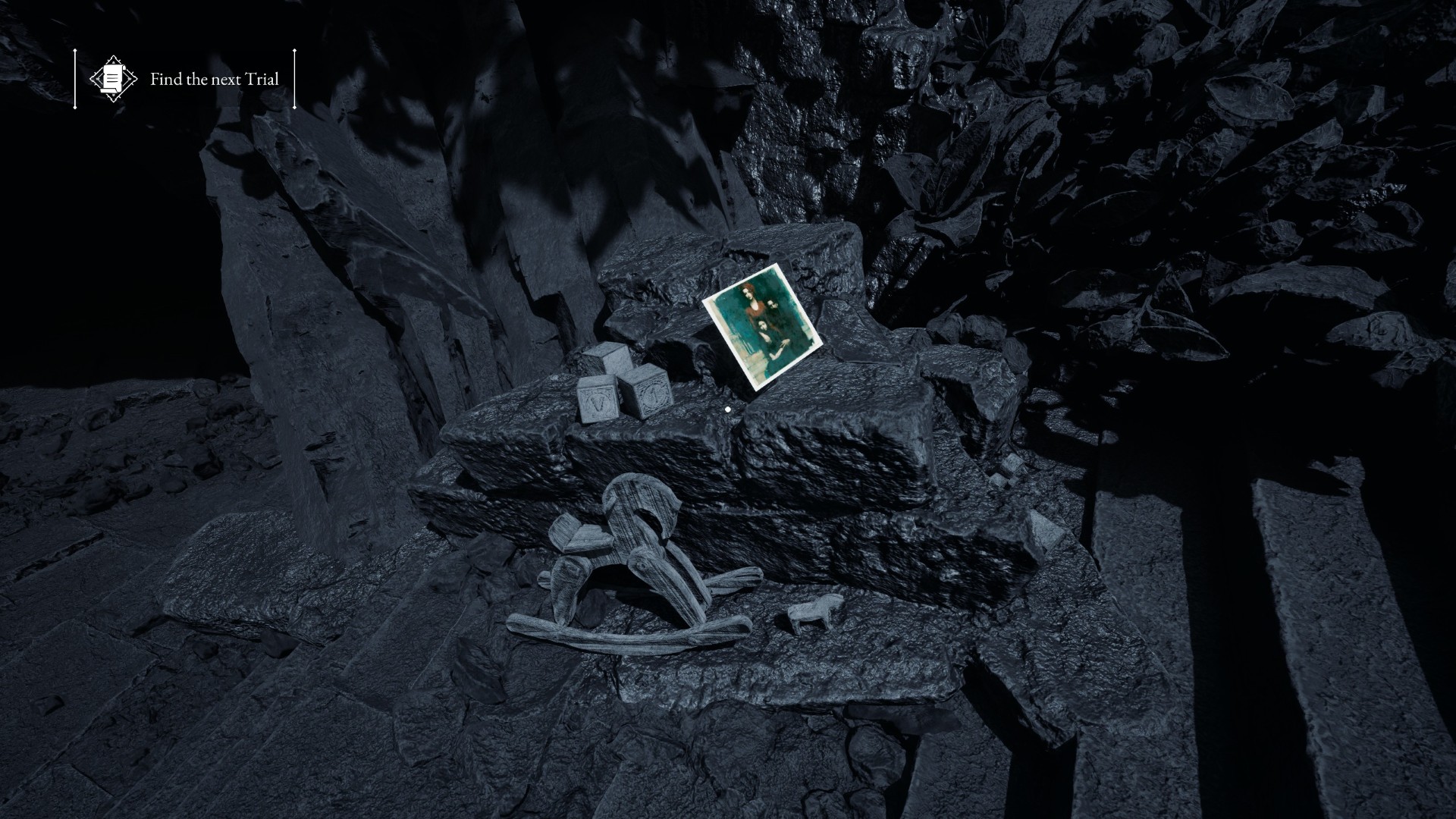
The Alighieri Circle: Dante’s Bloodline has an interesting premise, beautiful imagery and a mostly enjoyable collection of puzzles. Its use of Dante’s work is easily its strongest quality, but the surrounding game is too familiar and underdeveloped to leave a lasting impression. It exists as a competent walking simulator, yet aside from its literary inspiration, it offers little that players have not already experienced elsewhere. It is not a bad journey through Hell, but it is a disappointingly average one.
The Alighieri Circle: Dante’s Bloodline is difficult to recommend beyond players who are especially interested in Dante or enjoy solving puzzles without much guidance. Its literary inspiration gives it an identity, but the game surrounding it never becomes equally memorable. For everyone else, there are stronger walking simulators offering richer stories, more engaging exploration and better technical execution.
Ending Thoughts
Review copy provided by the publisher
Orc Incremental offers satisfying progression, entertaining totem combinations and enough content to justify its affordable price.
![[GAMESCOM 2026] Chronoscript: The Endless End Preview – Beautiful Pages Hide Deliberate Combat](https://www.indie-games.eu/wp-content/uploads/2026/09/Chronoscript-The-Endless-End-1-1024x576.jpg)
Chronoscript: The Endless End stands out from other Metroidvanias by blending 2D manuscript worlds with exploration inside a 3D manor.
![[GAMESCOM 2026] MegaGum Preview – Combat Hits Hard in This Sticky Platforming Adventure](https://www.indie-games.eu/wp-content/uploads/2026/09/MegaGum-09-09-26-5-1024x576.jpg)
MegaGum combines hard-hitting combat, varied weapons and Gum-powered platforming in a promising Gamescom 2026 demo.
![[GAMESCOM 2026] Delphinium Preview – Cozy Routine Mixed With Enjoyable Minigames](https://www.indie-games.eu/wp-content/uploads/2026/03/Delphinium--1024x665.jpg)
Delphinium mixes cozy farming, exploration and relationships with enjoyable fishing, cooking and forging minigames in its Gamescom 2026 demo.
Lady Death: Demonicron looks the part, but underneath its excellent comic-book exterior is a clunky and painfully short brawler.
![[GAMESCOM 2026] Tomb Raider: Legacy of Atlantis Preview – Expands the Original Without Losing Its Identity](https://www.indie-games.eu/wp-content/uploads/2026/09/tomb-raider-legacy-of-atlantis-06-02-26-1-1024x576.jpg)
Tomb Raider: Legacy of Atlantis brings Lara back to her roots, but its Gamescom 2026 showing proved this is far…
![[GAMESCOM 2026] Clive Barker’s Hellraiser: Revival Preview – Ready to Open the Box](https://www.indie-games.eu/wp-content/uploads/2026/09/Clive-Barkers-Hellraiser-Revival-08-30-26-1-1024x576.jpg)
Hellraiser: Revival preserves the franchise’s sex, gore and psychological horror while delivering approachable survival-horror gameplay.

Swan Song creates a peaceful and forgiving puzzle space without removing the challenge that makes solving a difficult puzzle rewarding.
Mortal Shell II starts brilliantly but grows repetitive and exhausting, while remaining a rewarding and ambitious Soulslike sequel.
![[GAMESCOM 2026] Terranigma Preview – A Lost SNES Classic Returns in 2027](https://www.indie-games.eu/wp-content/uploads/2026/08/Terranigma-1-1024x576.jpg)
After more than three decades of limited availability, Terranigma is returning in 2027. We played its enhanced re-release at Gamescom…

Reading another person’s mind is often presented as a desirable superpower, but Sister Other Paranoia immediately understands why it could…
Forsaken Realms: Vahrin’s Call is exactly the kind of ambitious, slightly clumsy fantasy RPG that used to be far more…
![[Early Access] 2nd EVE – Sci-Fi Action RPG That Lacks a Sense of Stakes](https://www.indie-games.eu/wp-content/uploads/2026/08/2ND-EVE-1024x576.jpg)
2nd Eve is a space-set action RPG in which we strive to save humanity.
![[PREVIEW] Dreamcards – Strategic Exploration of Consciousness](https://www.indie-games.eu/wp-content/uploads/2026/08/Dreamcards_20260810_233631_0000-1024x576.jpg)
Dreamcards is a roguelike deckbuilder centered around dreams and nightmares.
![[Early Access] OFFBEAT – Incredibly Fun Way to Start a Music Career](https://www.indie-games.eu/wp-content/uploads/2026/08/Offbeat_20260808_201446_0000-1024x576.jpg)
In OFFBEAT, we play the role of a jobbing composer who is launching their music career.

HellSlave II retains the original’s oppressive atmosphere, morally grey world and striking art while adding a larger world, randomized loot…
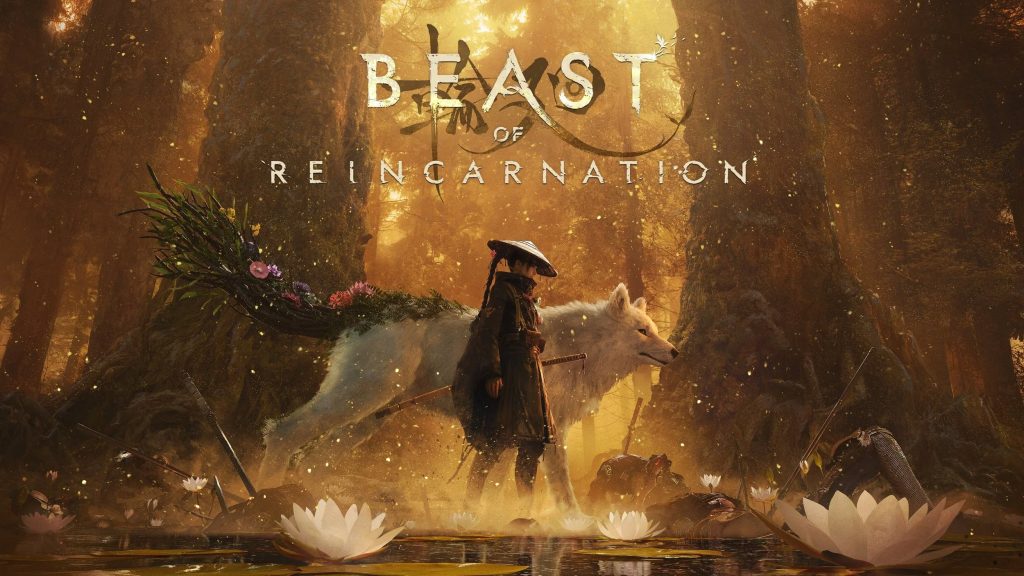
Beast of Reincarnation is an ambitious but uneven action RPG elevated by satisfying parry combat, beautiful art direction and the…

K-pop Idol Stories: Road to Debut captures the pressure of building idol group, but its management systems never explore that…
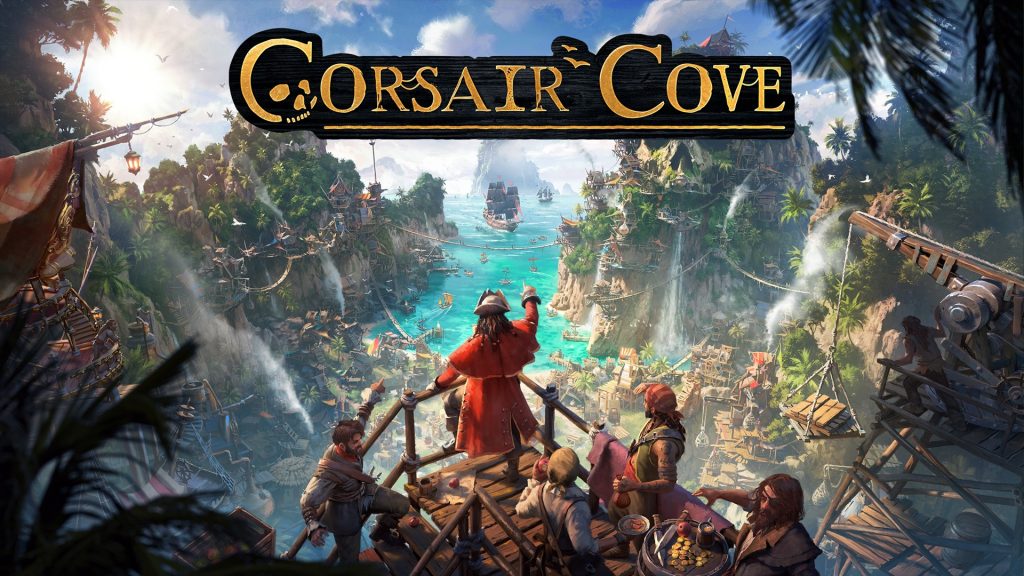
Hooded Horse keeps finding strategy games that know their audience, and Corsair Cove extends its impressive run of excellent city-builders.

Teeto is a warm, cozy, creative and highly enjoyable 3D platformer that understands why classic collectathons remain so appealing.
