
Denshattack! – Tony Hawk Meets Jet Set Radio on High-Speed Trains
Denshattack! blends Tony Hawk, Jet Set Radio, and Japanese train culture into one of the year's most creative and unforgettable…

If you enjoy independent indie game coverage, consider supporting Indie-Games.eu on Patreon. It helps keep the site independent.
If you remember the first game, which has been with us for almost ten years, you might ask yourself when you start playing The Talos Principle 2: Is this really the same game? The sequel isn’t just richer, more substantial, and more engaging, it transforms from a purely puzzle-solving experience into a true story-rich adventure. The game raises questions about artificial intelligence, its development, and various ethical issues related to humanity and general progress. Croteam has truly gone a step further, elevating the game’s production to a higher level, with every character possessing their own emotions, voices, thoughts, and attitudes.
Beyond introducing diverse characters, the game immerses us in various plots, side stories, and the history of the world we inhabit. We find out how the story continues from the first installment and that every choice we make carries a price that influences the very end. Yes, the game offers us three different endings, all of which depend on how we’ve treated other characters and what our heart truly desires. The entire course of events is impressively executed, not only with audio recordings but also with images, an abundance of text to read, and cutscenes that will pique your imagination.

Also present is the recognizable characteristic of The Talos Principle, a reflective and philosophically oriented story. This game is designed to pose more questions than it provides answers. This is where you might find the character of the Sphinx most bothersome, as she only asks questions, speaks in allegories, and leaves you amazed every time. You will often have to seek answers yourself, only to be confronted with a new set of questions. The connection to Greek mythology further emphasizes the importance of it all.
New Jerusalem, the home of a thousand androids and a place we get to know more intimately, was built by Athena, the protagonist of the first game. As players, we assume the role of an android named 1K, the last created resident of New Jerusalem. The main societal objective, known as “The Goal,” was to create a thousand androids and achieve technological advancement.
But now that the goal has been met, the question arises: what’s next? The city’s founder left the community without explanation, and the robots, following her trail, discovered a mysterious pyramid-shaped megastructure that piques their curiosity. Therefore, an expedition team, including the main character, is assembled and sets out to investigate the megastructure. Upon arriving at the location, the androids face a series of puzzles, the solving of which opens the path to the center of the great pyramid.
Before we dive into solving the puzzles, we have the opportunity to explore the city. We meet its citizens, participate in political and social discussions, attend meetings, visit museums, and discover what happened when the first robot left the simulation a thousand years ago. All of this is indeed very impressive; you can spend hours just exploring every corner of the city, learning something new, and deeply immersing yourself in the entire essence of the game.

There are truly a great number of puzzles, and each one is different from the last. They are divided into 12 thematic areas, each containing eight main puzzles, two special ones, and one golden one, through which you earn Prometheus Tokens to eventually skip the slightly more demanding puzzles.
Furthermore, each area introduces new elements which gradually increases the difficulty of solving the puzzles. Notably, you don’t have to solve the puzzles in order; you can always skip one and return to it later.
Regarding the structure of the puzzles, you are often required to place certain objects in the right spots, activate elements in a specific order, and combine various mechanics such as teleportation, using anti-gravity surfaces, creating portals, carrying cubes, connecting different elements at the same time, etc.
The speed of solving the puzzles ranges between 2 to 3 minutes, and the game’s dynamic generally feels faster compared to the first game. Also, during your journey to the next puzzle, you’ll encounter beautiful scenery and attractive environmental vistas that will inevitably make you pause for a moment to marvel at the capabilities of the Unreal Engine.

All the puzzles are carefully designed; you can’t just rely on your resourcefulness, you must recognize the correct sequence to complete one. In other words, there is often only one correct solution you need to discover, with no room for inventing your own approaches. I don’t mind this approach, but it might have been more interesting if Croteam had allowed us more creativity in solving the special puzzles, at least outside of the main ones.
Additionally, I sometimes got stuck while solving puzzles, not in the sense of completing them, but simply trapped inside the puzzle because I made the wrong move and the game locked me behind a door. Such situations were rare, you could usually get out of one situation or another, however, the game severely lacks proper save positions.
You have to reload the checkpoint every time, which can send you back to the very beginning of the puzzle, forcing you to solve everything all over again. Also, if you happen to fall into the water or a large hole and die, the game will return you all the way back to your initial starting point, for instance, near a cutscene.

The Talos Principle 2 is a very beautiful game and captivates with its visual splendor. Every segment of the game invites you to stop, carefully observe the environment, and admire the landscapes it offers. The progress in particle effects is noticeable, the scenery looks more natural, and there is no more walking through small vegetation as there was in the original. Also, the lighting is significantly improved overall.
Additionally, the music fits the game perfectly, creating a melancholic atmosphere that gives you the feeling of being in some ancient Greek world. I didn’t encounter a single bug; the game ran smoothly on my computer, with no FPS drops or stuttering. It mostly maintained 60 FPS even on high settings.
Furthermore, you can communicate face-to-face with your expedition team, who will regularly contact you, comment on your discoveries, and talk to you after solving puzzles. For me, at least, the robots were very creepy, especially when they stare at you with those static eyes as if trying to read every part of your soul.
The game also features four different types of audio logs you can find and listen to, social media with the ability to reply to posts, and reading terminals. However, there was either too little or too much of this content; for example, the social media rarely appeared and had an impact, yet the concept itself seemed very interesting. Of course, most of the narrative-driven content is optional and can be entirely bypassed.

It’s truly fascinating how a game like this can be sold for only €28.99, while some significantly lower-quality titles are sold at double the price. Many might say this game isn’t exceptional, that it’s not everyone’s cup of tea, but it’s important to understand that the Croatian industry has never before produced a game quite like this, and that at its core, it’s far more complex than it might seem at first glance.
Some might focus their main criticism on the amount of walking and moving around, forgetting that this game is graced by a very complex story that needs to be told somehow. If you ever get the chance, and you’re not averse to exploring the narrative this game offers, The Talos Principle 2 is a game you shouldn’t miss.
Review copy provided by the publisher
Denshattack! blends Tony Hawk, Jet Set Radio, and Japanese train culture into one of the year's most creative and unforgettable…
If you're looking for a game that takes an incredibly simple idea and somehow turns it into something addictive, KAZ…
Cat Mail Co. charms with cozy visuals and satisfying mail sorting, but its full release doesn't quite live up to…
Forensics: Crime Scene Detective follows Aerosoft's familiar formula: an interesting simulation with decent visuals, weak optimization, and repetitive gameplay.

Foxy The First Steps is an excellent precision platformer that understands exactly what makes the genre enjoyable.

Tokyo Valkyries blends visual novel, roguelite deck-building, and fan service into a surprisingly enjoyable mix, despite few standout elements.

Moonlight Peaks refreshes the cozy farming formula with a more unique supernatural and magical approach while keeping the familiar mechanics…

The first thing that stands out about GRID 2 in 2026 has nothing to do with its handling, graphics, or…
HYPERWIRED is a top-down roguelike where your ship drags a giant plug, powering sockets to complete objectives and progress through…
![[PREVIEW] 70s-style Robot Anime Geppy-X – This Game Pretends It’s a Real 1970s Anime](https://www.indie-games.eu/wp-content/uploads/2026/06/70s-Style-Robot-Anime-Geppy-X-Preview-1024x576.jpg)
As I continue my Steam Next Fest journey, I stumbled upon a game I honestly wasn't expecting to enjoy as…
![[PREVIEW] Edge of Memories – One of My Biggest Steam Next Fest Disappointments](https://www.indie-games.eu/wp-content/uploads/2026/06/Edge-of-Memories-Preview-1024x576.jpg)
Right now, Edge of Memories feels like a game with good ideas that hasn't yet figured out how to turn…
![[PREVIEW] Penguin Colony – Lovecraftian Horror Meets Antarctic Exploration](https://www.indie-games.eu/wp-content/uploads/2026/06/Penguin-Colony-5-1024x576.jpg)
It is surprisingly difficult to explain Penguin Colony, yet incredibly easy to become fascinated by.

Magical Princess is one of those games that immediately reminded me of the classic Princess Maker series, but it does…
![[PREVIEW] Mortal Shell II – Difficult, Fair, and Surprisingly Polished](https://www.indie-games.eu/wp-content/uploads/2026/06/Mortal-Shell-II-1-1-1024x576.jpg)
Mortal Shell II has opened its beta to everyone, and I have to admit, this is exactly how you showcase…
![[PREVIEW] 1666: Amsterdam – Fails to Capture the Promise of Its Reveal](https://www.indie-games.eu/wp-content/uploads/2026/06/1666-amsterdam-1024x576.jpg)
Having just recently been revealed during Summer Game Fest, 1666: Amsterdam has already received a playable prologue on Steam.
![[EARLY ACCESS] Far Far West – Co-Op Shooter I Didn’t Expect to Love This Much](https://www.indie-games.eu/wp-content/uploads/2026/04/Far-Far-West-1024x576.jpg)
There is a reason why Far Far West is currently sitting at overwhelmingly positive reviews on Steam and has already…
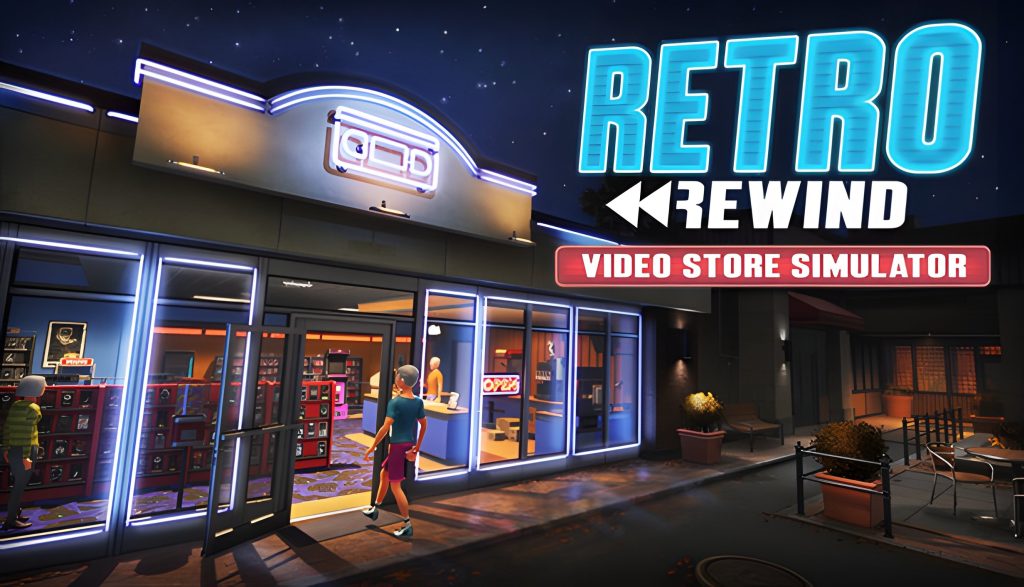
Retro Rewind - Video Store Simulator latest update that adds repair stations, street sign and more to the game, could…
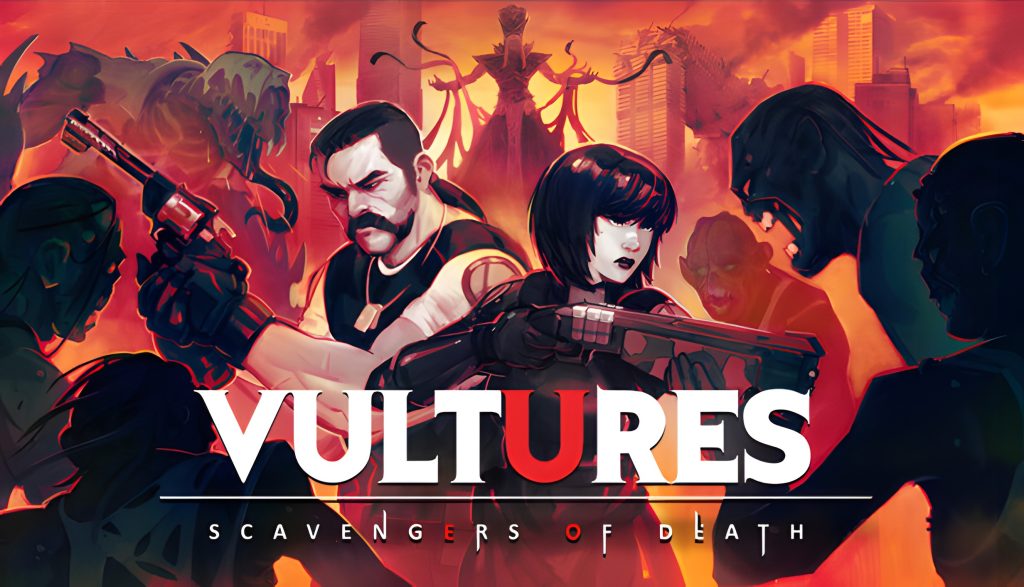
Vultures: Scavengers of Death is a turn-based tactical strategy game heavily inspired by classic survival horror.
![[Early Access] No Stone Unturned – A Fowl Play](https://www.indie-games.eu/wp-content/uploads/2026/05/Unturned-1-1024x576.jpg)
In No Stone Unturned, we play as Detective Cox, a squirrel with amnesia who investigates a murder of a chicken…

Outbound is a mediocre, shallow cozy game with a beautiful presentation and strong concept, but one that fails to deliver…
