![[EARLY ACCESS] The Last Caretaker – Survival Game I Cannot Stop Playing](https://www.indie-games.eu/wp-content/uploads/2026/07/The-last-Caretaker-Key-Art-1024x587.jpg)
[EARLY ACCESS] The Last Caretaker – Survival Game I Cannot Stop Playing
The Last Caretaker is a compelling survival crafter with a flooded world and mobile base, but weak combat and performance…

If you enjoy independent indie game coverage, consider supporting Indie-Games.eu on Patreon. It helps keep the site independent.
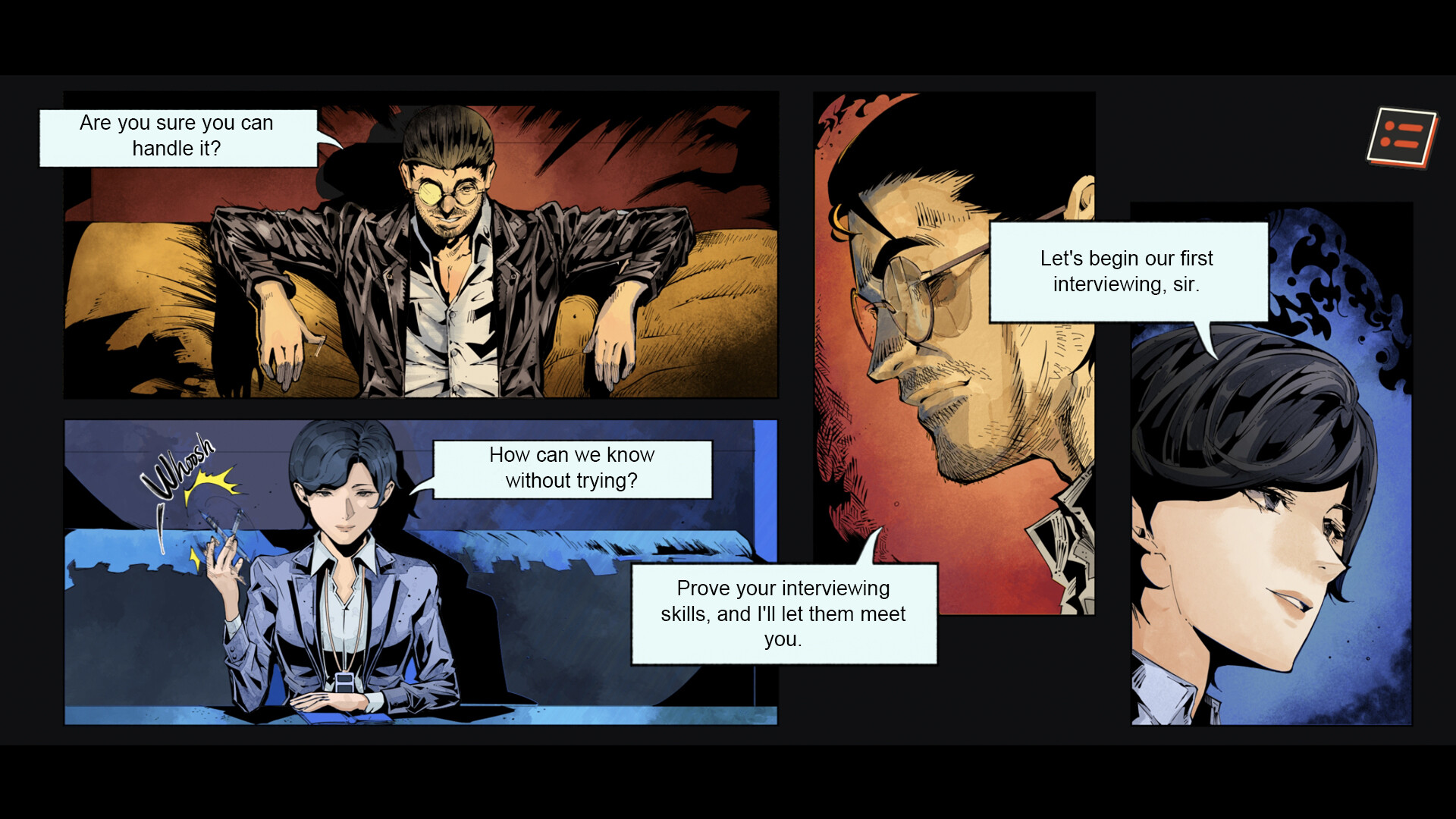
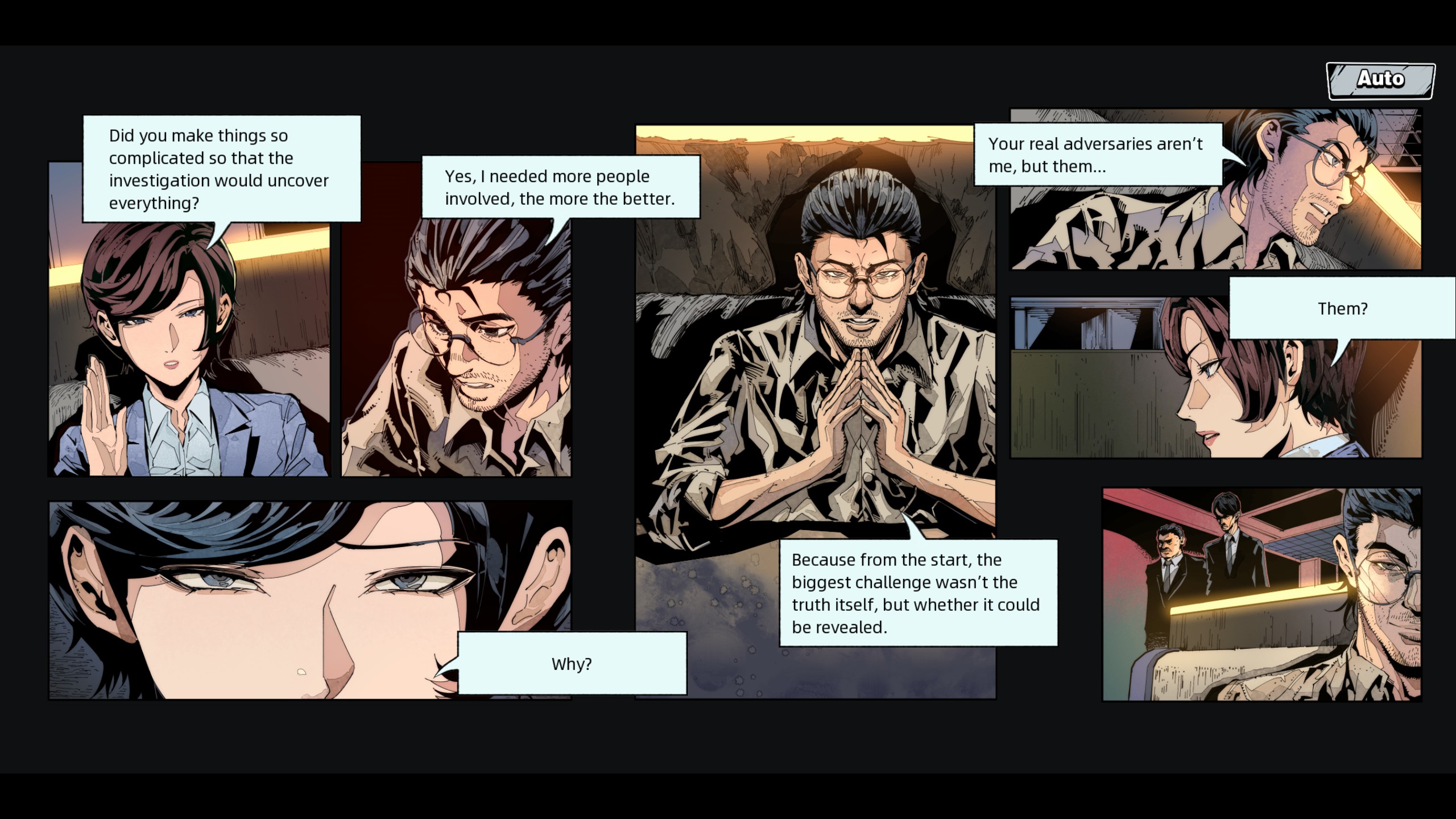
Card Detective is a card-battler and deck-building game in which we take on the role of journalist and detective Hazel Gong. Initially reporting on construction work at a building site, she accidentally stumbles upon a mysterious dead body. In addition to containing detective elements through which we will occasionally learn more about the game’s overall plot, the story itself is told in the form of a comic book, or manhwa. It features a very interesting card-playing mechanic, and the graphics are even more appealing, making it feel as if we are playing an interactive comic.
I must admit that the story was intriguing and held up until the end; it had plenty of conspiracies and twists. Each part of reading the comic won’t take long, the design of the characters and the colors in general are very good, and what pleasantly surprised me is that the characters show emotions. The graphics and presentation of the entire game are impressive, and even if you are not a big fan of card-battler games, the story will certainly draw you in.
Apart from the very well-designed graphics and comic book presentation, the gameplay might not be at the desired level, even though the concept is very appealing. Unfortunately, you will be able to progress relatively easily or quickly through the game by using certain tactics or strategies, effectively ‘cheesing’ your way through it.”
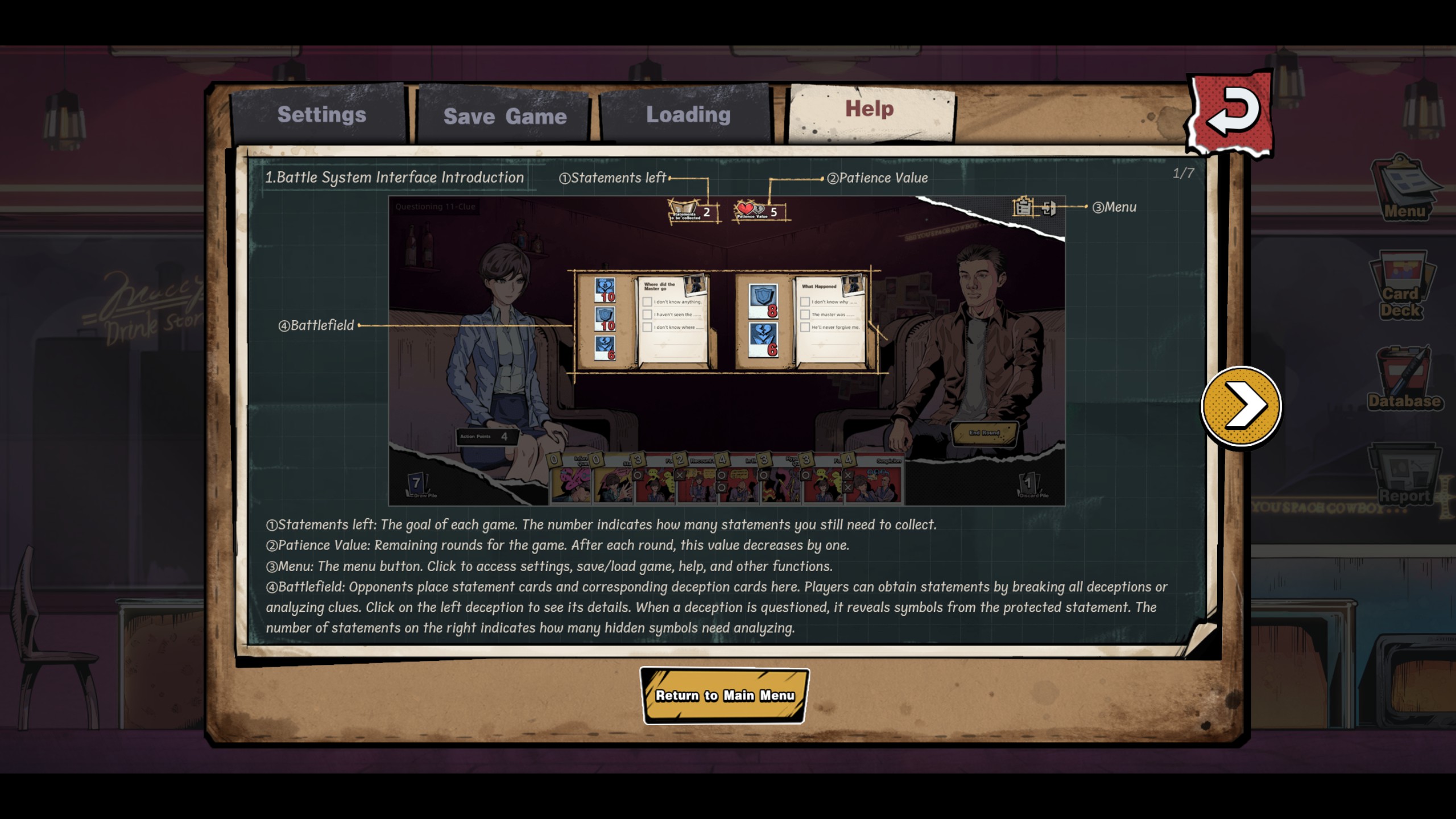
Card Detective is a game that has a lot to offer, but it feels as if the developers lacked the ambition to make something bigger. The tutorial is unnecessarily complicated, so much text and so many new words, and it turns out that half of it won’t be needed anyway.
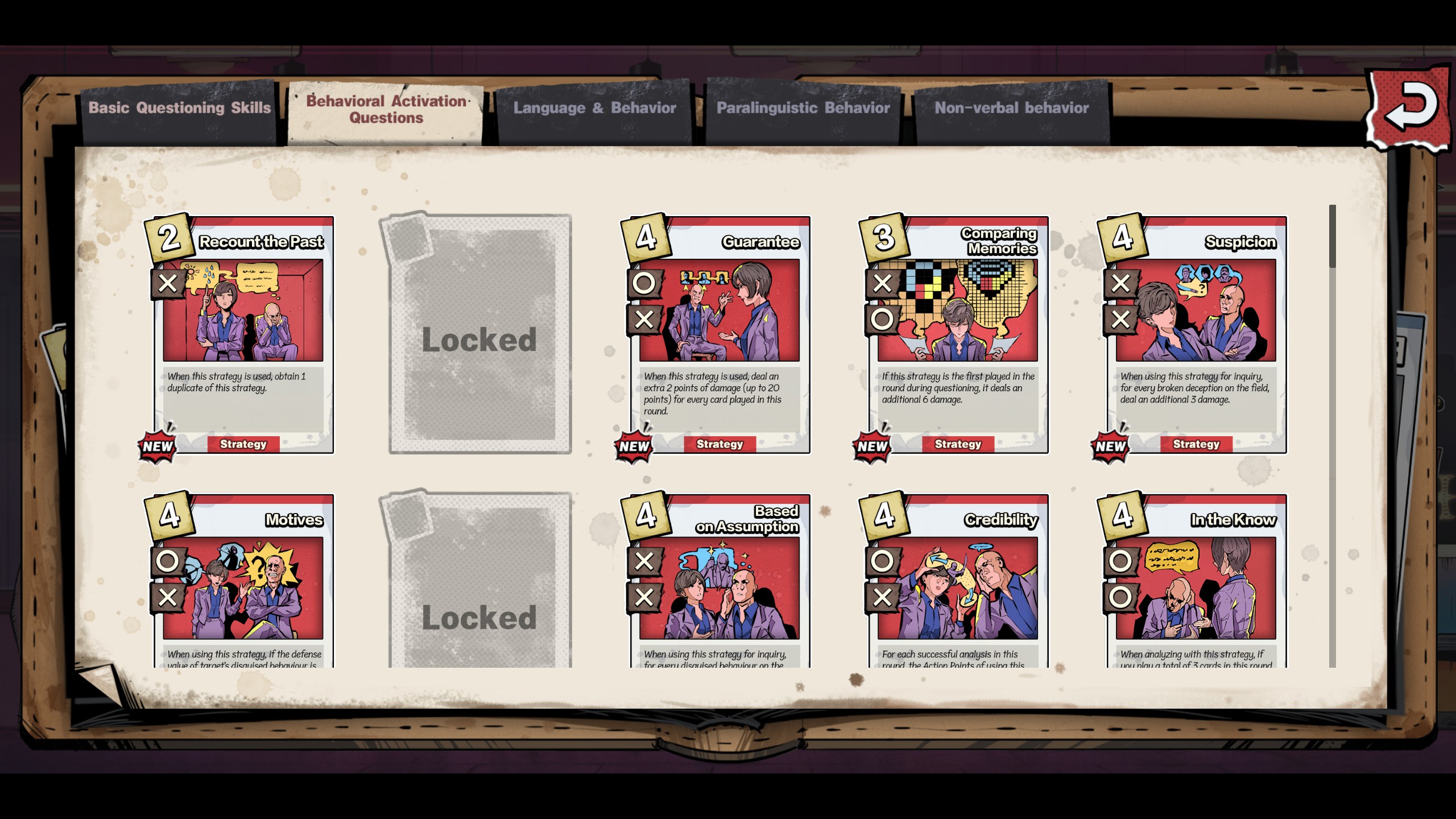
At its core, the game features several types of cards: yellow cards (fast cards, such as those for drawing new cards or gaining action points), Deception cards, and Strategy cards, which are essentially questions. There are also “enemy” Behavioral cards that you may or may not destroy, and they have special effects that can complicate your life, for instance, by preventing the effect of your card.
Every card in the game has its specific properties, but all are used in the same way: you will either deal damage or try to obtain clues. To win, it is necessary to find all the answers to arrive at the correct statement. Since this is an interview game, your turns are represented by the amount of the interviewee’s patience, if it reaches zero, you start over. To keep the gameplay mechanics from sounding too complicated, I will try to simplify it all.
Opponents set up Statement cards and corresponding Deception cards on the left and right sides. We get the statements by breaking all deceptions or by analyzing clues. You can inspect the cards on the left side by clicking on them. When a deception is questioned, it reveals symbols from the protected statement. The number of statements on the right side shows how many hidden symbols need to be analyzed.
When you destroy the left side of the journal (each card deals a certain amount of damage), X and O symbols are revealed, which technically represent the right side. Also, the cards on the left side have their own health, and when you completely finish that side, the right side is automatically completed. The symbols that appear indicate True (O) and False (X) statements. When I say they represent the left side, I mean that their positions can decipher the mentioned information.
Ultimately, it pays off to blindly play only the right side, as there is no point in wasting your cards on destroying the squares that have 25 health, and the game can confuse you with its symbols. In addition, it is important to emphasize that every card in the game has an X and O symbol or a combination of X X, O O, and a mix for solving the statements. All of this sounds complicated, but once you start playing, it will make sense.
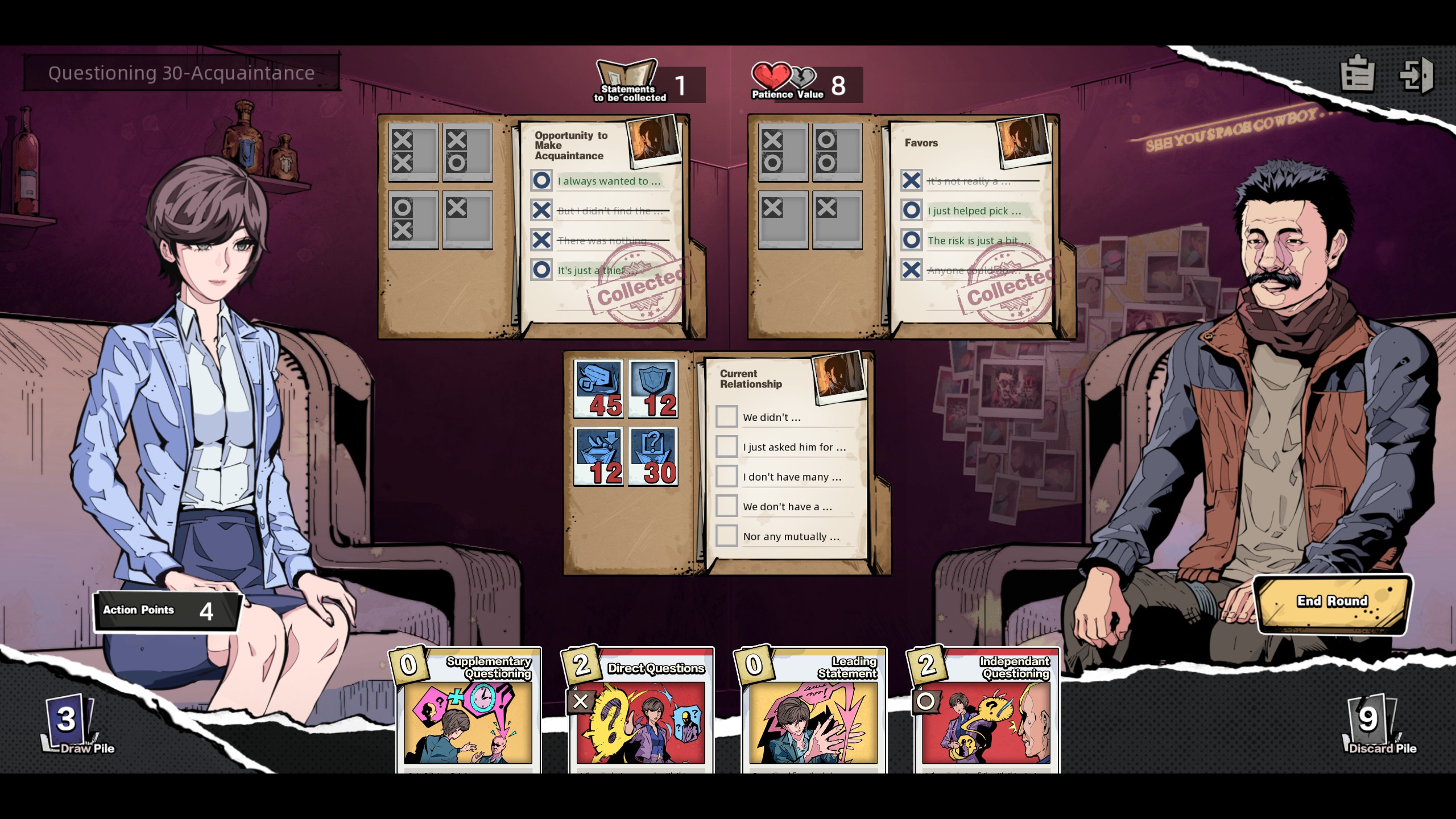
Now comes the part where I reveal how to “cheese” the game. Every action you take spends action points (you always start with four), and since every card has three copies, you can only take those that cost two action points, and also take cards that allow you to draw new ones or gain action points.
It’s very simple: you focus only on the right side and guess, come what may. Besides being able to do this several times, you will also complete the game very quickly. There is no unnecessary frustration or pondering over which move to make. In my opinion, because of this, the whole game loses its meaning.
What is certainly commendable is the ingenuity and appearance of the cards. It is impressive that there are two types of playing styles, but technically, one is more profitable than the other. Moreover, it is fun to combine different cards (you can have a maximum of 16 cards in your deck) and experiment with various ways of playing. There are even a lot of cards that you unlock by solving side and main missions. I recommend going through all the missions, as that is the only way to unlock all the cards during gameplay.
The main menu, where you choose which mission you want to solve, is incredibly unintuitive, poor, and static. To return to a specific mission, you have to click on the “Report” menu and then find the one you want to return to by clicking on the character. The game never showed this to us; I discovered it completely by accident. The game also fails to inform you that you must save the game at the start of playing to continue from where you left off. There is also the inability to skip any scenes; if you happen to lose, you will have to repeat all the dialogues and comic book excerpts to continue.
One very irritating feature is the dialogue that appears when you use cards during gameplay. Not only does this dialogue repeat with every character (sometimes making no sense), meaning the questions and answers are always the same, but you also cannot skip it, speed it up, or change it in the options. I wish there was a dedicated section in the options just for gameplay so players could customize their playing style. Generally, some cards need to be balanced, especially the enemy Behavioral or Deception cards, because some are simply impossible or nearly impossible to destroy.
To eventually enjoy reading the comic, or rather, to avoid constantly clicking, the developers gave us the option for automatic reading, where comic book parts appear in certain sequences. However, it all goes too fast, and you don’t manage to read absolutely anything, so in the end, it pays off to click everything manually.
Finally, the price of this game is 3.99 euros, and it is absolutely worth playing and trying out this interesting and short title. The developers just need to be brave, broaden their horizons, and something unique can be created from this game. I would love to see a free mode where you can play against anyone at any time. I wouldn’t want this to remain just a comic and a story, because the game’s approach and the way it is played personally intrigued me very much.
Review copy provided by the publisher
The Last Caretaker is a compelling survival crafter with a flooded world and mobile base, but weak combat and performance…

Advent: Dawn is an intriguing science-fiction visual novel elevated by a likable cast and one of the most convenient flowchart…
![[EARLY ACCESS] Hell Maiden – Beautiful but Uneven Journey Through Hell](https://www.indie-games.eu/wp-content/uploads/2025/06/HMD_screenshot_019-1024x576.jpg)
Bullet heaven and rougelite game Hell Maiden lands between a polished Early Access release and a promising game that still…
![[PREVIEW] Dark Queen of Samobor – Promising Croatian Adventure Still in Need of Polish](https://www.indie-games.eu/wp-content/uploads/2026/07/Dark-Queen-of-Samobor-1024x587.jpg)
Dark Queen of Samobor is a promising 2.5D side-scrolling action-adventure that combines Croatian folklore with combat, puzzles and cinematic platforming.
70s-style Robot Anime Geppy-X offers incredible animation, music and mecha nostalgia, but its average shooting make the €39 price difficult…
Denshattack! blends Tony Hawk, Jet Set Radio, and Japanese train culture into one of the year's most creative and unforgettable…
If you're looking for a game that takes an incredibly simple idea and somehow turns it into something addictive, KAZ…
Cat Mail Co. charms with cozy visuals and satisfying mail sorting, but its full release doesn't quite live up to…
Forensics: Crime Scene Detective follows Aerosoft's familiar formula: an interesting simulation with decent visuals, weak optimization, and repetitive gameplay.

Foxy The First Steps is an excellent precision platformer that understands exactly what makes the genre enjoyable.

Tokyo Valkyries blends visual novel, roguelite deck-building, and fan service into a surprisingly enjoyable mix, despite few standout elements.
Moonlight Peaks refreshes the cozy farming formula with a more unique supernatural and magical approach while keeping the familiar mechanics…

The first thing that stands out about GRID 2 in 2026 has nothing to do with its handling, graphics, or…
HYPERWIRED is a top-down roguelike where your ship drags a giant plug, powering sockets to complete objectives and progress through…
![[PREVIEW] 70s-style Robot Anime Geppy-X – This Game Pretends It’s a Real 1970s Anime](https://www.indie-games.eu/wp-content/uploads/2026/06/70s-Style-Robot-Anime-Geppy-X-Preview-1024x576.jpg)
As I continue my Steam Next Fest journey, I stumbled upon a game I honestly wasn't expecting to enjoy as…
![[PREVIEW] Edge of Memories – One of My Biggest Steam Next Fest Disappointments](https://www.indie-games.eu/wp-content/uploads/2026/06/Edge-of-Memories-Preview-1024x576.jpg)
Right now, Edge of Memories feels like a game with good ideas that hasn't yet figured out how to turn…
![[PREVIEW] Penguin Colony – Lovecraftian Horror Meets Antarctic Exploration](https://www.indie-games.eu/wp-content/uploads/2026/06/Penguin-Colony-5-1024x576.jpg)
It is surprisingly difficult to explain Penguin Colony, yet incredibly easy to become fascinated by.
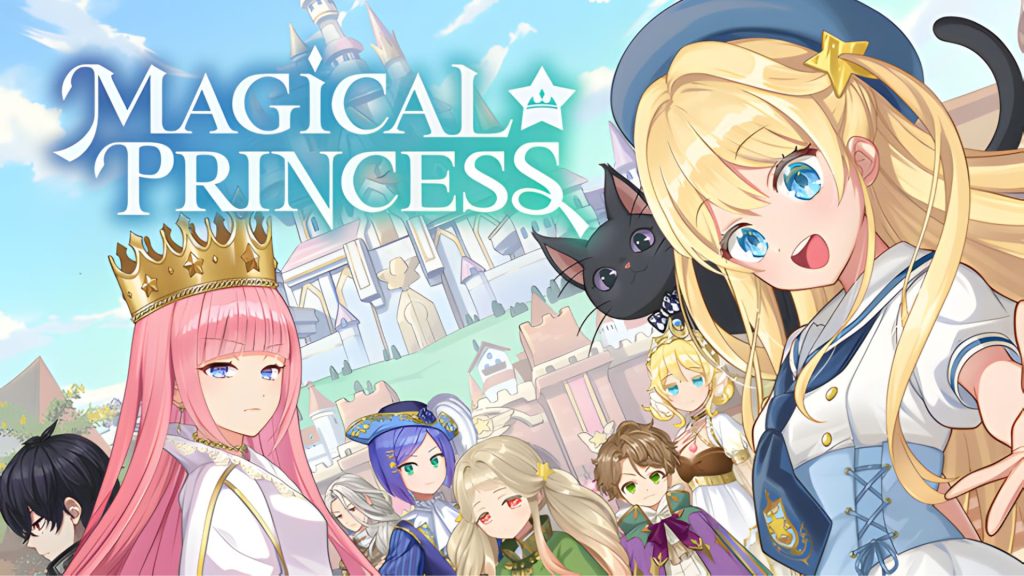
Magical Princess is one of those games that immediately reminded me of the classic Princess Maker series, but it does…
![[PREVIEW] Mortal Shell II – Difficult, Fair, and Surprisingly Polished](https://www.indie-games.eu/wp-content/uploads/2026/06/Mortal-Shell-II-1-1-1024x576.jpg)
Mortal Shell II has opened its beta to everyone, and I have to admit, this is exactly how you showcase…
![[PREVIEW] 1666: Amsterdam – Fails to Capture the Promise of Its Reveal](https://www.indie-games.eu/wp-content/uploads/2026/06/1666-amsterdam-1024x576.jpg)
Having just recently been revealed during Summer Game Fest, 1666: Amsterdam has already received a playable prologue on Steam.
