![[GAMESCOM 2026] Vikings Dynasty Preview – Expands the Dynasty Formula](https://www.indie-games.eu/wp-content/uploads/2026/09/Viking-Dynasty-09-21-26-2-1024x576.jpg)
[GAMESCOM 2026] Vikings Dynasty Preview – Expands the Dynasty Formula
After showing me Prospera at Gamescom 2026, Toplitz Productions' Mathias Oertel moved to a very different kind of settlement builder.…

If you enjoy independent indie game coverage, consider supporting Indie-Games.eu on Patreon. It helps keep the site independent.
Dystopicon is one of those strange indie games that immediately grabs your attention because it feels unlike almost anything else. This first-person dystopian life simulator imagines a future where robots have replaced humans in the workforce. Rather than enjoying the freedom created by automation, ordinary people have become economically useless.
As a Class-2 citizen, you receive a government apartment and a new profession: watching television. Different channels provide money, reputation or entertainment, allowing you to pay for food, hygiene and other basic services. It is an amusingly absurd premise backed by some clever social commentary, engaging world-building and numerous possible outcomes. Unfortunately, its satire remains interesting longer than its repetitive management loop.
Although Dystopicon is presented as a life and time-management simulator, it is closer to a short narrative experiment. Most of the experience takes place in multiple similar looking apartments, where you watch television, read messages, manage several needs and interact with whatever the government has provided.
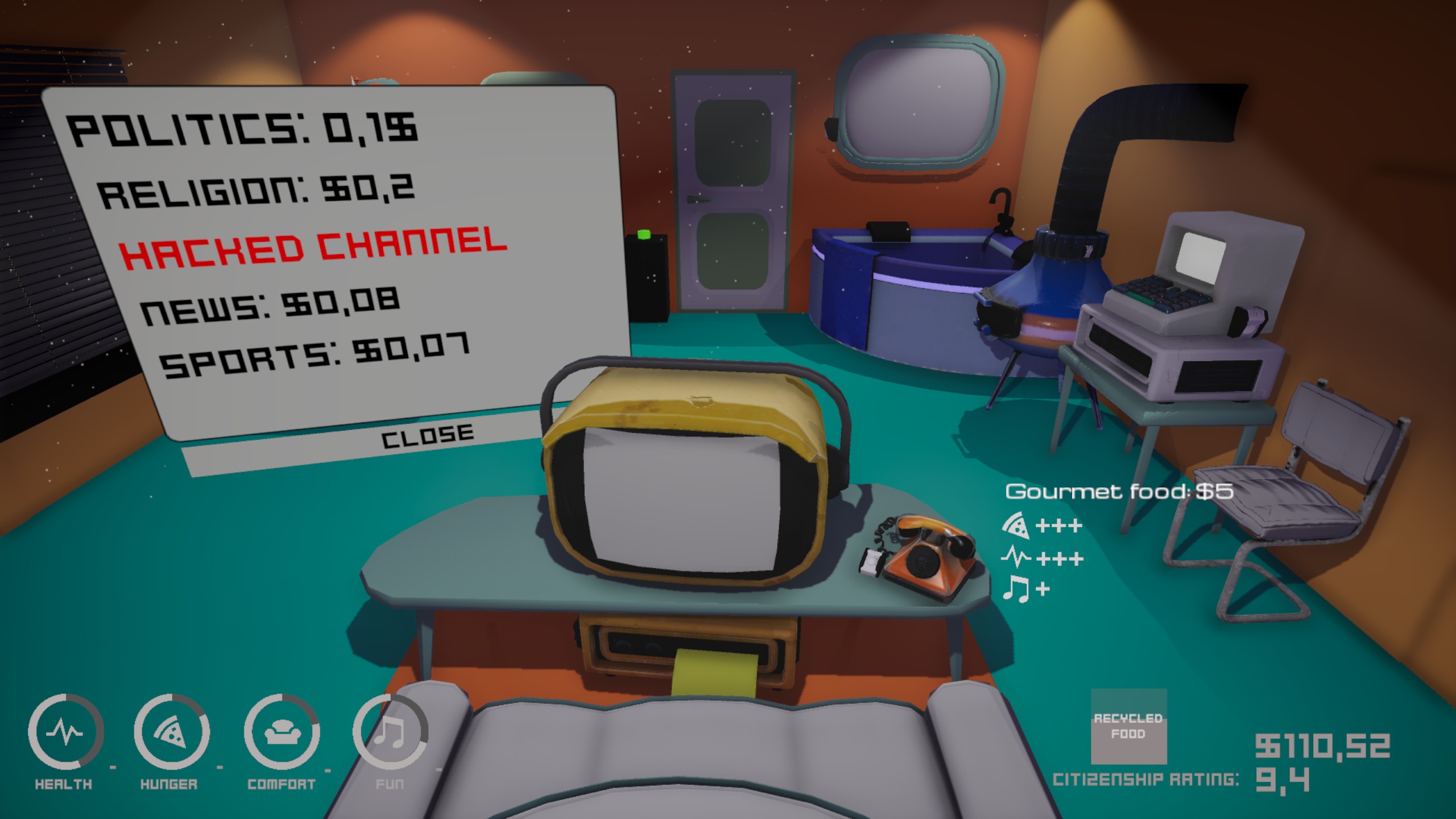
Every channel serves a different purpose. Religious programming usually produces the most money, but it drains your fun considerably. Sports and entertainment are less profitable, although they provide a healthier balance. Political broadcasts increase your reputation, which eventually allows you to rise through the social classes. Those are just a few of the channels available, with many more to discover as you continue playing.
Money creates genuine pressure because your needs continuously decrease. You must decide when to eat, rest, clean yourself or purchase another service. However, advancing to a higher social class does not necessarily make life easier. A Class-1 citizen might receive better food, upgraded utilities and even a jacuzzi, but everything also becomes more expensive.
It does not take long to discover an efficient routine. Some apartments do not even provide every service, while certain needs can be neglected for surprisingly long periods. Once you understand which channels and actions produce the best results, you begin repeating the same sequence.
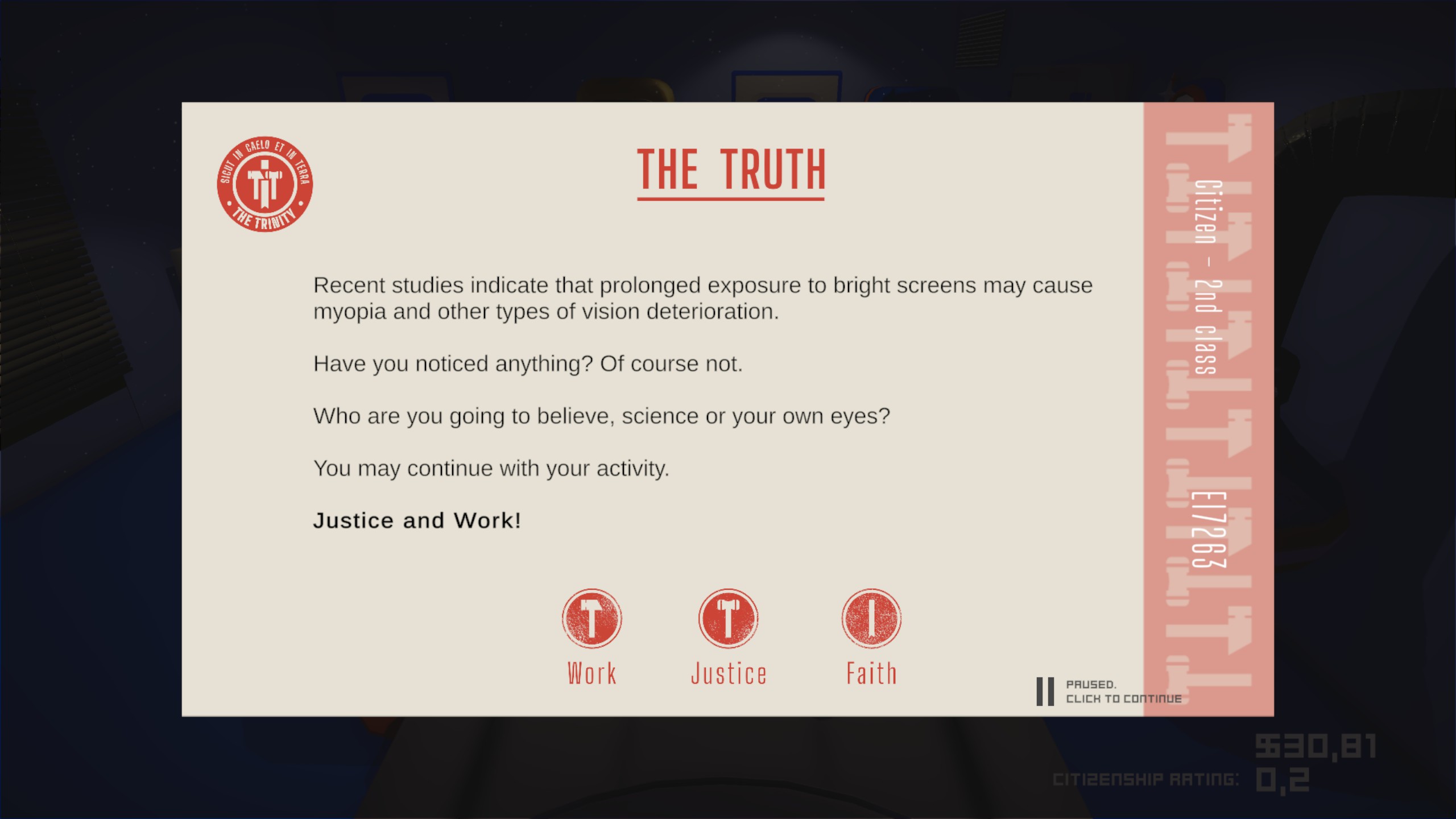
The management is relatively simple, but the events surrounding it give Dystopicon its identity. World-building occurs constantly through reports, government announcements, private messages and unexpected visitors. Someone might offer you drugs, ask you to hide an object or question your viewing habits. A government officer can even ask whether you watch pornography. These encounters usually allow you to cooperate, lie, remain obedient or deliberately cause trouble like moving between vent systems to check what’s happening in nearby places.
Smaller environmental incidents are equally memorable. Losing electricity requires manually restoring it, while a rat infestation gives you another unpleasant household problem. In one particularly effective sequence, reports warn about riots outside. Opening the window during the unrest can result in your bed being set on fire, permanently removing your ability to use it.
These moments make the apartment feel connected to a wider society despite your physical isolation. The satire is intentionally exaggerated, but it raises worthwhile questions about artificial employment, subscription-based living, media control and social fragmentation. Every comfort is another paid service, turning ordinary existence into a collection of transactions.
Dystopicon also creates a convincing conflict between morality and survival. Much like Papers, Please, it repeatedly asks how much personal integrity you are willing to sacrifice for security. You can obey every instruction, improve your reputation and become an ideal citizen. Alternatively, you can insult people, refuse to cooperate, manipulate the system or assist dissidents.
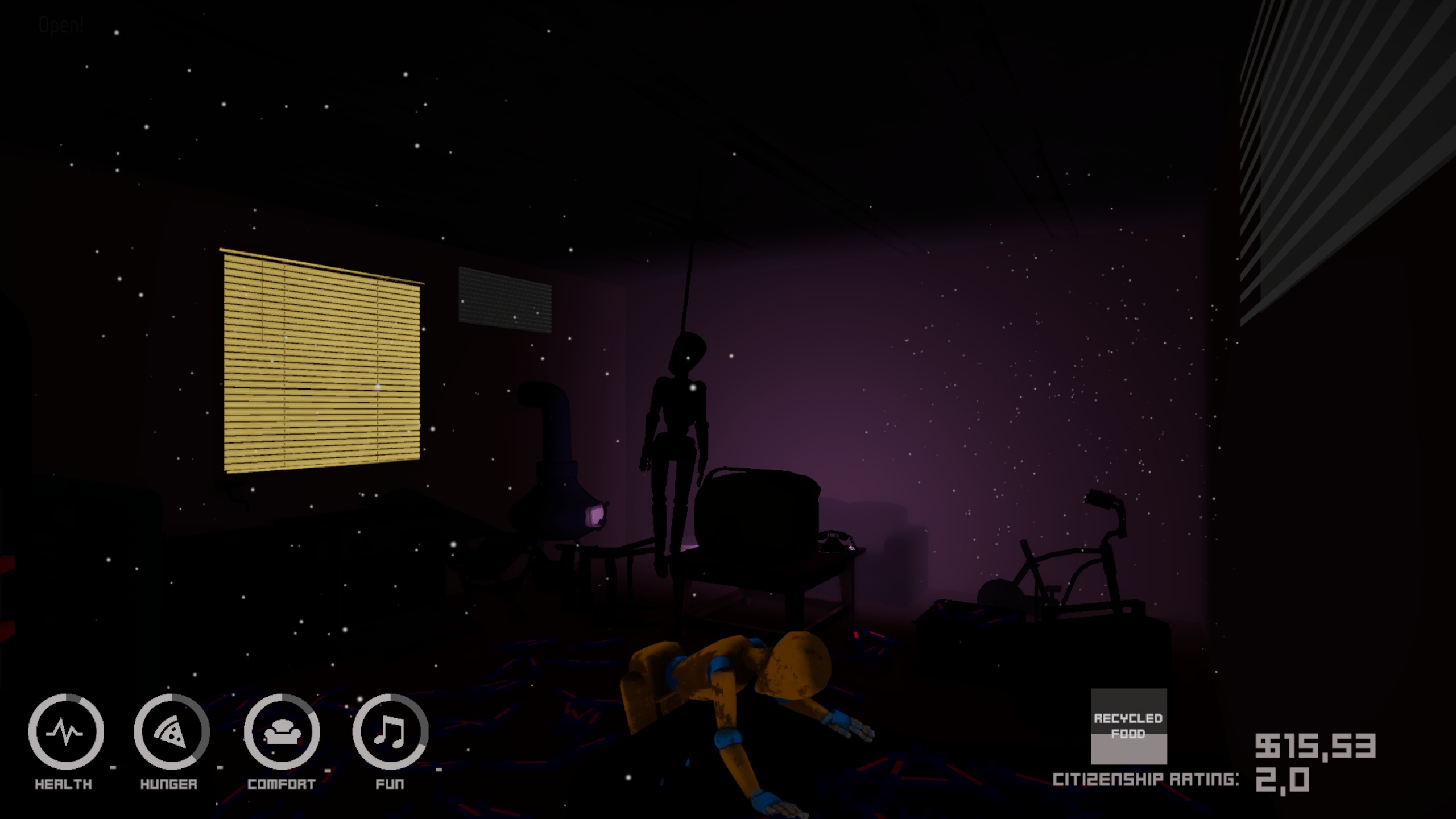
Dystopicon contains five main scenarios, a secret scenario and 14 reported endings. You can become a respected party citizen, face re-education, join the dissidents or potentially escape the apartment. You can even choose euthanasia if you want to abandon your character’s life entirely.
My first ending took approximately two hours, while three playthroughs required around six hours. The opening 20 to 30 minutes of each scenario are generally the strongest because new visitors, messages and mechanics regularly appear. Later, however, the stream of meaningful events slows down. You can spend considerable time watching television and maintaining your needs while waiting for the next important development.
Escaping requires $500, turning it into a particularly lengthy objective. Other endings have obscure requirements that are difficult to understand without checking the Steam achievements. Learning that a specific outcome depended on an action I did not know was significant, made repetition feel less like deliberate commentary and more like wasted time.
The lack of a conventional save system makes this worse. If you quit during a run, you cannot simply return to the same moment later. That is especially unfortunate for a game in which long periods can consist of repeating an already-solved routine.
Dystopicon successfully uses absurdity to discuss automation, capitalism, media addiction and the illusion of choice. Its written messages are engaging, its scenarios contain several wonderfully strange surprises, and being able to influence this society gives its commentary weight.
However, the destination frequently takes too long to reach. Repetition can reinforce the monotony of living under such a system, but that does not automatically make the routine entertaining. Once the novelty disappears, the game leans too heavily on basic resource management while withholding its most interesting narrative developments.
Dystopicon is still worth considering if you enjoy experimental narrative games and do not mind replaying familiar sequences to uncover different outcomes. Its ideas are memorable, but a shorter route toward its endings would have made its comfortable captivity considerably more compelling.
Dystopicon is an imaginative and memorable narrative experiment with sharp social commentary, engaging world-building and several wonderfully absurd scenarios. Its strongest moments come from the tension between obedience, survival and rebellion, as well as the strange events that interrupt the player’s controlled routine.
Ending Thoughts
Review copy provided by the publisher
After showing me Prospera at Gamescom 2026, Toplitz Productions' Mathias Oertel moved to a very different kind of settlement builder.…
![[GAMESCOM 2026] Prospera Preview – Production, Prosperity and Victorian Industry](https://www.indie-games.eu/wp-content/uploads/2026/09/Prospera-09-21-26-5-1024x576.jpg)
At Gamescom 2026, I met with Toplitz Productions' Mathias Oertel for a guided presentation of two upcoming games. One of…
Golden Swirl inventive card combat carries the experience, but repetitive rooms, weak upgrades and excessive dialogue hold it back.
![[GAMESCOM 2026] Wilderdark Preview – Ambitious Dinosaur Horror Game That Still Has Plenty to Prove](https://www.indie-games.eu/wp-content/uploads/2026/09/Wilderdark-1024x576.jpg)
Dinosaur survival horror game Wilderdark has one of those premises that immediately makes you wonder why more games have not…
![[PREVIEW] Tiny Metal 2 – Strategy Game That Wants You to Learn From Every Mistake](https://www.indie-games.eu/wp-content/uploads/2026/09/Tiny-Metal-2-1024x576.jpg)
I rarely enjoy discovering that my opening strategy was completely wrong, but Tiny Metal 2 made that process one of…
![[PREVIEW] Remothered: Red Nun’s Legacy – Ambitious Survival Horror That Needs More Polish](https://www.indie-games.eu/wp-content/uploads/2026/09/Remothered-Red-Nuns-Legacy-4-1024x576.jpg)
Remothered: Red Nun’s Legacy has a gripping atmosphere and promising survival tools, but its repetitive hiding and rough visuals need…
The Alighieri Circle: Dante’s Bloodline is difficult to recommend beyond players who are especially interested in Dante or enjoy solving…
Orc Incremental offers satisfying progression, entertaining totem combinations and enough content to justify its affordable price.
![[GAMESCOM 2026] Chronoscript: The Endless End Preview – Beautiful Pages Hide Deliberate Combat](https://www.indie-games.eu/wp-content/uploads/2026/09/Chronoscript-The-Endless-End-1-1024x576.jpg)
Chronoscript: The Endless End stands out from other Metroidvanias by blending 2D manuscript worlds with exploration inside a 3D manor.
![[GAMESCOM 2026] MegaGum Preview – Combat Hits Hard in This Sticky Platforming Adventure](https://www.indie-games.eu/wp-content/uploads/2026/09/MegaGum-09-09-26-5-1024x576.jpg)
MegaGum combines hard-hitting combat, varied weapons and Gum-powered platforming in a promising Gamescom 2026 demo.
![[GAMESCOM 2026] Delphinium Preview – Cozy Routine Mixed With Enjoyable Minigames](https://www.indie-games.eu/wp-content/uploads/2026/03/Delphinium--1024x665.jpg)
Delphinium mixes cozy farming, exploration and relationships with enjoyable fishing, cooking and forging minigames in its Gamescom 2026 demo.
Lady Death: Demonicron looks the part, but underneath its excellent comic-book exterior is a clunky and painfully short brawler.
![[GAMESCOM 2026] Tomb Raider: Legacy of Atlantis Preview – Expands the Original Without Losing Its Identity](https://www.indie-games.eu/wp-content/uploads/2026/09/tomb-raider-legacy-of-atlantis-06-02-26-1-1024x576.jpg)
Tomb Raider: Legacy of Atlantis brings Lara back to her roots, but its Gamescom 2026 showing proved this is far…
![[GAMESCOM 2026] Clive Barker’s Hellraiser: Revival Preview – Ready to Open the Box](https://www.indie-games.eu/wp-content/uploads/2026/09/Clive-Barkers-Hellraiser-Revival-08-30-26-1-1024x576.jpg)
Hellraiser: Revival preserves the franchise’s sex, gore and psychological horror while delivering approachable survival-horror gameplay.

Swan Song creates a peaceful and forgiving puzzle space without removing the challenge that makes solving a difficult puzzle rewarding.
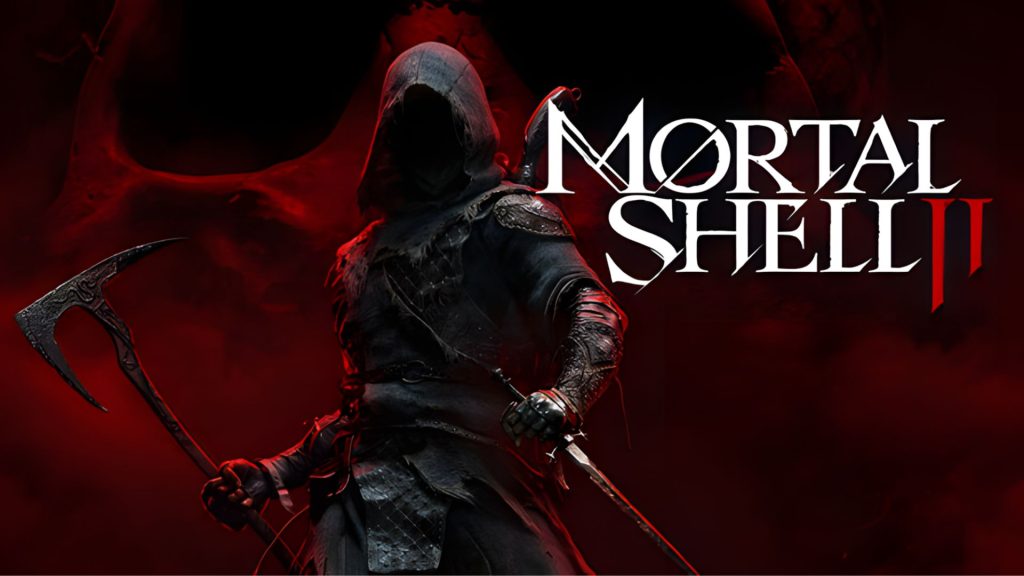
Mortal Shell II starts brilliantly but grows repetitive and exhausting, while remaining a rewarding and ambitious Soulslike sequel.
![[GAMESCOM 2026] Terranigma Preview – A Lost SNES Classic Returns in 2027](https://www.indie-games.eu/wp-content/uploads/2026/08/Terranigma-1-1024x576.jpg)
After more than three decades of limited availability, Terranigma is returning in 2027. We played its enhanced re-release at Gamescom…

Reading another person’s mind is often presented as a desirable superpower, but Sister Other Paranoia immediately understands why it could…
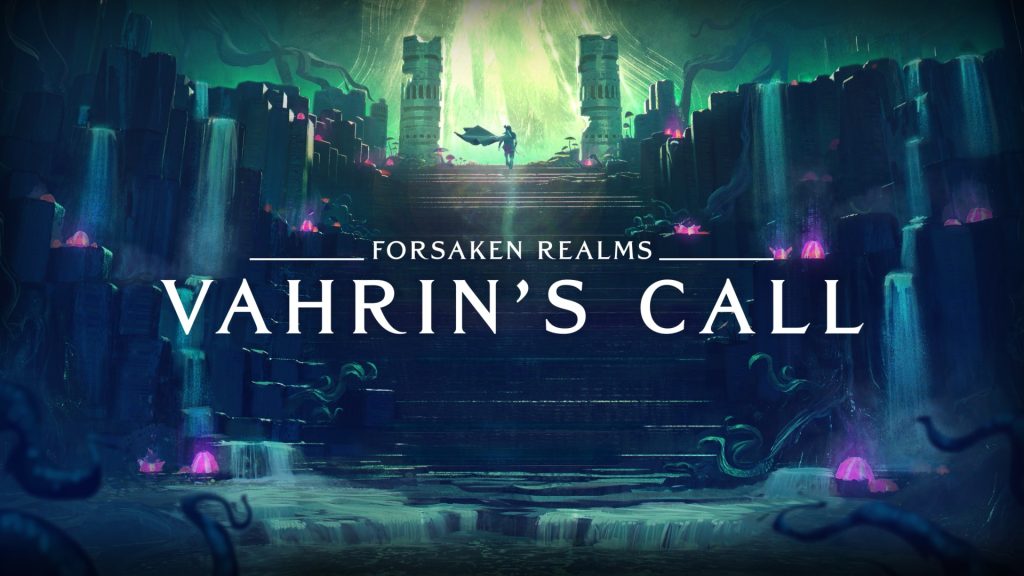
Forsaken Realms: Vahrin’s Call is exactly the kind of ambitious, slightly clumsy fantasy RPG that used to be far more…
![[Early Access] 2nd EVE – Sci-Fi Action RPG That Lacks a Sense of Stakes](https://www.indie-games.eu/wp-content/uploads/2026/08/2ND-EVE-1024x576.jpg)
2nd Eve is a space-set action RPG in which we strive to save humanity.
