
If you enjoy independent indie game coverage, consider supporting Indie-Games.eu on Patreon. It helps keep the site independent.
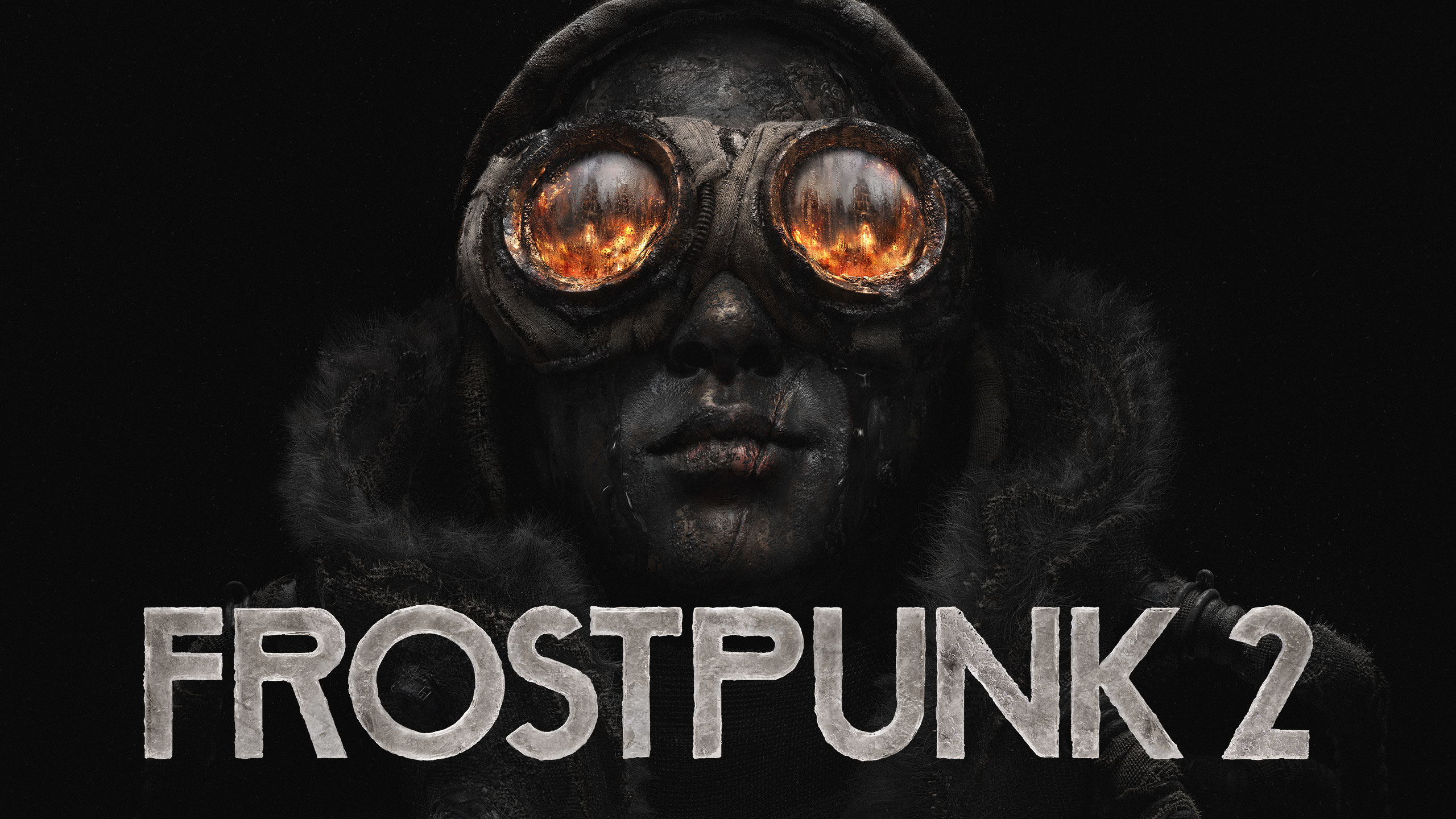
Frostpunk 2 is an ambitious sequel to the 2018 hit by 11 bit Studios, a game that redefined the city-building genre through its brutal survival mechanics. The story takes place three decades after the apocalyptic Great Frost, and you step into the shoes of the administrator of New London, tasked with guiding the massive metropolis through a frozen hellscape. The captain is dead, coal has been replaced by oil furnaces, and survival has given way to expansion, factional conflicts, and social evolution. Instead of fighting for survival one building at a time, the game offers a broader, district-focused vision, filled with political intrigue and moral uncertainty.

In the original Frostpunk, the focus was on the smallest of details, where every tent and pile of coal carried personal weight, and survival depended on small decisions. Frostpunk 2, however, broadens the perspective, shifting the focus to managing a larger system where districts and policies shape your legacy. The first game’s intimate approach made every loss feel painful (like the freezing of a child), while the sequel’s more detached model (where death becomes just a statistic) sacrifices emotional impact in favor of broader strategy. It’s a bold change, but not everyone will appreciate this decision.
In Frostpunk 2, each hexagonal district has its own function: residential, industrial, food-related, or extraction-based. You can upgrade them with hubs like hospitals or prisons. To progress, you break through the ice to conquer new areas, manage resources like coal, oil, food, and goods, and balance needs such as warmth, hunger, crime, and cleanliness. Time passes quickly, with weeks changing in seconds, reflecting the scale of a city that now houses tens of thousands of people. Exploration adds depth: you send teams into the frozen wilderness, establish supply routes, and build colonies that send resources back home.
However, with the larger scope comes greater complexity, and this is where problems arise. The council system introduces a political dimension, with factions voting on laws every 10 weeks, and you must negotiate, bribe, or manage groups like the Stalwarts and Pilgrims. It’s a smart addition that shows how messy democracy can be: you can promise a factory to win votes, or face protests if you break your word. But this system doesn’t allow for relaxation: constant pop-up windows, faction demands, resource shortages, and random events turn city management into an endless crisis. It feels like micromanagement dressed up as macro-management. Even with various post-launch updates, some parts still feel exhausting for players.

In Frostpunk 2, technology replaces the original, simple workshop upgrade system with a broad research system influenced by factions. Gone is the uniform tech tree from Frostpunk, where you gradually unlocked the efficiency of sawmills or the range of heaters. Instead, Frostpunk 2 offers over 100 research options spread across multiple idea trees (heating, resources, society, city), each tied to the ideology of a specific faction (Stalwarts for automation, Frostlanders for sustainability).
Research is initiated using Heatstamps (currency) and progresses through research institutes built within districts. Laws and technology are closely intertwined, often requiring Council approval to bring an idea to fruition, creating political obstacles. Compared to Frostpunk’s quick upgrades focused on survival, technology in Frostpunk 2 is a long-term investment that shapes New London’s identity over decades. However, due to the sheer number of elements to track and control, the research process often feels chaotic and random. With so many factors influencing decisions and the constant pressure to focus on survival, the technology system frequently detracts from the enjoyment of the game.
But that’s not the biggest issue. The game starts off fun, but in the middle and later stages, it becomes too repetitive. It tries to maintain tension, but no matter what you do, you’re always on the edge of survival. While this creates a sense of urgency, it can eventually become frustrating. Additionally, Frostpunk 2 doesn’t provide clear enough guidance for its complex mechanics. The five-chapter campaign serves as a tutorial, but it overwhelms players with districts, factions, and tech trees without clear explanations.

In the early game, you start with a simple city: residential, extraction, and industrial districts, along with a small research institute. Technological options are limited but essential: basic heating (like oil pumps replacing coal), resources (e.g., expanding sawmills for wood), and society (e.g., shift labor laws).
Research takes several weeks and costs a small amount of Heatstamps (50-100) and workers. Factions already make demands at this stage, such as better housing or more efficient fuel consumption, forcing you to choose your development path. Frostbreaking (ice clearing) opens up new space for growth, but your technology choices determine what you can build next.
In the mid-game, your city expands, with more districts, one or two colonies, and a second research institute. The tech tree broadens: heating now offers options like coal liquefiers (turning coal into oil) or wind turbines (sustainable heating sources). Resources branch into automation (mechanized sawmills) or recycling (waste recovery). Society divides between Order (guard units) and Equality (communal housing). Factions also strengthen their influence: Stalwarts demand factories, Pilgrims advocate for mobility, and unlocking new technologies often requires their votes or resources like Prefabs (manufactured goods).
In the late game, New London becomes a massive city with vast districts, numerous colonies, and fully upgraded research institutes. High-tier technological options become available: heating enables nuclear reactors or terraforming machines, resources offer endless mining or synthetic materials, while social technologies introduce extreme laws like full automation or collective labor. Research becomes expensive (800-1500 Heatstamps), and factional struggles peak — the Stalwarts may try to seize control of the entire technology system, potentially sparking rebellions if you refuse.

The campaign spans five chapters, serving both as a narrative experience and a tutorial for Frostpunk 2’s mechanics. Each chapter has specific story-related objectives but allows room for experimentation. Utopia Builder is a sandbox mode that enables the creation of custom cities without narrative constraints. Unlike the linear progression of the campaign, in this mode, you choose a map, set the difficulty (resource availability, frequency of Whiteout storms), and build from scratch.
It offers between 40 and 60+ hours of gameplay, and this is where the game truly shines: diverse maps, unlimited technology, and self-set goals are perfect for strategy lovers. Maps like Rift or Wasteland feel more vibrant thanks to unique elements such as bridges or ruins, making them far more interesting than the static circles in the original Frostpunk.
Utopia Builder features seven maps, each with its own special characteristics. For example, Crater is a large resource-rich map, ideal for beginners. On the other hand, Dreadnought is a smaller map with an abundance of oil but a lack of other resources, making the game significantly harder. The variety encourages experimentation, keeping the game fun for a long time. Frostpunk 2 also supports mods, which you can easily download via Steam Workshop. The game even includes a built-in mod browser for quicker access. While mods don’t radically alter the game, they add useful adjustments, like improved controls or a free camera, making the experience even more immersive.
Visually, Frostpunk 2 looks stunning. Built on Unreal Engine 5, it abandons the rough, detailed style of the original in favor of a wide, hexagonal view of New London. The city is a true dieselpunk labyrinth of rusted districts, red-hot power lines, and a smoky sky. Behind it stretches the frozen wasteland of Frostlands, full of resource deposits, abandoned cities, and colonies to conquer. When you zoom in on a district, you’ll see workers toiling or citizens freezing, which pays homage to the first game.

Frostpunk 2 is a bigger and bolder version of the first game. Instead of focusing on small survival struggles, it allows you to build a vast city in an icy wasteland. The game looks spectacular thanks to Unreal Engine 5, and it introduces new features like district management, political factions, and exploration of the frozen expanses beyond your city. You’ll face tough technological decisions, connect with colonies, and make difficult moral choices. The Utopia Builder mode offers seven different maps to keep you engaged. With 40-60 hours of gameplay, it’s perfect for players who enjoy complex strategies. It’s clear that 11 bit Studios has poured a lot of passion into this frozen world.
However, the sequel loses something important, what made the first game special. By shifting the focus to managing the entire city, the personal connection is lost, and citizens feel more like numbers than people. Tough decisions, like child labor or starvation, no longer have the same emotional impact. The game overwhelms you with information: districts, factions, multiple types of resources, and the tutorial doesn’t explain things clearly enough. While the first game built tension to dramatic conclusions (like surviving the final storm), the story in this sequel feels thin and simple… it just ends. Even after updates that fixed certain bugs, the game still suffers from overloaded systems that can frustrate players.
| Pros | Cons |
|---|---|
| Beautiful atmosphere, visuals, and music. | Steep learning curve for mechanics. |
| Excellent replayability. | Overwhelming amount of systems and information. |
| Political and factional depth. | Loss of personal connection with citizens. |
| Many new features compared to the first game. | Blend of micro and macro management won’t appeal to everyone. |
Review copy provided by the publisher
![[EARLY ACCESS] Far Far West – Co-Op Shooter I Didn’t Expect to Love This Much](https://www.indie-games.eu/wp-content/uploads/2026/04/Far-Far-West-300x169.jpg)
There is a reason why Far Far West is currently sitting at overwhelmingly positive reviews on Steam and has already…
Retro Rewind - Video Store Simulator latest update that adds repair stations, street sign and more to the game, could…
Vultures: Scavengers of Death is a turn-based tactical strategy game heavily inspired by classic survival horror.
![[Early Access] No Stone Unturned – A fowl play](https://www.indie-games.eu/wp-content/uploads/2026/05/Unturned-1-300x169.jpg)
In No Stone Unturned, we play as Detective Cox, a squirrel with amnesia who investigates a murder of a chicken…
Outbound is a mediocre, shallow cozy game with a beautiful presentation and strong concept, but one that fails to deliver…
![[PREVIEW] L’Agence – The Hearts of Paris](https://www.indie-games.eu/wp-content/uploads/2026/05/LAgence-naslovna-300x169.jpg)
L'Agence - The Hearts of Paris already feels like one of those indie games you randomly discover and end up…
Memoriapolis has just received its massive “Banners and Wonders” update, released alongside the game’s one-year anniversary.
Demon Lord: Just a Block initially felt like another roguelike I would spend a few hours with before eventually moving…
Wardrum is a flawed but genuinely creative roguelite, one that rhythm game and tactical RPG fans may still find worthwhile,…

Motorslice blends Prince of Persia-style platforming with Shadow of the Colossus-like boss encounters, throwing you into a world filled with…

Even in early access, Dead as Disco is an extremely fun mix of rhythm, action, and brawler gameplay.
Dungeon Clawler is a roguelike deck-builder built around heavy RNG, but instead of leaning fully into chaos or strict balance,…

Bus Bound sits somewhere between a driving simulator and light management game, but leans much more toward the simulation side,…
InKONBINI is for players who want something slow and introspective and less about managing a store and more about understanding…

Reptilian Rising is a thoughtful, cohesive tactics game that fully commits to its identity.
![[PREVIEW] Duo Quest – This Game Tests Your Friendship](https://www.indie-games.eu/wp-content/uploads/2025/12/Duo-Quest-300x169.jpg)
Duo Quest highlights everything great about the indie scene, though its chaotic gameplay might just put your friendships to the…
Cinderia is a really nice surprise, an action roguelite with tight gameplay that doesn't reinvent the genre but executes its…

Yu-Gi-Oh! Legacy of the Duelist: Link Evolution is probably the best single-player Yu-Gi-Oh! game we have right now.
StarRupture got its first major update about two weeks ago, and it pretty much changes everything you knew about the…

Vampire Crawlers doesn’t reinvent the genre, but it doesn’t need to. For the price, the amount of content, and how…
There is a reason why Far Far West is currently sitting at overwhelmingly positive reviews on Steam and has already…
Retro Rewind - Video Store Simulator latest update that adds repair stations, street sign and more to the game, could…
Vultures: Scavengers of Death is a turn-based tactical strategy game heavily inspired by classic survival horror.
In No Stone Unturned, we play as Detective Cox, a squirrel with amnesia who investigates a murder of a chicken…
Outbound is a mediocre, shallow cozy game with a beautiful presentation and strong concept, but one that fails to deliver…
L'Agence - The Hearts of Paris already feels like one of those indie games you randomly discover and end up…
Memoriapolis has just received its massive “Banners and Wonders” update, released alongside the game’s one-year anniversary.
Demon Lord: Just a Block initially felt like another roguelike I would spend a few hours with before eventually moving…
Wardrum is a flawed but genuinely creative roguelite, one that rhythm game and tactical RPG fans may still find worthwhile,…
Motorslice blends Prince of Persia-style platforming with Shadow of the Colossus-like boss encounters, throwing you into a world filled with…
Even in early access, Dead as Disco is an extremely fun mix of rhythm, action, and brawler gameplay.
Dungeon Clawler is a roguelike deck-builder built around heavy RNG, but instead of leaning fully into chaos or strict balance,…
Bus Bound sits somewhere between a driving simulator and light management game, but leans much more toward the simulation side,…
InKONBINI is for players who want something slow and introspective and less about managing a store and more about understanding…
Reptilian Rising is a thoughtful, cohesive tactics game that fully commits to its identity.
Duo Quest highlights everything great about the indie scene, though its chaotic gameplay might just put your friendships to the…
Cinderia is a really nice surprise, an action roguelite with tight gameplay that doesn't reinvent the genre but executes its…
Yu-Gi-Oh! Legacy of the Duelist: Link Evolution is probably the best single-player Yu-Gi-Oh! game we have right now.
StarRupture got its first major update about two weeks ago, and it pretty much changes everything you knew about the…
Vampire Crawlers doesn’t reinvent the genre, but it doesn’t need to. For the price, the amount of content, and how…
