
Denshattack! – Tony Hawk Meets Jet Set Radio on High-Speed Trains
Denshattack! blends Tony Hawk, Jet Set Radio, and Japanese train culture into one of the year's most creative and unforgettable…


If you enjoy independent indie game coverage, consider supporting Indie-Games.eu on Patreon. It helps keep the site independent.
Cozy farming and life sims have a habit of eating up huge chunks of your time. The gameplay loops are comforting, routines slowly take over your days, and before you know it you’re planning your real-life schedule around virtual crops. Because of that, it usually takes something special for a new entry to stand out without feeling like a remix of better-known ideas. Starsand Island manages that not by reinventing the wheel, but by understanding exactly what kind of player it’s trying to appeal to.
If you’ve enjoyed games like My Time at Sandrock, Stardew Valley, or even Rune Factory, Starsand Island will feel familiar, but it nudges the formula in a slightly different direction, mixing modern ideas with light fantasy elements in a way that’s easy to sink into.
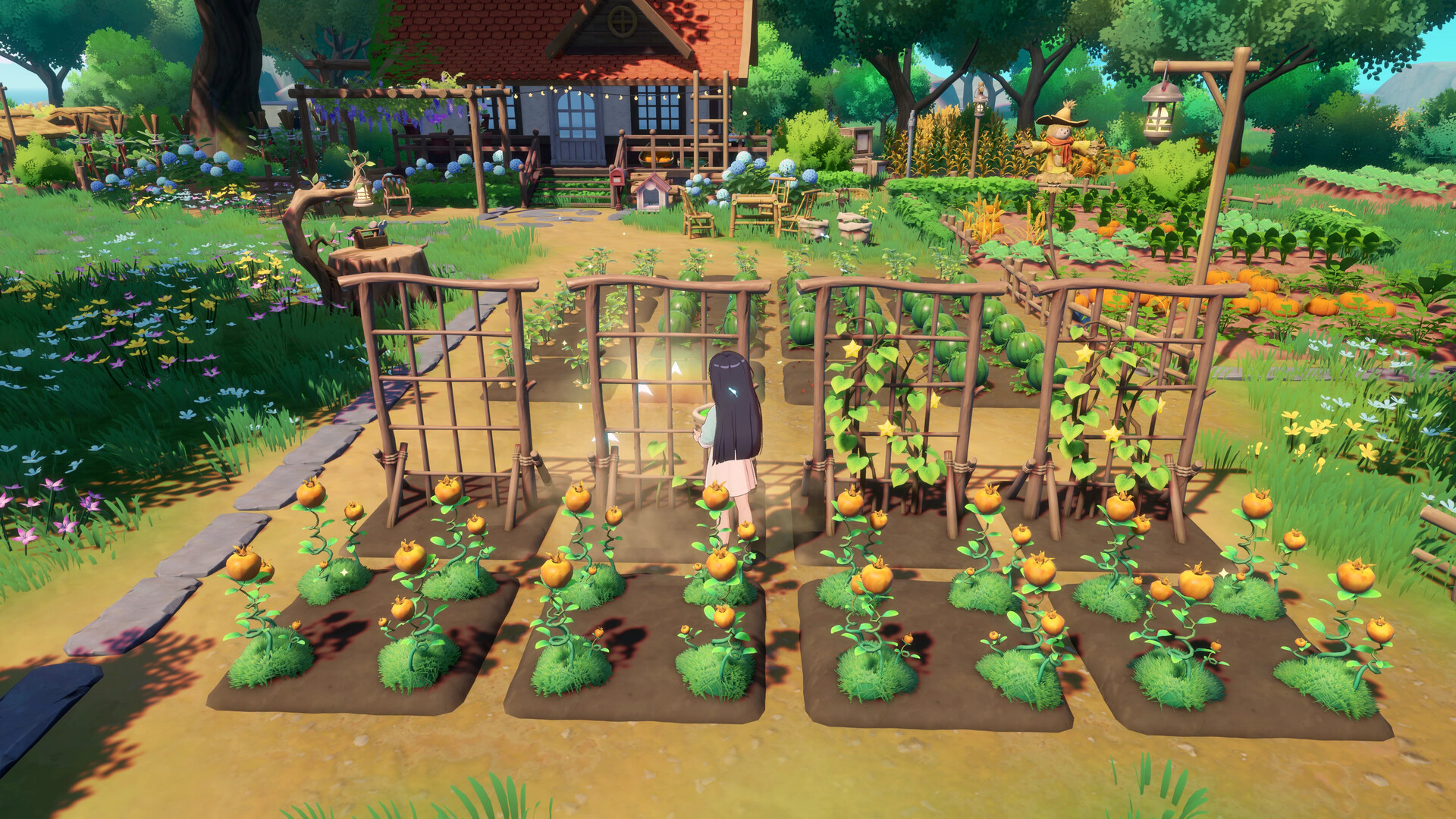
I haven’t finished the game yet, but even so, it’s very clear there are well over 100 hours here and that’s in Early Access. Between five main professions to progress through, a massive dungeon-like area to explore, and a large cast of characters to meet, there’s no shortage of things to do. That said, there is one thing that genuinely started to wear on me: the amount of backtracking.
I really don’t enjoy being sent from one end of the map to the other, only to be told to immediately go back where I just came from to finish a simple quest. Vehicles and skateboards help make this more bearable, but with so many quests and daily commissions, the constant travel can still become frustrating. Thankfully, the map isn’t quite as massive as it initially feels. It’s large, yes, but crossing it doesn’t take too long, which softens the impact of all that running around.
In terms of tone, Starsand Island leans heavily into escapism. Its anime-inspired presentation, gentle pacing, and focus on atmosphere over spectacle make it feel like a quiet retreat rather than a checklist-driven game. From the very start, it’s clear what the developers are aiming for. You return to the island after years away, not as a complete outsider, but as someone who once belonged there. The story itself is intentionally low-stakes. There are no dramatic twists or looming disasters, just a focus on reconnecting with the island, its people, and a slower way of life.
That philosophy carries over into the gameplay. As mentioned, Starsand Island revolves around five main professions: farming, ranching, fishing, crafting, and exploration. It sounds like a lot, but the game never pressures you to juggle everything at once. These paths exist side by side, not as obligations but as options. You’re encouraged to experiment, not optimise.
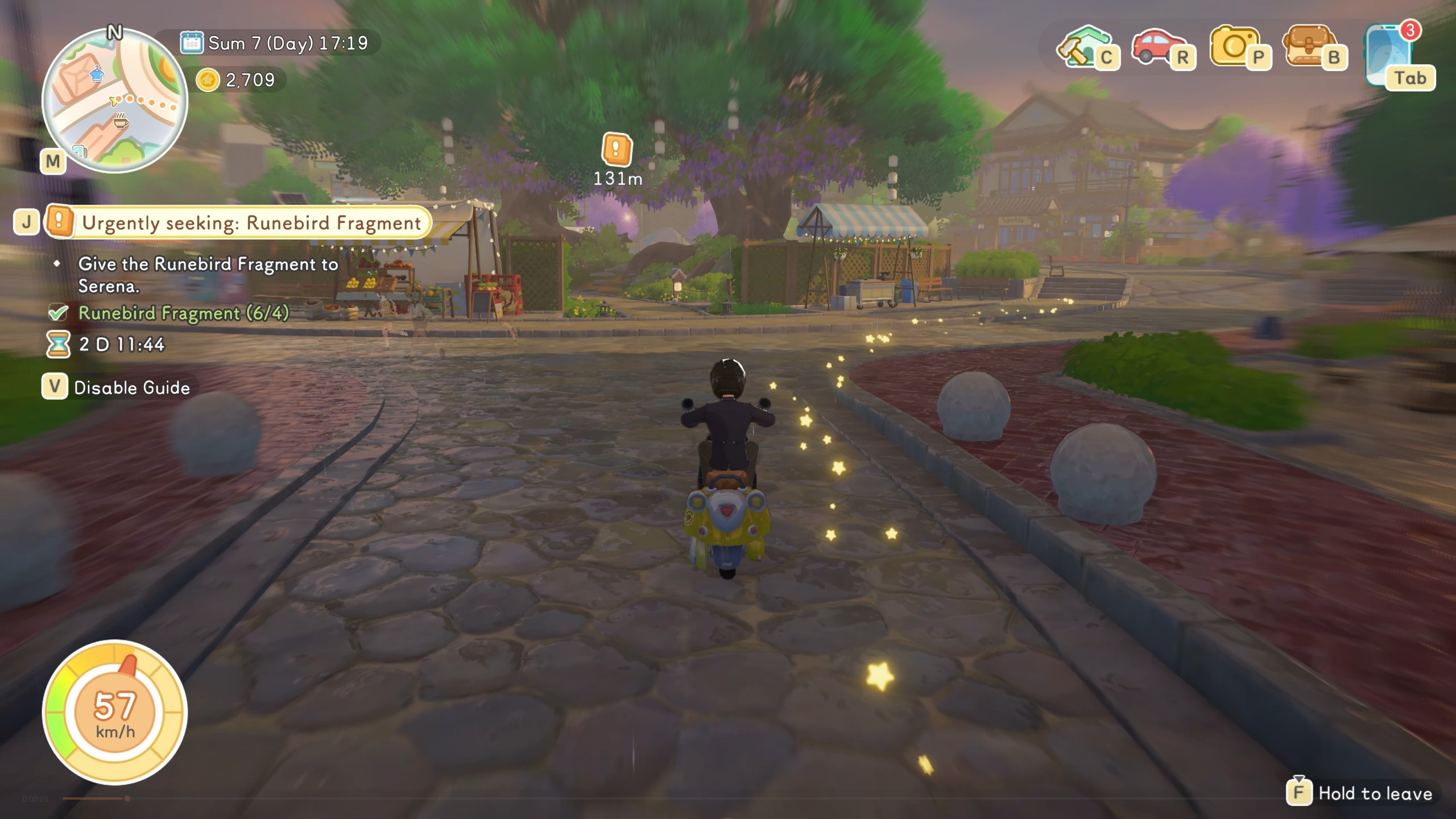
Technically, the game nudges you toward crafting first, and honestly, you’ll want to do that. Crafting unlocks a lot of systems tied to other professions and makes quest completion far smoother. Most tasks don’t demand much time, aside from the occasional wait for crops to grow, and switching between professions feels natural rather than overwhelming.
Each profession has more depth than it initially lets on. Ranching revolves around raising animals like chickens, ducks, rabbits, and even deer, complete with feeding, grooming, and bonding mechanics that reward patience. Fishing is familiar but relaxed, with boat routes unlocking new species and locations, which keeps it from feeling like filler. Farming will feel instantly comfortable to genre veterans and remains a reliable source of income. Crafting ties everything together, unlocking better tools, furniture, and quality-of-life upgrades as you progress.
Exploration deserves special mention thanks to the Moonlit Forest, a secondary area that acts as Starsand Island’s take on a dungeon. Combat here is deliberately mild, more of a simple interruption than a real test of skill. The focus is on gathering rare materials, solving light environmental puzzles, and slowly opening up new routes. That said, combat in its current state feels underwhelming. There’s no real challenge, no pressure, and very little reason to engage with it seriously. It often feels like an afterthought rather than a core part of the experience, and at times it doesn’t quite fit the otherwise peaceful world of Starsand Island.
There is a stamina system in place, draining as you do various activities like mining, chopping wood, or tilling land among others, but it’s easily managed by eating, resting, or sleeping. Movement across the island is another pleasant surprise. Between skateboards, scooters, vehicles, boats, and even rideable animals, getting around stays fun rather than tedious. It’s a small detail, but it makes daily routines feel playful instead of repetitive.

Social systems follow the same relaxed design philosophy. The island is full of villagers and animals, each with affection levels that increase through conversation, gifts, and quests. Giving someone the “wrong” gift doesn’t punish you, and there’s no aggressive calendar system threatening to lock you out of relationships.
Romance exists, but it’s entirely optional and never pushed on the player. NPCs also give back over time, whether through gifts, new dialogue, or subtle shifts in attitude, which helps relationships feel mutual rather than transactional. That said, it takes time to notice these changes, and romance, while present, never really goes particularly deep.
Of course, Starsand Island’s Early Access status is impossible to ignore. Festival events can break in many ways, from activities failing to load, NPCs floating mid-air, empty stalls, and invisible stages. Performance issues are also noticeable, including frame drops, screen tearing and long loading times, which feel rough for a game of this scope. Localization is another weak point. Menus and dialogue occasionally switch languages, and some English text feels awkwardly translated.
Character writing may also be divisive. While the overall aesthetic leans heavily into anime influences, some characters push exaggerated tropes a bit too far. Idol-like dialogue, excessive stuttering, and overly cute speech patterns don’t always land, especially given that these characters are meant to be adults.

Even without completing everything, it’s easy to see how much content is already here. With focused play, you can fully progress through several professions while only partially touching others. There’s also a progression system that lets you upgrade each profession using star resources earned through quests and leveling up. These upgrades offer meaningful bonuses, like reducing crafting times or preventing stamina loss while working.
Visually, Starsand Island brings seasonal changes that make time passing feel tangible. Summer’s bright colors shift into warmer autumn tones, and the world remains easy on the eyes even during long sessions. Character customization is especially strong, offering fine control over colors, facial features, and small details like heterochromia and facial markings.
Despite its flaws, Starsand Island is hard to put down. Even when bugs interrupt progress or systems misfire, the core loop remains engaging. Usually I managed to fixed these problems by restarting the game. In any case, there’s always something else to work toward, another small discovery to make, or a quiet moment that makes the island feel comforting and alive. It’s a game that encourages you to slow down, stop chasing efficiency, and just exist in its world for a while.
As it stands, this title is ambitious, charming, and undeniably rough around the edges. But the potential here is real. With continued polish and refinement, this could easily become one of the standout cozy games of its generation. For now, it’s a promising Early Access experience that offers warmth, freedom, and a glimpse of something genuinely special still waiting to fully bloom.
Review copy provided by the publisher
Denshattack! blends Tony Hawk, Jet Set Radio, and Japanese train culture into one of the year's most creative and unforgettable…
If you're looking for a game that takes an incredibly simple idea and somehow turns it into something addictive, KAZ…
Cat Mail Co. charms with cozy visuals and satisfying mail sorting, but its full release doesn't quite live up to…
Forensics: Crime Scene Detective follows Aerosoft's familiar formula: an interesting simulation with decent visuals, weak optimization, and repetitive gameplay.

Foxy The First Steps is an excellent precision platformer that understands exactly what makes the genre enjoyable.

Tokyo Valkyries blends visual novel, roguelite deck-building, and fan service into a surprisingly enjoyable mix, despite few standout elements.
Moonlight Peaks refreshes the cozy farming formula with a more unique supernatural and magical approach while keeping the familiar mechanics…
The first thing that stands out about GRID 2 in 2026 has nothing to do with its handling, graphics, or…
HYPERWIRED is a top-down roguelike where your ship drags a giant plug, powering sockets to complete objectives and progress through…
![[PREVIEW] 70s-style Robot Anime Geppy-X – This Game Pretends It’s a Real 1970s Anime](https://www.indie-games.eu/wp-content/uploads/2026/06/70s-Style-Robot-Anime-Geppy-X-Preview-1024x576.jpg)
As I continue my Steam Next Fest journey, I stumbled upon a game I honestly wasn't expecting to enjoy as…
![[PREVIEW] Edge of Memories – One of My Biggest Steam Next Fest Disappointments](https://www.indie-games.eu/wp-content/uploads/2026/06/Edge-of-Memories-Preview-1024x576.jpg)
Right now, Edge of Memories feels like a game with good ideas that hasn't yet figured out how to turn…
![[PREVIEW] Penguin Colony – Lovecraftian Horror Meets Antarctic Exploration](https://www.indie-games.eu/wp-content/uploads/2026/06/Penguin-Colony-5-1024x576.jpg)
It is surprisingly difficult to explain Penguin Colony, yet incredibly easy to become fascinated by.

Magical Princess is one of those games that immediately reminded me of the classic Princess Maker series, but it does…
![[PREVIEW] Mortal Shell II – Difficult, Fair, and Surprisingly Polished](https://www.indie-games.eu/wp-content/uploads/2026/06/Mortal-Shell-II-1-1-1024x576.jpg)
Mortal Shell II has opened its beta to everyone, and I have to admit, this is exactly how you showcase…
![[PREVIEW] 1666: Amsterdam – Fails to Capture the Promise of Its Reveal](https://www.indie-games.eu/wp-content/uploads/2026/06/1666-amsterdam-1024x576.jpg)
Having just recently been revealed during Summer Game Fest, 1666: Amsterdam has already received a playable prologue on Steam.
![[EARLY ACCESS] Far Far West – Co-Op Shooter I Didn’t Expect to Love This Much](https://www.indie-games.eu/wp-content/uploads/2026/04/Far-Far-West-1024x576.jpg)
There is a reason why Far Far West is currently sitting at overwhelmingly positive reviews on Steam and has already…
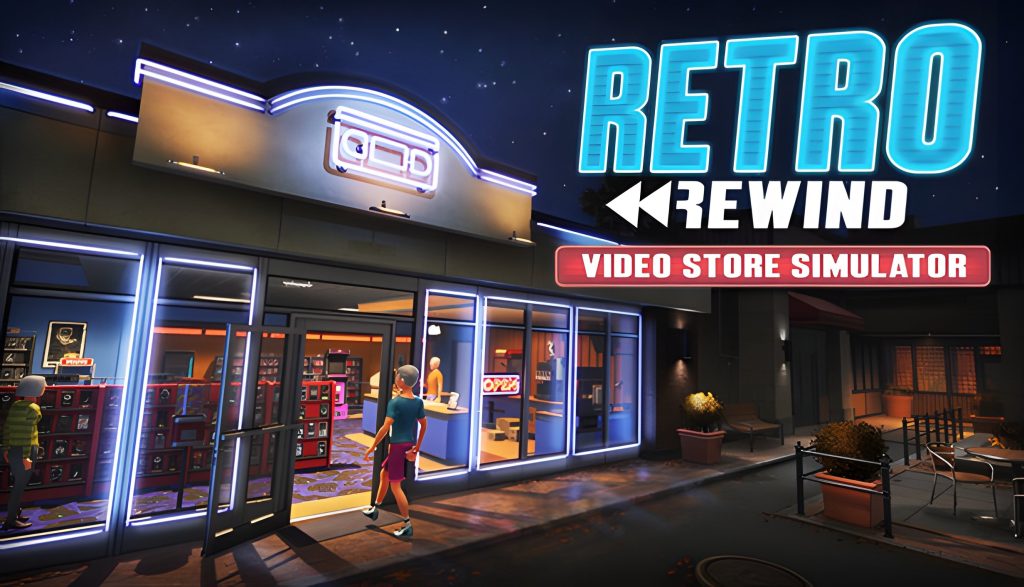
Retro Rewind - Video Store Simulator latest update that adds repair stations, street sign and more to the game, could…
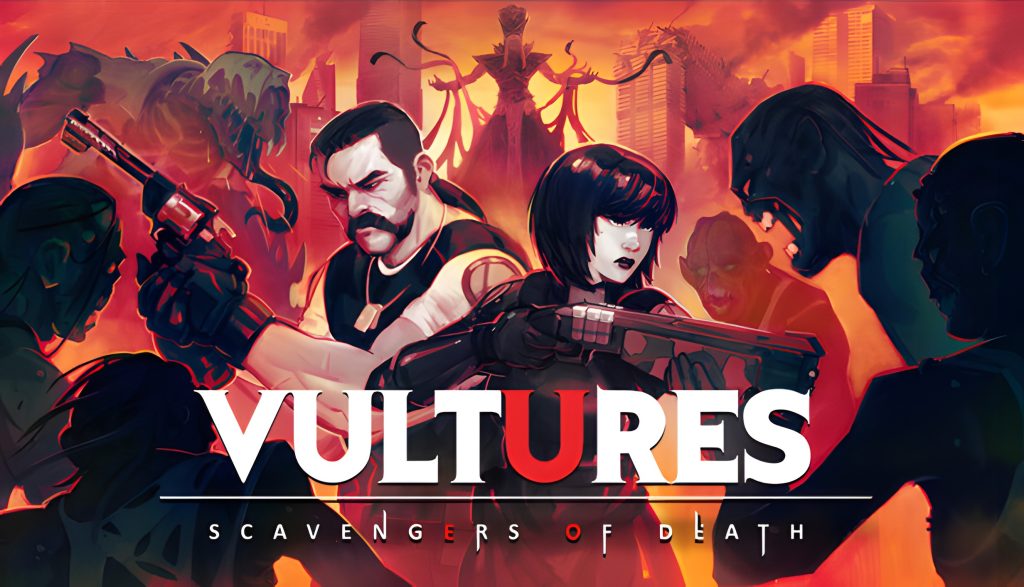
Vultures: Scavengers of Death is a turn-based tactical strategy game heavily inspired by classic survival horror.
![[Early Access] No Stone Unturned – A Fowl Play](https://www.indie-games.eu/wp-content/uploads/2026/05/Unturned-1-1024x576.jpg)
In No Stone Unturned, we play as Detective Cox, a squirrel with amnesia who investigates a murder of a chicken…
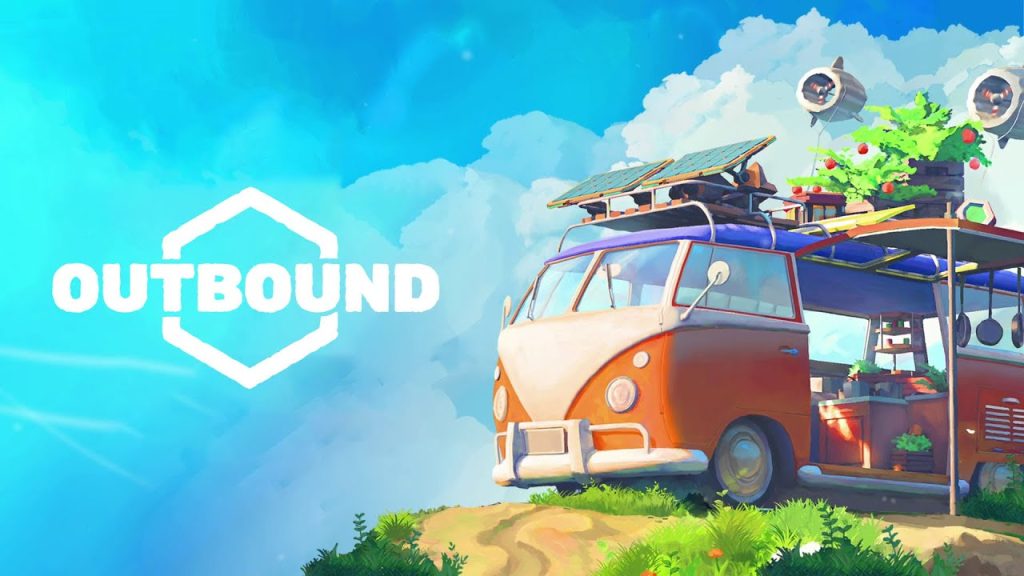
Outbound is a mediocre, shallow cozy game with a beautiful presentation and strong concept, but one that fails to deliver…
