Fire Emblem Awakening Retro Review – Unfulfilled Potential
Awakening is worth playing if you enjoy developing characters, experimenting with tactical partnerships, and shaping an army over a massive…


If you enjoy independent indie game coverage, consider supporting Indie-Games.eu on Patreon. It helps keep the site independent.
March is absolutely packed with major releases, and realistically, none of us have enough time to play everything. But over the past few days, I’ve quietly been sinking hours into something that might easily slip under the radar: AETHUS, the upcoming story-driven survival crafting game from Pawsmonaut Games.
Set in a futuristic alien world, AETHUS puts you in the role of Maeve, a former engineer of the powerful Astral Resource Corporation, who ventures alone to uncover the truth behind an abandoned mining claim. While it absolutely delivers on the sci-fi atmosphere and survival mechanics, what surprised me most is how strongly the narrative drives everything forward.
The standout feature of this game is its immersion. It completely pulls you into the world and the role of the protagonist, with your robot companion serving as a constant, helpful presence. The world itself is massive, so vast that it’s easy to get lost in everything from the great voice acting to the sheer scale of exploration. The game rewards those who dig deeper; if you don’t explore, you’ll miss out on the environmental storytelling found in journal logs and hidden side objectives. AETHUS hits the nail with open-world design, making the exploration well worth your time.
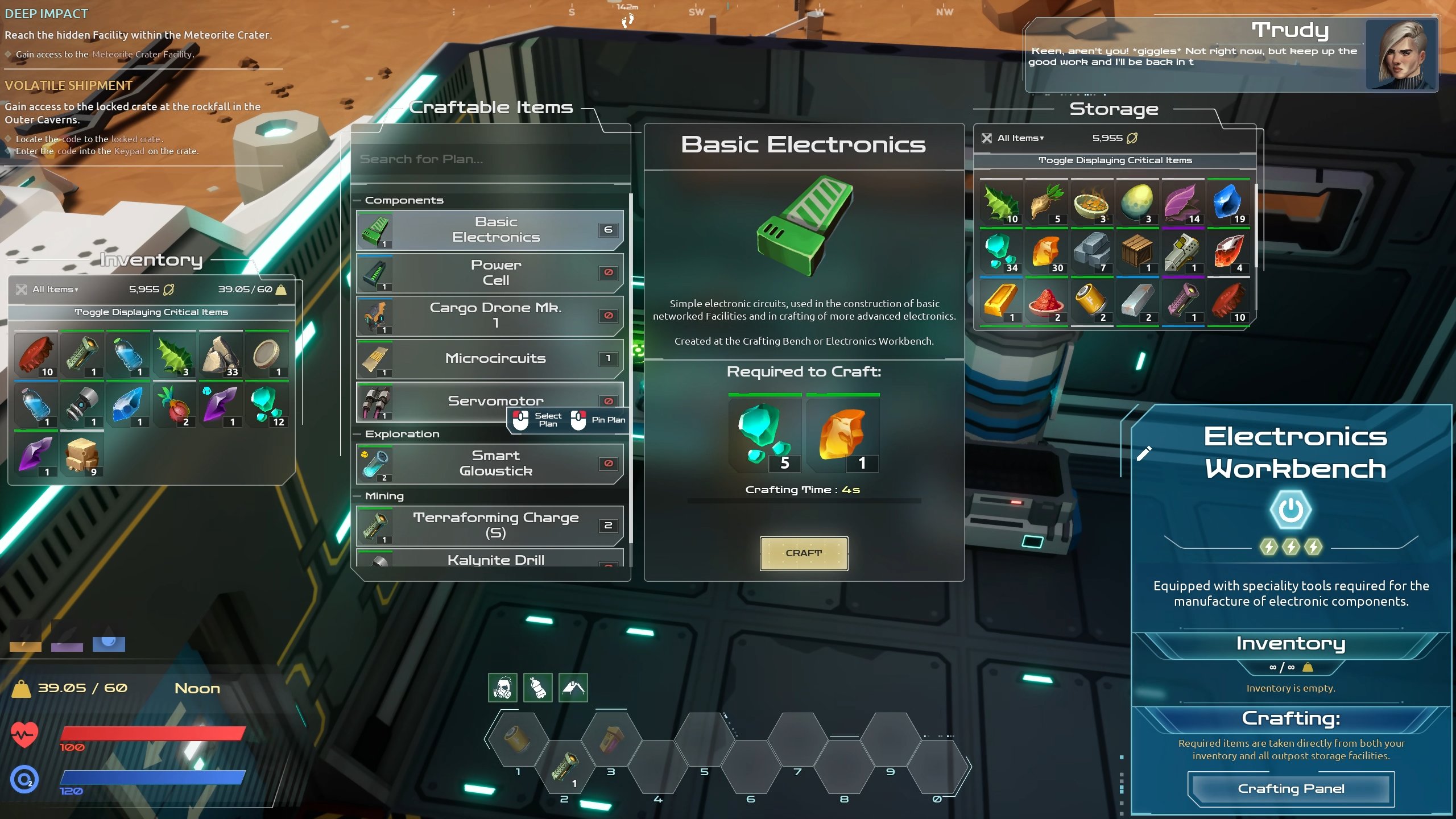
I also loved the sense of progression. You start with almost nothing, but as the story unfolds, you evolve from a small-scale survivor into the architect of a massive base. While the game has so much content it’s almost overwhelming, it never feels boring. Secondly, what really stood out is the game’s crafting and base management system. Crafting in this game revolves around a variety of facilities, each base component you build ties directly into your power system, resource storage, and food production.
What really impressed me is how natural this progression feels. You start by gathering simple materials like stones and metal scraps and as you dig deeper into the world, mining rare resources like meteorites or exotic minerals, you unlock more advanced blueprints. The trading system also plays a big role here. There’s a trading station where you sell the resources you collect during your explorations, which you can spend to buy new blueprints or upgrades. These upgrades don’t just give you fancy gadgets, they let you expand your horizons, like increasing your oxygen capacity or beefing up Roland so he can smash more resource nodes.
As you progress, you’re not just crafting for crafting’s sake, you’re shaping a fully functioning outpost. Sadly, the game is slightly lacking in the automation department. Most of it revolves around massive drilling outposts that you first need to get up and running, and only then can you deploy drones to transport the resources back to your base. I would have liked that whole process to be a bit faster. Additionally, your base can become quite complex.
You’re building multiple interconnected locations and platforms, managing your power supply, and even setting up farming. One thing I genuinely like is that certain rooms provide specific benefits, like bonuses to storage capacity or improved sleep quality, so it’s not just a matter of placing a room and being done with it. You really have to think about how everything fits together. Once you grasp the chain of crafting steps and building systems, it all feels surprisingly logical, even as the complexity ramps up.
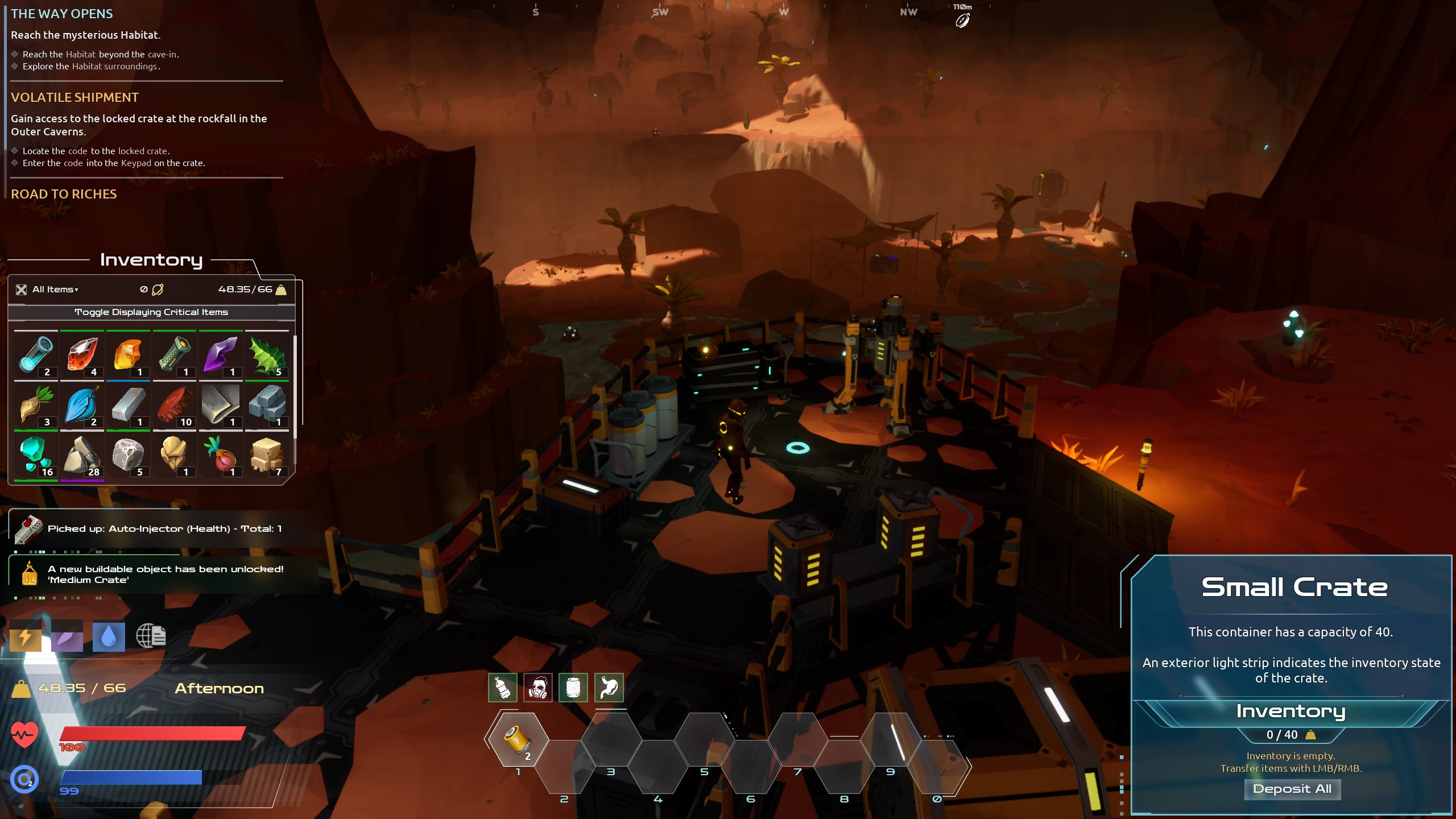
With all this sense of complexity and progression, AETHUS does have some underlying issues that can’t be ignored. Let’s start with the survival aspect. A huge portion of your time in AETHUS will be spent in the vast underground cavern systems – exploring abandoned facilities that fill the landscape. Your goal is to navigate from one point to another, but a major gameplay hurdle is oxygen. You simply can’t breathe down there.
This constant oxygen management forces you back to these scattered facilities to refill your tanks, and while that makes sense thematically, the biggest problem is the sheer amount of backtracking. This becomes a dominant chore, especially early in the game. Once you set up your main base, you put so much effort into building it, only to have to trek back and forth constantly, an issue that really drags down the pacing. I kept thinking a fast travel option or some teleportation mechanic would have been a game-changer, without it, a good chunk of your time is just spent repeating these back-and-forth trips.
Another aspect that left me a bit cold is how the survival mechanics, despite being present, fall into the background. Once you get further into the game, it does get easier, but things like hunger, thirst, and sleep feel lacking. Sure, they give you small perks, like extra carrying capacity, speed boosts, and minor stat increases, but honestly, you can completely ignore them. It’s nice that they’re there, but they never feel vital, so, if you’re skipping them, you won’t feel like you’re missing out on some core mechanic.
And finally, the lack of enemies stands out, at least in terms of direct threats. The biggest dangers you face are environmental, fall damage is brutal, and your health can plummet fast if you’re careless, especially when oxygen runs low. I never died, as I was hyper-cautious, but that fragility makes every step feel risky. Aside from those environmental hazards, the lack of real enemy variety is a bit of a missed opportunity. There’s a lot of tension in the environment, but it would have been great to see more dynamic danger.
And here I am, going on about the positives and negatives without even mentioning Roland, who plays a huge role in the game. He drives the story forward, helps mine resources for you, and even delivers them back to you. There are also plenty of smaller mechanics sprinkled throughout the game. For example, there’s terraforming, where you use explosives to clear space, and a scanner that lets you identify which materials in the environment can be mined or collected.
We can definitely distill AETHUS into three distinct parts: the early game, the mid game, and the late game. Without giving too much away, expect to spend around 30 hours, maybe more, depending on how quickly you grasp the mechanics. You might get lost at times, but it’s not because the game hides its systems, on the contrary, it steadily unveils them, and as you progress, everything becomes clearer.
In this structure, the early game is solid, it hooks you in with a sense of wonder and discovery. The late game, however, is by far the most satisfying since your base flourishes, your crafting reaches a crescendo, and every step feels purposeful. That mid-game, though, it’s a bit of a mixed bag. It’s not bad, but it’s unbalanced, especially in how much you need to collect and craft and it leans heavily on backtracking, which can drag down the pacing. Still, these chapters are well defined, and once you push past that middle slog, the game rewards you tenfold.
I can’t stress enough how gorgeous AETHUS is, it’s truly a beautiful game. The camera work is fantastic, letting you get up close in third-person or zoom out for that sweeping view of the landscapes. I won’t spoil too much, because the game’s magic lies in its gradual expansion of mechanics and biomes. From desert expanses to lush grasslands and eerie infected zones, you’ll keep finding new wonders.
If you love these kinds of sci-fi crafting adventures, AETHUS feels like a homecoming. It strikes that perfect balance, no overly complex automation, but a deep crafting system guided by a strong narrative. There are difficulty settings, too, so you can tailor the experience to your liking, whether you want a casual or a more challenging run. In conclusion, AETHUS is a beautifully crafted sci-fi adventure with a rich world, but it just needs a bit more balance, especially in exploration and travel, to reach its full potential.
Review copy provided by the publisher
Awakening is worth playing if you enjoy developing characters, experimenting with tactical partnerships, and shaping an army over a massive…
Duskfade is worth considering for players who miss colourful PS2-style action-platformers and can tolerate basic combat, floaty movement and backtracking.

Man I Just Wanna Go Home is a noir crime story with visuals from MS Paint and life-or-death choices.
![[GAMESCOM 2026] Vikings Dynasty Preview – Expands the Dynasty Formula](https://www.indie-games.eu/wp-content/uploads/2026/09/Viking-Dynasty-09-21-26-2-1024x576.jpg)
After showing me Prospera at Gamescom 2026, Toplitz Productions' Mathias Oertel moved to a very different kind of settlement builder.…
![[GAMESCOM 2026] Prospera Preview – Production, Prosperity and Victorian Industry](https://www.indie-games.eu/wp-content/uploads/2026/09/Prospera-09-21-26-5-1024x576.jpg)
At Gamescom 2026, I met with Toplitz Productions' Mathias Oertel for a guided presentation of two upcoming games. One of…
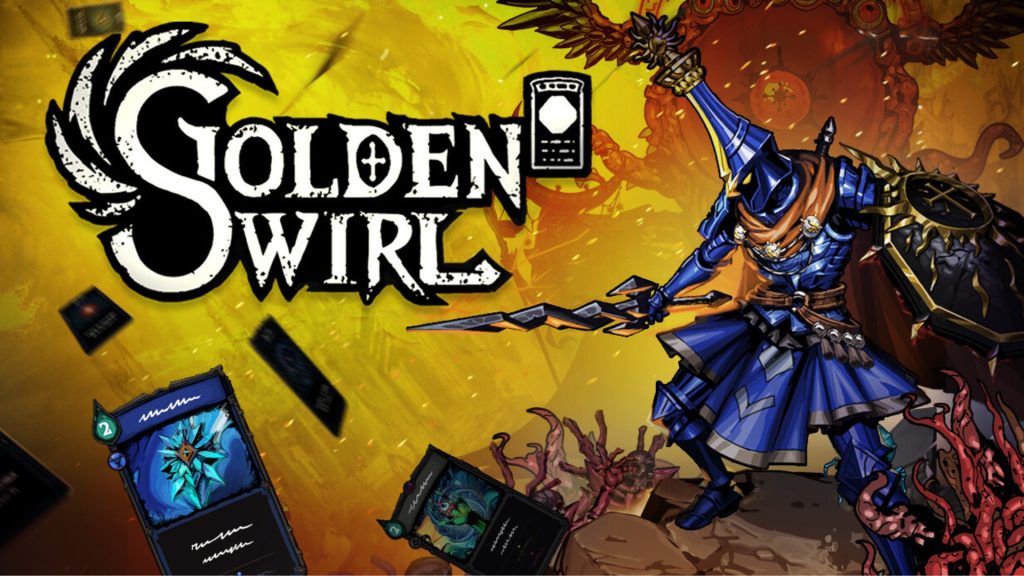
Golden Swirl inventive card combat carries the experience, but repetitive rooms, weak upgrades and excessive dialogue hold it back.
![[GAMESCOM 2026] Wilderdark Preview – Ambitious Dinosaur Horror Game That Still Has Plenty to Prove](https://www.indie-games.eu/wp-content/uploads/2026/09/Wilderdark-1024x576.jpg)
Dinosaur survival horror game Wilderdark has one of those premises that immediately makes you wonder why more games have not…
![[PREVIEW] Tiny Metal 2 – Strategy Game That Wants You to Learn From Every Mistake](https://www.indie-games.eu/wp-content/uploads/2026/09/Tiny-Metal-2-1024x576.jpg)
I rarely enjoy discovering that my opening strategy was completely wrong, but Tiny Metal 2 made that process one of…
![[PREVIEW] Remothered: Red Nun’s Legacy – Ambitious Survival Horror That Needs More Polish](https://www.indie-games.eu/wp-content/uploads/2026/09/Remothered-Red-Nuns-Legacy-4-1024x576.jpg)
Remothered: Red Nun’s Legacy has a gripping atmosphere and promising survival tools, but its repetitive hiding and rough visuals need…
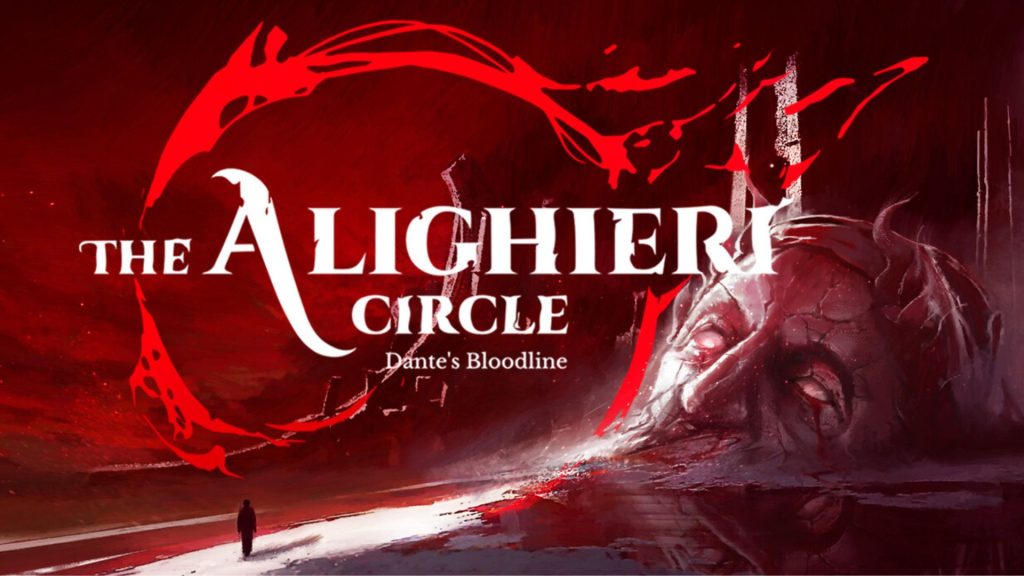
The Alighieri Circle: Dante’s Bloodline is difficult to recommend beyond players who are especially interested in Dante or enjoy solving…
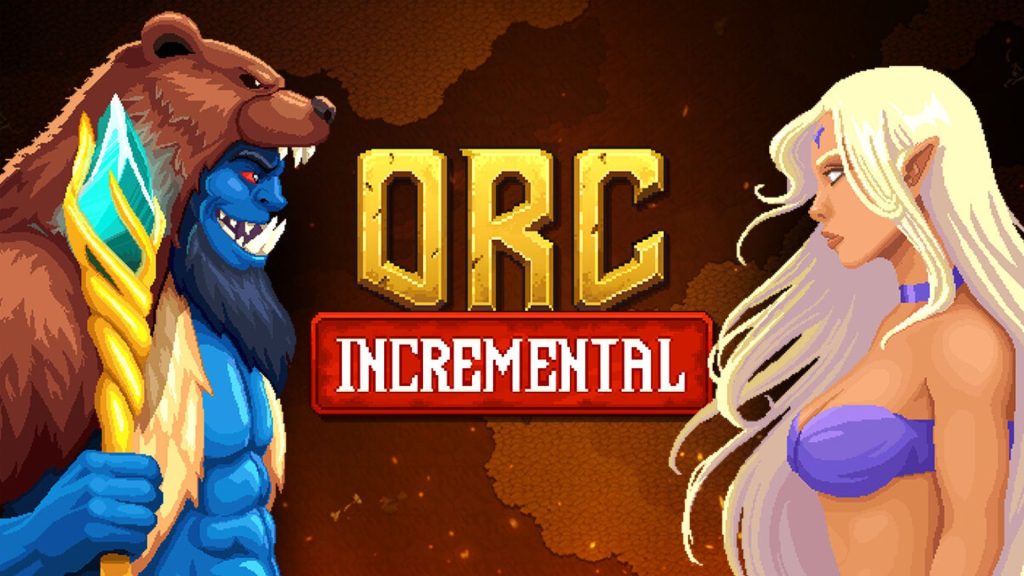
Orc Incremental offers satisfying progression, entertaining totem combinations and enough content to justify its affordable price.
![[GAMESCOM 2026] Chronoscript: The Endless End Preview – Beautiful Pages Hide Deliberate Combat](https://www.indie-games.eu/wp-content/uploads/2026/09/Chronoscript-The-Endless-End-1-1024x576.jpg)
Chronoscript: The Endless End stands out from other Metroidvanias by blending 2D manuscript worlds with exploration inside a 3D manor.
![[GAMESCOM 2026] MegaGum Preview – Combat Hits Hard in This Sticky Platforming Adventure](https://www.indie-games.eu/wp-content/uploads/2026/09/MegaGum-09-09-26-5-1024x576.jpg)
MegaGum combines hard-hitting combat, varied weapons and Gum-powered platforming in a promising Gamescom 2026 demo.
![[GAMESCOM 2026] Delphinium Preview – Cozy Routine Mixed With Enjoyable Minigames](https://www.indie-games.eu/wp-content/uploads/2026/03/Delphinium--1024x665.jpg)
Delphinium mixes cozy farming, exploration and relationships with enjoyable fishing, cooking and forging minigames in its Gamescom 2026 demo.
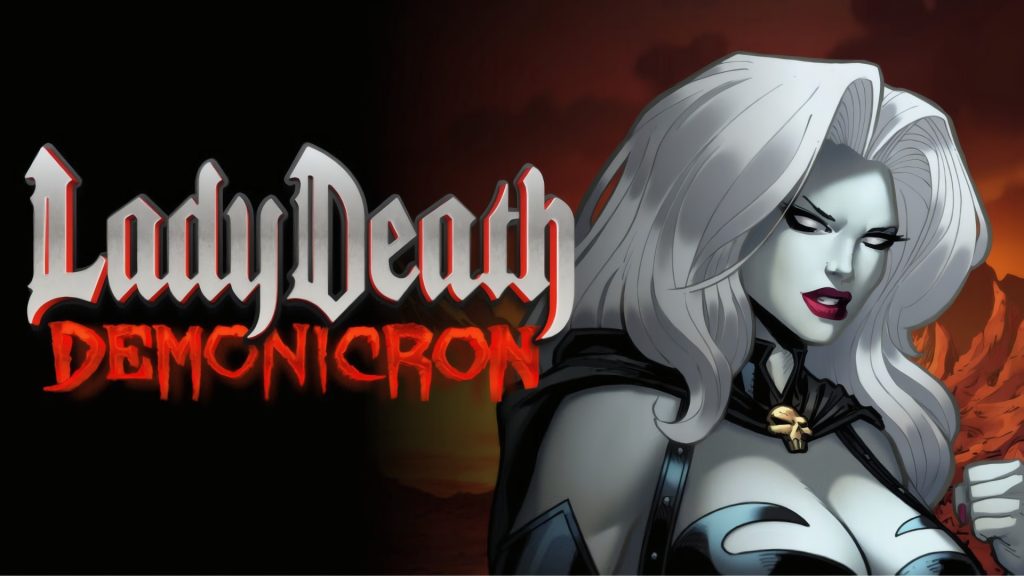
Lady Death: Demonicron looks the part, but underneath its excellent comic-book exterior is a clunky and painfully short brawler.
![[GAMESCOM 2026] Tomb Raider: Legacy of Atlantis Preview – Expands the Original Without Losing Its Identity](https://www.indie-games.eu/wp-content/uploads/2026/09/tomb-raider-legacy-of-atlantis-06-02-26-1-1024x576.jpg)
Tomb Raider: Legacy of Atlantis brings Lara back to her roots, but its Gamescom 2026 showing proved this is far…
![[GAMESCOM 2026] Clive Barker’s Hellraiser: Revival Preview – Ready to Open the Box](https://www.indie-games.eu/wp-content/uploads/2026/09/Clive-Barkers-Hellraiser-Revival-08-30-26-1-1024x576.jpg)
Hellraiser: Revival preserves the franchise’s sex, gore and psychological horror while delivering approachable survival-horror gameplay.

Swan Song creates a peaceful and forgiving puzzle space without removing the challenge that makes solving a difficult puzzle rewarding.
Mortal Shell II starts brilliantly but grows repetitive and exhausting, while remaining a rewarding and ambitious Soulslike sequel.
![[GAMESCOM 2026] Terranigma Preview – A Lost SNES Classic Returns in 2027](https://www.indie-games.eu/wp-content/uploads/2026/08/Terranigma-1-1024x576.jpg)
After more than three decades of limited availability, Terranigma is returning in 2027. We played its enhanced re-release at Gamescom…
