![[GAMESCOM 2026] Vikings Dynasty Preview – Expands the Dynasty Formula](https://www.indie-games.eu/wp-content/uploads/2026/09/Viking-Dynasty-09-21-26-2-1024x576.jpg)
[GAMESCOM 2026] Vikings Dynasty Preview – Expands the Dynasty Formula
After showing me Prospera at Gamescom 2026, Toplitz Productions' Mathias Oertel moved to a very different kind of settlement builder.…

If you enjoy independent indie game coverage, consider supporting Indie-Games.eu on Patreon. It helps keep the site independent.
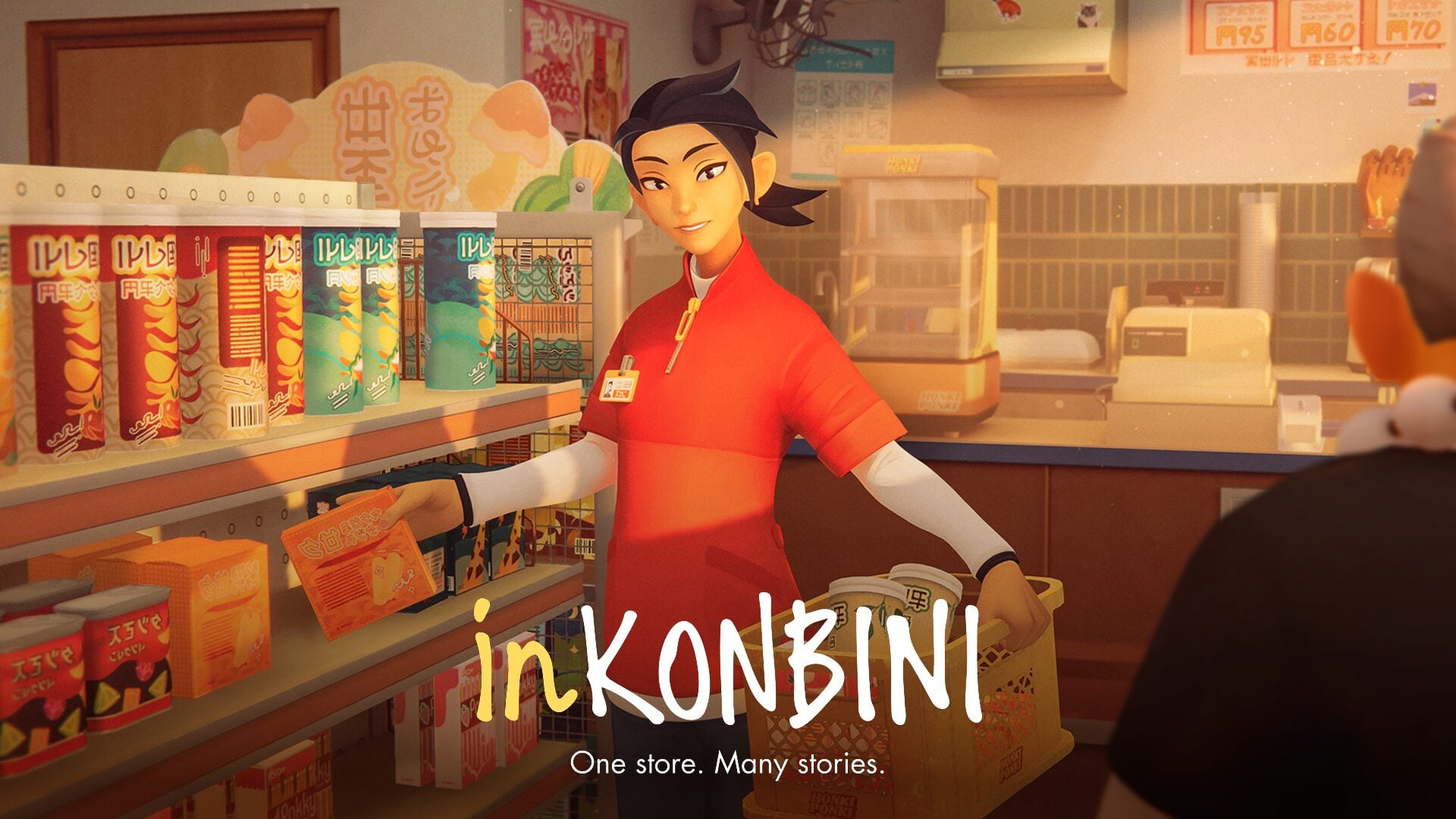
InKONBINI: One Store. Many Stories isn’t your typical simulator. At first glance, it looks like a management game, but in reality, it’s much more of a narrative-driven, character-focused experience. And honestly, I kind of wish it had two modes. The foundation for a proper management simulator is clearly there, and it could have worked really well alongside the story. However, I understand why the developers leaned fully into the narrative approach.
When it comes to gameplay, about half of your time is spent doing everyday store tasks: stocking shelves, organizing items, working the cashier, reading notes, calling your aunt, and using services like delivery or repairs. But all of that mostly serves as a vehicle for the story and the atmosphere. It’s there, but it’s not the main focus.
I’d describe the game more as a slow, reflective slice-of-life experience rather than something driven by goals. You do have daily tasks, and you work night shifts across seven days, but the pace is intentionally calm. There aren’t many customers, and the game is more about making you feel present and useful than constantly busy.
The other half of the game is all about people. Conversations, small interactions, and slowly unfolding stories. And this is where the game really leans in. Like a lot of cozy games, it dips into more psychological territory, with characters opening up about their struggles, thoughts, and personal issues. You’re just a student helping out your aunt, yet you end up being this quiet listener to everyone else’s problems. It sounds heavy, but the game handles it in a subtle, grounded way. Nothing feels over-explained or forced.
You meet a range of characters, each with their own story that evolves over time. There’s an older grandpa who clearly carries emotional baggage from the past, a journalist searching for meaning in her work, and others who slowly reveal more about themselves as the nights go on. The game touches on themes like time passing, work, and small human connections. What it does really well is making these mundane interactions feel meaningful without dragging them out.
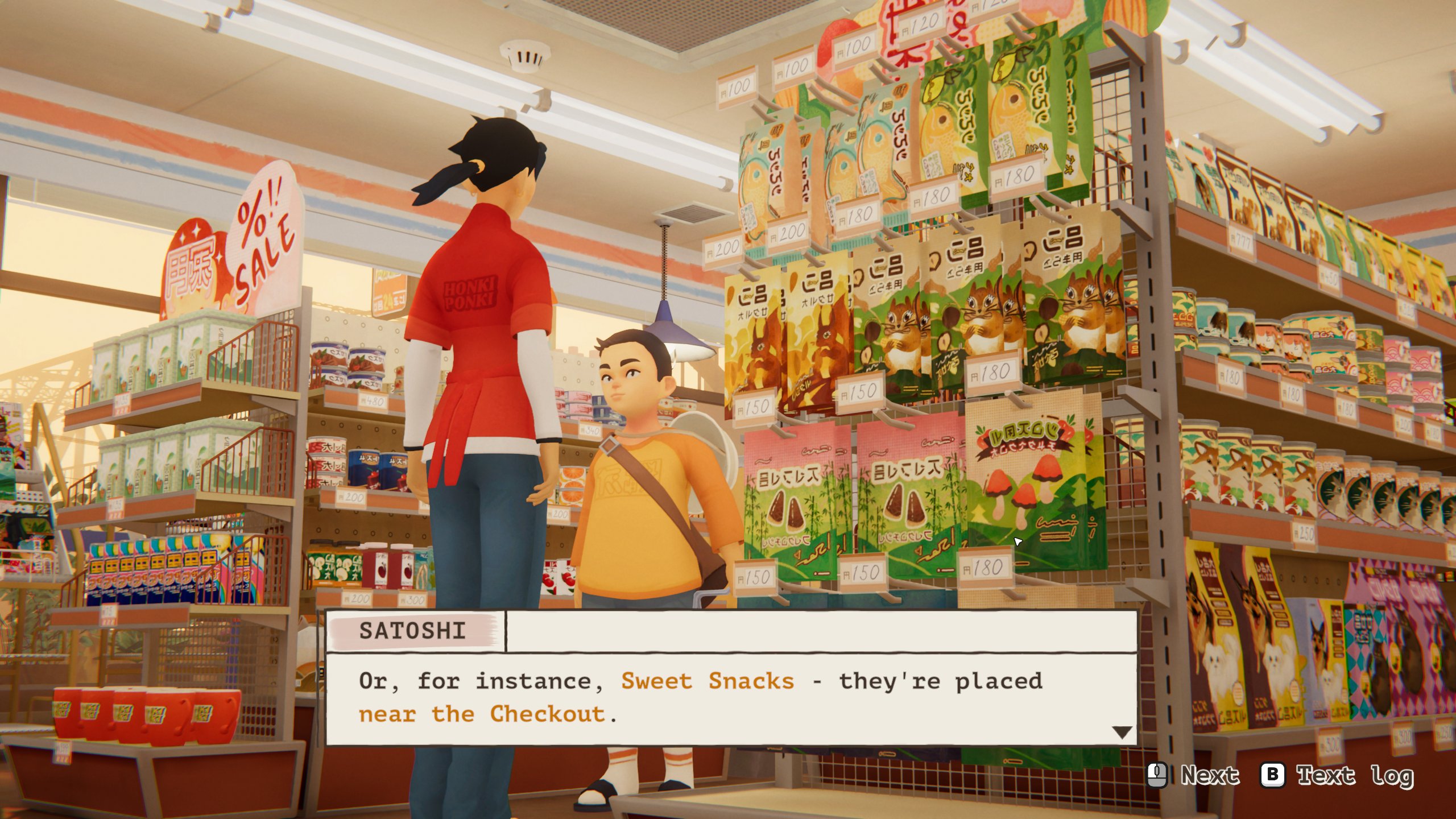
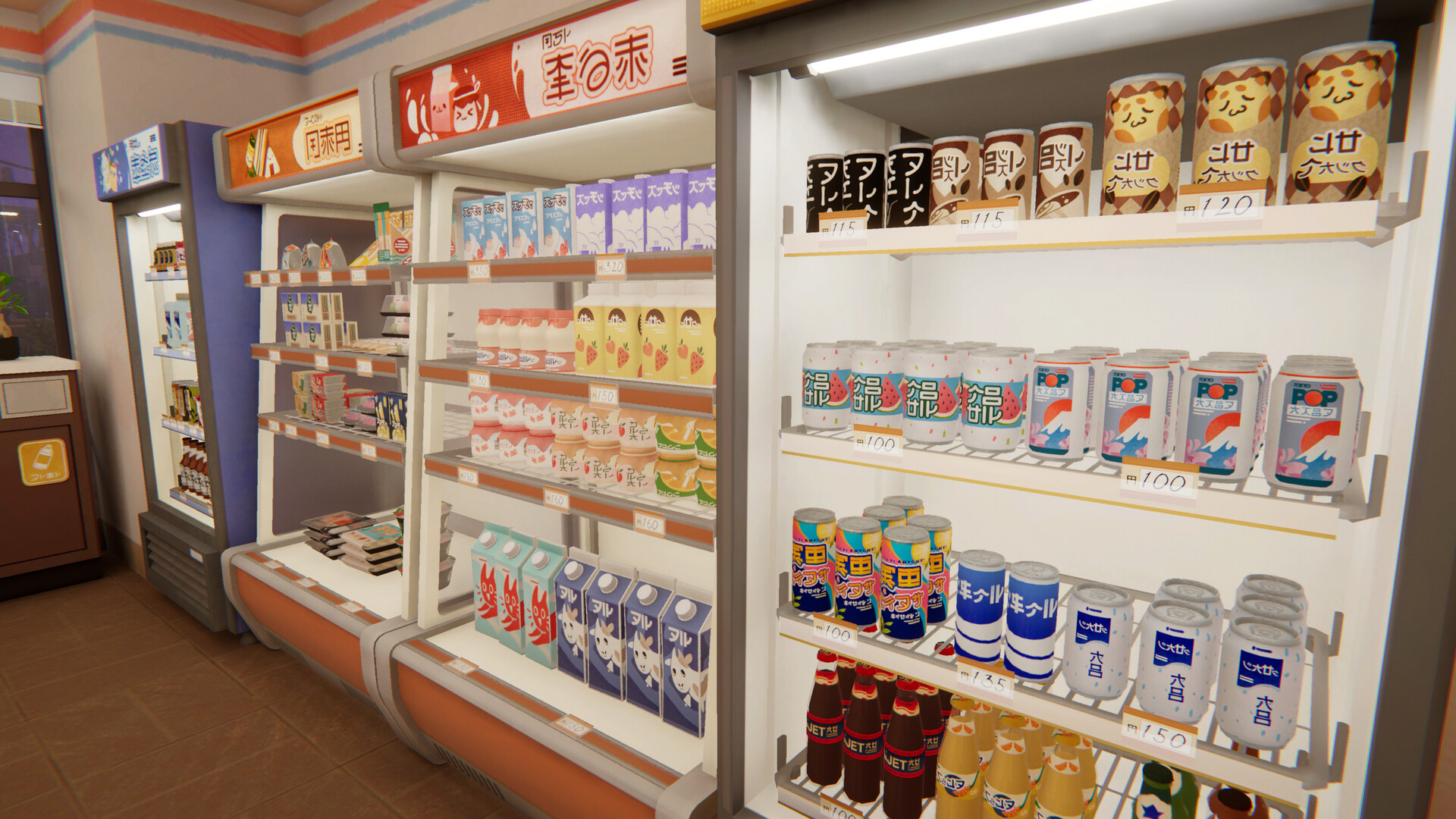
At the same time, the gameplay loop itself becomes oddly immersive. It’s repetitive, yes, but in a way that pulls you in. You start thinking about small things: did I stock that correctly, did I order the right items, does that fridge work? It creates this quiet sense of responsibility. You’re constantly moving around, interacting with objects, keeping things in order, and the game does a good job of mixing in just enough variation so it doesn’t feel completely stale.
Helping customers is another key part. They react to your store layout, ask for help finding items, or even ask for recommendations. Sometimes it almost feels like you’re following them around the store, waiting to see if they need something, which is funny, leaning into stalking moments, but it’s also a bit too much at times. Still, it adds to that feeling of being actively involved in the space.
There are also light puzzle elements, mostly tied to conversations. Since many items are labeled in Japanese or made-up text, you rely on descriptions and context to figure out what someone wants. One example is a quiet, mysterious customer who barely speaks, you have to ask the right questions to understand what he’s looking for. It’s a simple system, but it works well within the game’s tone.
The game also includes a dictionary system, which is honestly essential. It tracks conversations, tasks, and important details, and without it, you’d probably get lost. It’s one of those small quality-of-life features that makes a big difference. In terms of atmosphere, it’s set in a rural 90s Japan setting, and it captures that feeling in a very grounded way. It’s not exaggerated or overly stylized, it just feels like a quiet, lived-in place. The attention to detail helps sell that experience, and the overall vibe is calm, reflective, and slightly nostalgic.
With everything said so far, there are definitely some frustrations. Movement is slow, and you can’t really speed things up, which becomes noticeable when you’re constantly going back and forth between storage and the shop. The character can also get stuck on objects or walls, which breaks immersion. Inventory management is a bit clunky too, you’re forced to carry a basket even when you’re just moving one or two items, which feels unnecessary.
Another issue is the lack of replayability. There’s no free play mode, no branching paths, and no alternative outcomes. No matter what choices you make, the story stays the same. This is where I really wish the game had a separate simulator mode, something endless where you can just run the store, manage customers, and enjoy the gameplay loop without the narrative constraints.
At the end of the day, inKONBINI is for players who want something slow, thoughtful, and introspective. It’s about observing people, having small but meaningful conversations, and finding value in routine. It’s less about managing a store and more about understanding the people who walk into it. And while it has its limitations, it does that in a way that feels genuine and memorable.
InKONBINI is for players who want something slow, thoughtful, and introspective and less about managing a store and more about understanding the people who walk into it. For those seeking a management sim, look elsewhere; for those wanting a contemplative character study, this delivers in a way that feels genuine and memorable.
Ending Thoughts
Review copy provided by the publisher
After showing me Prospera at Gamescom 2026, Toplitz Productions' Mathias Oertel moved to a very different kind of settlement builder.…
![[GAMESCOM 2026] Prospera Preview – Production, Prosperity and Victorian Industry](https://www.indie-games.eu/wp-content/uploads/2026/09/Prospera-09-21-26-5-1024x576.jpg)
At Gamescom 2026, I met with Toplitz Productions' Mathias Oertel for a guided presentation of two upcoming games. One of…
Golden Swirl inventive card combat carries the experience, but repetitive rooms, weak upgrades and excessive dialogue hold it back.
![[GAMESCOM 2026] Wilderdark Preview – Ambitious Dinosaur Horror Game That Still Has Plenty to Prove](https://www.indie-games.eu/wp-content/uploads/2026/09/Wilderdark-1024x576.jpg)
Dinosaur survival horror game Wilderdark has one of those premises that immediately makes you wonder why more games have not…
![[PREVIEW] Tiny Metal 2 – Strategy Game That Wants You to Learn From Every Mistake](https://www.indie-games.eu/wp-content/uploads/2026/09/Tiny-Metal-2-1024x576.jpg)
I rarely enjoy discovering that my opening strategy was completely wrong, but Tiny Metal 2 made that process one of…
![[PREVIEW] Remothered: Red Nun’s Legacy – Ambitious Survival Horror That Needs More Polish](https://www.indie-games.eu/wp-content/uploads/2026/09/Remothered-Red-Nuns-Legacy-4-1024x576.jpg)
Remothered: Red Nun’s Legacy has a gripping atmosphere and promising survival tools, but its repetitive hiding and rough visuals need…
The Alighieri Circle: Dante’s Bloodline is difficult to recommend beyond players who are especially interested in Dante or enjoy solving…
Orc Incremental offers satisfying progression, entertaining totem combinations and enough content to justify its affordable price.
![[GAMESCOM 2026] Chronoscript: The Endless End Preview – Beautiful Pages Hide Deliberate Combat](https://www.indie-games.eu/wp-content/uploads/2026/09/Chronoscript-The-Endless-End-1-1024x576.jpg)
Chronoscript: The Endless End stands out from other Metroidvanias by blending 2D manuscript worlds with exploration inside a 3D manor.
![[GAMESCOM 2026] MegaGum Preview – Combat Hits Hard in This Sticky Platforming Adventure](https://www.indie-games.eu/wp-content/uploads/2026/09/MegaGum-09-09-26-5-1024x576.jpg)
MegaGum combines hard-hitting combat, varied weapons and Gum-powered platforming in a promising Gamescom 2026 demo.
![[GAMESCOM 2026] Delphinium Preview – Cozy Routine Mixed With Enjoyable Minigames](https://www.indie-games.eu/wp-content/uploads/2026/03/Delphinium--1024x665.jpg)
Delphinium mixes cozy farming, exploration and relationships with enjoyable fishing, cooking and forging minigames in its Gamescom 2026 demo.
Lady Death: Demonicron looks the part, but underneath its excellent comic-book exterior is a clunky and painfully short brawler.
![[GAMESCOM 2026] Tomb Raider: Legacy of Atlantis Preview – Expands the Original Without Losing Its Identity](https://www.indie-games.eu/wp-content/uploads/2026/09/tomb-raider-legacy-of-atlantis-06-02-26-1-1024x576.jpg)
Tomb Raider: Legacy of Atlantis brings Lara back to her roots, but its Gamescom 2026 showing proved this is far…
![[GAMESCOM 2026] Clive Barker’s Hellraiser: Revival Preview – Ready to Open the Box](https://www.indie-games.eu/wp-content/uploads/2026/09/Clive-Barkers-Hellraiser-Revival-08-30-26-1-1024x576.jpg)
Hellraiser: Revival preserves the franchise’s sex, gore and psychological horror while delivering approachable survival-horror gameplay.

Swan Song creates a peaceful and forgiving puzzle space without removing the challenge that makes solving a difficult puzzle rewarding.
Mortal Shell II starts brilliantly but grows repetitive and exhausting, while remaining a rewarding and ambitious Soulslike sequel.
![[GAMESCOM 2026] Terranigma Preview – A Lost SNES Classic Returns in 2027](https://www.indie-games.eu/wp-content/uploads/2026/08/Terranigma-1-1024x576.jpg)
After more than three decades of limited availability, Terranigma is returning in 2027. We played its enhanced re-release at Gamescom…
Reading another person’s mind is often presented as a desirable superpower, but Sister Other Paranoia immediately understands why it could…
Forsaken Realms: Vahrin’s Call is exactly the kind of ambitious, slightly clumsy fantasy RPG that used to be far more…
![[Early Access] 2nd EVE – Sci-Fi Action RPG That Lacks a Sense of Stakes](https://www.indie-games.eu/wp-content/uploads/2026/08/2ND-EVE-1024x576.jpg)
2nd Eve is a space-set action RPG in which we strive to save humanity.
