
Fire Emblem Awakening Retro Review – Unfulfilled Potential
Awakening is worth playing if you enjoy developing characters, experimenting with tactical partnerships, and shaping an army over a massive…


If you enjoy independent indie game coverage, consider supporting Indie-Games.eu on Patreon. It helps keep the site independent.
Every January, without fail, I find myself playing yet another simulator from PlayWay or Ultimate Games. At this point, it’s practically a tradition. The problem is that this time they released a launch-day patch that fixed most of the issues I was ready to complain about, and now I honestly don’t know what to think about Ancient Farm. It’s a solid game, but it’s also extremely barebones. It’s not bad, but it’s just not very good either.
Ancient Farm is a hands-on farming simulator set in ancient Egypt, where everything is done manually. You start with empty land, basic tools, and no automation at all. The idea is simple: plow the land, plant crops, water and fertilize them, gather resources, raise animals, produce goods, and slowly work your way toward building larger structures, including temples.
The game takes place in a closed sandbox environment, which means your space is limited from the very beginning. This quickly becomes a problem, as there is very little room for creativity or experimentation. You are mostly working within strict boundaries, doing the same actions in the same places, which makes the whole experience feel shallow and restrictive.
Farming itself is very straightforward. You plow the land, plant seeds, water them, fertilize them, and wait for the crops to grow through visible growth stages. If you wait too long, crops can rot, which sounds punishing on paper but rarely feels meaningful in practice. Some plants, like papyrus and sugar cane, can only grow near water, which slightly encourages planning, but even this system feels underused. Fruit trees and orchards exist and take longer to grow, offering repeatable harvests over time, but again, the depth is minimal. You do these actions because the game tells you to, not because the systems push you to think differently.
Animal farming suffers from similar issues. You can raise cows, sheep, pigs, hens, and oxen, with oxen being used to pull plows and speed up field work. While this sounds like a natural connection between systems, farming and animal husbandry are barely linked in any meaningful way. You can completely ignore animals and focus only on crops, or do the opposite and still progress without problems. Because of this, the balance starts to fall apart very quickly. You never feel forced to engage with all the systems, which makes them feel optional rather than important.
This is clearly an indie game with a limited budget, and that shows almost everywhere. Animations look stiff and often unintentionally funny. Turning wood into planks, clay into bricks, watering fields, slaughtering animals, or using basic tools all lack polish and weight. Nothing feels smooth, and everything looks slightly underdeveloped. After around three hours, you will have seen most of what the game has to offer. New buildings unlock, but they rarely introduce new ideas. They just extend the same loop with slightly different items.
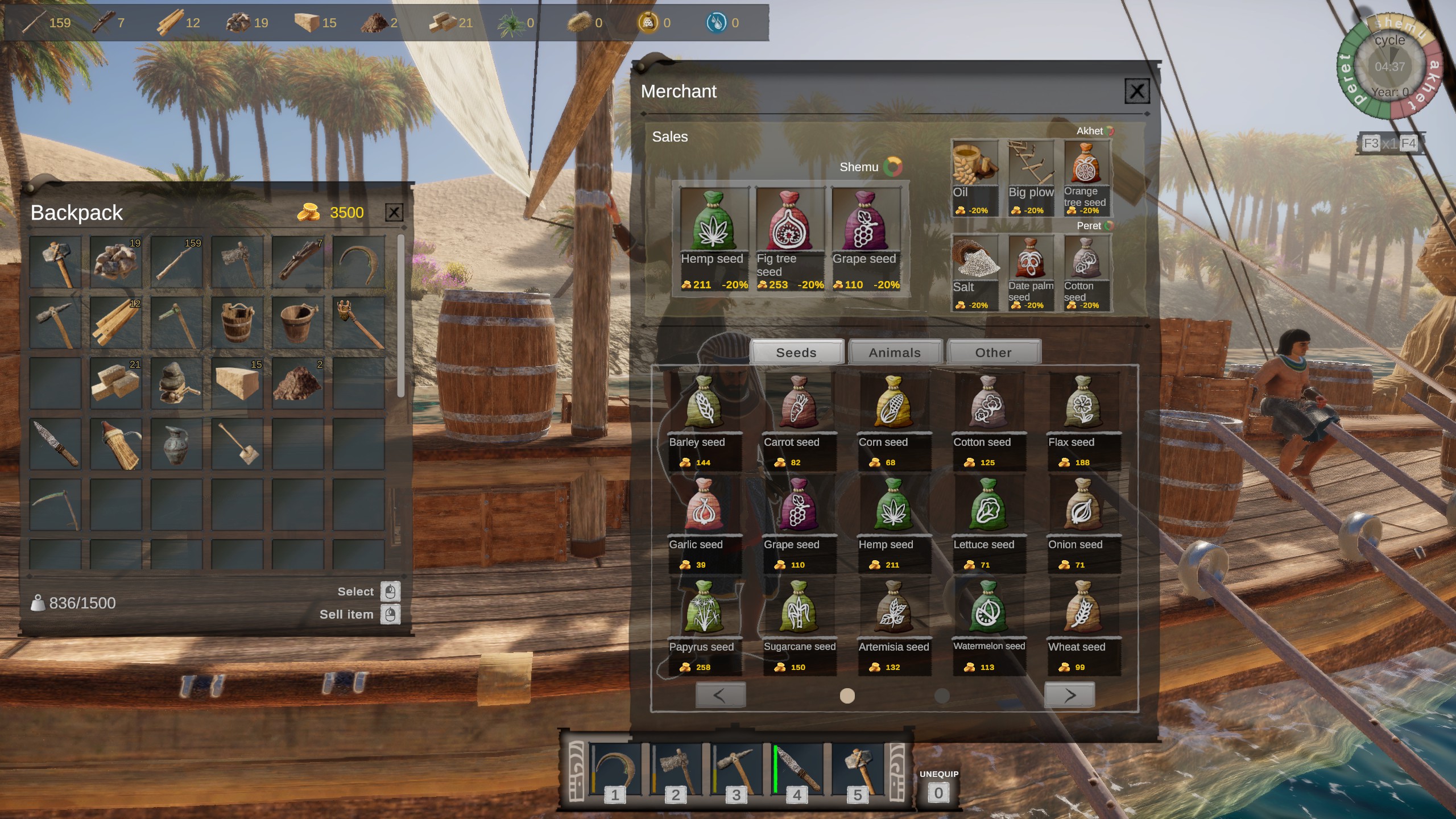
Later in the game, things do become a bit more complex. You unlock carts, better tools, advanced kitchens, bakeries, and other production buildings. You can cook meals, bake bread, produce beer, oils, incense, and other goods. You gather raw materials like wood, stone, clay, fibers, and crops, turn them into products, and sell them to a traveling merchant. With that money, you buy blueprints, seeds, fertilizer, and upgrades. This loop never truly evolves. There is no real challenge, no pressure, and no moment where the game asks more from you. You are never tested, and you are never pushed to optimize or adapt.
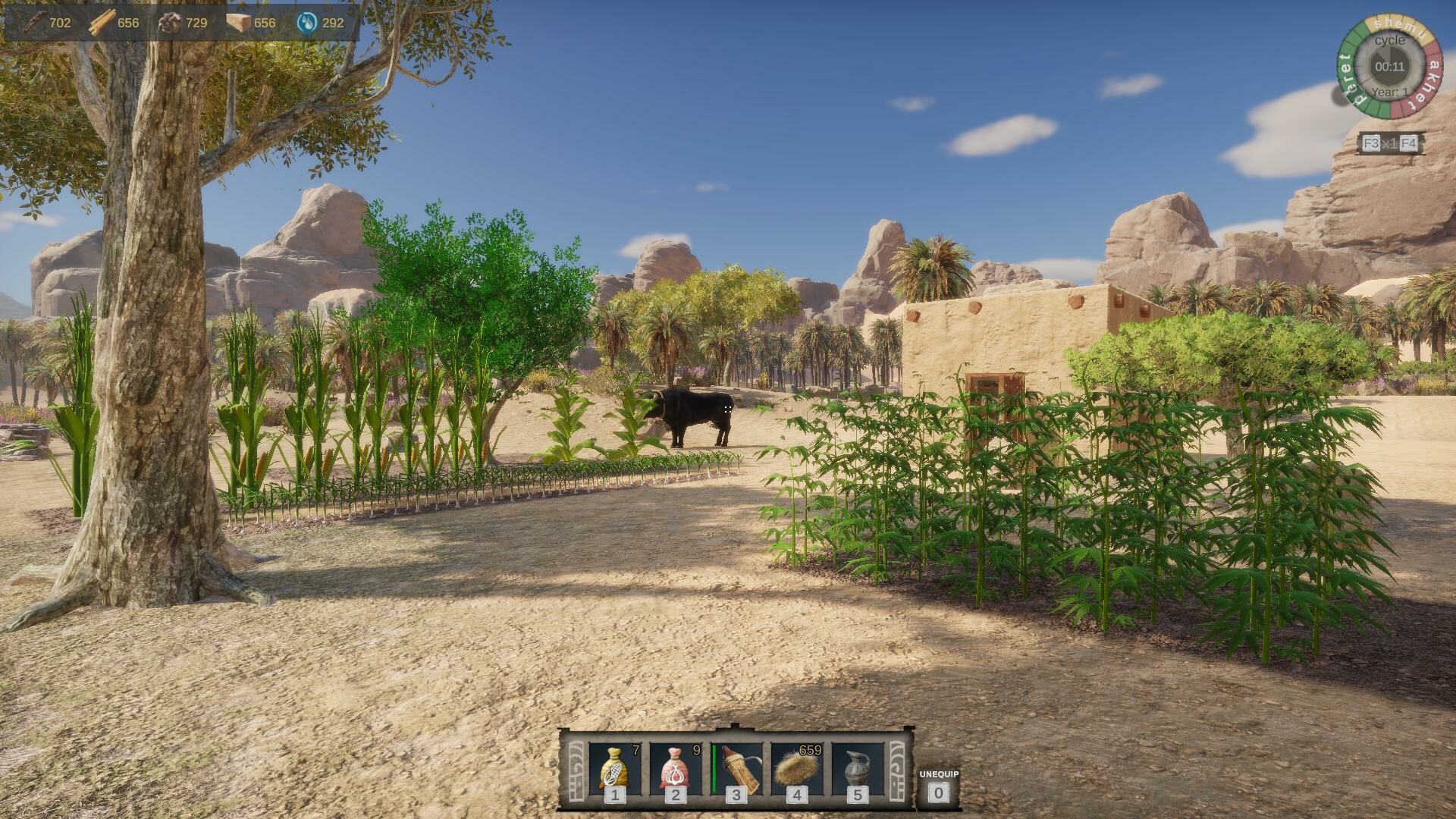
One of the strangest things about Ancient Farm is how little it expects from the player. The structure is so loose that you often wonder what the point of finishing the game even is. Yes, your farm slowly expands, buildings appear, and the land becomes cleaner and more organized. There is a cozy, almost meditative feeling to clearing land and organizing space, similar to PowerWash Simulator. The difference is that Ancient Farm rarely rewards you for your effort. You do not feel accomplished, and the game never makes your actions feel meaningful or important.
The setting is, without a doubt, one of the game’s strongest points. Ancient Egypt is a great choice for a manual farming simulator. Doing everything by hand fits the theme very well, and visually the game can look quite nice, especially from a distance. The lighting, the desert environment, and the simple architecture work together nicely. There is a full day and night cycle and three seasons, which helps the world feel alive. At the same time, these systems can make the game feel slow and drawn out. Luckily, Ancient Farm includes a time skip mechanic, which allows you to speed up time significantly. This feature saved me a lot of time and made the experience much more tolerable.
The day-one launch update improved many parts of the game and fixed several frustrating problems. Since this completely ruined my review I wrote before, I’m just going to mention few things. When processing wood into planks, you now get sticks as well, which makes resource use feel more logical. Additionally, notifications now warn you when an ox runs out of stamina, so you can send it to rest instead of guessing what went wrong.
Animal pens were improved with water troughs that allow automatic feeding and watering. You simply place water and hay inside, and animals take care of themselves. Before the update, this was a very frustrating mechanic that simply forced you to always check on your animals. Building demolition was also added through a demolition hammer, letting you remove buildings and recover some resources, which should have been there from the start.
The economy was slightly improved with a dynamic pricing system. Selling too much of one resource lowers its price, while unused goods slowly gain value. While I do like this idea, it just ruins the whole way of getting the money easily, forcing you into more grinding. But there are still some persistent problems, such as you can’t quickly store items, you can’t clear the area around you faster and merchant can literally stop trading with you once it’s time for him to leave despite you being in the trading menu.
In the end, Ancient Farm Simulator is a calm, simple farming game with a strong theme and a cozy atmosphere. Unfortunately, it lacks depth, challenge, and a clear sense of purpose. Even with the launch updates, it feels unfinished and overpriced for 15 €. You can enjoy a few relaxing hours clearing land, planting crops, and watching your farm grow, but once the novelty wears off, there is very little reason to keep playing. If you love the ancient Egypt setting and want something very slow and casual, Ancient Farm might be worth a look. Otherwise, there are many better and deeper farming and simulation games available for the same price.
Review copy provided by the publisher
Awakening is worth playing if you enjoy developing characters, experimenting with tactical partnerships, and shaping an army over a massive…

Duskfade is worth considering for players who miss colourful PS2-style action-platformers and can tolerate basic combat, floaty movement and backtracking.

Man I Just Wanna Go Home is a noir crime story with visuals from MS Paint and life-or-death choices.
![[GAMESCOM 2026] Vikings Dynasty Preview – Expands the Dynasty Formula](https://www.indie-games.eu/wp-content/uploads/2026/09/Viking-Dynasty-09-21-26-2-1024x576.jpg)
After showing me Prospera at Gamescom 2026, Toplitz Productions' Mathias Oertel moved to a very different kind of settlement builder.…
![[GAMESCOM 2026] Prospera Preview – Production, Prosperity and Victorian Industry](https://www.indie-games.eu/wp-content/uploads/2026/09/Prospera-09-21-26-5-1024x576.jpg)
At Gamescom 2026, I met with Toplitz Productions' Mathias Oertel for a guided presentation of two upcoming games. One of…
Golden Swirl inventive card combat carries the experience, but repetitive rooms, weak upgrades and excessive dialogue hold it back.
![[GAMESCOM 2026] Wilderdark Preview – Ambitious Dinosaur Horror Game That Still Has Plenty to Prove](https://www.indie-games.eu/wp-content/uploads/2026/09/Wilderdark-1024x576.jpg)
Dinosaur survival horror game Wilderdark has one of those premises that immediately makes you wonder why more games have not…
![[PREVIEW] Tiny Metal 2 – Strategy Game That Wants You to Learn From Every Mistake](https://www.indie-games.eu/wp-content/uploads/2026/09/Tiny-Metal-2-1024x576.jpg)
I rarely enjoy discovering that my opening strategy was completely wrong, but Tiny Metal 2 made that process one of…
![[PREVIEW] Remothered: Red Nun’s Legacy – Ambitious Survival Horror That Needs More Polish](https://www.indie-games.eu/wp-content/uploads/2026/09/Remothered-Red-Nuns-Legacy-4-1024x576.jpg)
Remothered: Red Nun’s Legacy has a gripping atmosphere and promising survival tools, but its repetitive hiding and rough visuals need…
The Alighieri Circle: Dante’s Bloodline is difficult to recommend beyond players who are especially interested in Dante or enjoy solving…
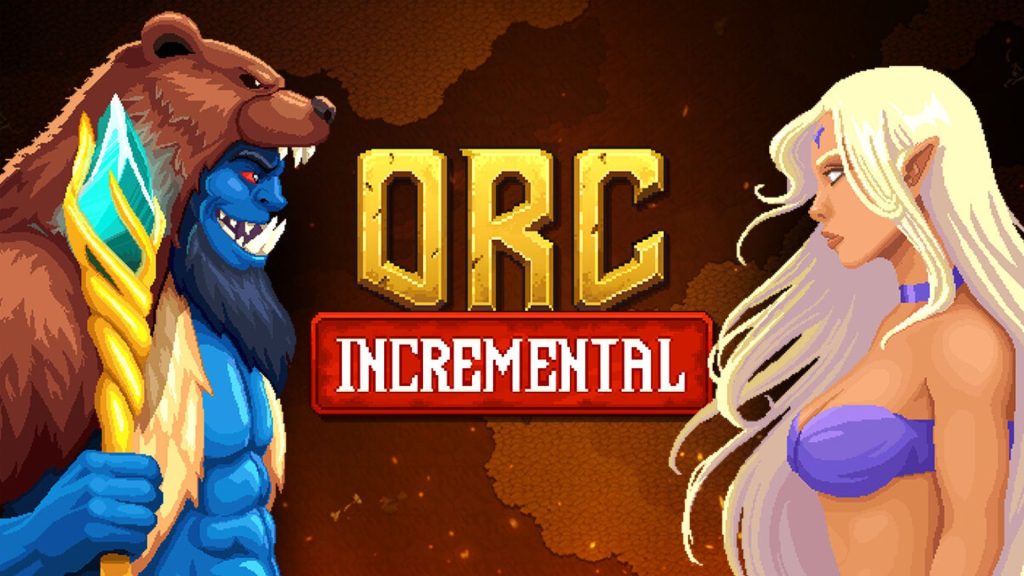
Orc Incremental offers satisfying progression, entertaining totem combinations and enough content to justify its affordable price.
![[GAMESCOM 2026] Chronoscript: The Endless End Preview – Beautiful Pages Hide Deliberate Combat](https://www.indie-games.eu/wp-content/uploads/2026/09/Chronoscript-The-Endless-End-1-1024x576.jpg)
Chronoscript: The Endless End stands out from other Metroidvanias by blending 2D manuscript worlds with exploration inside a 3D manor.
![[GAMESCOM 2026] MegaGum Preview – Combat Hits Hard in This Sticky Platforming Adventure](https://www.indie-games.eu/wp-content/uploads/2026/09/MegaGum-09-09-26-5-1024x576.jpg)
MegaGum combines hard-hitting combat, varied weapons and Gum-powered platforming in a promising Gamescom 2026 demo.
![[GAMESCOM 2026] Delphinium Preview – Cozy Routine Mixed With Enjoyable Minigames](https://www.indie-games.eu/wp-content/uploads/2026/03/Delphinium--1024x665.jpg)
Delphinium mixes cozy farming, exploration and relationships with enjoyable fishing, cooking and forging minigames in its Gamescom 2026 demo.
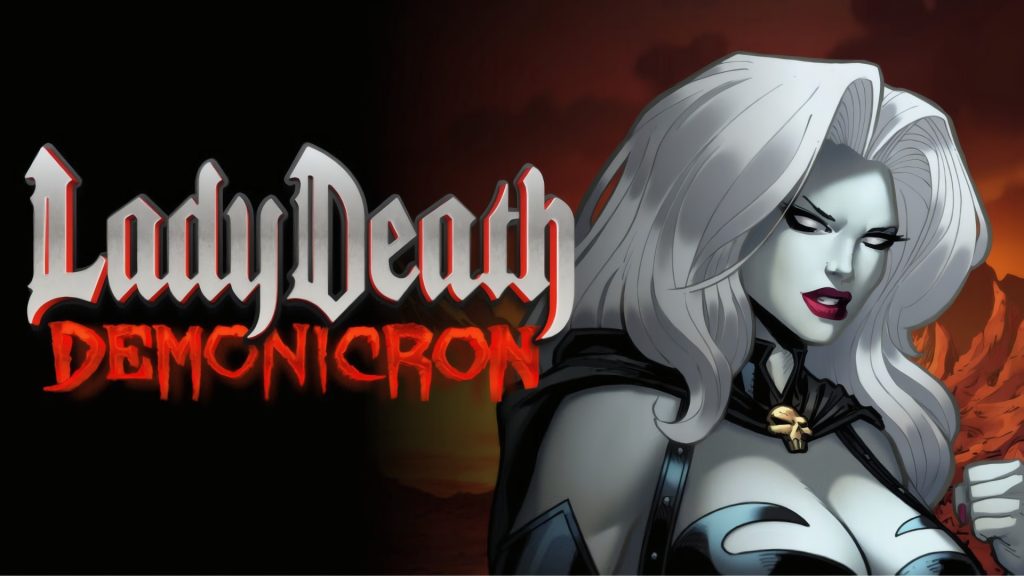
Lady Death: Demonicron looks the part, but underneath its excellent comic-book exterior is a clunky and painfully short brawler.
![[GAMESCOM 2026] Tomb Raider: Legacy of Atlantis Preview – Expands the Original Without Losing Its Identity](https://www.indie-games.eu/wp-content/uploads/2026/09/tomb-raider-legacy-of-atlantis-06-02-26-1-1024x576.jpg)
Tomb Raider: Legacy of Atlantis brings Lara back to her roots, but its Gamescom 2026 showing proved this is far…
![[GAMESCOM 2026] Clive Barker’s Hellraiser: Revival Preview – Ready to Open the Box](https://www.indie-games.eu/wp-content/uploads/2026/09/Clive-Barkers-Hellraiser-Revival-08-30-26-1-1024x576.jpg)
Hellraiser: Revival preserves the franchise’s sex, gore and psychological horror while delivering approachable survival-horror gameplay.

Swan Song creates a peaceful and forgiving puzzle space without removing the challenge that makes solving a difficult puzzle rewarding.
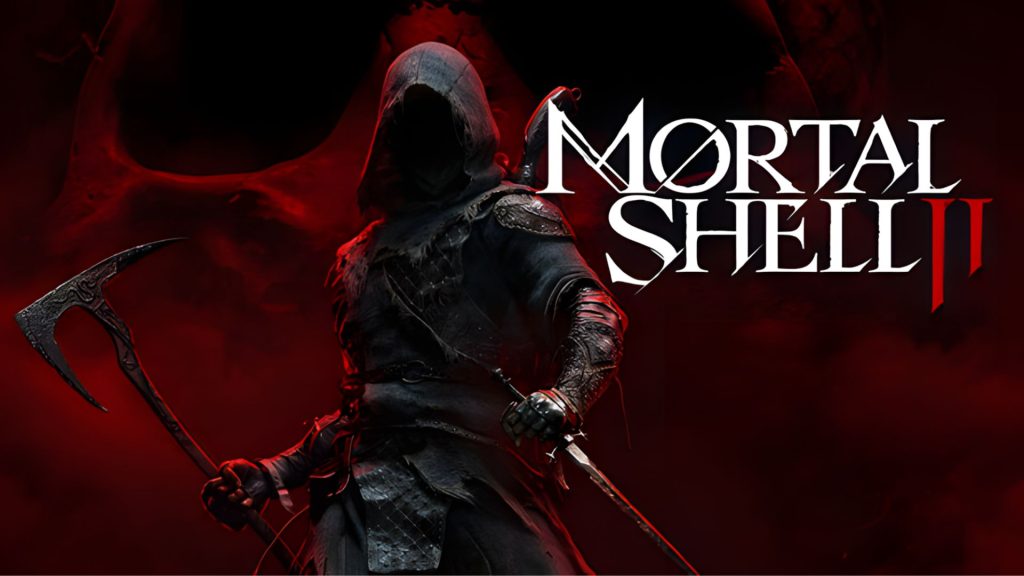
Mortal Shell II starts brilliantly but grows repetitive and exhausting, while remaining a rewarding and ambitious Soulslike sequel.
![[GAMESCOM 2026] Terranigma Preview – A Lost SNES Classic Returns in 2027](https://www.indie-games.eu/wp-content/uploads/2026/08/Terranigma-1-1024x576.jpg)
After more than three decades of limited availability, Terranigma is returning in 2027. We played its enhanced re-release at Gamescom…
