Duskfade – The PS2 Era Returns With All Its Strengths and Weaknesses
Duskfade is worth considering for players who miss colourful PS2-style action-platformers and can tolerate basic combat, floaty movement and backtracking.


If you enjoy independent indie game coverage, consider supporting Indie-Games.eu on Patreon. It helps keep the site independent.
Heart of Crown Online was supposed to be just another card-based game. Something I’d download, mess around with for a bit, maybe finish a few matches, and then quietly uninstall. But yeah, that didn’t happen. Spending time with Heart of Crown Online ended up feeling a lot more like sitting down for a proper tabletop session than a throwaway digital card game.
For anyone unfamiliar with it, Hearts of Crown started as a physical board game before being adapted into a digital deck-builder. What surprised me most is how faithful that adaptation is. I even double-checked online just to be sure, and yes, every card works exactly as it does in the real-world version. Nothing feels simplified or watered down, and the game never loses its original identity in the process.
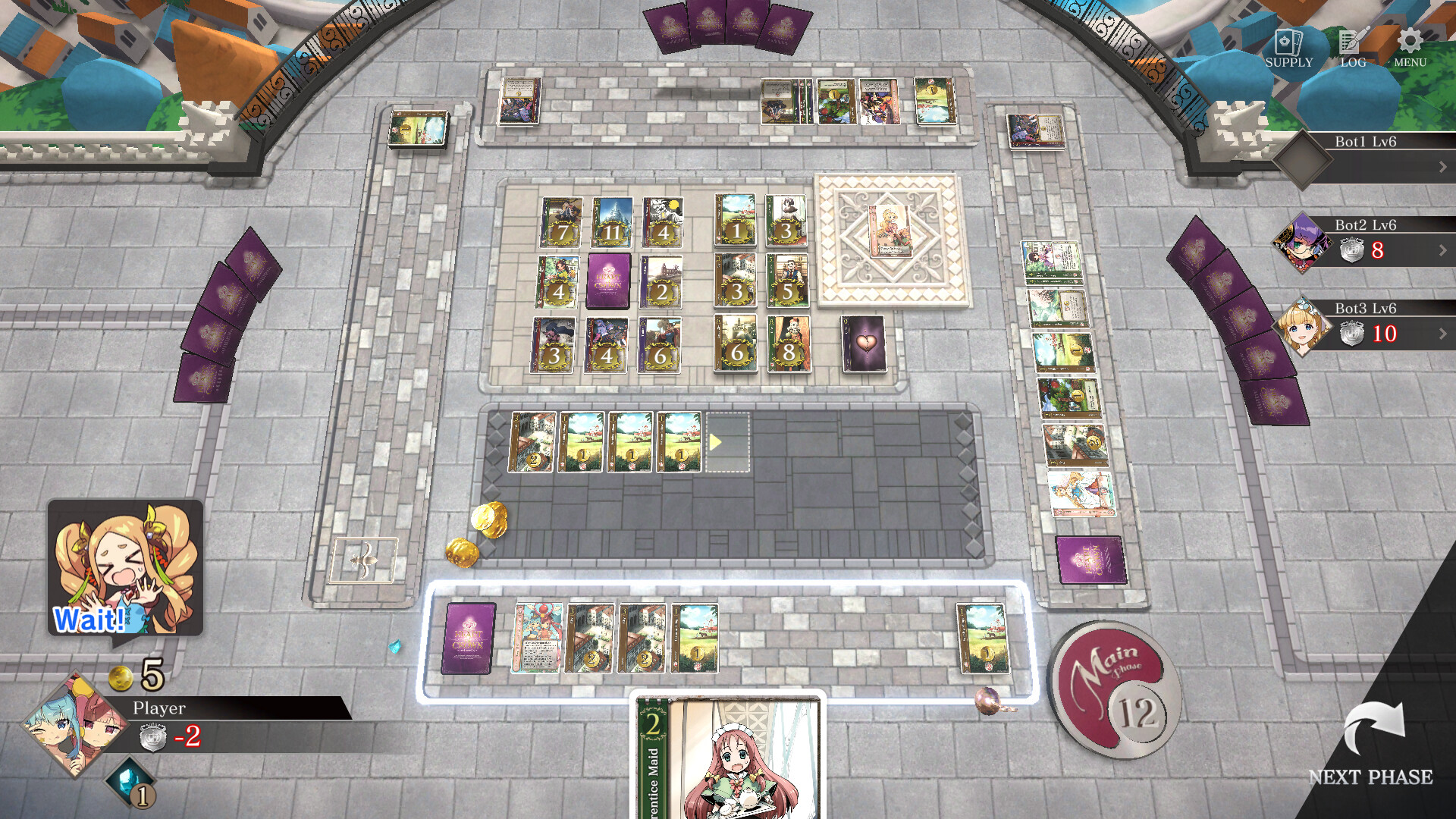
On the surface, the gameplay is pretty easy to understand. Seven princesses are competing for succession, and your job is to support one of them by building influence through cards, resources, and timing your moves correctly. But while the setup is simple, the strategy underneath it goes much deeper than I expected. The more matches you play, the more layers you start to notice.
Each match begins slowly, with limited resources and a fairly modest deck. You gradually expand your options by buying new lands, actions, and support cards, shaping your strategy as you go. There’s a very clear “turning point” moment when you finally have enough coins to back a princess, and from there on, every decision suddenly feels much heavier. Early turns are careful and methodical, while the later stages turn into tense races where a single mistake, or a perfectly timed purchase, can decide the entire match.
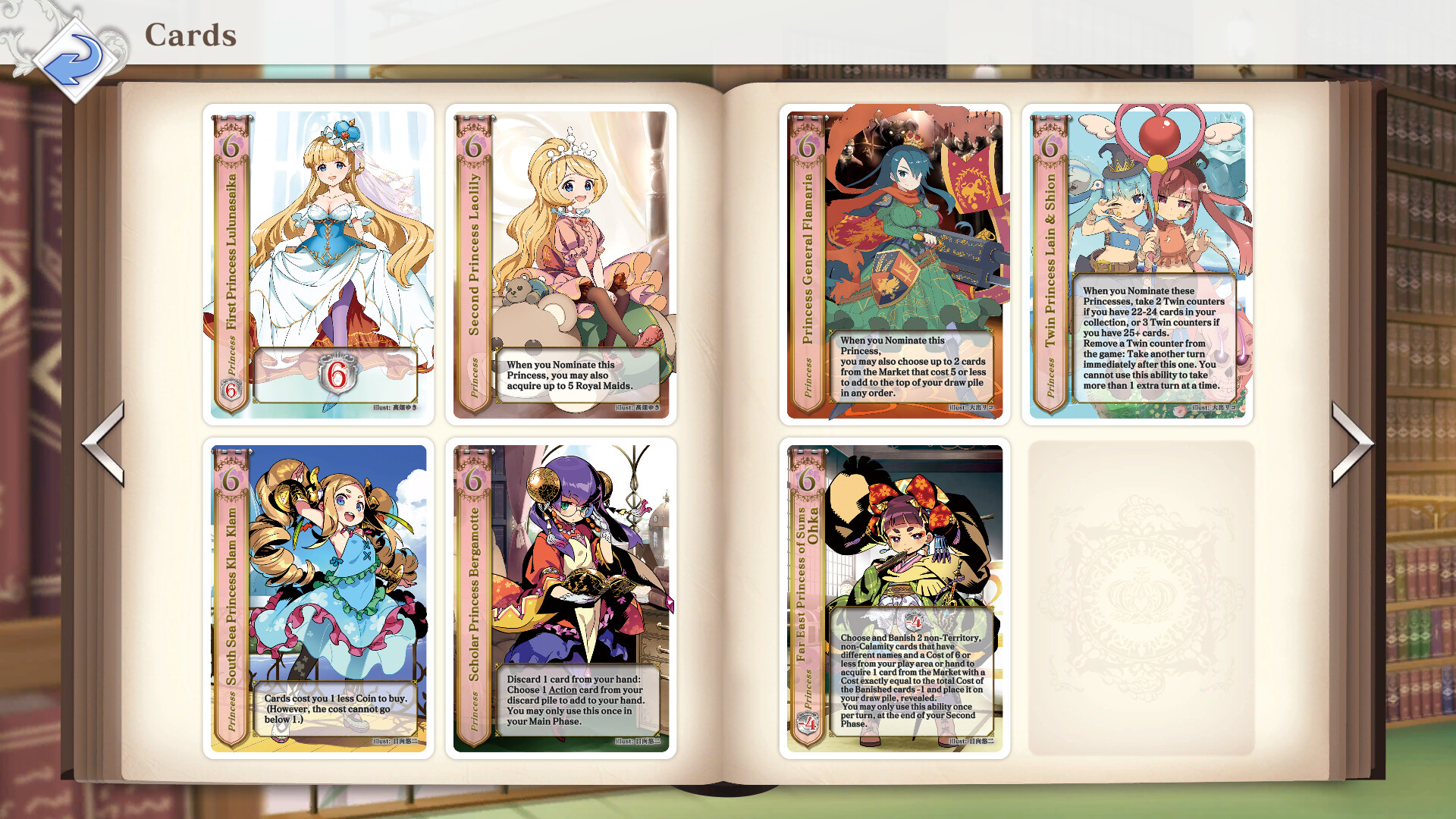
What really kept me engaged was how different each princess feels to play. Lulunasaika’s early point advantage pushes you toward fast, aggressive strategies, while Lain and Shion reward patience and careful sequencing with extra turns. Bergamotte leans into more technical play thanks to her ability to recycle cards, while characters like Ohka and Laolily add a layer of unpredictability that can completely shift the flow of a match. Because of this variety, the game rarely feels repetitive, even after dozens of hours. You start forming preferences, adjusting your deck-building habits, and learning how to counter certain characters over time.
For new players, the Scenario Mode is honestly a great place to start. Instead of throwing you straight into open matches, it introduces mechanics gradually through themed challenges and preset decks. Each chapter feels like a small, self-contained lesson, showing how different strategies can emerge from the same core rules. It will feel confusing at first, no way around that, but after a few hours, things begin to click and the systems start making sense.
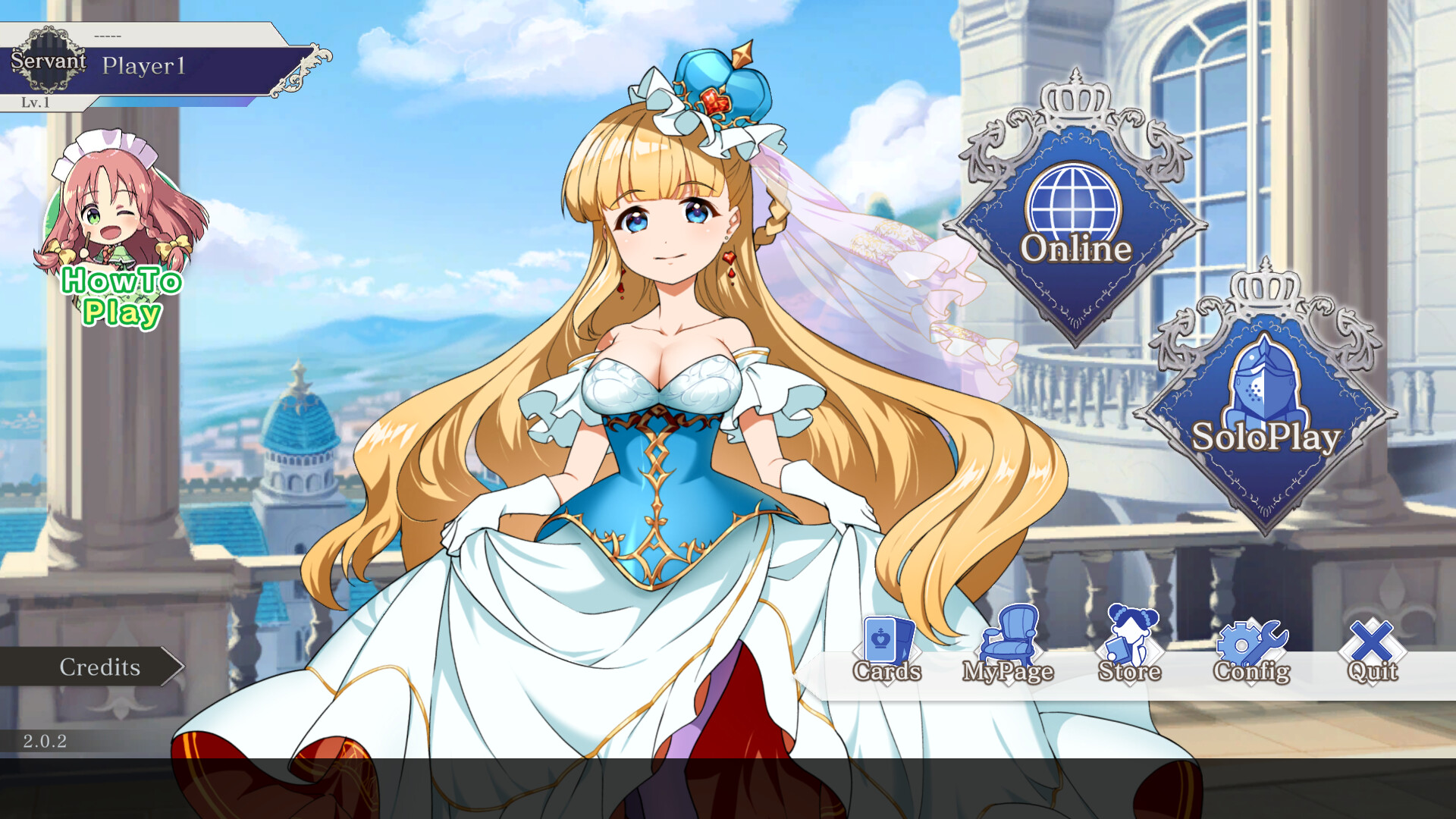
Visually, Heart of Crown Online fully commits to its anime-inspired style. The artwork is detailed and expressive, with animated touches that keep the board from feeling static. Princess portraits, card art, and small visual effects all help the game feel polished. The interface is also well thought out: cards are easy to read, information is clearly presented, and menus never feel overwhelming.
That said, the visual style is also where I personally started to bounce off a bit. The fanservice-heavy character designs will absolutely appeal to some players, but I’ll be honest, I found a lot of the animations exaggerated, and I really wasn’t a fan of the princess voice acting. It got grating enough that I ended up turning the voices off entirely. That’s just my personal taste, though, and I can easily see others enjoying it.
Beyond single-player and customizable AI matches, which can actually be pretty aggressive and smart, the game also offers multiplayer with full cross-play between PC and Switch. Whether you jump into ranked matches or casual rooms, finding opponents is rarely an issue.
Ranked play is where the game really shows its teeth. At higher levels, matches turn into intense battles of efficiency, timing, and reading your opponents. Knowing when to commit to a princess, when to stall, and when to interfere with others becomes a mental game that rewards experience and foresight. The seasonal system and cosmetic shop add a bit of progression, but nothing gameplay-related is locked behind them, which I appreciated.
In terms of usability, the game is generally welcoming, especially if you’re already familiar with deck-builders. Most systems feel intuitive after a few matches, but the learning curve shouldn’t be underestimated. The basics are easy to grasp, but mastering timing, deck optimization, and long-term planning takes real time and practice.
By the end of it all, Heart of Crown Online surprised me. It’s a smart, respectful digital adaptation that stays true to its tabletop roots while fully embracing online play. It’s deep without being inaccessible, polished without feeling sterile, and competitive without locking players out. The aesthetic and learning curve won’t be for everyone, but if you’re willing to invest the time, there’s a genuinely rewarding experience here. For deck-building fans who don’t mind a strong anime flavor, Heart of Crown Online stands out as one of the more compelling options in the genre.
Review copy provided by the publisher
Duskfade is worth considering for players who miss colourful PS2-style action-platformers and can tolerate basic combat, floaty movement and backtracking.

Man I Just Wanna Go Home is a noir crime story with visuals from MS Paint and life-or-death choices.
![[GAMESCOM 2026] Vikings Dynasty Preview – Expands the Dynasty Formula](https://www.indie-games.eu/wp-content/uploads/2026/09/Viking-Dynasty-09-21-26-2-1024x576.jpg)
After showing me Prospera at Gamescom 2026, Toplitz Productions' Mathias Oertel moved to a very different kind of settlement builder.…
![[GAMESCOM 2026] Prospera Preview – Production, Prosperity and Victorian Industry](https://www.indie-games.eu/wp-content/uploads/2026/09/Prospera-09-21-26-5-1024x576.jpg)
At Gamescom 2026, I met with Toplitz Productions' Mathias Oertel for a guided presentation of two upcoming games. One of…
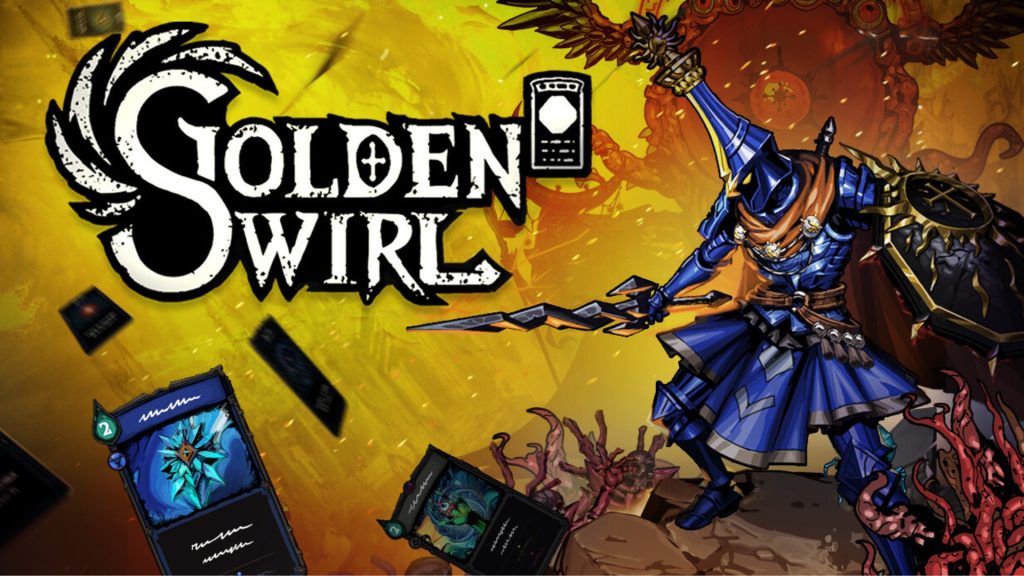
Golden Swirl inventive card combat carries the experience, but repetitive rooms, weak upgrades and excessive dialogue hold it back.
![[GAMESCOM 2026] Wilderdark Preview – Ambitious Dinosaur Horror Game That Still Has Plenty to Prove](https://www.indie-games.eu/wp-content/uploads/2026/09/Wilderdark-1024x576.jpg)
Dinosaur survival horror game Wilderdark has one of those premises that immediately makes you wonder why more games have not…
![[PREVIEW] Tiny Metal 2 – Strategy Game That Wants You to Learn From Every Mistake](https://www.indie-games.eu/wp-content/uploads/2026/09/Tiny-Metal-2-1024x576.jpg)
I rarely enjoy discovering that my opening strategy was completely wrong, but Tiny Metal 2 made that process one of…
![[PREVIEW] Remothered: Red Nun’s Legacy – Ambitious Survival Horror That Needs More Polish](https://www.indie-games.eu/wp-content/uploads/2026/09/Remothered-Red-Nuns-Legacy-4-1024x576.jpg)
Remothered: Red Nun’s Legacy has a gripping atmosphere and promising survival tools, but its repetitive hiding and rough visuals need…
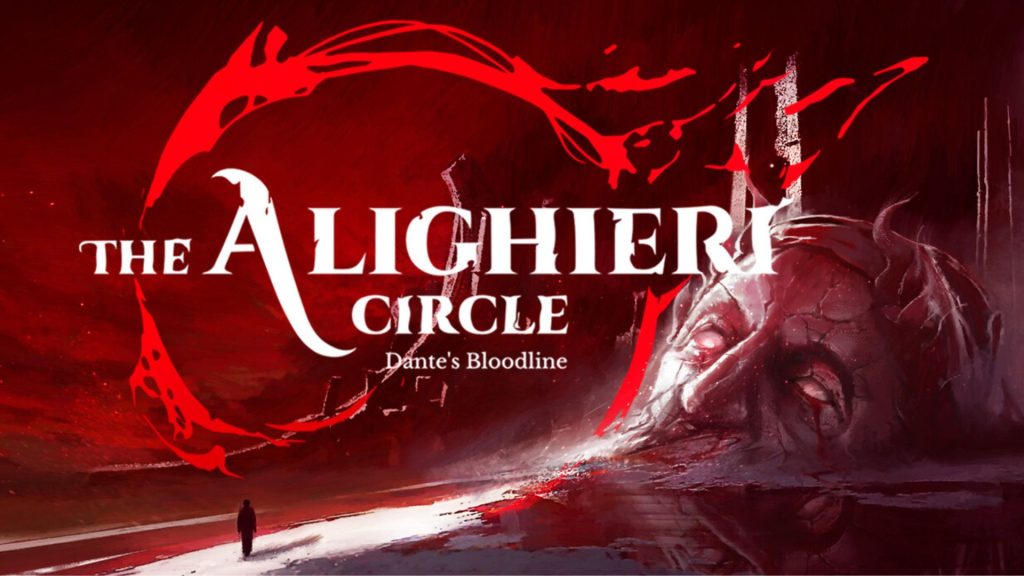
The Alighieri Circle: Dante’s Bloodline is difficult to recommend beyond players who are especially interested in Dante or enjoy solving…
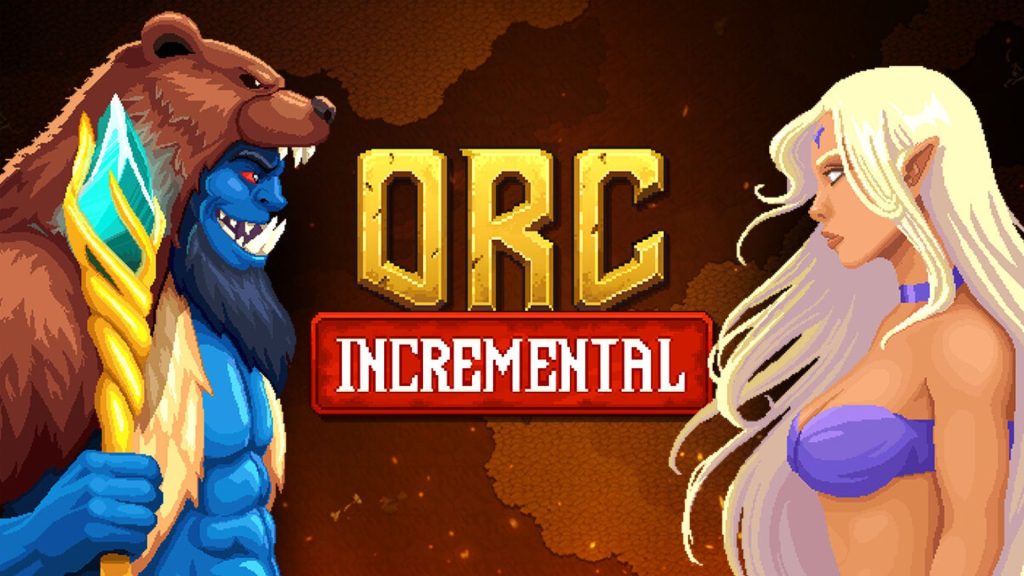
Orc Incremental offers satisfying progression, entertaining totem combinations and enough content to justify its affordable price.
![[GAMESCOM 2026] Chronoscript: The Endless End Preview – Beautiful Pages Hide Deliberate Combat](https://www.indie-games.eu/wp-content/uploads/2026/09/Chronoscript-The-Endless-End-1-1024x576.jpg)
Chronoscript: The Endless End stands out from other Metroidvanias by blending 2D manuscript worlds with exploration inside a 3D manor.
![[GAMESCOM 2026] MegaGum Preview – Combat Hits Hard in This Sticky Platforming Adventure](https://www.indie-games.eu/wp-content/uploads/2026/09/MegaGum-09-09-26-5-1024x576.jpg)
MegaGum combines hard-hitting combat, varied weapons and Gum-powered platforming in a promising Gamescom 2026 demo.
![[GAMESCOM 2026] Delphinium Preview – Cozy Routine Mixed With Enjoyable Minigames](https://www.indie-games.eu/wp-content/uploads/2026/03/Delphinium--1024x665.jpg)
Delphinium mixes cozy farming, exploration and relationships with enjoyable fishing, cooking and forging minigames in its Gamescom 2026 demo.
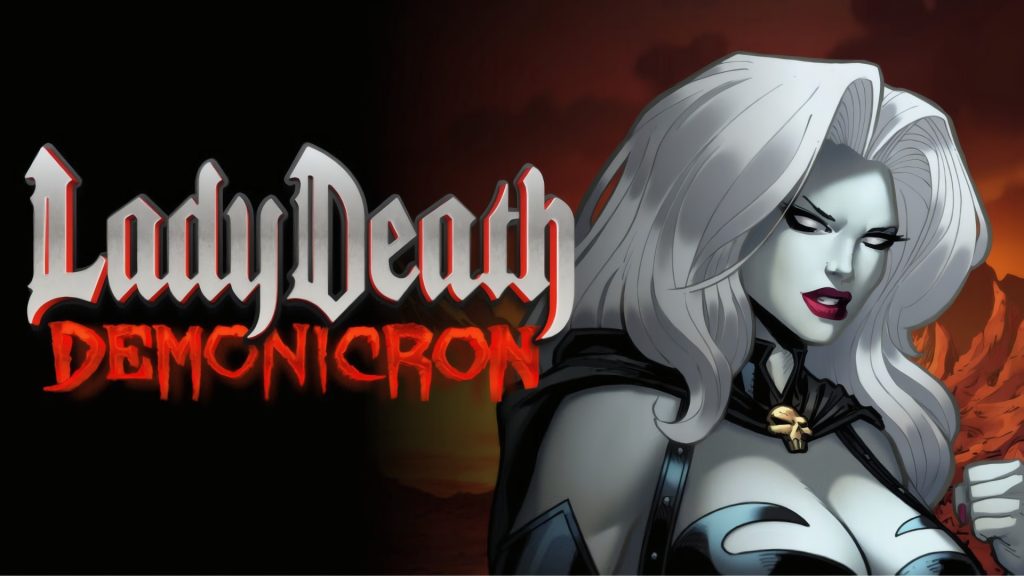
Lady Death: Demonicron looks the part, but underneath its excellent comic-book exterior is a clunky and painfully short brawler.
![[GAMESCOM 2026] Tomb Raider: Legacy of Atlantis Preview – Expands the Original Without Losing Its Identity](https://www.indie-games.eu/wp-content/uploads/2026/09/tomb-raider-legacy-of-atlantis-06-02-26-1-1024x576.jpg)
Tomb Raider: Legacy of Atlantis brings Lara back to her roots, but its Gamescom 2026 showing proved this is far…
![[GAMESCOM 2026] Clive Barker’s Hellraiser: Revival Preview – Ready to Open the Box](https://www.indie-games.eu/wp-content/uploads/2026/09/Clive-Barkers-Hellraiser-Revival-08-30-26-1-1024x576.jpg)
Hellraiser: Revival preserves the franchise’s sex, gore and psychological horror while delivering approachable survival-horror gameplay.

Swan Song creates a peaceful and forgiving puzzle space without removing the challenge that makes solving a difficult puzzle rewarding.
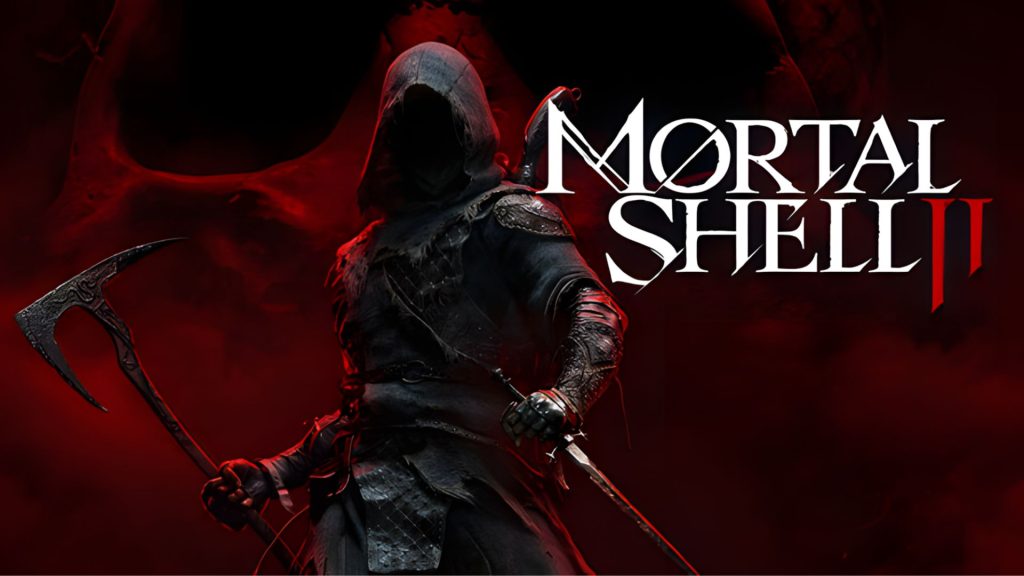
Mortal Shell II starts brilliantly but grows repetitive and exhausting, while remaining a rewarding and ambitious Soulslike sequel.
![[GAMESCOM 2026] Terranigma Preview – A Lost SNES Classic Returns in 2027](https://www.indie-games.eu/wp-content/uploads/2026/08/Terranigma-1-1024x576.jpg)
After more than three decades of limited availability, Terranigma is returning in 2027. We played its enhanced re-release at Gamescom…
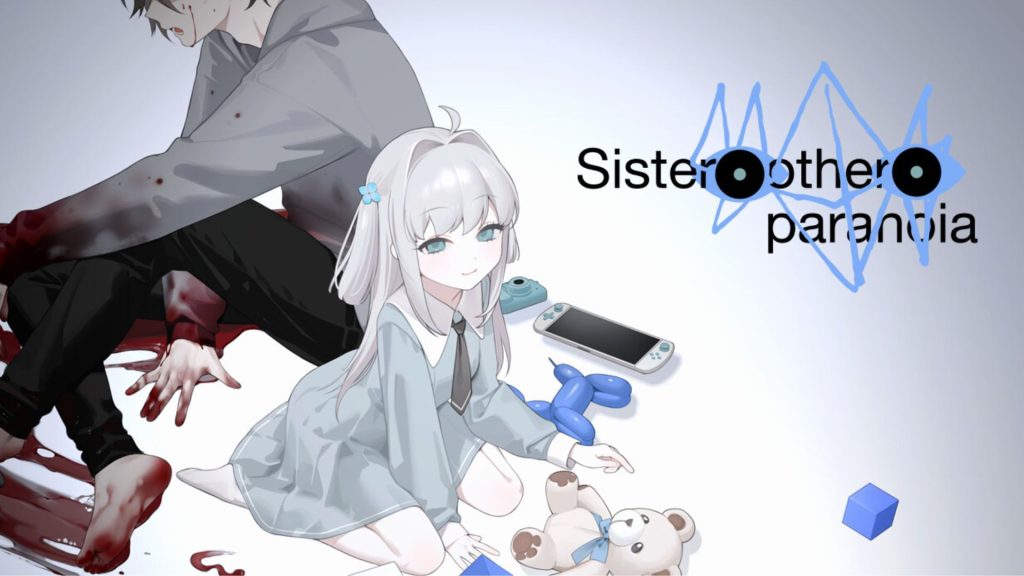
Reading another person’s mind is often presented as a desirable superpower, but Sister Other Paranoia immediately understands why it could…
