Fire Emblem Awakening Retro Review – Unfulfilled Potential
Awakening is worth playing if you enjoy developing characters, experimenting with tactical partnerships, and shaping an army over a massive…


If you enjoy independent indie game coverage, consider supporting Indie-Games.eu on Patreon. It helps keep the site independent.
Roots Devour is an ambitious and creative indie game that mixes deckbuilding, resource management and exploration into one strange and memorable experience. Wrapped in a dark, Lovecraftian style, it’s a very unique “evil plant” game where you spread through the forest, uncover its secrets and consume everything in your path. I never expected to spend hours playing as a plant, but the game regularly surprises you with small story moments, like a rat betraying its own kind to avoid being eaten, or human cultists slowly realizing what kind of monster they’ve awakened.
At its core, Roots Devour puts you in the role of an ancient, otherworldly force waking up beneath a quiet forest. The tone is unapologetically dark. Your goal is simple: grow, spread your roots and feed. You pierce the land and living creatures alike to drain blood, which acts as a key resource. Every root you place and every card you play on the map feels like a real decision, tying strategy directly to the act of consuming the world around you. It’s not symbolic or abstract, the game makes sure you feel like a growing threat with every move.
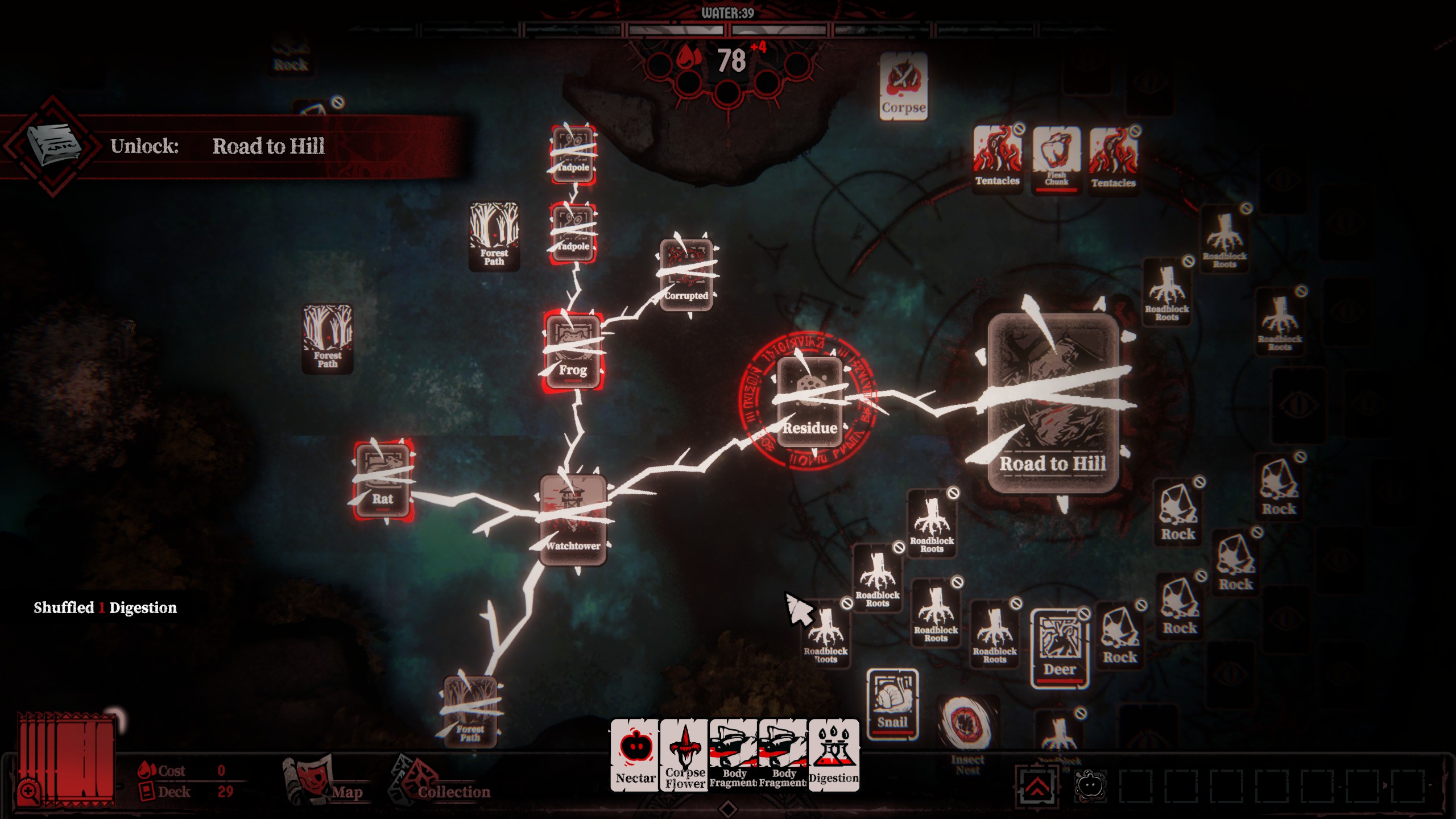
The main mechanic is built around connecting cards on a grid to spread your roots across the map. Unlike most deckbuilders, where progress depends heavily on card draw and randomness, Roots Devour focuses more on positioning and resource management. Every card matters because of where you place it, placement affects costs, bonuses, and how cards interact with those around them. What first looks like a simple tile-based system quickly shows more depth. The way your roots grow directly affects your blood and water resources, the paths you can take through a level, and how you interact or clash with other creatures.
Cards themselves aren’t the most important part of the game, it’s how you manage everything around them. That said, some cards can change how you play, like digestion cards that let you consume larger creatures, or poison clouds that destroy roots draining water. At first, the game can feel overwhelming, but the more you play, the more you realize it’s built for long runs. The end never feels close and that’s intentional. There are multiple endings and easily over ten hours of content. After finishing a run, you can unlock new cards and bonuses outside the campaign and the further you push each run, the more upgrades you earn, making it important to survive and expand for as long as possible.
Storytelling in Roots Devour is subtle and rarely explained directly. The narrative unfolds across five chapters through short encounters with human characters such as survivors, cultists and people slowly losing their sanity. These moments are handled through dialogue and player choices and they tie directly into your role in the world. You can observe, trade with, manipulate, or consume these characters and those decisions can affect the overall direction of your run. This approach encourages replayability and experimenting with different outcomes. While the system works well overall, occasional translation issues can make some story moments feel less clear than they should.
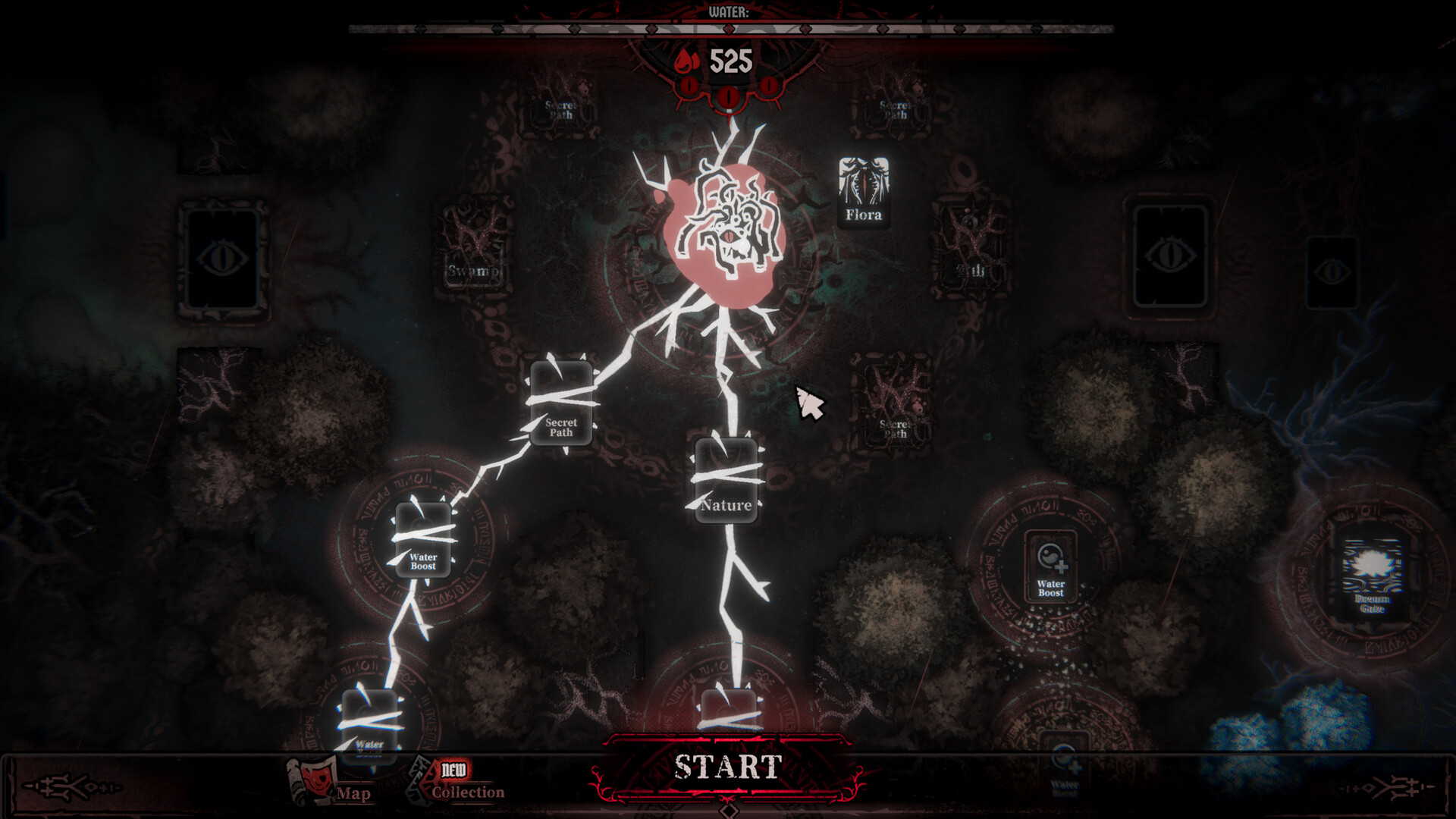
The game also features a fast-travel system that lets you choose your starting point, though some paths remain blocked by rocks or trees until you progress further. While the game uses a simple, linear path to show you where to go, it never spoils what’s ahead and there are plenty of hidden paths to discover. It’s also worth mentioning how frequently the game introduces new mechanics, like different ways to collect cards and manage your water. In fact, you’ll need to strategically place your cards to conserve water over long distances. There’s a surprising amount of depth here and once the strategy clicks, the game becomes even more fun.
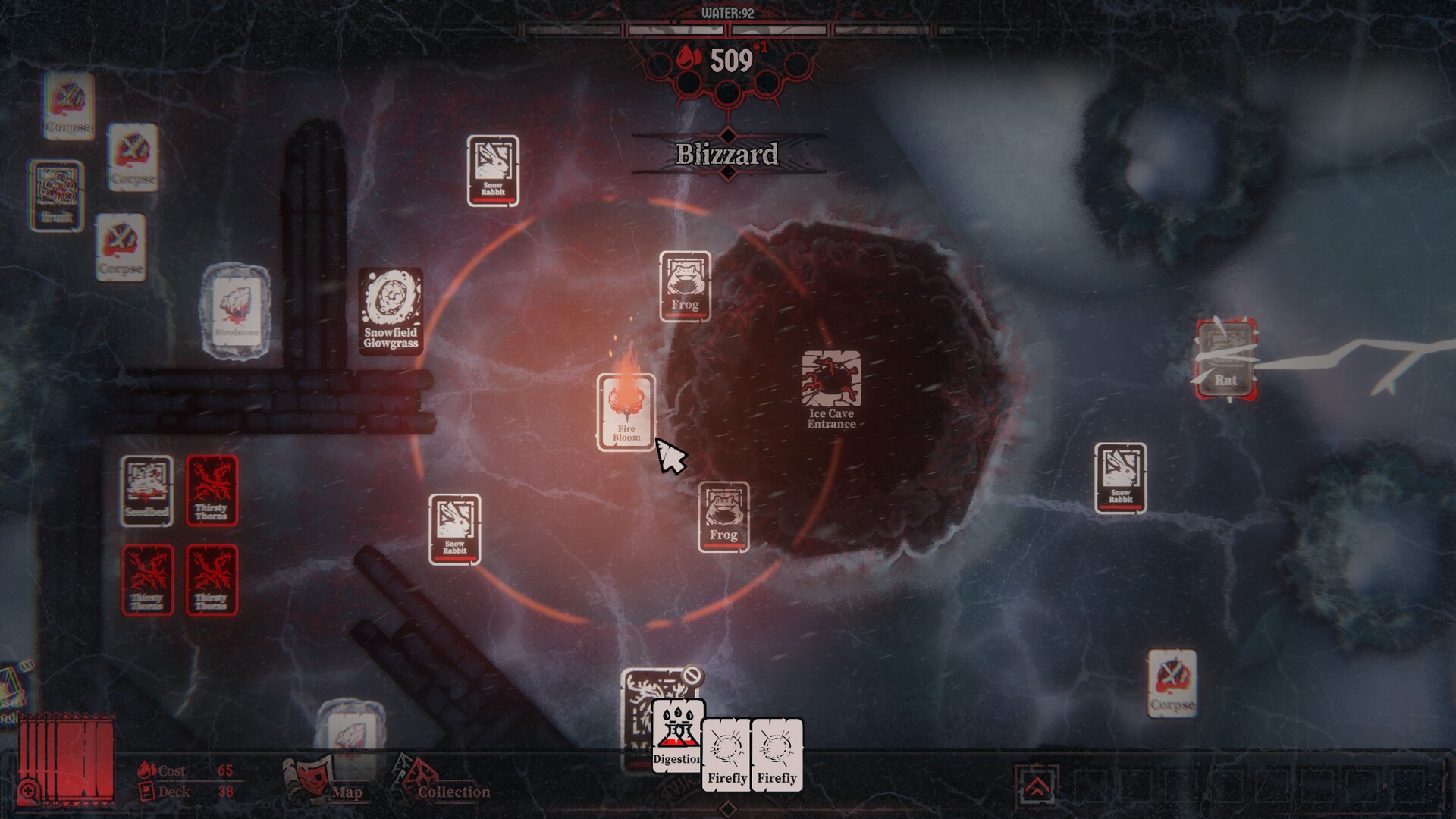
The art style leans heavily into gothic and unsettling imagery. You move through twisted forests, grotesque living creatures, muddy swamps, and freezing, bone-chilling mountains. These environments don’t just change how the game looks, they also affect how it plays. Each region introduces new rules or limitations that force you to adjust your strategy. The swamp slowly suffocates your growth, while the frozen mountains constantly drain your water and blood. These environmental pressures feel just as important as the cards you play.
That said, the game isn’t without its rough edges. I’ll be honest, I often wished the game did a better job of signaling when a decision was especially important. In some moments, like deciding whether to kill or spare a creature such as the owl, the game doesn’t clearly communicate the long-term impact of your choice. Difficulty can also spike suddenly in certain areas, especially in the mountains, without giving you much time to adapt. Thankfully, the game allows you to quickly return to previous areas, which helps soften the frustration.
Puzzles are also a regular part of the experience. Paths may be blocked at first, but there’s usually a solution if you pay close attention. The game keeps introducing new ideas instead of repeating the same tricks, whether it’s figuring out where to place a torch to reveal a hidden cave or finding an alternate route forward. Along the way, you’ll meet a merchant who follows you throughout the game and lets you buy upgrades, as well as side characters you can interact with and keep close, adding a bit more depth to your journey.
Roots Devour is exactly why indie games are so special. It’s a bold, innovative genre-blender that delivers a strategic card game centered on being the villain. It takes familiar mechanics and breathes new life into them through engaging gameplay and a stunning, grotesque gothic aesthetic. Between the lore entries that genuinely surprise you and the sheer amount of content, this is an experience that sticks with you well after you’ve finished playing.
Review copy provided by the publisher
Awakening is worth playing if you enjoy developing characters, experimenting with tactical partnerships, and shaping an army over a massive…
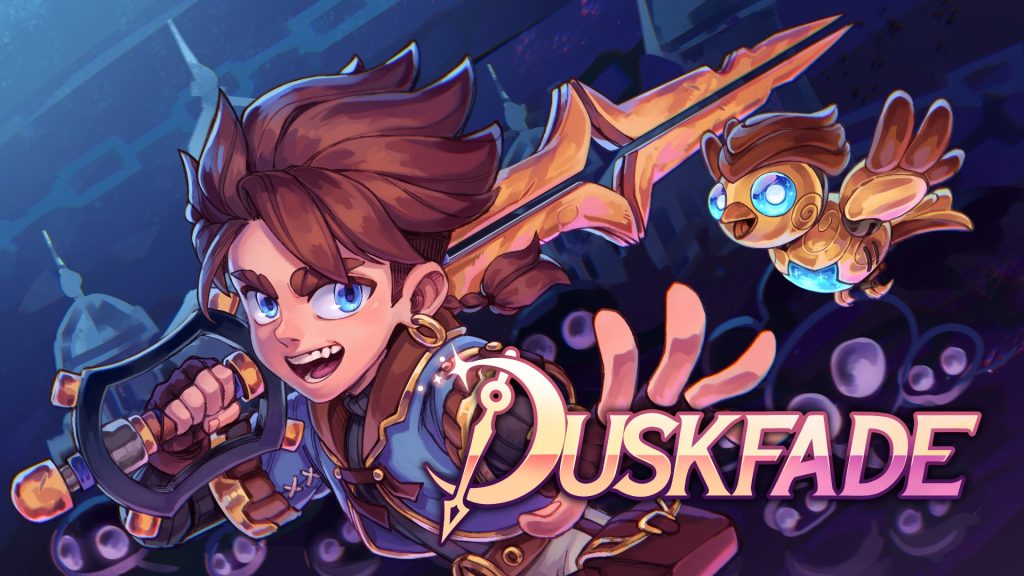
Duskfade is worth considering for players who miss colourful PS2-style action-platformers and can tolerate basic combat, floaty movement and backtracking.

Man I Just Wanna Go Home is a noir crime story with visuals from MS Paint and life-or-death choices.
![[GAMESCOM 2026] Vikings Dynasty Preview – Expands the Dynasty Formula](https://www.indie-games.eu/wp-content/uploads/2026/09/Viking-Dynasty-09-21-26-2-1024x576.jpg)
After showing me Prospera at Gamescom 2026, Toplitz Productions' Mathias Oertel moved to a very different kind of settlement builder.…
![[GAMESCOM 2026] Prospera Preview – Production, Prosperity and Victorian Industry](https://www.indie-games.eu/wp-content/uploads/2026/09/Prospera-09-21-26-5-1024x576.jpg)
At Gamescom 2026, I met with Toplitz Productions' Mathias Oertel for a guided presentation of two upcoming games. One of…
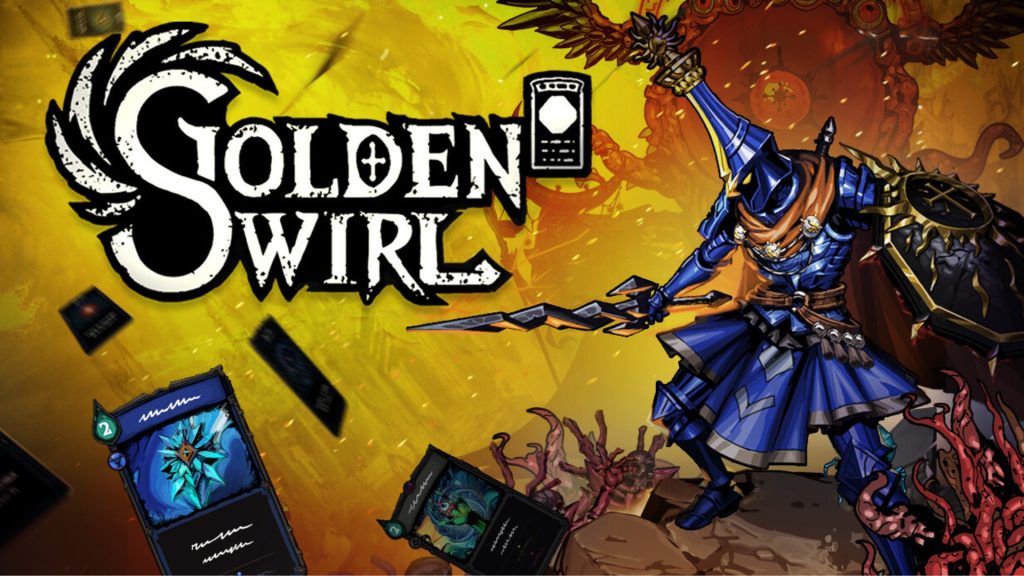
Golden Swirl inventive card combat carries the experience, but repetitive rooms, weak upgrades and excessive dialogue hold it back.
![[GAMESCOM 2026] Wilderdark Preview – Ambitious Dinosaur Horror Game That Still Has Plenty to Prove](https://www.indie-games.eu/wp-content/uploads/2026/09/Wilderdark-1024x576.jpg)
Dinosaur survival horror game Wilderdark has one of those premises that immediately makes you wonder why more games have not…
![[PREVIEW] Tiny Metal 2 – Strategy Game That Wants You to Learn From Every Mistake](https://www.indie-games.eu/wp-content/uploads/2026/09/Tiny-Metal-2-1024x576.jpg)
I rarely enjoy discovering that my opening strategy was completely wrong, but Tiny Metal 2 made that process one of…
![[PREVIEW] Remothered: Red Nun’s Legacy – Ambitious Survival Horror That Needs More Polish](https://www.indie-games.eu/wp-content/uploads/2026/09/Remothered-Red-Nuns-Legacy-4-1024x576.jpg)
Remothered: Red Nun’s Legacy has a gripping atmosphere and promising survival tools, but its repetitive hiding and rough visuals need…
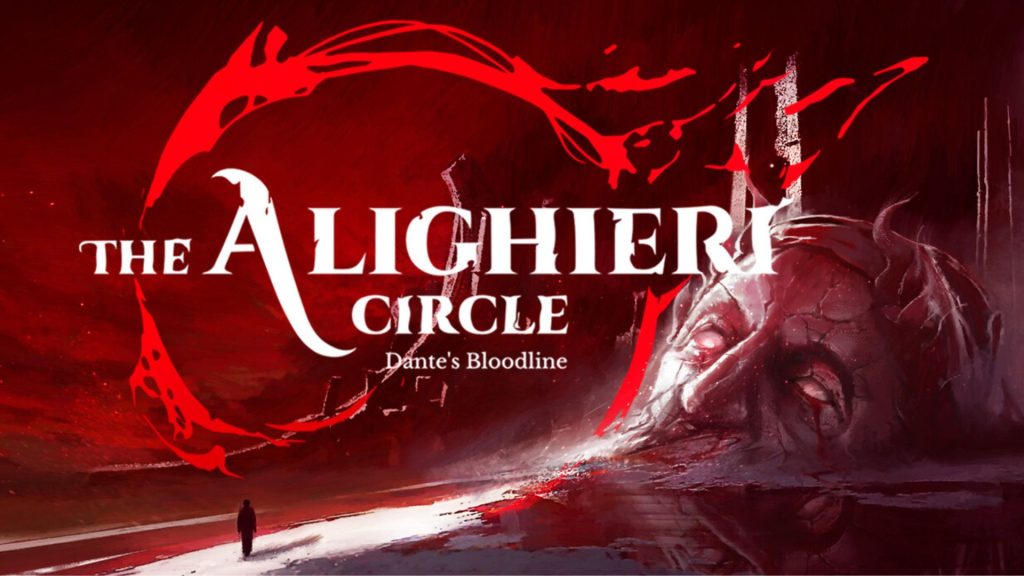
The Alighieri Circle: Dante’s Bloodline is difficult to recommend beyond players who are especially interested in Dante or enjoy solving…
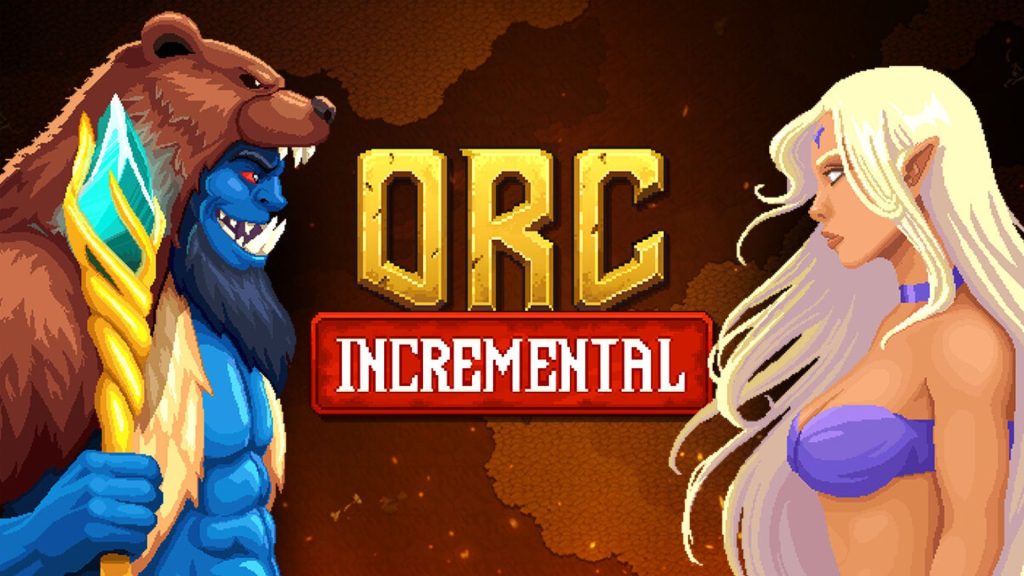
Orc Incremental offers satisfying progression, entertaining totem combinations and enough content to justify its affordable price.
![[GAMESCOM 2026] Chronoscript: The Endless End Preview – Beautiful Pages Hide Deliberate Combat](https://www.indie-games.eu/wp-content/uploads/2026/09/Chronoscript-The-Endless-End-1-1024x576.jpg)
Chronoscript: The Endless End stands out from other Metroidvanias by blending 2D manuscript worlds with exploration inside a 3D manor.
![[GAMESCOM 2026] MegaGum Preview – Combat Hits Hard in This Sticky Platforming Adventure](https://www.indie-games.eu/wp-content/uploads/2026/09/MegaGum-09-09-26-5-1024x576.jpg)
MegaGum combines hard-hitting combat, varied weapons and Gum-powered platforming in a promising Gamescom 2026 demo.
![[GAMESCOM 2026] Delphinium Preview – Cozy Routine Mixed With Enjoyable Minigames](https://www.indie-games.eu/wp-content/uploads/2026/03/Delphinium--1024x665.jpg)
Delphinium mixes cozy farming, exploration and relationships with enjoyable fishing, cooking and forging minigames in its Gamescom 2026 demo.
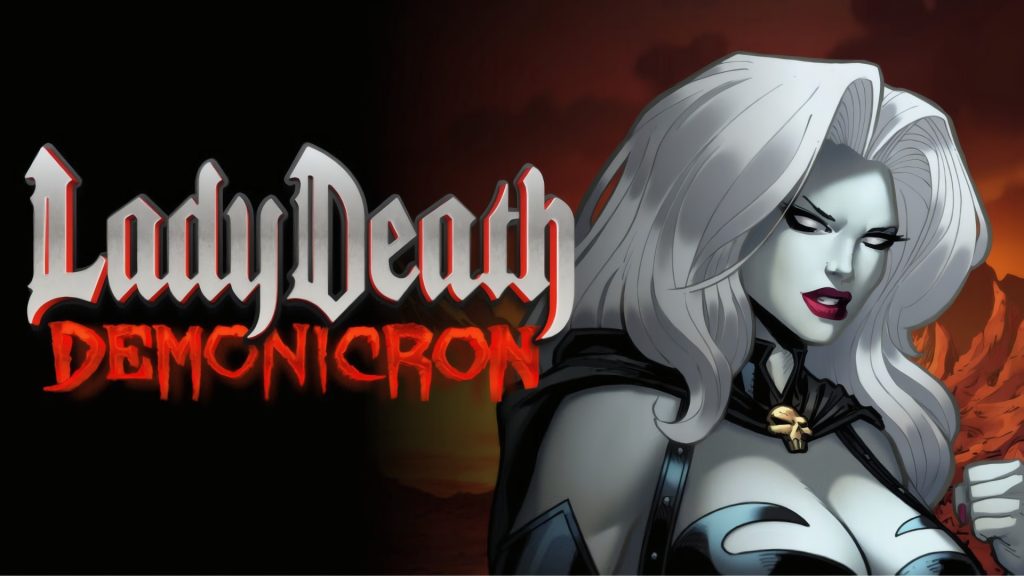
Lady Death: Demonicron looks the part, but underneath its excellent comic-book exterior is a clunky and painfully short brawler.
![[GAMESCOM 2026] Tomb Raider: Legacy of Atlantis Preview – Expands the Original Without Losing Its Identity](https://www.indie-games.eu/wp-content/uploads/2026/09/tomb-raider-legacy-of-atlantis-06-02-26-1-1024x576.jpg)
Tomb Raider: Legacy of Atlantis brings Lara back to her roots, but its Gamescom 2026 showing proved this is far…
![[GAMESCOM 2026] Clive Barker’s Hellraiser: Revival Preview – Ready to Open the Box](https://www.indie-games.eu/wp-content/uploads/2026/09/Clive-Barkers-Hellraiser-Revival-08-30-26-1-1024x576.jpg)
Hellraiser: Revival preserves the franchise’s sex, gore and psychological horror while delivering approachable survival-horror gameplay.

Swan Song creates a peaceful and forgiving puzzle space without removing the challenge that makes solving a difficult puzzle rewarding.

Mortal Shell II starts brilliantly but grows repetitive and exhausting, while remaining a rewarding and ambitious Soulslike sequel.
![[GAMESCOM 2026] Terranigma Preview – A Lost SNES Classic Returns in 2027](https://www.indie-games.eu/wp-content/uploads/2026/08/Terranigma-1-1024x576.jpg)
After more than three decades of limited availability, Terranigma is returning in 2027. We played its enhanced re-release at Gamescom…
