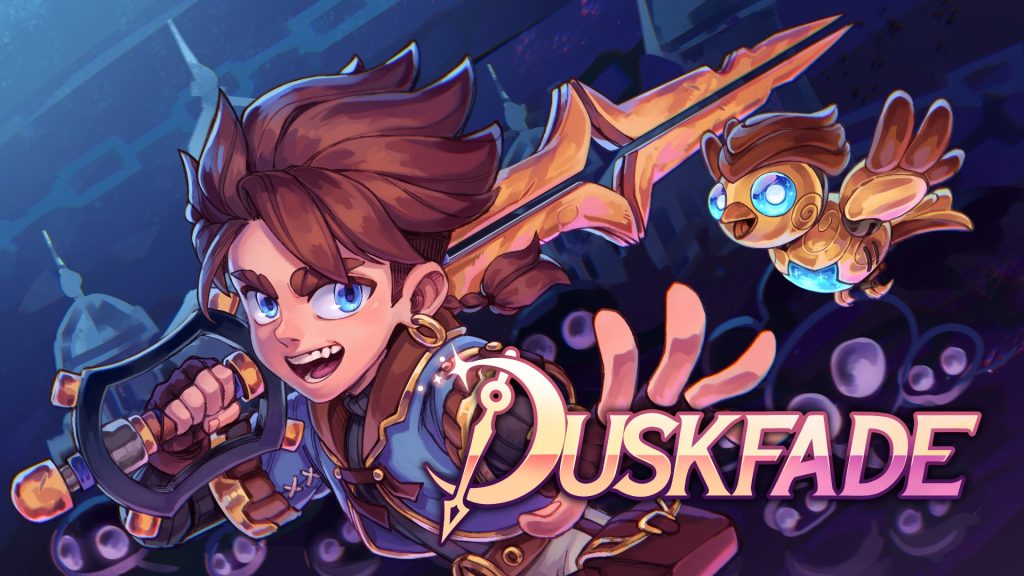
Duskfade – The PS2 Era Returns With All Its Strengths and Weaknesses
Duskfade is worth considering for players who miss colourful PS2-style action-platformers and can tolerate basic combat, floaty movement and backtracking.


If you enjoy independent indie game coverage, consider supporting Indie-Games.eu on Patreon. It helps keep the site independent.
School of Magic: Deck & Slash is an ambitious indie experiment that blends deckbuilding with real-time hack-and-slash action, and the result is immediately intriguing. Released into Early Access, it’s clear that some areas are still a work in progress, but the core mechanics already show strong potential and promise a unique twist on two popular genres. The game positions itself as “Diablo meets Slay the Spire,” and for the most part, it delivers on that bold comparison.
It’s also worth noting that AI plays a significant role in the game’s development. The 2D art was created using OpenAI tools, the narrator is powered by ElevenLabs, narrative assistance was provided by OpenAI, and coding was supported by various AI models, including OpenAI and Anthropic technologies. This might not be everyone’s cup of tea.
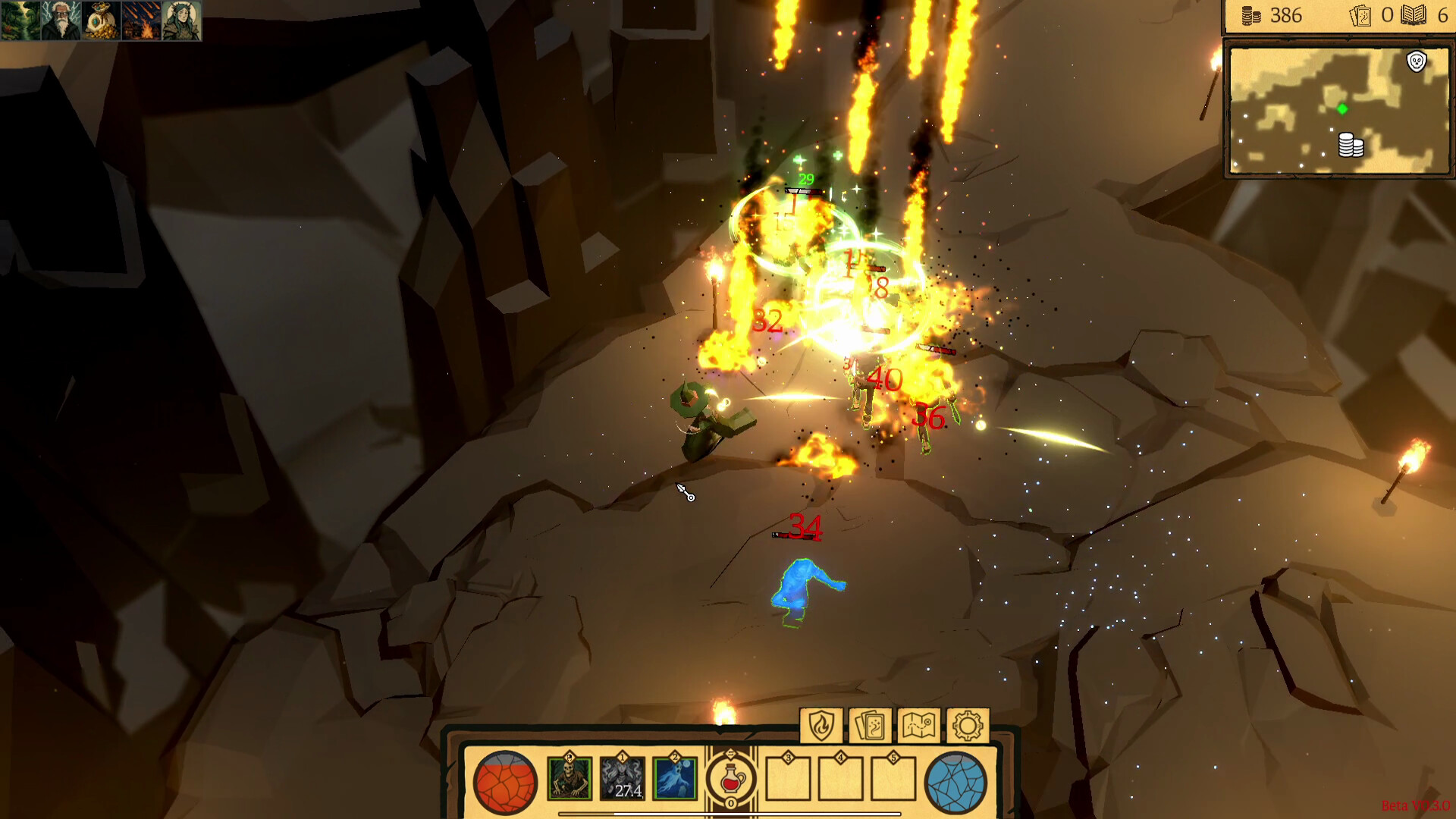
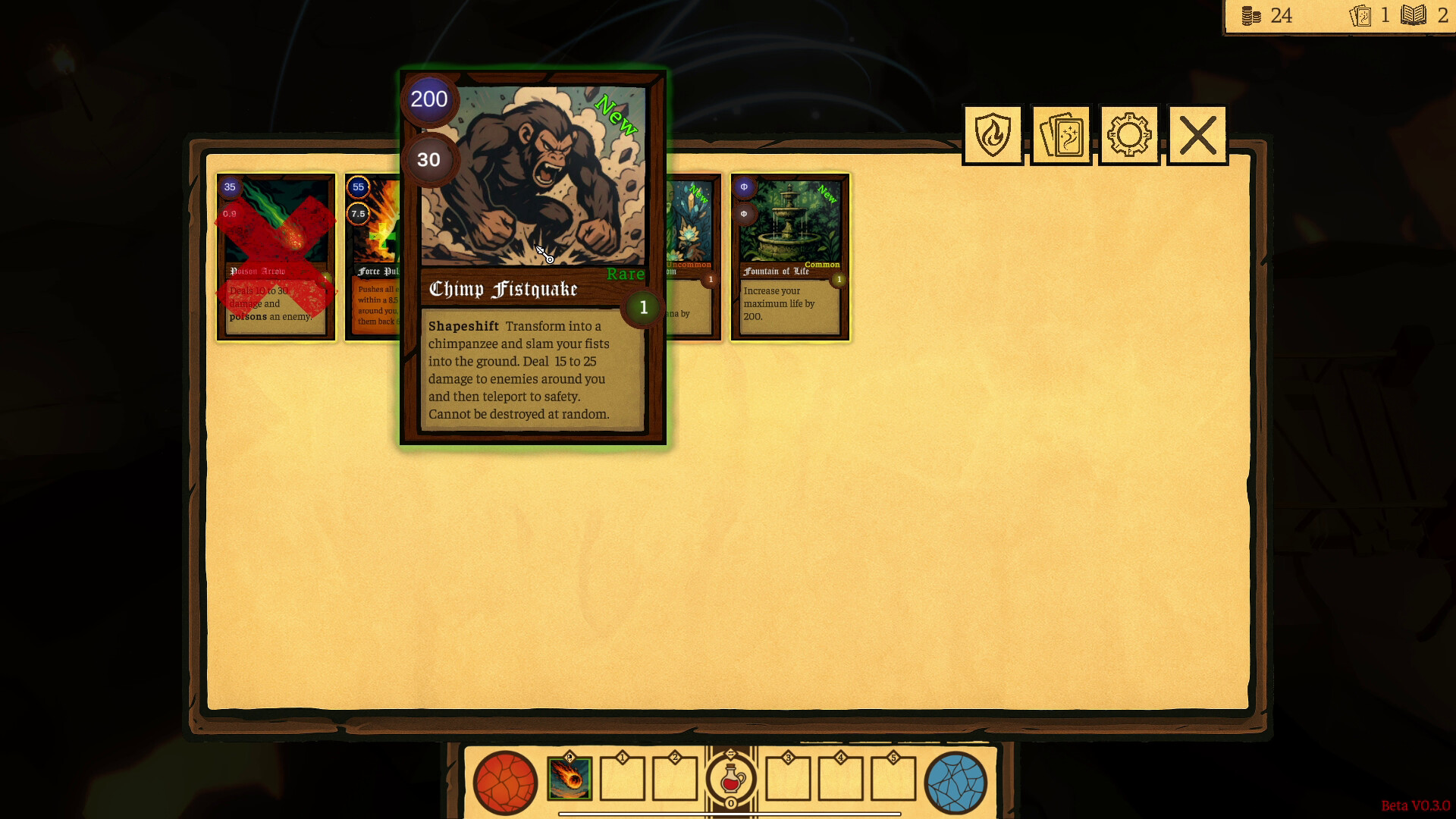
The game’s primary loop revolves around building a character’s deck of spells at the start of each run, then venturing into real-time combat. Unlike traditional class-based RPGs, you assemble a dynamic set of abilities, which evolve as the run progresses: one card is removed, the rest grow stronger, and three new cards are added. This mechanic creates an interesting, ever-changing skill tree where no two runs feel identical.
The deckbuilding itself is unique, and the choices carry meaningful weight, but the implementation is sometimes frustrating. The animations showing spell changes each turn are slow and intrusive; a static icon or quick summary would make the process smoother. Similarly, while you can modify spells, the options are limited, and leveling them rarely feels impactful. Boosts are minor, and occasional massive rewards, like a 100+% critical chance for the first level, feel unearned and break the balance.
Combat is real-time, requiring strategic planning, but it quickly becomes repetitive. Enemies charge, you cast spells, you move on. Even boss encounters, while visually distinct, rarely demand anything more than the same basic actions. The early game offers some tension, but the difficulty curve quickly flattens into a “power spiral.” The result is that fights rarely feel skill-based; surviving or succeeding often comes down to choosing the right stat boosts or spells rather than reflexes or clever play.
Map and level design add to these issues. Environments feel flat and featureless, with little incentive to explore. Landmark features often appear nonfunctional, giving the impression of unfinished content, and the minimap is poorly executed, sometimes hiding key connections or misrepresenting terrain. Its only helpful element is the player trail, which helps track recent movements. Exploration feels like a checklist rather than a meaningful adventure: you move from one encounter to another with little sense of discovery, and most battles are very similar to each other.
Technical performance further undermines the experience. On my PC, the game suffered from constant FPS drops and freezing, making some areas unplayable despite the modest visuals. While the demo ran more smoothly, the full release made progression frustrating. These issues, combined with Early Access limitations, create a barrier to fully enjoying the game’s promising systems.
Still, there is potential here. The risk-and-reward system of deck evolution encourages experimentation, and unlocking new spells or story content between runs gives a sense of progression even through failure. For thise who enjoy both deckbuilding and action RPGs, the foundation is intriguing: each run offers a chance to experiment with builds and strategies in a way that few indie titles attempt.
At present, however, School of Magic: Deck & Slash is a mixed experience. The deckbuilding mechanics are clever, but combat and level design are flat, balance is inconsistent, and technical issues can prevent proper play. It offers the satisfaction of checking boxes off a task list, but lacks excitement in its core gameplay loop. For those willing to explore an Early Access title with strong ideas but incomplete execution, it’s worth a look. Those seeking polished, skill-driven combat or fully realized environments may want to wait.
Review copy provided by the publisher
Duskfade is worth considering for players who miss colourful PS2-style action-platformers and can tolerate basic combat, floaty movement and backtracking.

Man I Just Wanna Go Home is a noir crime story with visuals from MS Paint and life-or-death choices.
![[GAMESCOM 2026] Vikings Dynasty Preview – Expands the Dynasty Formula](https://www.indie-games.eu/wp-content/uploads/2026/09/Viking-Dynasty-09-21-26-2-1024x576.jpg)
After showing me Prospera at Gamescom 2026, Toplitz Productions' Mathias Oertel moved to a very different kind of settlement builder.…
![[GAMESCOM 2026] Prospera Preview – Production, Prosperity and Victorian Industry](https://www.indie-games.eu/wp-content/uploads/2026/09/Prospera-09-21-26-5-1024x576.jpg)
At Gamescom 2026, I met with Toplitz Productions' Mathias Oertel for a guided presentation of two upcoming games. One of…
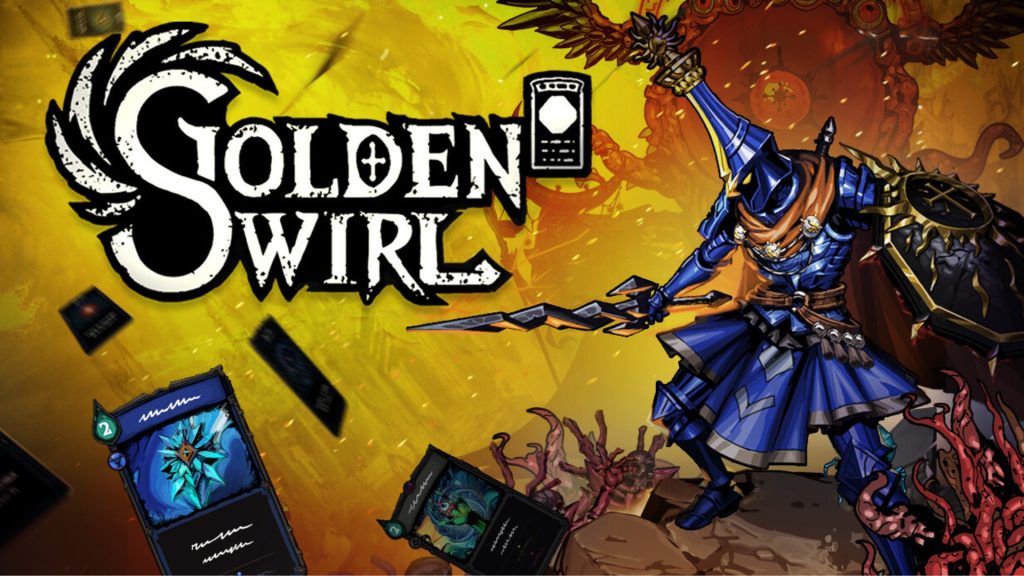
Golden Swirl inventive card combat carries the experience, but repetitive rooms, weak upgrades and excessive dialogue hold it back.
![[GAMESCOM 2026] Wilderdark Preview – Ambitious Dinosaur Horror Game That Still Has Plenty to Prove](https://www.indie-games.eu/wp-content/uploads/2026/09/Wilderdark-1024x576.jpg)
Dinosaur survival horror game Wilderdark has one of those premises that immediately makes you wonder why more games have not…
![[PREVIEW] Tiny Metal 2 – Strategy Game That Wants You to Learn From Every Mistake](https://www.indie-games.eu/wp-content/uploads/2026/09/Tiny-Metal-2-1024x576.jpg)
I rarely enjoy discovering that my opening strategy was completely wrong, but Tiny Metal 2 made that process one of…
![[PREVIEW] Remothered: Red Nun’s Legacy – Ambitious Survival Horror That Needs More Polish](https://www.indie-games.eu/wp-content/uploads/2026/09/Remothered-Red-Nuns-Legacy-4-1024x576.jpg)
Remothered: Red Nun’s Legacy has a gripping atmosphere and promising survival tools, but its repetitive hiding and rough visuals need…
The Alighieri Circle: Dante’s Bloodline is difficult to recommend beyond players who are especially interested in Dante or enjoy solving…
Orc Incremental offers satisfying progression, entertaining totem combinations and enough content to justify its affordable price.
![[GAMESCOM 2026] Chronoscript: The Endless End Preview – Beautiful Pages Hide Deliberate Combat](https://www.indie-games.eu/wp-content/uploads/2026/09/Chronoscript-The-Endless-End-1-1024x576.jpg)
Chronoscript: The Endless End stands out from other Metroidvanias by blending 2D manuscript worlds with exploration inside a 3D manor.
![[GAMESCOM 2026] MegaGum Preview – Combat Hits Hard in This Sticky Platforming Adventure](https://www.indie-games.eu/wp-content/uploads/2026/09/MegaGum-09-09-26-5-1024x576.jpg)
MegaGum combines hard-hitting combat, varied weapons and Gum-powered platforming in a promising Gamescom 2026 demo.
![[GAMESCOM 2026] Delphinium Preview – Cozy Routine Mixed With Enjoyable Minigames](https://www.indie-games.eu/wp-content/uploads/2026/03/Delphinium--1024x665.jpg)
Delphinium mixes cozy farming, exploration and relationships with enjoyable fishing, cooking and forging minigames in its Gamescom 2026 demo.
Lady Death: Demonicron looks the part, but underneath its excellent comic-book exterior is a clunky and painfully short brawler.
![[GAMESCOM 2026] Tomb Raider: Legacy of Atlantis Preview – Expands the Original Without Losing Its Identity](https://www.indie-games.eu/wp-content/uploads/2026/09/tomb-raider-legacy-of-atlantis-06-02-26-1-1024x576.jpg)
Tomb Raider: Legacy of Atlantis brings Lara back to her roots, but its Gamescom 2026 showing proved this is far…
![[GAMESCOM 2026] Clive Barker’s Hellraiser: Revival Preview – Ready to Open the Box](https://www.indie-games.eu/wp-content/uploads/2026/09/Clive-Barkers-Hellraiser-Revival-08-30-26-1-1024x576.jpg)
Hellraiser: Revival preserves the franchise’s sex, gore and psychological horror while delivering approachable survival-horror gameplay.

Swan Song creates a peaceful and forgiving puzzle space without removing the challenge that makes solving a difficult puzzle rewarding.
Mortal Shell II starts brilliantly but grows repetitive and exhausting, while remaining a rewarding and ambitious Soulslike sequel.
![[GAMESCOM 2026] Terranigma Preview – A Lost SNES Classic Returns in 2027](https://www.indie-games.eu/wp-content/uploads/2026/08/Terranigma-1-1024x576.jpg)
After more than three decades of limited availability, Terranigma is returning in 2027. We played its enhanced re-release at Gamescom…

Reading another person’s mind is often presented as a desirable superpower, but Sister Other Paranoia immediately understands why it could…
