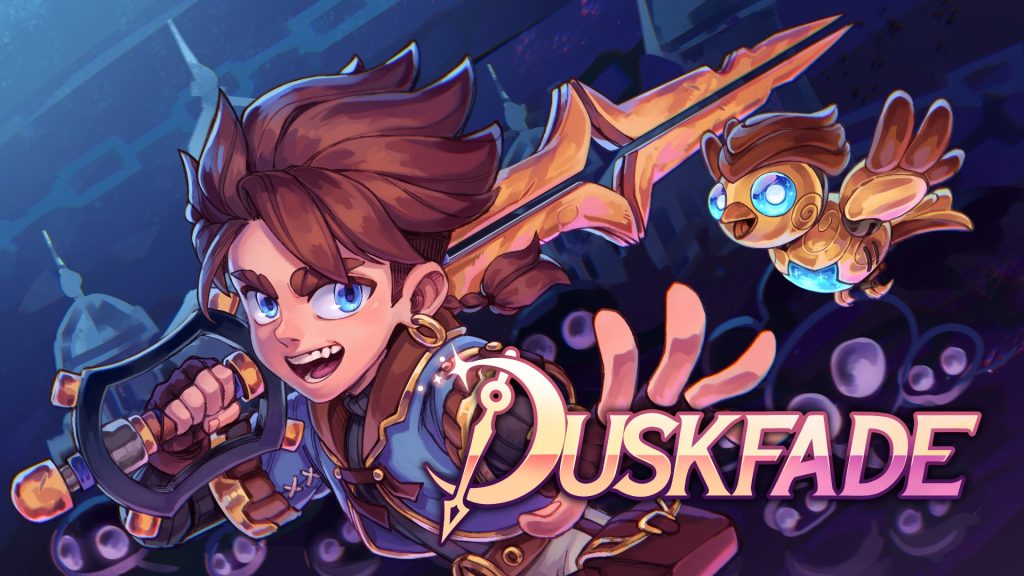
Duskfade – The PS2 Era Returns With All Its Strengths and Weaknesses
Duskfade is worth considering for players who miss colourful PS2-style action-platformers and can tolerate basic combat, floaty movement and backtracking.

If you enjoy independent indie game coverage, consider supporting Indie-Games.eu on Patreon. It helps keep the site independent.
Well hello there! Looks like you’ve stumbled upon on a review from someone who, in his 24 years of life, has never touched a Stronghold game before. What could possibly go wrong, right? So, what exactly is Stronghold Crusader: Definitive Edition? It’s an expanded remaster of the original 2002 “castle sim”. Buckle up for an honest, newbie take on the game, and feel free to trash me in the comments if you wish (no hard feelings!).
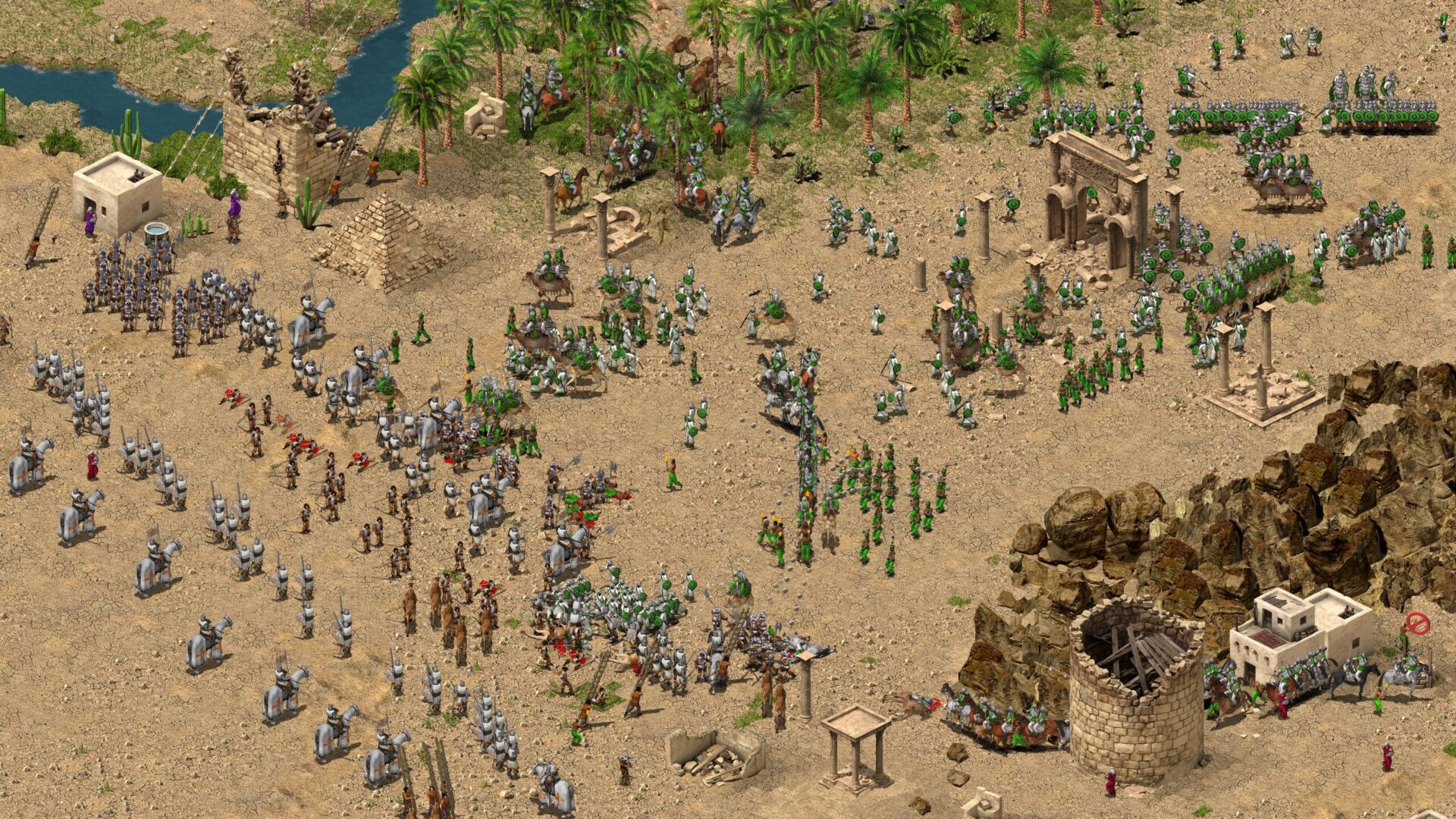
Since I never played the original 2002 game, I didn’t bother checking what’s new, because, hey, it’s all new to me. Okay, fine, I did take a sneak peek. This Definitive Edition features remastered artwork, animations, and music, plus new gameplay content, returning voice actors, and many fan-requested improvements, including larger maps. They’ve added new playable units, characters, campaigns, and more. Oh, and you can now besiege castles with 8 friends and rivals, so expect some wild multiplayer moments.
The moment I launched the game, I was greeted by this incredible, almost godly music and a crusader swinging his axe. I honestly thought it couldn’t get any better; I probably spent ten minutes just listening to the menu theme that had Arabic themes. Now, you’d think the campaign, being the tutorial, would be the first thing I played to grasp the mechanics, right? Well, I actually dove straight into the sandbox mode.
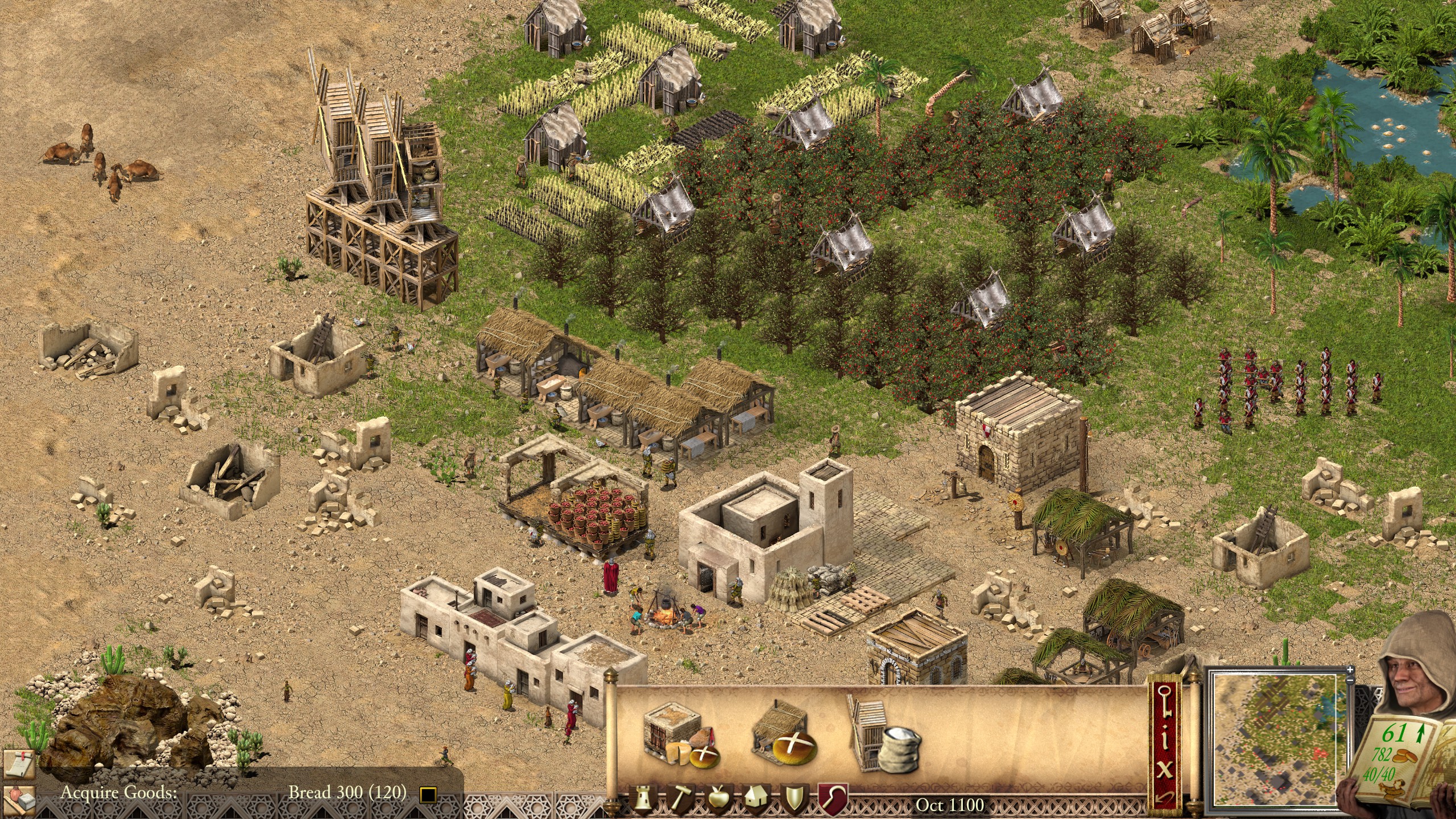
The ultimate enemy-free mod, just me, my land, and three hours of trying to figure out what the heck was going on. Since I have extensive experience with RTS and strategy games, it wasn’t that hard to piece together. I found the granary, woods to chop, iron, stone, and even a completely free marketplace. And oh boy, was I wrong about my initial assumptions. Stone walls? Castles to build? Watchtowers? A huge number of units to test? To be honest, I didn’t fully experience this in sandbox mode, although you can set up raids, choose how many units attack you, or even simulate disasters like fire or disease.
“I gave up finishing the campaign after completing the first one and trying several others. It was just so incredibly boring.”
Alright, alright, I gave the campaign mode a chance. And there’s certainly a lot to play: seven historical campaigns based on real-life events? This was my time to shine! You learn how to build, how Bedouins operate, the basics of Crusader gameplay, unit usage – pretty much everything. But oh man, I gave up after finishing the first campaign and trying several other ones. It was just so incredibly boring.
I genuinely didn’t want to sit for another 30 minutes just waiting for my bread storage to fill up so I could complete an objective. Even worse, sometimes I was thrown into scenarios that made no sense, like trying to breach a castle swarming with archers without a single catapult or a way to build heavy swordsmen.
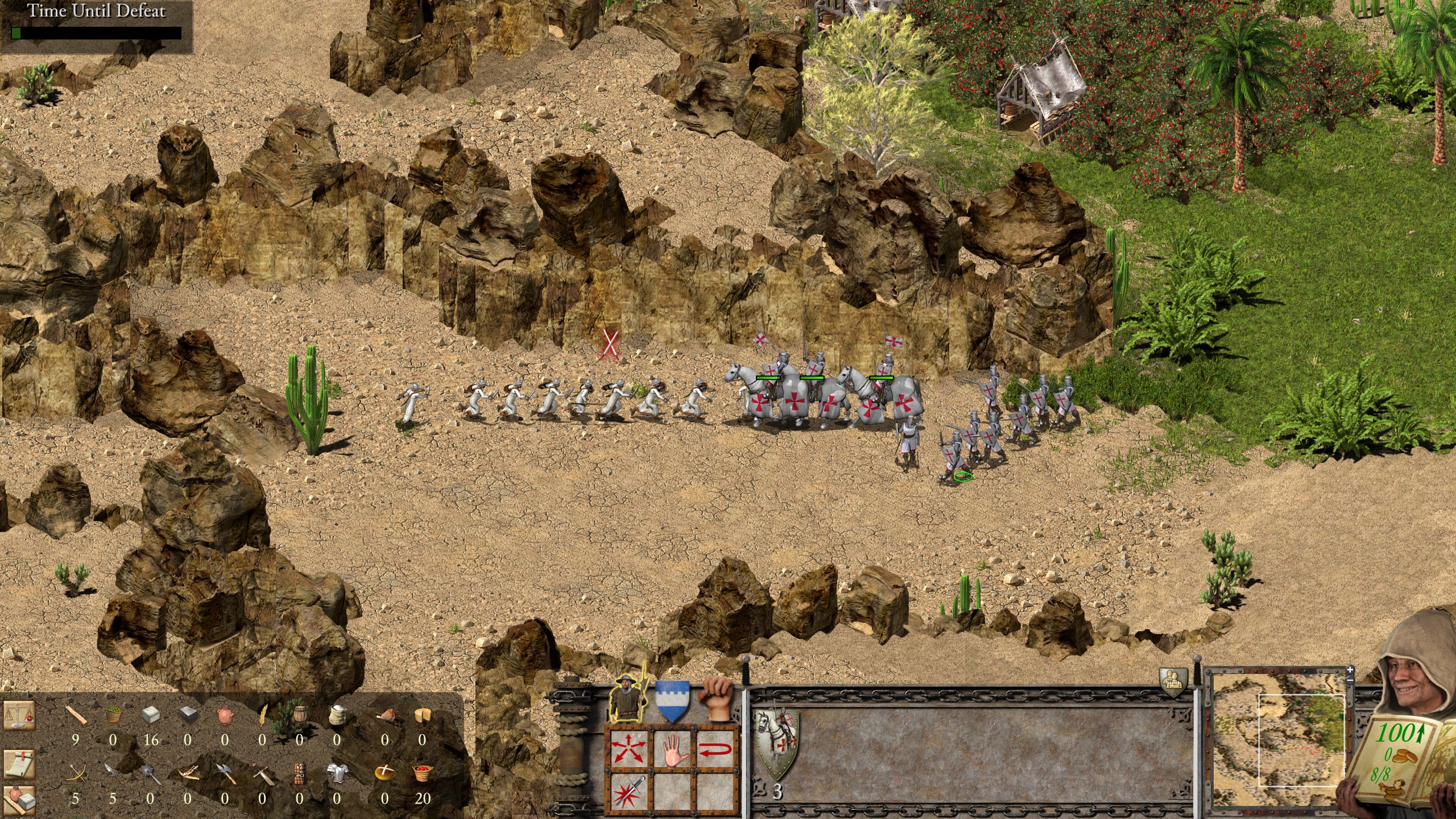
The first thing I thought I realized about the game: it’s very slow. While I didn’t mind the pace entirely, the game sometimes felt like it wasted my time. Yet, it was still a surprisingly fun experience. Maybe it was being able to build my own walls and castles, or perhaps how easy and accessible everything was to understand? One thing I truly appreciated was the hint system within the campaign. You can reveal hints one by one to understand your next steps.
I was genuinely surprised how the enemy AI consistently focused on archers, often ignoring other units. While sometimes amusing, imagine facing 20 archers stacked in watchtowers around a castle, with no way to counter them – you’re pretty much done for. The AI switched between being quite dumb and surprisingly smart. It was odd to me that the AI almost never or poorly reacted when I attacked their food farms or iron mines, at least on normal difficulty. For some reason, the AI would also consistently try to build across my territory just to reach a specific resource, even though they were effectively using the marketplace to trade.
“I was genuinely surprised how the enemy AI consistently focused on archers, often ignoring other units.”
Once I completely wiped out their resources, the AI just stopped working entirely. In fact, if the AI realizes you’re in a better position, it often just gives up. There were so many instances during my Skirmish playthroughs where we got stuck in frustrating loops. For example, the enemy had massive walls, numerous towers, and a huge number of units, but they also had stone resources that I lacked. Meanwhile, I had iron. This led to a stalemate where they could constantly build walls, while I had to spend a huge amount of money just to buy rocks for my catapults.
Overall, my feelings about the AI are a mixed bag. After numerous runs and playthroughs, finishing plenty of them, I believe it could have been better. Don’t get me wrong, RTS games often struggle with AI, but it’s not as bad as I initially thought. The AI does present a challenge; they definitely build faster than you, focus on certain areas, and control things more efficiently.
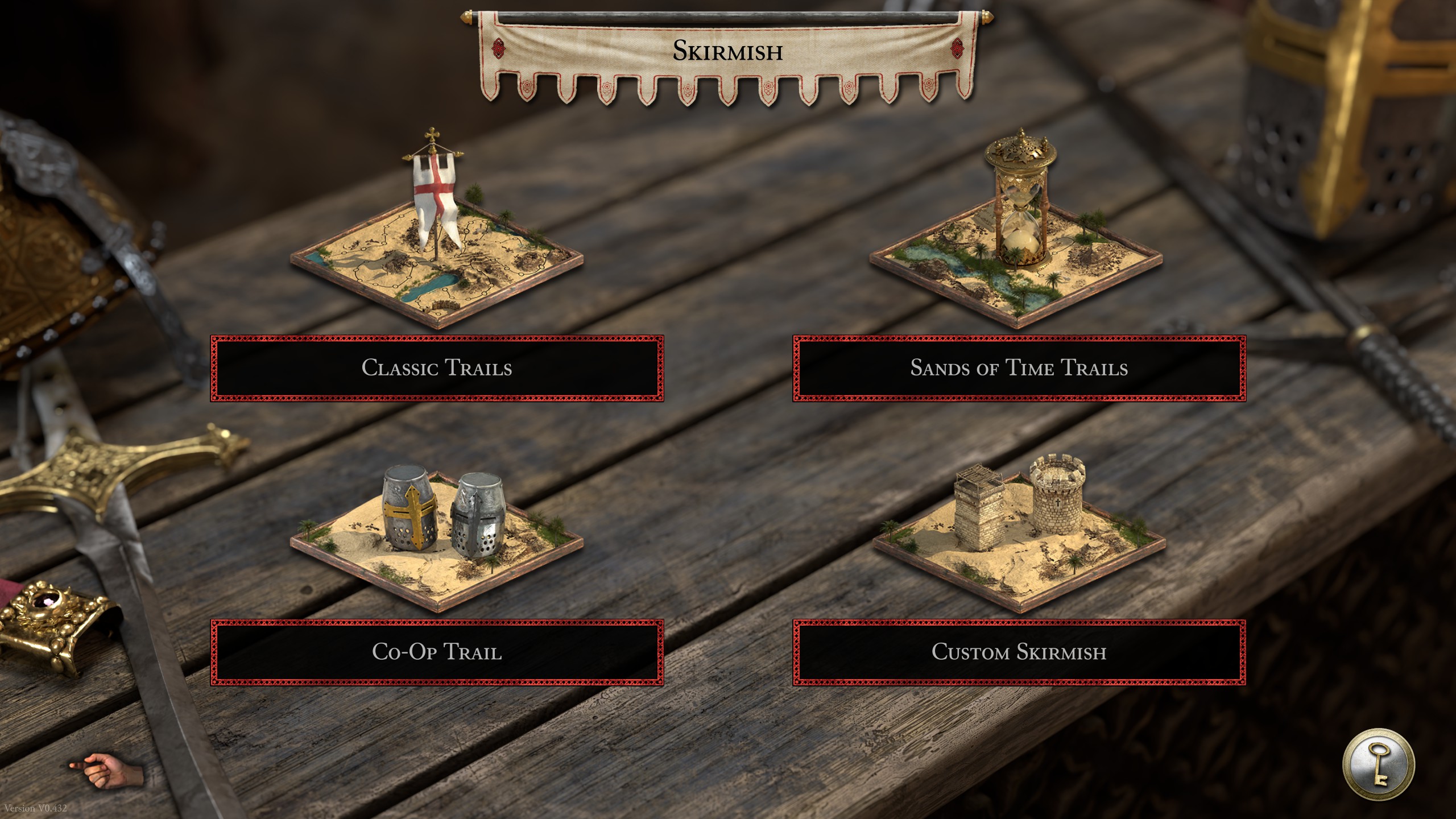
While I did ditch the campaign, Skirmish mode was very fun. It actually helped me learn the game quite fast. Yes, the AI destroyed me countless times because they were much quicker, but then I realized: hey, this game isn’t as slow as I thought. You have to be faster than your enemy, you have to play and strategize ahead. Once I understood I could easily build a mercenary squad early on, it became much easier to compete with the AI.
In fact, there are four ways to play skirmishes: classic trials with three difficulty settings (easy, normal, hard), co-op skirmishes, custom skirmishes, and Sands of Time trials where you test your endurance against harsh conditions. So, there’s a lot to dig into. During my 30-hour playthrough (I didn’t complete the hardest difficulty trial), I often found myself replaying the Sands of Time trials. They forced me to think twice about every move due to the fact there are leaderboards and it challenges you to beat the levels as fast as possible. This was the breakthrough moment: this game is not easy; it’s very difficult.
“Skirmish mode was very fun. It actually helped me learn the game quite fast.”
One more thing I want to point out: there’s a huge variety of units and machinery at your disposal, offering immense freedom to build castles and surrounding structures. For instance, you can construct a castle gate that lowers over water, and you can freely rotate your camera for easier navigation around corners. I even found myself building smaller outposts with walls just to terrorize the AI. Since much of the gameplay centers around oasis, imagine building towers all around them. This was a very fun part of the game. The “not so fun” aspect, however, was trying to breach those very same walls.
Chasing down enemies with heavy camels, healers, fire throwers, horse archers, and assassins was incredibly fun, and you’ll find yourself constantly experimenting with these units. While the building and progression are quite basic, lacking multiple tiers, combat is where this game truly shines, it’s undoubtedly the most enjoyable part.
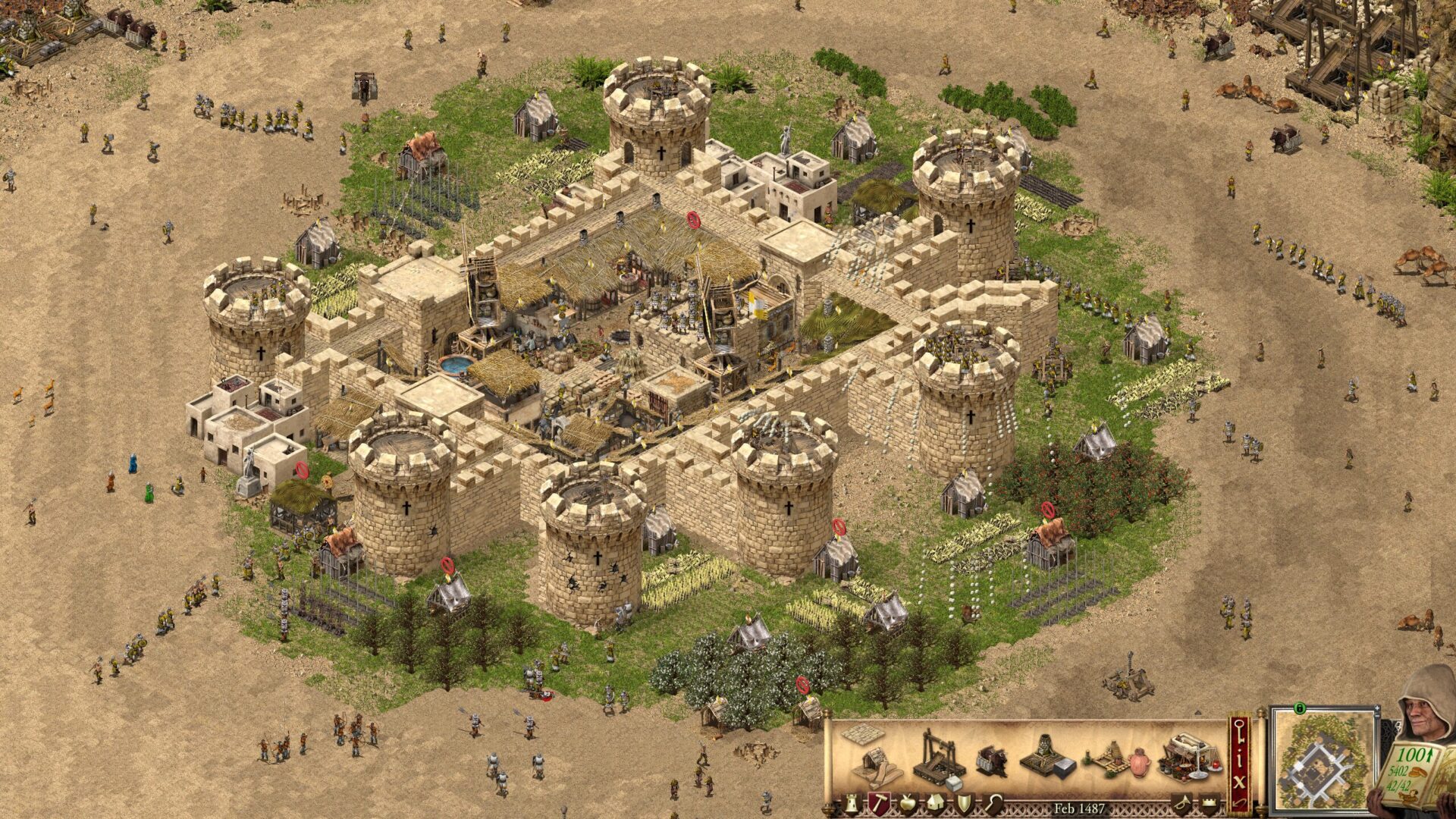
This might sting for some, but this game isn’t very beginner-friendly. While there are options to learn, the best way to master it is simply to keep playing and playing; the more you grasp the mechanics, the easier it becomes. It was definitely frustrating for me at the start. At one point, I honestly thought I had enough, until I decided to try custom skirmishes. And oh boy, there are 20 different AI opponents you can face, each bringing unique difficulties, playstyles, and more. In fact, as I’m typing this, I secretly have another custom skirmish running in the background.
I did encounter a few bugs. For instance, fire sometimes caused people inside buildings, like a stone quarry, to simply “bug out”, they weren’t on fire, just standing there motionless. The fire often didn’t spread or burn anything nearby, which felt odd. The disease system, like throwing cows at enemy walls, seemed completely pointless, or perhaps I just didn’t understand the mechanic. As mentioned, the AI still isn’t the brightest and often makes questionable decisions, it genuinely takes them a long time to start building catapults or trebuchets.
“Stronghold Crusader: Definitive Edition isn’t beginner-friendly, but stick with it.”
One more surprise was the constant chatter. Clicking on the treasury prompts a voice telling me, “We have low treasury, my liege,” and even random peasants talk when I click on them. The AI also talks just before attacking, so it never felt lonely trying to figure things out. Honestly, I was genuinely surprised by the quality of some animations, how great the voice acting is, and how perfectly it all fits the game without being annoying.
In the end, playing Stronghold Crusader: Definitive Edition taught me three things:
| Pros | Cons |
|---|---|
| Rich skirmish modes. | Frustrating campaign pacing. |
| Engaging sandbox freedom. | Inconsistent AI behavior. |
| Varied and fun combat units. | Steep learning curve for newcomers. |
| Huge amount of replayability. | Minor bugs. |
Review copy provided by the publisher
Duskfade is worth considering for players who miss colourful PS2-style action-platformers and can tolerate basic combat, floaty movement and backtracking.

Man I Just Wanna Go Home is a noir crime story with visuals from MS Paint and life-or-death choices.
![[GAMESCOM 2026] Vikings Dynasty Preview – Expands the Dynasty Formula](https://www.indie-games.eu/wp-content/uploads/2026/09/Viking-Dynasty-09-21-26-2-1024x576.jpg)
After showing me Prospera at Gamescom 2026, Toplitz Productions' Mathias Oertel moved to a very different kind of settlement builder.…
![[GAMESCOM 2026] Prospera Preview – Production, Prosperity and Victorian Industry](https://www.indie-games.eu/wp-content/uploads/2026/09/Prospera-09-21-26-5-1024x576.jpg)
At Gamescom 2026, I met with Toplitz Productions' Mathias Oertel for a guided presentation of two upcoming games. One of…
Golden Swirl inventive card combat carries the experience, but repetitive rooms, weak upgrades and excessive dialogue hold it back.
![[GAMESCOM 2026] Wilderdark Preview – Ambitious Dinosaur Horror Game That Still Has Plenty to Prove](https://www.indie-games.eu/wp-content/uploads/2026/09/Wilderdark-1024x576.jpg)
Dinosaur survival horror game Wilderdark has one of those premises that immediately makes you wonder why more games have not…
![[PREVIEW] Tiny Metal 2 – Strategy Game That Wants You to Learn From Every Mistake](https://www.indie-games.eu/wp-content/uploads/2026/09/Tiny-Metal-2-1024x576.jpg)
I rarely enjoy discovering that my opening strategy was completely wrong, but Tiny Metal 2 made that process one of…
![[PREVIEW] Remothered: Red Nun’s Legacy – Ambitious Survival Horror That Needs More Polish](https://www.indie-games.eu/wp-content/uploads/2026/09/Remothered-Red-Nuns-Legacy-4-1024x576.jpg)
Remothered: Red Nun’s Legacy has a gripping atmosphere and promising survival tools, but its repetitive hiding and rough visuals need…
The Alighieri Circle: Dante’s Bloodline is difficult to recommend beyond players who are especially interested in Dante or enjoy solving…
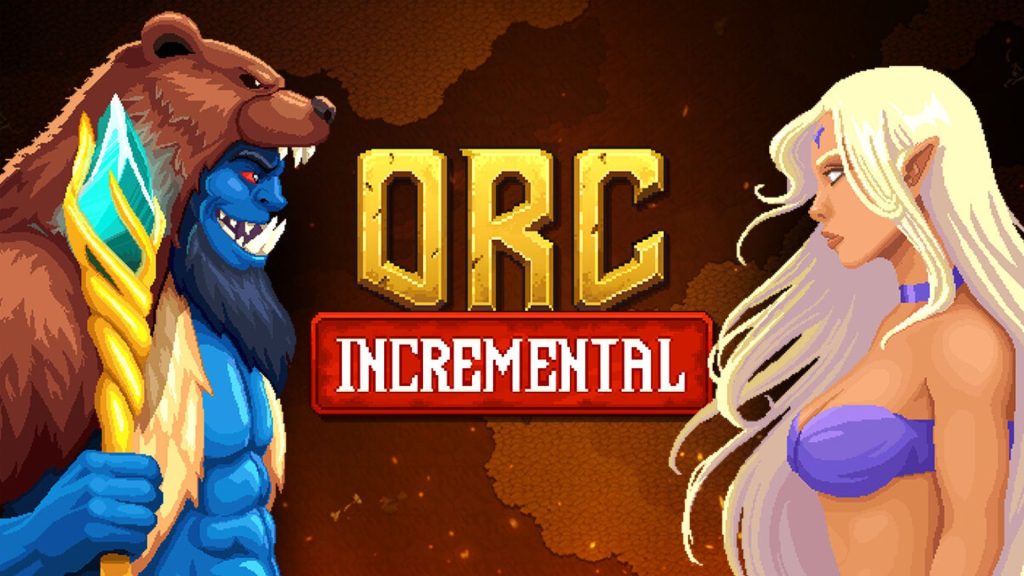
Orc Incremental offers satisfying progression, entertaining totem combinations and enough content to justify its affordable price.
![[GAMESCOM 2026] Chronoscript: The Endless End Preview – Beautiful Pages Hide Deliberate Combat](https://www.indie-games.eu/wp-content/uploads/2026/09/Chronoscript-The-Endless-End-1-1024x576.jpg)
Chronoscript: The Endless End stands out from other Metroidvanias by blending 2D manuscript worlds with exploration inside a 3D manor.
![[GAMESCOM 2026] MegaGum Preview – Combat Hits Hard in This Sticky Platforming Adventure](https://www.indie-games.eu/wp-content/uploads/2026/09/MegaGum-09-09-26-5-1024x576.jpg)
MegaGum combines hard-hitting combat, varied weapons and Gum-powered platforming in a promising Gamescom 2026 demo.
![[GAMESCOM 2026] Delphinium Preview – Cozy Routine Mixed With Enjoyable Minigames](https://www.indie-games.eu/wp-content/uploads/2026/03/Delphinium--1024x665.jpg)
Delphinium mixes cozy farming, exploration and relationships with enjoyable fishing, cooking and forging minigames in its Gamescom 2026 demo.
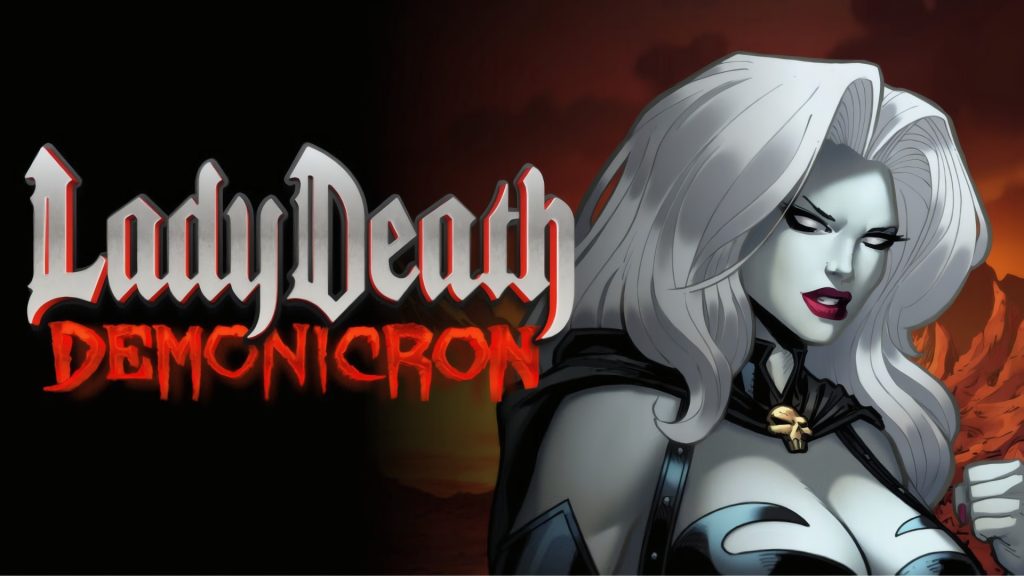
Lady Death: Demonicron looks the part, but underneath its excellent comic-book exterior is a clunky and painfully short brawler.
![[GAMESCOM 2026] Tomb Raider: Legacy of Atlantis Preview – Expands the Original Without Losing Its Identity](https://www.indie-games.eu/wp-content/uploads/2026/09/tomb-raider-legacy-of-atlantis-06-02-26-1-1024x576.jpg)
Tomb Raider: Legacy of Atlantis brings Lara back to her roots, but its Gamescom 2026 showing proved this is far…
![[GAMESCOM 2026] Clive Barker’s Hellraiser: Revival Preview – Ready to Open the Box](https://www.indie-games.eu/wp-content/uploads/2026/09/Clive-Barkers-Hellraiser-Revival-08-30-26-1-1024x576.jpg)
Hellraiser: Revival preserves the franchise’s sex, gore and psychological horror while delivering approachable survival-horror gameplay.

Swan Song creates a peaceful and forgiving puzzle space without removing the challenge that makes solving a difficult puzzle rewarding.
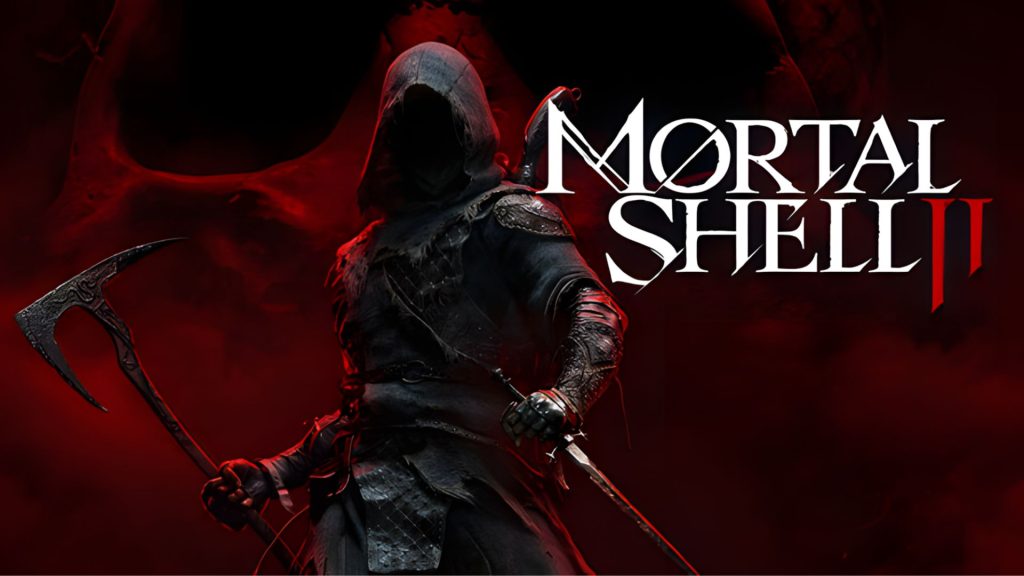
Mortal Shell II starts brilliantly but grows repetitive and exhausting, while remaining a rewarding and ambitious Soulslike sequel.
![[GAMESCOM 2026] Terranigma Preview – A Lost SNES Classic Returns in 2027](https://www.indie-games.eu/wp-content/uploads/2026/08/Terranigma-1-1024x576.jpg)
After more than three decades of limited availability, Terranigma is returning in 2027. We played its enhanced re-release at Gamescom…
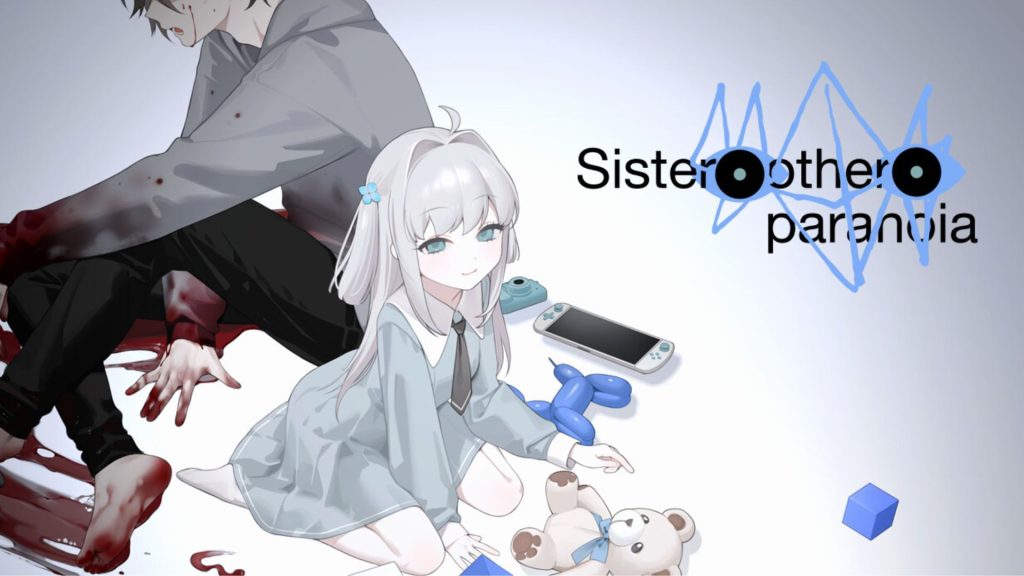
Reading another person’s mind is often presented as a desirable superpower, but Sister Other Paranoia immediately understands why it could…
