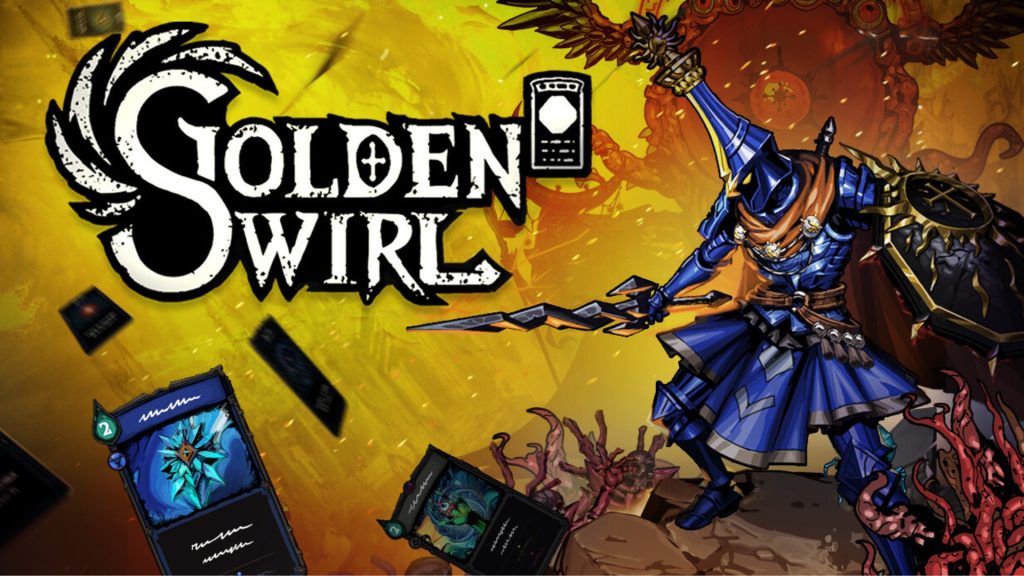
Golden Swirl – Brilliant Deckbuilding Buried Under Endless Dialogue
Golden Swirl inventive card combat carries the experience, but repetitive rooms, weak upgrades and excessive dialogue hold it back.


If you enjoy independent indie game coverage, consider supporting Indie-Games.eu on Patreon. It helps keep the site independent.
XeGrader plus is clearly made by people with a genuine appreciation for classic arcade shooters. Its colourful pixel art, fixed-screen stages and simple controls create a convincing retro experience, while secrets and environmental tricks attempt to give its shooting additional depth. However, after finishing its 18 stages, I was left conflicted. It offers a decent amount of fun, but its basic mechanics, short length and separately sold retro modes make the €20 asking price difficult to justify.
XeGrader plus is mechanically straightforward. You move around and press one button to fire. Movement generally feels good, projectiles are easy to follow and the enemy roster gradually grows from simple slimes to flying demons and other fantasy creatures.
The stages also become more dynamic as you progress. Some are completely fixed, while later levels scroll and force you to move alongside the screen while dodging attacks. The 18 stages contain an impressive amount of visual and mechanical variety, so the game rarely feels stale during an initial playthrough.
Its difficulty increases naturally across three modes: Practice, Average and Expert. Average is already fairly demanding, while Practice begins with all the fairies unlocked. These provide useful bonuses, including a shield that absorbs damage and alternative firing patterns.
Bosses require you to learn their attack patterns rather than simply shooting continuously. You will die frequently during your first few runs, but the game normally feels fair. The hit detection is forgiving enough that you can escape projectiles that come extremely close to your character. Success remains heavily dependent on movement and fast reactions, but I rarely felt that a death was caused by an invisible or unfair hitbox. Sadly, upgrades disappear when your run ends, meaning when you press continue, you start again without anything.

The major idea separating XeGrader plus from a standard shooter is its collection of secrets. Environmental tricks can reveal fairies, weapon upgrades and score bonuses. You might activate a button to spawn a chest containing a trident-like attack that fires three beams, or cross a bridge that repeatedly appears and disappears before opening another chest.
Unfortunately, these discoveries often feel trivial. There are not that many of them, and the game does a poor job of explaining how its systems work. Sometimes finding a secret causes additional enemies to spawn and makes the stage harder, while ignoring it allows the level to proceed normally. That is an interesting risk-and-reward system, but its rules are barely communicated.
I understand that this is an intentionally old-fashioned arcade game, but a simple digital manual would have made a significant difference. Secrets should reward observation and experimentation. Here, some interactions feel too arbitrary, making the discoveries less satisfying than they should be.
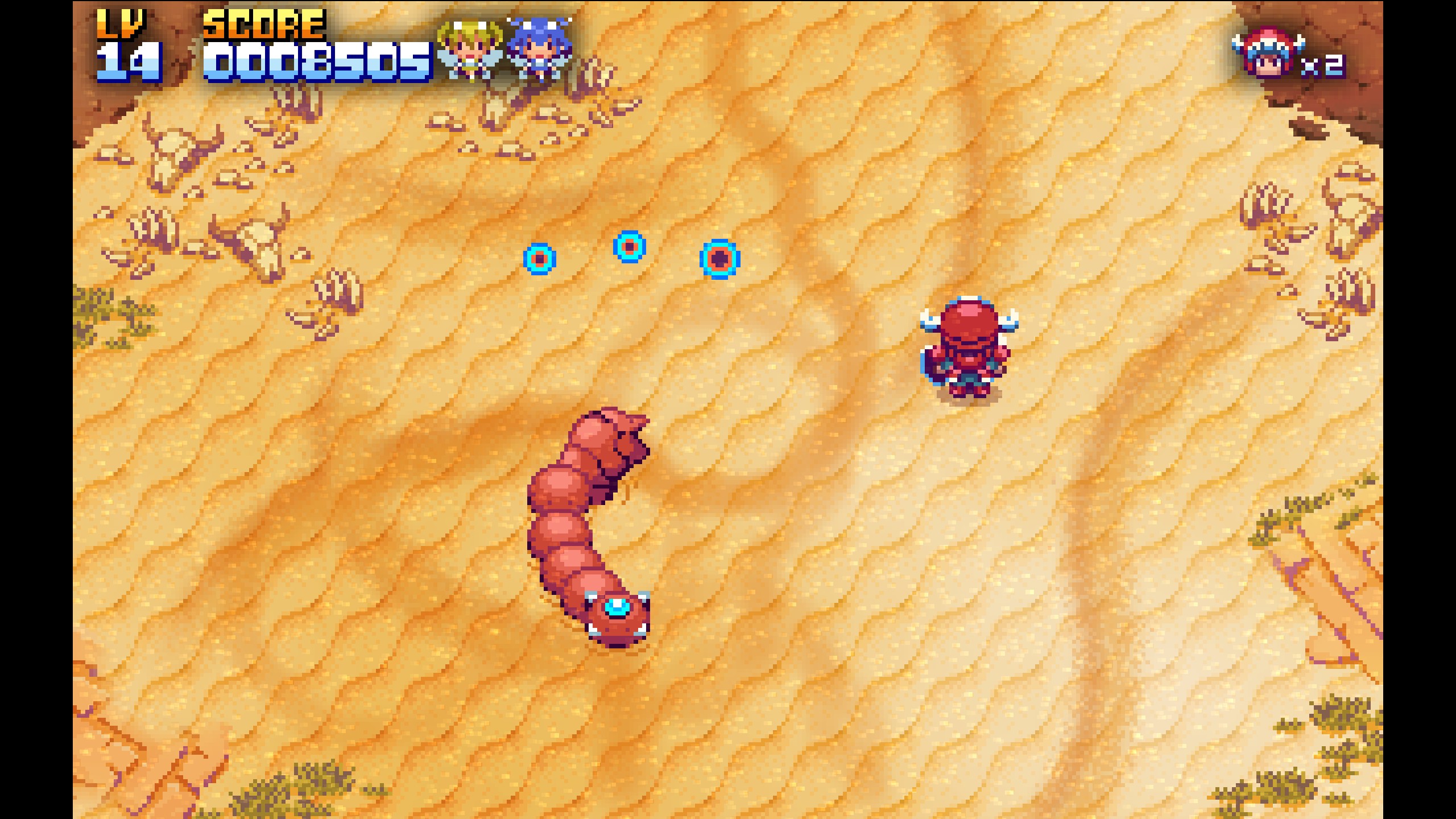
The main Arcade mode looks fantastic. Its detailed environments, colourful sprites and visual effects give every biome a distinctive appearance. Even without any personal nostalgia for Tokihiro Naito’s Hydlide background or the game’s Tower of Druaga influences, it is easy to recognise how much care went into its presentation. Unfortunately, Arcade mode has a slight delay when firing. It does not ruin the game, but it is noticeable in something that relies so heavily on quick reactions.
Strangely, the two retro modes do not appear to suffer from the same delay. The MSX2 version uses original image data at 320×200 resolution with 16 colours, alongside two-channel PSG audio and hardware envelope sound generation. It also adjusts several puzzles and adds vampire enemies.
Origin mode recreates the PC-8001mkII version using the original image data, 320×200 resolution and only four simultaneous colours. Its audio produces pseudo-musical scales by rapidly switching BEEP sounds, while its gameplay includes rebalanced puzzles and additional vampire enemies.
These limitations give both versions a much more distinctive identity. They are more than simple visual filters, but locking each one behind a separate €5 DLC remains a questionable decision.

XeGrader plus can be completed in approximately two hours, although dying and restarting will naturally increase that number. Its stages encourage memorising routes, learning bosses and improving with every attempt. The leaderboards, secrets and multiple difficulty settings provide additional replay value for dedicated score chasers.
Once I completed it, however, I had little reason to return beyond pursuing a better score. There are no additional mechanics or substantial forms of progression waiting after the first few attempts. This is clearly designed for a very particular audience that enjoys replaying compact arcade games until every movement is perfected.
I cannot definitively call it overpriced because the 18 stages are varied, polished and enjoyable. Still, €20 is difficult to recommend for such a simple and short shooter. Asking another €10 for the two historically interesting modes makes the complete €30 package even harder to defend.
Had both modes been included for €20, the game would have been much easier to recommend. As it stands, XeGrader plus is a beautiful, fair and charming retro throwback that will find its niche audience, but a lower price could have introduced its ideas to far more players.
XeGrader plus looks excellent in its primary Arcade mode. Its colourful sprites, detailed environments, strong biome variety and clear projectile design create a polished modern interpretation of a classic shooter. The MSX2 and Origin versions also possess distinctive visual identities, although selling them separately prevents their presentation from strengthening the standard package. The slight firing delay in Arcade mode also weakens the otherwise impressive audiovisual experience.
Ending Thoughts
No review code was provided; the game was purchased on Steam
Golden Swirl inventive card combat carries the experience, but repetitive rooms, weak upgrades and excessive dialogue hold it back.
![[GAMESCOM 2026] Wilderdark Preview – Ambitious Dinosaur Horror Game That Still Has Plenty to Prove](https://www.indie-games.eu/wp-content/uploads/2026/09/Wilderdark-1024x576.jpg)
Dinosaur survival horror game Wilderdark has one of those premises that immediately makes you wonder why more games have not…
![[PREVIEW] Tiny Metal 2 – Strategy Game That Wants You to Learn From Every Mistake](https://www.indie-games.eu/wp-content/uploads/2026/09/Tiny-Metal-2-1024x576.jpg)
I rarely enjoy discovering that my opening strategy was completely wrong, but Tiny Metal 2 made that process one of…
![[PREVIEW] Remothered: Red Nun’s Legacy – Ambitious Survival Horror That Needs More Polish](https://www.indie-games.eu/wp-content/uploads/2026/09/Remothered-Red-Nuns-Legacy-4-1024x576.jpg)
Remothered: Red Nun’s Legacy has a gripping atmosphere and promising survival tools, but its repetitive hiding and rough visuals need…
The Alighieri Circle: Dante’s Bloodline is difficult to recommend beyond players who are especially interested in Dante or enjoy solving…

Orc Incremental offers satisfying progression, entertaining totem combinations and enough content to justify its affordable price.
![[GAMESCOM 2026] Chronoscript: The Endless End Preview – Beautiful Pages Hide Deliberate Combat](https://www.indie-games.eu/wp-content/uploads/2026/09/Chronoscript-The-Endless-End-1-1024x576.jpg)
Chronoscript: The Endless End stands out from other Metroidvanias by blending 2D manuscript worlds with exploration inside a 3D manor.
![[GAMESCOM 2026] MegaGum Preview – Combat Hits Hard in This Sticky Platforming Adventure](https://www.indie-games.eu/wp-content/uploads/2026/09/MegaGum-09-09-26-5-1024x576.jpg)
MegaGum combines hard-hitting combat, varied weapons and Gum-powered platforming in a promising Gamescom 2026 demo.
![[GAMESCOM 2026] Delphinium Preview – Cozy Routine Mixed With Enjoyable Minigames](https://www.indie-games.eu/wp-content/uploads/2026/03/Delphinium--1024x665.jpg)
Delphinium mixes cozy farming, exploration and relationships with enjoyable fishing, cooking and forging minigames in its Gamescom 2026 demo.
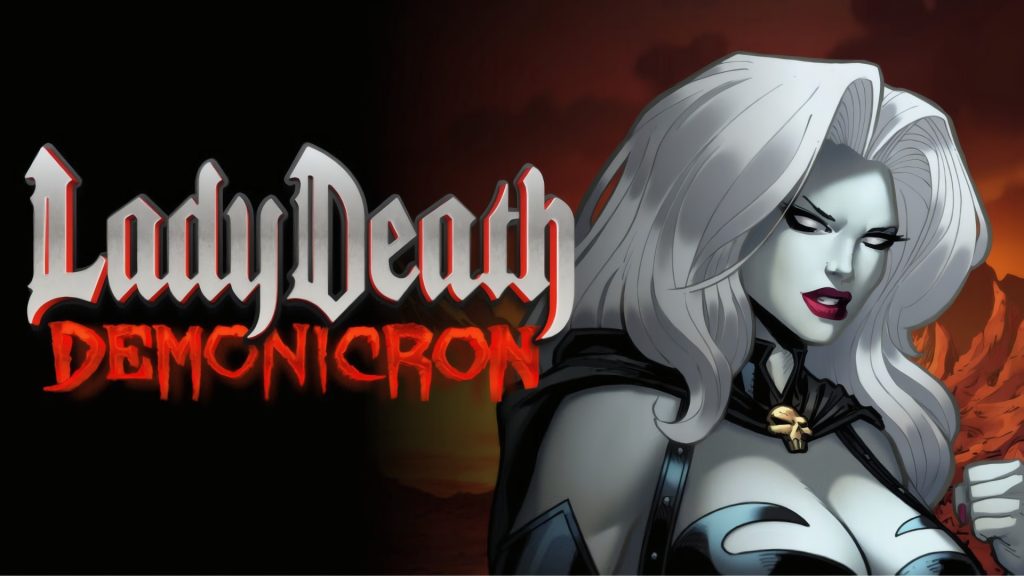
Lady Death: Demonicron looks the part, but underneath its excellent comic-book exterior is a clunky and painfully short brawler.
![[GAMESCOM 2026] Tomb Raider: Legacy of Atlantis Preview – Expands the Original Without Losing Its Identity](https://www.indie-games.eu/wp-content/uploads/2026/09/tomb-raider-legacy-of-atlantis-06-02-26-1-1024x576.jpg)
Tomb Raider: Legacy of Atlantis brings Lara back to her roots, but its Gamescom 2026 showing proved this is far…
![[GAMESCOM 2026] Clive Barker’s Hellraiser: Revival Preview – Ready to Open the Box](https://www.indie-games.eu/wp-content/uploads/2026/09/Clive-Barkers-Hellraiser-Revival-08-30-26-1-1024x576.jpg)
Hellraiser: Revival preserves the franchise’s sex, gore and psychological horror while delivering approachable survival-horror gameplay.

Swan Song creates a peaceful and forgiving puzzle space without removing the challenge that makes solving a difficult puzzle rewarding.

Mortal Shell II starts brilliantly but grows repetitive and exhausting, while remaining a rewarding and ambitious Soulslike sequel.
![[GAMESCOM 2026] Terranigma Preview – A Lost SNES Classic Returns in 2027](https://www.indie-games.eu/wp-content/uploads/2026/08/Terranigma-1-1024x576.jpg)
After more than three decades of limited availability, Terranigma is returning in 2027. We played its enhanced re-release at Gamescom…

Reading another person’s mind is often presented as a desirable superpower, but Sister Other Paranoia immediately understands why it could…
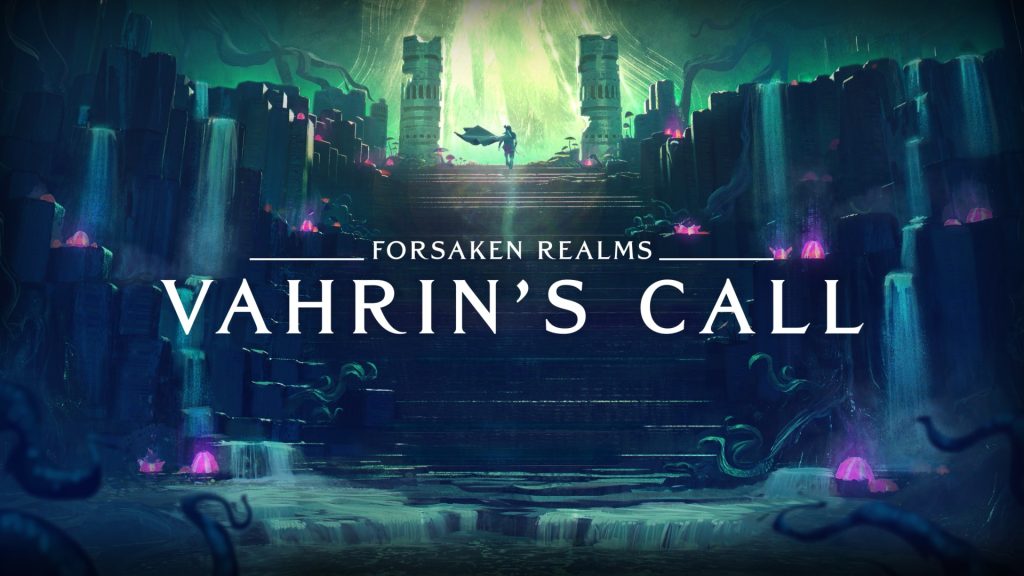
Forsaken Realms: Vahrin’s Call is exactly the kind of ambitious, slightly clumsy fantasy RPG that used to be far more…
![[Early Access] 2nd EVE – Sci-Fi Action RPG That Lacks a Sense of Stakes](https://www.indie-games.eu/wp-content/uploads/2026/08/2ND-EVE-1024x576.jpg)
2nd Eve is a space-set action RPG in which we strive to save humanity.
![[PREVIEW] Dreamcards – Strategic Exploration of Consciousness](https://www.indie-games.eu/wp-content/uploads/2026/08/Dreamcards_20260810_233631_0000-1024x576.jpg)
Dreamcards is a roguelike deckbuilder centered around dreams and nightmares.
![[Early Access] OFFBEAT – Incredibly Fun Way to Start a Music Career](https://www.indie-games.eu/wp-content/uploads/2026/08/Offbeat_20260808_201446_0000-1024x576.jpg)
In OFFBEAT, we play the role of a jobbing composer who is launching their music career.
