Duskfade – The PS2 Era Returns With All Its Strengths and Weaknesses
Duskfade is worth considering for players who miss colourful PS2-style action-platformers and can tolerate basic combat, floaty movement and backtracking.


If you enjoy independent indie game coverage, consider supporting Indie-Games.eu on Patreon. It helps keep the site independent.
I’m not usually a fan of cozy games, especially those that become repetitive, but Star Birds is a different story. It elevates the genre by engaging your brain while keeping the gameplay simple and intuitive. If you enjoyed Dorfromantik from Toukana Interactive, you’ll love Star Birds even more. It’s a truly unique and brilliant game that’s set to grow and expand throughout its Early Access period.
Star Birds is a space-themed, base-building, and resource management game that was created in collaboration with the YouTube channel kurzgesagt – In a Nutshell. The game’s core loop revolves around helping a flock of spacefaring birds establish a production network across various asteroids. It combines the satisfying automation of games like Factorio with a more casual, puzzle-like approach and a charming visual style.
While complex games like Factorio might not be for everyone, Star Birds aims to make its gameplay more accessible. The core loop is simple: create automated production chains, with a helpful in-game wiki to guide you. You start on a small spherical asteroid with a few buildings, mining resources, and driving a small vehicle. Your main goal is to collect two types of in-game currency: one for building basic structures and another for researching new technologies and exploring new asteroids.
You’ll solve different objectives to progress through the story, with each new chapter expanding on the core gameplay. For example, you might begin by producing simple things like oxygen or glass. Later, you’ll tackle more complex tasks like creating plastic, building nuclear plants, and managing electricity, all while navigating the increasingly complex network of pipes on your asteroid.
“It’s driven by a story campaign with specific missions and objectives that guide you through the gameplay.”
Star Birds isn’t a pure sandbox game. It’s driven by a story campaign with specific missions and objectives that guide you through the gameplay. These missions introduce new mechanics, buildings, and recipes at a steady pace. Completing quests rewards you with new technologies and upgrades, allowing you to create even more complex automation. The story is presented in the signature lighthearted style of Kurzgesagt, complete with cutscenes and funny dialogue from your bird companions.
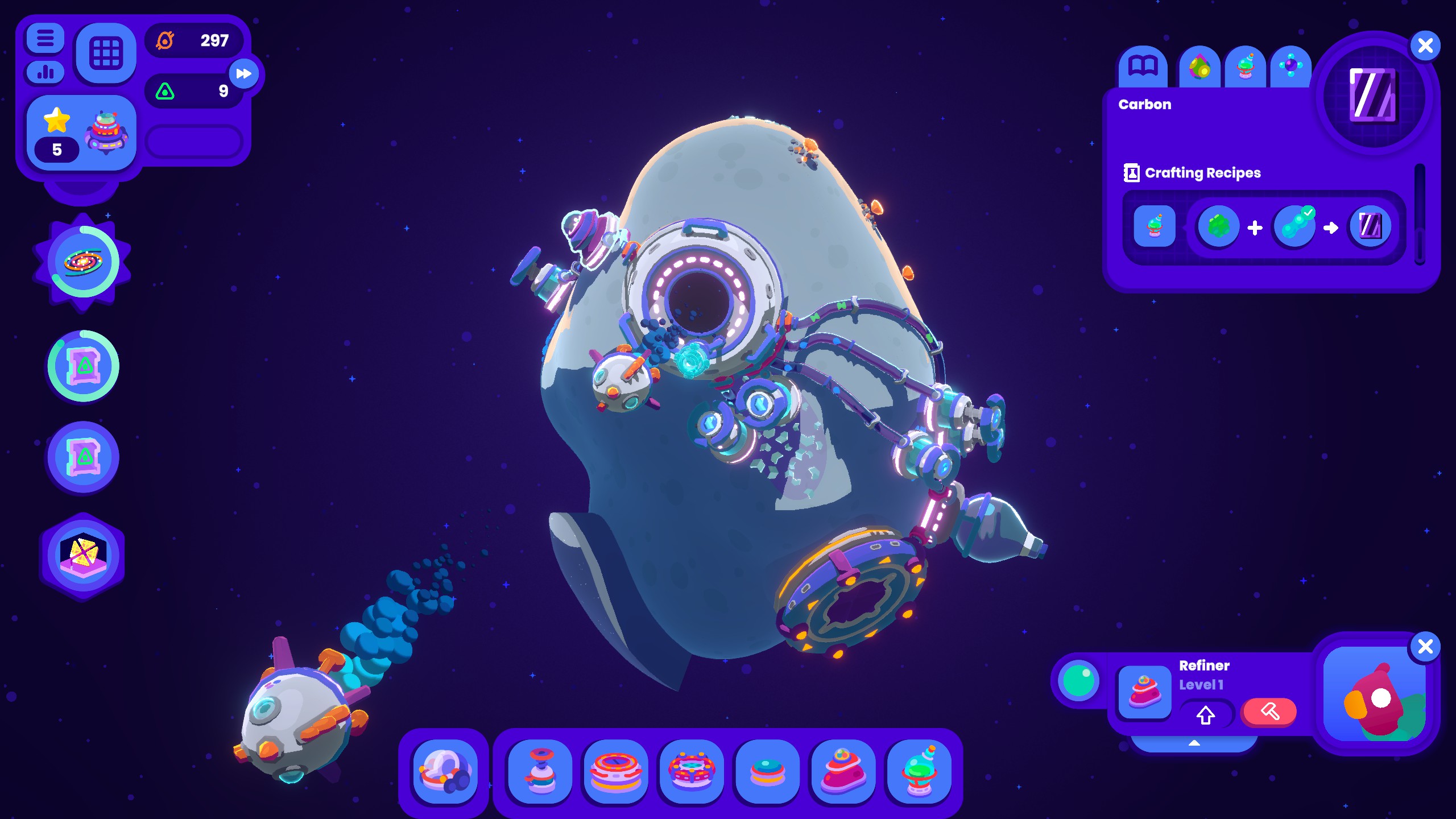
This game is all about careful planning. I learned this the hard way after accidentally soft-locking myself. I initially thought I could transport multiple resources in a single pipe, but I discovered that it’s much more effective to transport each resource individually to avoid confusion. The game uses launch and landing pads to move resources between asteroids. Resources too become more complex over time, such as needing an ice extractor to get water from icy terrain.
“On a small, spherical asteroid, the “no-cross” rule creates a fascinating spatial puzzle.”
Even if you get bored of placing pipes and extractors, Star Birds keeps things interesting. You’ll eventually get explosives to build labs on smaller craters. At first, I thought the game might lack replayability. But then I realized that the asteroids are procedurally generated, making each playthrough different. You’ll never get the same asteroid shape or resource layout, and there are several secret levels and missions to discover along the way.
Let’s talk about the most challenging part of the game: the pipe system. You draw pipes to connect your buildings, but they can’t cross over each other. On a small, spherical asteroid, this “no-cross” rule creates a fascinating spatial puzzle. What starts as a simple, linear flow quickly becomes a complex “spaghetti” of tubes as you add more production chains. This is a deliberate design choice that forces you to think carefully about layout from the very beginning.

Fortunately, you later unlock buildings that can connect multiple pipes at once, transporting different resources to various locations simultaneously. I wish a similar solution existed for electricity; it would be great to connect multiple solar panels at once instead of placing them individually. However, the game does have a sun mechanic, and solar panels placed in designated areas can produce double the electricity.
In addition to the main campaign, the game offers a “bonus sector” with procedurally generated planets. This provides a more open-ended experience for players who want to test their optimization skills without the constraints of the main story. This mode, with its randomized layouts and challenges, adds a significant amount of replayability, allowing you to perfect your space-factory-building techniques.
“Every player’s playthrough is its own story and its own canon, so nothing is universally true or false.”
The game also allows you to upgrade your buildings and production rates. Each chapter features unique missions that, upon completion, reward you with a special currency. For example, to earn all three rewards in Chapter 1, you need to complete the chapter, beat it in under four minutes, and earn 20 stars. You earn stars by upgrading your main base through objectives that appear over time and by having more and more production chains.
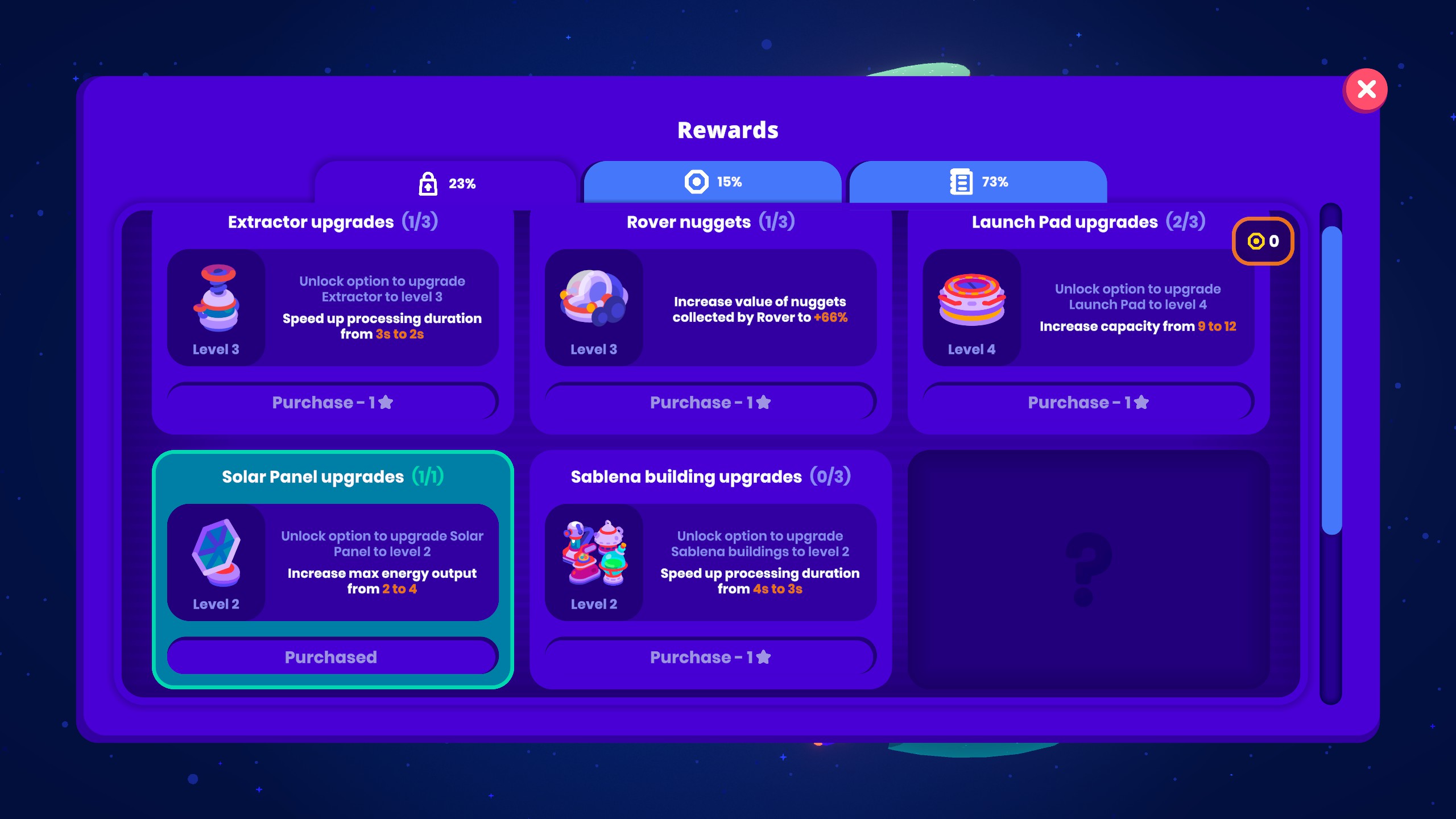
Thanks to the quest system, there’s always something happening on your screen. You’ll have main quests and numerous side quests, which usually involve sending specific resources from your asteroids back to your main base. While your base gets upgraded over time, it doesn’t offer much more. Currently, Star Birds feels complete, but I think it would benefit from an endless mode. Why not letting you move from one sector to another in a single playthrough, expanding your operations for hours on end.
I didn’t encounter any bugs or technical issues, aside from a minor glitch with the music. The graphics are beautiful, with a noticeable level of detail that contributes to the cozy, relaxing atmosphere. Despite its calm feel, you’re always on the move, and there’s a lot to explore in the 6–8 hour main campaign. Since the game is in Early Access, we can expect new content and improvements to be added over time. This is definitely a game you shouldn’t miss.
| Pros | Cons |
|---|---|
| Unique and accessible gameplay. | Potential for “spaghetti” overload. |
| Charming art style and narrative. | Repetitive quest types. |
| Satisfying automation loop. | Lacks fully featured, free-form sandbox mode. |
| Excellent sense of progression. | Linear and hand-holdy campaign |
Review copy provided by the publisher
Duskfade is worth considering for players who miss colourful PS2-style action-platformers and can tolerate basic combat, floaty movement and backtracking.

Man I Just Wanna Go Home is a noir crime story with visuals from MS Paint and life-or-death choices.
![[GAMESCOM 2026] Vikings Dynasty Preview – Expands the Dynasty Formula](https://www.indie-games.eu/wp-content/uploads/2026/09/Viking-Dynasty-09-21-26-2-1024x576.jpg)
After showing me Prospera at Gamescom 2026, Toplitz Productions' Mathias Oertel moved to a very different kind of settlement builder.…
![[GAMESCOM 2026] Prospera Preview – Production, Prosperity and Victorian Industry](https://www.indie-games.eu/wp-content/uploads/2026/09/Prospera-09-21-26-5-1024x576.jpg)
At Gamescom 2026, I met with Toplitz Productions' Mathias Oertel for a guided presentation of two upcoming games. One of…
Golden Swirl inventive card combat carries the experience, but repetitive rooms, weak upgrades and excessive dialogue hold it back.
![[GAMESCOM 2026] Wilderdark Preview – Ambitious Dinosaur Horror Game That Still Has Plenty to Prove](https://www.indie-games.eu/wp-content/uploads/2026/09/Wilderdark-1024x576.jpg)
Dinosaur survival horror game Wilderdark has one of those premises that immediately makes you wonder why more games have not…
![[PREVIEW] Tiny Metal 2 – Strategy Game That Wants You to Learn From Every Mistake](https://www.indie-games.eu/wp-content/uploads/2026/09/Tiny-Metal-2-1024x576.jpg)
I rarely enjoy discovering that my opening strategy was completely wrong, but Tiny Metal 2 made that process one of…
![[PREVIEW] Remothered: Red Nun’s Legacy – Ambitious Survival Horror That Needs More Polish](https://www.indie-games.eu/wp-content/uploads/2026/09/Remothered-Red-Nuns-Legacy-4-1024x576.jpg)
Remothered: Red Nun’s Legacy has a gripping atmosphere and promising survival tools, but its repetitive hiding and rough visuals need…
The Alighieri Circle: Dante’s Bloodline is difficult to recommend beyond players who are especially interested in Dante or enjoy solving…
Orc Incremental offers satisfying progression, entertaining totem combinations and enough content to justify its affordable price.
![[GAMESCOM 2026] Chronoscript: The Endless End Preview – Beautiful Pages Hide Deliberate Combat](https://www.indie-games.eu/wp-content/uploads/2026/09/Chronoscript-The-Endless-End-1-1024x576.jpg)
Chronoscript: The Endless End stands out from other Metroidvanias by blending 2D manuscript worlds with exploration inside a 3D manor.
![[GAMESCOM 2026] MegaGum Preview – Combat Hits Hard in This Sticky Platforming Adventure](https://www.indie-games.eu/wp-content/uploads/2026/09/MegaGum-09-09-26-5-1024x576.jpg)
MegaGum combines hard-hitting combat, varied weapons and Gum-powered platforming in a promising Gamescom 2026 demo.
![[GAMESCOM 2026] Delphinium Preview – Cozy Routine Mixed With Enjoyable Minigames](https://www.indie-games.eu/wp-content/uploads/2026/03/Delphinium--1024x665.jpg)
Delphinium mixes cozy farming, exploration and relationships with enjoyable fishing, cooking and forging minigames in its Gamescom 2026 demo.
Lady Death: Demonicron looks the part, but underneath its excellent comic-book exterior is a clunky and painfully short brawler.
![[GAMESCOM 2026] Tomb Raider: Legacy of Atlantis Preview – Expands the Original Without Losing Its Identity](https://www.indie-games.eu/wp-content/uploads/2026/09/tomb-raider-legacy-of-atlantis-06-02-26-1-1024x576.jpg)
Tomb Raider: Legacy of Atlantis brings Lara back to her roots, but its Gamescom 2026 showing proved this is far…
![[GAMESCOM 2026] Clive Barker’s Hellraiser: Revival Preview – Ready to Open the Box](https://www.indie-games.eu/wp-content/uploads/2026/09/Clive-Barkers-Hellraiser-Revival-08-30-26-1-1024x576.jpg)
Hellraiser: Revival preserves the franchise’s sex, gore and psychological horror while delivering approachable survival-horror gameplay.

Swan Song creates a peaceful and forgiving puzzle space without removing the challenge that makes solving a difficult puzzle rewarding.
Mortal Shell II starts brilliantly but grows repetitive and exhausting, while remaining a rewarding and ambitious Soulslike sequel.
![[GAMESCOM 2026] Terranigma Preview – A Lost SNES Classic Returns in 2027](https://www.indie-games.eu/wp-content/uploads/2026/08/Terranigma-1-1024x576.jpg)
After more than three decades of limited availability, Terranigma is returning in 2027. We played its enhanced re-release at Gamescom…
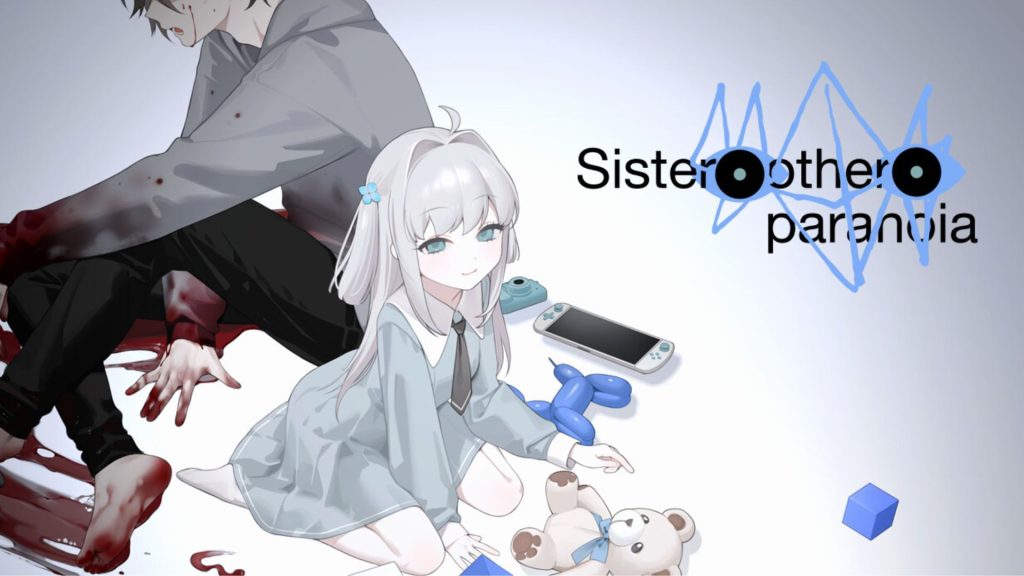
Reading another person’s mind is often presented as a desirable superpower, but Sister Other Paranoia immediately understands why it could…
