![[GAMESCOM 2026] Vikings Dynasty Preview – Expands the Dynasty Formula](https://www.indie-games.eu/wp-content/uploads/2026/09/Viking-Dynasty-09-21-26-2-1024x576.jpg)
[GAMESCOM 2026] Vikings Dynasty Preview – Expands the Dynasty Formula
After showing me Prospera at Gamescom 2026, Toplitz Productions' Mathias Oertel moved to a very different kind of settlement builder.…

If you enjoy independent indie game coverage, consider supporting Indie-Games.eu on Patreon. It helps keep the site independent.
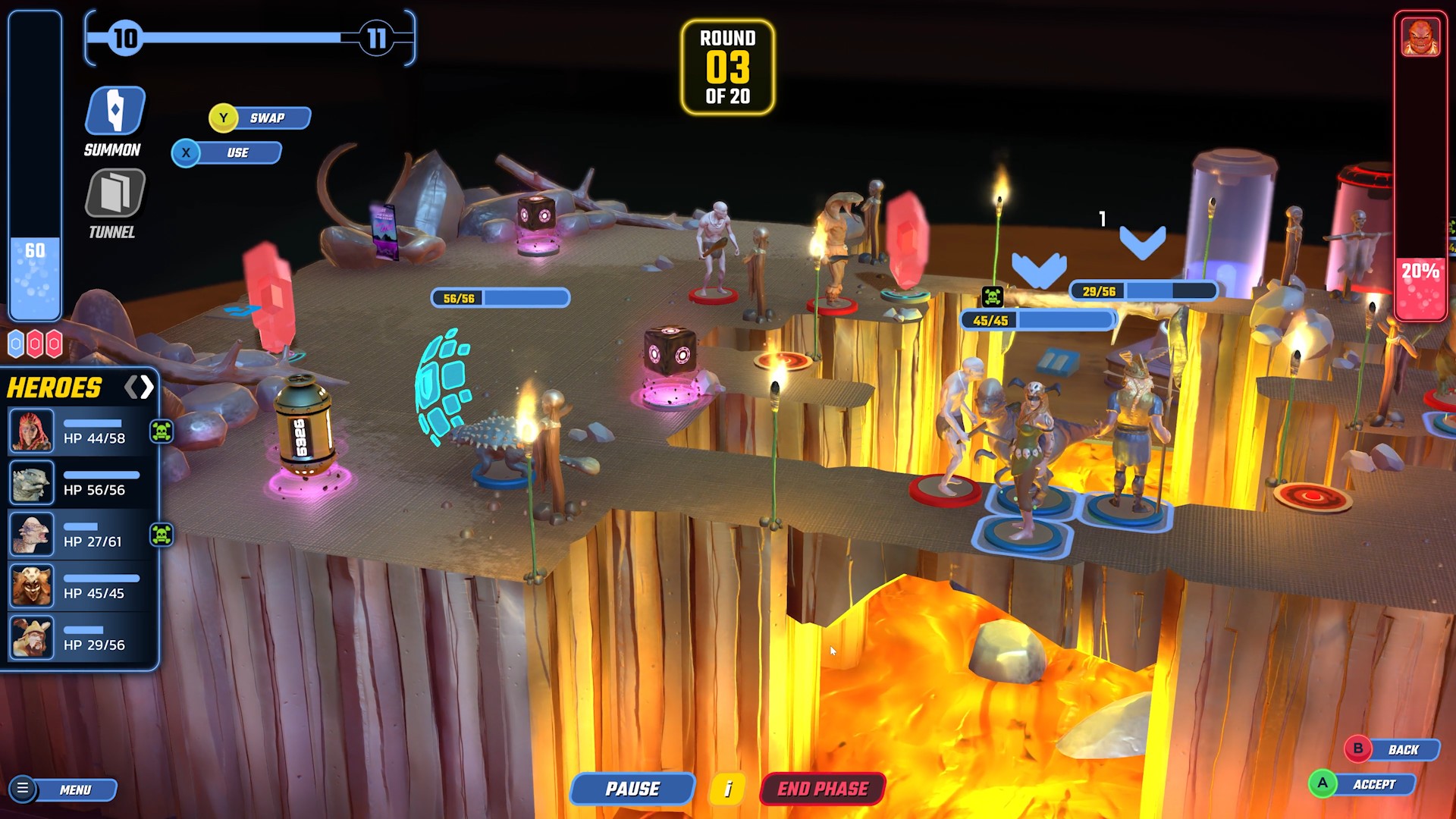
In Reptilian Rising, you command an unlikely coalition of time-displaced heroes as they battle against lizard hybrids, cultists, and weaponized dinosaurs in turn-based encounters that feel lifted straight from a tabletop session. From the moment you step onto its grid-based battlefields, the game leans heavily into a board game aesthetic, and it works in its favor. Characters resemble miniature figurines, environments feel like physical boards, and each mission unfolds with the deliberate pacing of a strategy game played across a table rather than a screen.
Most missions follow a consistent structure. You are typically tasked with capturing three time gates within a set number of turns, all while managing enemy reinforcements and optional objectives. On paper, this repetition might seem limiting, but in practice it feels more like a deliberate design choice inspired by scenario-based board games.
Each mission becomes a variation on a core puzzle. Different layouts, enemy compositions, and side objectives force you to rethink your approach, even if the end goal remains the same. It’s easy to imagine physically moving pieces across a board, drawing cards to determine enemy behavior, and adjusting your tactics on the fly. Rather than detracting from the experience, this consistency gives the game a focused, almost methodical rhythm.
Worth pointing out is that replayability naturally emerges from this design. The heroes you recruit, the order you unlock them, and the upgrades you choose all influence how these scenarios play out. With multiple difficulty options and systems that clearly anticipate repeat playthroughs, the game quietly encourages you to revisit its challenges with new strategies.
One of the game’s standout features is its unique cast of heroes. You might might mix a classical-era unit with some one from a completely different historical era. The roster is colorful, packed with references, and constantly entertaining. As characters level up, they gain access to random passive skills and eventually unlock more advanced actions. This system allows for a surprising degree of flexibility, letting you shape your team in ways that suit your preferred playstyle.
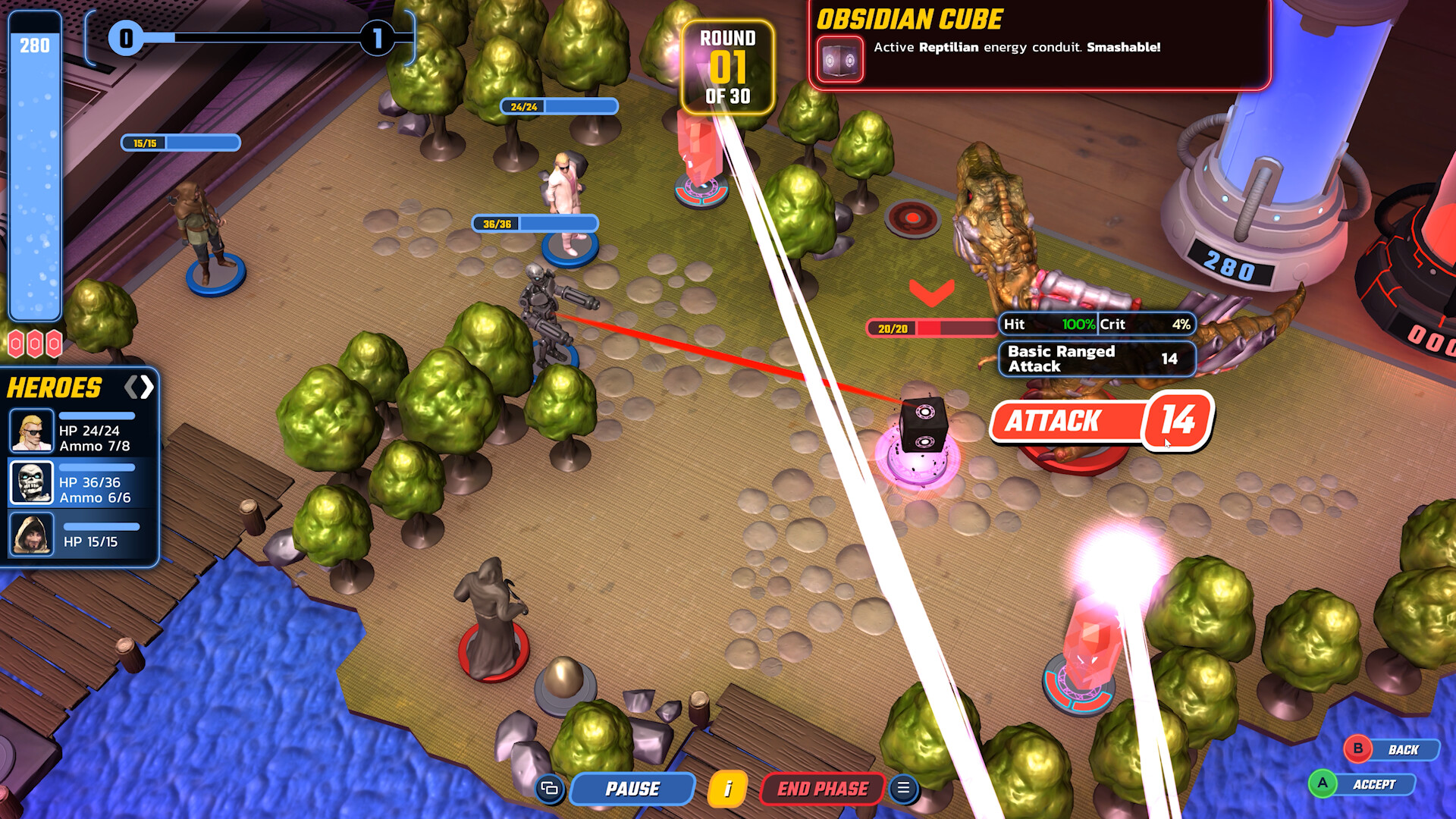
Combat in Reptilian Rising goes beyond simple positioning and attacks. At the heart of its systems is “time energy,” a resource generated through actions and spent on powerful abilities. This includes summoning additional heroes, activating special skills, creating clones, or even manipulating the battlefield through time-based mechanics.
At the same time, you’re constantly managing threats. Enemy reinforcements grow stronger over time, but capturing time gates shifts the flow, spawning weaker enemies elsewhere on the map. You can block these entry points, destroy energy cubes to delay boss encounters, or push aggressively toward objectives. Do you play defensively, sealing off threats and slowing the enemy’s momentum, or do you rush objectives to prevent stronger foes from appearing? The game thrives in these moments, where every action carries weight and every turn feels like part of a larger plan.
As your heroes grow stronger, the system opens up even further. Additional actions, improved abilities, and more complex interactions transform the game from a relatively simple tactics experience into something far more dynamic. By the mid-to-late stages, the number of options available can be genuinely impressive.
Although not a full roguelite, the game incorporates elements of the genre. Campaigns are structured as runs with checkpoints, and heroes have limited lives that persist across missions. Losing a unit carries consequences, adding tension and encouraging thoughtful play. Retreating wounded heroes, rotating your roster, and managing resources all add another layer of strategy.
That said, failure can be frustrating. Losing a mission often sends you back several stages, requiring you to replay a sequence of missions to progress again. While some randomness helps keep things from feeling identical, repetition can set in during these moments. Meta progression softens the blow somewhat. Upgrades persist across runs, and heroes retain their levels at checkpoints, giving you a sense of forward momentum even after setbacks.
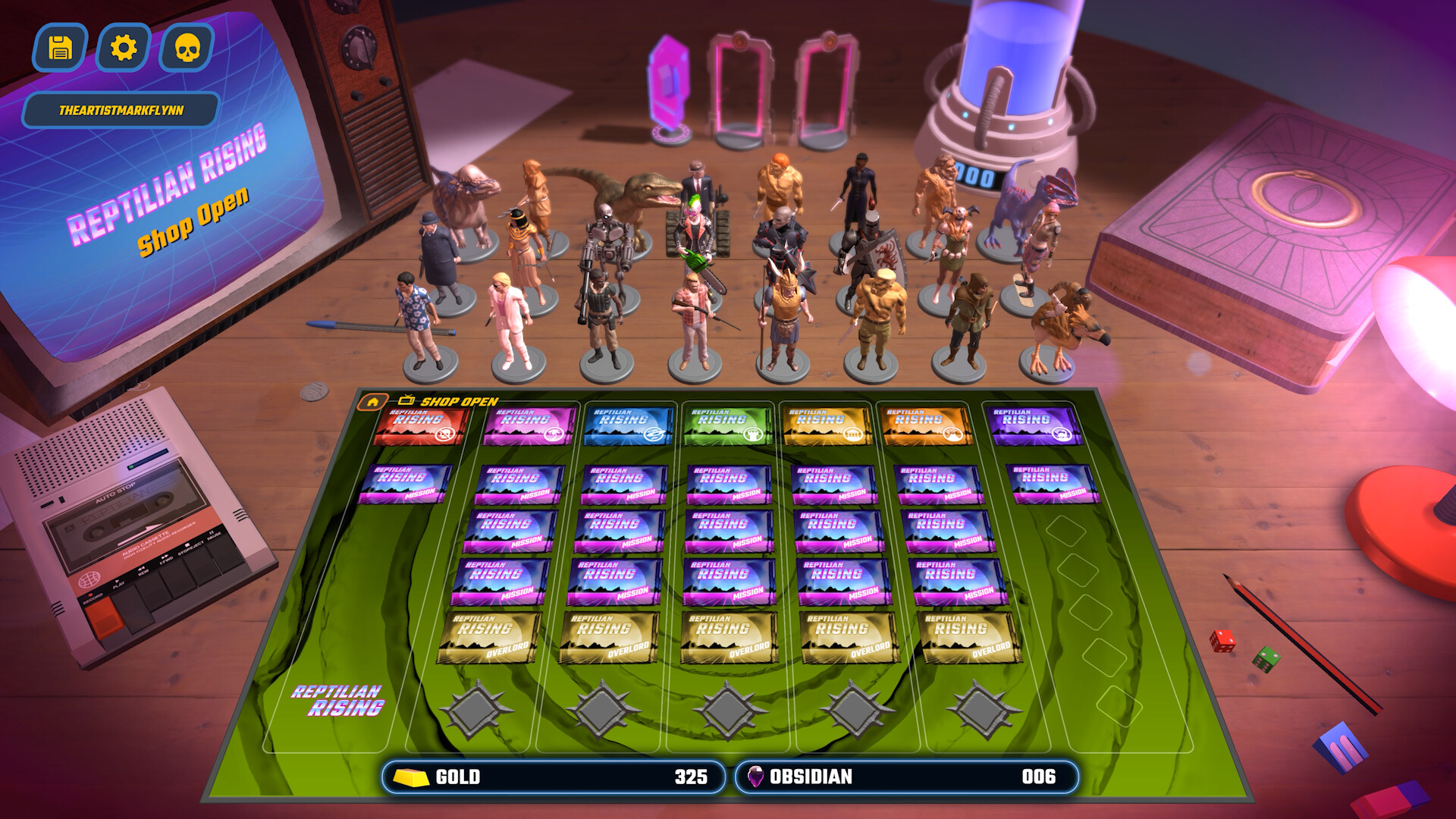
Reptilian Rising offers a focused experience. A single campaign run will likely last around 10 to 12 hours, with additional playtime available through higher difficulties and repeat runs. While there’s incentive to replay and experiment with different heroes, the overall content may feel limited for players who prefer a one-and-done experience. This makes its price point a consideration. When compared to other titles in the same range, the lack of polish and relatively contained scope may give you some second thoughts.
Even so, there’s something undeniably appealing here. Beneath the rough edges is a thoughtful, cohesive tactics game that fully commits to its identity. It captures the feel of a solo board game remarkably well, blending strategic depth with a quirky, time-bending premise. It may be janky, it may be repetitive at times, but it’s also inventive, charming, and genuinely fun to play.
Reptilian Rising is a thoughtful, cohesive tactics game that fully commits to its identity. The board game aesthetic works in its favor with characters resembling miniature figurines and environments like physical boards. The unique hero roster is a standout feature, you might field a classical-era archer alongside a World War II sniper” on a giant bird. However, the game lacks a certain level of polish and is rough around the edges. Most missions follow a consistent structure capturing time gates, which can feel repetitive.
Ending Thoughts
Review copy provided by the publisher
After showing me Prospera at Gamescom 2026, Toplitz Productions' Mathias Oertel moved to a very different kind of settlement builder.…
![[GAMESCOM 2026] Prospera Preview – Production, Prosperity and Victorian Industry](https://www.indie-games.eu/wp-content/uploads/2026/09/Prospera-09-21-26-5-1024x576.jpg)
At Gamescom 2026, I met with Toplitz Productions' Mathias Oertel for a guided presentation of two upcoming games. One of…
Golden Swirl inventive card combat carries the experience, but repetitive rooms, weak upgrades and excessive dialogue hold it back.
![[GAMESCOM 2026] Wilderdark Preview – Ambitious Dinosaur Horror Game That Still Has Plenty to Prove](https://www.indie-games.eu/wp-content/uploads/2026/09/Wilderdark-1024x576.jpg)
Dinosaur survival horror game Wilderdark has one of those premises that immediately makes you wonder why more games have not…
![[PREVIEW] Tiny Metal 2 – Strategy Game That Wants You to Learn From Every Mistake](https://www.indie-games.eu/wp-content/uploads/2026/09/Tiny-Metal-2-1024x576.jpg)
I rarely enjoy discovering that my opening strategy was completely wrong, but Tiny Metal 2 made that process one of…
![[PREVIEW] Remothered: Red Nun’s Legacy – Ambitious Survival Horror That Needs More Polish](https://www.indie-games.eu/wp-content/uploads/2026/09/Remothered-Red-Nuns-Legacy-4-1024x576.jpg)
Remothered: Red Nun’s Legacy has a gripping atmosphere and promising survival tools, but its repetitive hiding and rough visuals need…
The Alighieri Circle: Dante’s Bloodline is difficult to recommend beyond players who are especially interested in Dante or enjoy solving…

Orc Incremental offers satisfying progression, entertaining totem combinations and enough content to justify its affordable price.
![[GAMESCOM 2026] Chronoscript: The Endless End Preview – Beautiful Pages Hide Deliberate Combat](https://www.indie-games.eu/wp-content/uploads/2026/09/Chronoscript-The-Endless-End-1-1024x576.jpg)
Chronoscript: The Endless End stands out from other Metroidvanias by blending 2D manuscript worlds with exploration inside a 3D manor.
![[GAMESCOM 2026] MegaGum Preview – Combat Hits Hard in This Sticky Platforming Adventure](https://www.indie-games.eu/wp-content/uploads/2026/09/MegaGum-09-09-26-5-1024x576.jpg)
MegaGum combines hard-hitting combat, varied weapons and Gum-powered platforming in a promising Gamescom 2026 demo.
![[GAMESCOM 2026] Delphinium Preview – Cozy Routine Mixed With Enjoyable Minigames](https://www.indie-games.eu/wp-content/uploads/2026/03/Delphinium--1024x665.jpg)
Delphinium mixes cozy farming, exploration and relationships with enjoyable fishing, cooking and forging minigames in its Gamescom 2026 demo.
Lady Death: Demonicron looks the part, but underneath its excellent comic-book exterior is a clunky and painfully short brawler.
![[GAMESCOM 2026] Tomb Raider: Legacy of Atlantis Preview – Expands the Original Without Losing Its Identity](https://www.indie-games.eu/wp-content/uploads/2026/09/tomb-raider-legacy-of-atlantis-06-02-26-1-1024x576.jpg)
Tomb Raider: Legacy of Atlantis brings Lara back to her roots, but its Gamescom 2026 showing proved this is far…
![[GAMESCOM 2026] Clive Barker’s Hellraiser: Revival Preview – Ready to Open the Box](https://www.indie-games.eu/wp-content/uploads/2026/09/Clive-Barkers-Hellraiser-Revival-08-30-26-1-1024x576.jpg)
Hellraiser: Revival preserves the franchise’s sex, gore and psychological horror while delivering approachable survival-horror gameplay.

Swan Song creates a peaceful and forgiving puzzle space without removing the challenge that makes solving a difficult puzzle rewarding.
Mortal Shell II starts brilliantly but grows repetitive and exhausting, while remaining a rewarding and ambitious Soulslike sequel.
![[GAMESCOM 2026] Terranigma Preview – A Lost SNES Classic Returns in 2027](https://www.indie-games.eu/wp-content/uploads/2026/08/Terranigma-1-1024x576.jpg)
After more than three decades of limited availability, Terranigma is returning in 2027. We played its enhanced re-release at Gamescom…

Reading another person’s mind is often presented as a desirable superpower, but Sister Other Paranoia immediately understands why it could…
Forsaken Realms: Vahrin’s Call is exactly the kind of ambitious, slightly clumsy fantasy RPG that used to be far more…
![[Early Access] 2nd EVE – Sci-Fi Action RPG That Lacks a Sense of Stakes](https://www.indie-games.eu/wp-content/uploads/2026/08/2ND-EVE-1024x576.jpg)
2nd Eve is a space-set action RPG in which we strive to save humanity.
