![[GAMESCOM 2026] Wilderdark Preview – Ambitious Dinosaur Horror Game That Still Has Plenty to Prove](https://www.indie-games.eu/wp-content/uploads/2026/09/Wilderdark-1024x576.jpg)
[GAMESCOM 2026] Wilderdark Preview – Ambitious Dinosaur Horror Game That Still Has Plenty to Prove
Dinosaur survival horror game Wilderdark has one of those premises that immediately makes you wonder why more games have not…

If you enjoy independent indie game coverage, consider supporting Indie-Games.eu on Patreon. It helps keep the site independent.
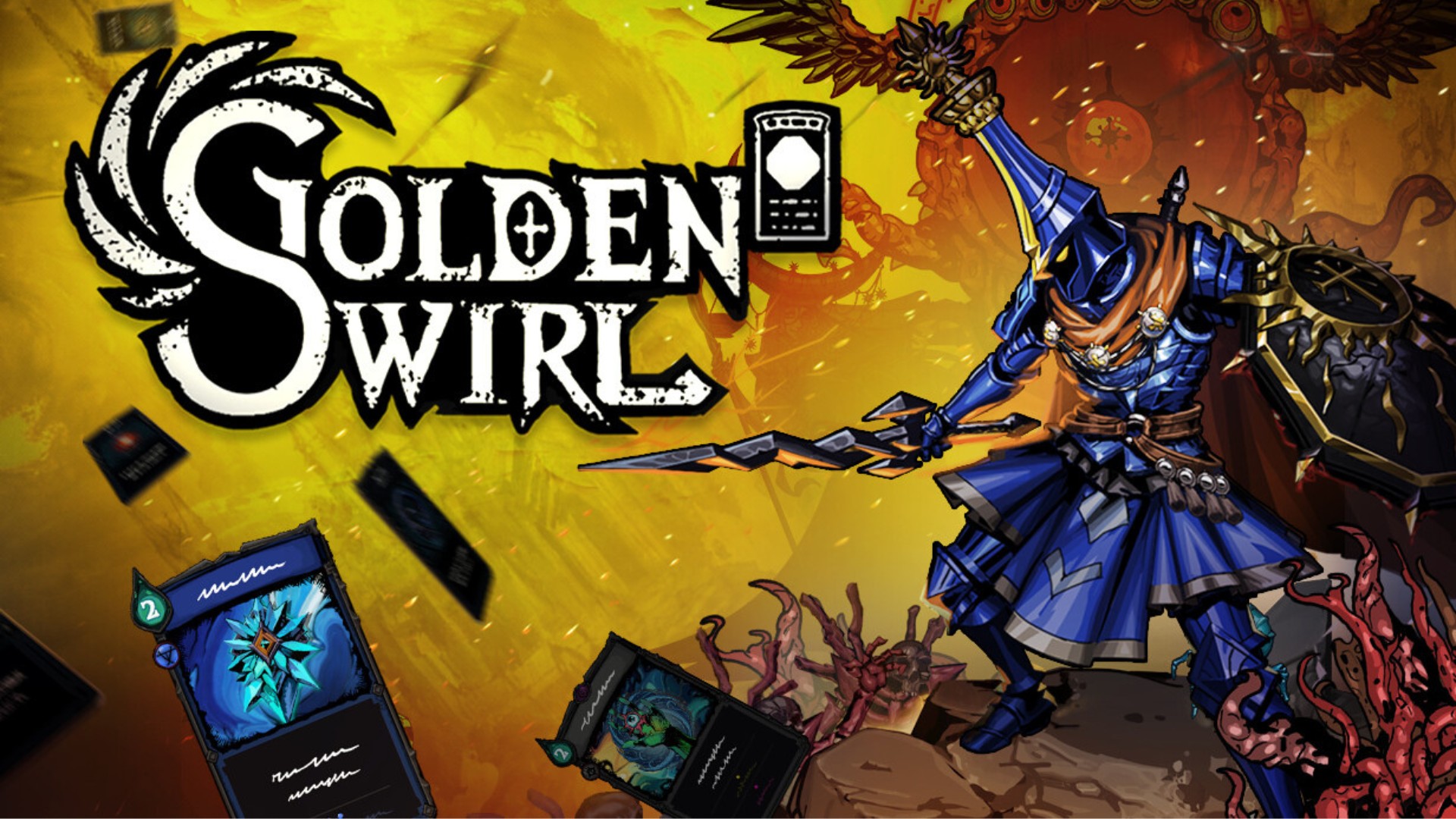
Golden Swirl has one of the most interesting deckbuilding combat systems I have played in quite some time. It is tactical without becoming slow, energetic without taking control away from the player, and filled with enough cards, characters and equipment to encourage experimentation. Unfortunately, almost everything surrounding that system is far less memorable.
I spent ten hours with the PC (Steam) version, completed every location and defeated all of the bosses. I did not reach 100% completion, as I still had cards, items and perks left to unlock. That unfinished collection gives the game some replay value, but I had already seen enough repeated rooms, enemies and dialogue to understand both why its central loop works and why returning to it can become exhausting.
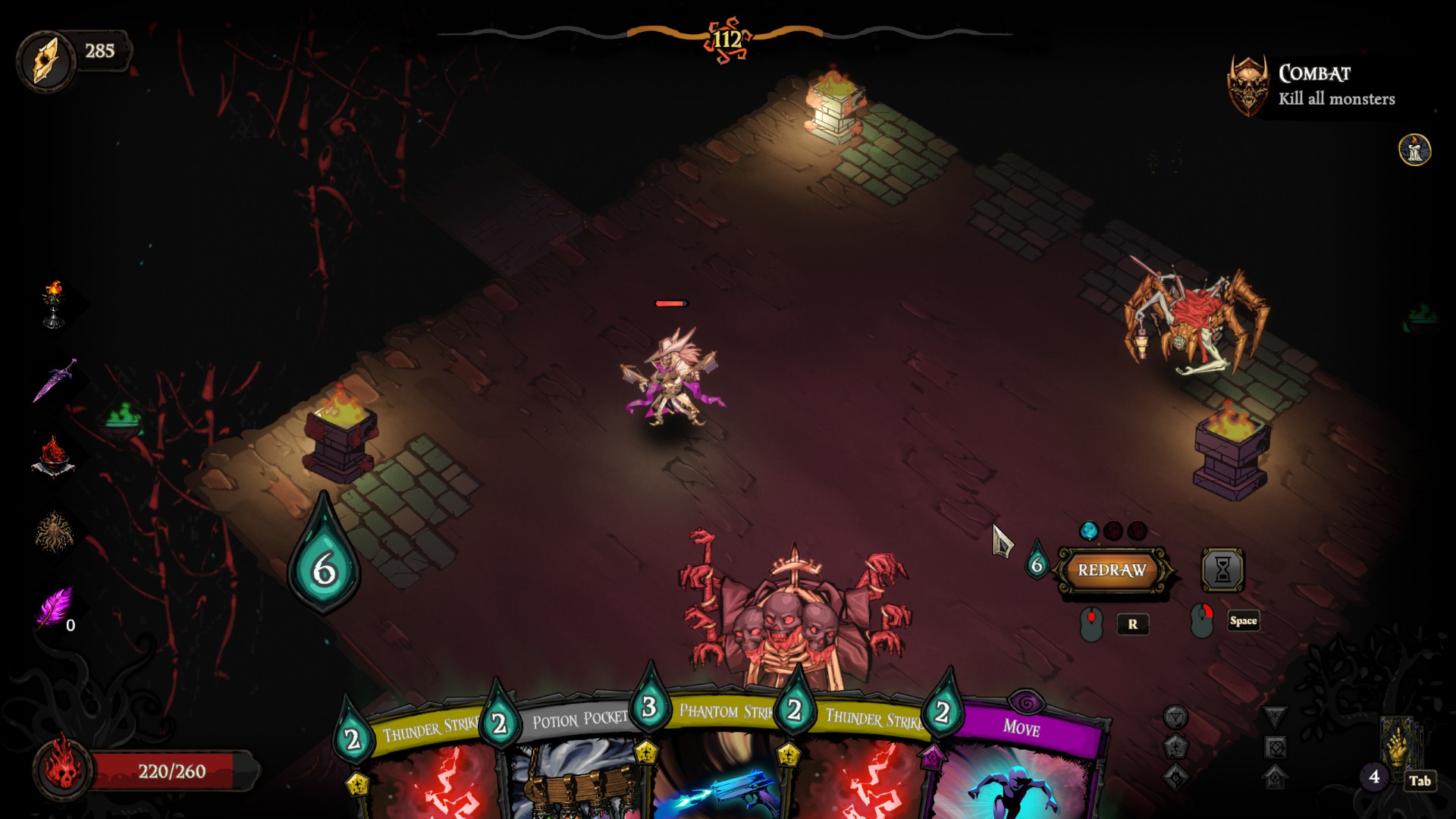
It would be easy to describe Golden Swirl as Slay the Spire mixed with an action game, but that comparison does not properly explain its identity. Cards do not simply improve familiar movement and attacks. They are the actions you use to move, defend yourself, reposition and strike enemies, while those enemies continue behaving in real time.
The clever part is that selecting a card pauses the action. I could stop, inspect the battlefield, aim an ability and think through my next move before allowing everything to continue. This preserves the pressure of real-time combat without forcing rushed decisions. It also makes positioning and attack direction as important as the cards in my hand.
The controls support this idea extremely well. Aiming is easy, pausing feels immediate, and playing cards remains responsive even when a build becomes more complicated. Careful planning is useful, especially while learning how enemies behave, but the game does not demand perfect tactical discipline at all times. Once I understood my deck and found the right combinations, I could play far more aggressively and sometimes spam abilities without losing control of the encounter.
Every unlocked character also introduces a different playstyle. New card sets, equipment and passive effects steadily expand what can be attempted, so experimentation remains the strongest reason to begin another expedition. The game explains individual effects as they appear, and once I understood how health, armour and card properties worked together, building around their interactions became satisfying.
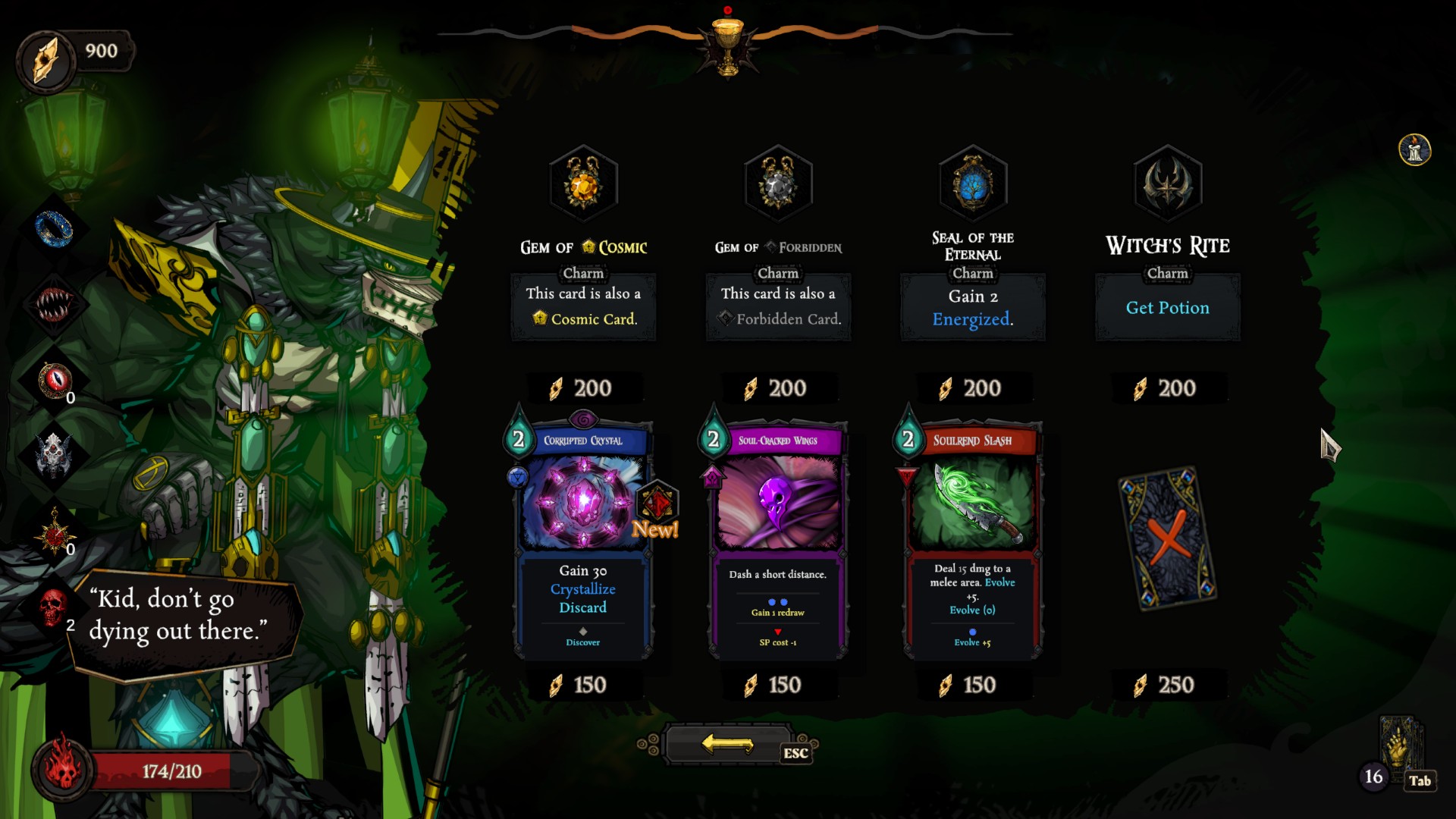
Runs are not saved by combat alone. Golden Swirl includes a huge selection of events involving chests, card removal, card banishment, rewards and unpredictable encounters. These decisions connect to the Golden Will system, where success or failure can affect your condition and available resources.
The best moments come from taking a chance with poor odds and somehow succeeding. That small victory can feel as rewarding as defeating a difficult enemy because I knew the risk before committing. My deck also mattered outside combat, allowing its composition to influence certain checks rather than reducing every event to a detached dialogue choice.
The same randomness can be frustrating. A high chance of success does not guarantee anything, and failing three favorable checks in a row feels terrible. That unpredictability belongs in a roguelite, but the displayed odds sometimes create an expectation the result does not satisfy. Even then, the sheer number of possible events gives expeditions some welcome variety when the physical rooms begin blending together.
There is almost always something to unlock after a run. New characters, card sets, charms, artefacts and equipment provide visible progress, and customizing the Nameless One gives those rewards a practical purpose. This steady flow kept me playing long after I had understood the basic combat loop.
The Golden Tree upgrades were much less exciting. Most provide small numerical improvements such as additional starting currency, more healing after a round or extra re-roll opportunities. These bonuses are useful, but they rarely change how a run is approached. However, the ending upgrade in the tree felt particularly worthwile.
The limited environmental structure makes that disappointing progression harder to ignore. Each location has its own visual identity and atmosphere, but the layouts remain fundamentally similar. Rooms are generally variations on the same square arenas, while enemies and bosses inevitably begin repeating. Bosses provide some much-needed differences, although even they cannot fully prevent the later expeditions from becoming familiar.
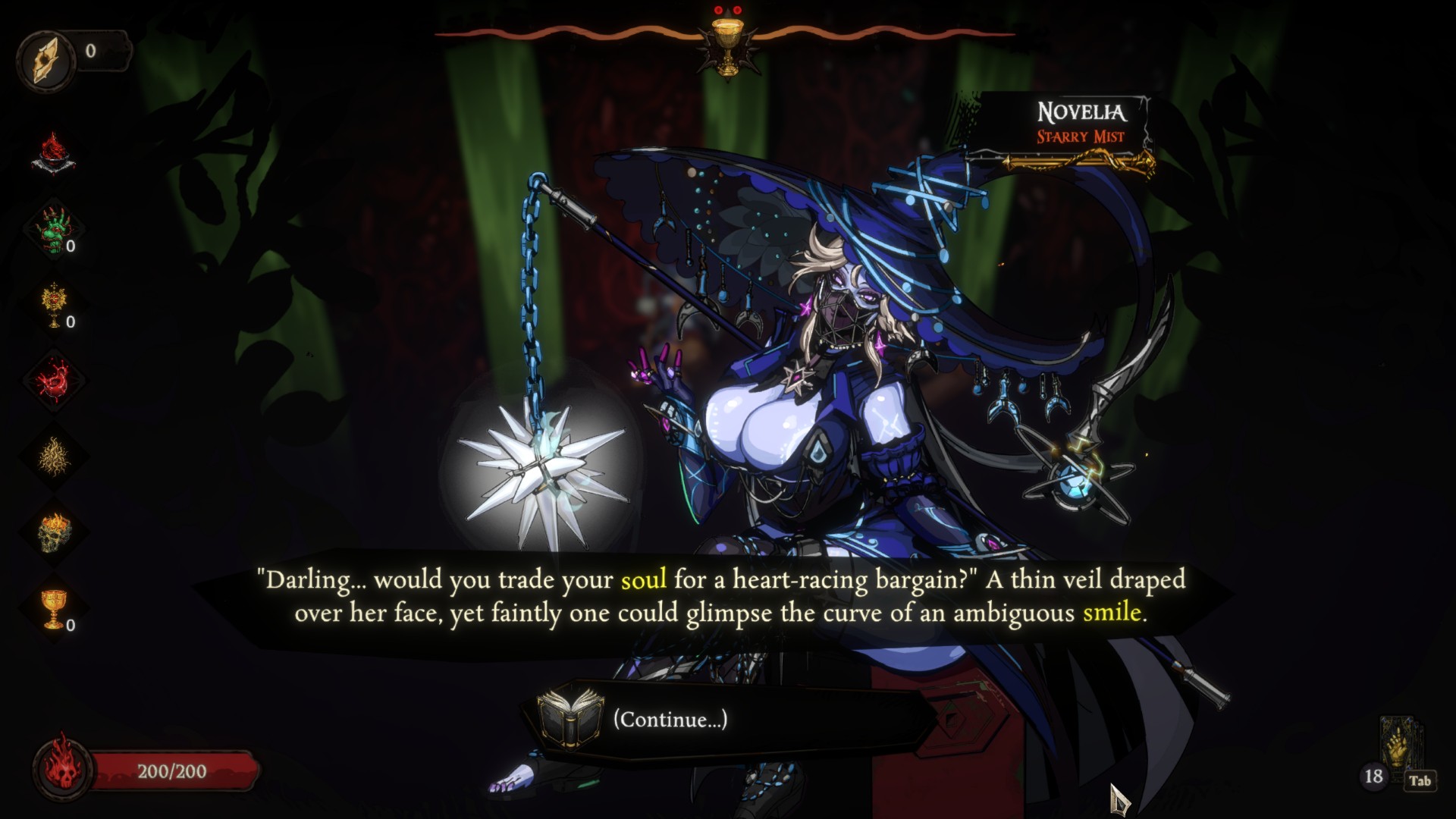
Visually, the characters are polished and immediately recognizable as the game’s main attraction. Golden Swirl openly embraces exaggerated fanservice, particularly its women with enormous breasts and deliberately provocative outfits. They are attractive in a very specific, over-the-top way, although some proportions also look strange. The game is clearly not ashamed of this direction, and that confidence is interesting even when the designs undermine the horror atmosphere.
The problem is that the characters themselves are forgettable. The premise, cast and wider world never stayed with me in the way the artwork initially suggested they might. Its lore contains plenty of ideas, but it often feels as though the developer worked backwards, forcing the story to justify the mechanics and imagery without asking whether the resulting narrative was genuinely engaging.
There is also far too much dialogue. Listening to every character after finishing a level is tolerable during the first couple of hours, but it quickly becomes repetitive and cumbersome. The English voice acting is extensive, yet that becomes a burden when I am repeatedly skipping conversations just to return to the part of the game I enjoy. Names, metaphors and fragments of worldbuilding are piled together without enough reason to care about them.
That repetition weakens otherwise decent worldbuilding. Different locations may look distinct, but their similar structures and constant exposition make them feel like slight variations of the same experience. Eventually, I stopped looking forward to what anyone had to say and treated every conversation as another interruption.
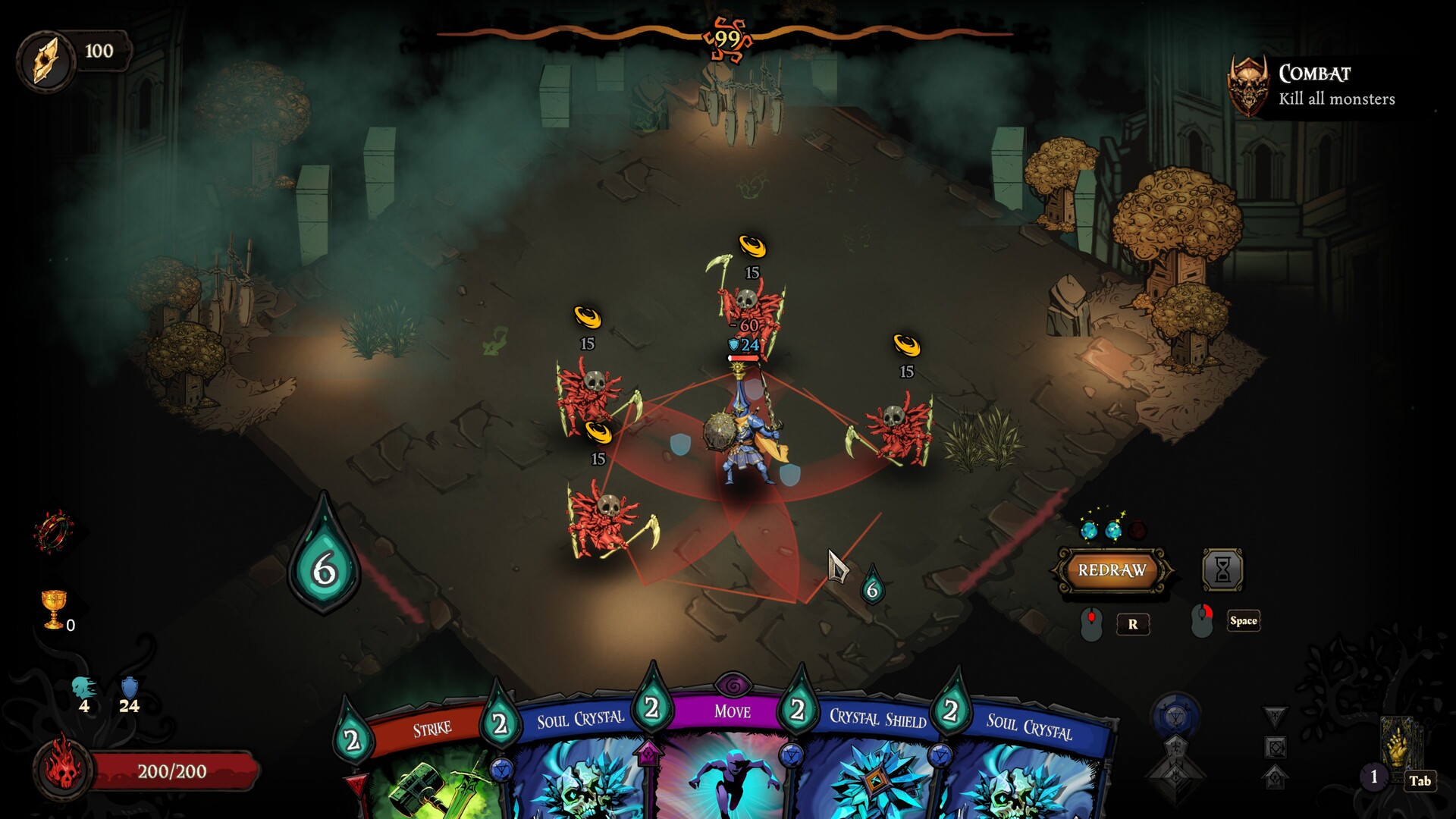
On PC, Golden Swirl ran without any technical problems throughout my ten hours. That stability allowed its mechanical strengths to shine: responsive controls, satisfying deck synergies, tactical pausing and frequent unlocks all make it remarkably easy to begin one more run.
Golden Swirl is at its best when it trusts its cards, gives me space to experiment and lets its unusual combat system speak for itself. Whenever it returns to repetitive rooms, modest permanent upgrades or another long conversation, that excitement drains away. I still wanted to unlock more cards when I stopped playing, but I wanted far less of nearly everything standing between them.
I recommend Golden Swirl to deckbuilding and roguelike players who value mechanical experimentation more than story. Its combat is original, accessible and deep enough to carry the experience, but anyone sensitive to repetitive layouts, excessive dialogue or heavily exaggerated fanservice should approach it with those limitations in mind.
Golden Swirl is easy to recommend to players who value creative deckbuilding and experimentation more than story. Its distinctive real-time card combat, tactical pause system and steady stream of unlocks kept me invested for ten hours. However, the repetitive environments, underwhelming Golden Tree upgrades and excessive dialogue prevent it from reaching its full potential. The gameplay is strong enough to carry the experience, but almost everything surrounding it feels far less memorable.
Ending Thoughts
Review copy provided by the publisher
Dinosaur survival horror game Wilderdark has one of those premises that immediately makes you wonder why more games have not…
![[PREVIEW] Tiny Metal 2 – Strategy Game That Wants You to Learn From Every Mistake](https://www.indie-games.eu/wp-content/uploads/2026/09/Tiny-Metal-2-1024x576.jpg)
I rarely enjoy discovering that my opening strategy was completely wrong, but Tiny Metal 2 made that process one of…
![[PREVIEW] Remothered: Red Nun’s Legacy – Ambitious Survival Horror That Needs More Polish](https://www.indie-games.eu/wp-content/uploads/2026/09/Remothered-Red-Nuns-Legacy-4-1024x576.jpg)
Remothered: Red Nun’s Legacy has a gripping atmosphere and promising survival tools, but its repetitive hiding and rough visuals need…
The Alighieri Circle: Dante’s Bloodline is difficult to recommend beyond players who are especially interested in Dante or enjoy solving…

Orc Incremental offers satisfying progression, entertaining totem combinations and enough content to justify its affordable price.
![[GAMESCOM 2026] Chronoscript: The Endless End Preview – Beautiful Pages Hide Deliberate Combat](https://www.indie-games.eu/wp-content/uploads/2026/09/Chronoscript-The-Endless-End-1-1024x576.jpg)
Chronoscript: The Endless End stands out from other Metroidvanias by blending 2D manuscript worlds with exploration inside a 3D manor.
![[GAMESCOM 2026] MegaGum Preview – Combat Hits Hard in This Sticky Platforming Adventure](https://www.indie-games.eu/wp-content/uploads/2026/09/MegaGum-09-09-26-5-1024x576.jpg)
MegaGum combines hard-hitting combat, varied weapons and Gum-powered platforming in a promising Gamescom 2026 demo.
![[GAMESCOM 2026] Delphinium Preview – Cozy Routine Mixed With Enjoyable Minigames](https://www.indie-games.eu/wp-content/uploads/2026/03/Delphinium--1024x665.jpg)
Delphinium mixes cozy farming, exploration and relationships with enjoyable fishing, cooking and forging minigames in its Gamescom 2026 demo.
Lady Death: Demonicron looks the part, but underneath its excellent comic-book exterior is a clunky and painfully short brawler.
![[GAMESCOM 2026] Tomb Raider: Legacy of Atlantis Preview – Expands the Original Without Losing Its Identity](https://www.indie-games.eu/wp-content/uploads/2026/09/tomb-raider-legacy-of-atlantis-06-02-26-1-1024x576.jpg)
Tomb Raider: Legacy of Atlantis brings Lara back to her roots, but its Gamescom 2026 showing proved this is far…
![[GAMESCOM 2026] Clive Barker’s Hellraiser: Revival Preview – Ready to Open the Box](https://www.indie-games.eu/wp-content/uploads/2026/09/Clive-Barkers-Hellraiser-Revival-08-30-26-1-1024x576.jpg)
Hellraiser: Revival preserves the franchise’s sex, gore and psychological horror while delivering approachable survival-horror gameplay.

Swan Song creates a peaceful and forgiving puzzle space without removing the challenge that makes solving a difficult puzzle rewarding.
Mortal Shell II starts brilliantly but grows repetitive and exhausting, while remaining a rewarding and ambitious Soulslike sequel.
![[GAMESCOM 2026] Terranigma Preview – A Lost SNES Classic Returns in 2027](https://www.indie-games.eu/wp-content/uploads/2026/08/Terranigma-1-1024x576.jpg)
After more than three decades of limited availability, Terranigma is returning in 2027. We played its enhanced re-release at Gamescom…

Reading another person’s mind is often presented as a desirable superpower, but Sister Other Paranoia immediately understands why it could…
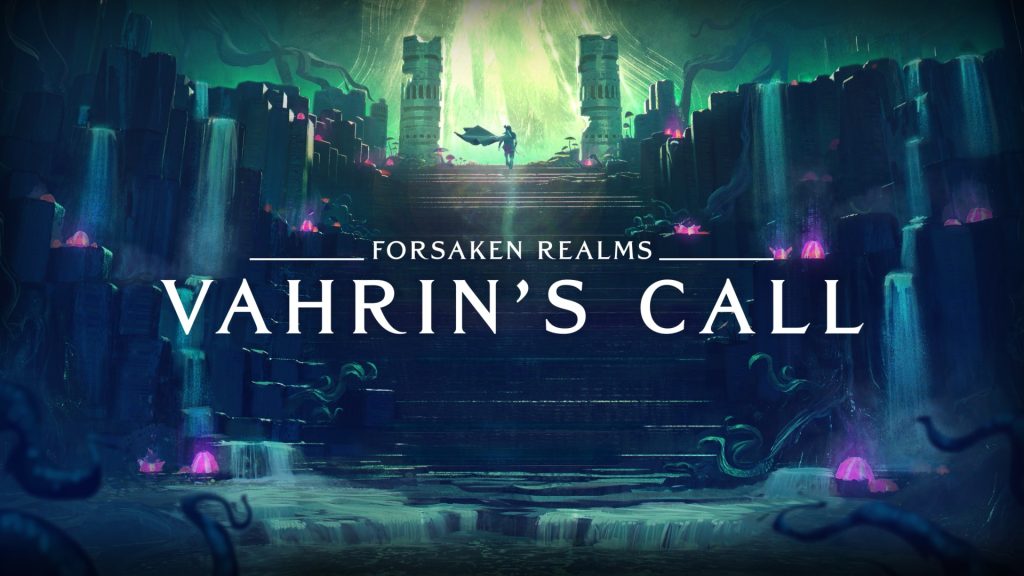
Forsaken Realms: Vahrin’s Call is exactly the kind of ambitious, slightly clumsy fantasy RPG that used to be far more…
![[Early Access] 2nd EVE – Sci-Fi Action RPG That Lacks a Sense of Stakes](https://www.indie-games.eu/wp-content/uploads/2026/08/2ND-EVE-1024x576.jpg)
2nd Eve is a space-set action RPG in which we strive to save humanity.
![[PREVIEW] Dreamcards – Strategic Exploration of Consciousness](https://www.indie-games.eu/wp-content/uploads/2026/08/Dreamcards_20260810_233631_0000-1024x576.jpg)
Dreamcards is a roguelike deckbuilder centered around dreams and nightmares.
![[Early Access] OFFBEAT – Incredibly Fun Way to Start a Music Career](https://www.indie-games.eu/wp-content/uploads/2026/08/Offbeat_20260808_201446_0000-1024x576.jpg)
In OFFBEAT, we play the role of a jobbing composer who is launching their music career.

HellSlave II retains the original’s oppressive atmosphere, morally grey world and striking art while adding a larger world, randomized loot…
