Turnip Mountain – Satisfying Climbing Adventure That Proves Less Is More
Turnip Mountain stands out for its combination of a unique control system and a minimalist approach.

If you enjoy independent indie game coverage, consider supporting Indie-Games.eu on Patreon. It helps keep the site independent.
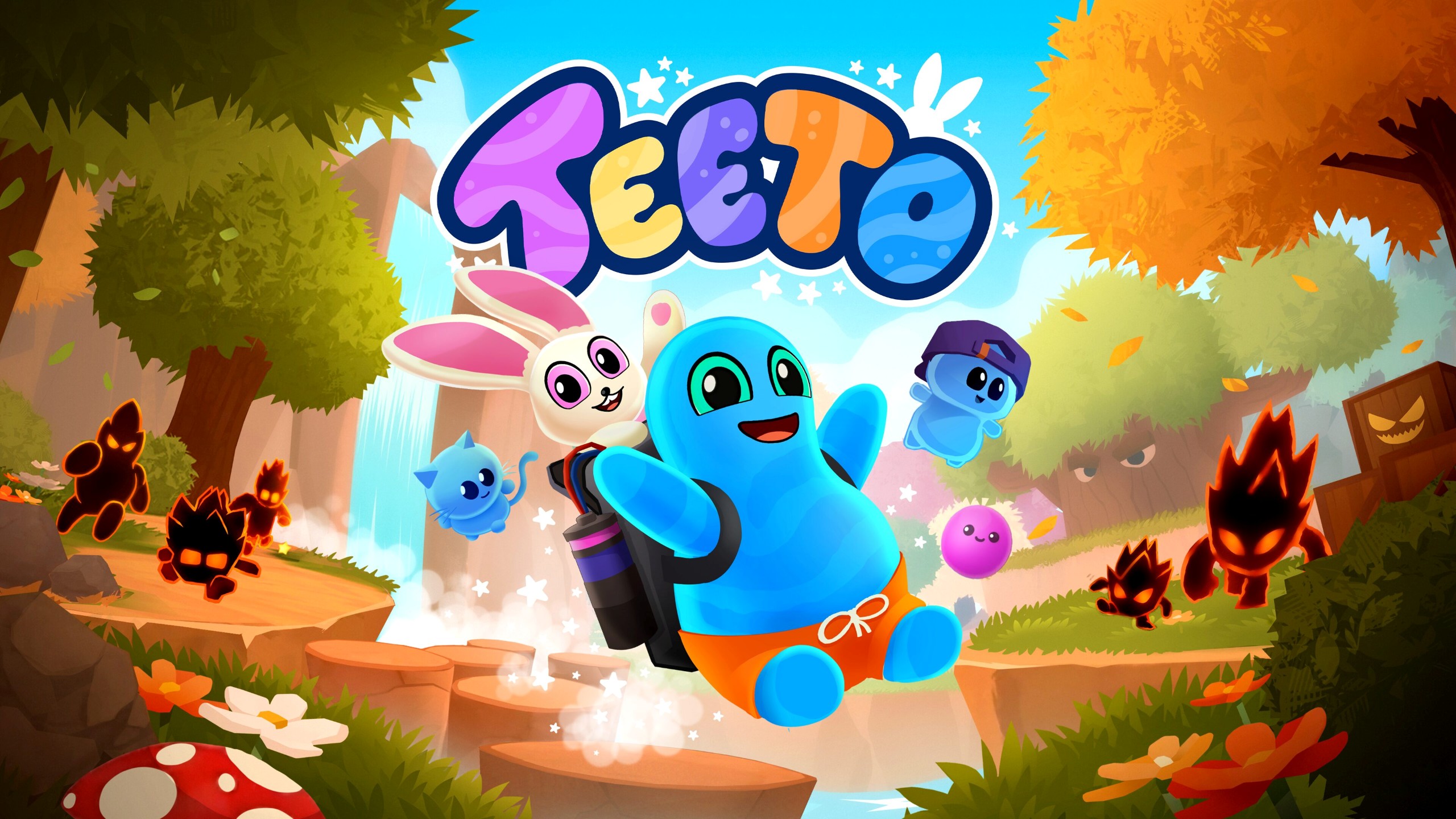
Teeto won me over through something as simple as turning into a chair and firing cushions across the room. It is a ridiculous ability with limited practical value, but it perfectly captures the personality of Eat Pant Games’ 3D platformer. The game is playful, occasionally bizarre and far more interested in making you smile than testing the limits of your patience.
It takes clear inspiration from the collectathon platformers of the late 1990s. However, it does not merely copy the past. Its responsive movement, forgiving platforming and cleverly implemented transformations make it feel comfortable alongside modern releases.
Teeto never reaches the mechanical depth or production quality of the biggest names in the genre. Its combat is basic, its camera can become troublesome and completionists are given surprisingly few tools for tracking their progress. Nevertheless, its six-to-eight-hour adventure is filled with such warmth, creativity and memorable characters that these shortcomings rarely prevent it from being an absolute joy to play.
Humanity has disappeared, but Teeto is not interested in presenting another devastated world dominated by death and despair. In the absence of people, abandoned objects and animals have developed consciousness. Unfortunately, sinister creatures known as Shadows have also emerged and begun terrorising this unusual new civilisation. A plush rabbit scientist named Nory responds by creating Teeto, a small blue blob capable of absorbing materials from the surrounding environment. Teeto is sent across the world to confront the Shadows and uncover what happened to humanity.
Absorbing environmental materials is the foundation of both exploration and puzzle-solving. The idea resembles Kirby’s ability to acquire different powers, although Teeto usually gains them from nearby objects rather than defeated enemies. For example, absorbing a rock transforms Teeto into a heavy block capable of smashing cracked surfaces.
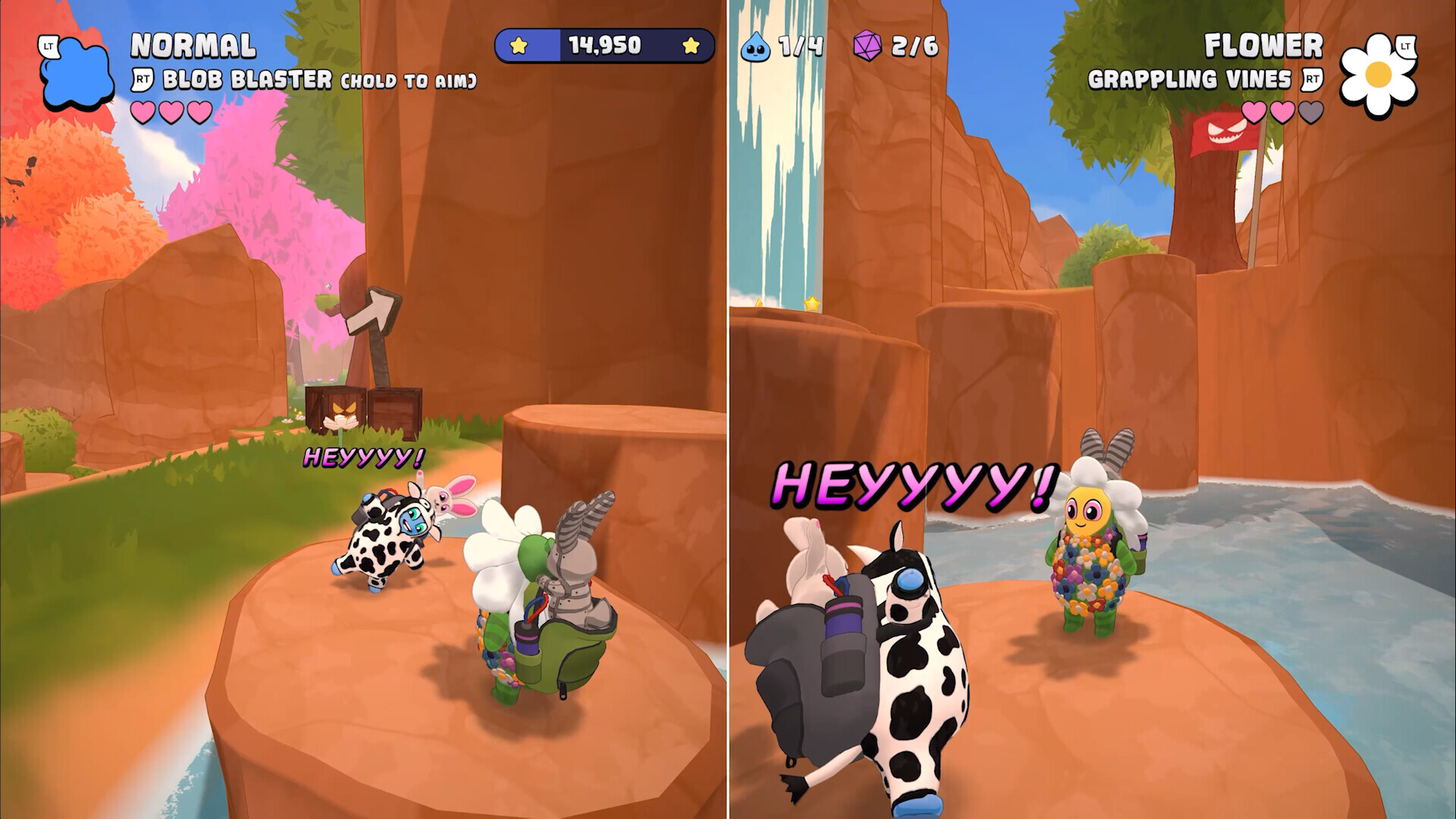
A flower produces a long stem that can attach itself to designated points, allowing you to swing across gaps. Fire can melt ice, while other transformations serve more specialised or deliberately silly purposes. Teeto can even become a bush for stealth sections or the aforementioned armchair that launches cushions.
The individual abilities are easy to understand, but the smartest decision is how naturally they fit into the existing controls. New transformations alter how Teeto interacts with the environment without constantly adding new button combinations. Puzzles are similarly approachable.
Whenever a particular transformation is required, its source is usually located somewhere nearby. This allows each area to introduce an idea, explore several variations and then move forward without forcing you to carry abilities across half the level. It also keeps backtracking to a minimum.
The resulting puzzles are unlikely to leave experienced players stuck for long, but their purpose is not to provide elaborate brainteasers. They give the transformations a practical role and create a pleasant rhythm between platforming, exploration and light problem-solving. There is usually something new waiting before an existing ability begins to feel overused.
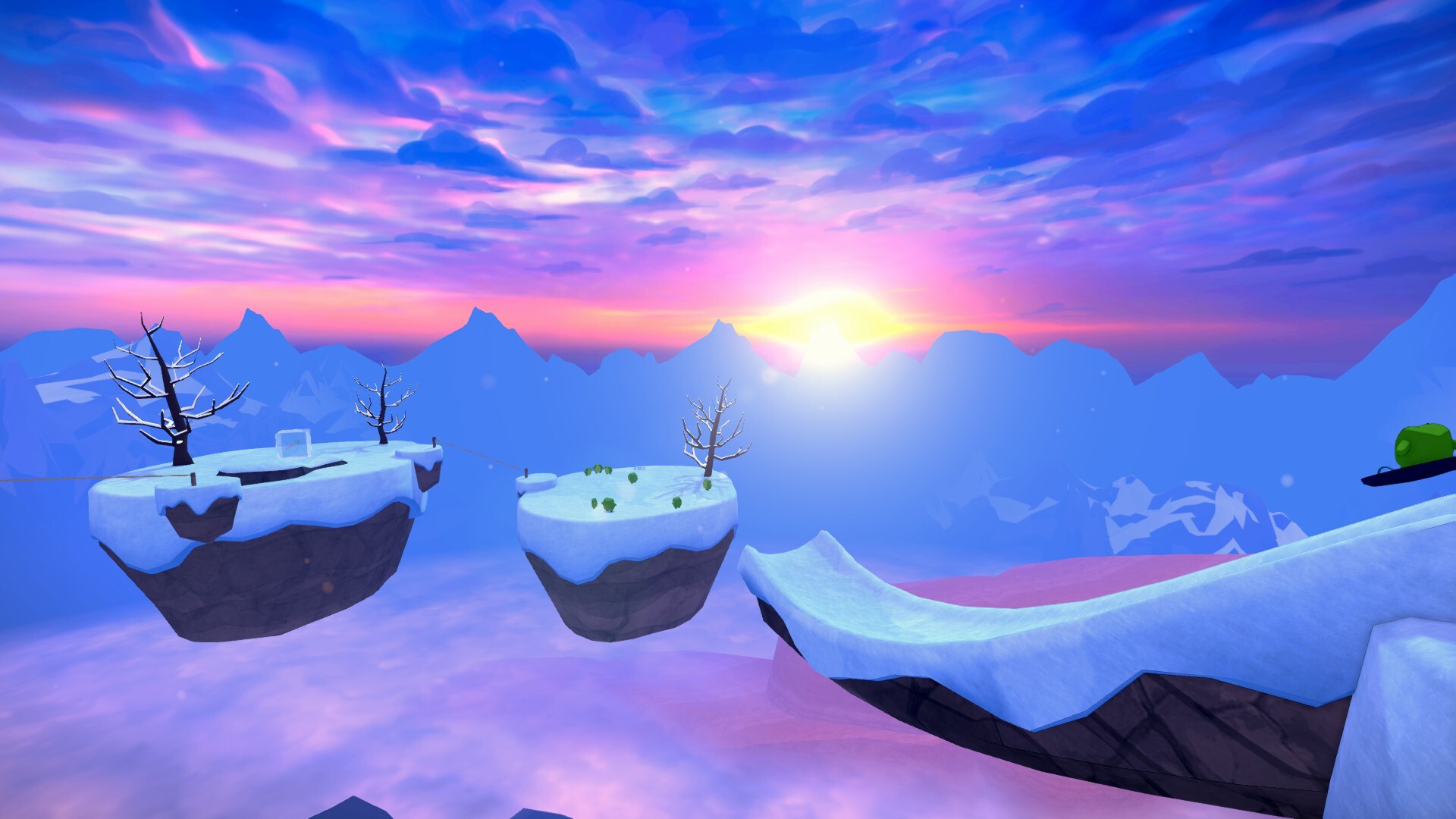
Teeto initially feels slightly unusual to control. During a jump, the character appears to rotate around a point positioned just behind its body. That movement can make distances difficult to judge during the opening stages, particularly when landing on smaller platforms.
Fortunately, the game provides several safety nets. Teeto can slow its descent using an improvised parachute, giving you time to correct an inaccurate jump. The character will also automatically grab and climb nearby ledges, frequently turning what looks like a failed landing into a successful one. After a short adjustment period, moving around becomes fluid and satisfying.
These forgiving mechanics suit the game’s relaxed nature, although players searching for demanding platforming will not find much resistance. Teeto generally wants you to explore its world rather than repeatedly attempt the same obstacle. That generosity sometimes reduces the satisfaction of completing a difficult sequence, but it also maintains the campaign’s excellent pace.
Combat is considerably less developed. Most ordinary Shadows can be defeated with a single hit or spinning attack, making them minor interruptions rather than meaningful threats. They add movement and activity to the levels, but fighting them is rarely as interesting as navigating the environment.
Bosses provide more substantial encounters at the end of each act. These battles incorporate previously introduced transformations and ask you to recognise when and how each power should be applied. They cannot completely compensate for the shallow regular combat, but they demonstrate how well the transformation system works when placed under greater pressure.
Teeto preserves the traditional collectathon pleasure of finding something hidden behind a platform, inside a suspicious passage or beyond an optional challenge. Stars serve as currency for purchasing cosmetic outfits in the central hub, while purple Vionite crystals unlock access to additional worlds.
The most charming collectibles are the Baby Michaels, tiny blue creatures with individual appearances. Rescued Baby Michaels relocate to the hub island, gradually turning it into a livelier place. You can also pick them up and throw them through a basketball hoop, which serves no grand mechanical purpose but is exactly the kind of unnecessary interaction that gives Teeto its character.
These collectibles encourage you to look beyond the main route without making progress feel dependent on exhaustive searching. Unfortunately, the interface does not provide enough support for players attempting a complete run. There is no proper map, while the menus offer limited information about which Vionite crystals have already been collected within individual levels. Missing one item can therefore lead to unnecessary searching through places you have already visited.
An optional local split-screen cooperative mode is also included. Local multiplayer has become uncommon enough that its presence deserves recognition, particularly in a cheerful platformer that can be enjoyed by younger players and families. The campaign works naturally as a solo adventure, but having another way to experience it makes the overall package more flexible.
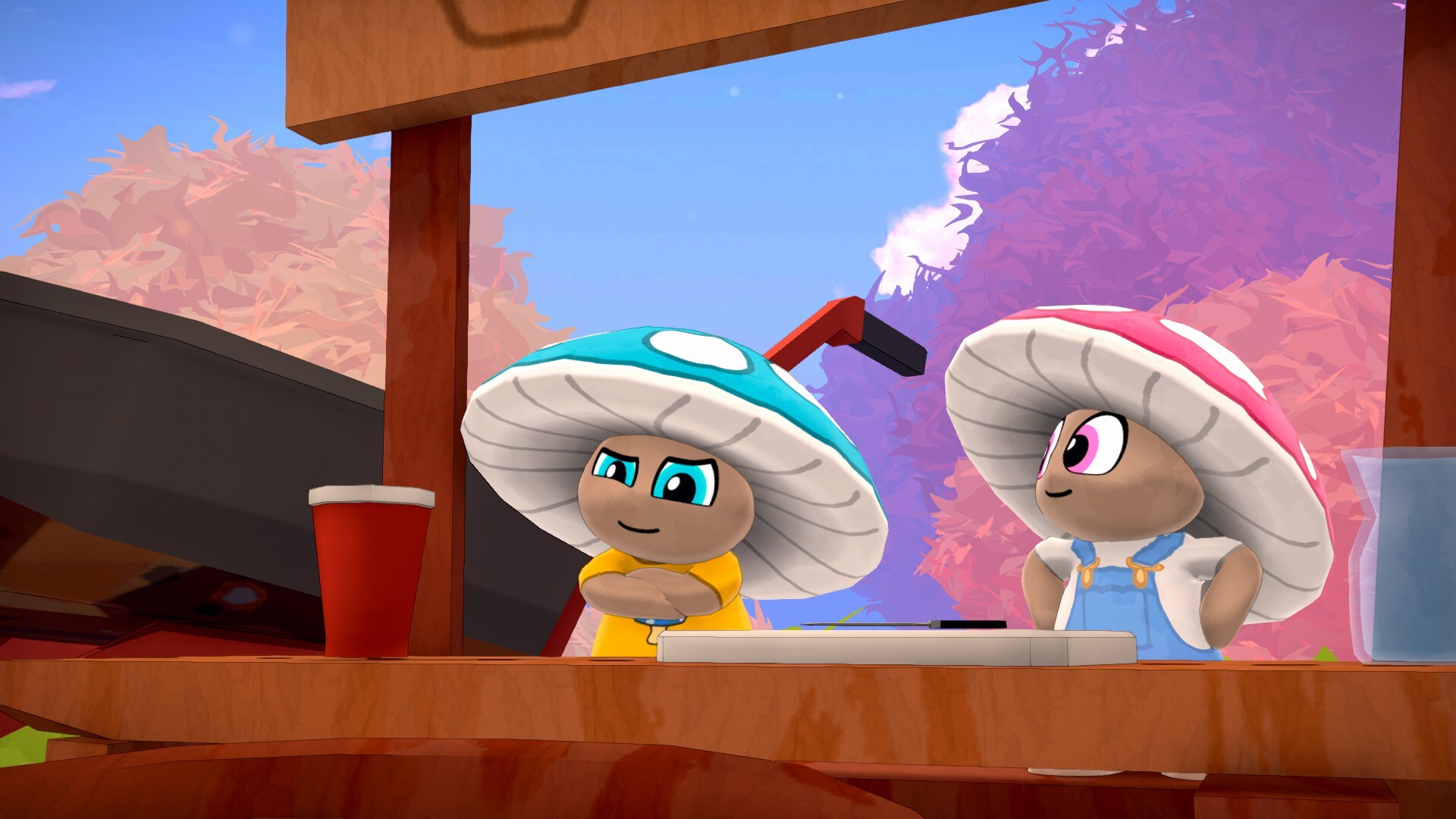
Teeto understands that a 3D platformer does not require an enormous world or dozens of interconnected systems to be rewarding. It needs enjoyable movement, worthwhile exploration and enough creativity to make the next platform, character or collectible feel inviting. Eat Pant Games succeeds in all three areas.
Also worth noting is that the camera is the most noticeable visual problem. It occasionally struggles in enclosed areas or settles into an awkward position during certain jumps. These incidents are not frequent enough to ruin the platforming, but they become frustrating whenever an otherwise simple landing is obscured by the viewing angle.
Its limited combat, occasional camera problems and weak collectible tracking prevent it from matching the genre’s finest examples. The forgiving difficulty also means platforming veterans may finish the campaign without encountering many serious challenges. However, Teeto does not pretend to be a brutal test of precision. It is a compact, welcoming adventure designed to leave you in a better mood than when you started.
The transformations provide its strongest mechanical ideas, but the humour and lovable characters are what give it a lasting identity. Teeto may borrow the foundations of classic collectathons, yet it uses them to create a world that feels warm, peculiar and entirely its own. Anyone missing cheerful 3D platformers should have little trouble falling in love with this strange blue blob.
Teeto is a warm, creative and highly enjoyable 3D platformer that understands why classic collectathons remain so appealing. Its responsive movement, imaginative transformations and lovable characters turn a relatively simple adventure into something memorable. Becoming a rock, flower, bush or cushion-firing chair is not merely a visual joke; each transformation contributes to the game’s playful rhythm of exploration, platforming and light puzzle-solving. Anyone looking for a cheerful, compact collectathon should find it very easy to recommend.
Ending Thoughts
Review copy provided by the publisher
Turnip Mountain stands out for its combination of a unique control system and a minimalist approach.
Dystopicon is an imaginative and memorable narrative experiment with sharp social commentary, engaging world-building and several wonderfully absurd scenarios.
Maneki Mania is an incremental game centered around petting a lucky cat.
XeGrader Plus delivers colorful retro shooting, but basic mechanics, a short campaign and paid retro modes make its €20 price…
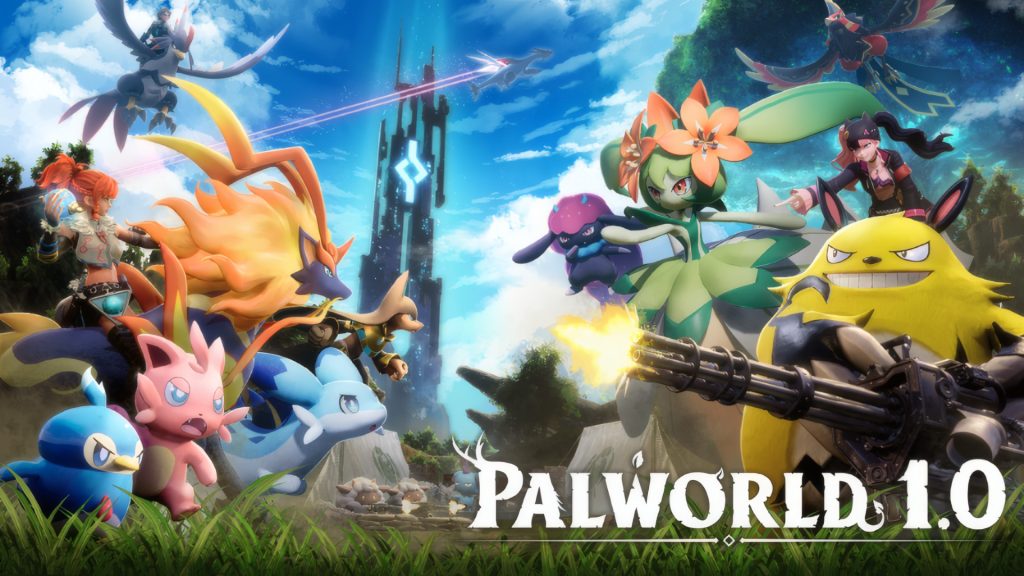
It has been roughly two and a half years since Palworld first entered Early Access, and quite a lot has…
![[EARLY ACCESS] The Last Caretaker – Survival Game I Cannot Stop Playing](https://www.indie-games.eu/wp-content/uploads/2026/07/The-last-Caretaker-Key-Art-1024x587.jpg)
The Last Caretaker is a compelling survival crafter with a flooded world and mobile base, but weak combat and performance…

Advent: Dawn is an intriguing science-fiction visual novel elevated by a likable cast and one of the most convenient flowchart…
![[EARLY ACCESS] Hell Maiden – Beautiful but Uneven Journey Through Hell](https://www.indie-games.eu/wp-content/uploads/2025/06/HMD_screenshot_019-1024x576.jpg)
Bullet heaven and rougelite game Hell Maiden lands between a polished Early Access release and a promising game that still…
![[PREVIEW] Dark Queen of Samobor – Promising Croatian Adventure Still in Need of Polish](https://www.indie-games.eu/wp-content/uploads/2026/07/Dark-Queen-of-Samobor-1024x587.jpg)
Dark Queen of Samobor is a promising 2.5D side-scrolling action-adventure that combines Croatian folklore with combat, puzzles and cinematic platforming.
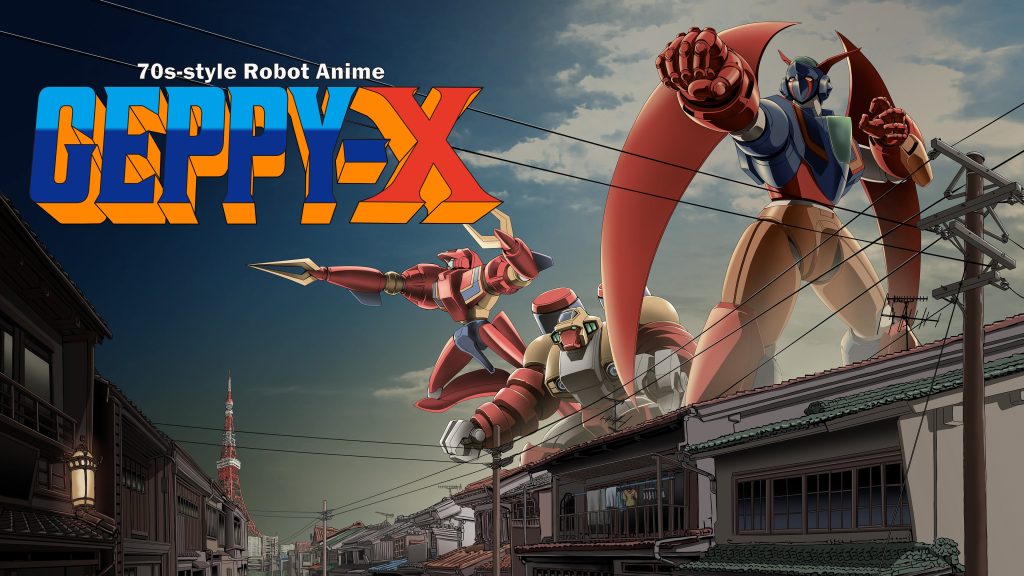
70s-style Robot Anime Geppy-X offers incredible animation, music and mecha nostalgia, but its average shooting make the €39 price difficult…
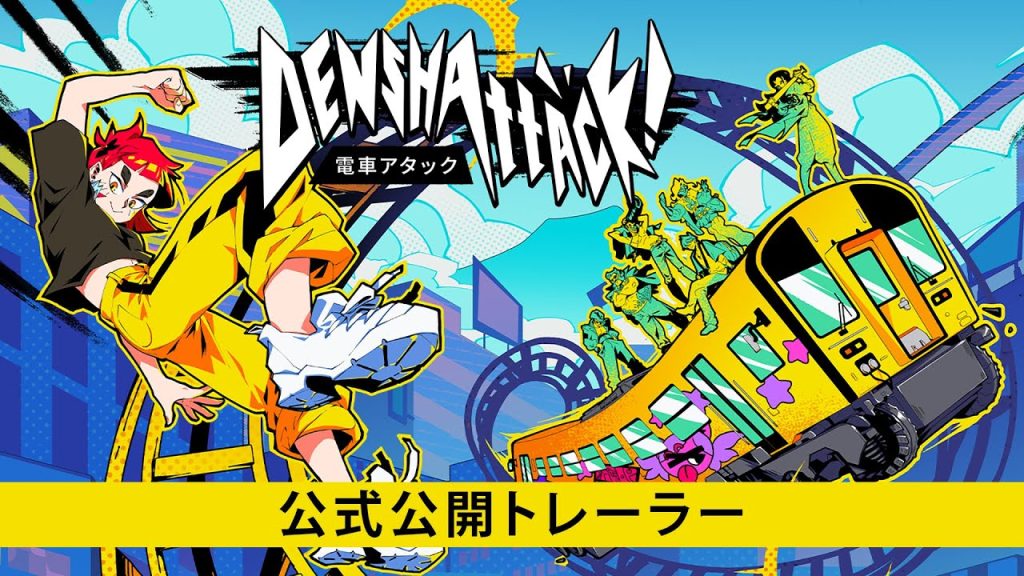
Denshattack! blends Tony Hawk, Jet Set Radio, and Japanese train culture into one of the year's most creative and unforgettable…
If you're looking for a game that takes an incredibly simple idea and somehow turns it into something addictive, KAZ…
Cat Mail Co. charms with cozy visuals and satisfying mail sorting, but its full release doesn't quite live up to…
Forensics: Crime Scene Detective follows Aerosoft's familiar formula: an interesting simulation with decent visuals, weak optimization, and repetitive gameplay.

Foxy The First Steps is an excellent precision platformer that understands exactly what makes the genre enjoyable.

Tokyo Valkyries blends visual novel, roguelite deck-building, and fan service into a surprisingly enjoyable mix, despite few standout elements.
Moonlight Peaks refreshes the cozy farming formula with a more unique supernatural and magical approach while keeping the familiar mechanics…

The first thing that stands out about GRID 2 in 2026 has nothing to do with its handling, graphics, or…
HYPERWIRED is a top-down roguelike where your ship drags a giant plug, powering sockets to complete objectives and progress through…
![[PREVIEW] 70s-style Robot Anime Geppy-X – This Game Pretends It’s a Real 1970s Anime](https://www.indie-games.eu/wp-content/uploads/2026/06/70s-Style-Robot-Anime-Geppy-X-Preview-1024x576.jpg)
As I continue my Steam Next Fest journey, I stumbled upon a game I honestly wasn't expecting to enjoy as…
