![[GAMESCOM 2026] Clive Barker’s Hellraiser: Revival Preview – Ready to Open the Box](https://www.indie-games.eu/wp-content/uploads/2026/09/Clive-Barkers-Hellraiser-Revival-08-30-26-1-1024x576.jpg)
[GAMESCOM 2026] Clive Barker’s Hellraiser: Revival Preview – Ready to Open the Box
Hellraiser: Revival preserves the franchise’s sex, gore and psychological horror while delivering approachable survival-horror gameplay.

![[PREVIEW] Dark Queen of Samobor – Promising Croatian Adventure Still in Need of Polish](https://www.indie-games.eu/wp-content/uploads/2026/07/Dark-Queen-of-Samobor.jpg)
If you enjoy independent indie game coverage, consider supporting Indie-Games.eu on Patreon. It helps keep the site independent.
Dark Queen of Samobor is a promising 2.5D side-scrolling action-adventure that combines Croatian folklore with combat, puzzles and cinematic platforming. Its beautiful world immediately brings games such as Neva and Gris to mind, although its greater focus on combat gives it a slightly different identity. After spending around 30 minutes with the demo, I came away impressed by its atmosphere and ideas, even if several elements still require more polish.
Developed by Downtown Game Studio, the adventure takes place in a dark fantasy version of medieval Croatia. A returning knight finds his homeland under the rule of an evil queen, beginning a journey inspired by Croatian stories, Slavic mythology and historical legends. The full game is planned for Q1 2027, while the demo presents one chapter from the five expected in the final release.
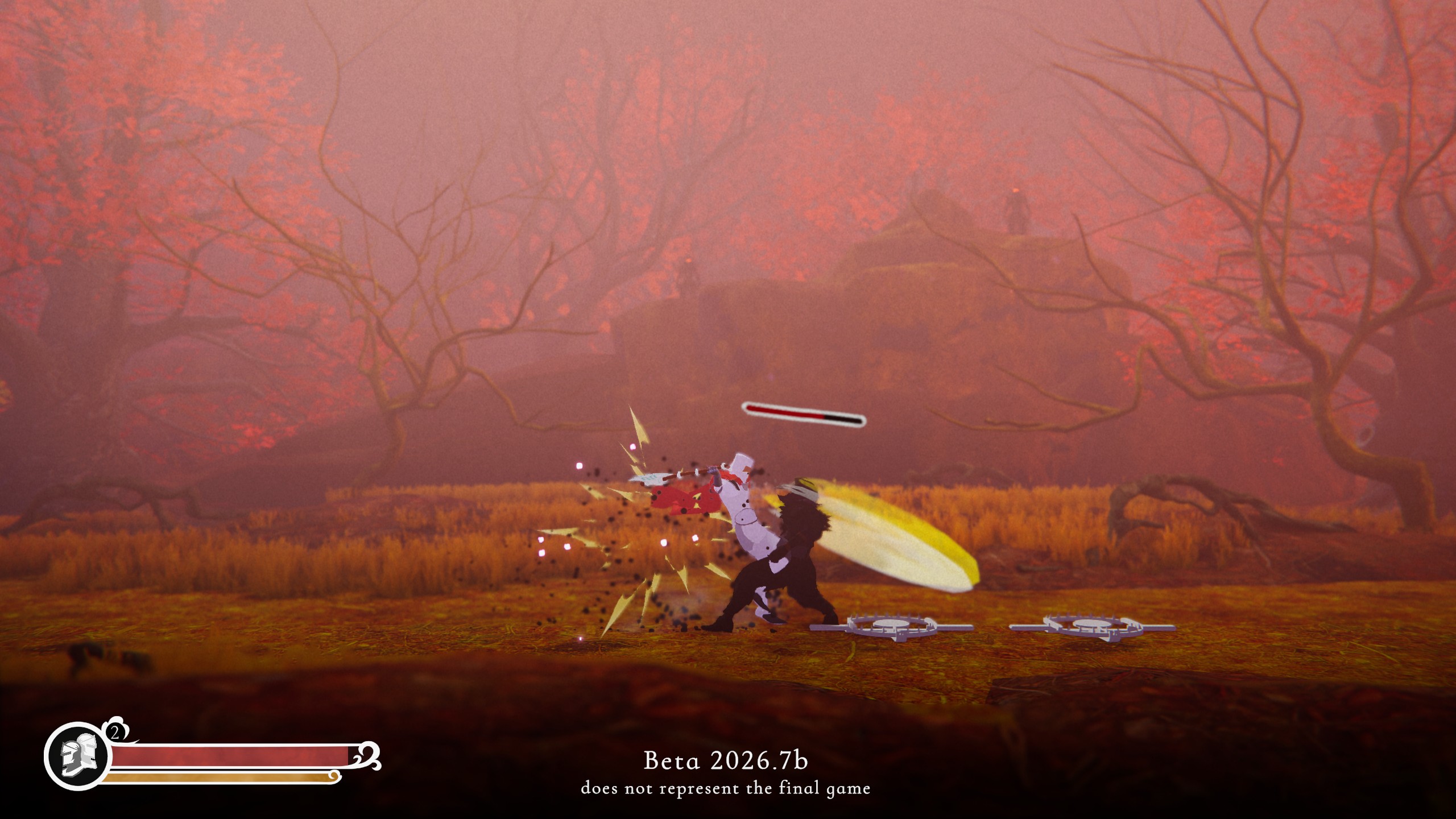
Combat is one of the most common activities throughout the demo. The knight can perform light and heavy attacks, dodge incoming blows and parry attacks with the correct timing. None of these mechanics are particularly unusual, but the basic fighting system feels solid and easy to understand.
Enemies are not especially difficult to defeat, although there is enough variety to prevent every fight from feeling identical. Smaller ones rely on lighter attacks that can normally be parried, while larger enemies use more powerful strikes. These are marked in red, warning you that they cannot be parried and must be avoided instead.
The forgiving difficulty makes the game accessible, especially for players who are more interested in its world and story than a punishing combat challenge. Checkpoints appear regularly, so mistakes rarely cost more than a few moments. Even when a trap crushes you or an enemy catches you off guard, you can quickly return to the action.
Axe throwing is also used during combat and puzzles. It works well enough, but it currently feels somewhat clunky and lacks the smoothness found elsewhere in the fighting system. The animations and overall presentation could similarly benefit from additional work before release. You can clearly see the smaller indie production behind the game, although that does not prevent its central ideas from working.
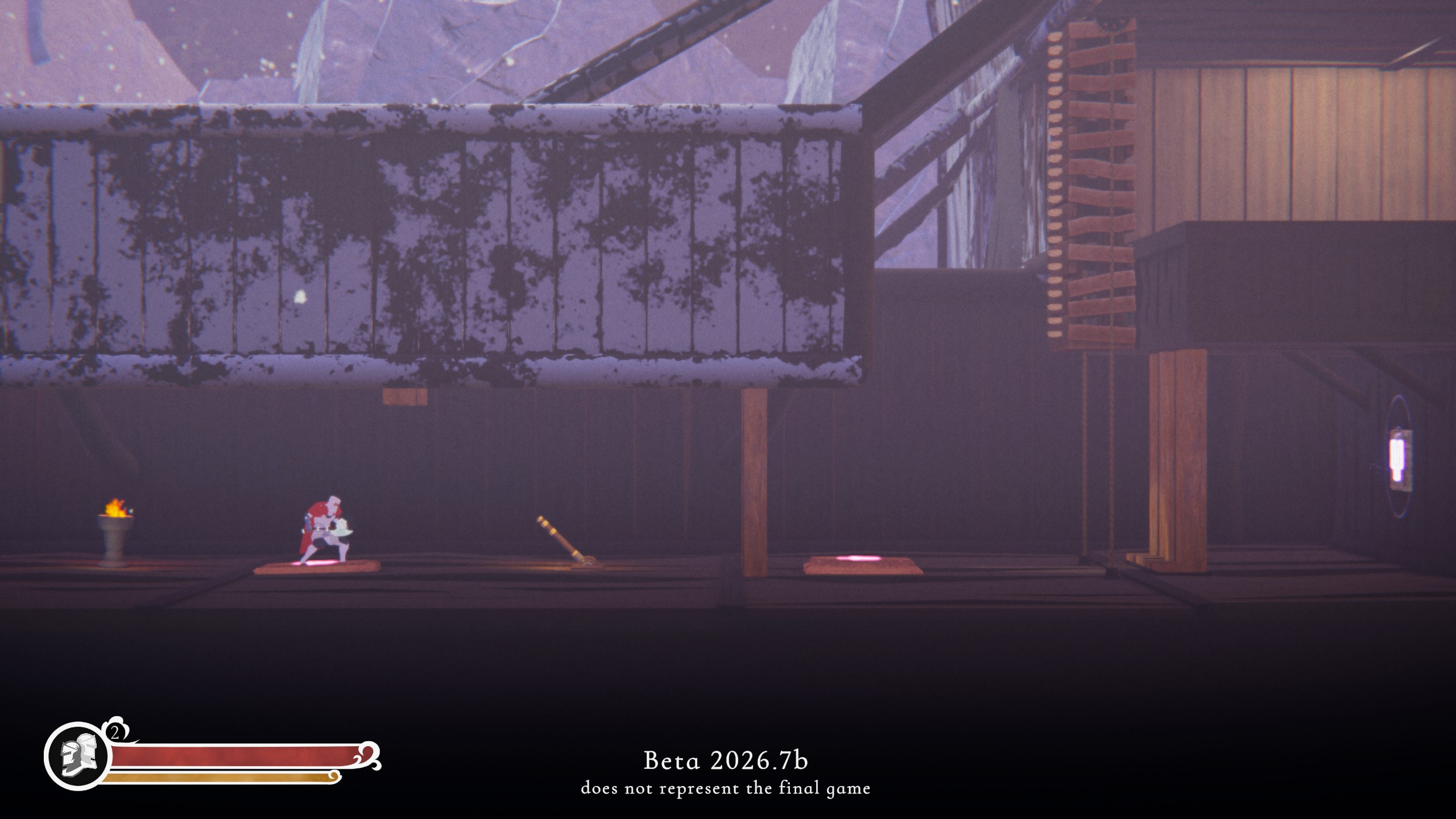
The demo does a good job of presenting several important parts of the adventure within its short running time. Alongside fighting enemies, you must avoid traps, complete straightforward puzzles and use special abilities to progress. One of the most interesting powers allows you to slow time. During one memorable sequence, a massive boulder begins chasing the knight, forcing you to slow everything down and escape before it catches up. The same ability can freeze moving spikes, creating a safe opportunity to pass through them.
Other puzzles require you to throw the knight’s axe at specific objects. You might use it to open a blocked passage or activate a mechanism before quickly moving into a safe area. None of these puzzles are particularly complicated, but they help divide the combat encounters and create some enjoyable cinematic moments.
The level structure is otherwise very linear and familiar. You fight a group of enemies, complete a puzzle, avoid a trap, perform some platforming and then enter another battle. It is a formula we have seen many times before, and the demo does not do much to reinvent it.
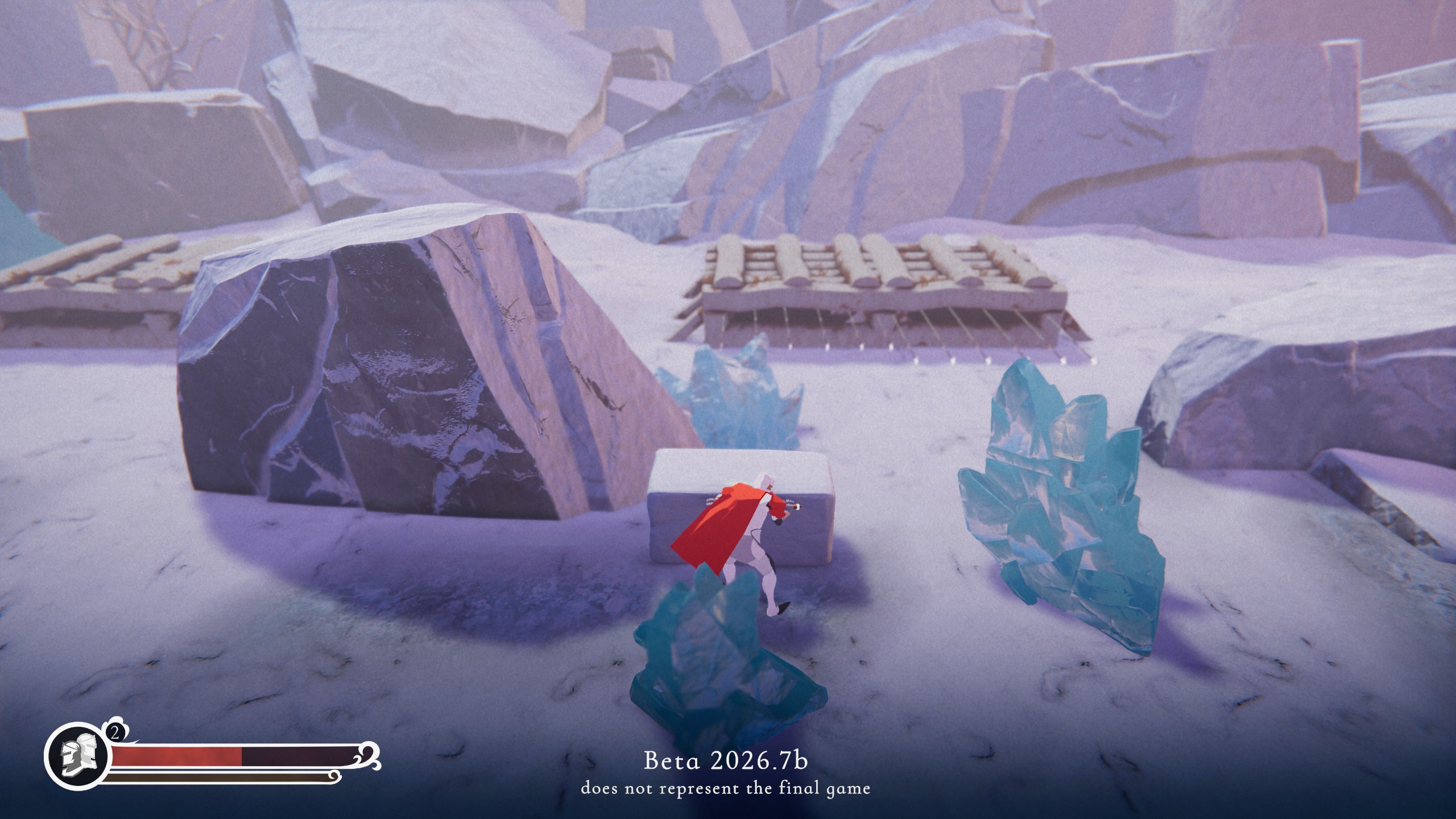
One of the demo’s most impressive qualities is how much environmental variety it presents within approximately 30 minutes. The journey begins in an autumn-like biome filled with warm colours before eventually moving into a colder, winter environment covered in snow and ice.
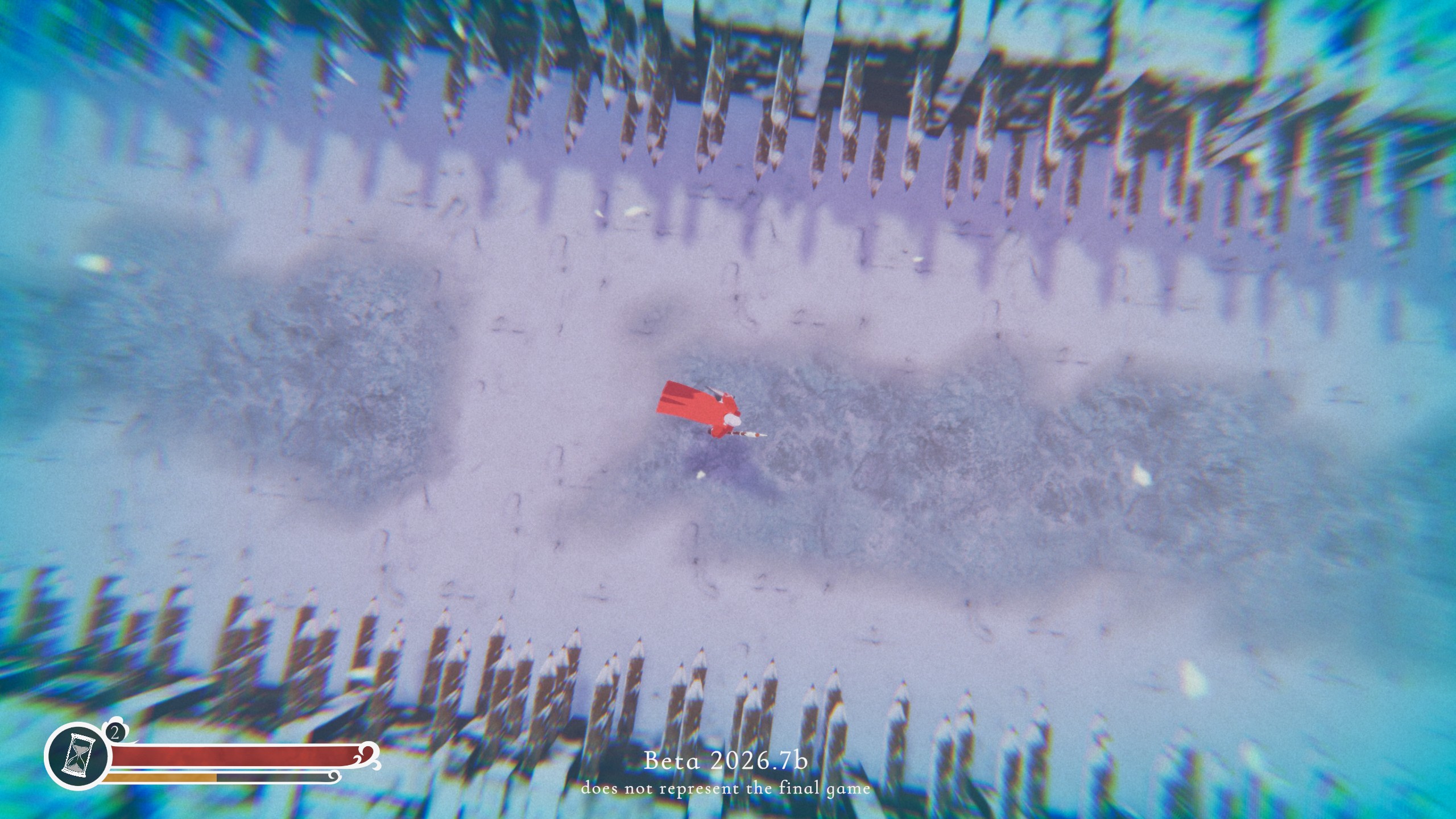
The camera work further improves the presentation. While most of the gameplay is shown from a traditional side-scrolling perspective, the camera regularly changes position. It can move into a top-down view, zoom closer to the character or pull away to reveal more of the environment.
These changes add cinematic value to the adventure and help its most important moments stand out. They also prevent the presentation from feeling too static, especially when travelling through otherwise linear areas. The direction might not always be flawless, but the developers clearly understand how camera movement can make a smaller game feel more ambitious.
The strongest part of Dark Queen of Samobor is its setting. Its colourful environments, dark atmosphere and storybook presentation are clearly influenced by visually striking adventures such as Neva. It would be unfair to compare this small production directly with a masterpiece of that level, but the inspiration is easy to recognise.
More importantly, Dark Queen of Samobor builds its own identity through Croatian folklore. The story of the Dark Queen and the returning knight introduces historical references alongside monsters and legends drawn from the region. That cultural focus makes the world more interesting than its otherwise familiar gameplay structure might suggest.
Dark Queen of Samobor is not a flawless experience in its current form. Its axe throwing can feel clunky, its animations need improvement and its level design follows a very familiar pattern. Nevertheless, this is a solid and enjoyable indie adventure with a beautiful world and an underused cultural setting. The foundations are already here; it now needs additional polish to help those qualities reach their full potential.
Its Kickstarter campaign was also successfully funded on July 8, raising $15,641 from 345 backers against a $10,000 target. Late pledges remain available, while the successful campaign should provide additional support as development continues.
Hellraiser: Revival preserves the franchise’s sex, gore and psychological horror while delivering approachable survival-horror gameplay.

Swan Song creates a peaceful and forgiving puzzle space without removing the challenge that makes solving a difficult puzzle rewarding.
Mortal Shell II starts brilliantly but grows repetitive and exhausting, while remaining a rewarding and ambitious Soulslike sequel.
![[GAMESCOM 2026] Terranigma Preview – A Lost SNES Classic Returns in 2027](https://www.indie-games.eu/wp-content/uploads/2026/08/Terranigma-1-1024x576.jpg)
After more than three decades of limited availability, Terranigma is returning in 2027. We played its enhanced re-release at Gamescom…
Reading another person’s mind is often presented as a desirable superpower, but Sister Other Paranoia immediately understands why it could…
Forsaken Realms: Vahrin’s Call is exactly the kind of ambitious, slightly clumsy fantasy RPG that used to be far more…
![[Early Access] 2nd EVE – Sci-Fi Action RPG That Lacks a Sense of Stakes](https://www.indie-games.eu/wp-content/uploads/2026/08/2ND-EVE-1024x576.jpg)
2nd Eve is a space-set action RPG in which we strive to save humanity.
![[PREVIEW] Dreamcards – Strategic Exploration of Consciousness](https://www.indie-games.eu/wp-content/uploads/2026/08/Dreamcards_20260810_233631_0000-1024x576.jpg)
Dreamcards is a roguelike deckbuilder centered around dreams and nightmares.
![[Early Access] OFFBEAT – Incredibly Fun Way to Start a Music Career](https://www.indie-games.eu/wp-content/uploads/2026/08/Offbeat_20260808_201446_0000-1024x576.jpg)
In OFFBEAT, we play the role of a jobbing composer who is launching their music career.
HellSlave II retains the original’s oppressive atmosphere, morally grey world and striking art while adding a larger world, randomized loot…
Beast of Reincarnation is an ambitious but uneven action RPG elevated by satisfying parry combat, beautiful art direction and the…

K-pop Idol Stories: Road to Debut captures the pressure of building idol group, but its management systems never explore that…
Hooded Horse keeps finding strategy games that know their audience, and Corsair Cove extends its impressive run of excellent city-builders.
Teeto is a warm, cozy, creative and highly enjoyable 3D platformer that understands why classic collectathons remain so appealing.
Turnip Mountain stands out for its combination of a unique control system and a minimalist approach.
Dystopicon is an imaginative and memorable narrative experiment with sharp social commentary, engaging world-building and several wonderfully absurd scenarios.
Maneki Mania is an incremental game centered around petting a lucky cat.
XeGrader Plus delivers colorful retro shooting, but basic mechanics, a short campaign and paid retro modes make its €20 price…
It has been roughly two and a half years since Palworld first entered Early Access, and quite a lot has…
![[EARLY ACCESS] The Last Caretaker – Survival Game I Cannot Stop Playing](https://www.indie-games.eu/wp-content/uploads/2026/07/The-last-Caretaker-Key-Art-1024x587.jpg)
The Last Caretaker is a compelling survival crafter with a flooded world and mobile base, but weak combat and performance…
