![[PREVIEW] Remothered: Red Nun’s Legacy – Ambitious Survival Horror That Needs More Polish](https://www.indie-games.eu/wp-content/uploads/2026/09/Remothered-Red-Nuns-Legacy-4-1024x576.jpg)
[PREVIEW] Remothered: Red Nun’s Legacy – Ambitious Survival Horror That Needs More Polish
Remothered: Red Nun’s Legacy has a gripping atmosphere and promising survival tools, but its repetitive hiding and rough visuals need…

If you enjoy independent indie game coverage, consider supporting Indie-Games.eu on Patreon. It helps keep the site independent.
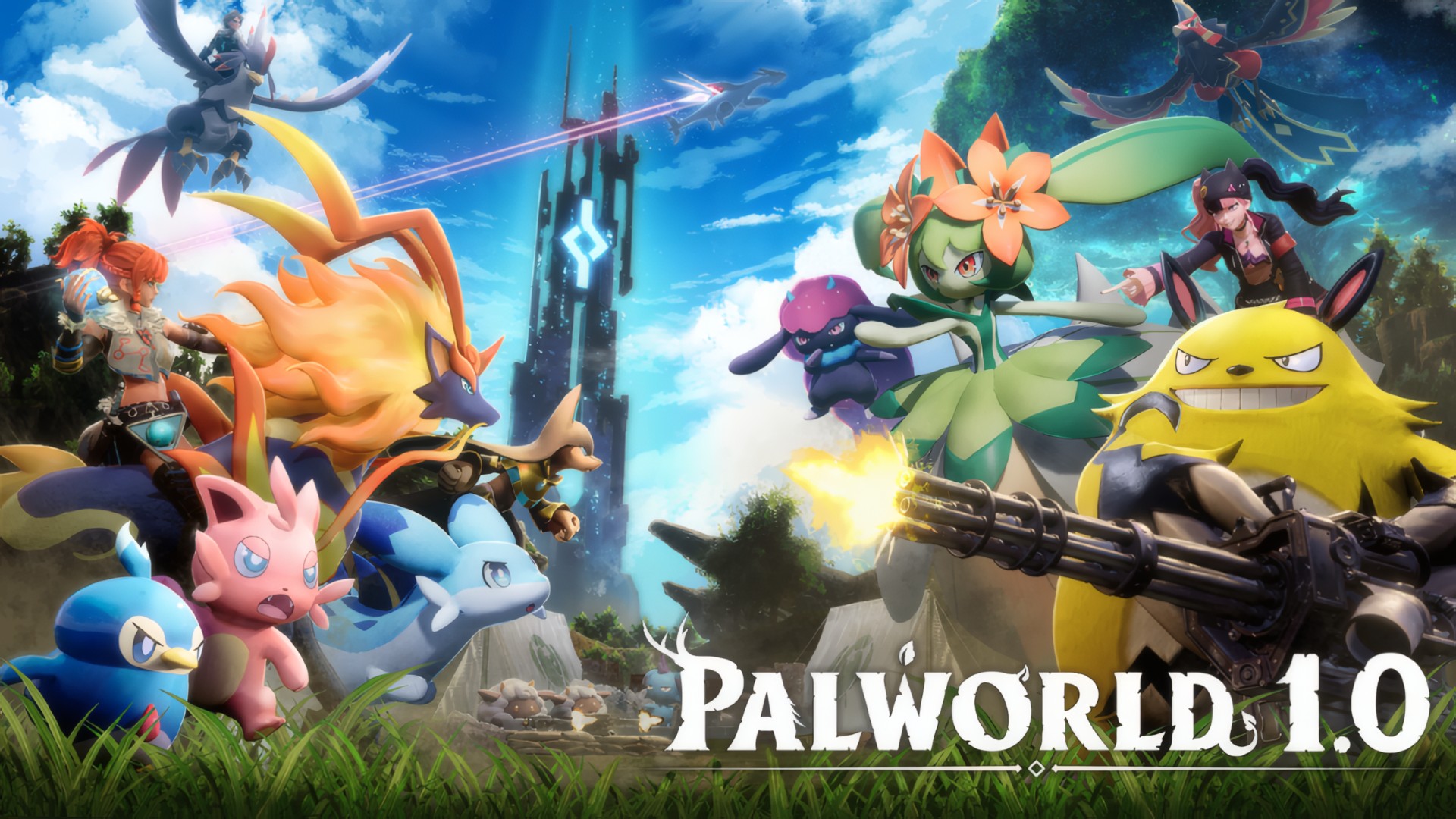
It has been roughly two and a half years since Palworld first entered Early Access, and quite a lot has happened during that time. Pocketpair established its own publishing label, collaborated with several other games and continued expanding Palworld through increasingly ambitious updates. More importantly, the game became one of the biggest releases Steam has ever seen, sitting behind only PUBG and Black Myth: Wukong in all-time concurrent players.
Now that Palworld has officially reached version 1.0, its popularity has exploded once again. The full release peaked at almost 962,000 concurrent Steam players, while the original Early Access launch still holds an all-time record of more than 2.1 million. Those numbers are incredible, but after returning to Palpagos and seeing how much the game has grown, they are not particularly surprising.
Palworld is still buggy, grindy and occasionally held together by questionable pathfinding. However, it is also one of the most entertaining survival games I have played in years. Version 1.0 does not suddenly make it perfect, but it finally makes Palworld feel like a complete game rather than a collection of promising systems waiting to be finished.
Palworld continues to be compared with Pokémon, but I do not think that comparison accurately explains what the game actually is. Yes, you capture colorful creatures and use their elemental abilities in battle, but that is where most of the meaningful similarities end. Palworld is primarily a survival game built around exploration, automation, crafting and base management.
The basic loop will immediately feel familiar if you have played games such as Ark, Valheim or Enshrouded. You gather wood, stone, ore and other materials before turning them into tools, weapons, armour and Pal Spheres. You weaken wild Pals, capture them and then decide whether they belong in your active party or would be more useful working at one of your bases.
That last part is what gives Palworld its identity. Every Pal has elemental strengths, active attacks, passive traits, a Partner Skill and several possible work specializations. A creature that appears mediocre in combat might become essential for mining ore, watering crops, generating electricity, producing medicine or transporting materials.
As your collection grows, every capture has the potential to improve something. You might find a stronger fighter, a faster mount or a worker with better passive traits. Even capturing duplicates has a purpose because they can contribute to upgrades and condensation. Palworld is constantly giving you another small reason to explore, experiment or reorganize your production chain.
It can feel overwhelming at first. There are technology trees, base upgrades, breeding systems, dungeons, bosses, raids, crafting stations and hundreds of creatures to understand. Thankfully, the game introduces most of these systems gradually. You begin by chopping trees and building a basic shelter, but eventually you are managing several automated industrial bases while flying across the world with futuristic weapons.

When Palworld first entered Early Access, you could experience most of its important content within around 30 or 40 hours. There were plenty of creatures to capture and bosses to defeat, but the overall adventure felt disconnected. You were mostly left to create your own objectives while the story quietly disappeared into the background.
Version 1.0 improves this considerably. The progression has been rebuilt around exploration, main missions, tower bosses and the journey toward the World Tree. New side missions and settlements make Palpagos feel more inhabited, while NPCs now have more reasons to exist beyond standing around as decorations.
The narrative is still secondary. Palworld has more direction now, but it has not suddenly become a character-driven RPG. Its settlements remain fairly basic, its factions are superficial and many quests rely on familiar fetch or bounty objectives. Much of the lore is also delivered through journals rather than memorable conversations.
Still, having a clearer journey makes a noticeable difference. The main quest naturally directs you between regions appropriate for your level, introduces important mechanics and unlocks tower encounters that feed back into the technology tree. You can ignore it for hours while building bases or hunting rare Pals, but it is there whenever you want a defined objective.
The world itself has expanded enormously. Sunreach introduces floating islands with their own civilization, resources and creatures, while the World Tree acts as the climax of the current storyline and the primary endgame region. Smaller volcanic, desert and ruined islands have also been added alongside rebuilt Wildlife Sanctuaries, Ancient Ruins, offshore enemy bases and Watchtowers that reveal parts of the map.
Exploration is now faster thanks to additional fast-travel points, auto-run and the Wing Pack, which provides limited flight without requiring a mount. The Wing Pack occasionally makes older traversal challenges feel irrelevant, but moving around Palpagos is considerably more enjoyable because of it.

Version 1.0 adds 72 Pals, including 47 completely new creatures and 25 elemental or regional variants. This brings the full collection to 287, which is an almost ridiculous number considering how many of them also have unique Partner Skills and workplace functions. Pocketpair has additionally reworked the Partner Skills of more than 200 existing Pals and introduced over 100 new animations.
Pals are now more expressive around bases. They can swim, sleep beside you and display additional idle behaviours. More importantly, properly developed party members can finally equal or even exceed the player’s damage. Guns previously became so powerful that your creatures sometimes felt like automated distractions, but the new balance makes them more valuable as actual combat partners.
The combat remains a mixture of third-person shooting and companion management. You fight directly with bows, melee weapons, firearms and futuristic equipment while one Pal operates semi-independently. Direct commands allow you to target specific enemies, although I still wish we could deploy several regular Pals simultaneously. Watching only one creature fight beside you does not always deliver the large-scale monster battles the game seems capable of supporting.
Tower bosses are among the best parts of the game. Their revised arenas, animations and attack patterns make them much more enjoyable, while improved melee controls and hit detection give you more reliable ways to participate. Pal behaviour can still be inconsistent, but combat feels far more balanced between the player and their companion.
Legendary Pals also give exploration and endgame preparation a stronger sense of purpose. Creatures such as Jetragon, Frostallion, Paladius and Necromus are not simply rare additions to your Paldex. They are powerful encounters that require good equipment, plenty of ammunition, capable party members and enough high-level Pal Spheres to survive several failed capture attempts.

Pocketpair has reduced several of the worst Early Access grinds. Capture bonuses require five copies of a Pal instead of 12, while maximum condensation has dropped from 116 copies to 48. Capture rates are more generous, weaker Pals gain experience faster and treasure chests award considerably more gold.
Crafting costs, ammunition yields, equipment progression and Pal Spheres have also been rebalanced. These changes make the early and middle sections much smoother. Experimentation is less punishing, while recently captured Pals can catch up without spending hours fighting weak enemies.
Unfortunately, the late game still demands a serious commitment. Reaching levels 70 to 80, unlocking the final technology nodes, gathering endgame materials and breeding ideal Pals can require many repetitive hours. Mutation and Awakening add further depth by creating stronger creatures with improved statistics and rare passive traits, but they also introduce another layer of probability and resource farming.
This creates a noticeable division. The opening 30 hours are easily the most enjoyable because everything feels new. You are constantly discovering regions, catching unfamiliar Pals and unlocking mechanics. Eventually, progression becomes increasingly dependent on optimized automation, repeated captures and long production chains.
Palworld provides extensive world settings that let you increase experience gains, resource drops and capture rates. I strongly recommend adjusting them if the default grind starts hurting your enjoyment. There is no shame in making the game respect your time, particularly when playing alone.

Base management is deeper and more convenient than ever. Storage can be named, painted and filtered, materials automatically move into matching chests, and production stations can access resources stored elsewhere. You can also prioritize jobs more precisely and adjust work speed or ranch production.
Despite these improvements, building remains frustrating. Base boundaries are too restrictive, structures behave awkwardly on uneven terrain and most creations still look artificial and boxy. Talented players can construct impressive settlements, but they are frequently fighting against the system rather than being supported by it.
Pal pathfinding is an even bigger problem. Large creatures struggle with stairs and narrow spaces, workers occasionally stand idle, and assignments do not always function correctly. Pals may teleport to their jobs, become stuck or ignore tasks that they are clearly capable of completing. Large bases can also cause performance drops.
Mods can solve some of these problems, but that is also disappointing. After two and a half years, several popular quality-of-life modifications address limitations that should have been fixed officially. Palworld’s automation is one of its most important systems, so watching your supposedly intelligent workforce become confused by a staircase remains unnecessarily irritating.

Palworld is not polished enough to hide all of its Early Access origins. Its world can feel empty between major locations, its story remains forgettable and its final progression becomes repetitive. Base construction needs more freedom, while Pal pathfinding still creates problems that should have disappeared long before version 1.0.
Yet none of those weaknesses erase how much fun Palworld can be. Few survival games combine collecting, exploration, combat, automation, breeding and base management this successfully. It is also perfectly viable alone, supports offline play and becomes even more enjoyable in co-op, especially when tackling raids or exploring with friends.
Version 1.0 transforms Palworld into a much more connected and rewarding experience. It offers an enormous roster of creatures, better progression, stronger combat, new regions and enough customization to accommodate both relaxed players and dedicated automation enthusiasts.
At the end of the day, Palworld is messy, ambitious and incredibly addictive. It may occasionally frustrate you, and its late game will test your patience, but this is still an adventure I can comfortably recommend. Once its collection of strange creatures and interconnected systems gets its claws into you, losing dozens, or potentially hundreds, of hours becomes remarkably easy.
Palworld 1.0 remains messy, buggy and occasionally frustrating, but it is also one of the most entertaining and ambitious survival games available. Its enormous Pal roster, addictive exploration, automation, breeding and combat systems create a rewarding adventure that is difficult to put down. The full release finally gives the experience a clearer structure and makes its many systems feel connected rather than unfinished.
Ending Thoughts
Review copy was purchased on Steam
Remothered: Red Nun’s Legacy has a gripping atmosphere and promising survival tools, but its repetitive hiding and rough visuals need…
The Alighieri Circle: Dante’s Bloodline is difficult to recommend beyond players who are especially interested in Dante or enjoy solving…
Orc Incremental offers satisfying progression, entertaining totem combinations and enough content to justify its affordable price.
![[GAMESCOM 2026] Chronoscript: The Endless End Preview – Beautiful Pages Hide Deliberate Combat](https://www.indie-games.eu/wp-content/uploads/2026/09/Chronoscript-The-Endless-End-1-1024x576.jpg)
Chronoscript: The Endless End stands out from other Metroidvanias by blending 2D manuscript worlds with exploration inside a 3D manor.
![[GAMESCOM 2026] MegaGum Preview – Combat Hits Hard in This Sticky Platforming Adventure](https://www.indie-games.eu/wp-content/uploads/2026/09/MegaGum-09-09-26-5-1024x576.jpg)
MegaGum combines hard-hitting combat, varied weapons and Gum-powered platforming in a promising Gamescom 2026 demo.
![[GAMESCOM 2026] Delphinium Preview – Cozy Routine Mixed With Enjoyable Minigames](https://www.indie-games.eu/wp-content/uploads/2026/03/Delphinium--1024x665.jpg)
Delphinium mixes cozy farming, exploration and relationships with enjoyable fishing, cooking and forging minigames in its Gamescom 2026 demo.
Lady Death: Demonicron looks the part, but underneath its excellent comic-book exterior is a clunky and painfully short brawler.
![[GAMESCOM 2026] Tomb Raider: Legacy of Atlantis Preview – Expands the Original Without Losing Its Identity](https://www.indie-games.eu/wp-content/uploads/2026/09/tomb-raider-legacy-of-atlantis-06-02-26-1-1024x576.jpg)
Tomb Raider: Legacy of Atlantis brings Lara back to her roots, but its Gamescom 2026 showing proved this is far…
![[GAMESCOM 2026] Clive Barker’s Hellraiser: Revival Preview – Ready to Open the Box](https://www.indie-games.eu/wp-content/uploads/2026/09/Clive-Barkers-Hellraiser-Revival-08-30-26-1-1024x576.jpg)
Hellraiser: Revival preserves the franchise’s sex, gore and psychological horror while delivering approachable survival-horror gameplay.

Swan Song creates a peaceful and forgiving puzzle space without removing the challenge that makes solving a difficult puzzle rewarding.

Mortal Shell II starts brilliantly but grows repetitive and exhausting, while remaining a rewarding and ambitious Soulslike sequel.
![[GAMESCOM 2026] Terranigma Preview – A Lost SNES Classic Returns in 2027](https://www.indie-games.eu/wp-content/uploads/2026/08/Terranigma-1-1024x576.jpg)
After more than three decades of limited availability, Terranigma is returning in 2027. We played its enhanced re-release at Gamescom…

Reading another person’s mind is often presented as a desirable superpower, but Sister Other Paranoia immediately understands why it could…
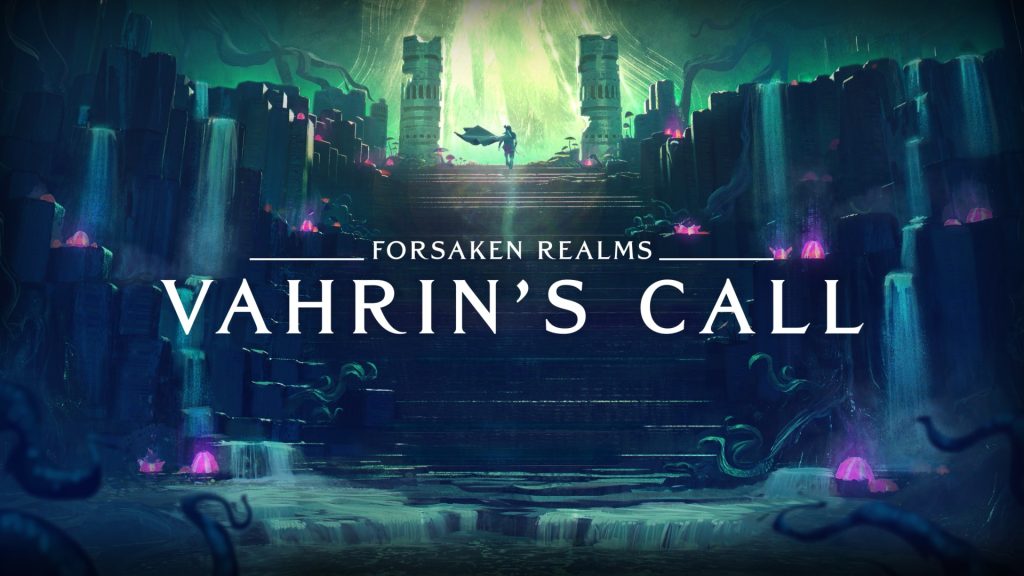
Forsaken Realms: Vahrin’s Call is exactly the kind of ambitious, slightly clumsy fantasy RPG that used to be far more…
![[Early Access] 2nd EVE – Sci-Fi Action RPG That Lacks a Sense of Stakes](https://www.indie-games.eu/wp-content/uploads/2026/08/2ND-EVE-1024x576.jpg)
2nd Eve is a space-set action RPG in which we strive to save humanity.
![[PREVIEW] Dreamcards – Strategic Exploration of Consciousness](https://www.indie-games.eu/wp-content/uploads/2026/08/Dreamcards_20260810_233631_0000-1024x576.jpg)
Dreamcards is a roguelike deckbuilder centered around dreams and nightmares.
![[Early Access] OFFBEAT – Incredibly Fun Way to Start a Music Career](https://www.indie-games.eu/wp-content/uploads/2026/08/Offbeat_20260808_201446_0000-1024x576.jpg)
In OFFBEAT, we play the role of a jobbing composer who is launching their music career.

HellSlave II retains the original’s oppressive atmosphere, morally grey world and striking art while adding a larger world, randomized loot…
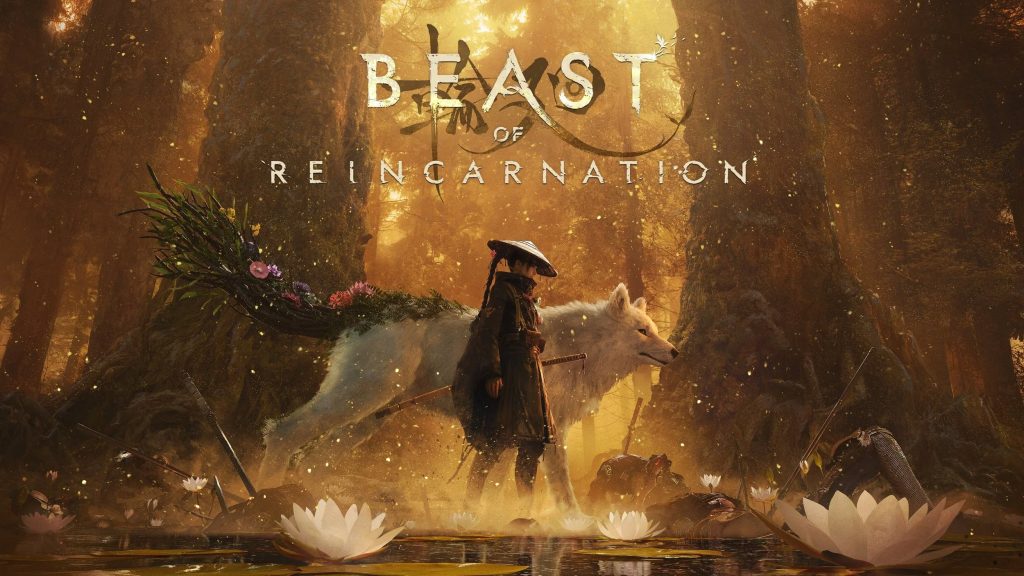
Beast of Reincarnation is an ambitious but uneven action RPG elevated by satisfying parry combat, beautiful art direction and the…

K-pop Idol Stories: Road to Debut captures the pressure of building idol group, but its management systems never explore that…
