

If you enjoy independent indie game coverage, consider supporting Indie-Games.eu on Patreon. It helps keep the site independent.
Cloudheim feels like a game made by people who care more about how it feels to play than how realistic it looks. It doesn’t aim for massive maps or photorealistic visuals, instead focusing on fast movement, a strong sense of impact in combat, and a world that feels playful and unusual. At first glance, it comes across as a relaxed, almost “turn your brain off and play” kind of adventure in the vein of modern Zelda titles, where you run around, fight enemies, occasionally solve a simple puzzle, or discover a hidden chest. From the very first moment, when you see floating islands scattered across the sky, it’s clear that Cloudheim has personality and wants to stand out. In its current state, it offers co-op, different roles or classes, randomized exploration, and a lighthearted story that mixes myth with goofy humor.

The world of Cloudheim is built around a simple but charming twist on Norse mythology. Ragnarok didn’t destroy everything, things just went wrong. The world shattered, massive chunks of land were thrown into the sky, and what remains now floats as a chain of islands connected by broken paths and strange ruins. The gods have vanished, order has collapsed, and the world is now roamed by monsters, survivors, and remnants of forgotten legends. In the middle of this chaos, you are an adventurer trying to at least partially patch up the broken order.
Within this setting, Cloudheim blends action RPG combat, light survival elements, and physics-based movement. One of the best examples of its tone is your base, Odin Shell, a gigantic flying turtle that carries your camp, workshops, and crew. On paper, all of this sounds like a solid foundation for an interesting story, but Cloudheim never really makes a serious effort to tell something deeper.
The narrative is very sparse and almost completely disappears after the third island. There are no real cutscenes, no strong emotional arc, and no characters that make you care about the world or your place in it. Lore exists, but only in minimal form, serving purely as a backdrop for the action. The story is there so it doesn’t get in the way and that’s both a strength and a weakness. If you’re looking for a strong narrative hook, you won’t find it here.
Thankfully, gameplay is where Cloudheim truly shines. Movement is smooth, fast, and responsive. Jumping, dodging, flying, and attacking flow naturally into one another, and simply navigating the floating islands is often fun even when there are no enemies around. The islands are designed as open arenas that encourage experimentation rather than strict linear progression.

Combat is fluid, chaotic, and extremely bombastic. Enemies react to hits, fly through the air, bounce off walls, or simply fall off the edge of an island. Explosions, tornadoes, powerful kicks, and spinning attacks constantly encourage you to throw enemies around, while the game gives you enough tools to keep that chaos under control. Learning how to manage this madness is easily the most enjoyable part of the experience. Class choice plays an important role, as each class offers a distinct combat style and set of animations.
That said, despite its potential, the progression system isn’t great. Instead of traditional skill trees or freeform builds, each class features a linear skill unlock system. Skills and weapons are unlocked by filling out a mastery table, often without any real need to actually use them. It’s enough to have them equipped while defeating enemies and then simply unequip them afterward. Many of these skills feel weak or are clearly designed solely for co-op play.
Co-op, on the other hand, is one of Cloudheim’s greatest strengths. Playing with others makes combat even more chaotic and fun. Different abilities overlap, enemies fly everywhere, and boss fights require coordination and spatial awareness. The game is fully playable solo, and a welcome addition is a system that remembers your progress across different worlds, so you don’t have to start from scratch every time. It can get messy, but when everything clicks, it produces some of the most memorable moments in the game.

The physics system brings its own set of problems. Sometimes enemies react perfectly to hits, while at other times they almost ignore them entirely. The environment can cause strange behavior in jumps or attacks, which can be frustrating in more demanding fights. Visual clutter can also obscure important cues, especially during boss battles filled with effects.
Progression and crafting seem simple at first, but in practice they can become tedious. The idea of running your own shop sounds interesting, but it quickly turns into a repetitive mini-game with no real end. Most crafted items have no real purpose beyond being sold, and the weapon enchanting system is often unclear. You’ll frequently end up with dozens of useless weapon copies that you have to sell just to level up your shop and unlock passive character bonuses. This becomes the main endgame grind, and it’s hard to call it particularly exciting.
Visually, Cloudheim is colorful and cartoonish, with bold shapes and thick outlines. The floating islands create strong visual layering, and the skies give the world a soft, magical atmosphere. The world feels vibrant and imaginative, though sometimes overloaded with effects. Sound design and music also fit the game’s tone well: cheerful, energetic, and functional, even if rarely memorable.

Since Cloudheim is still in Early Access, many parts of the game feel unfinished. The story comes to an abrupt halt, some systems are unbalanced, and the game’s focus occasionally wavers between action, crafting, and grinding. Still, the core experience is strong. When Cloudheim lets you move freely, experiment with combat, and enjoy the chaos of its physics, it truly shines. It’s not perfect and often trips over its own systems, but it has energy, identity, and exceptionally fun combat. With more polish and a clearer focus, it could grow into something special. Even now, it offers enough wild moments to keep you coming back, at least until the grind catches up with you.
Review copy provided by the publisher
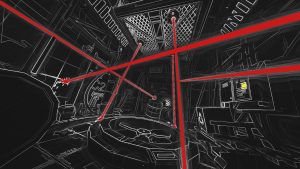
SECTOR ZERO delivers exactly what it promises on Steam: a one-hour experience filled with inventive puzzles.

Vital Shell is a top-down arena shooter and rougelike that immediately establishes a strong sense of identity.

There is a strong concept, a lovely atmosphere, and flashes of something genuinely special buried under layers of poor usability…

Lanesplit was supposed to be a relaxing yet adrenaline-pumping driving and racing game, a place where you could sit on…

At its core, I Hate This Place blends isometric action with survival mechanics and open-world exploration.

Ambitious and creative indie game that mixes deckbuilding, resource management and exploration into one strange and memorable experience.

Moving Simulator is a niche title that will primarily appeal to those who enjoy methodical, physics-based simulations and logistical challenges.

Kids, stay away. This is not your favourite Disney character Winnie the Pooh. This version is far more grotesque and…
![[PREVIEW] Diviner – Dark Fantasy RPG Worth Digging Into](https://www.indie-games.eu/wp-content/uploads/2026/01/ss_b89ae32bd963134129b6d415f551faee1c131f73.1920x1080-300x169.jpg)
In today’s crowded game market, it’s really hard to discover new games, and many great indie titles sadly get lost…

Escape from Ever After is a must-play for turn-based RPG fans who love games with great character and humor.
![[PREVIEW] Sub-Species – Great Underwater Concept Held Back by a Barebones Demo](https://www.indie-games.eu/wp-content/uploads/2026/01/Sub-Species-300x169.jpg)
Sub-Species is a 2.5D Arcade Action/Adventure, where you control a submarine that rotates 360° in order to battle alien sea…

The combination of emotional investment and defensive gameplay brings something truly unique to the genre.

Blightstone is the kind of game that could make anyone fall in love with the turn-based strategy and roguelike genres.

Hungry Horrors feels less like a work-in-progress and more like a feast that’s already worth sitting down for, even if…

Your main goal is to collect votes from other students so you can win the Carmel Star election.

It’s not perfect, it’s brutal, and it will test your patience, but overall, it delivers a very solid experience.

Not only does it deliver an excellent action RPG gameplay loop, but it’s also incredibly addictive and genuinely fun to…

By focusing more on growing and restoring rather than pure destruction, Air Hares offers a softer take on arcade action.

The Real Face of a VTuber isn’t trying to be Ace Attorney. Instead, it aims to be memorable, and it…
![[PREVIEW] Don’t Stop, Girlypop! – Slay (the enemies)!](https://www.indie-games.eu/wp-content/uploads/2026/01/Dont-Stop-Girlypop-300x169.jpg)
Don't Stop, Girlypop! is a Y2K arena movement shooter with a lot of glamour.
SECTOR ZERO delivers exactly what it promises on Steam: a one-hour experience filled with inventive puzzles.
Vital Shell is a top-down arena shooter and rougelike that immediately establishes a strong sense of identity.
There is a strong concept, a lovely atmosphere, and flashes of something genuinely special buried under layers of poor usability…
Lanesplit was supposed to be a relaxing yet adrenaline-pumping driving and racing game, a place where you could sit on…
At its core, I Hate This Place blends isometric action with survival mechanics and open-world exploration.
Ambitious and creative indie game that mixes deckbuilding, resource management and exploration into one strange and memorable experience.
Moving Simulator is a niche title that will primarily appeal to those who enjoy methodical, physics-based simulations and logistical challenges.
Kids, stay away. This is not your favourite Disney character Winnie the Pooh. This version is far more grotesque and…
In today’s crowded game market, it’s really hard to discover new games, and many great indie titles sadly get lost…
Escape from Ever After is a must-play for turn-based RPG fans who love games with great character and humor.
Sub-Species is a 2.5D Arcade Action/Adventure, where you control a submarine that rotates 360° in order to battle alien sea…
The combination of emotional investment and defensive gameplay brings something truly unique to the genre.
Blightstone is the kind of game that could make anyone fall in love with the turn-based strategy and roguelike genres.
Hungry Horrors feels less like a work-in-progress and more like a feast that’s already worth sitting down for, even if…
Your main goal is to collect votes from other students so you can win the Carmel Star election.
It’s not perfect, it’s brutal, and it will test your patience, but overall, it delivers a very solid experience.
Not only does it deliver an excellent action RPG gameplay loop, but it’s also incredibly addictive and genuinely fun to…
By focusing more on growing and restoring rather than pure destruction, Air Hares offers a softer take on arcade action.
The Real Face of a VTuber isn’t trying to be Ace Attorney. Instead, it aims to be memorable, and it…
Don't Stop, Girlypop! is a Y2K arena movement shooter with a lot of glamour.
