Stranded Deep 2 Moves Survival Into an Endless Desert River World
Stranded Deep 2 leaves the Pacific for an endless desert river world with mobile bases, dynamic terrain and co-op in…

![[GAMESCOM 2026] Chronicles: Medieval Looks Far More Ambitious Than a Simple Mount & Blade Rival](https://www.indie-games.eu/wp-content/uploads/2026/09/Chronicles-Medieval-10.jpg)
If you enjoy independent indie game coverage, consider supporting Indie-Games.eu on Patreon. It helps keep the site independent.
Chronicles: Medieval was one of the most ambitious games I saw at Gamescom 2026. Raw Power Games is not merely creating another medieval action RPG in which hundreds of soldiers collide while the player charges into battle. It is attempting to combine large-scale army management, detailed troop simulation, third-person combat, diplomacy and a generational sandbox spanning 209 regions.
After watching an exclusive 45-minute hands-off presentation, I came away convinced that it has enough ideas to distinguish itself from Mount & Blade, even if it remains too early to know whether all those interconnected systems will work together. You can also wishlist the game on Steam.
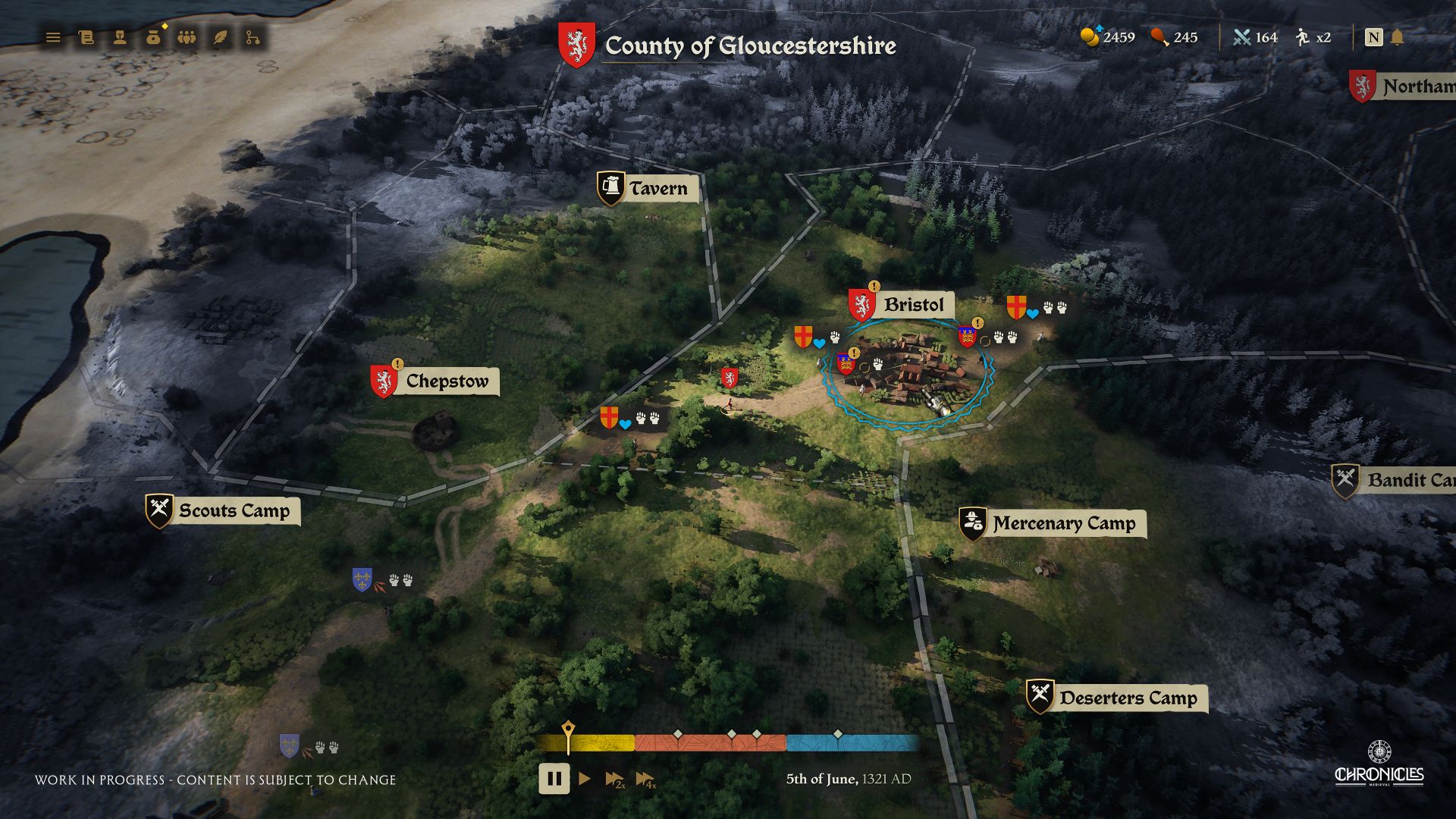
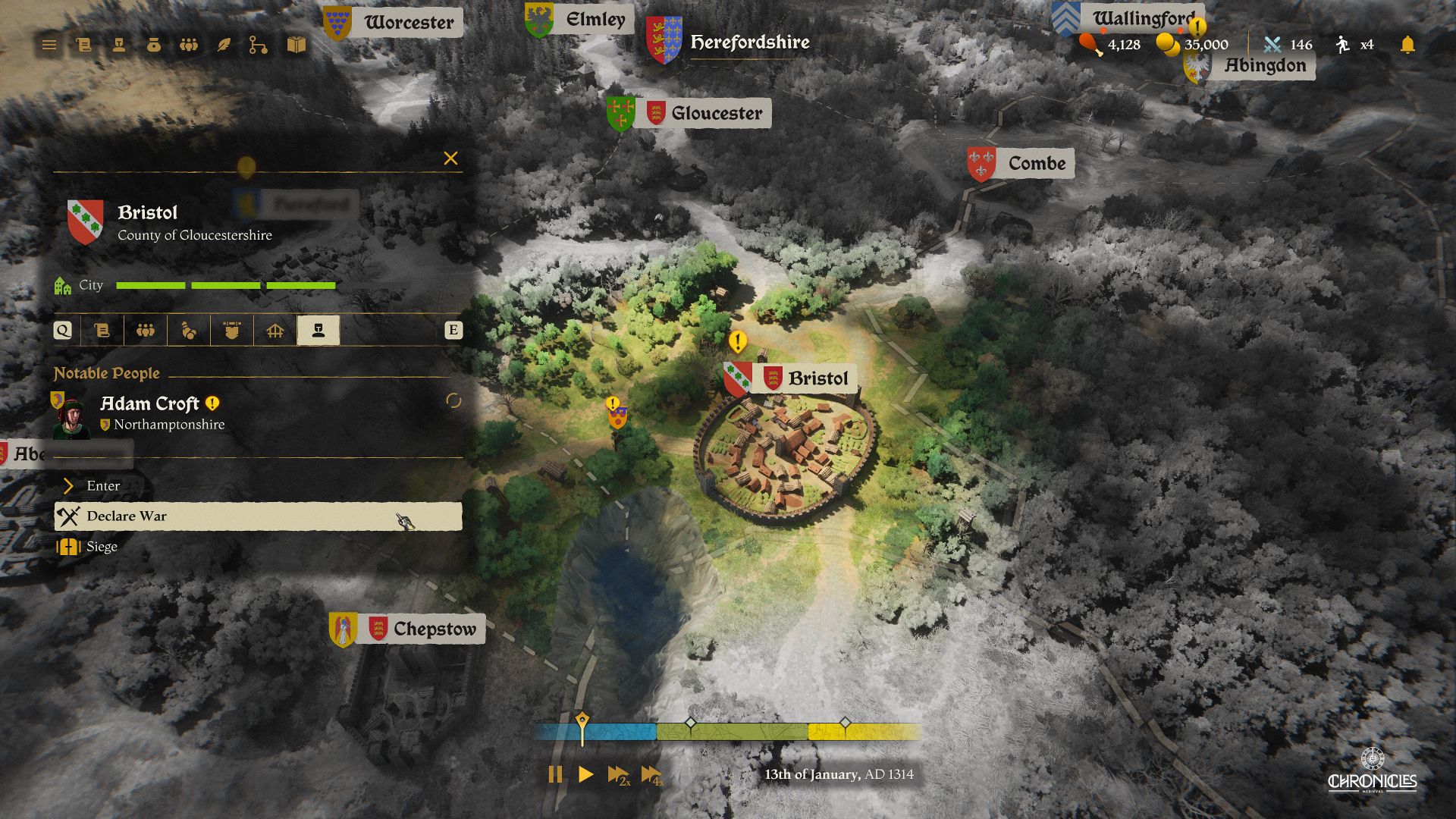
Set during the Hundred Years’ War, Chronicles: Medieval lets you lead an army belonging to Britain, France or the Holy Roman Empire. Its Exploration map presents a broad view of Europe, divided between different regions and the lords controlling them. Historically inspired coats of arms help establish the political landscape, while the map can be examined more closely when travelling through a particular area.
With 209 regions, each containing at least one settlement and a castle that can be attacked, the campaign already appears enormous. Dynamic points of interest add bandit camps, trading opportunities and mercenaries waiting to be hired, while rival armies continue moving around the map.
It sounds like the sort of sandbox that could consume hundreds of hours, particularly because the campaign does not simply end when the player character dies. The game will progress through multiple chapters and generations, allowing control to pass from one member of a dynasty to another. Technology and the wider world will advance over time, potentially allowing campaigns to continue indefinitely while political powers rise and fall.
Diplomacy is also intended to play a much greater role than it does in Mount & Blade. We were not shown enough of this system to judge its depth, but the promise of meaningful political interaction is important. If diplomacy, dynastic succession and regional control affect one another convincingly, Chronicles: Medieval could become much more than a sequence of impressive battles.
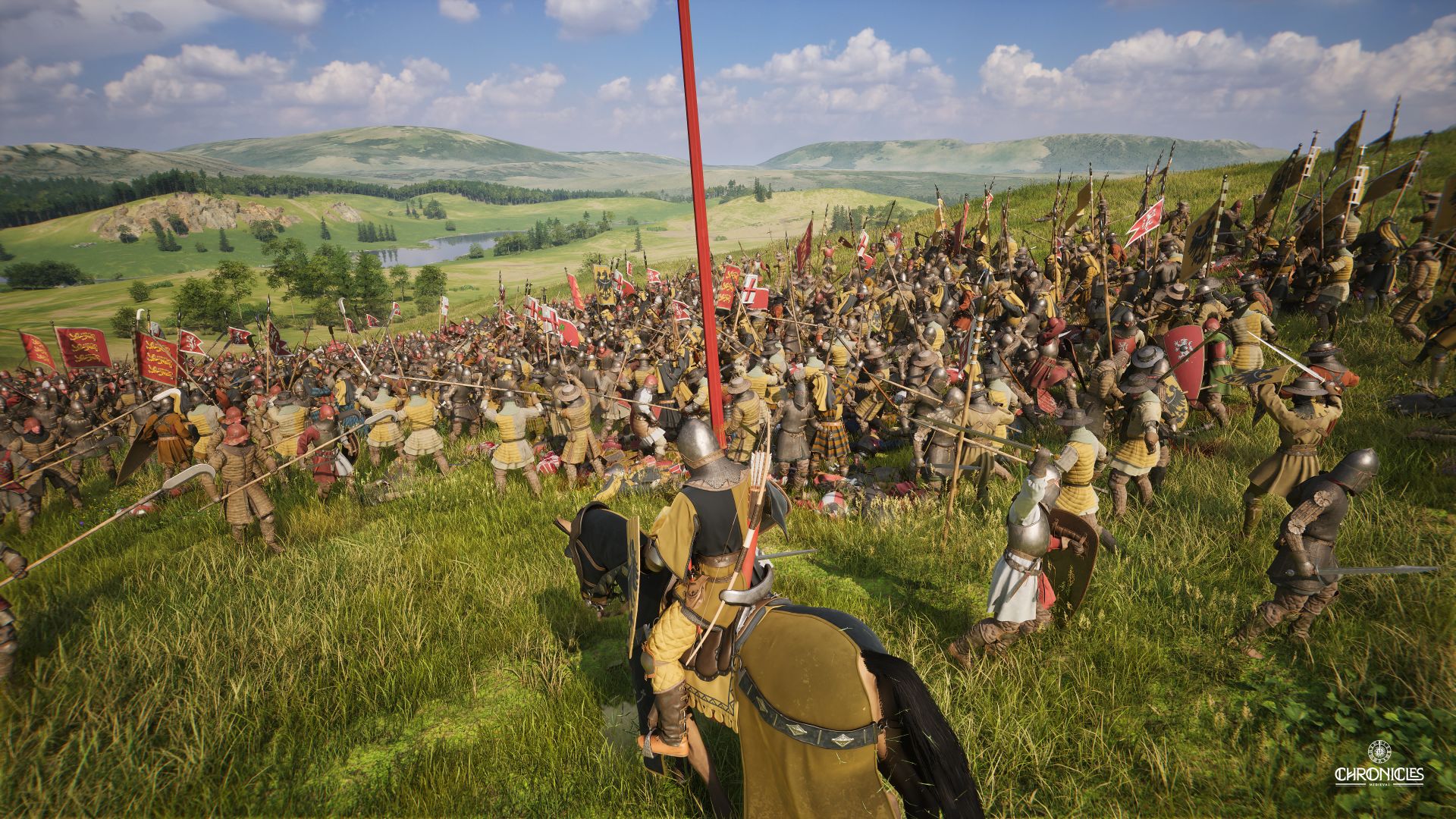
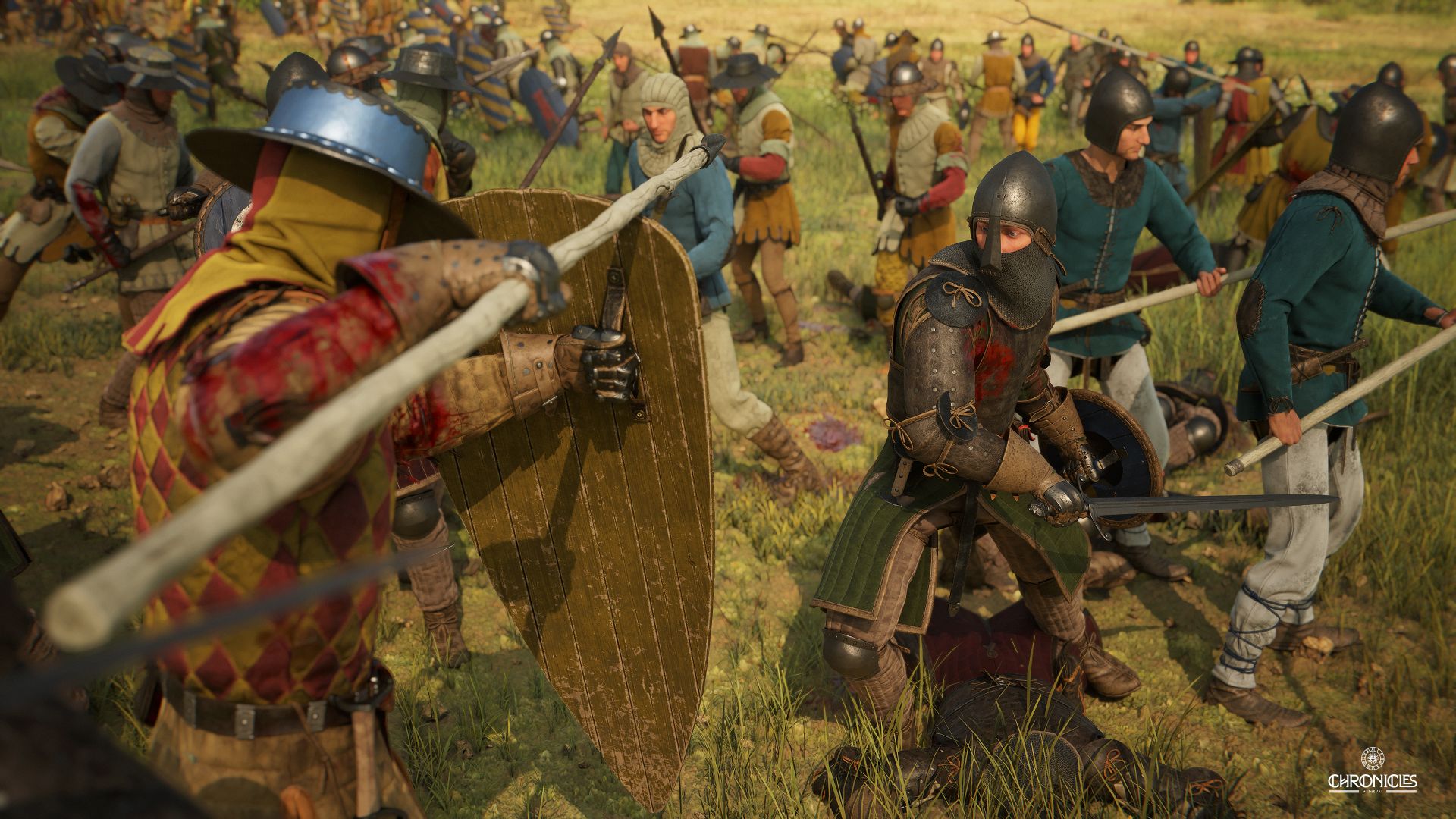
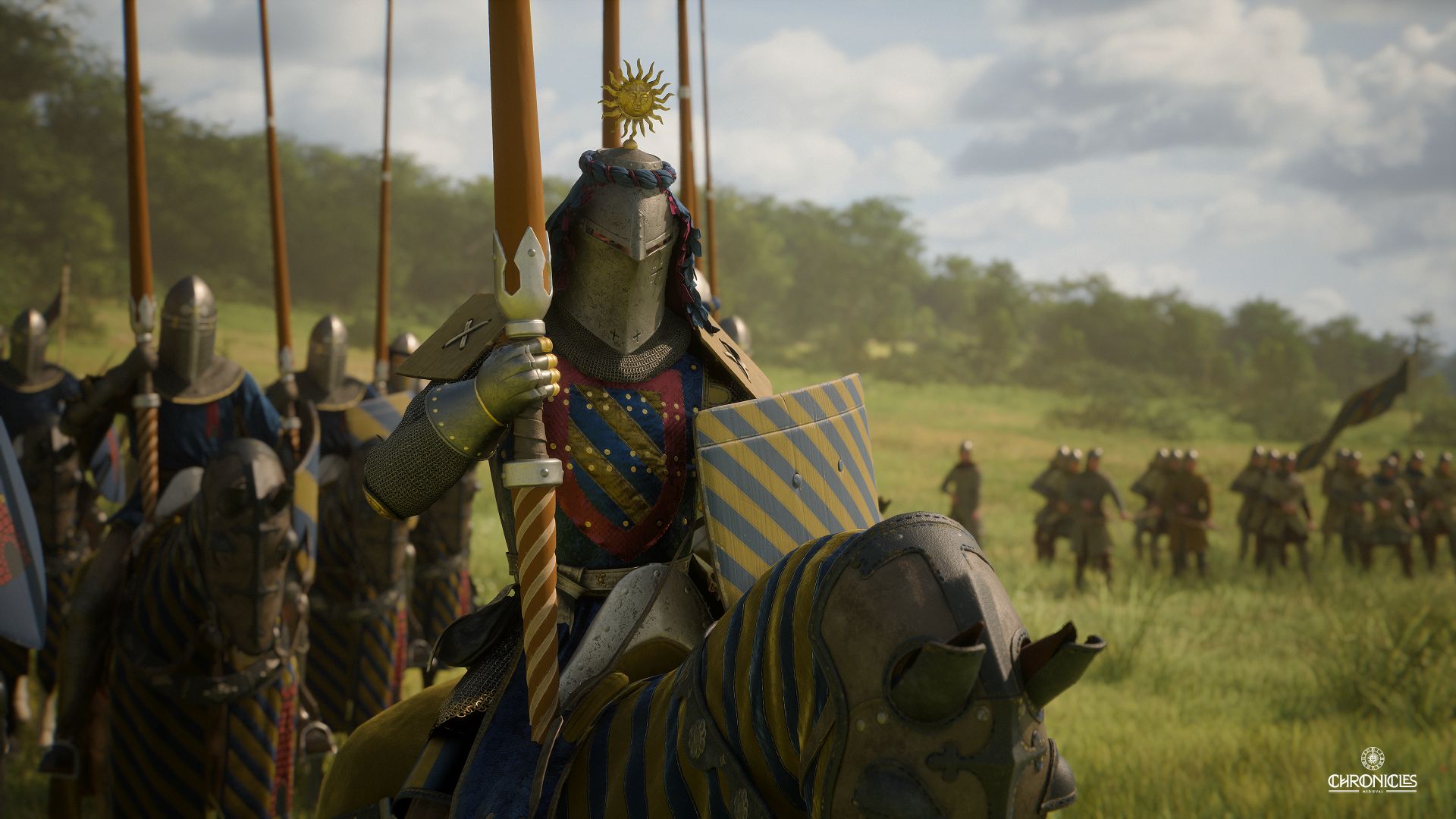
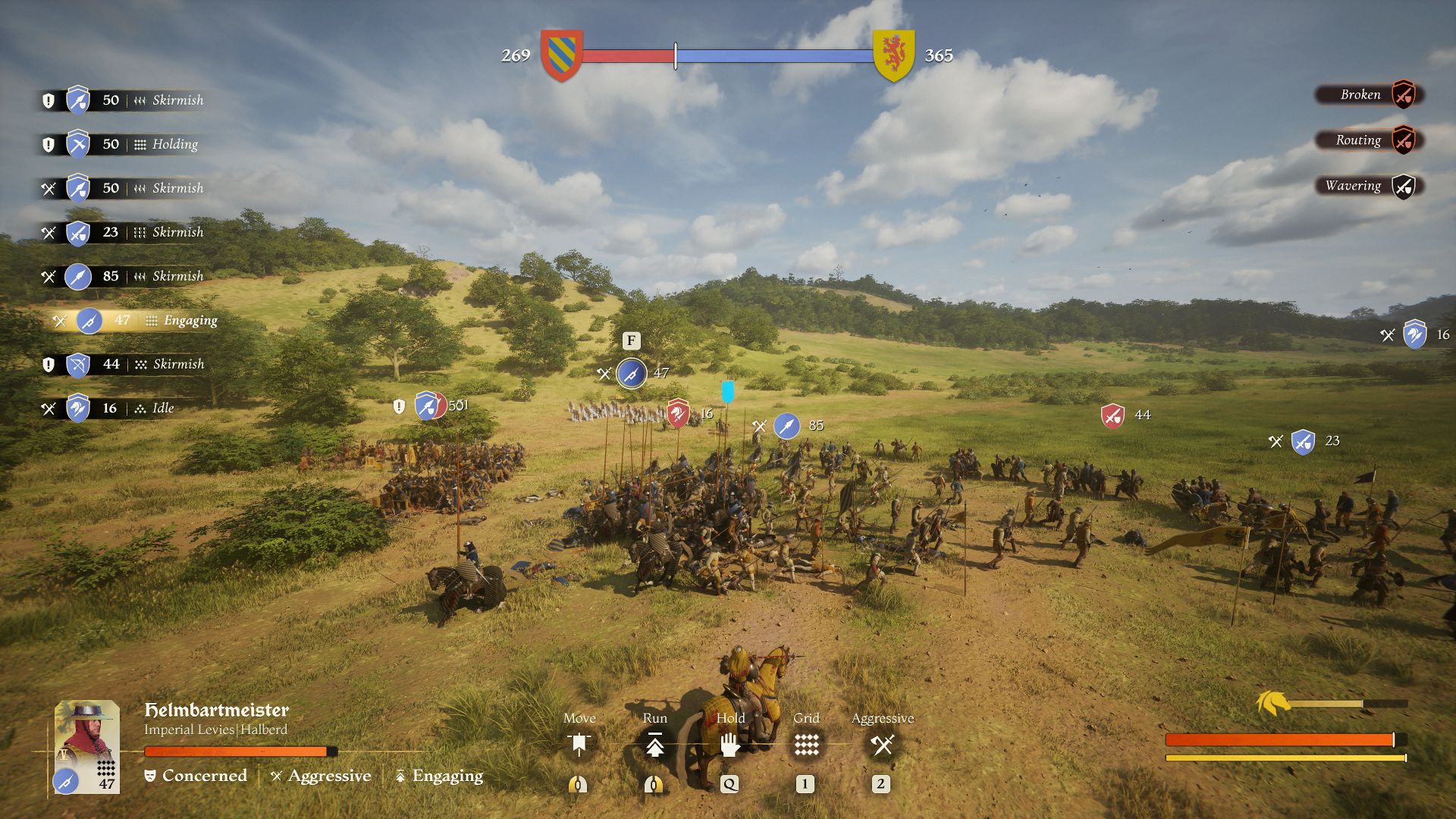
The centrepiece of the demonstration was a large battle between the Holy Roman Empire and France, fought across the rolling hills of Burgundy. The scale was immediately impressive, but the attention given to individual soldiers stood out even more. Every combatant could be inspected, including their equipment and general effectiveness. This matters because troops are separated into three broad categories: Household soldiers, Mercenaries and Levies.
Household troops come from noble backgrounds. They are expensive and difficult to train, but they possess superior equipment and perform more effectively as a unit. Mercenaries are experienced professionals who can provide reliable support without necessarily matching the potential of elite Household troops. Levies occupy the lowest level, consisting of conscripted civilians who may enter battle carrying little more than farming equipment.
These differences are expressed through cohesion, which determines how effectively soldiers maintain formation and cooperate. A disciplined Household unit can form a tightly packed line and potentially withstand a cavalry charge, provided it carries suitable equipment. Levies stand farther apart, break more easily and generally struggle against organised opposition.
This made the armies feel like believable collections of people rather than two large groups distinguished only by colour. Weapons, armour, shields, formations and social backgrounds all influence what a unit can realistically accomplish. Sending poorly equipped Levies directly into heavily armoured cavalry would not merely be an inefficient tactical choice; it would be a predictably disastrous one.
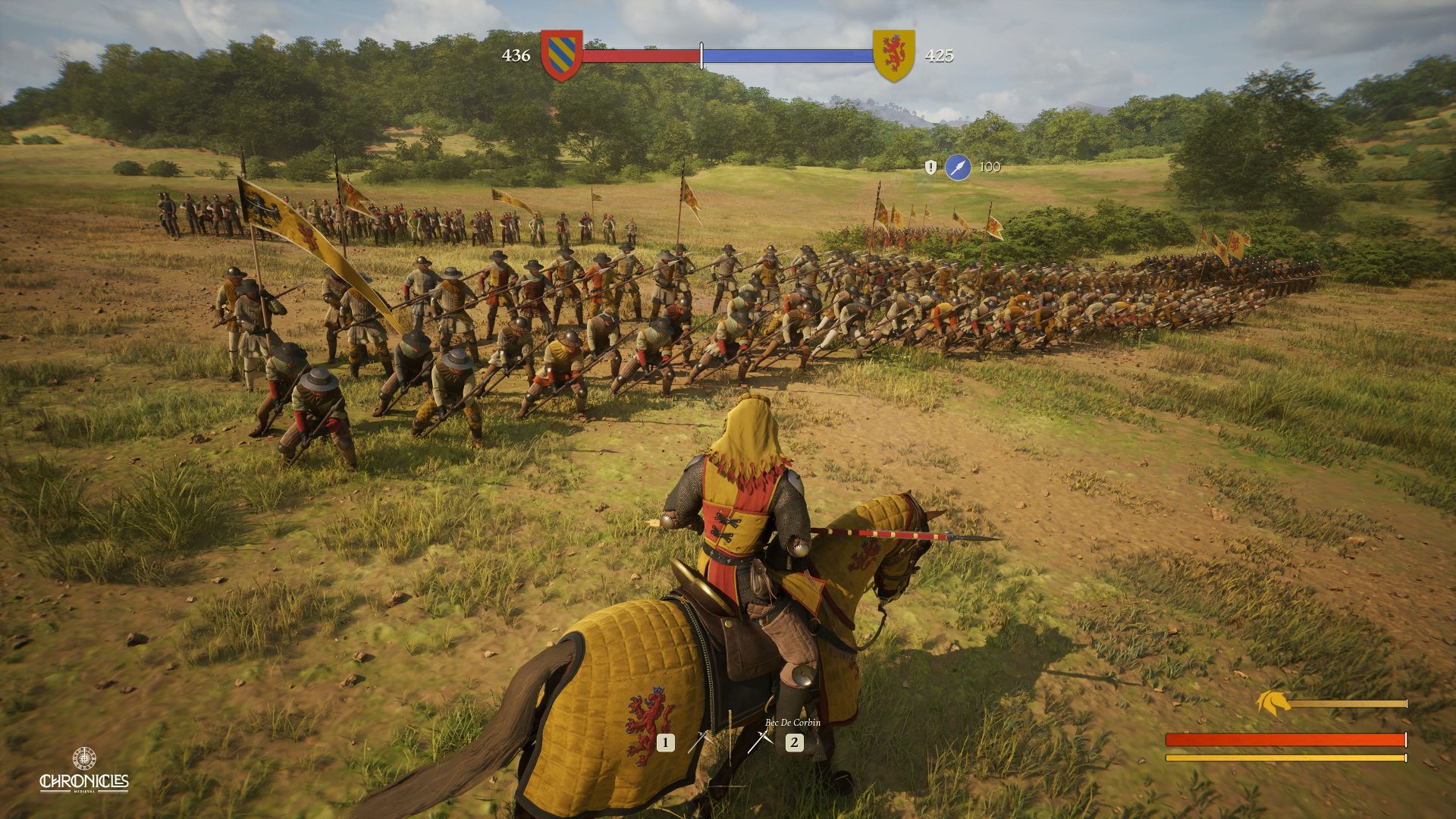
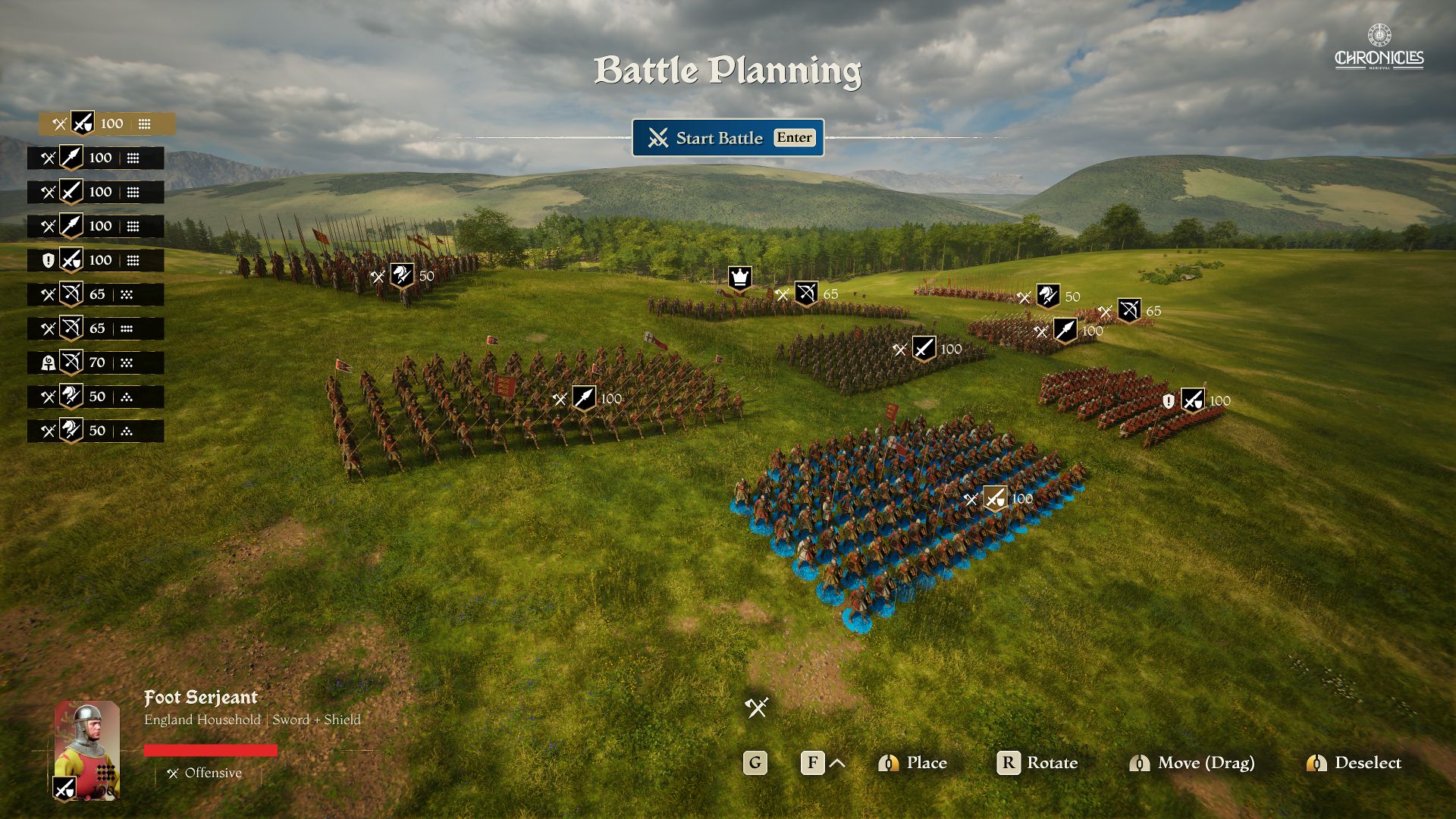
Before fighting begins, you can position individual units and issue detailed orders from an overhead tactical perspective. Cavalry can be sent around the enemy’s flank, infantry can be ordered to hold a particular position, and spearmen can form a spear wall to counter mounted opponents.
Formation width also introduces an interesting compromise. Spreading soldiers across a wider area provides greater coverage, but it makes the formation thinner and more vulnerable to a concentrated charge. Commands can still be issued once the battle begins, although units already following specific instructions will not automatically abandon them whenever a general order is given.
The camera moves into a third-person perspective, transforming the game from a strategy simulation into something closer to an action RPG when you want to fight yourself. Mounted combat looked particularly enjoyable. Riding across the battlefield provides the speed needed to reach endangered units, relay new commands and attack exposed enemies. Players can also dismount when they need greater control during close combat or want to deal with a particular threat themselves.
The developers are keeping combat relatively grounded, though historical authenticity will not completely restrict player freedom. A mounted commander can wield unusual equipment such as a polearm if that is how the player wants to fight. There will be no fantasy creatures or supernatural abilities, but the team does not want historical accuracy to become an excuse for limiting experimentation.
Although the direct combat looked promising, it also appeared noticeably rougher than the strategic simulation surrounding it. Animations and impacts still require refinement, and the fighting did not yet possess the polish necessary to make every encounter feel convincing. Considering that the game is still in development, this was not especially surprising, but it remains an area that will need significant attention.
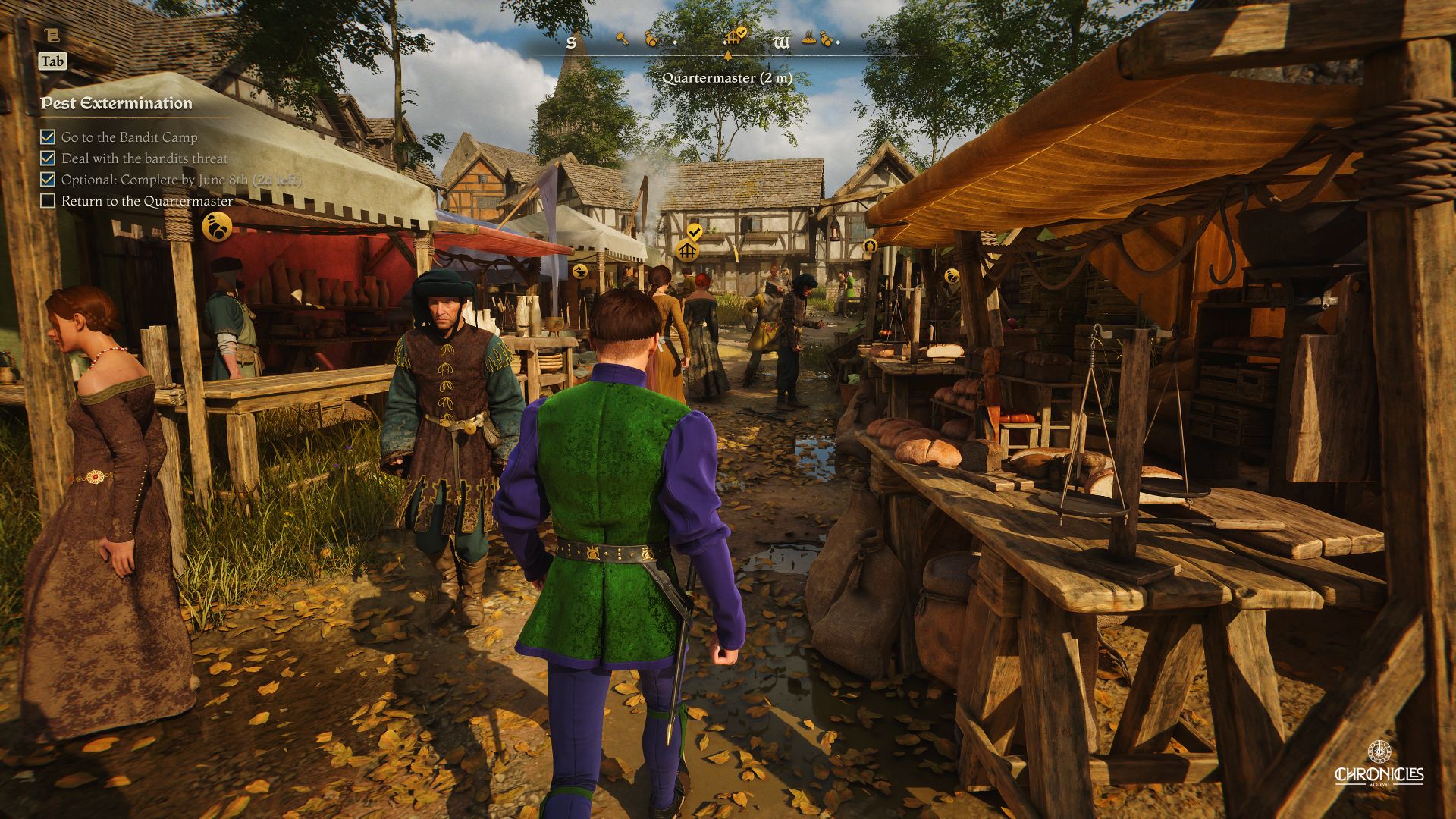
Comparisons with Mount & Blade are unavoidable, so I directly asked the developers what makes Chronicles: Medieval different. Their answer focused on its grounded historical direction, more approachable structure and deeper strategic systems. After seeing the game in motion, I think that distinction is justified.
Mount & Blade remains an obvious point of reference because both games combine campaign management with direct participation in large medieval battles. Chronicles: Medieval, however, appears more interested in precisely simulating armies, equipment, cohesion, formations, dynastic change and wider political relationships.
Mod support should extend that sandbox further. Raw Power Games is already developing Chronicles: Medieval with modifications in mind and says it is fully committed to supporting them, even if the necessary tools are not available immediately at launch. Multiplayer is also planned for full-scale standalone battles, but not for the campaign. Campaign multiplayer could potentially arrive after Early Access, although the team is not committing to it yet.
Chronicles: Medieval left a stronger impression on me than I expected. Its battles are enormous, its troop simulation appears unusually detailed, and switching between strategic command and direct mounted combat gives it a compelling sense of scale. It looks distinctive enough to escape Mount & Blade’s shadow and could be perfect for players who enjoy losing themselves in complicated sandbox systems.
For now, Chronicles: Medieval looks remarkably ambitious. Whether all its moving parts can form one cohesive medieval sandbox remains unanswered, but after seeing its armies collide on the hills of Burgundy, I am eager to discover whether Raw Power Games can pull it off.
Stranded Deep 2 leaves the Pacific for an endless desert river world with mobile bases, dynamic terrain and co-op in…
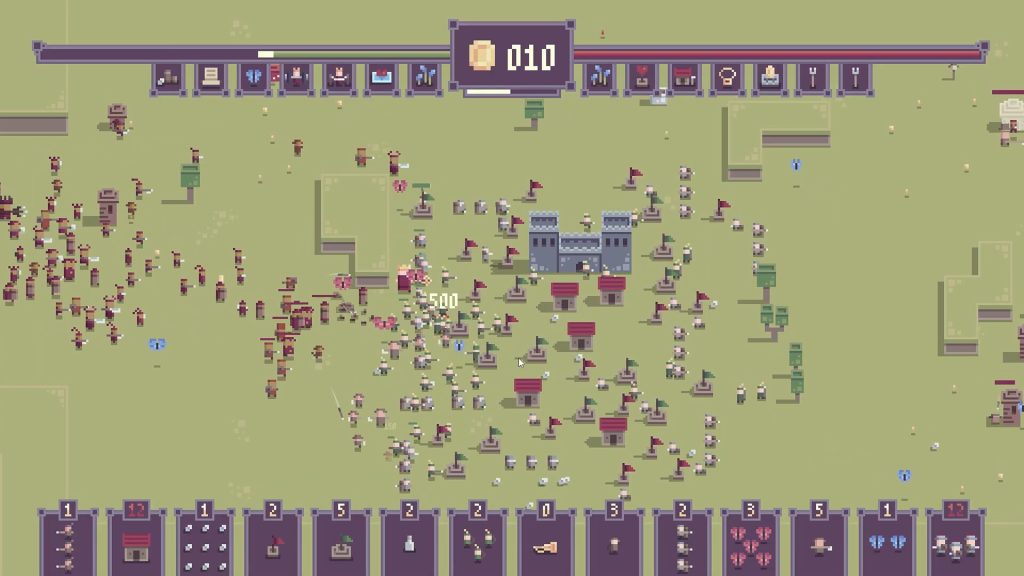
Kinghold’s Steam demo introduces its 20-second wave cycle, directly controlled king, autonomous armies and card-based battlefield strategy.
The Wind’s Path receives a DRM-free physical PC edition from We The Indies, preserving the fast top-down platformer on disc.
Lie of Caelum: Spirit launches a $34,000 Kickstarter for its retro-styled mecha JRPG, with Motoi Sakuraba attached as a guest…
Ashfield Hollow launches a roughly ten-hour Steam demo covering 50 in-game days, with transferable saves and extensive sandbox settings.
Hubert launches for PC through Steam in October 2026, placing players in the paws of a shepherd dog protecting his…
The Last Caretaker Update 5.5: Deck Drop adds 11 storage modules, new questlines, locations and extensive technical improvements.
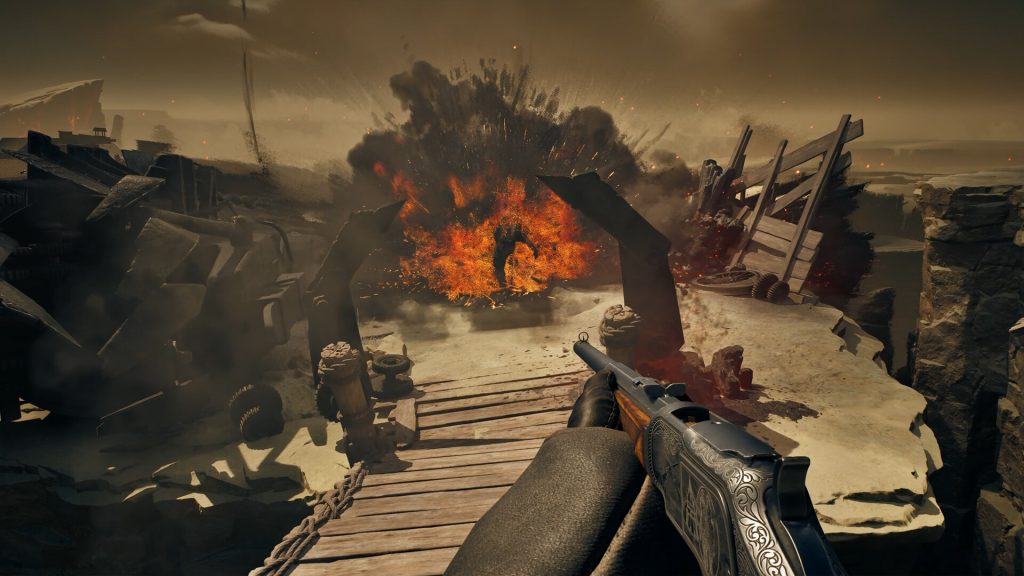
Guns of Eschaton targets a 2026 launch with deliberate Soulslike gunplay, cooperative progression and an occult Western setting.
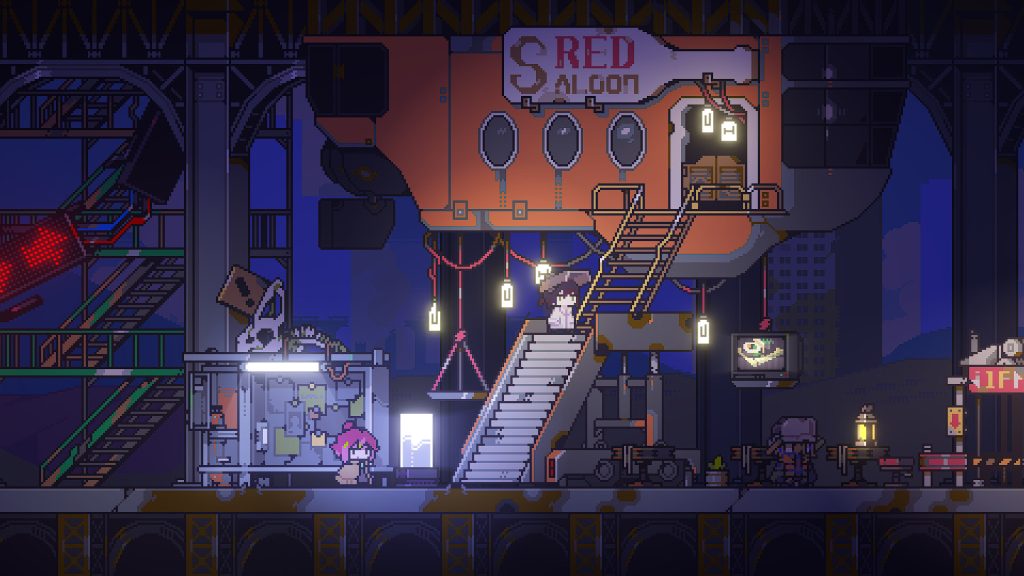
Doloc Town surpasses 180,000 lifetime sales after selling more than 80,000 copies during the first two weeks following its Version…
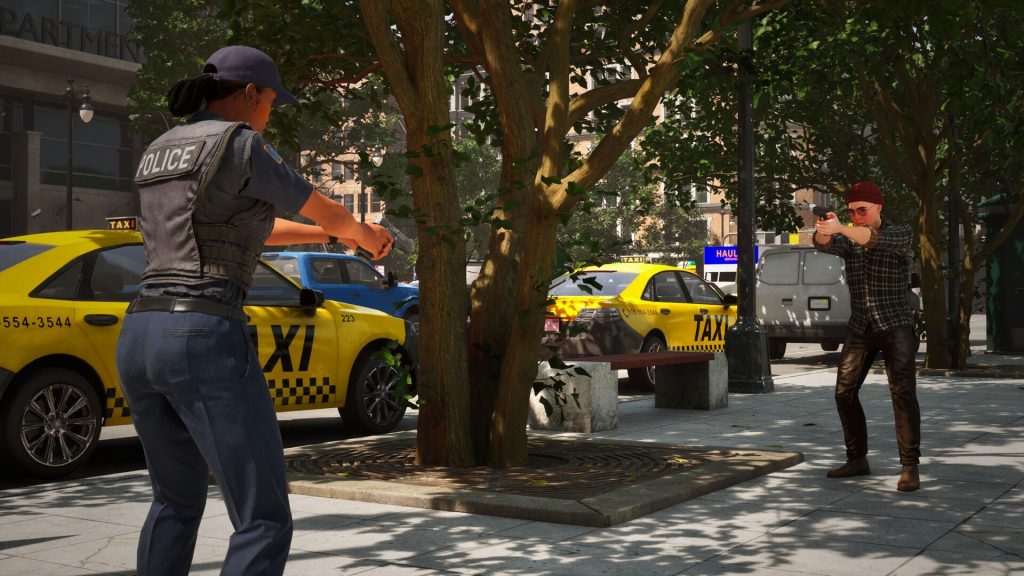
Police Simulator introduces K-9 patrols, more than 50 callouts and full cross-play when it launches for PC and consoles in…
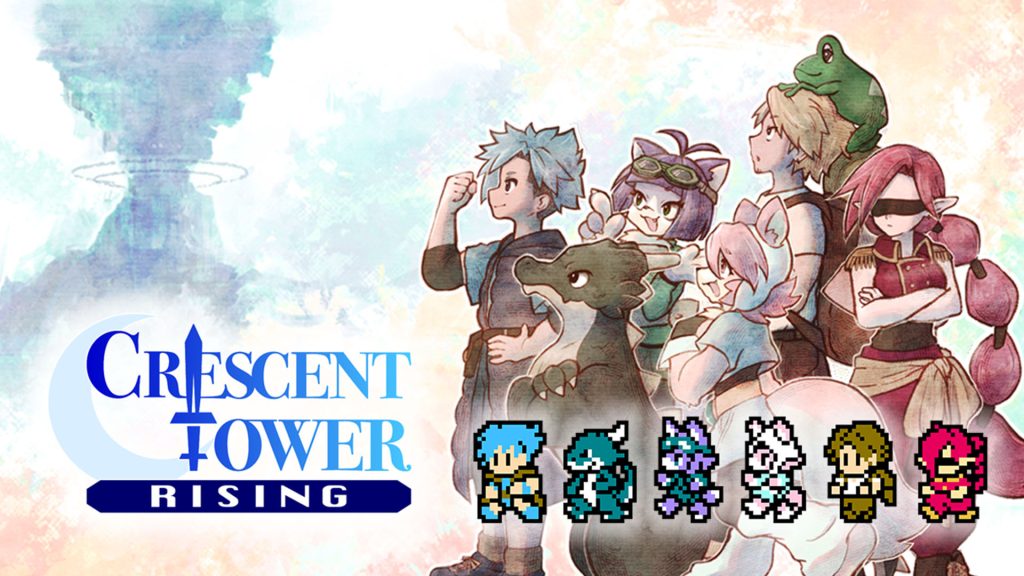
Crescent Tower: RISING brings five connected stories, 14 classes and a new Skill Blocks system to PC through Steam.
Gate Zero's first combat trailer sends Max into the time-corrupted EON World ahead of its spring 2027 launch.
Screamer’s August 31st update buffs several characters, changes its first-boot behaviour and addresses leaderboard cheating.

Cloudgazer turns cloud watching into a relaxing hidden-object game when it launches for Steam, iOS and Android on September 3rd,…
Tachyon Flow is a coming-soon PC runner built around skill-based momentum, freeform routes and expressive third-person parkour.
The Journey Home now has a free Steam demo, introducing its age-shifting puzzles, surreal world and emotional side-scrolling adventure.
Above the Desk, the studio behind Above the Snow, has announced The Lunacy: That Game About a Cult, a dark-comedy…
Gladio Mori leaves Steam Early Access and launches for PC, PlayStation 5 and Xbox Series X|S in September 2026, with…
Kitaria Fables 2 will hold a closed Steam beta from September 7th to 21st, 2026, offering selected players roughly 60…

Midsummer Madness launches for PC, Nintendo Switch and Switch 2 in November 2026, following an exclusive one-day gamescom demo in…
