
If you enjoy independent indie game coverage, consider supporting Indie-Games.eu on Patreon. It helps keep the site independent.
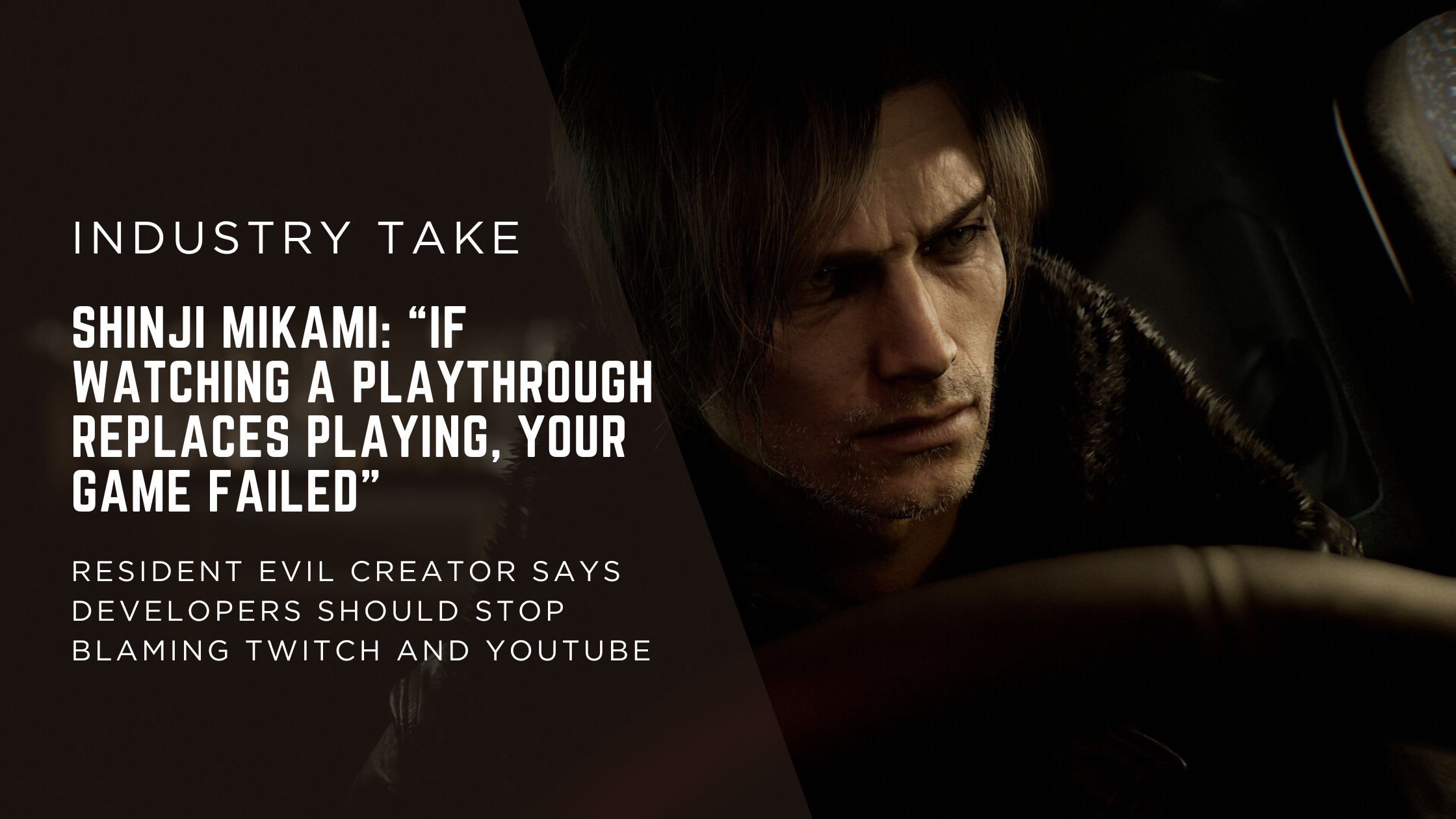
The gaming industry keeps debating whether livestreams, Let’s Plays, and full playthrough videos help or hurt game sales. Some developers worry that viewers can experience an entire game through YouTube or Twitch without ever purchasing it themselves. Others see content creators as valuable partners who introduce games to audiences that traditional marketing could never reach. Few opinions carry more weight in that discussion than those of Resident Evil creator Shinji Mikami.
As the creator of the original Resident Evil and the director behind Resident Evil 4, Mikami helped define both survival horror and modern third-person action games. His influence can still be seen across the industry today, which makes his recent comments about streaming particularly interesting.
Speaking with Japanese comedian and streamer Eiko Kano, Mikami was asked a question that many content creators have likely wondered about at some point. Kano, who has become well known in Japan for his often chaotic Resident Evil playthroughs, admitted that he had always worried about whether streaming games might upset developers by revealing puzzles, story twists, and surprises.
Even though Capcom had granted permission for his content, he still wanted to hear directly from one of the industry’s most respected creators. Mikami’s response was surprisingly simple: “If viewers watch a playthrough of a game all the way to the end and are satisfied with just that, then it was only that good of a game.”
It’s a statement that immediately shifts responsibility away from streamers and back onto developers. Rather than treating content creators as a threat, Mikami argues that developers should focus on building experiences that viewers still want to participate in, even after they’ve seen someone else play them.

One reason the debate around streaming remains controversial is because different types of games offer different kinds of experiences. If someone watches a movie, they have essentially experienced the entire product. The same is true for a television series or a novel. Once the story has been consumed, there is often little reason to experience it again unless the viewer particularly enjoyed it.
Games operate differently. While narrative is certainly important in many titles, the experience isn’t solely defined by what happens. It is also defined by how it happens. Player decisions, mechanical mastery, failures, successes, experimentation, and personal agency all contribute to the final experience.
This is a belief Mikami has expressed throughout his career. In previous interviews, he has described games as a “collaborative medium where developers create only part of the experience”. The player completes the other half through their actions, choices, and emotional responses. Two people may play the same game and emerge with completely different stories about what happened.
That is particularly true in games like Resident Evil. Watching someone carefully manage ammunition, panic during an unexpected encounter, or barely survive a difficult boss fight is entertaining. Experiencing those moments yourself, however, creates an entirely different emotional response. The tension feels more personal because the consequences belong to you rather than the person holding the controller. That’s something no stream can fully replicate.
Research published by Midia found that gamers now spend more time watching gaming-related content than actively playing games. According to the report, players averaged approximately 8.5 hours per week watching gaming videos compared to around 7.4 hours spent playing games themselves. That statistic would have seemed unbelievable a decade ago.
Today, however, it reflects how dramatically gaming culture has evolved. Platforms such as YouTube, Twitch, TikTok, and Kick have transformed gaming into a form of entertainment that exists beyond the games themselves. Many people follow specific personalities rather than specific games. Others watch competitive esports, challenge runs, speedruns, lore videos, or simply use streams as background entertainment while doing other activities.
For younger audiences especially, watching games has become as normal as watching television. This shift has naturally raised concerns among some developers and publishers. If players can watch an entire game online, why would they spend $70 purchasing it? Mikami’s answer is essentially that they will, if the game offers something genuinely interactive.
There is some truth to the fear that streaming can reduce sales for certain games. Narrative-heavy titles with limited player agency are perhaps the most vulnerable. If the primary appeal of a game is discovering plot twists or reaching the ending, watching a complete playthrough may satisfy much of that curiosity.
However, games built around mechanics, mastery, experimentation, or personal storytelling tend to benefit far more from exposure. Minecraft remains popular despite billions of hours of online content. The same is true for Counter-Strike, Elden Ring, Baldur’s Gate 3, Fortnite, Grand Theft Auto V, and countless other games that continue attracting players even after years of extensive coverage.
People watch these games because they are interested in them. They play them because watching cannot fully replace participation. Resident Evil itself provides an excellent example. Viewers may know exactly where every enemy appears and understand every puzzle solution. Yet the tension of managing limited resources, surviving encounters, and navigating dangerous environments remains fundamentally different when you’re the one making the decisions.
Perhaps the most important aspect of Mikami’s comments is that they challenge developers to stop viewing streamers as the problem. Whenever discussions about streaming arise, they often focus on copyright concerns, spoilers, or lost sales. Those are understandable issues, but they may overlook a more fundamental question.
Why does someone choose to watch instead of play? In many cases, the answer has little to do with streaming itself. Modern games are expensive. New releases frequently cost $70 or more, while many players already have enormous backlogs they may never finish. Time is also becoming an increasingly valuable resource. Watching a few hours of gameplay requires far less commitment than investing dozens of hours into learning systems and completing a game yourself.
The competition for attention has never been greater. In that environment, developers face a difficult challenge. They must create experiences compelling enough to convince viewers that participation offers something valuable beyond observation. That doesn’t mean every game needs endless replayability or complex systems. It simply means developers need to understand what makes their game uniquely interactive.

Instead of worrying that streaming might damage games, Mikami views it as an opportunity for great games to prove their value. If watching generates interest, excitement, and curiosity, then it becomes one of the most effective forms of marketing available. The burden, in his view, falls on developers to create experiences worth playing rather than merely watching.
As gaming continues evolving into both an interactive medium and a spectator activity, that philosophy feels increasingly relevant. Millions of people now spend more time watching games than playing them, and that trend is unlikely to disappear anytime soon. Rather than fighting that reality, Mikami suggests embracing it.
After all, if someone watches an entire game and still feels the urge to pick up a controller, perhaps that’s the strongest endorsement a developer can hope for.
![[OPINION] Gaming Has Officially Become a $200 Billion Industry](https://www.indie-games.eu/wp-content/uploads/2026/06/Gamign-Industry-Newzoo-Report-1-300x169.jpg)
According to Newzoo’s final 2025 figures, the global games market generated $201.6 billion, surpassing the $200 billion milestone for the…
Bunraku places you in magical stage performances where legendary ninja warriors battle for glory in front of a live audience.
You can choose from six classes, ranging from assassins to plague-wielding mages, while also unlocking demonic powers that expand build…

HYPERWIRED combines classic space combat with a rather unusual mechanic: plugging your ship directly into energy sockets scattered throughout each…
![[OPINION] PlayStation’s Return to Exclusives Shows Sony Has Learned From Its Recent Mistakes](https://www.indie-games.eu/wp-content/uploads/2026/06/PlayStation-Studios-Opinion-PC-300x169.jpg)
While not completely abandoning PC releases, Sony is drawing a clearer line regarding which games must remain closely tied to…
Serenity Forge and Studio HazeDenki have announced Sister Other Paranoia alongside a new trailer, introducing what looks to be a…

Here is a list of 10 upcoming games from this year's Digital Dragons that we recommend.
Developed by Henry's House and Oscar Brittain, Slayblade takes inspiration from classic Beyblade battles and turns them into a colorful…

Don't Nod, the studio behind Life is Strange, Vampyr, Jusant, and Lost Records: Bloom & Rage, may be facing one…
According to industry insider NateTheHate, Clair Obscur: Expedition 33 is still planned for release on Nintendo Switch 2 sometime in…
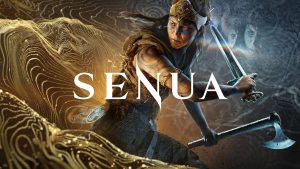
Revealed during the Xbox Games Showcase this Summer, Senua is a full-scale action-adventure game set in the acclaimed Hellblade universe.
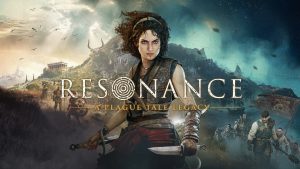
Resonance: A Plague Tale Legacy is the third main game in the A Plague Tale series, a single-player action-adventure prequel…

Microsoft is reportedly exploring major structural changes for Xbox, including the possibility of turning the gaming division into a separate…
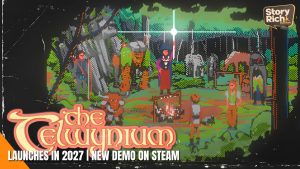
The demo on Steam includes Book One: Winter's Dawn, offering introduction to the game's world, characters, and puzzle-solving gameplay.
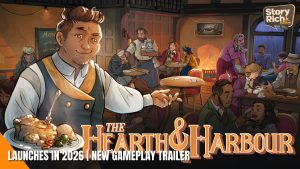
The new gameplay update for The Hearth & Harbour gave players a closer look at life in the harbor city…
After years of updates, expansions, and post-launch support, turn-based JRPG Sea of Stars has officially reached the end of its…

SHE: (Seraphim Helix Experiment) is the latest project from Rocket Adrift Games, combining stealth mechanics inspired by Metal Gear Solid…

Servant of the Lake launches this August and takes players to the infamous Vanderboom Estate long before the events of…

Lost in the Roots grabbed attention with its haunting hand-drawn visuals and a story that seems determined to get under…
You arrive in the isolated mountain town of Ashenridge as an escaped convict hoping to leave your past behind.
According to Newzoo’s final 2025 figures, the global games market generated $201.6 billion, surpassing the $200 billion milestone for the…
Bunraku places you in magical stage performances where legendary ninja warriors battle for glory in front of a live audience.
You can choose from six classes, ranging from assassins to plague-wielding mages, while also unlocking demonic powers that expand build…
HYPERWIRED combines classic space combat with a rather unusual mechanic: plugging your ship directly into energy sockets scattered throughout each…
While not completely abandoning PC releases, Sony is drawing a clearer line regarding which games must remain closely tied to…
Serenity Forge and Studio HazeDenki have announced Sister Other Paranoia alongside a new trailer, introducing what looks to be a…
Here is a list of 10 upcoming games from this year's Digital Dragons that we recommend.
Developed by Henry's House and Oscar Brittain, Slayblade takes inspiration from classic Beyblade battles and turns them into a colorful…
Don't Nod, the studio behind Life is Strange, Vampyr, Jusant, and Lost Records: Bloom & Rage, may be facing one…
According to industry insider NateTheHate, Clair Obscur: Expedition 33 is still planned for release on Nintendo Switch 2 sometime in…
Revealed during the Xbox Games Showcase this Summer, Senua is a full-scale action-adventure game set in the acclaimed Hellblade universe.
Resonance: A Plague Tale Legacy is the third main game in the A Plague Tale series, a single-player action-adventure prequel…
Microsoft is reportedly exploring major structural changes for Xbox, including the possibility of turning the gaming division into a separate…
The demo on Steam includes Book One: Winter's Dawn, offering introduction to the game's world, characters, and puzzle-solving gameplay.
The new gameplay update for The Hearth & Harbour gave players a closer look at life in the harbor city…
After years of updates, expansions, and post-launch support, turn-based JRPG Sea of Stars has officially reached the end of its…
SHE: (Seraphim Helix Experiment) is the latest project from Rocket Adrift Games, combining stealth mechanics inspired by Metal Gear Solid…
Servant of the Lake launches this August and takes players to the infamous Vanderboom Estate long before the events of…
Lost in the Roots grabbed attention with its haunting hand-drawn visuals and a story that seems determined to get under…
You arrive in the isolated mountain town of Ashenridge as an escaped convict hoping to leave your past behind.
